On this page
- Key takeaways
- What's the difference between natural and synthetic vitamin E?
- Is natural or synthetic vitamin E better?
- How do you tell d-alpha from dl-alpha tocopherol on a label?
- How do vitamin E IU, mg and %DV line up?
- How much vitamin E do you need per day?
- How much vitamin E is too much?
- How do you take Betterly's vitamin E formulas?
- When don't you need a vitamin E supplement?
- Who should check with a healthcare provider first?
- FAQ: natural vs synthetic vitamin E
- Sources
The short answer: Natural vs synthetic vitamin E comes down to potency. Labels list natural vitamin E as d-alpha-tocopherol and synthetic as dl-alpha-tocopherol. The NIH counts 1 mg of the natural form as equal to 2 mg of the synthetic. FDA asks makers to fold that gap into the milligrams and %DV they print. So on a panel that follows FDA's guidance, those numbers tell you more than the prefix does.
Key takeaways
- A "d-" in front of alpha-tocopherol marks natural vitamin E, and "dl-" marks the synthetic form made in a lab.
- FDA asks makers to halve synthetic milligrams before printing them. On a panel that follows that guidance, the mg and %DV already account for the form.
- Tocopheryl acetate is an ester that can be natural or synthetic; the d or dl decides which.
- Adults need 15 mg of vitamin E a day, and the adult upper limit for supplements is 1,000 mg of either form.
Full disclosure: we sell three hair, skin and nails formulas with vitamin E, and all three list the synthetic dl- form. Below, you'll see our panels exactly as printed, plus the spots where our lineup won't suit you.
What's the difference between natural and synthetic vitamin E?
Natural vitamin E is RRR-alpha-tocopherol, the only alpha-tocopherol shape that occurs naturally in food, while synthetic vitamin E is a lab-made mix of eight shapes of that molecule.
Those eight shapes are called stereoisomers. Each has the same atoms, arranged differently in 3D. Some pairs are mirror images, like your left and right hands. FDA's guidance on converting vitamin units for Nutrition and Supplement Facts labels says only the RRR shape occurs naturally in food. The synthetic form, all-rac-alpha-tocopherol, holds all eight shapes in equal amounts.
The shapes matter because FDA's guidance credits vitamin E activity to only four of the eight, the "2R" ones. Natural RRR is one of them. In a synthetic batch, only half the molecules have a 2R shape. That's where the 2-to-1 ratio comes from.
The NIH Office of Dietary Supplements (ODS) vitamin E fact sheet calls vitamin E a fat-soluble nutrient. It acts as an antioxidant, helping shield cells from free-radical damage. ODS also uses the vitamin E name for eight related compounds in food. That's a separate "eight," and alpha-tocopherol is just one of them.
Is natural or synthetic vitamin E better?
Natural vitamin E is more potent per milligram of raw ingredient, but synthetic isn't a worse buy when a label's mg and %DV already reflect the difference.
ODS spells out the ratio: 1 mg of vitamin E equals 1 mg of d-alpha-tocopherol or 2 mg of dl-alpha-tocopherol.
FDA's labeling guidance, though, asks for "label claim" milligrams, meaning vitamin E counted as alpha-tocopherol. In FDA's worked example, a supplement holds 20 mg of synthetic vitamin E. The maker divides by 2 and prints 10 mg, or 67% of the Daily Value.
So on a panel that follows this guidance, a synthetic 15 mg and a natural 15 mg both mean 100% of the Daily Value. The form still matters on older IU labels, where each form converts with its own factor. It also matters if you simply prefer the form found naturally in food.
How do you tell d-alpha from dl-alpha tocopherol on a label?
On a Supplement Facts panel, the words in parentheses after "Vitamin E" tell you: "d-" means natural, "dl-" means synthetic, and no prefix means the label doesn't say.
Capital letters don't matter. Here's the wording on five of our panels, as printed.
| What the panel prints | Form | Our product, amount |
|---|---|---|
| DL-alpha-Tocopherol | Synthetic | Collagen & Vitamin E Strips, 6 mg |
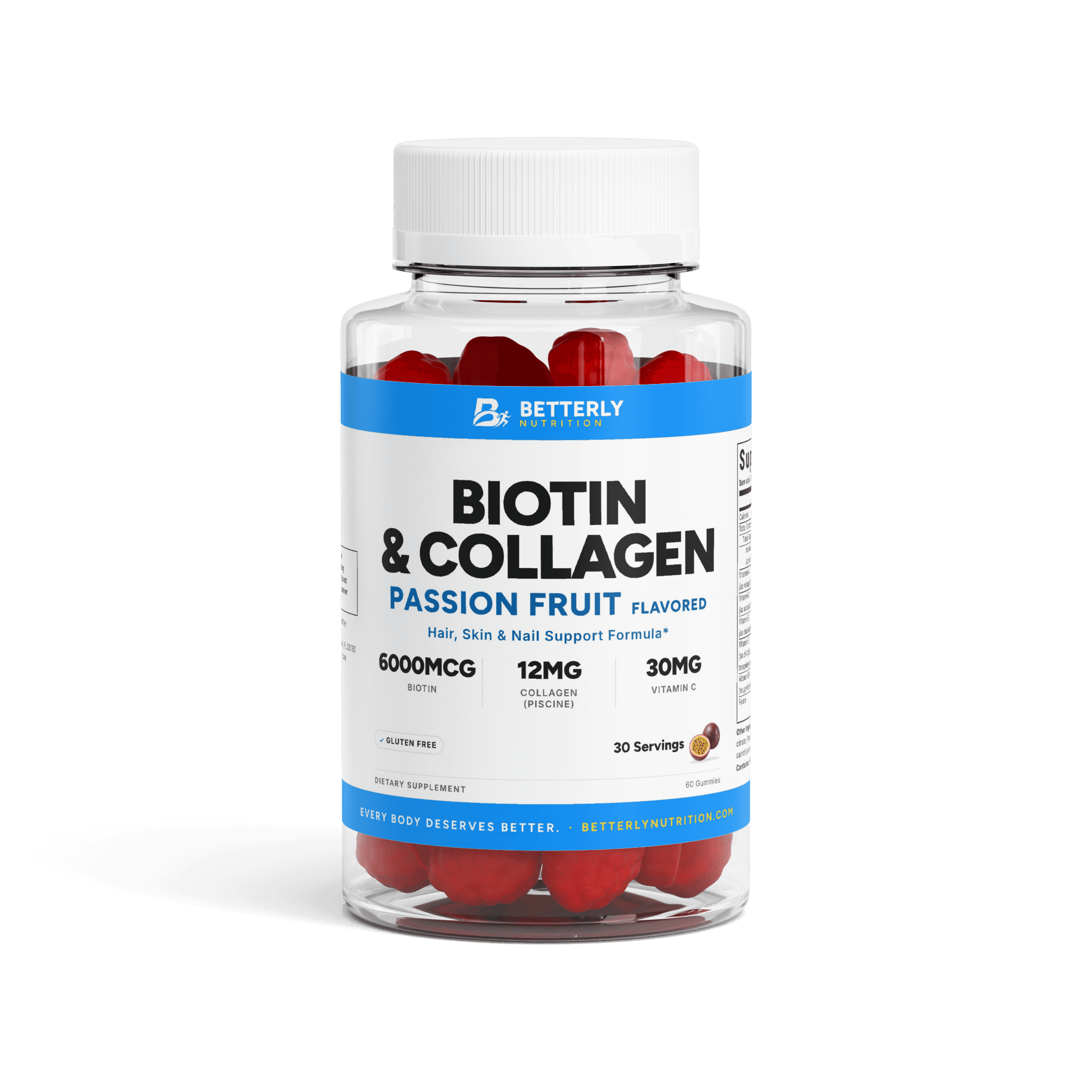
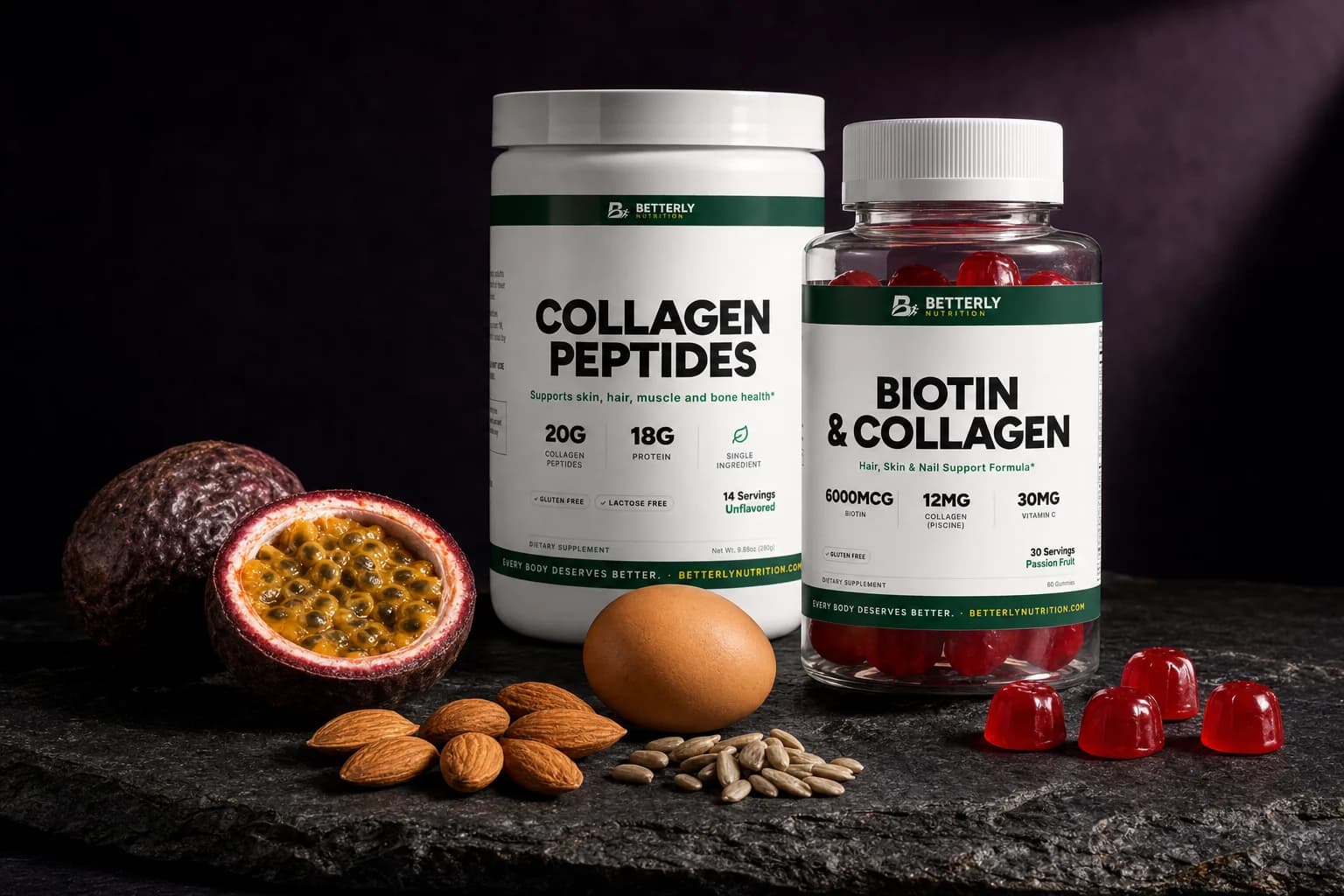
| dl-Alpha tocopheryl acetate | Synthetic ester | Biotin & Collagen Gummies, 18 mg |
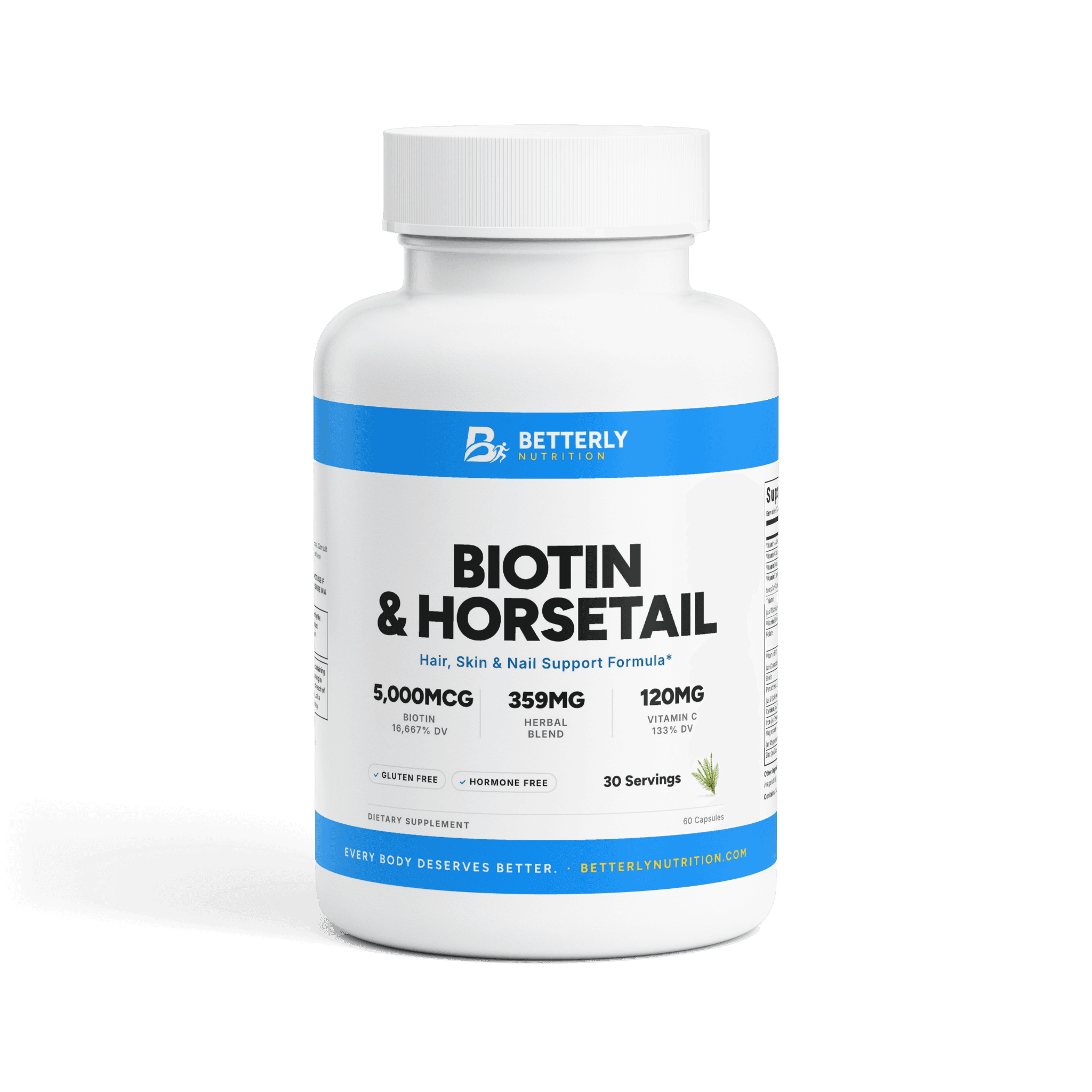
| DL-Alpha tocopheryl acetate | Synthetic ester | Biotin & Horsetail Hair Capsules, 14 mg |
| d-alpha tocopheryl acetate | Natural ester | Elderberry, Echinacea & Zinc Capsules, 15 mg |
| d-alpha tocopherol acetate | Natural ester | Bilberry & Lutein Eye Capsules, 30 mg |
Each amount is per serving: 1 Oral Strip (265 mg) for the strips, 2 Gummies, or 2 Capsules for each capsule formula.
One flag on the eye capsules: their 2-capsule serving also lists 80 mg of zinc. That's twice the 40 mg adult upper limit the NIH sets for zinc, so we don't suggest them at that dose. Our guide to whether 80 mg of zinc is too much shows where that limit comes from.
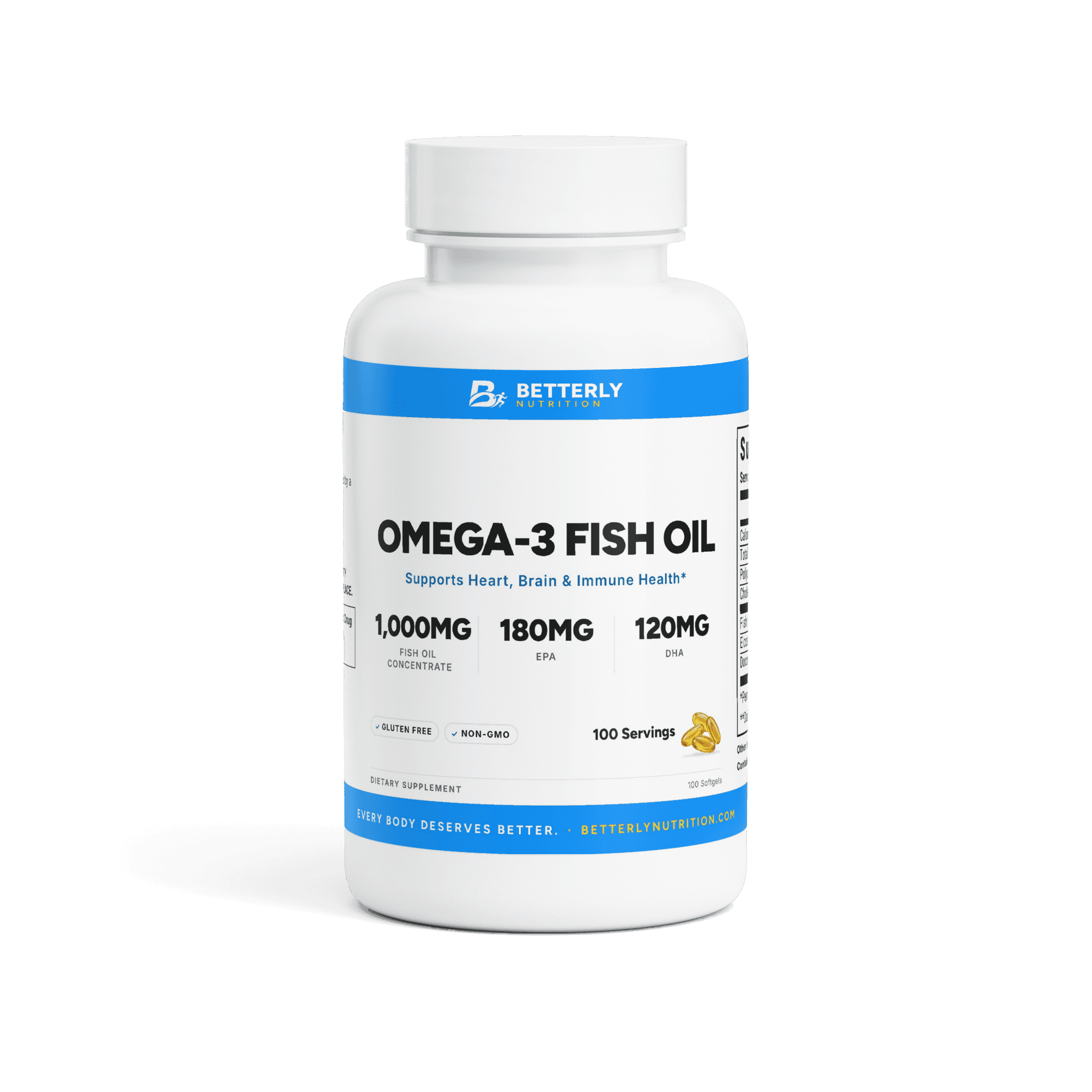
Our Omega-3 Fish Oil Softgels show a different blind spot. Their other-ingredients line says only "Vitamin E," so the form isn't stated.
Is tocopheryl acetate natural or synthetic?
Tocopheryl acetate can be either. It's an ester form of vitamin E, and the d- or dl- in front of it still tells you whether it's natural or synthetic.
An ester, here, is vitamin E joined to acetic acid. FDA's guidance lists RRR-alpha-tocopheryl acetate and succinate as esters of natural vitamin E, and the all-rac versions as esters of synthetic. Each ester converts from IU with the same factor as its plain form. So "d-alpha-tocopherol vs tocopheryl acetate" is a plain-form-vs-ester question.
How do vitamin E IU, mg and %DV line up?
Current vitamin E labels list milligrams of alpha-tocopherol against a 15 mg Daily Value. Older labels used IU, and converting IU to mg depends on the form.
FDA's Daily Value reference page sets vitamin E at 15 mg of alpha-tocopherol, and the conversion guidance shows the old Daily Value as 30 IU. Percent DV is the label-claim mg divided by 15. So our strip's 6 mg reads 40%, and the gummies' 18 mg per 2-gummy serving reads 120%.
For IU, ODS and FDA use the same two factors: multiply by 0.67 for natural vitamin E or 0.45 for synthetic.
| An older label says | If natural (× 0.67) | If synthetic (× 0.45) |
|---|---|---|
| 30 IU | 20.1 mg | 13.5 mg |
| 100 IU | 67 mg | 45 mg |
| 400 IU | 268 mg | 180 mg |
| 1,000 IU | 670 mg | 450 mg |
On an IU label, then, the prefix changes the answer. The same IU works out to about 1.5 times as many milligrams when the vitamin E is natural.
One honest limit: our panels print one vitamin E figure and don't show the raw weight of the ingredient. So the label alone can't show you the conversion.
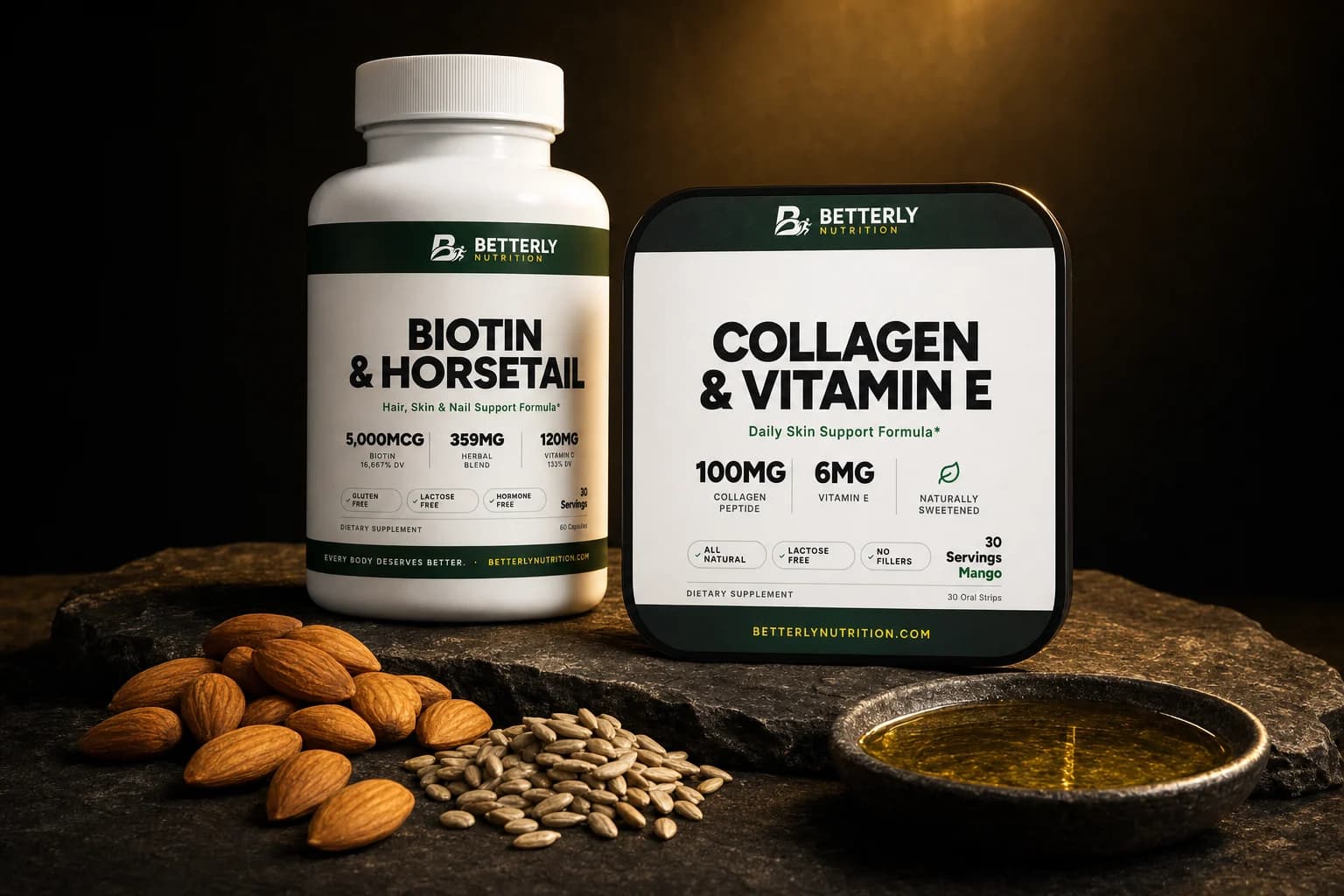
From our shop: Collagen & Vitamin E Strips — a mango-flavored oral strip that lists 6 mg of vitamin E as DL-alpha-Tocopherol (40% DV) and 100 mg of collagen peptide per 1-strip serving.
How much vitamin E do you need per day?
Adults need 15 mg of vitamin E a day, according to ODS, or 19 mg while breastfeeding. The figure is the same for women and men.
Kids need less: 6 mg at ages 1 to 3, 7 mg at 4 to 8 and 11 mg at 9 to 13. From 14 on, it's 15 mg.
ODS lists wheat germ, sunflower and safflower oils among the best sources, along with almonds, hazelnuts and sunflower seeds.
ODS says most Americans' diets fall short of that amount, yet it calls true deficiency very rare in healthy people.
For scale, ODS says a typical once-daily multivitamin gives about 13.5 mg, while vitamin E-only products often hold 67 mg or more.
How much vitamin E is too much?
The adult upper limit for vitamin E from supplements is 1,000 mg a day of either form. ODS equates that to 1,500 IU natural or 1,100 IU synthetic.
The limit covers supplements only, since ODS says vitamin E naturally present in food isn't harmful. With high-dose supplements, the worry is bleeding: they might reduce the blood's ability to clot after a cut. Limits for children are lower.
There's a catch, though. ODS notes that vitamin E supplements might cause harm even below that limit. Its example is synthetic: men who took 180 mg a day for several years. That's the form our hair, skin and nails formulas list. It's also 10 to 30 times what one serving of any of them holds. So keep well under 1,000 mg.
All three of our hair formulas at label directions would add up to 38 mg of vitamin E (6 + 18 + 14), far below that limit. We still don't suggest that combination: the gummies and capsules by themselves list 1,280 mcg of folic acid a day (400 + 880).
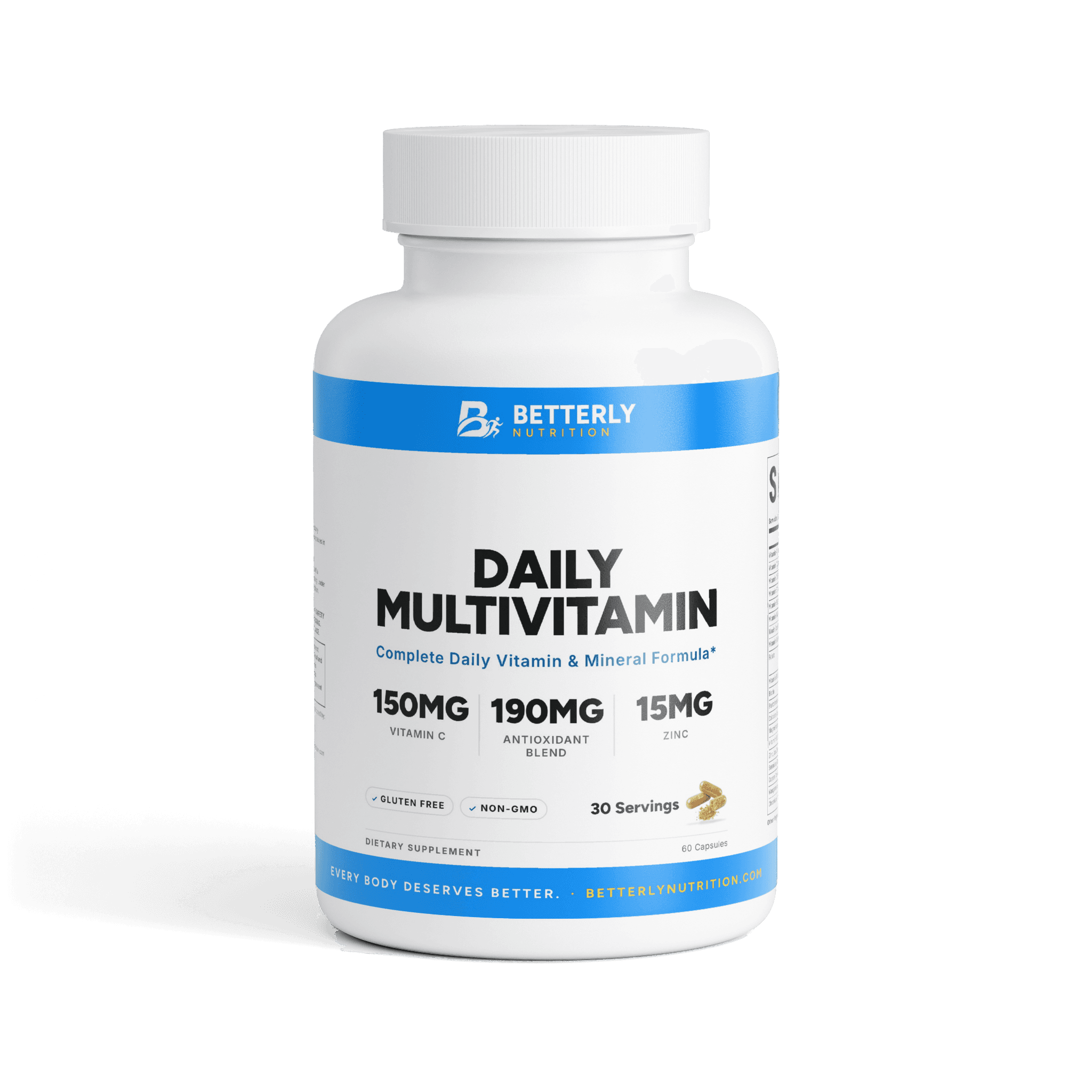
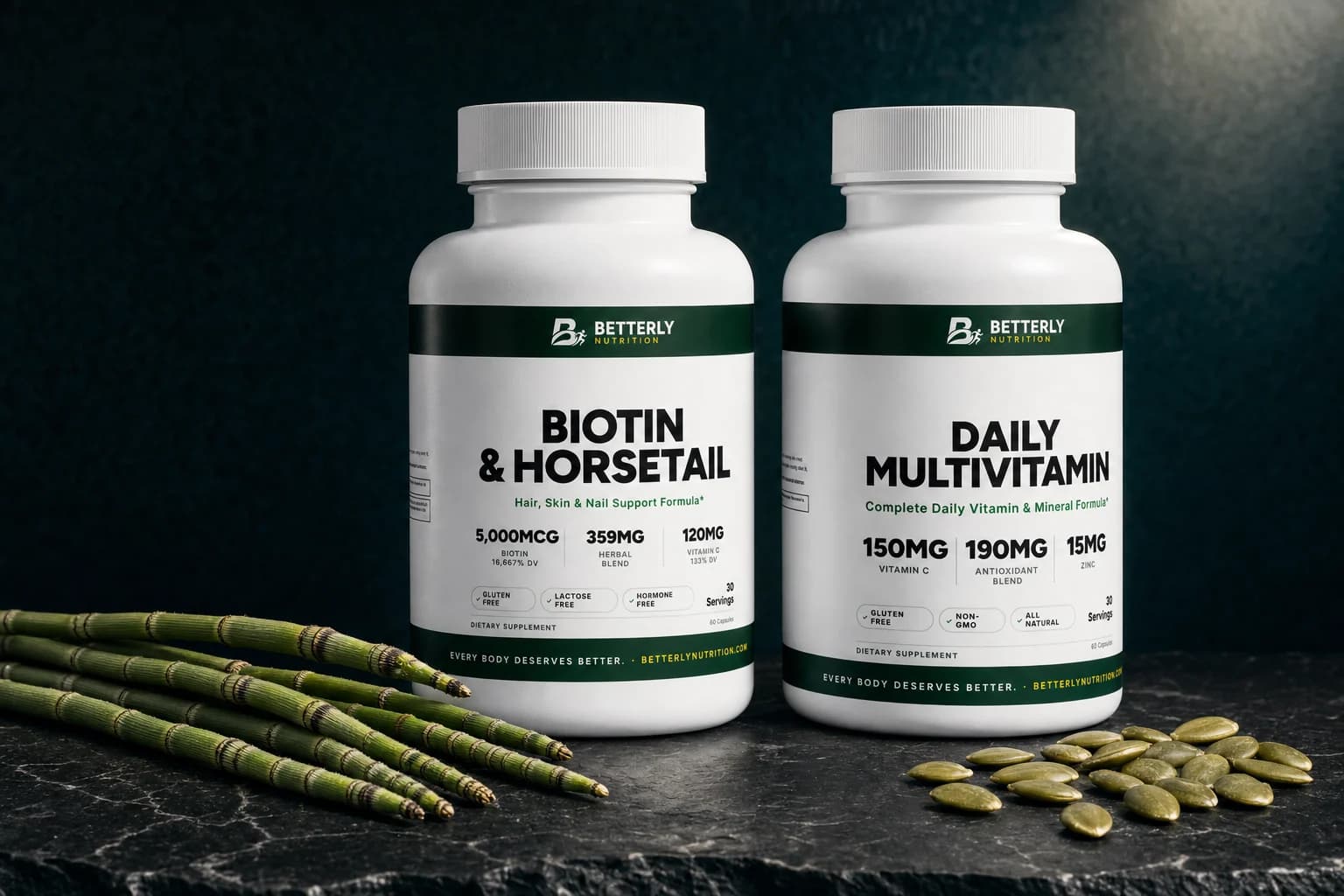
A multivitamin brings its own vitamin E row, plus the same folic acid snag. Look at our Biotin & Horsetail Hair Capsules next to our Daily Multivitamin Capsules. Their vitamin E comes to 27.5 mg a day at label directions (14 + 13.5). The multi's folate row prints 400 mcg of folic acid in parentheses, so the pair lists 1,280 mcg (880 + 400).
The ODS folate fact sheet puts the adult upper limit for folate from supplements and fortified foods at 1,000 mcg a day. Both pairs go over it, so we don't suggest either pairing. Our walkthrough on pairing a hair formula with a multi covers the other rows a multi and a hair label share.
How do you take Betterly's vitamin E formulas?
Take each Betterly formula exactly as its label directs: one Collagen & Vitamin E strip daily, 2 Biotin & Collagen Gummies daily, or 2 Biotin & Horsetail Hair Capsules daily.
The directions, word for word:
- Collagen & Vitamin E Strips: "Place 1 oral strip on the tongue daily and allow it to dissolve."
- Biotin & Collagen Gummies: "2 gummies daily or as directed by a healthcare professional." Each 2-gummy serving also lists 6000 mcg of biotin and 4 g of added sugars.
- Biotin & Horsetail Hair Capsules: "For adults only. Take two (2) capsules daily." Each 2-capsule serving also lists 5,000 mcg of biotin and a 359 mg proprietary blend.
Morning or evening is up to you, because the directions only say daily. Choose one formula rather than two, and never go past the serving on the pack.
The gummies and capsules are multi-nutrient hair formulas, and our honest review of biotin gummies walks the gummy panel row by row.
From our shop: Biotin & Collagen Gummies — a 2-gummy serving carries 18 mg of vitamin E, printed as dl-Alpha tocopheryl acetate (120% DV), alongside biotin, vitamin C and 12 mg of fish collagen.
When don't you need a vitamin E supplement?
Skip a vitamin E product when your multi covers it, your oils and snacks supply it, or a hair formula on your shelf already includes it.
- Your multivitamin covers it. Our Daily Multivitamin Capsules list 13.5 mg per 2-capsule serving.
- Your meals cover it, through almonds, sunflower seeds or sunflower and safflower oils.
- You're already on a hair formula. Adding the strip to the gummies or capsules stacks 6 mg you may not need.
- You want the natural form. Our hair formulas all use synthetic, and we don't sell a standalone vitamin E. Our two natural-form labels are blends built around other ingredients.
- Your real question is about skin. Our guide to vitamin E supplements for skin takes that on.
Who should check with a healthcare provider first?
Vitamin E deserves a provider's input first if you use medicine that slows blood clotting, are pregnant, nursing or under 18, or manage a medical condition.
That list mirrors the caution on each of our three hair, skin and nails packs: "Do not exceed recommended dose. Consult a physician if pregnant, nursing, under 18, or have a medical condition."
According to ODS, vitamin E supplements can interact with some medicines. People on anticoagulant or antiplatelet medicines face a higher chance of bleeding. A pharmacist can check the full panel against your prescriptions. Before a surgery date, tell your care team about every supplement you take.
Check allergens, too. The gummies' label says they contain fish (tilapia) and tree nuts (coconut), and the capsules' label says they contain soy.
FAQ: natural vs synthetic vitamin E
Is dl-alpha-tocopherol bad for you?
Dl-alpha-tocopherol is simply vitamin E made in a lab, but that doesn't make it risk-free. ODS gives the natural and synthetic forms one adult upper limit: 1,000 mg a day from supplements. Its example of possible harm below that limit involved men taking 180 mg of synthetic vitamin E daily for several years. That's 10 times the 18 mg in a serving of our gummies, the highest of our three hair formulas. Keep your daily total modest.
Is the vitamin E in food natural or synthetic?
Unfortified food carries natural vitamin E. FDA's conversion guidance says only RRR-alpha-tocopherol occurs naturally in food, while synthetic vitamin E appears only in fortified foods and supplements. So almonds and sunflower seeds give you natural vitamin E. A fortified cereal may add the synthetic kind, and its ingredient list is where to look for a dl- prefix.
What are mixed tocopherols?
Mixed tocopherols are blends of several vitamin E forms, such as gamma-tocopherol, rather than alpha-tocopherol alone. ODS says scientists don't know whether these other forms work better than alpha-tocopherol in supplements. FDA bases the vitamin E Daily Value on alpha-tocopherol only, the one form it says the blood maintains. So a mixed-tocopherol label's %DV counts only the alpha-tocopherol in the blend.
How much vitamin E is in a multivitamin?
A typical once-daily multivitamin provides about 13.5 mg of vitamin E, according to ODS, close to the 15 mg Daily Value. Our Daily Multivitamin Capsules match it: 13.5 mg, listed as DL-Alpha Tocopherol Acetate, for 90% DV per 2-capsule serving. A hair formula on top of a multi needs more checking than vitamin E. Our multi and our hair capsules together list 1,280 mcg of folic acid, above the adult upper limit, so we don't suggest that pair.
Should you take vitamin E with food?
You can take vitamin E with food, but none of our three hair, skin and nails labels asks you to. ODS notes that vitamin E needs some fat to be absorbed. So pairing the gummies or capsules with a meal is fine if that suits your routine. What matters more is the daily amount on the label: 1 strip, 2 gummies or 2 capsules.
Sources
- Vitamin E: Fact Sheet for Consumers, NIH Office of Dietary Supplements
- Folate: Fact Sheet for Consumers, NIH Office of Dietary Supplements
- Converting Units of Measure for Folate, Niacin, and Vitamins A, D, and E on the Nutrition and Supplement Facts Labels: Guidance for Industry, U.S. Food and Drug Administration
- Daily Value on the Nutrition and Supplement Facts Labels, U.S. Food and Drug Administration
If this left you looking for somewhere to start, read collagen and vitamin E oral strips (6 mg vitamin E) — its amounts per serving are listed on the page. For the practical questions this raises, how dosing, sourcing and subscriptions work is answered in one place.