On this page
- Key takeaways
- Is it safe to take collagen and vitamin E together?
- Does vitamin E help collagen, or is that vitamin C's job?
- What's the difference between vitamin E and collagen?
- What benefits can you honestly expect from the pair?
- Where does vitamin C fit in, and can you take all three?
- Do collagen and vitamin E do anything for nails?
- Is a vitamin E and collagen cream the same thing?
- How much of each is in our strip, powder and gummies?
- How do you take the strip and powder, per the labels?
- When can you skip this pairing?
- Who should check with a healthcare provider first?
- FAQ: collagen and vitamin E
- Sources
The short answer: Yes, you can take collagen and vitamin E together. The federal fact sheets we read name no clash between them, and the two do different jobs. MedlinePlus credits vitamin C, not vitamin E, with forming collagen, and it describes vitamin E as an antioxidant. Our Collagen & Vitamin E Strips list 6 mg of vitamin E (40% DV) and 100 mg of collagen peptide per 1 Oral Strip (265 mg) serving.
Key takeaways
- MedlinePlus lists forming collagen among vitamin C's jobs, while its vitamin E page describes an antioxidant and never mentions collagen.
- No federal page we read flags taking collagen with vitamin E, though the NIH Office of Dietary Supplements warns that vitamin E can interact with certain medicines.
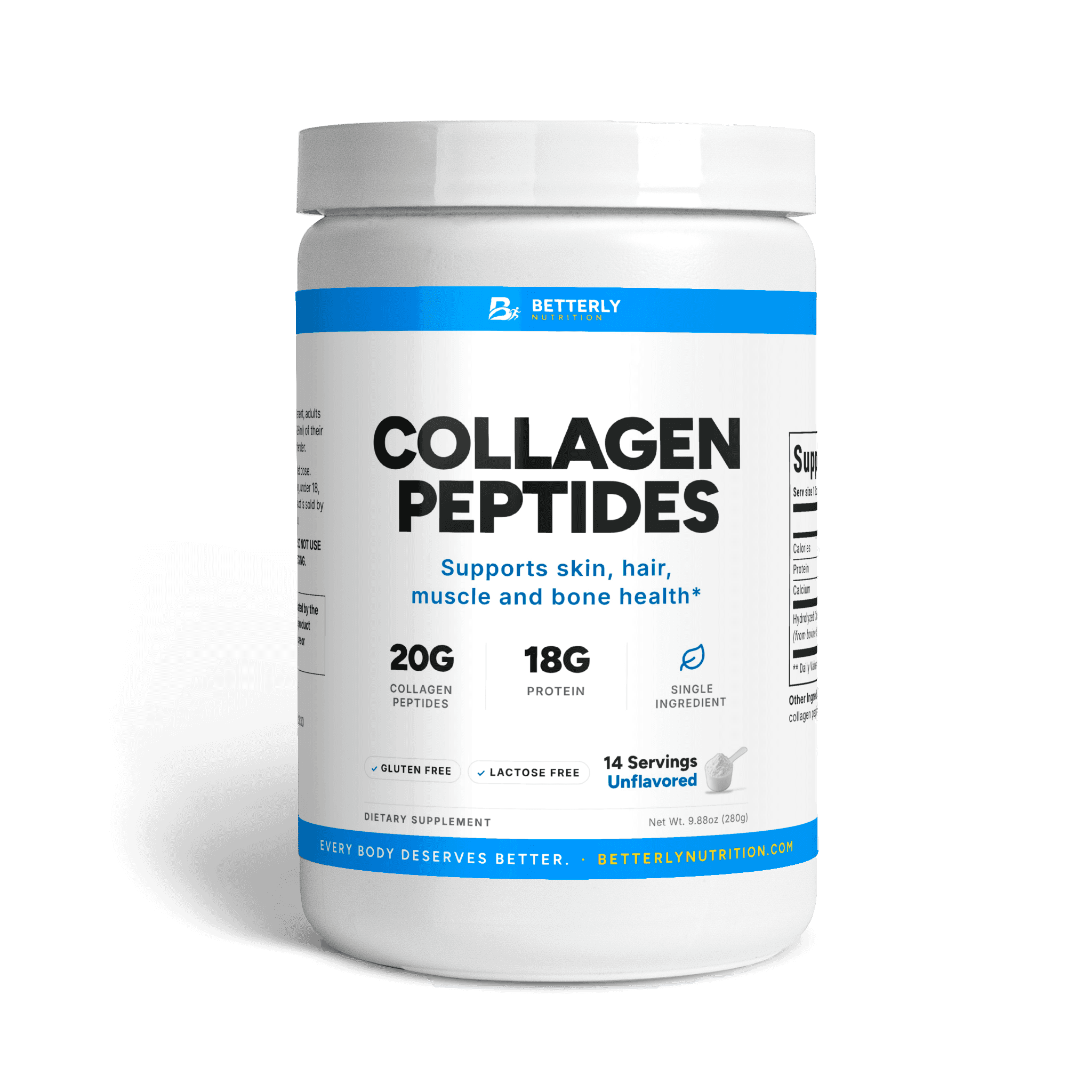
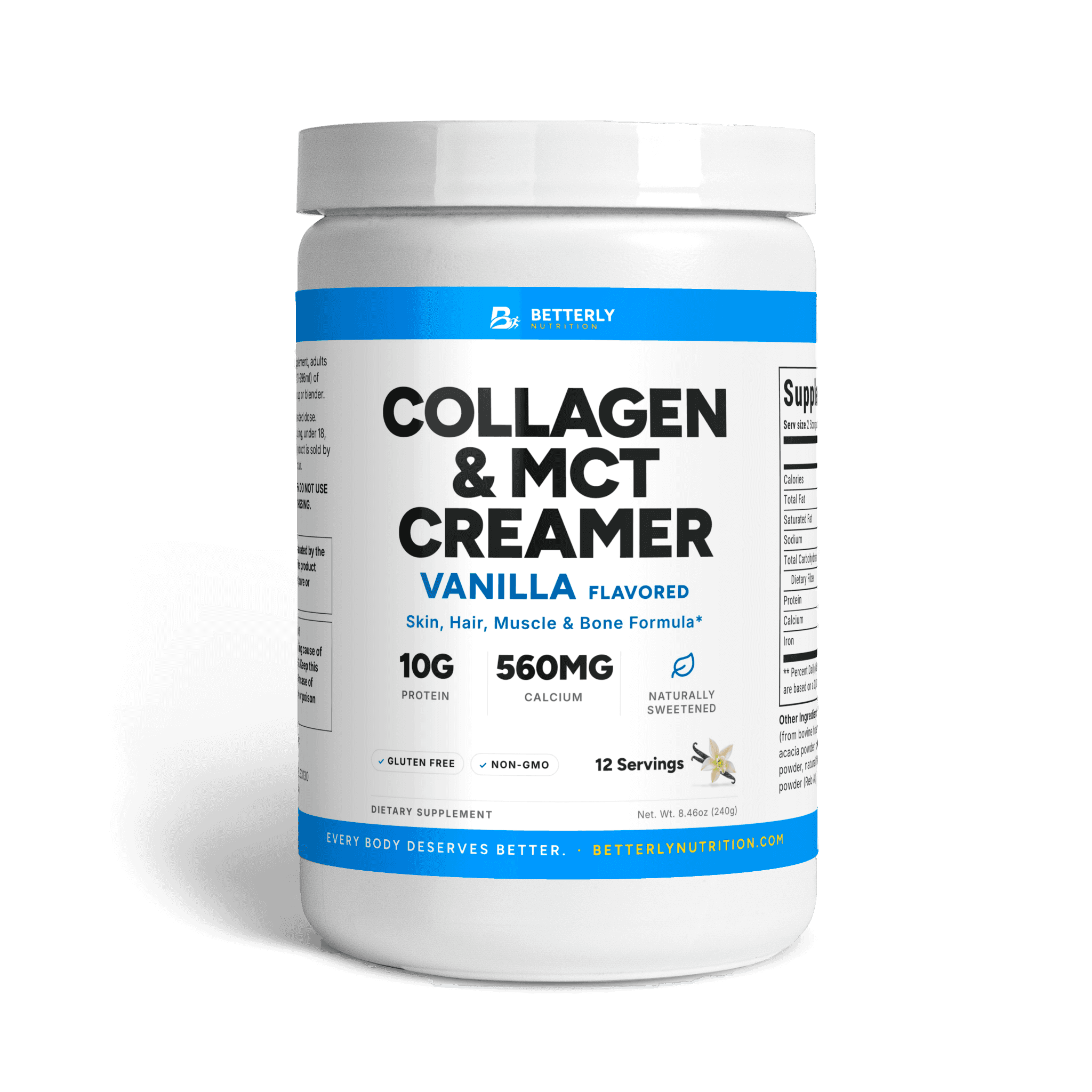
- Grams of collagen come from a powder: our unflavored tub lists 20 g per scoop, while our strip lists 100 mg.
- ODS says most people in the United States get enough vitamin C from food, so fruit and vegetables can cover that part.
- Many search results for this pairing are creams and serums, and this guide is only about what you swallow.
A word on where we stand: Betterly sells the strip, the powder and the gummy below. So we've stuck to our printed Supplement Facts panels and named federal pages, even where that makes the pairing sound plainer than other brands do.
Is it safe to take collagen and vitamin E together?
No federal page we read flags a problem with taking collagen and vitamin E together, and the vitamin E interaction warnings from ODS are about certain medicines.
Collagen is a protein, and our labels count it as one. The Collagen Peptides Powder (Unflavored) shows 18 g of protein on the same panel as its 20 g of hydrolyzed collagen peptides. Vitamin E is a fat-soluble vitamin, and MedlinePlus's vitamin E article says your body stores it in fatty tissue and the liver.
What the ODS consumer fact sheet on vitamin E does flag is medicine: blood thinners, one cholesterol-drug combination and certain medical treatments. Those warnings stand whether or not collagen is in the picture, and the provider section below covers each one.
Does vitamin E help collagen, or is that vitamin C's job?
Vitamin C is the nutrient that federal pages tie to collagen. MedlinePlus lists forming collagen among vitamin C's uses, and its vitamin E page doesn't mention collagen at all.
The MedlinePlus page on vitamin C says your body uses vitamin C to "form an important protein called collagen," which it describes as material for skin, tendons, ligaments and blood vessels. The ODS vitamin C fact sheet for consumers puts it more simply: your body needs vitamin C to make collagen.
Vitamin E's listed roles sit elsewhere. MedlinePlus calls it an antioxidant, meaning it protects body tissue from damage caused by free radicals. It also helps form red blood cells and helps your body use vitamin K.
Plenty of brand pages say vitamin E guards collagen fibers or wakes up the cells that make collagen. We didn't find either claim on any federal page we opened, so we won't repeat them as fact.
What's the difference between vitamin E and collagen?
Vitamin E is a fat-soluble vitamin with a recommended adult intake of 15 mg a day, while collagen is a protein with no daily amount set at all.
| Detail | Collagen | Vitamin E | Vitamin C |
|---|---|---|---|
| What it is | A protein | A fat-soluble vitamin | A water-soluble vitamin |
| Adult daily amount (ODS) | None set | 15 mg | 75 mg women, 90 mg men |
| Role in making collagen | It is collagen | None listed | Needed to make it |
| On our three panels | Strip, powder, gummy | Strip, gummy | Gummy only |
The role row is the takeaway: vitamin E's case rests on its own antioxidant work, not on making collagen.
MedlinePlus also says your body stores vitamin E, but it can't make vitamin C or store it. That's why vitamin C needs a regular supply from what you eat.
What benefits can you honestly expect from the pair?
Collagen and vitamin E benefits are separate ones: vitamin E works as an antioxidant, collagen adds protein, and no federal page we read credits the pair with anything extra.
Some brand pages call the combination "synergistic." We found no such idea on the ODS or MedlinePlus pages, so here's what we can measure instead.
ODS says the diets of most Americans provide less vitamin E than the recommended amount, though healthy people rarely show clear signs of falling short. One strip's 6 mg covers 40% of the 15 mg adult figure, a modest top-up. For scale, ODS notes that vitamin E-only supplements commonly hold 67 mg or more.
The strip's collagen is small next to a scoop. Our guide on whether collagen strips work runs that dose math in full. If collagen in grams is what you want, that's the powder's job.
Where does vitamin C fit in, and can you take all three?
For most people, collagen, vitamin C and vitamin E can share one routine, with fruit and vegetables covering the vitamin C. If you take cholesterol medicine, ask your provider first; the safety section below explains why.
ODS lists 75 mg a day for adult women and 90 mg for men, plus 35 mg more for people who smoke. Both sources list citrus fruits, kiwi, strawberries, red and green peppers and broccoli. MedlinePlus adds that cooking and long storage cut vitamin C, and that raw fruits and vegetables are the best sources. A sliced pepper at lunch or an orange after dinner is an easy way to add some.
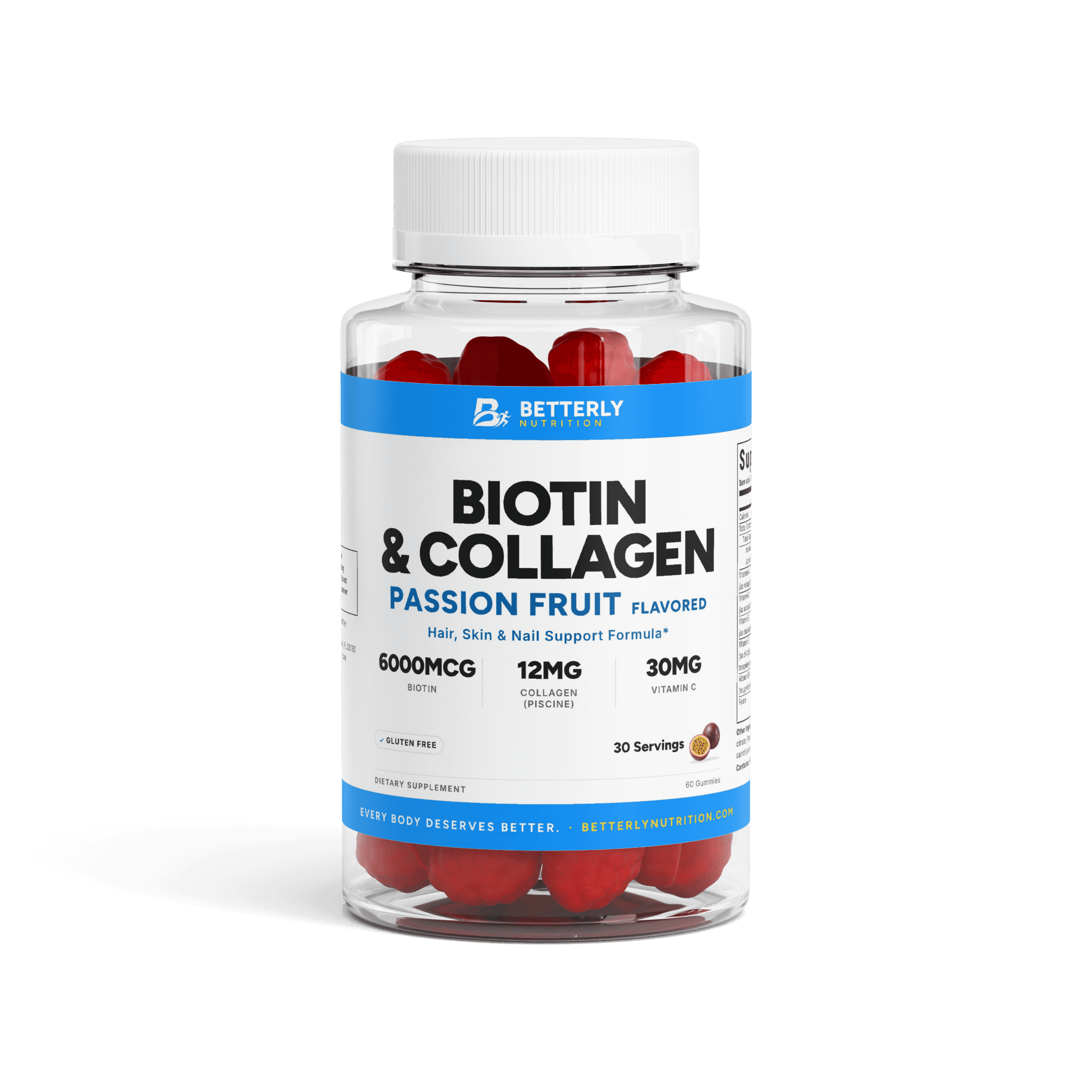
Among our three products, only the Biotin & Collagen Gummies list vitamin C: 30 mg (33% DV) per 2 Gummies serving. Our beginner's guide to collagen has its own short section on pairing collagen with vitamin C.
Don't overshoot with supplements, though. MedlinePlus says more than 2,000 mg of vitamin C a day isn't recommended and can bring on stomach upset.
Do collagen and vitamin E do anything for nails?
No federal page we opened links collagen or vitamin E to nail strength, so we can't promise that the pair will change your nails.
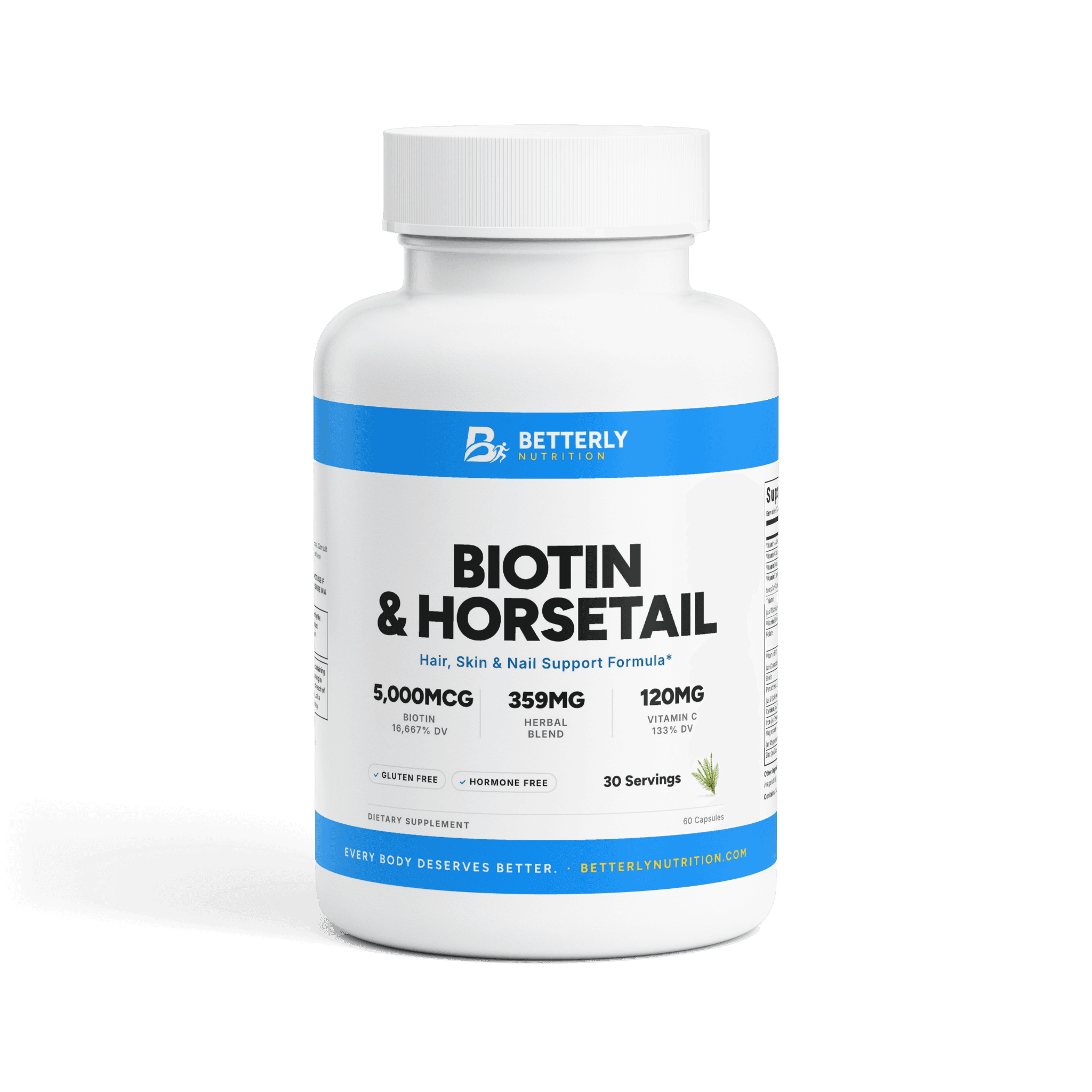
Biotin is the nutrient that usually comes up for nails, and our biotin for nails guide covers what the research on it does and doesn't show. Our gummies list 6000 mcg of biotin per 2 Gummies serving, and you'll find other options on our hair, skin and nails shelf.
Is a vitamin E and collagen cream the same thing?
No. A collagen and vitamin E cream or serum is a cosmetic you apply to your skin, while strips, powders and gummies are dietary supplements you swallow.
Much of what comes back when you search "collagen and vitamin E" is face cream and serum. Turn the package over to sort them: anything meant to be swallowed shows amounts per serving under a Supplement Facts heading. We don't make a cream, so we can't speak to what one does on skin.
How much of each is in our strip, powder and gummies?
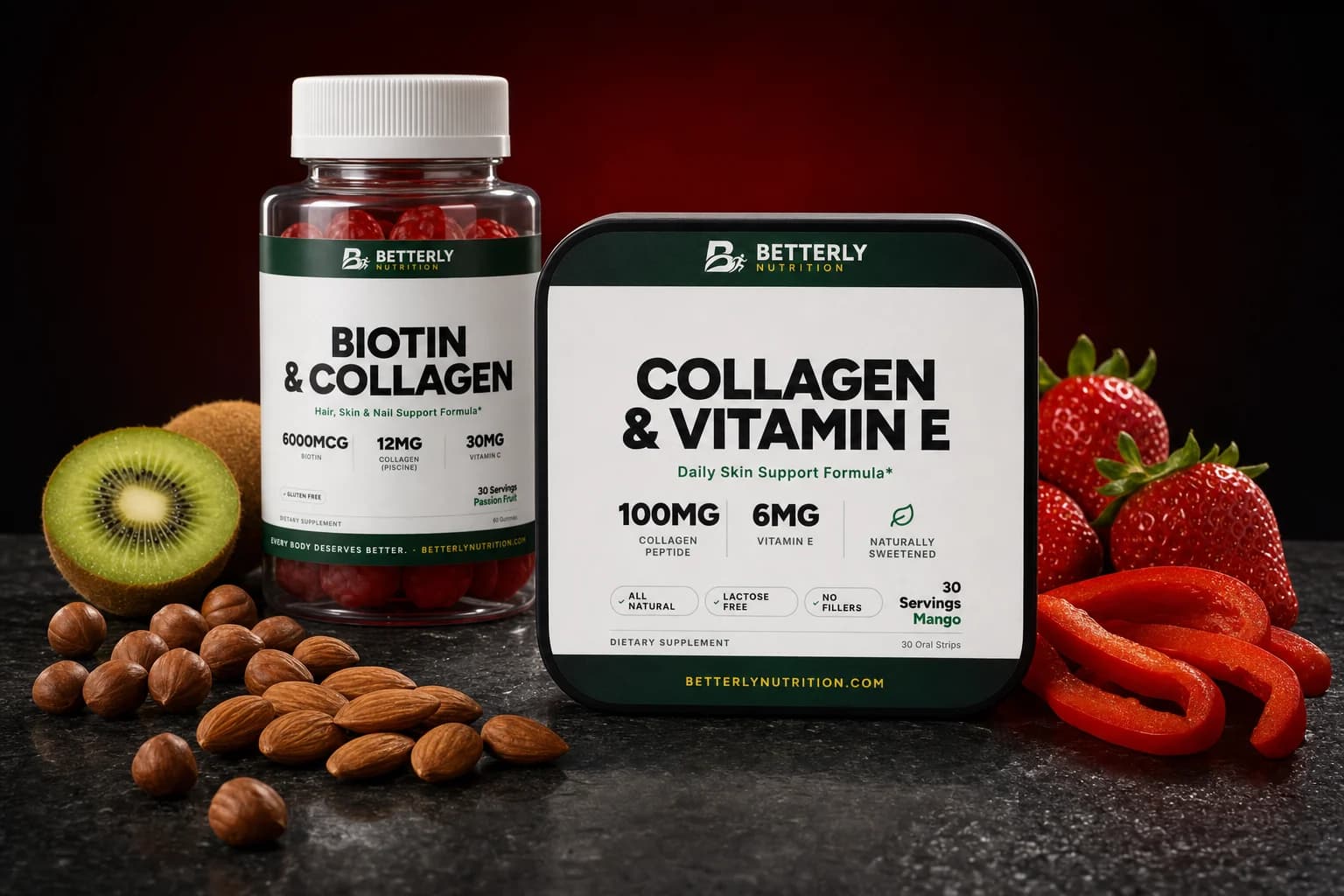
Our Collagen & Vitamin E Strips list 100 mg of collagen and 6 mg of vitamin E per strip, while the unflavored powder lists 20 g of collagen per scoop. The gummies list 12 mg of collagen, 18 mg of vitamin E (three times the strip's) and 30 mg of vitamin C per 2 Gummies serving.
| Product and serving | Collagen | Vitamin E | Vitamin C |
|---|---|---|---|
| Strips, 1 Oral Strip (265 mg) | 100 mg | 6 mg (40% DV) | Not listed |
| Unflavored powder, 1 Scoop (20g) | 20 g, bovine hide | Not listed | Not listed |
| Gummies, 2 Gummies | 12 mg, piscine | 18 mg (120% DV) | 30 mg (33% DV) |
The powder carries the collagen, the strip and gummy carry vitamin E, and only the gummy has vitamin C. So this routine usually means a powder, a vitamin E source and some fruit.
The gummies also list 4 g of added sugars per serving.
Both vitamin E sources are synthetic forms: DL-alpha-Tocopherol in the strip and dl-alpha tocopheryl acetate in the gummy. ODS explains that "dl-" marks lab-made vitamin E and that the natural form is more potent. Our guide to natural vs synthetic vitamin E goes deeper.
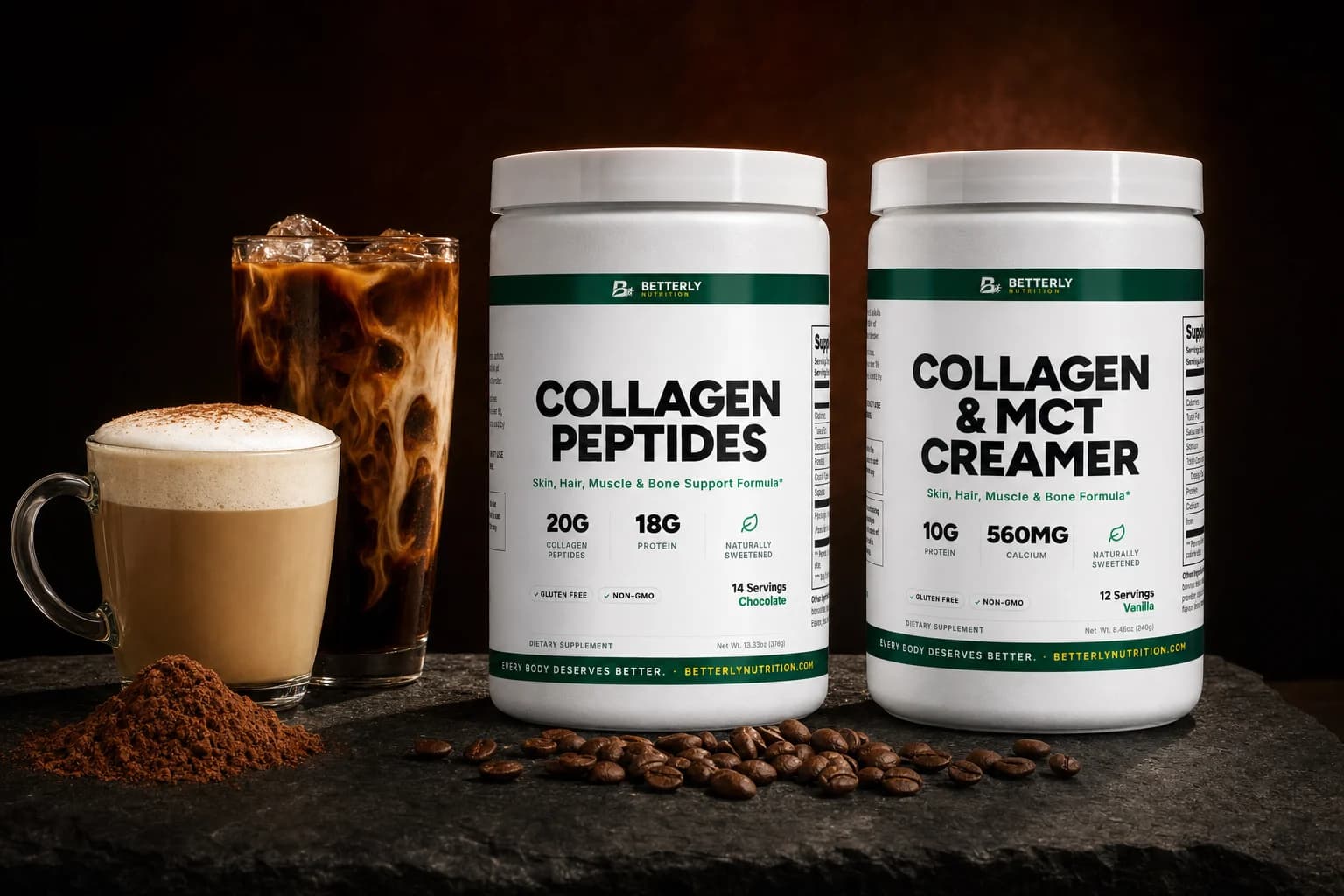
From our shop: Collagen Peptides Powder (Unflavored) — a single-ingredient tub of bovine hide collagen peptides, 20 g per 1 Scoop (20g) serving, with no vitamin E to overlap with a strip.
How do you take the strip and powder, per the labels?
Take each product by its own label: one Collagen & Vitamin E strip on your tongue daily and one scoop of powder in 8-10 oz of a drink.
- Strip: the label's suggested use is "Place 1 oral strip on the tongue daily and allow it to dissolve." It names no hour and no meal.
- Powder: the label says adults mix one scoop with 8-10 oz (237-296ml) of their favorite beverage in a shaker cup or blender.
- Vitamin C: add a raw fruit or vegetable to a meal, or mix the scoop into orange juice.
- Gummies, if you use them: the label says "2 gummies daily or as directed by a healthcare professional."
Vitamin E is fat-soluble, and ODS says it needs some fat to be absorbed. Nothing on the strip's label ties it to a meal, so use breakfast or lunch as a reminder if that helps, not as a requirement.
All three products together add up to about 20.1 g of collagen (20 g plus 100 mg plus 12 mg), 24 mg of vitamin E and 30 mg of vitamin C a day. Every panel here carries the same line: "Do not exceed recommended dose." One strip, one scoop and one 2-gummy serving is the ceiling.
From our shop: Collagen & Vitamin E Strips — 100 mg of collagen peptide and 6 mg of vitamin E (40% DV) in each 1 Oral Strip (265 mg) serving, for anyone who'd rather not mix or chew.
When can you skip this pairing?
You can skip the collagen and vitamin E pairing if your meals already bring vitamin E, if you only want grams of collagen, or if another product lists vitamin E.
- You eat vitamin E foods most days. MedlinePlus names wheat germ, sunflower and safflower oils, almonds, peanuts, hazelnuts, sunflower seeds, spinach and broccoli.
- Collagen in grams is your only goal. The powder covers that, and a strip adds just 100 mg.
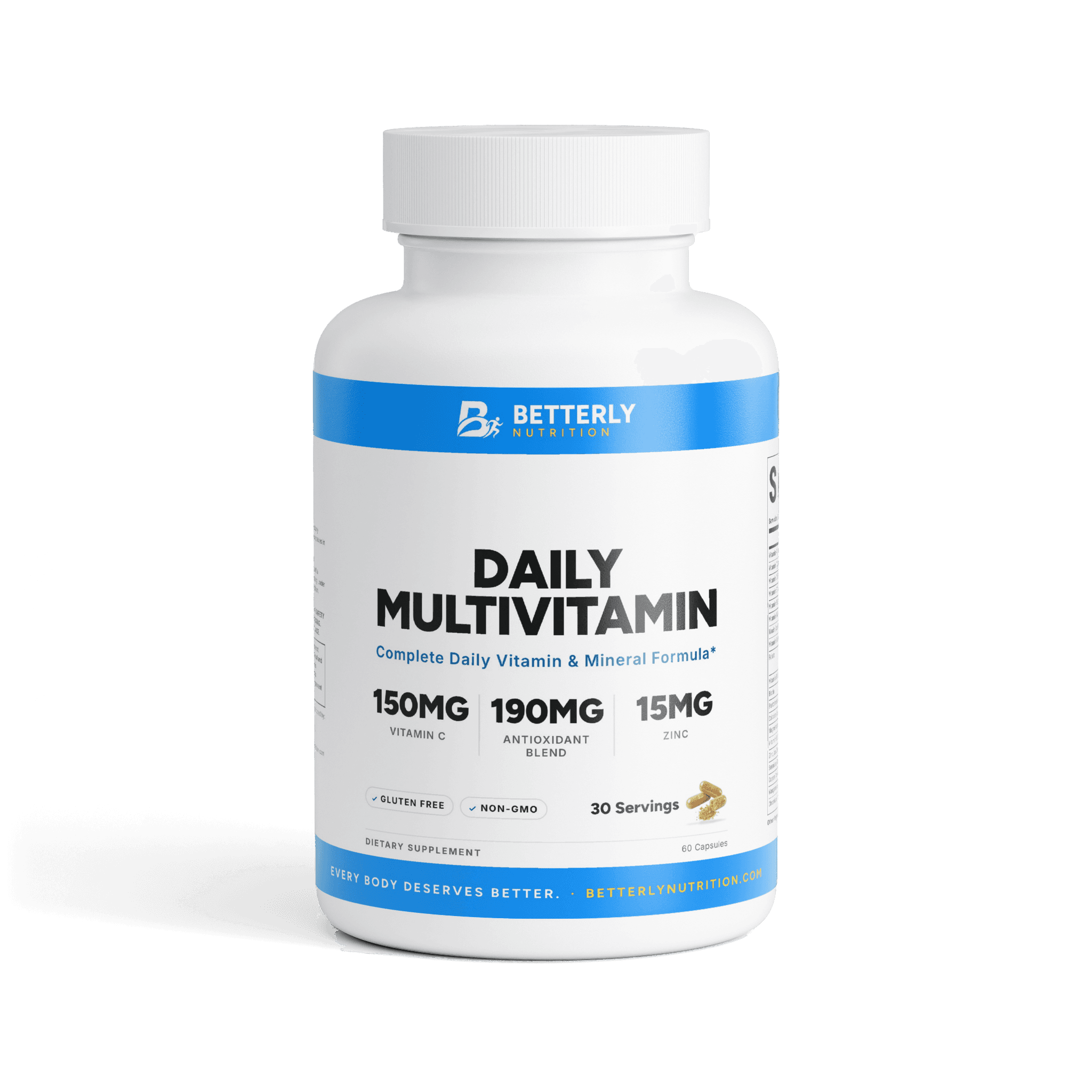
- Your multivitamin already lists vitamin E. ODS puts a typical once-daily multivitamin at about 13.5 mg.
- You want a guaranteed skin or nail change. Neither our labels nor the federal pages tie this pair to a visible outcome.
Who should check with a healthcare provider first?
Ask a healthcare provider before adding collagen and vitamin E if you're pregnant, nursing or under 18, take prescription medicine, have surgery scheduled or manage a medical condition.
All three labels print the same caution: "Do not exceed recommended dose. Consult a physician if pregnant, nursing, under 18, or have a medical condition." Bring these up as well:
- Anticoagulant or antiplatelet medicines, such as warfarin. According to ODS, vitamin E can add to bleeding risk in people who take them.
- Upcoming surgery. Tell your surgical team about every supplement, since ODS links high vitamin E doses to bleeding risk.
- Cholesterol medicines. In one study ODS describes, vitamin E taken with other antioxidants, vitamin C among them, weakened the effect of a statin combined with niacin.
- Chemotherapy or radiation therapy. ODS advises talking with your doctor before taking antioxidant supplements during these treatments.
- Food rules. The gummies list fish (tilapia) and tree nuts (coconut), and the powder's collagen is from bovine hide. The strip prints only "Collagen Peptide" with no source named, so don't read that silence as animal-free. Ask us before counting on it for a dietary rule.
- Lab tests. According to the ODS biotin fact sheet, biotin above recommended amounts may cause false results on some lab tests. So list the gummies, with their 6000 mcg per serving, on any intake form before lab work.
FAQ: collagen and vitamin E
Can you take collagen and vitamin E at the same time?
Yes, collagen and vitamin E can go in at the same moment. Let the strip melt on your tongue, then drink your scoop of powder, or split them between breakfast and dinner. The strip's directions say "daily," the powder's give a drink size, and neither mentions an hour or a wait between products. What they do set is the amount: one strip a day and one scoop per drink.
Does vitamin E have collagen in it?
No, vitamin E doesn't contain collagen. Vitamin E is a fat-soluble vitamin and collagen is a protein, so a product supplies both only when both appear on its Supplement Facts panel. Our Collagen & Vitamin E Strips list 6 mg of vitamin E and 100 mg of collagen per strip, and our unflavored powder lists no vitamins at all.
Does taking the strip and gummies together stay under the vitamin E limit?
Yes, our strip and gummies together stay well under the vitamin E limit. One strip (6 mg) plus one 2-gummy serving (18 mg) comes to 24 mg a day. ODS sets the adult upper limit for vitamin E supplements at 1,000 mg a day. A multivitamin or a separate vitamin E capsule adds to the total, so read those panels too. Our guide to dl- versus d-alpha vitamin E explains how the limit works.
How long can you take collagen and vitamin E?
Our strip, powder and gummy labels put no time limit on collagen and vitamin E; their directions cover one day's amount and say nothing about weeks or months. The federal pages we cite set their vitamin E limit per day, not by duration. Still, ODS notes research suggesting years of vitamin E supplements might cause harm even below that limit, at 180 mg a day in one study, far above the 24 mg in our strip and gummies. If collagen and vitamin E become a long-term habit, bring the labels to your next checkup so your provider sees your full daily total.
Can you mix collagen powder into orange juice for vitamin C?
Yes. Our Collagen Peptides Powder (Unflavored) label says to mix one scoop with 8-10 oz of your favorite beverage, and orange juice counts. MedlinePlus lists citrus juices among vitamin C sources and suggests juice sold in a carton over a clear bottle, because light can reduce vitamin C. We found no federal guidance that the two must be taken together.
Sources
- Vitamin E: Fact Sheet for Consumers, NIH Office of Dietary Supplements
- Vitamin C: Fact Sheet for Consumers, NIH Office of Dietary Supplements
- Vitamin C, MedlinePlus Medical Encyclopedia
- Vitamin E, MedlinePlus Medical Encyclopedia
- Biotin: Fact Sheet for Consumers, NIH Office of Dietary Supplements
If this left you looking for somewhere to start, read daily collagen and vitamin E oral strips — its amounts per serving are listed on the page. For the practical questions this raises, how dosing, sourcing and subscriptions work is answered in one place.