On this page
- Key takeaways
- Whey protein blend or isolate: which should you pick?
- What is a whey protein blend, and what does "blend" mean on a label?
- Whey protein blend vs isolate: which gives you more protein?
- Is whey isolate worth the higher price over a blend?
- Does a whey protein blend have more lactose than isolate?
- How do texture and mixing differ between a blend and isolate?
- How much whey blend or isolate should you take, and when?
- When don't you need a whey blend or an isolate?
- Who should check with a healthcare provider first?
- FAQ: whey protein blend vs isolate
- Sources
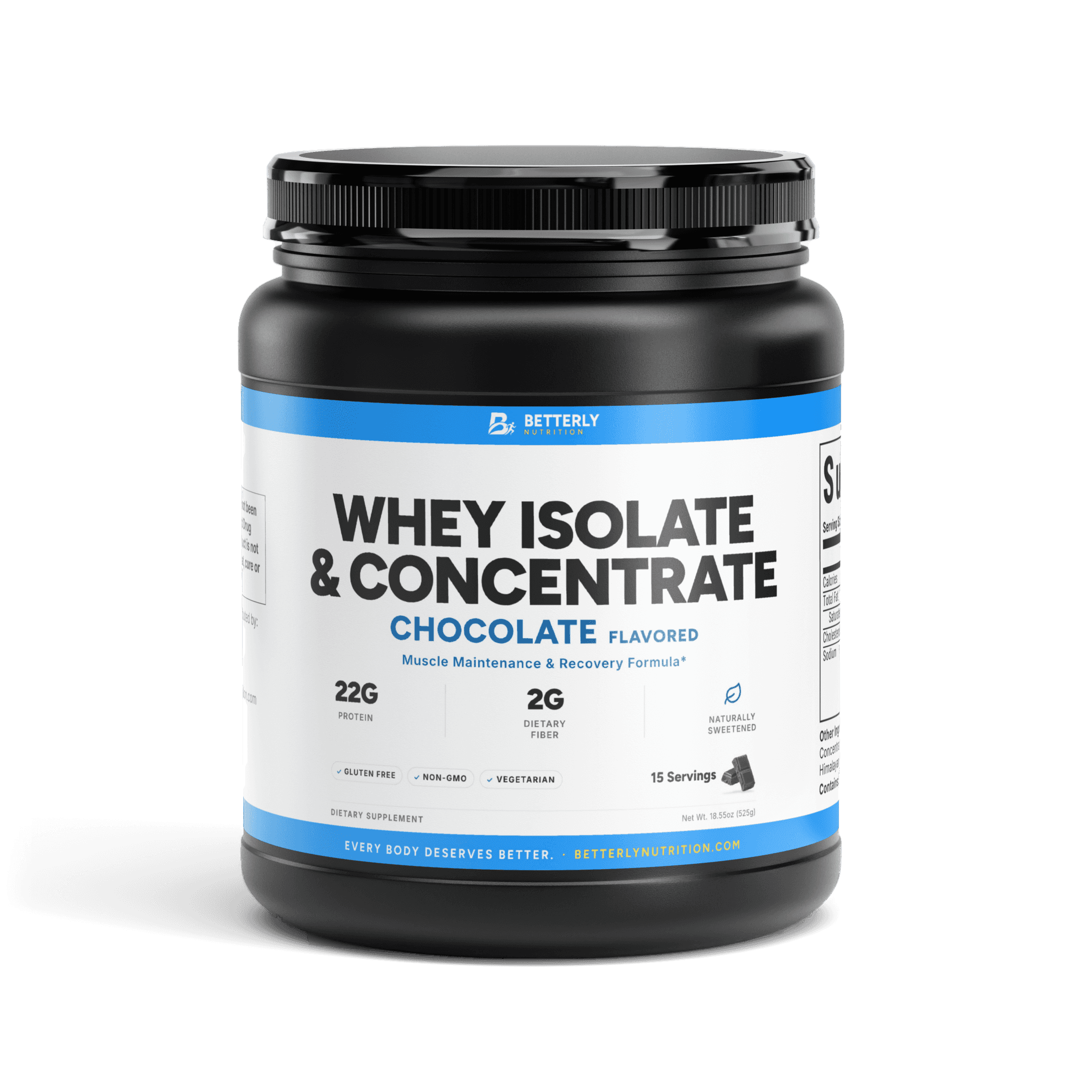
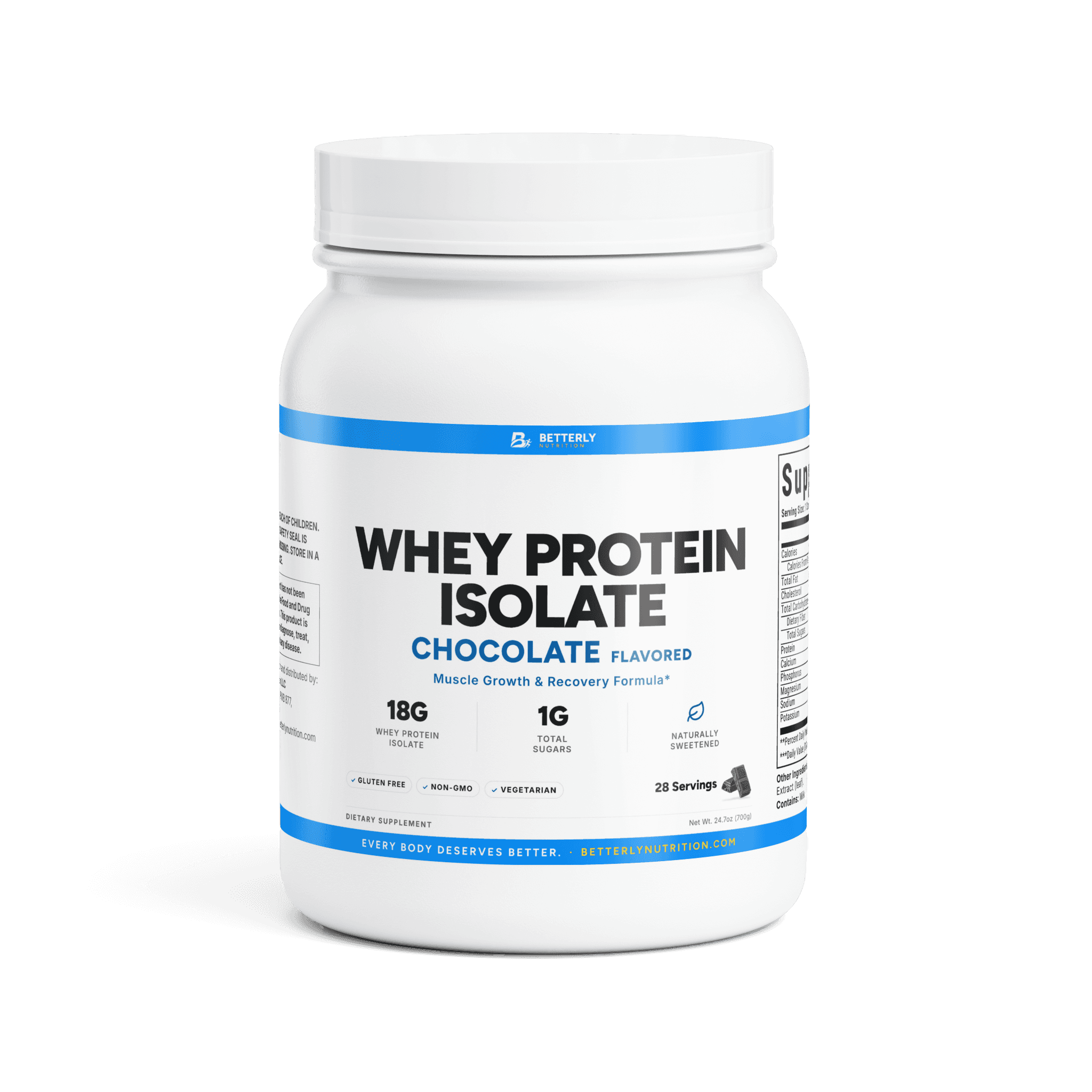
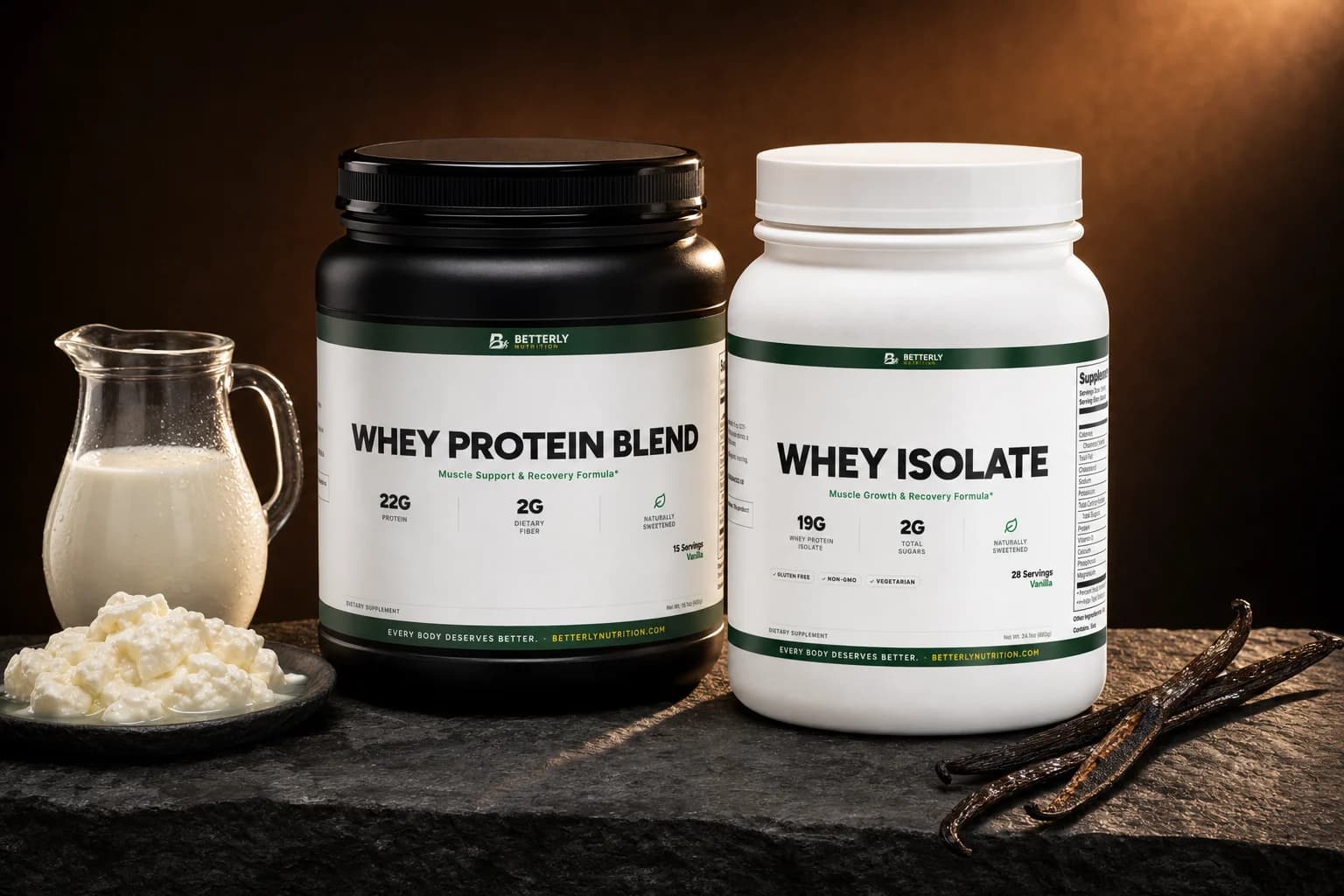
The short answer: Whey protein blend vs isolate comes down to what rides along with the protein. A blend mixes whey isolate with whey concentrate, usually without printing the split, while isolate is the more filtered form alone. Our Whey Isolate & Concentrate Blend Powder (Vanilla) lists 22 g of protein per 2 scoops (approximately 32 g) serving. Our Whey Protein Isolate Powder (Vanilla) lists 19 g per 1 Scoop (24.4g) serving, with fewer calories and more protein per gram of powder.
Key takeaways
- A whey protein blend is whey isolate and whey concentrate sharing one tub, and our blend's label names both forms without printing the split.
- Our vanilla blend lists 22 g of protein per 2 scoops (approximately 32 g) serving, and our vanilla isolate 19 g per 1 Scoop (24.4g) serving. The blend's bigger serving explains the gap: per gram of powder and per calorie, the isolate carries more protein.
- A full tub of our vanilla isolate holds about 532 g of protein, next to about 330 g in the vanilla blend, so compare price per gram of protein rather than price per tub.
- Neither is milk free: both labels read "Contains: Milk," and each lists 2 g of Total Sugars in its printed serving.
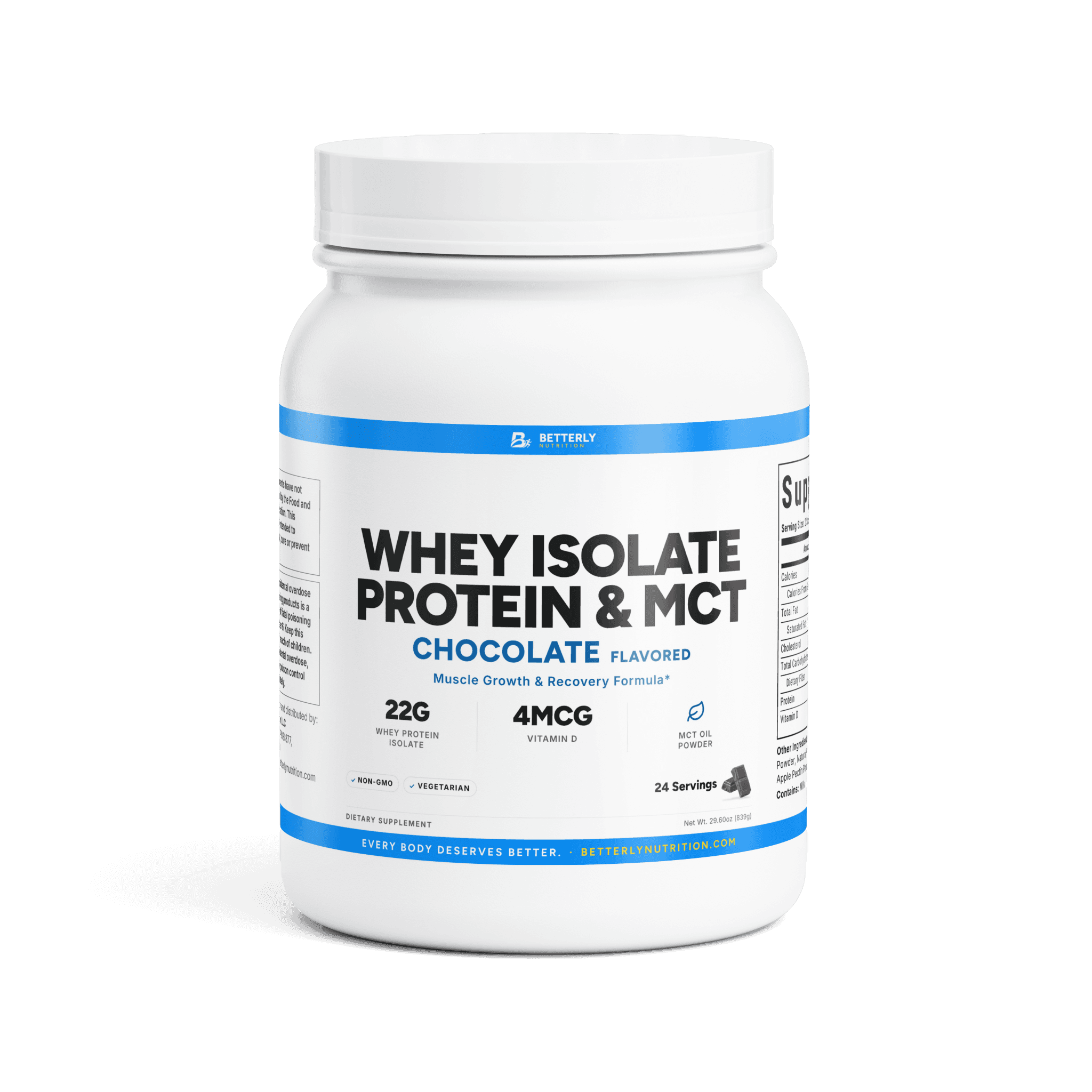
We sell both of these, plus a third whey that adds MCT oil powder, so we aren't a neutral referee. Whichever of our three you pick, we make the sale, so judge us by our own panels, copied line for line, and by plain notes on where each one falls short.
Whey protein blend or isolate: which should you pick?
Pick our whey isolate if calories or a short ingredient list matter most; pick our whey blend for added gums and a dietary fiber line.
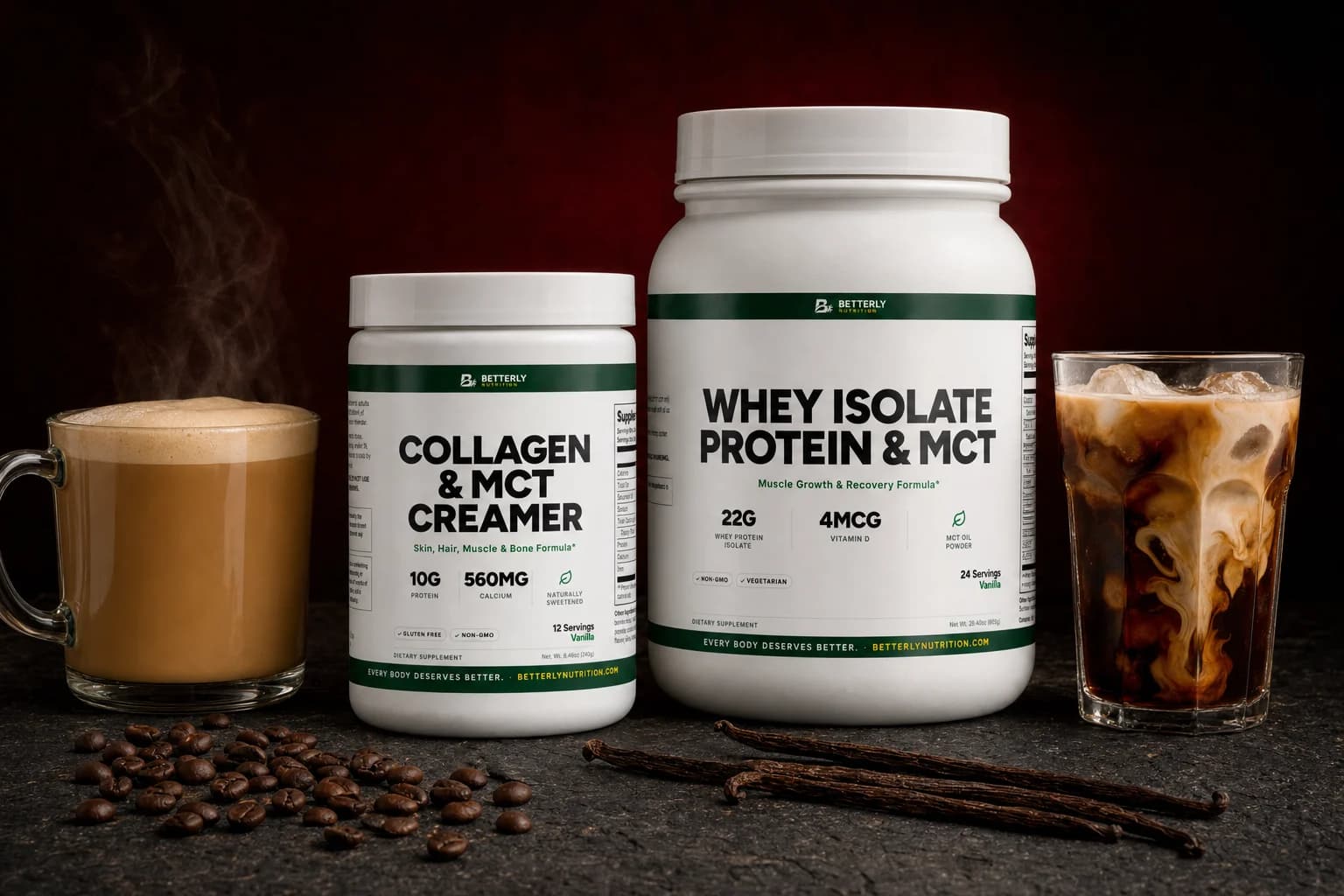
Here's how the three vanilla wheys we sell line up: the Whey Isolate & Concentrate Blend Powder (Vanilla), the Whey Protein Isolate Powder (Vanilla) and the Whey Protein Isolate & MCT Powder (Vanilla).
| If this matters most | Pick | What the label shows |
|---|---|---|
| Fewest calories per gram of protein | Whey Protein Isolate Powder | About 4.7, lowest of the three |
| Most protein per gram of powder | Whey Protein Isolate Powder | About 78%, against about 69% for the blend |
| Shortest ingredient list | Whey Protein Isolate Powder | Three ingredients |
| A gluten-free claim on the pack | Blend or Whey Protein Isolate Powder | Both print it; the Isolate & MCT doesn't |
| 22 g of protein in one serving | Blend or Isolate & MCT | Both list 22 g, from the two heaviest servings |
| Added gums and a fiber line | Whey Isolate & Concentrate Blend Powder | Guar gum, xanthan gum, 2 g dietary fiber |
| Most protein per tub | Either isolate | About 530 g against 330 g |
| Knowing the exact whey form | Either isolate | The blend doesn't print its split |
Most rows point to the isolate, and we'd rather say so up front. The blend's case rests on its gums and fiber line, plus a lower tub price when we checked. All three sit in the Betterly protein collection.
What is a whey protein blend, and what does "blend" mean on a label?
A whey protein blend is a powder that combines two forms of whey, usually isolate and concentrate, so every scoop carries some of each.
Milk carries two main groups of protein, casein and whey, and concentrate and isolate are two grades of the whey group. Concentrate goes through less filtering and holds on to more of milk's natural fat and sugar. Isolate is filtered further, so a bigger share of it is protein.
On our vanilla tub, the ingredient list opens with "Whey Protein Blend (Whey Protein Isolate and Whey Protein Concentrate)." The parentheses name the two forms and give no ratio. We don't have one to share, so we won't estimate it.
The word "blend" can mean other things on other tubs, too:
- Whey plus other proteins. Some "protein blend" powders mix whey with casein, egg or plant protein, often pitched as fast and slow protein. Ours lists no casein, so that pitch doesn't apply.
- A proprietary blend. This format prints one total weight for a group of ingredients. Ours isn't labeled that way.
So read "whey protein blend" as "some isolate, some concentrate, split unknown," and go to the panel for real numbers.
Whey protein blend vs isolate: which gives you more protein?
Our whey blend lists 22 g of protein per 2 scoops (approximately 32 g) serving, against 19 g per 1 Scoop (24.4g) serving for our more protein-dense whey isolate.
Here are all three vanilla panels, each per its own printed serving.
| Panel line | Whey blend | Whey isolate | Isolate & MCT |
|---|---|---|---|
| Serving size | 2 scoops (approximately 32 g) | 1 Scoop (24.4g) | 2 Scoops (34g) |
| Protein | 22 g | 19 g | 22 g |
| Calories | 130 | 90 | 120 |
| Total fat | 2 g | 0.5 g | 1 g |
| Total carbohydrates | 6 g | 2 g | 5 g |
| Dietary fiber | 2 g | No line | No line |
| Total sugars | 2 g | 2 g | 2 g |
| Cholesterol | 150 mg (50% DV) | 2.5 mg | 13 mg |
| Servings per tub | 15 | 28 | 24 |
The blend's lead on protein comes from a heavier serving: its two scoops weigh about 7.6 g more than the isolate's one. Set each protein line against its serving weight and the plain isolate comes out about 78% protein, the blend about 69% and the MCT isolate about 65%.
Almost every other line in the plain isolate's column is the smallest of the three. The blend carries the most calories, carbohydrates and fat. Its cholesterol line stands out most: 150 mg in its serving, half the Daily Value, against 2.5 mg in the plain isolate's.
Calories per gram of protein make a fair yardstick too. Divide the calorie line by the protein line and you get about 5.9 for the blend, 5.5 for the MCT isolate and 4.7 for the plain isolate. The lower the number, the more of each serving's calories come from protein.
Does a 3 g gap matter? The NIH Office of Dietary Supplements fact sheet on exercise and athletic performance puts athletes at about 75 to 135 g of protein a day at 150 pounds, so 3 g is small. The same sheet passes along a sports-science figure of about 20 g of high-quality protein every 3 to 5 hours for a 150-pound athlete, and both servings land close to it.
Is whey isolate worth the higher price over a blend?
Whey isolate can cost more per tub yet less per gram of protein, so divide each tub's price by the protein it holds before deciding.
Multiply servings per tub by protein per serving:
- Whey Isolate & Concentrate Blend Powder (Vanilla): 15 servings × 22 g = 330 g
- Whey Protein Isolate Powder (Vanilla): 28 servings × 19 g = 532 g
- Whey Protein Isolate & MCT Powder (Vanilla): 24 servings × 22 g = 528 g
On the day we wrote this, the blend had the lowest tub price of the three, yet both isolates came out slightly cheaper per gram of protein, since each holds about 200 g more. Prices change, so redo the math with the price on the product card below.
The FDA's guide on how to understand and use the Nutrition Facts label tells shoppers to watch the serving size, "especially how many servings there are in the food package." Fifteen servings against 28 is a bigger gap than either price tag shows. If the blend's lower upfront cost suits your budget, that's still a fair reason to pick it.
Does a whey protein blend have more lactose than isolate?
Our whey blend and whey isolate each print 2 g of Total Sugars in their own servings, with no separate lactose line, so the labels can't settle it.
As ingredients, concentrate generally keeps more milk sugar (lactose) than isolate does. How much ends up in a finished blend depends on how much concentrate went in, and our label doesn't say.
The FDA's label guide counts the sugar in milk inside Total Sugars. So whatever lactose each serving holds sits within that 2 g, even though the blend's serving is the heavier one.
Neither label claims to be lactose free. Our coming guide to digestive enzymes with protein shakes goes deeper on lactose.
How do texture and mixing differ between a blend and isolate?
Our whey blend lists guar gum and xanthan gum, two common thickeners, while our plain whey isolate lists no thickener, only whey protein isolate, natural flavors and stevia.
The gums are there for body. Solnul® (Resistant Potato Starch) sits second on the blend's list, right after the whey. The panel's fiber reading is one lump figure, 2 g of dietary fiber per 2 scoops (approximately 32 g) serving, with no grams given to the starch or to either gum.
The directions differ too: cold water for the blend, while the isolate's label allows water or your favorite beverage, so milk or iced coffee fits. Our guide to stirring protein powder into coffee without clumps covers hot mugs, and our upcoming guide to gums in protein powder goes further on guar and xanthan.
From our shop: Whey Isolate & Concentrate Blend Powder (Vanilla) — whey isolate and whey concentrate in one tub, with 22 g of protein per 2 scoops (approximately 32 g) serving and a 2 g dietary fiber line.
How much whey blend or isolate should you take, and when?
Take one serving as each label directs: 2 scoops of our whey blend in cold water, or 1 scoop of our whey isolate in water or another drink.
- Whey Isolate & Concentrate Blend Powder: "Add one serving (2 scoops) to 8–12 oz (240–355 ml) of cold water and blend or shake thoroughly." It gives no time of day and no number of servings per day.
- Whey Protein Isolate Powder: adults mix one scoop with 6-8 oz (177-237 ml) of water or your favorite beverage daily. Its timing note points to 20-30 minutes ahead of a meal, alongside 8 oz (237 ml) of water, or whatever your healthcare professional directs.
- Whey Protein Isolate & MCT Powder: the same directions as the plain isolate, with two scoops in place of one.
All three labels say "Do not exceed recommended dose," so stick to one serving as printed. ODS adds that high protein intakes seem quite safe, but there's no benefit past recommended amounts. If your shake follows a workout, our simple post-workout routine shows where protein sits beside fluids and electrolytes.
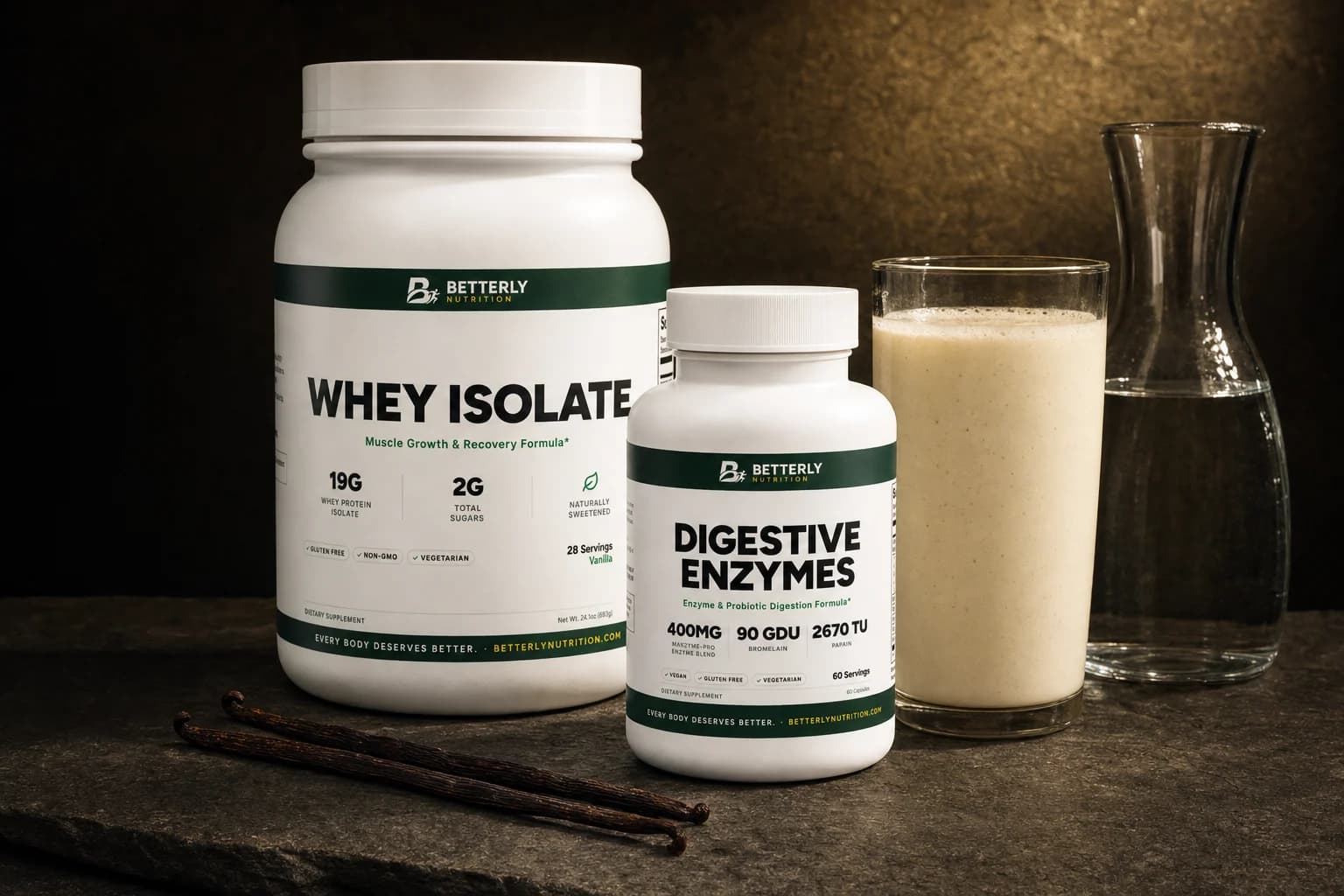
From our shop: Whey Protein Isolate Powder (Vanilla) — three listed ingredients, 90 calories and 19 g of protein per 1 Scoop (24.4g) serving, with gluten free, non-GMO and vegetarian printed on the label.
When don't you need a whey blend or an isolate?
Neither whey powder is necessary when your meals already supply enough protein, and both are out if you avoid milk.
ODS says athletes can probably meet their protein needs from food, and it frames powders as a backup when that falls short. If meals get you there, a shake is convenience, not a requirement.
Milk is the harder line. Every one of our whey labels declares it, and the FDA's page on food allergies names milk among the nine major food allergens labels must call out. Filtering whey into isolate doesn't change that.
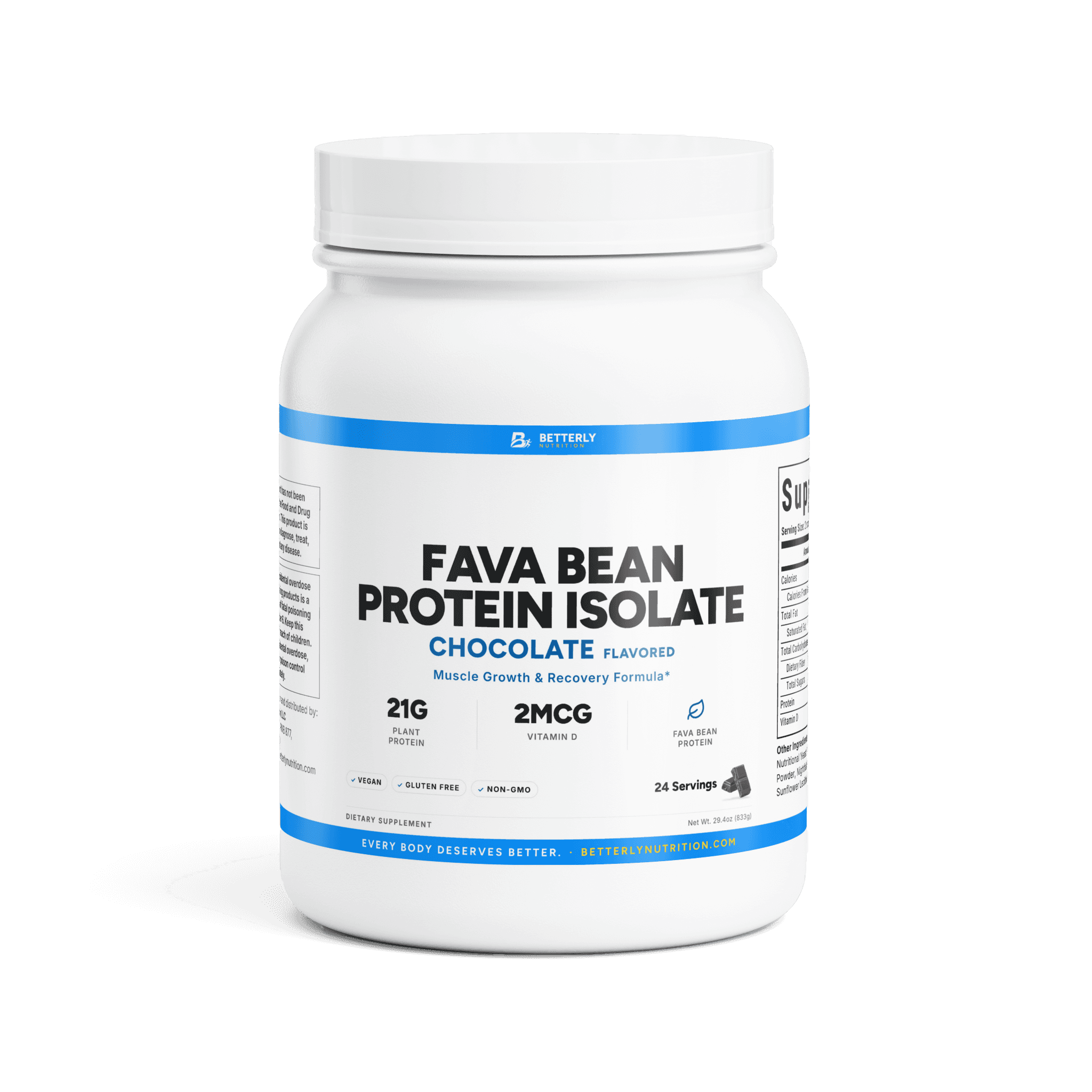
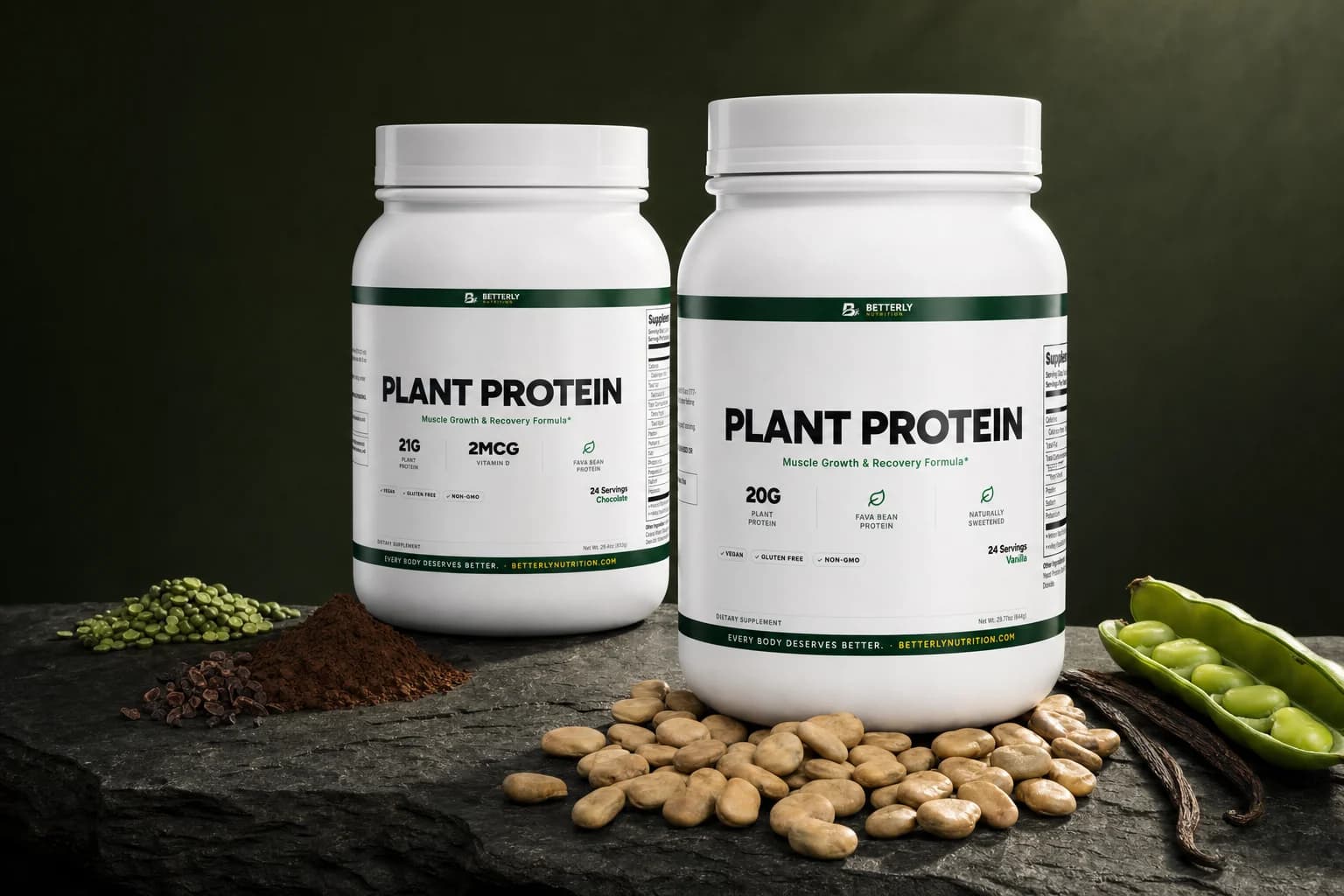
If you avoid milk, look at a plant powder instead. Our Fava Bean Protein Isolate Powder (Vanilla) carries a vegan claim and prints 20 g of protein per 2 Scoops (35g) serving. Its main protein is fava bean, which our comparison of fava bean and pea protein unpacks.
Who should check with a healthcare provider first?
Check with a healthcare provider before your first whey shake if you're expecting or breastfeeding, younger than 18, taking any prescription, or have a medical condition.
All three whey tubs carry the same caution, which names pregnancy, nursing, under 18 and medical conditions. Raise prescription medication or upcoming surgery too, since your provider should know every supplement you take.
Bring the panel if you've been given limits on protein, sodium or dietary cholesterol. The blend lists 150 mg of cholesterol and 150 mg of sodium per 2 scoops (approximately 32 g) serving; the plain isolate lists 2.5 mg and 55 mg per 1 Scoop (24.4g) serving.
FAQ: whey protein blend vs isolate
Is a whey protein blend better than whey concentrate?
A whey protein blend isn't automatically better than whey concentrate. It contains concentrate plus some isolate, in a share most labels don't state. Whether that makes a particular blend leaner than a straight concentrate depends on the split, and our blend doesn't print one. Compare the protein, calorie and Total Sugars lines per serving on both tubs. We don't sell a straight concentrate.
What are the benefits of a whey protein blend?
A whey protein blend offers the same basic benefit as other whey: convenient, complete protein. According to the NIH Office of Dietary Supplements, whey supplies every essential amino acid, and protein helps build, maintain and repair muscle. Beyond that, our blend lists 22 g of protein and 2 g of dietary fiber per 2 scoops (approximately 32 g) serving, and its guar and xanthan gums are there for body.
Is whey protein blend gluten free?
Our Whey Isolate & Concentrate Blend Powder prints a gluten-free claim on its label, and so does our Whey Protein Isolate Powder. The blend's ingredient list names whey, resistant potato starch, natural flavors, salt, two gums and stevia. Our Whey Protein Isolate & MCT Powder makes no gluten-free claim, so if you need to avoid gluten, choose a tub that states it.
Does whey isolate build more muscle than a blend?
No source we cite says it does: the NIH Office of Dietary Supplements doesn't compare whey isolate with whey blends. It says protein helps build, maintain and repair muscle, gives a daily range by body weight, and passes along about 20 g every 3 to 5 hours for a 150-pound athlete. Our blend lists 22 g per 2 scoops (approximately 32 g) serving and our isolate 19 g per 1 Scoop (24.4g) serving, both near that mark. Choose on calories, ingredients and label details instead.
Can you take whey blend and whey isolate on the same day?
You can own both, but treat them as swaps rather than a stack: take one serving, as printed, from whichever tub you reach for that day. Our isolate's directions call for one scoop daily, and all three of our whey labels say "Do not exceed recommended dose." A blend day gives 22 g of protein per 2 scoops (approximately 32 g) serving, and an isolate day gives 19 g per 1 Scoop (24.4g) serving.
Sources
- Dietary Supplements for Exercise and Athletic Performance: Fact Sheet for Consumers, NIH Office of Dietary Supplements
- How to Understand and Use the Nutrition Facts Label, U.S. Food and Drug Administration
- Food Allergies: What You Need to Know, U.S. Food and Drug Administration
If this left you looking for somewhere to start, read vanilla whey protein blend with 22 g protein per serving — its amounts per serving are listed on the page. For the practical questions this raises, how dosing, sourcing and subscriptions work is answered in one place.