On this page
- Key takeaways
- Is fava bean protein the same as pea protein?
- Fava bean protein vs pea protein: what do the amino acids show?
- Is fava bean protein a complete protein?
- What does "fava bean protein isolate" tell you on a label?
- Do fava and pea protein taste or mix differently?
- How do you find a vegan protein powder without pea protein?
- How do you take Betterly's Fava Bean Protein Isolate Powder?
- When don't you need a fava or pea protein powder?
- Who should check with a doctor before using fava bean protein?
- FAQ: fava bean and pea protein
- Sources
The short answer: Fava bean protein vs pea protein is closer than the marketing on either side suggests. Both come from legume seeds, and USDA data puts their branched-chain amino acids at about 160 mg per gram of protein each. Pea carries more lysine, fava a bit more tryptophan, and their methionine is nearly identical. The real differences sit elsewhere on the label, plus one safety point: some people are told to avoid fava beans entirely.
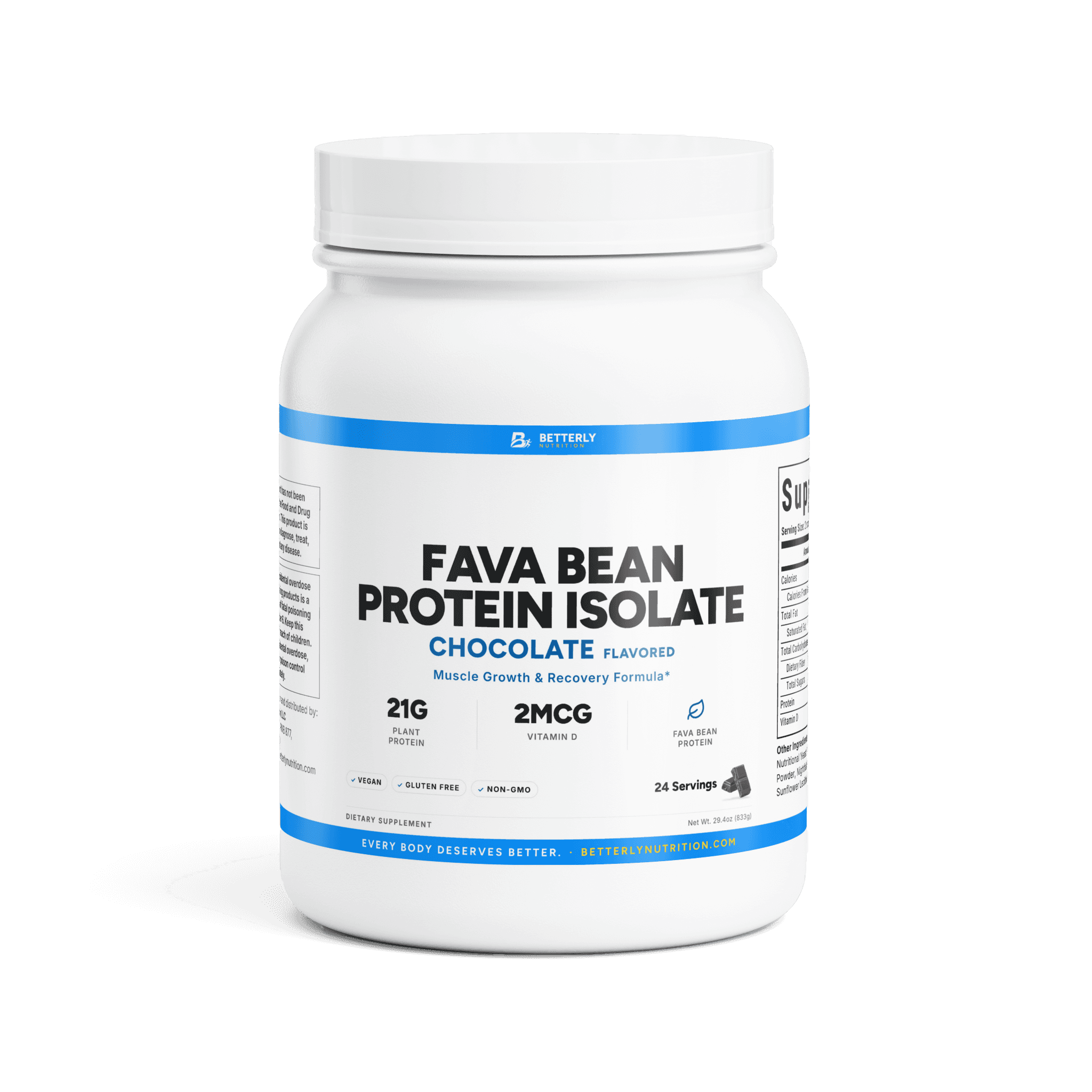
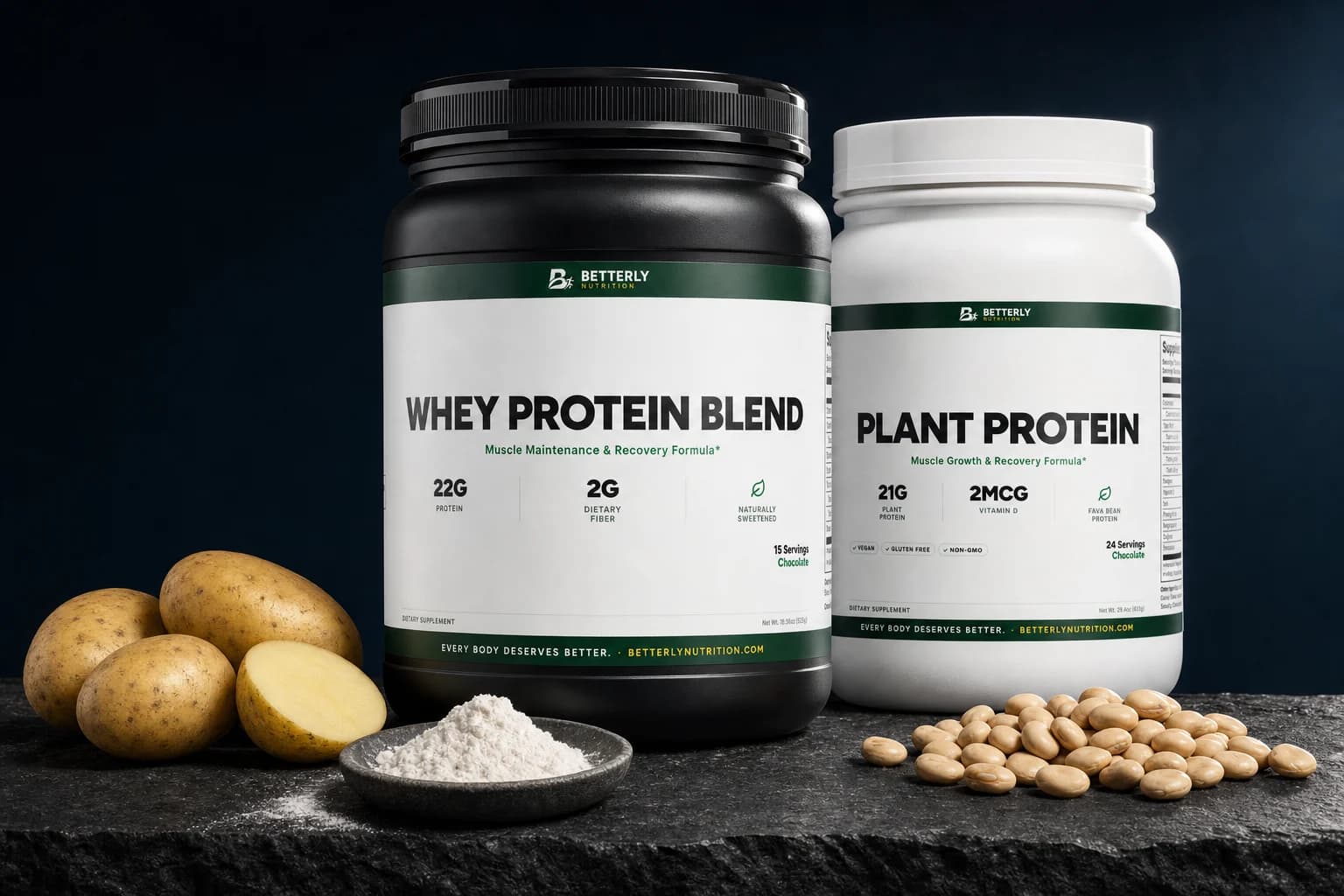
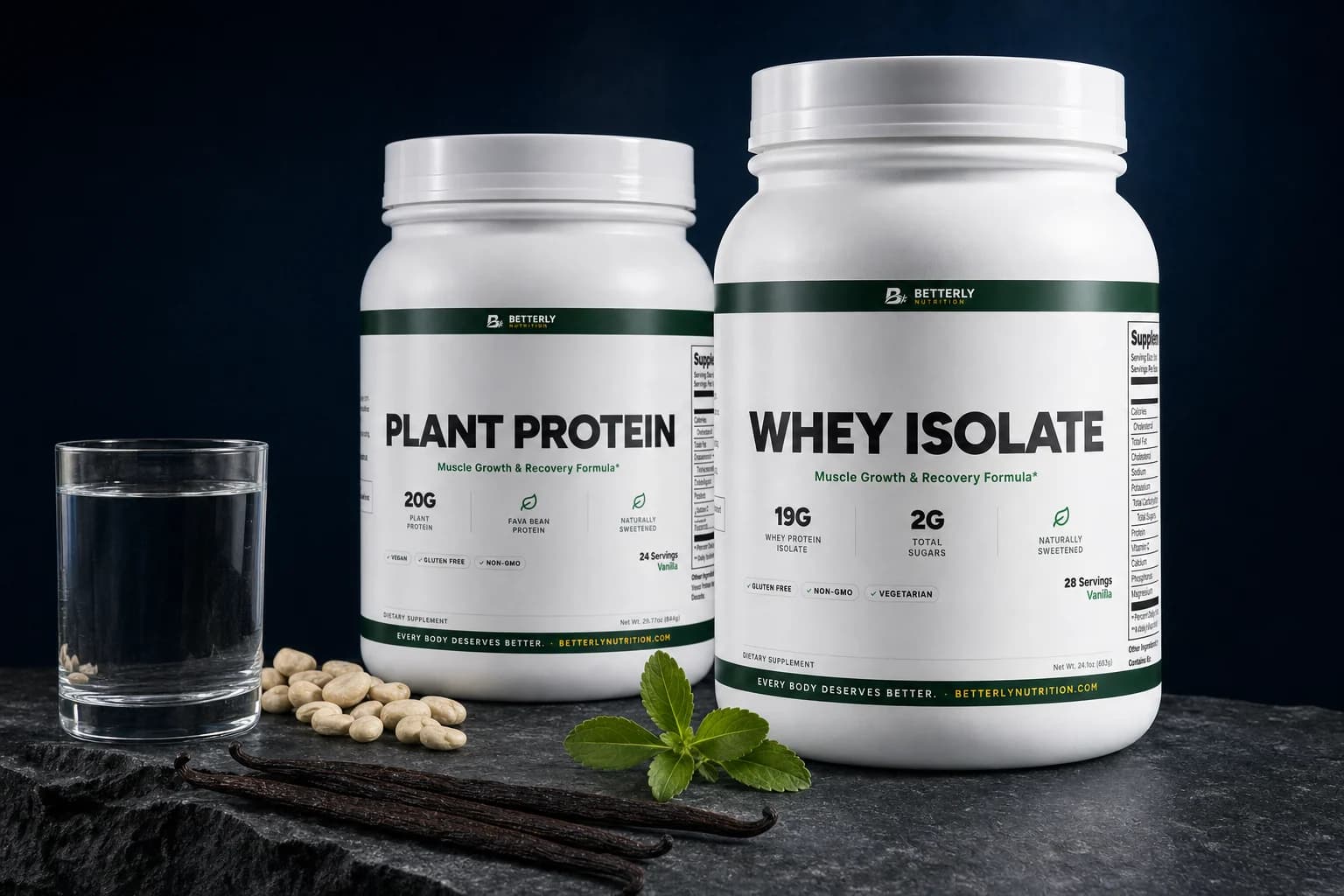
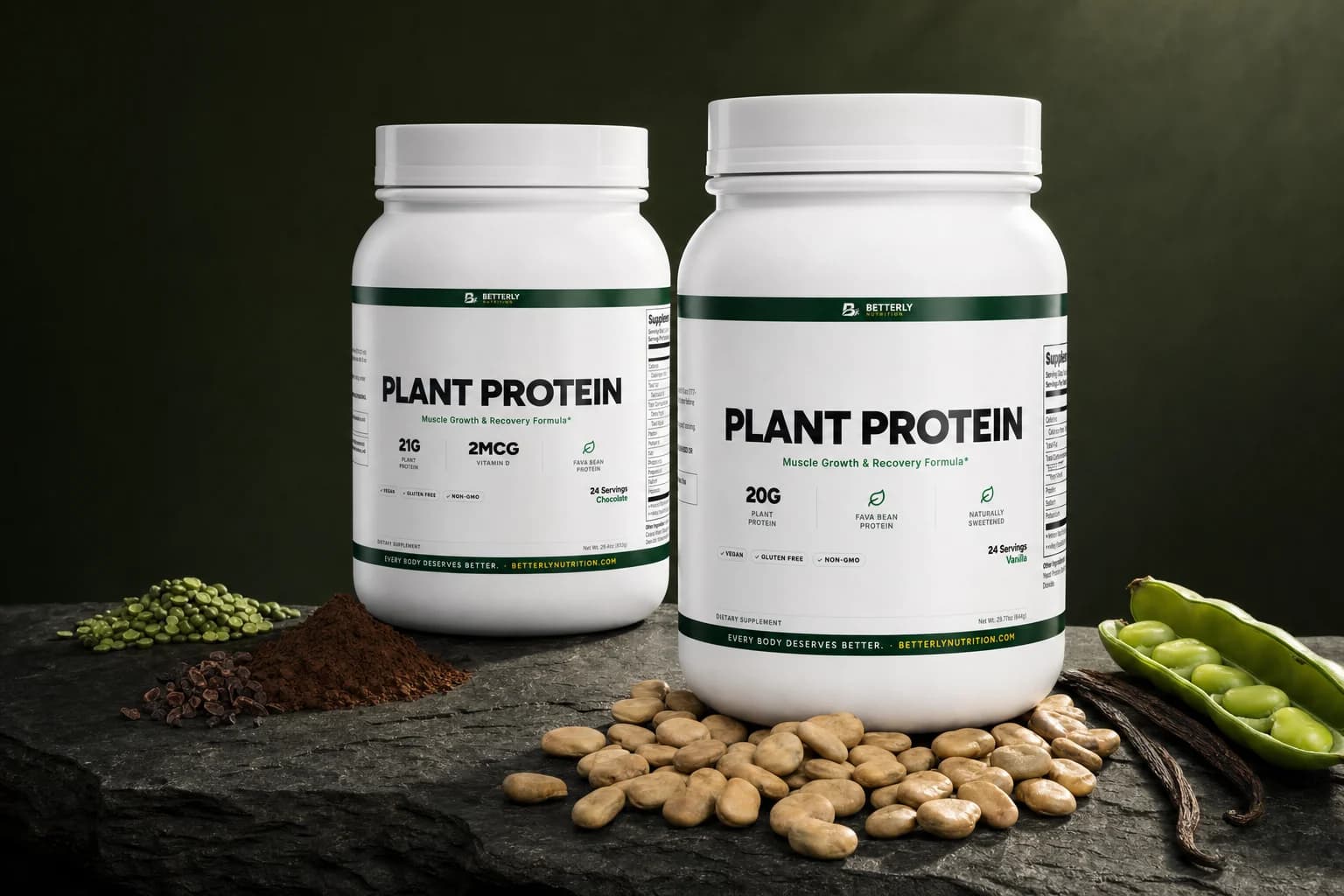
We sell a fava-based protein powder, Fava Bean Protein Isolate Powder (Vanilla), plus its chocolate twin, and we don't sell a pea-based protein powder. Read this knowing where we stand.
Key takeaways
- Fava bean protein and pea protein come from two different legumes, Vicia faba and Pisum sativum, so they aren't the same ingredient.
- Gram for gram of protein, USDA seed data shows nearly identical branched-chain amino acids (BCAAs), with pea ahead on lysine and fava ahead on tryptophan.
- USDA lists all nine essential amino acids for both seeds, and the NIH says a mix of plant foods is one way to cover every one you need.
- Betterly's Fava Bean Protein Isolate Powder is built on fava bean protein isolate plus fermented yeast protein, and its ingredient list names no pea.
- If you've been told to avoid fava beans, skip fava protein powders unless a healthcare provider clears them.
Is fava bean protein the same as pea protein?
No, fava bean protein and pea protein come from two different plants, though both are legumes in the same botanical family, Fabaceae.
Fava beans (Vicia faba) are the large, flat beans also sold as broad beans. "Faba" and "fava" are two spellings of the same bean, so "faba bean protein" on a tub means the same thing. Pea protein comes from Pisum sativum, the plant behind the peas in your freezer aisle.
Fava bean protein vs pea protein: what do the amino acids show?
Fava bean protein vs pea protein comes out close to even on amino acids: USDA seed data shows matching BCAAs, more lysine in pea and more tryptophan in fava.
The numbers below come from USDA's FoodData Central entries for raw, dried fava beans and raw green split peas. We divided each amino acid by the seed's total protein so you can compare them gram for gram.
| Per gram of protein (raw seed) | Fava bean | Split pea |
|---|---|---|
| Leucine | 75 mg | 73 mg |
| BCAAs (leucine, isoleucine, valine) | 160 mg | 160 mg |
| Lysine | 64 mg | 77 mg |
| Tryptophan | 9.5 mg | 6.9 mg |
| Methionine | 8.2 mg | 8.4 mg |
| Methionine + cysteine | 21 mg | 20 mg |
The line to remember is the BCAA row, because it's a tie. Pea's clear edge is lysine, about a fifth more per gram. Fava's edges are tryptophan and a hair more leucine.
One honest limit: these are whole seeds, not isolates, and processing can shift the pattern somewhat. Read the table as a map of the raw materials, not a spec sheet for any tub.
Is fava bean protein a complete protein?
Fava bean protein contains all nine essential amino acids in USDA's data, but being "complete" depends on how much of each it supplies, which USDA doesn't grade.
Essential amino acids are the ones your body can't make. The NIH Office of Dietary Supplements (ODS) explains that animal foods contain all of them, while plant foods like grains and legumes contain different mixes. ODS adds that eating a range of plant foods is one way to get them all.
Pea protein sits in the same spot. USDA lists all nine for split peas too, and the two seeds land within half a milligram of each other on methionine. So "is pea protein complete?" gets the same careful answer.
Some brands pair two protein sources with that mixing idea in mind. Our Fava Bean Protein Isolate Powder lists fava bean protein isolate first and YESTEIN™ Fermented Nutritional Yeast Protein further down. The label doesn't print an amino acid profile or call the blend complete, so we won't make that claim for it either.
Beans, grains, nuts, seeds and soy spread across your meals do the mixing for you.
What does "fava bean protein isolate" tell you on a label?
"Fava bean protein isolate" means protein separated from fava beans and concentrated, and its list position shows where it ranks by weight, not how many grams it contributes.
On our tubs, both protein sources appear in the ingredient list printed under the Supplement Facts panel, not in the panel itself. The yeast protein is where the two flavors part ways:
- Fava Bean Protein Isolate Powder (Chocolate): Fava Bean Protein Isolate, then YESTEIN™ Fermented Nutritional Yeast Protein, then Nidau Cocoa Powder and seven more.
- Fava Bean Protein Isolate Powder (Vanilla): Fava Bean Protein Isolate, then Natural Flavors, then YESTEIN™ Fermented Nutritional Yeast Protein and five more.
In the vanilla, natural flavors outrank the yeast protein, and because FDA's Chapter V ingredient labeling guide has that list run in descending order by weight, the tub holds more flavoring than yeast protein. In the chocolate, the order shows only that the fava isolate weighs at least as much as the yeast protein. Neither label gives grams per source.
Per 2 Scoops (35g) serving, the vanilla lists 20 g of protein, so protein makes up about 57% of the scoop's weight. The chocolate lists 21 g per 2 scoops (34.7g) serving, about 61%. The rest includes the non-protein part of the isolates plus flavorings, cocoa, MCT oil powder, pectin, salt and other minor ingredients.
For any tub, divide the protein grams by the serving's weight to see what you're really scooping.
From our shop: Fava Bean Protein Isolate Powder (Vanilla) — 20 g of protein per 2 Scoops (35g) serving from fava bean protein isolate and fermented yeast protein, with no pea on the ingredient list.
Do fava and pea protein taste or mix differently?
We haven't blind-tested fava against pea protein, so for a flavored powder, the fairer comparison is what each label adds: flavorings, sweetener and salt.
Here's each of ours:
- Vanilla: natural flavors listed second, plus sea salt and stevia leaf extract. Total sugars are 4 g per 2 Scoops (35g) serving.
- Chocolate: two cocoa powders, natural flavor, sea salt and stevia leaf extract. Total sugars are 1 g per 2 scoops (34.7g) serving.
Stevia extract (leaf) is the only sweetener named on either ingredient list.
For texture, both flavors include MCT oil powder and apple pectin powder, a fruit fiber that adds body. The vanilla adds silicon dioxide to keep the powder flowing, and the chocolate adds sunflower lecithin to help it blend.
The label gives you one texture dial: 6-8 oz of liquid per serving, thicker toward 6 oz and thinner toward 8. We cover flavor fixes in a separate guide on making plant protein taste better.
How do you find a vegan protein powder without pea protein?
To find a vegan protein powder without pea protein, read the full ingredient list, because the front of a tub may only say "plant protein."
Even our own tub puts the fava detail in a small tile under "Plant Protein."
On other brands' labels, pea can show up as "pea protein," "pea protein isolate," "pea protein concentrate" or "yellow pea protein." Check every protein source listed, not just the first, since some vegan powders combine two or three.
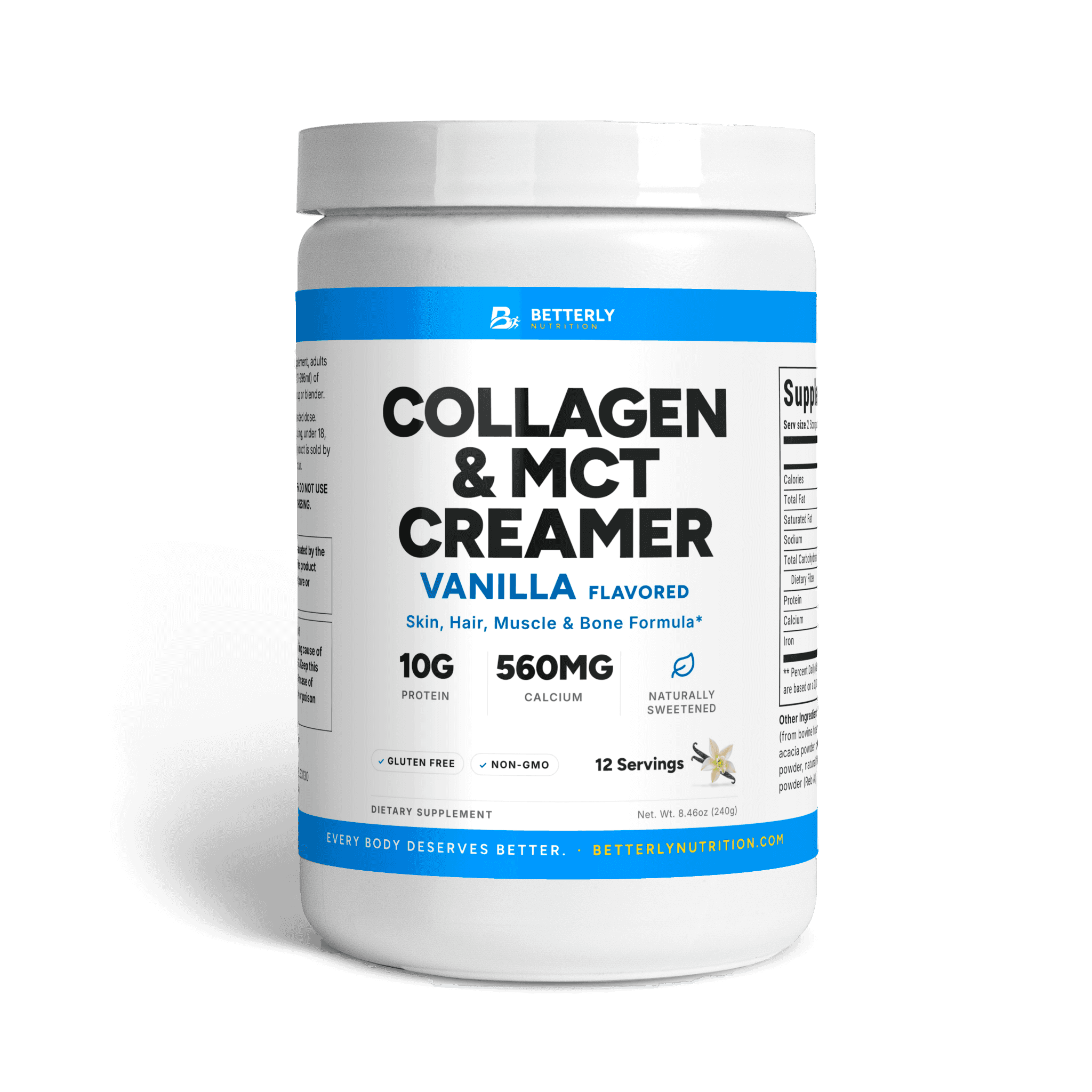
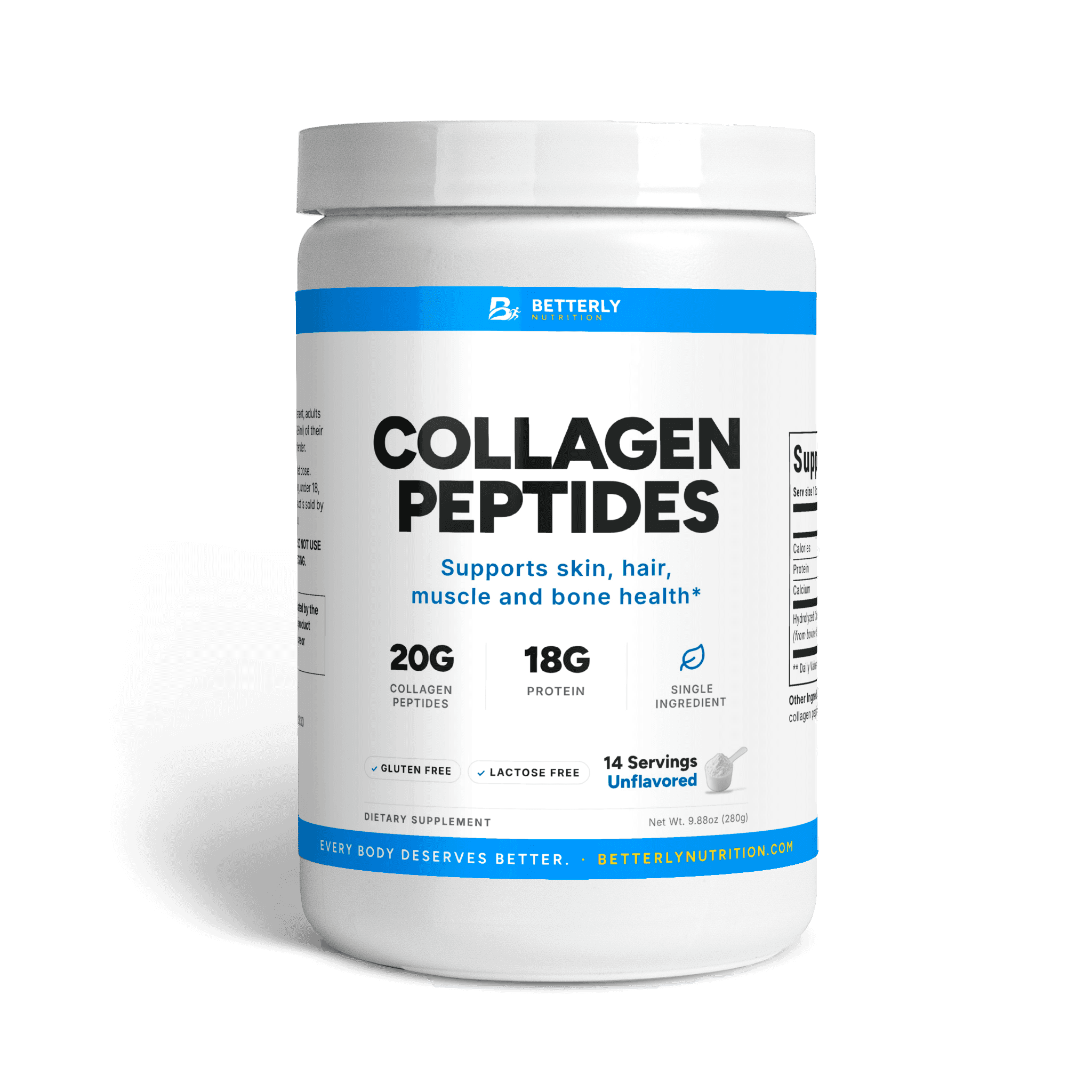
Pea turns up outside protein tubs, too. Our Collagen Peptides & MCT Creamer (Vanilla) lists pea protein powder among its ingredients, so read the label on anything you stir into a drink.
Whatever your reason for skipping pea, this table sorts the common cases:
| If this is you | Closer fit | Why |
|---|---|---|
| You want a vegan shake with no pea | A fava-based powder like ours | Our ingredient list names no pea |
| You want the most lysine per gram | A pea-based powder | Pea seeds show about a fifth more; check the brand's amino acid profile |
| You've been told to avoid fava beans | A non-fava powder, after asking your provider | MedlinePlus flags fava beans for people with low G6PD |
| You mainly want about 20 g of protein in a shake | Either | Their seeds' BCAAs per gram match |
| Your meals already cover your protein | Neither | A powder is a convenience |
The rows that pick a side are about an ingredient you want to avoid. You can compare every powder we carry, whey included, in our protein collection.
How do you take Betterly's Fava Bean Protein Isolate Powder?
Betterly's Fava Bean Protein Isolate Powder label says adults mix 2 scoops with 6-8 oz of water or another drink daily, ideally 20-30 minutes before a meal.
The label gives the liquid as 6-8 oz (177-237 ml) and pairs the pre-meal serving with 8 oz (237ml) of water, or whatever your healthcare professional directs. Its caution: don't exceed the recommended dose.
Straight from the two Supplement Facts panels:
| Per serving | Vanilla, 2 Scoops (35g) | Chocolate, 2 scoops (34.7g) |
|---|---|---|
| Calories | 110 (5 from fat) | 110 (15 from fat) |
| Protein | 20 g | 21 g |
| Total fat | 0.5 g | 1.5 g, including 1 g saturated |
| Total carbohydrates | 6 g | 4 g, including 1 g fiber |
| Total sugars | 4 g | 1 g |
| Sodium | 180 mg (8% DV) | 190 mg (8% DV) |
| Potassium | 5 mg (<1% DV) | 105 mg (2% DV) |
| Vitamins and minerals | None listed | Vitamin D 2 mcg, iron 1 mg, phosphorus 18 mg, magnesium 13 mg |
The chocolate edges ahead on protein and potassium and lists four vitamins and minerals the vanilla doesn't. The vanilla is lower in fat but higher in sugars. Both tubs hold 24 servings.
ODS counts a mix of different plant foods as high-quality protein, so the fava-or-pea choice matters less than your day's total. The label's suggested use is one serving a day, and meals carry the rest.
If a shake has to fit around other supplements, our guide to a simple daily routine shows how to keep the lineup short.
From our shop: Fava Bean Protein Isolate Powder (Chocolate) — 21 g of protein per 2 scoops (34.7g) serving, flavored with two cocoa powders and sweetened with stevia leaf extract.
When don't you need a fava or pea protein powder?
You don't need a fava or pea protein powder if your meals already cover your protein, because a powder adds convenience, not a nutrient food can't supply.
Even for athletes, ODS says food alone probably covers protein needs, and it sees no benefit in going past recommended amounts. You can likely skip the tub if:
- You already eat beans, lentils, tofu, grains or other protein foods at most meals.
- You'd rather eat whole fava beans or peas, which also bring the fiber an isolate leaves behind.
- Tubs tend to sit half-finished in your cupboard.
A powder earns its spot on rushed mornings or when a meal is hours away. After training, our post-workout recovery guide puts fluids and a real meal ahead of any scoop.
Who should check with a doctor before using fava bean protein?
Check with a doctor before using fava bean protein if you've been told to avoid fava beans, or you're pregnant, nursing, under 18, on medication or managing a medical condition.
- The label's caution. Both flavors say to consult a physician if you're pregnant, nursing, under 18, or have a medical condition. A daily shake counts as a supplement, so list it, fava base and all, whenever a prescriber or surgical team asks what you take.
- Fava beans and G6PD. MedlinePlus explains that G6PD is an enzyme that helps red blood cells work properly. It lists fava beans first among the things people with low G6PD are advised to avoid. Our label doesn't mention this, and we have no data on our isolate showing the concern is gone, so skip fava powders unless your provider says otherwise.
- Legumes in general. Fava beans and peas are both legumes. If peanuts, soy, peas or other legumes have ever given you a reaction, ask before trying either kind of powder.
The chocolate flavor also contains iron, so its label carries the standard iron warning for young children. Keep both tubs out of reach.
FAQ: fava bean and pea protein
Is faba bean protein the same as fava bean protein?
Yes, faba bean protein and fava bean protein are the same ingredient with two spellings. Both names refer to Vicia faba, the plant also sold as the broad bean. When you compare tubs, count them as one protein source and judge each powder by its protein grams per serving.
What are the benefits of fava bean protein powder?
The main benefit of fava bean protein powder is the protein itself. The NIH Office of Dietary Supplements says protein helps build, maintain and repair your muscles. Betterly's Fava Bean Protein Isolate Powder (Vanilla) lists 20 g of protein per 2 Scoops (35g) serving, and its label marks it vegan, gluten free and non-GMO. For shoppers who skip pea or dairy, the fava base is the practical draw.
Is yeast protein the same as whey protein?
No, yeast protein and whey protein come from different sources. Whey is a protein from milk, while yeast protein is made from yeast grown through fermentation, and since yeast isn't an animal product, it can appear on a vegan label. In Betterly's Fava Bean Protein Isolate Powder, fermented yeast protein is a supporting ingredient listed after fava bean protein isolate.
Does fava bean protein have more protein than pea protein?
Fava beans have slightly more protein than dried peas as whole seeds. USDA lists 26.1 g per 100 g of raw fava beans versus 23.1 g for raw split peas. Once each becomes an isolate, that gap matters less than the finished label, so compare protein grams to the serving's weight. Our vanilla lists 20 g per 2 Scoops (35g) serving.
Can kids use fava bean protein powder?
Betterly's Fava Bean Protein Isolate Powder isn't something to give a child without a doctor's input. Its label says to consult a physician if you're under 18. The chocolate version also contains iron, and its label warns that accidental overdose of iron-containing products is a leading cause of fatal poisoning in children under 6. Store both tubs well out of reach.
How long does a tub of fava bean protein last?
A tub of Betterly's Fava Bean Protein Isolate Powder lasts 24 days at the label's suggested use. Both flavors hold 24 servings, and the label calls for 2 scoops daily. Taking less is fine; taking more isn't, since the label says not to exceed the recommended dose. Store it in a cool, dry place, as the label directs.
Sources
- Dietary Supplements for Exercise and Athletic Performance: Fact Sheet for Consumers (NIH Office of Dietary Supplements)
- FoodData Central (USDA): raw fava beans, FDC ID 175205
- FoodData Central (USDA): raw green split peas, FDC ID 172428
- Dietary Supplement Labeling Guide: Chapter V. Ingredient Labeling (FDA)
- G6PD Test (MedlinePlus)
If this left you looking for somewhere to start, read vegan protein powder without pea protein — its amounts per serving are listed on the page. For the practical questions this raises, how dosing, sourcing and subscriptions work is answered in one place.