On this page
- Key takeaways
- When is the best time to take plant protein powder?
- Why take plant protein 20-30 minutes before a meal?
- When should you drink a vegan protein shake around a workout?
- How much of a plant-based day does one scoop cover?
- Can you drink a plant protein shake before bed?
- How do you use vegan protein powder on training and rest days?
- When can you skip plant protein powder?
- Who should check with a healthcare provider first?
- FAQ: when to take plant protein powder
- Sources
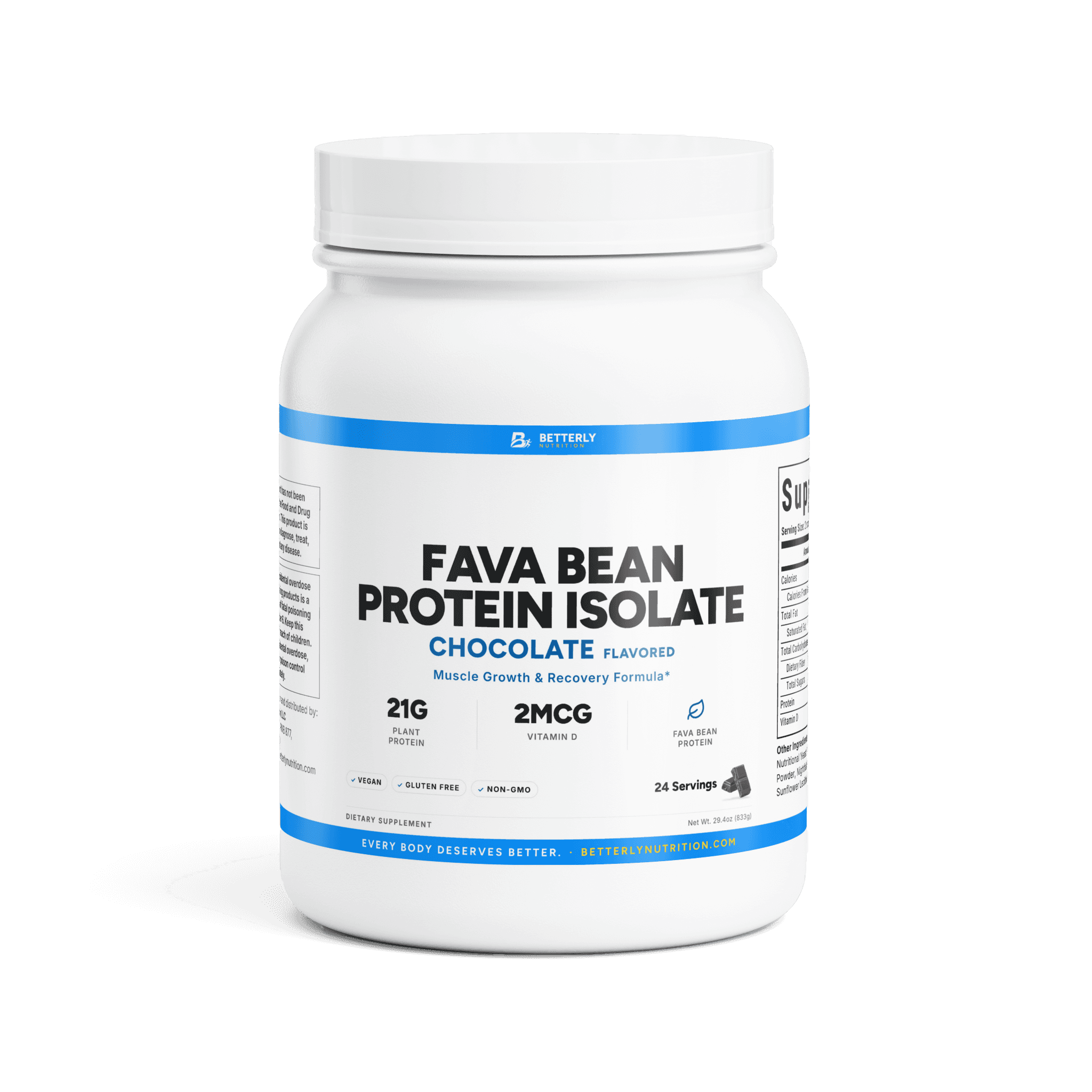
The short answer: When to take plant protein powder, going by our tub, is 20-30 minutes before a meal. On training days, the simplest meal to pick is the one you eat after your session. Fava Bean Protein Isolate Powder (Chocolate) lists 21 g of protein per 2 scoops (34.7g) serving, about a fifth of a 100 g protein day, and the grains and beans on the plate that follows widen the day's amino acid mix.
Key takeaways
- Betterly's Fava Bean Protein Isolate Powder directions call for one 2-scoop serving a day, and the "for best results" sentence adds a pre-meal window without naming workouts, mornings or bedtime.
- According to the NIH Office of Dietary Supplements, legumes and grains each carry a different mix of essential amino acids, so a fava-based shake followed by a grain-based meal widens your variety.
- According to the ODS fact sheet, sports-science experts suggest protein within 2 hours after exercising, and a post-training shake taken shortly before dinner can meet that slot and the label's window together.
- The chocolate flavor lists two cocoa powders and no caffeine amount, which makes the cocoa-free vanilla the more predictable evening pick.
Full disclosure: the fava-and-yeast powder in every schedule below is ours, sold in chocolate and vanilla. You can check our work, because each timing window traces to a line printed on the tub or to a federal page linked in the text.
When is the best time to take plant protein powder?
The best time to take plant protein powder, according to Betterly's label, is 20-30 minutes before a meal. No other clock time appears anywhere on the tub.
Two sentences on the back panel do the work. The first sets the serving for adults: two scoops in 6-8 oz (177-237 ml) of water or a favorite beverage, daily. The second is the timing line, printed as "For best results, take 20-30 minutes before a meal with 8 oz (237ml) of water or as directed by your healthcare professional."
That 8 oz of water is the one unclear part. The label doesn't say whether it means the liquid you mix the powder into or a separate glass on the side, and its wording supports either reading.
Which meal should the shake come before? Pick the one that's usually lightest on legumes, tofu or tempeh, because that's where 21 g of protein fills the biggest gap. If breakfast is toast and fruit while dinner is a lentil curry, breakfast is your slot.
Wondering about an empty stomach, or about trading breakfast for a shake? Our morning-versus-night protein shake guide covers those questions for every powder we sell.
Why take plant protein 20-30 minutes before a meal?
Nowhere does the Fava Bean Protein Isolate Powder label explain its 20-30 minute window. We read it as a scheduling cue that ties the shake to food, not as a promise of any effect.
The pairing happens to suit a plant-based plate. The NIH Office of Dietary Supplements (ODS) covers why in its fact sheet on sports and exercise supplements. Some amino acids, called essential, can't be produced by your body and must come from food. Legumes and grains each carry a different mix of them, so the sheet counts a varied plant diet as one route to all of them.
Our tub supplies the legume side. Fava Bean Protein Isolate, from fava beans (Vicia faba), is the first ingredient in both flavors, and YESTEIN™ Fermented Nutritional Yeast Protein appears later. Neither panel lists individual amino acids, so we can't grade the blend on its own. USDA figures for the raw beans are in our side-by-side of fava and pea protein.
The meal that follows can bring the grain side. A shake at 12:05 and a 12:30 lunch of brown rice with black beans, or whole-wheat pita with hummus, puts a grain on the table next to another legume.
MedlinePlus, from the National Library of Medicine, adds some slack in its Protein in diet article: essential amino acids don't have to be eaten at every meal. If lunch has no grain, oatmeal at breakfast still counts.
When should you drink a vegan protein shake around a workout?
Plant protein can go before or after a workout, and after training fits Betterly's label best when a meal follows within about 30 minutes.
Both tubs call themselves a "Muscle Growth & Recovery Formula" on the front panel. The suggested use on the back, though, gives no workout timing at all.
For training days, the ODS fact sheet is the better guide. According to it, sports-science experts recommend that every 3 to 5 hours, athletes eat a serving of high-quality protein, with one within 2 hours after exercising and one before sleep. Their amount is 0.14 g per pound, roughly 20 g for someone who weighs 150 pounds, from animal foods, a mix of plant foods, or both.
Put the label and the fact sheet side by side, and the order is train, then shake, then eat. The schedules further down show it for morning and evening sessions.
A pre-workout shake is still your one serving for the day. It just misses the best-results line, since few people eat 20-30 minutes into a session.
Fluids and electrolytes come first in our post-training routine, which places the shake among several other steps.
How much of a plant-based day does one scoop cover?
One serving of Fava Bean Protein Isolate Powder (Chocolate) covers about a fifth of a 100 g protein day, leaving roughly 79 g for your meals and snacks.
For healthy adults, MedlinePlus sets the daily range at 10% to 35% of calories from protein. Its worked example is a 2,000-calorie day with 100 g of protein, which supplies 20% of those calories. It also states that a diet without animal products can still supply all the protein a person needs.
Your own number depends on your calorie needs, so 100 g is an example, not a target. On the food side, MedlinePlus rates ½ cup of cooked beans or lentils, or ¼ cup of tofu, at about 7 g of protein apiece. Here's one plant-based day built on that math:
| Meal | What you eat | Protein | Number from |
|---|---|---|---|
| Before breakfast | Chocolate shake, 2 scoops (34.7g) | 21 g | Our label |
| Lunch | 1 cup cooked lentils | About 14 g | MedlinePlus |
| Dinner | ½ cup tofu | About 14 g | MedlinePlus |
| Side or snack | 1 cup cooked black beans | About 14 g | MedlinePlus |
| Running total | Four sources | About 63 g | Added up |
The key point from the table: even on a day heavy with legumes, the scoop is one protein source among four or five. Bread, pasta, nuts and soy milk cover the last 37 g or so, and their Nutrition Facts labels show how much each adds. The vanilla's share is 20 g per 2 Scoops (35g) serving.
Can you drink a plant protein shake before bed?
A plant protein shake before bed is a fine use of your one daily Fava Bean Protein Isolate Powder serving, but it sits outside the label's best-results line because no meal follows.
The ODS fact sheet names "before sleep" among the protein servings sports-science experts suggest for athletes, so an evening scoop isn't odd.
Flavor matters more at night. The chocolate tub lists Nidau Cocoa Powder and Nightfall Black Cocoa Powder, and MedlinePlus's caffeine overview says caffeine occurs naturally in cacao pods, which are used to make chocolate products. The same page says you may feel caffeine's effects for four to six hours, and that some people are more sensitive than others.
No caffeine row appears on our chocolate panel, so how much a serving holds, if any, is something the label doesn't answer. If you limit caffeine at night, that four-to-six-hour span argues for drinking the chocolate earlier in the day.
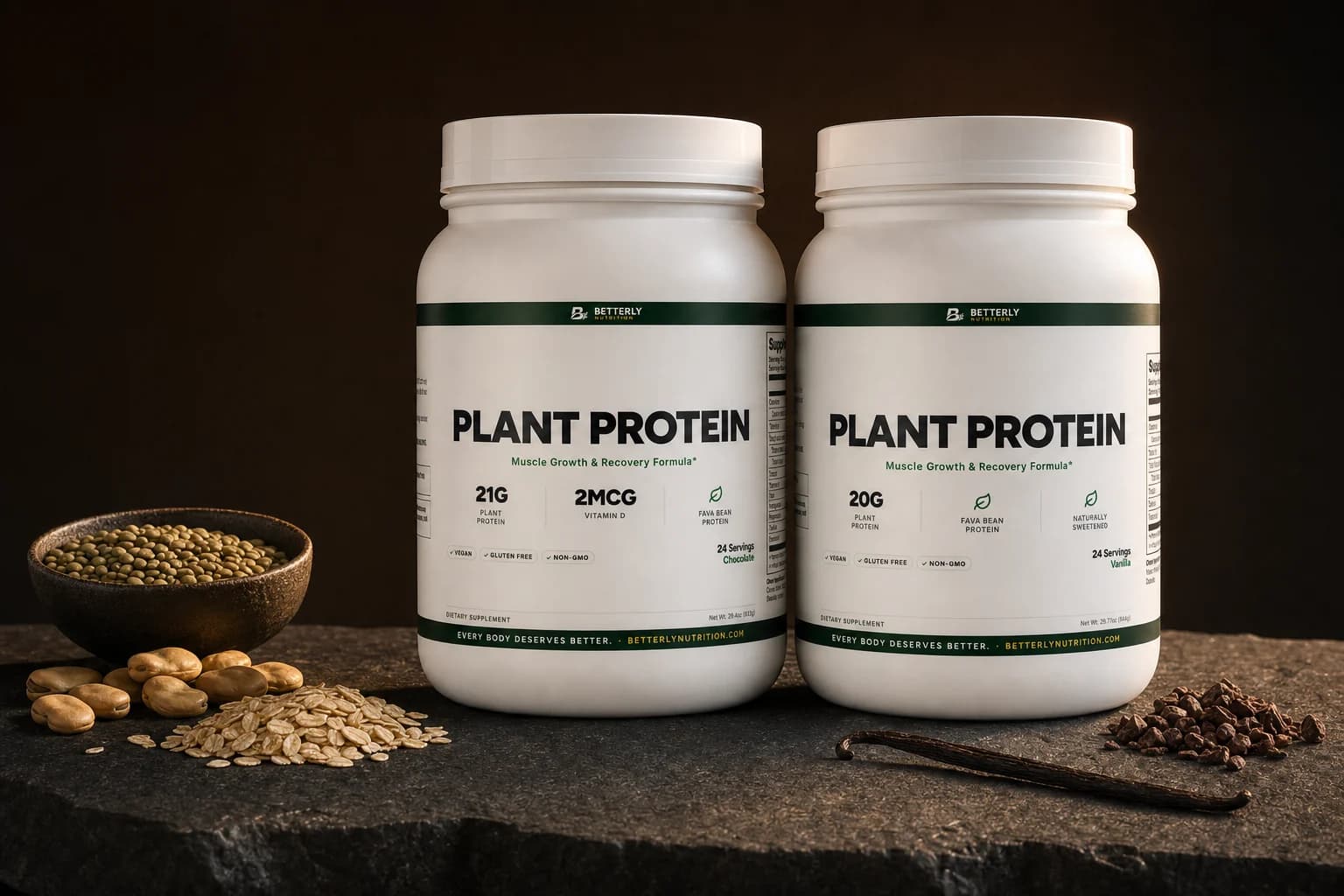
Fava Bean Protein Isolate Powder (Vanilla) sidesteps the question. Its ingredient list names no cocoa, and it lists 20 g of protein per 2 Scoops (35g) serving.
From our shop: Fava Bean Protein Isolate Powder (Vanilla) — a cocoa-free option for evening shakes, with 20 g of protein and 110 calories per 2 Scoops (35g) serving, labeled vegan, gluten free and non-GMO.
How do you use vegan protein powder on training and rest days?
Use Fava Bean Protein Isolate Powder the same way every day: one 2-scoop serving in 6-8 oz of liquid, 20-30 minutes before a meal when you can. Only the meal changes.
Evening training day. You finish at 5:15 p.m., and dinner is a tofu stir-fry over rice at 6:15. A shake at about 5:45 lands inside the ODS 2-hour slot and half an hour ahead of the meal.
Morning training day. You finish a run at 6:30 a.m. Shake at 7:00, then eat oatmeal made with soy milk at 7:25. The oats add a grain to the fava in the scoop.
Rest day. Only the anchor changes. Pick the meal that's lightest on legumes, say a noon salad, and take the shake around 11:35. A day already heavy on lentils and beans can go without one.
Whatever the day, the serving stays at 2 scoops (34.7g) of chocolate or 2 Scoops (35g) of vanilla, with 24 servings per tub. Each caution starts with "Do not exceed recommended dose," which rules out a bigger shake after a hard session. Soy or oat milk works as the mixer, since the label allows a favorite beverage, but its protein and calories sit on top of the panel's.
Could you split the serving between breakfast and dinner? The label describes a single drink and never mentions dividing it, so we'd keep it whole unless a healthcare professional, the one exception the label names, says otherwise.
Both labels ask for cool, dry storage. The chocolate also lists 1 mg of iron (6% DV) per 2 scoops (34.7g) serving and carries the standard iron warning about children under 6, so shelve it where small hands can't reach.
The ODS fact sheet Dietary Supplements: What You Need to Know recommends a complete written list of your supplements, noting each one's dose and frequency. For this one, jot down the time and the meal that followed.
From our shop: Fava Bean Protein Isolate Powder (Chocolate) — 21 g of protein per 2 scoops (34.7g) serving, 24 servings per tub, and a label that times it 20-30 minutes before a meal.
When can you skip plant protein powder?
You can skip plant protein powder on any day your meals already meet your protein needs. The protein in a scoop is something beans, lentils and tofu can also supply.
Try the table above against a normal day of yours. If lentils, tofu and beans already bring you close to your number, the scoop is optional that day. The tub is most useful when meals fall short, like a travel day or a week of quick salads.
Late nights are the other case. If the only open slot is bedtime, the chocolate is the tub on hand and you avoid evening caffeine, passing on the shake is reasonable.
Weighing our plant tubs against whey? Every flavor is in our protein collection.
Who should check with a healthcare provider first?
Ask a healthcare provider before starting Fava Bean Protein Isolate Powder if you're pregnant or nursing, younger than 18, on prescription medication, due for surgery or managing a health condition.
Most of that list is printed on the tub, whose caution line says to "Consult a physician if pregnant, nursing, under 18, or have a medical condition." That ODS sheet on supplements widens the circle. It wants all of your providers, pharmacists and dentists included, kept informed about what you use, and it flags any planned surgical procedure as a time to bring supplements up.
Bring the tub, a note of when you take it, and a rough total of your usual day's protein. If a dietitian or doctor has set a protein target for you, that total shows whether 21 g fits inside it.
Name the base ingredient too. Fava beans head both ingredient lists, and some people have been told by a clinician to avoid them.
FAQ: when to take plant protein powder
Can you take plant protein powder with a meal instead of before it?
Yes, Fava Bean Protein Isolate Powder taken with a meal still meets the label's core direction of two scoops in 6-8 oz of liquid daily. The 20-30 minute lead time belongs to the "for best results" sentence, which reads as advice, not a rule. A shake sipped alongside rice and beans is still your one daily serving.
Do you have to combine plant proteins at the same meal?
No, plant proteins don't need to be combined at every meal. MedlinePlus says essential amino acids aren't required at each meal, and that the day as a whole is what counts. A fava-based shake before breakfast and lentils with rice at dinner both land in the same day. Variety across your plant foods, which ODS calls one way to cover every essential amino acid, is the part to watch.
Does plant protein need different timing than whey?
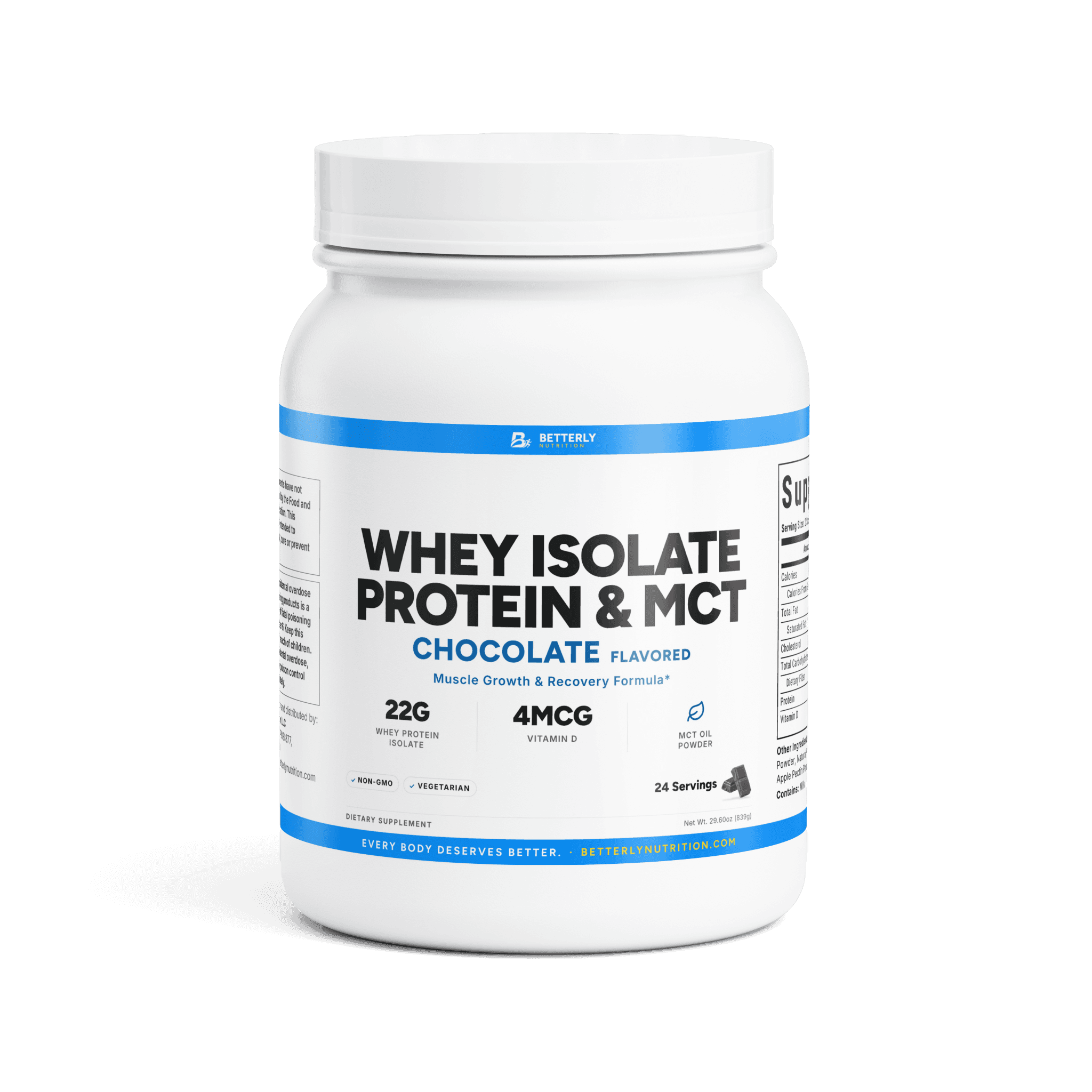
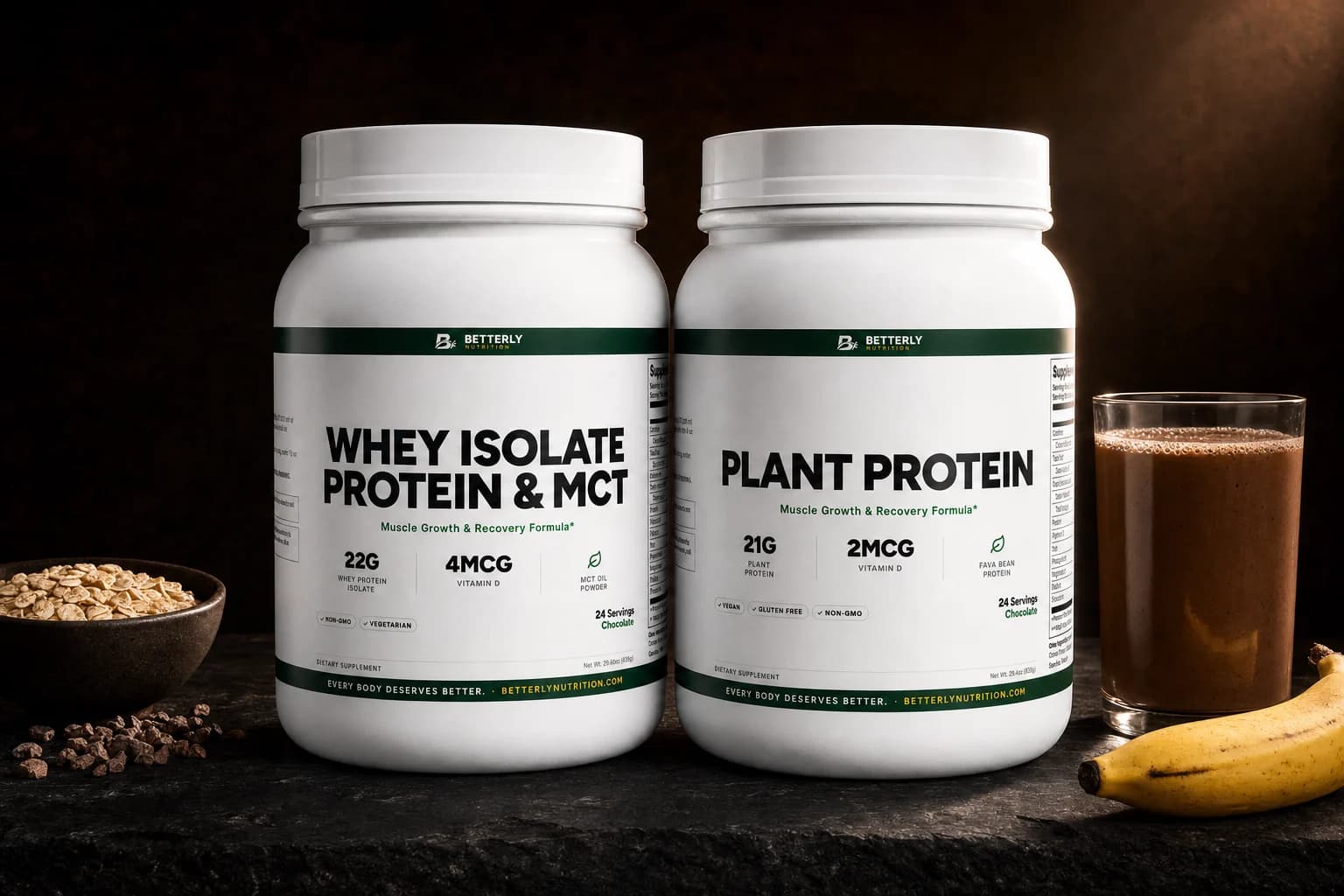
No, plant protein doesn't need its own timing on our labels. Fava Bean Protein Isolate Powder and Whey Protein Isolate & MCT Powder (Chocolate) print the same timing sentence: 20-30 minutes before a meal with 8 oz (237ml) of water. Our one-scoop whey isolate uses that window too. We haven't found a federal page that sets a separate schedule for plant protein. The real difference sits elsewhere: the whey labels say "Contains: Milk," while the plant tubs carry a vegan claim.
Can teenagers drink a plant protein shake after practice?
No, not before a physician weighs in, because Fava Bean Protein Isolate Powder's directions address adults only and its caution tells anyone under 18 to consult a physician. That holds after practice or at any other hour. Until the family has that conversation, a teen athlete's protein can come from meals and snacks such as bean burritos, tofu bowls or lentil soup.
How many days will one tub of plant protein cover?
One tub of Fava Bean Protein Isolate Powder covers 24 days at one serving a day, because both flavors list 24 servings per container. Training and rest weeks use it at the same pace. Level scoops keep that math honest: the chocolate's serving weighs 34.7g and the vanilla's 35g, so heaped scoops will empty the tub sooner.
Sources
- Protein in diet, MedlinePlus Medical Encyclopedia, U.S. National Library of Medicine
- Dietary Supplements for Exercise and Athletic Performance: Fact Sheet for Consumers, NIH Office of Dietary Supplements
- Caffeine, MedlinePlus, U.S. National Library of Medicine
- Dietary Supplements: What You Need to Know, NIH Office of Dietary Supplements
If this left you looking for somewhere to start, read fava bean protein powder for after training — its amounts per serving are listed on the page. For the practical questions this raises, how dosing, sourcing and subscriptions work is answered in one place.