On this page
- Key takeaways
- What's the quickest way to make a vegan protein shake taste better?
- Why does plant protein taste earthy?
- How do you make plant protein powder less gritty?
- Why can a plant protein shake taste too sweet?
- What should you mix plant protein powder with?
- What does the label say about how to use plant protein powder?
- What are some easy plant protein smoothie recipes?
- What if plant protein still doesn't taste right to you?
- Who should check with a healthcare provider first?
- FAQ: plant protein taste and texture
- Sources
The short answer: How to make plant protein taste better comes down to order: fix the texture, then the flavor. Work the powder into a cold paste or blend it, and pour 6 oz of liquid before you decide on the last 2. Then pair our Fava Bean Protein Isolate Powder (Chocolate) with coffee, banana or peanut butter. Its sweetener, stevia leaf extract, is already in the scoop, so sugar is the last fix to try, not the first.
Key takeaways
- An earthy note usually traces back to the protein itself, and ours pairs a fava bean isolate with a fermented yeast protein.
- Grit is more often a mixing problem than a flavor problem, so a paste-first stir or a blender fixes more than any add-in.
- Sweetness is already built in: stevia leaf extract sits on both of our ingredient lists, which makes sweetened milk or syrup easy to overdo.
- Fruit, nut butter and oats make a richer shake, but they add calories the panel doesn't count, and some carry major food allergens.
- Every build below uses the label's single daily serving, 2 scoops in 6-8 oz of liquid.
We sell this powder in chocolate and vanilla, so we're hardly neutral about how it tastes. The numbers below come off those two labels, and where they're silent, we'll say so.
What's the quickest way to make a vegan protein shake taste better?
The quickest way to make a vegan protein shake taste better is to name what's wrong with it (earthy, gritty, too sweet or thin) and fix that first.
| Your shake is... | Likely cause | Try first | Watch for |
|---|---|---|---|
| Earthy or beany | The fava and yeast protein base | Ice-cold liquid, plus cold brew, cocoa or cinnamon | Coffee brings caffeine |
| Gritty or chalky | Dry pockets of powder | A paste first, then a hard shake or a blender | A spoon rarely gets there |
| Too sweet | Stevia in both tubs | The full 8 oz, unsweetened milk or plain cold brew | Sweetened cartons add sugar |
| Thin or watery | Plain water at the top of the range | 6 oz of liquid, ice or frozen fruit | Fruit adds calories |
| Fine, but you want bolder flavor | Personal taste | Cinnamon, cocoa or frozen berries | Berries add sugar |
When two rows apply, fix the grit first, since no fruit or sweetener can hide a sandy sip.
Why does plant protein taste earthy?
Plant protein tastes earthy because it's made from legumes, grains or yeast, which carry savory notes that a flavored powder has to work around.
Both tubs open their ingredient lists with Fava Bean Protein Isolate, and YESTEIN™ Fermented Nutritional Yeast Protein comes second in the chocolate and third in the vanilla. Nutritional yeast is usually a savory topping, not a milkshake ingredient. How much each source contributes isn't on the label, so we can't tell you which one drives the flavor.
Your nose does a lot of the tasting. NIDCD, the NIH institute that studies smell and taste, explains on its smell page that chewing releases aromas, which reach your smell sensors through a channel linking the roof of the throat to the nose. Without that sense, it adds, familiar flavors such as chocolate "would be hard to distinguish."
So a beany aroma reads as a beany taste. Chocolate's aroma travels the same route, which is why we think cocoa suits a legume base.
Here's every ingredient besides the two proteins on the chocolate's list and on the Fava Bean Protein Isolate Powder (Vanilla). The flavor, sweetener, pectin, lecithin and silicon dioxide rows borrow their wording from the FDA's consumer page on types of food ingredients. That page files pectin with the thickeners said to improve mouthfeel, soy lecithin with the emulsifiers that let ingredients mix smoothly (our chocolate uses sunflower lecithin), and silicon dioxide with the anti-caking agents. The cocoa, salt and MCT rows are our own words.
| Ingredient | Chocolate | Vanilla | Likely job |
|---|---|---|---|
| Nidau and Nightfall Black cocoa powders | Yes | No | Chocolate flavor |
| Natural flavor | Yes, 4th | Yes, 2nd | Adds specific flavors |
| Stevia Extract (leaf) | Yes, last | Yes | Sweetness |
| Sea Salt | Yes | Yes | Seasoning |
| Apple Pectin Powder | Yes | Yes | Texture and mouthfeel |
| MCT Oil Powder | Yes | Yes | A dried oil, part of the fat |
| Sunflower Lecithin | Yes | No | Smoother mixing |
| Silicon Dioxide | No | Yes | Free-flowing powder |
Counted by ingredient, the chocolate carries more flavorings: two cocoas plus a natural flavor, where the vanilla has one Natural Flavors line. With no cocoa in the tub, the vanilla leaves more room for fruit or spice.
How do you make plant protein powder less gritty?
To make plant protein powder less gritty, wet every bit of it before the rest of the liquid goes in: make a quick paste, then shake hard or blend.
Chalkiness usually means dry pockets of powder, so try a paste. Put 2 level scoops in your shaker, add about a quarter of your liquid, and mash it with a fork until it looks like smooth frosting. Then pour in the rest and shake for a good 30 seconds.
A blender does it best, breaking up clumps a shaker ball misses. Then let the shake sit a minute and give it one more quick shake.
For a thin shake, reverse the too-sweet fix below and stop at 6 oz. The final 2 oz of the label's range can wait until you've had a sip and know you want it lighter. Ice or frozen fruit adds body without touching the scoop.
Our label names no temperature, but we'd start ice-cold. Heat brings its own clumping trouble, which we untangle in protein powder in coffee.
Why can a plant protein shake taste too sweet?
A plant protein shake can taste too sweet because both of our tubs already contain stevia leaf extract, and sweetened milk, ripe fruit or syrup stacks more on top.
The sugar line on a panel won't tell you how sweet a shake tastes. The chocolate lists 1 g of total sugars per 2 scoops (34.7g) serving, but its two cocoa powders are bitter on their own, so its sweetness has something to push against. The vanilla lists 4 g of total sugars per 2 Scoops (35g) serving and has no cocoa. Neither label explains where the vanilla's extra sugars come from.
To tone a shake down, stretch it to 8 oz, swap a sweetened carton for an unsweetened one, or make the chocolate with plain cold brew.
Salt is covered too: 190 mg of sodium per chocolate serving and 180 mg per vanilla serving, 8% of the Daily Value each. Skip the pinch of salt some recipes add.
What should you mix plant protein powder with?
Mix plant protein powder with a cold liquid you'd happily drink alone, such as plant milk, cold brew or chilled tea; our label allows water or a favorite beverage.
Water versus milk gets its own guide, protein shakes with water or milk, so here are add-ins, sorted by what they bring:
- Roast: cold brew, chilled espresso or unsweetened cocoa. Coffee plus the chocolate tub makes a cold mocha.
- Sweetness and body: frozen banana, mango or a couple of pitted dates. Start with half what a recipe calls for, since the tub's stevia already sweetens.
- Creaminess: a spoonful of peanut, almond or sunflower seed butter, or a few tablespoons of rolled oats.
- Warm spice: cinnamon, nutmeg or cardamom. Their warm aroma competes with the beany one, and a pinch adds no sugar.
- Tartness: frozen berries or cherries, a better match for the vanilla than the chocolate.
Most of these add calories, especially fruit, nut butter and oats, plus any milk you pour. The panel's 110 calories per serving count only the powder.
Some add-ins are allergens, too. The FDA's food allergy page names nine major food allergens, among them peanuts, tree nuts such as almonds, soybeans and sesame. Peanut butter, almond milk, soy milk and tahini each bring one along, so check those labels as well as ours.
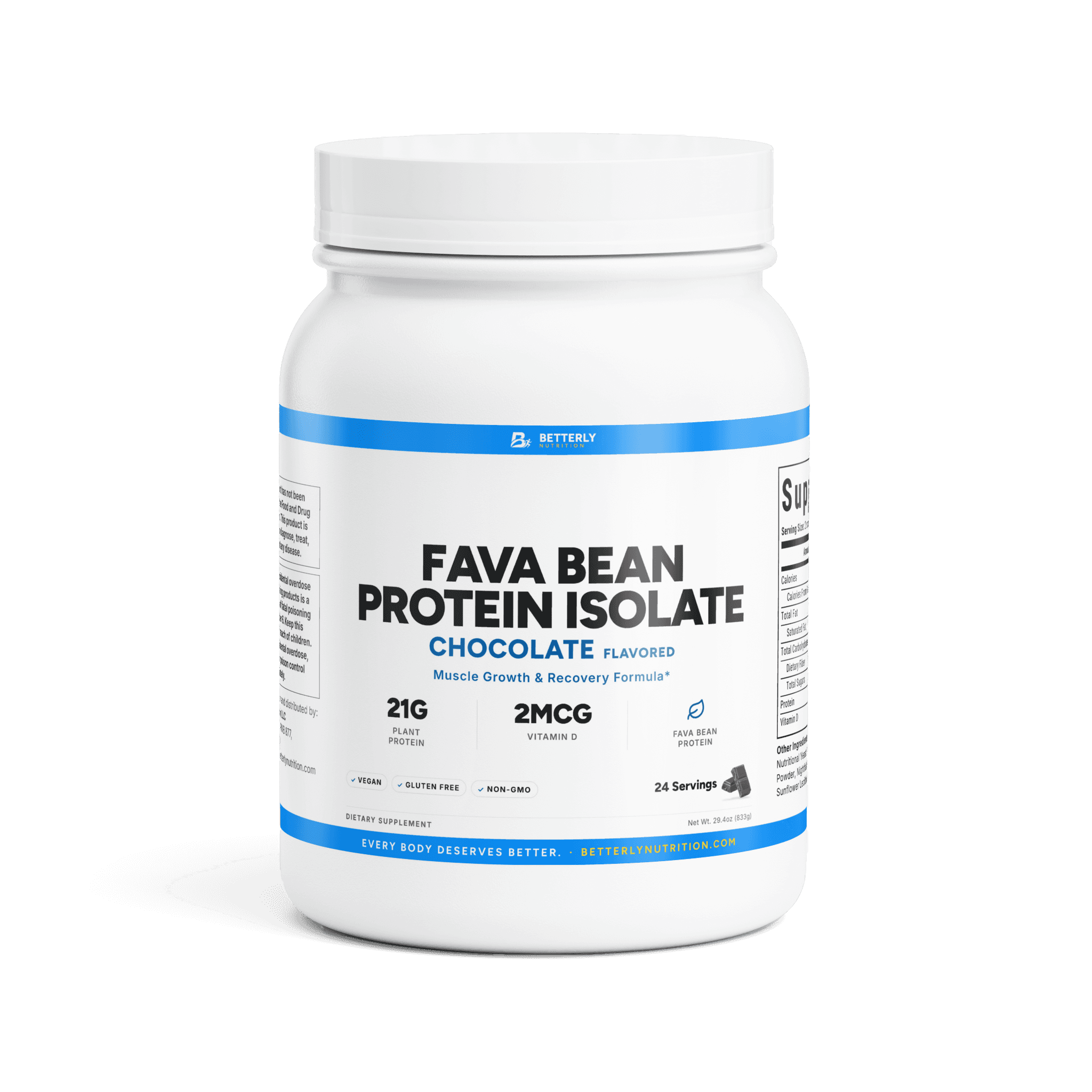
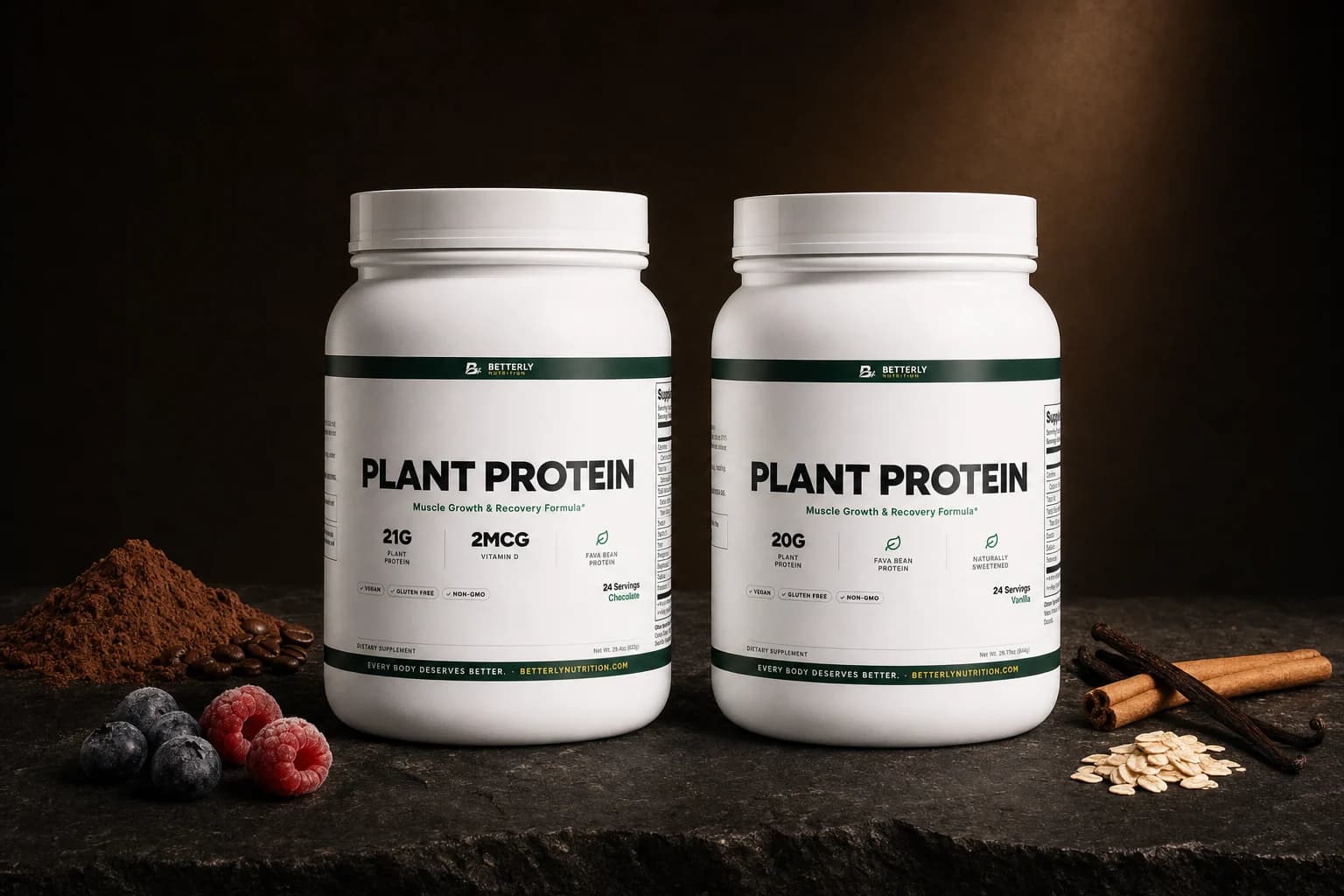
From our shop: Fava Bean Protein Isolate Powder (Chocolate) — 21 g of protein per 2 scoops (34.7g) serving, with Nidau and Nightfall Black cocoa powders on its ingredient list and 24 servings per tub.
What does the label say about how to use plant protein powder?
The Fava Bean Protein Isolate Powder label sets one serving a day for either flavor: 2 scoops mixed with 6-8 oz (177-237 ml) of water or a favorite beverage.
Its "for best results" line suggests taking it 20-30 minutes before a meal with 8 oz (237ml) of water, or as your healthcare professional directs. The smoothie builds below lean on the first line's "favorite beverage" wording instead.
What each panel adds to your glass before any add-ins:
- Chocolate: 21 g of protein and 110 calories per 2 scoops (34.7g) serving, plus 2 mcg of vitamin D (11% DV) and 1 mg of iron (6% DV).
- Vanilla: 20 g of protein and 110 calories per 2 Scoops (35g) serving.
- Both: 24 servings per tub, labeled vegan, gluten free and non-GMO.
Both labels also print "Do not exceed recommended dose," so a bigger glass means more ice or frozen fruit, never a third scoop.
What are some easy plant protein smoothie recipes?
Easy plant protein smoothie recipes start with one 2-scoop serving and 6-8 oz of liquid, then bring in a few extras that suit the flavor, blended with ice.
Mocha cold brew (chocolate)
Blend 2 scoops of the chocolate with 6 oz of cold brew, 2 oz of unsweetened oat milk, a pinch of cinnamon and ice. Coffee and cocoa lean the same way, so we'd call this the strongest cover for an earthy note.
Peanut butter banana (chocolate)
Blend 2 scoops of the chocolate with 8 oz of unsweetened soy or oat milk, half a frozen banana and 1 tablespoon of peanut butter. It's the richest vegan protein shake here and the biggest calorie jump.
Berry vanilla
Blend 2 scoops of the vanilla with 8 oz of cold water or unsweetened almond milk and a handful of frozen mixed berries. The berries give the vanilla a tart edge, and with water the glass stays light.
Cinnamon oat, no banana (vanilla)
Blend 2 scoops of the vanilla with 8 oz of oat milk, 2 tablespoons of rolled oats, cinnamon, a pinch of nutmeg and ice. Run the blender for 45 to 60 seconds so the oats break down and thicken the shake the way a banana would.
From our shop: Fava Bean Protein Isolate Powder (Vanilla) — a no-cocoa base for berry and cinnamon shakes, with 20 g of protein and 0.5 g of total fat per 2 Scoops (35g) serving.
What if plant protein still doesn't taste right to you?
If plant protein still doesn't taste right after these fixes, you can skip the shake, because a protein powder is optional when meals supply enough protein.
In its exercise and athletic performance fact sheet, the NIH Office of Dietary Supplements (ODS) tells athletes they "can probably eat enough foods that contain protein" to cover their needs. Supplements, it says, can help "if needed."
On a plant-based plate, that food can be beans, lentils, tofu, tempeh, whole grains, nuts and seeds.
Still dreading the glass after the grit, sweetness and thickness fixes? Then this powder may not be for you, and that's fine. The same goes if every shake needs syrup, banana and peanut butter first, since by then the extras can carry more calories than the scoop.
If you eat dairy, there's another route: every other powder in our protein collection is whey-based, made from milk.
Who should check with a healthcare provider first?
Check with a healthcare provider before starting a plant protein shake if you're pregnant, nursing, under 18, on any prescription, preparing for surgery or managing a health condition.
Both labels print the same caution: "Consult a physician if pregnant, nursing, under 18, or have a medical condition." The add-ins raise a few more points:
- Fava beans: if a clinician has told you to avoid fava beans, ask before trying a fava-based powder. Our plant protein side effects guide covers the label lines worth checking.
- Caffeine: the mocha build adds whatever caffeine your cold brew holds.
- Family smoothies: the chocolate lists 1 mg of iron per serving and carries the standard iron warning, which calls accidental overdose of iron-containing products a leading cause of fatal poisoning in children under 6. Keep the tubs up high, and ask a doctor before either goes into a child's smoothie.
When you do ask, bring the recipe along with the tub. Your provider can only weigh what's actually in the glass.
FAQ: plant protein taste and texture
Can you make a plant protein shake the night before?
We'd rather you didn't: our Fava Bean Protein Isolate Powder label gives no hold time for a mixed shake, and its directions cover mixing, not storing. For a faster morning, portion tomorrow's frozen fruit, oats or spices into a container at night, then blend them with the powder and cold liquid in the morning.
Why does my vegan protein shake taste bitter?
In our chocolate Fava Bean Protein Isolate Powder, bitterness most likely comes from its two cocoa powders, since unsweetened cocoa is bitter by nature. Cold brew adds more. To soften the glass, swap some of the cold brew for unsweetened oat or soy milk, or blend in half a frozen banana.
How do you make unflavored plant protein taste good?
Unflavored plant protein needs more help than a flavored tub, since nothing in it covers the earthy base. Blend it with a flavorful liquid such as cold brew or oat milk, then add unsweetened cocoa, cinnamon or frozen fruit, and sweeten to taste. Betterly has no unflavored plant protein, so follow that product's own label for the serving.
Can you put plant protein powder in oatmeal or baking?
Our Fava Bean Protein Isolate Powder label gives only drink directions, 2 scoops in 6-8 oz of liquid, so oatmeal and baking fall outside what it covers. We can't tell you how heat or cooking changes this powder's taste or texture. If you stir it into food anyway, keep it to one serving a day and count it as that day's shake.
Can you mix plant protein with whey protein?
You can mix plant protein with whey protein in one shaker, but the drink stops being vegan or dairy-free, since whey comes from milk. It also means two supplement servings, with each tub's "do not exceed" line still applying to its own serving (2 scoops of the plant protein). Skip the combination if you avoid milk, and let a healthcare provider help you judge how much protein suits you.
Sources
- Smell Disorders, NIDCD, National Institutes of Health
- Types of Food Ingredients, U.S. Food and Drug Administration
- Food Allergies: What You Need to Know, U.S. Food and Drug Administration
- Dietary Supplements for Exercise and Athletic Performance: Fact Sheet for Consumers, NIH Office of Dietary Supplements
If this left you looking for somewhere to start, read vegan chocolate protein powder with 21 g of protein per serving — its amounts per serving are listed on the page. For the practical questions this raises, how dosing, sourcing and subscriptions work is answered in one place.