On this page
- Key takeaways
- What are the side effects of plant protein powder?
- Does plant protein cause gas?
- Does plant protein cause bloating, or is it the other ingredients?
- What are the side effects of fava bean protein?
- How much sodium is in a plant protein shake?
- Why does the chocolate flavor carry an iron warning?
- How do you take plant protein powder so it sits well?
- When don't you need a plant protein powder?
- Who should check with a healthcare provider first?
- FAQ: plant protein powder side effects
- Sources
The short answer: Plant protein powder side effects are mostly digestive: gas, bloating, or a heavy, too-full stomach. Federal health pages trace gas to swallowed air and to carbohydrates that gut bacteria ferment, so how you drink a shake matters too, not just what's in it. A fava-based powder like ours adds two label details worth knowing: 180 to 190 mg of sodium per serving, and an iron warning on the chocolate tub.
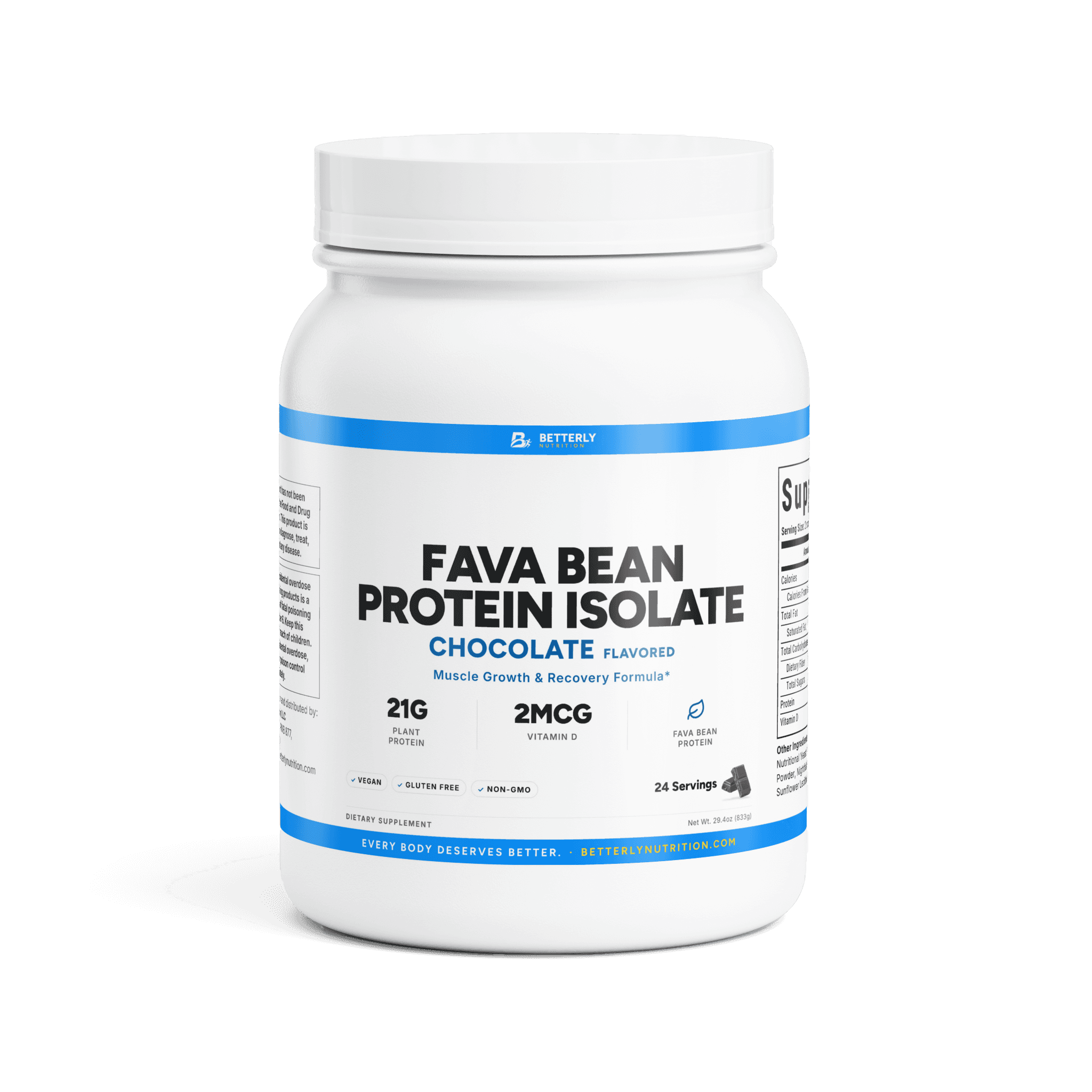
We sell a Fava Bean Protein Isolate Powder (Vanilla) and a chocolate version of it, so we're not a neutral voice here. Every product number below comes from our own two Supplement Facts panels, the limits come from the federal pages we name, and we'll say plainly where a panel can't answer your question.
Key takeaways
- Plant protein's usual complaints are digestive, and MedlinePlus notes that a food that gives one person gas may not affect another.
- NIDDK lists beans, peas and lentils among foods whose carbohydrates may lead to extra gas, and fava beans belong to that legume group.
- Betterly's Fava Bean Protein Isolate Powder lists 180 mg of sodium per 2 Scoops (35g) serving of vanilla and 190 mg per 2 scoops (34.7g) serving of chocolate, 8% of the Daily Value either way.
- The chocolate flavor lists 1 mg of iron per 2 scoops (34.7g) serving, so its label carries the standard warning to keep it away from young children.
- Anyone told to steer clear of fava beans or other legumes should check with their doctor before using a fava-based product.
What are the side effects of plant protein powder?
Plant protein powder side effects are usually digestive, like gas, bloating or a heavy stomach, and how strongly you notice them varies a lot from person to person.
MedlinePlus puts it simply: "Foods that produce gas in one person may not cause gas in another." The same goes for vegan protein powder side effects: the other ingredients in the scoop and how fast you drink it can play a part, not just the protein.
Three more label details deserve a look: sodium, iron and the protein source. Here's where each shows up, with our numbers per serving:
| What you notice or ask about | Label line to check | On our tubs, per serving |
|---|---|---|
| Gas | Carbohydrates, fiber, sweeteners | 6 g carbs (vanilla); 4 g with 1 g fiber (chocolate); stevia is the only named sweetener |
| Bloating or fullness | Total fat, liquid in the directions | 0.5 g or 1.5 g fat; 6-8 oz of liquid per serving |
| Salt | Sodium and its %DV | 180 mg (vanilla) or 190 mg (chocolate), 8% DV |
| Iron warning | Iron row and WARNING text | Chocolate only: 1 mg iron, 6% DV |
| Fava caution | Other Ingredients | Fava Bean Protein Isolate listed first on both |
Only the first two rows depend on how your own digestion responds. The other three you can settle by reading the tub before you ever open it.
Does plant protein cause gas?
Plant protein powder can cause gas for some people; NIDDK lists legumes such as beans, peas and lentils among gas-linked foods but doesn't address protein isolates.
The page from NIDDK, the NIH institute that covers digestion, makes one thing clear: the gas comes from carbohydrates that pass through undigested until bacteria further down ferment them.
And a protein isolate isn't a bowl of beans. It's a concentrated protein ingredient, and the panel shows how little room is left for anything else. Per 2 Scoops (35g) serving, our vanilla lists 20 g of protein and 6 g of total carbohydrates. The chocolate lists 21 g of protein and 4 g of carbohydrates per 2 scoops (34.7g) serving.
Beyond total sugars (4 g in the vanilla, 1 g in the chocolate) and the chocolate's 1 g of fiber, neither panel names the specific carbohydrates, so we can't promise you a gas-free shake.
The second source is air. MedlinePlus names swallowed air as one of gas's two sources, and a shaker bottle can whip some of it into a foamy drink.
Does plant protein cause bloating, or is it the other ingredients?
Plant protein powder bloating can come from the protein source or from the ingredients around it, so read the Other Ingredients line before you blame the fava, pea or rice.
NIDDK's diet page names several things that also turn up in protein tubs:
- Sugar alcohols. Sweeteners ending in "-ol," such as sorbitol, xylitol and erythritol. Our two ingredient lists name one sweetener, Stevia Extract (leaf), and no "-ol" sweetener at all.
- Fiber. NIDDK says some people get more gas when they have too much fiber. Both our tubs contain apple pectin powder, a fiber from apples. The chocolate panel lists 1 g of dietary fiber (4% DV), and the vanilla panel has no fiber row at all.
- Fat. NIDDK notes that high-fat foods can increase bloating for some people. Both tubs contain MCT oil powder, but total fat is only 0.5 g per vanilla serving and 1.5 g per chocolate serving (1 g of it saturated).
- Your mixer. The label says water or your favorite beverage. NIDDK's list also includes dairy products and fruit juices, so a shake blended into milk or juice brings its own gas-linked carbohydrates along.
Then there's volume. The directions pair each serving with 6-8 oz of liquid and, for best results, 8 oz of water 20-30 minutes before a meal. That's a full glass or more of liquid shortly before you eat, which can feel like a lot on its own.
We can't tell you which of these, if any, will bother you, but the label lets you rule each one in or out.
What are the side effects of fava bean protein?
Fava bean protein is a legume protein, so the same gas questions apply, and it carries one extra caution for people who've been told to avoid fava beans.
Fava, sometimes spelled faba, falls under the legumes NIDDK names, so its note about beans, peas and lentils covers it too. We don't have data on side effects from our specific isolate, and we won't guess at any.
If you've been told to avoid fava beans or other legumes, check with your doctor before using a fava-based product. Our label carries no fava or legume warning, so the tub won't flag it for you.
Fava isn't the only protein in our tubs, either. Both list YESTEIN™ Fermented Nutritional Yeast Protein further down, a protein made from yeast rather than beans. Our fava bean protein vs pea protein breakdown covers how fava stacks up against the more common pea base.
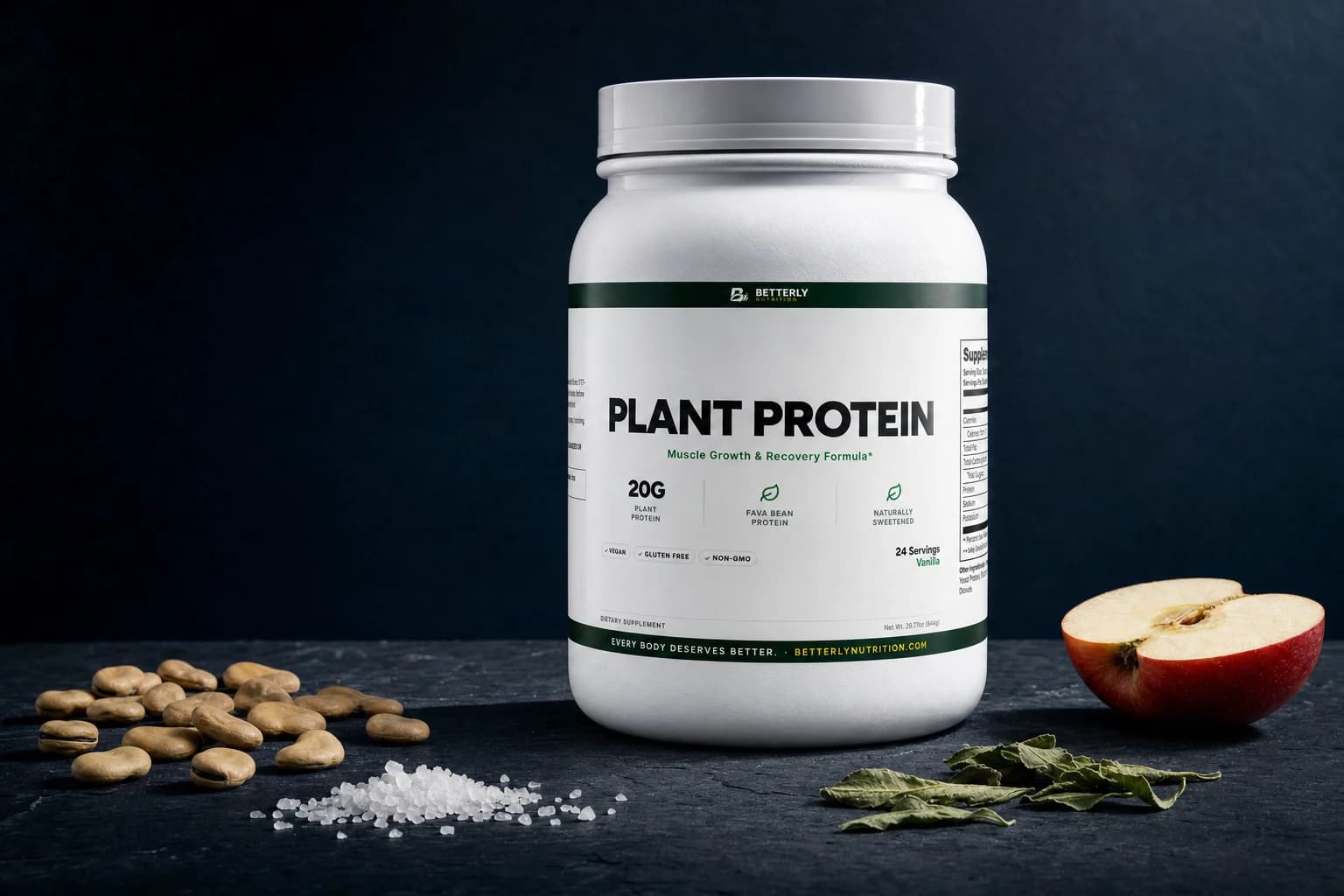
From our shop: Fava Bean Protein Isolate Powder (Vanilla) — 20 g of protein per 2 Scoops (35g) serving, with stevia leaf extract as the only named sweetener and no iron on its panel.
How much sodium is in a plant protein shake?
Betterly's Fava Bean Protein Isolate Powder lists 180 mg of sodium per vanilla serving and 190 mg per chocolate serving, and both amounts equal 8% of the Daily Value.
Those figures are per 2 Scoops (35g) serving for the vanilla and per 2 scoops (34.7g) serving for the chocolate, and sea salt appears on both ingredient lists. The FDA's consumer page, Sodium in Your Diet, puts the Daily Value under 2,300 mg a day. It calls 5% DV or less per serving low and 20% DV or more high.
At 8%, either flavor lands between those two marks. It's not a low-sodium food, and it's not a high-sodium one either.
The shake's sodium sits on top of whatever your meals bring, and an electrolyte drink after a sweaty workout adds more. Our look at whether you can overdo electrolytes walks through that math. Potassium differs far more between the flavors: 5 mg in the vanilla and 105 mg (2% DV) in the chocolate.
If your healthcare provider has given you a sodium number to stay under, count the shake toward it like any other food.
Why does the chocolate flavor carry an iron warning?
Fava Bean Protein Isolate Powder (Chocolate) lists 1 mg of iron (6% DV) per 2 scoops (34.7g) serving, and supplements containing iron carry a standard warning about accidental overdose in young children.
The label's wording, exactly as printed: "WARNING: Accidental overdose of iron-containing products is a leading cause of fatal poisoning in children under 6. Keep this product out of reach of children. In case of accidental overdose, call a doctor or poison control center immediately."
The warning comes with the ingredient. The NIH Office of Dietary Supplements explains that dietary supplements containing iron carry a label statement to keep them out of children's reach. It also puts the adult upper limit for iron at 45 mg a day, counting food, drinks and supplements together, so 1 mg per serving is small by that measure.
The vanilla panel lists no iron, and its label has no iron warning. Both tubs still say to keep them out of children's reach.
Tracking iron across several products? Our daily iron needs guide lists the amounts by age and sex.
How do you take plant protein powder so it sits well?
The suggested use on Betterly's Fava Bean Protein Isolate Powder is two scoops a day for adults, mixed into 6-8 oz (177-237 ml) of water or your favorite drink.
For best results, the label adds, take it 20-30 minutes before a meal with 8 oz (237ml) of water, or as your healthcare professional directs. The caution printed below opens with "Do not exceed recommended dose."
Within those directions, NIDDK's habit list suggests some easy things to try:
- Skip the straw and the sparkling water, since NIDDK lists drinking with a straw and fizzy drinks among habits doctors may suggest limiting.
- Let the foam settle, then sip sitting down. Eating slowly and sitting down both appear on NIDDK's list, and so does not talking while you drink.
- Pick your mixer on purpose. Plain water adds nothing to the panel's numbers, while milk or juice brings carbohydrates that NIDDK links with gas.
- Keep to one serving, which is the label's limit whatever your protein goal.
- Jot down what you had. NIDDK notes that a doctor may want a written log of meals, drinks and gas symptoms, and a few days of notes is easy to start.
Test one change at a time. Swap the mixer and drop the straw on the same day, and you won't know which one helped. Timing is its own question, covered in our guide on when to take plant protein powder.
From our shop: Fava Bean Protein Isolate Powder (Chocolate) — 21 g of protein per 2 scoops (34.7g) serving, with 1 g of dietary fiber and two cocoa powders on the ingredient list.
When don't you need a plant protein powder?
Skip plant protein powder if food already gets you enough protein, or if shakes keep leaving you uncomfortable after you've changed how you drink them.
A tub is a convenience for rushed mornings, not something your meals can't match. You can probably leave it on the shelf if:
- Your meals already include protein foods you digest comfortably.
- You've adjusted your mixer, your pace and your straw habit, and shakes still don't sit well with you.
- You've been told to avoid fava beans and haven't talked with your doctor yet.
Want a different base? Compare every tub in our protein collection. Dairy powders raise their own version of this question: does whey protein cause bloating?
Who should check with a healthcare provider first?
Check with a healthcare provider before using plant protein powder if you're pregnant, nursing, under 18, on medication, living with a medical condition, or told to avoid fava beans.
Both flavors print the same caution: "Do not exceed recommended dose. Consult a physician if pregnant, nursing, under 18, or have a medical condition."
Three other situations are worth a quick conversation too:
- If you've been told to avoid fava beans or you have a legume allergy, check with your doctor before using a fava-based product. Our fava bean protein vs pea protein breakdown explains why some people are told to avoid fava.
- If you take prescription medication or have a procedure coming up, mention the shake to your prescriber or surgical team like any supplement. Name the flavor, since only the chocolate contains iron.
- If you've been given a sodium target, the 180 or 190 mg per serving belongs in your daily count.
If a shake ever brings on something more than a mildly unsettled stomach, stop taking it and get medical advice.
FAQ: plant protein powder side effects
Can vegan protein powder upset your stomach?
Yes, vegan protein powder can upset some people's stomachs. Powders built on legumes such as fava or pea come from a food group NIDDK links with extra gas. Sweeteners, added fiber, your mixer and how fast you drink can all add to it.
Is chocolate or vanilla plant protein easier on your stomach?
Neither flavor of Betterly's Fava Bean Protein Isolate Powder reads as gentler on its label, but the two panels do differ. Per 2 scoops (34.7g) serving, the chocolate lists 1 g of fiber, 1.5 g of fat, 1 g of total sugars, 190 mg of sodium and 1 mg of iron. Per 2 Scoops (35g) serving, the vanilla has no fiber row and lists 0.5 g of fat, 4 g of total sugars and 180 mg of sodium. Both name stevia leaf extract as the only sweetener.
Is fava bean protein a concern with a legume allergy?
Fava bean protein comes from a legume, so if you have a legume allergy, check with your doctor before using a fava-based product. On Betterly's tubs, fava appears as the first ingredient, Fava Bean Protein Isolate, and there's no separate "Contains" statement to catch your eye. On other brands, look for fava, faba or broad bean anywhere in the ingredient list.
Is plant protein powder safe during pregnancy?
Betterly's Fava Bean Protein Isolate Powder label tells anyone pregnant or nursing to consult a physician, so that conversation comes before the first scoop. Show your provider the full panel, including the protein, the sodium and, for the chocolate, the iron. We can't clear any supplement for pregnancy, ours included.
Can you drink two plant protein shakes a day?
Not with Betterly's Fava Bean Protein Isolate Powder. Its suggested use is one serving of two scoops daily, and the label warns against going past the recommended dose. A second shake would also double the sodium to 360 mg (vanilla) or 380 mg (chocolate). If you want more protein in your day, add it through meals instead.
Sources
- Eating, Diet, & Nutrition for Gas in the Digestive Tract (NIDDK, National Institutes of Health)
- Gas (MedlinePlus, National Library of Medicine)
- Sodium in Your Diet (U.S. Food and Drug Administration)
- Iron: Fact Sheet for Consumers (NIH Office of Dietary Supplements)
If this left you looking for somewhere to start, read vegan protein powder without sugar alcohols — its amounts per serving are listed on the page. For the practical questions this raises, how dosing, sourcing and subscriptions work is answered in one place.