On this page
- Key takeaways
- Does protein powder have fiber, and why do some add it?
- What is resistant potato starch (Solnul®) in a protein powder?
- How much fiber is in a protein shake with fiber?
- How far does 2 g of fiber go toward your daily amount?
- Protein powder with fiber and low sugar: which label rows matter?
- Protein powder with fiber or a fiber supplement: which fits?
- How do you take a fiber-added protein shake, going by the label?
- When is the extra fiber in a shake not worth it?
- Who should check with a healthcare provider first?
- FAQ: protein powder with fiber
- Sources
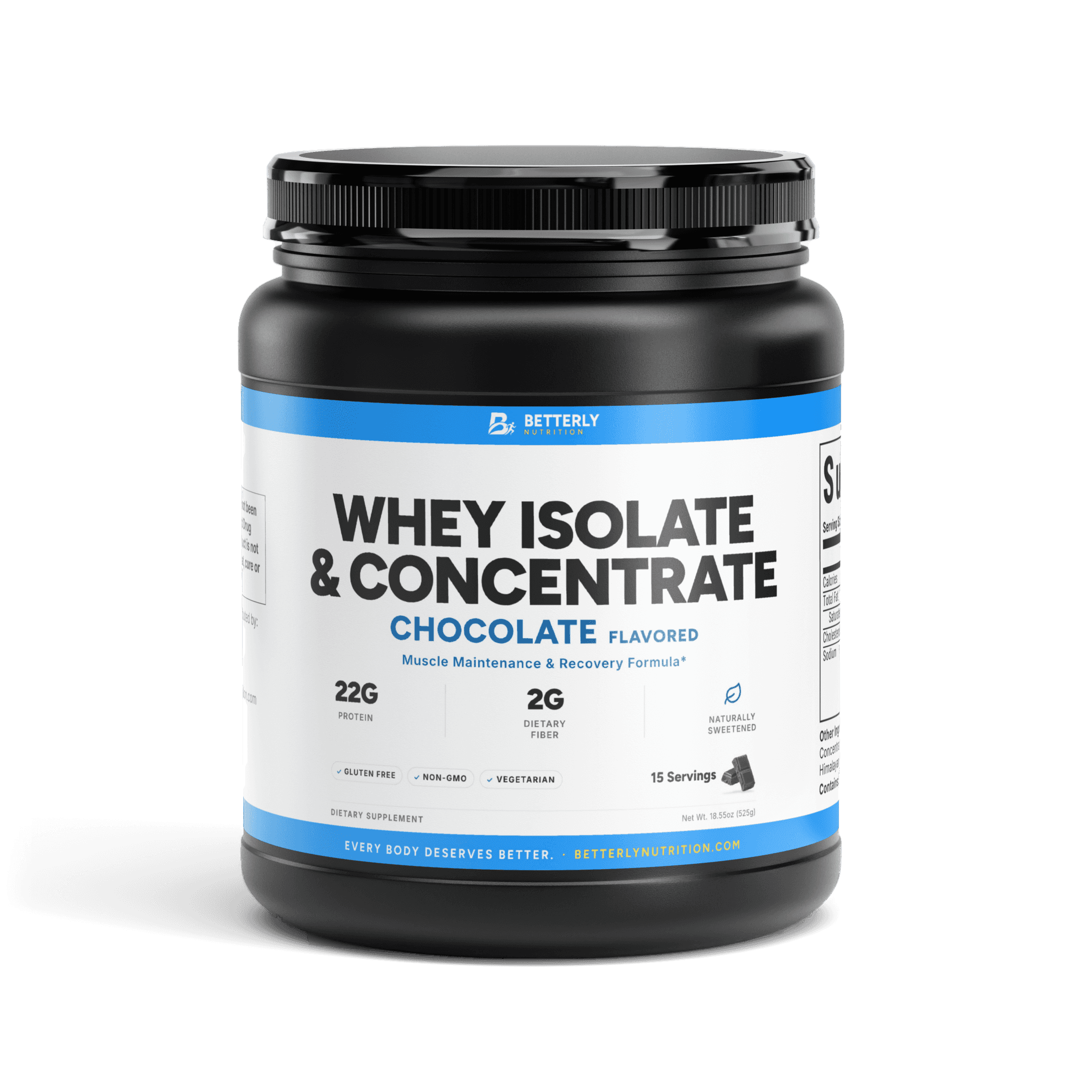
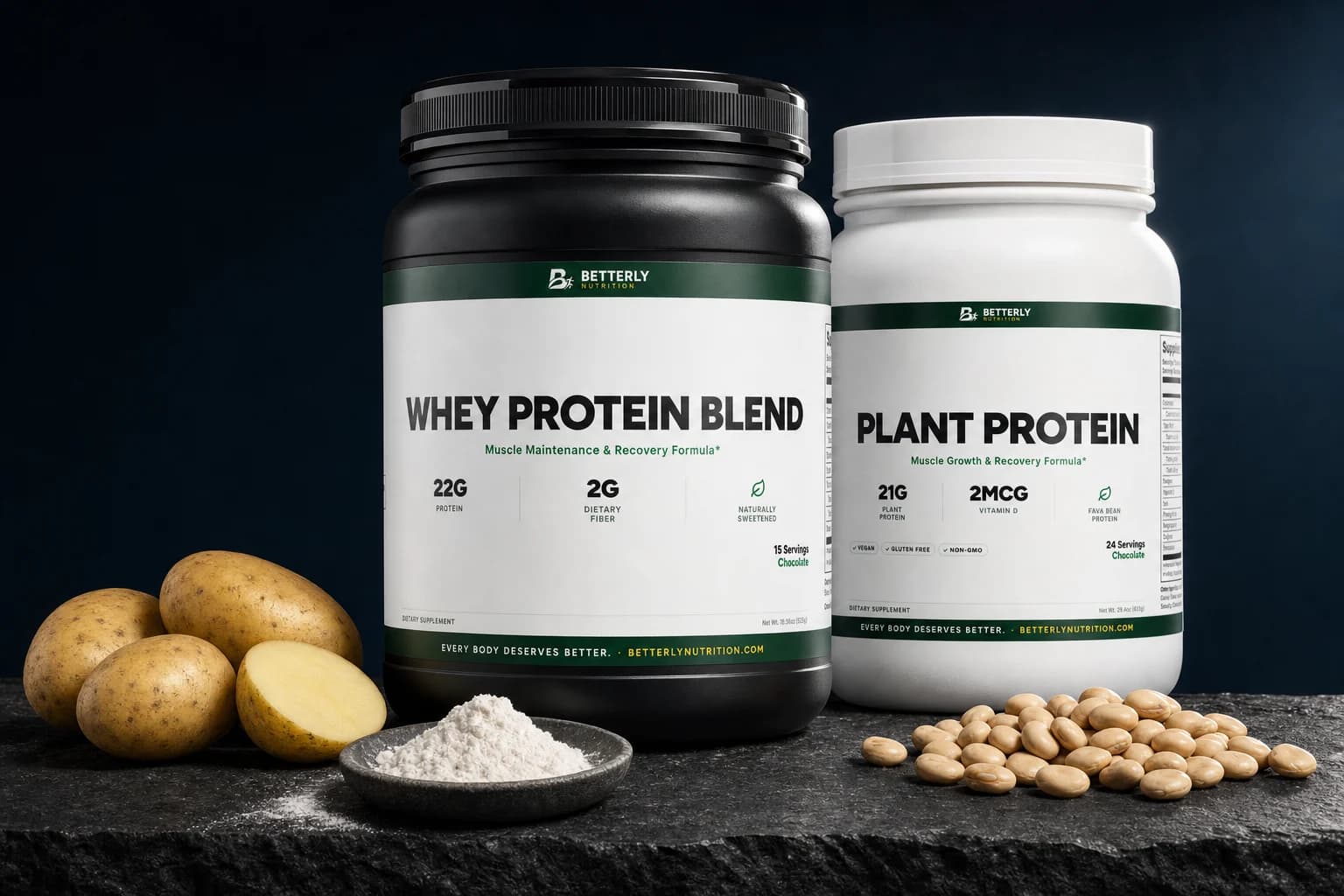
The short answer: A whey protein powder with fiber gets that fiber from ingredients mixed in with the whey, since whey comes from milk. Our Whey Isolate & Concentrate Blend Powder (Chocolate) adds Solnul® resistant potato starch and guar gum, and its Supplement Facts list 2 g of dietary fiber per 2 scoops (approximately 35 g) serving. That's 7% of the Daily Value. MedlinePlus puts the recommended daily intake at 21 to 38 g, so the shake is a small top-up.
We sell that tub, so we aren't neutral here. That's why our fiber rows sit side by side below, including the tubs whose panels skip fiber entirely.
Key takeaways
- MedlinePlus describes fiber as a substance found in plants, and whey comes from milk, so the fiber on a whey powder's label comes from ingredients added to the whey.
- Solnul® is the branded resistant potato starch in our Whey Isolate & Concentrate Blend Powder, and resistant starch is a type of fiber: starch the body doesn't break down like ordinary starch.
- Fiber varies from tub to tub: Betterly's chocolate whey powders print 1 g or 2 g per serving, while our two vanilla whey isolates print no Dietary Fiber row at all.
- If more fiber is your real goal, beans, fruit, vegetables, whole grains or a product built around fiber will do more than a protein shake can.
Does protein powder have fiber, and why do some add it?
Whey protein has no fiber of its own, so the fiber in a protein powder usually comes from added ingredients such as resistant starch, a gum, pectin or cocoa.
According to MedlinePlus's fiber overview, fiber is a substance found in plants, and the kind you can eat turns up in fruits, vegetables and grains. Whey is a milk protein. So when a whey tub prints a Dietary Fiber row, those grams belong to something mixed in with the whey.
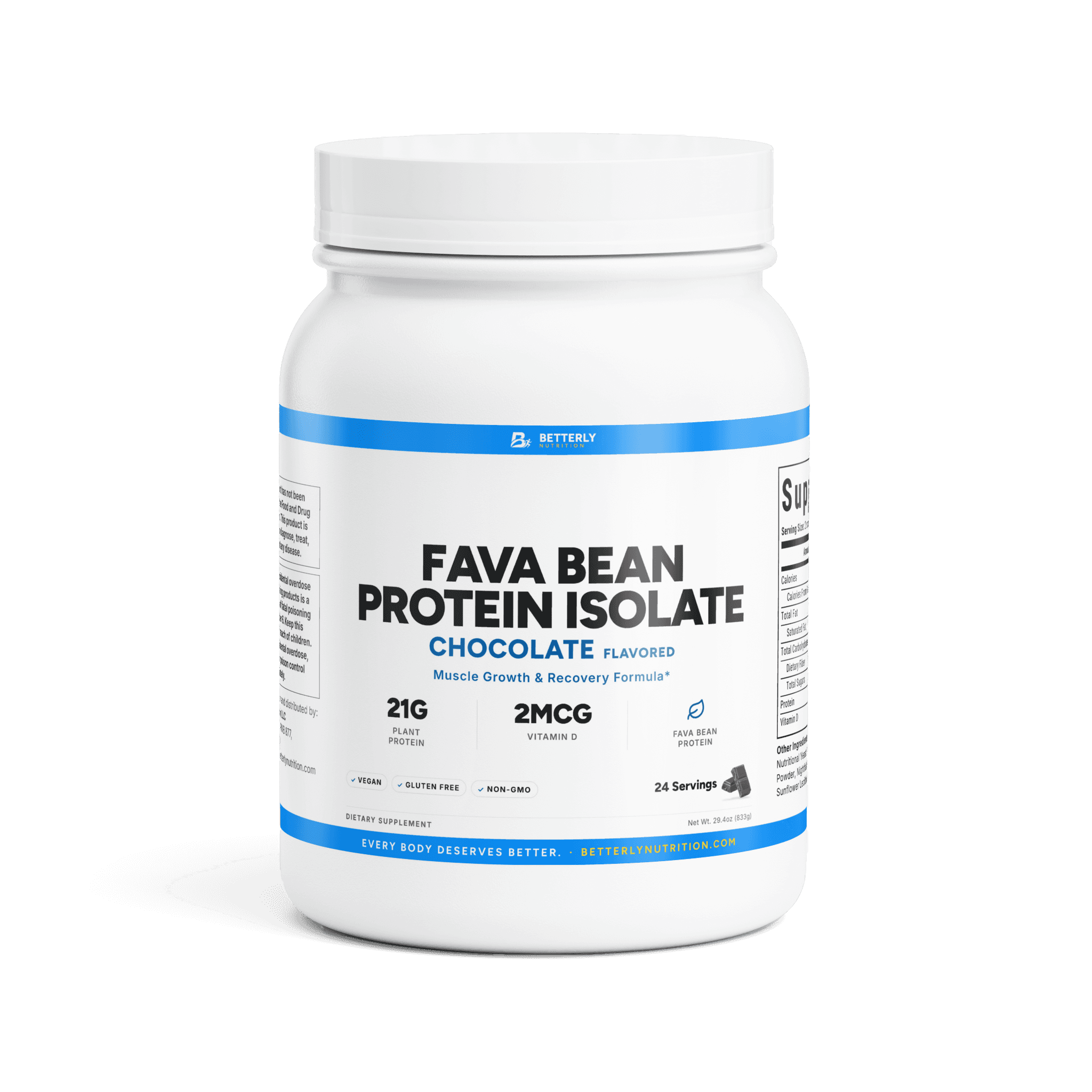
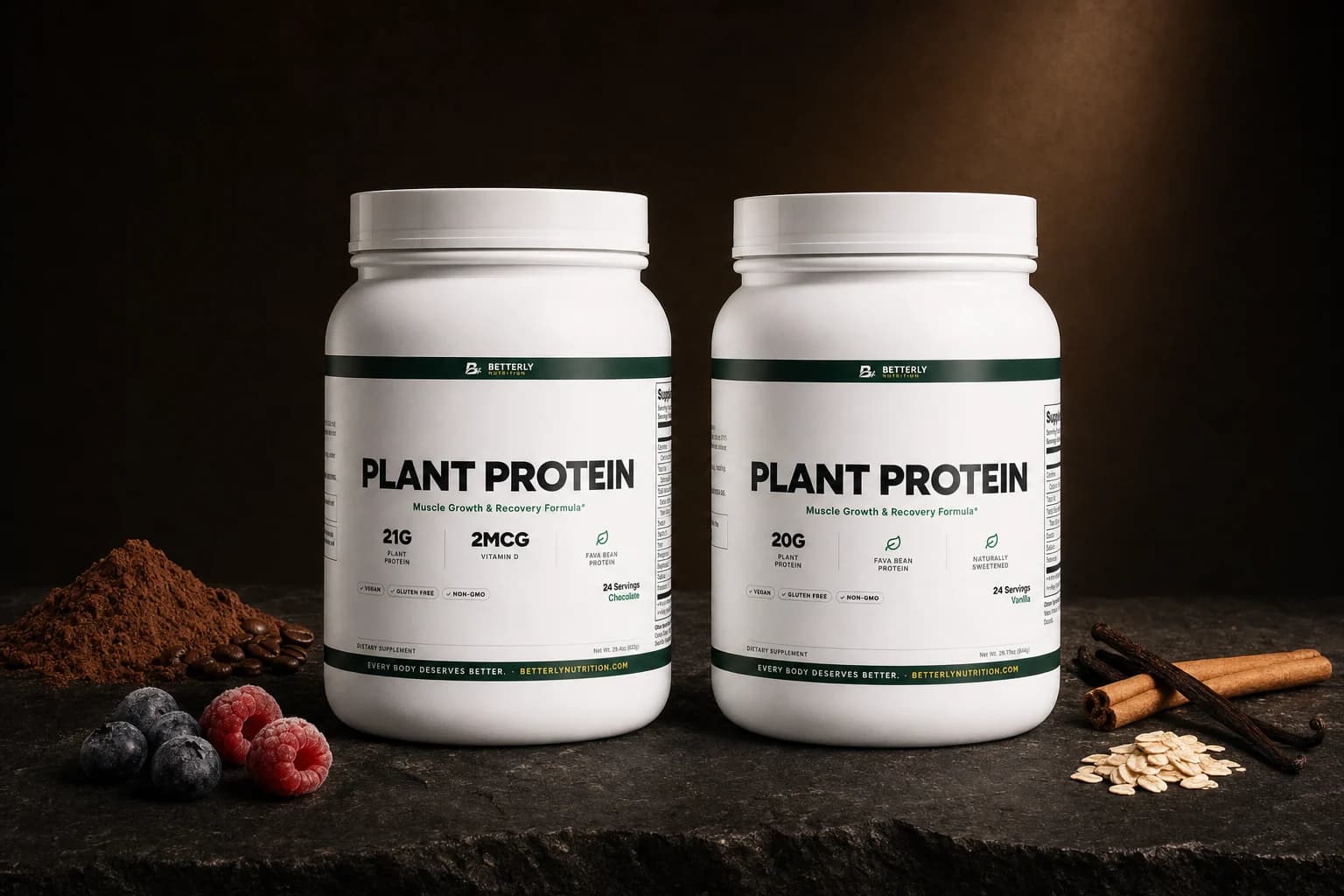
Plant-based doesn't promise much fiber either. Our Fava Bean Protein Isolate Powder (Chocolate) prints 1 g per 2 scoops (34.7g) serving. Fava bean protein isolate leads its ingredient list, with apple pectin powder and two cocoa powders further down.
So why add fiber at all? First, many people run short: MedlinePlus puts the average American's intake at about 16 grams a day. Second, some fiber-type ingredients change the drink. Guar gum thickens a shake, and our explainer on gums in protein powder shows how to spot it.
The third reason is less flattering: "with fiber" looks good on a tub. The number under those words matters more.
What is resistant potato starch (Solnul®) in a protein powder?
Resistant potato starch is potato starch that the body doesn't break down like ordinary starch, which is why it counts as a type of fiber.
MedlinePlus lays out the split in its page on carbohydrates. The body breaks sugars and most starches down into glucose for energy, while fiber is the part of food it doesn't break down. The word "resistant" tells you which side of that line a starch falls on.
On our blend's label, the ingredient reads "Solnul® (Resistant Potato Starch)." The ® marks a registered brand name, and the words in brackets name the ingredient. Only the whey blend itself comes before it in the ingredient list.
Regulators are still sorting resistant starch out. The FDA's Q&A on dietary fiber puts "high amylose starch (resistant starch 2)" on its list of fibers it plans to propose adding, next to inulin and polydextrose. Potato starch never appears on that list, and our label names no resistant starch type for Solnul®, so the list doesn't settle how Solnul® is counted.
The 2 g on our panel is a total, not a Solnul® figure. Guar gum, which sits on the FDA's main fiber list, shares the same ingredient list, and the label assigns no grams to either one.
Our label makes no promises about Solnul® and never calls it a prebiotic, so we don't either.
How much fiber is in a protein shake with fiber?
On our labels, a protein shake with fiber holds 1 g or 2 g per serving. Whey Isolate & Concentrate Blend Powder and Collagen Peptides Powder (Chocolate) top the list at 2 g.
| Powder | Serving | Dietary fiber (%DV) | Total sugars |
|---|---|---|---|
| Whey Isolate & Concentrate Blend Powder (Chocolate) | 2 scoops (approximately 35 g) | 2 g (7%) | 2 g |
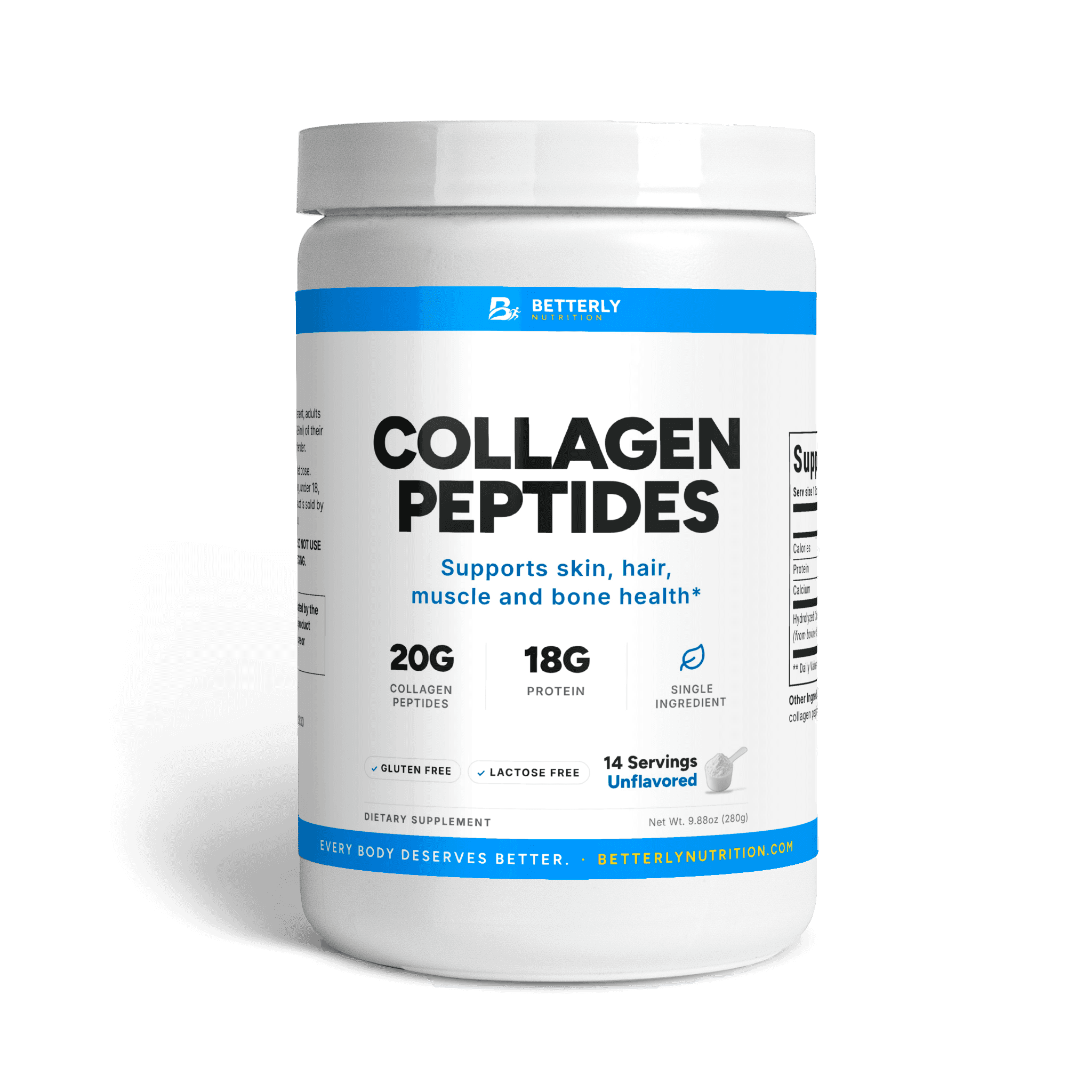
| Collagen Peptides Powder (Chocolate) | 2 Scoops (27 g) | 2 g (7%) | Not listed |
| Fava Bean Protein Isolate Powder (Chocolate) | 2 scoops (34.7g) | 1 g (4%) | 1 g |
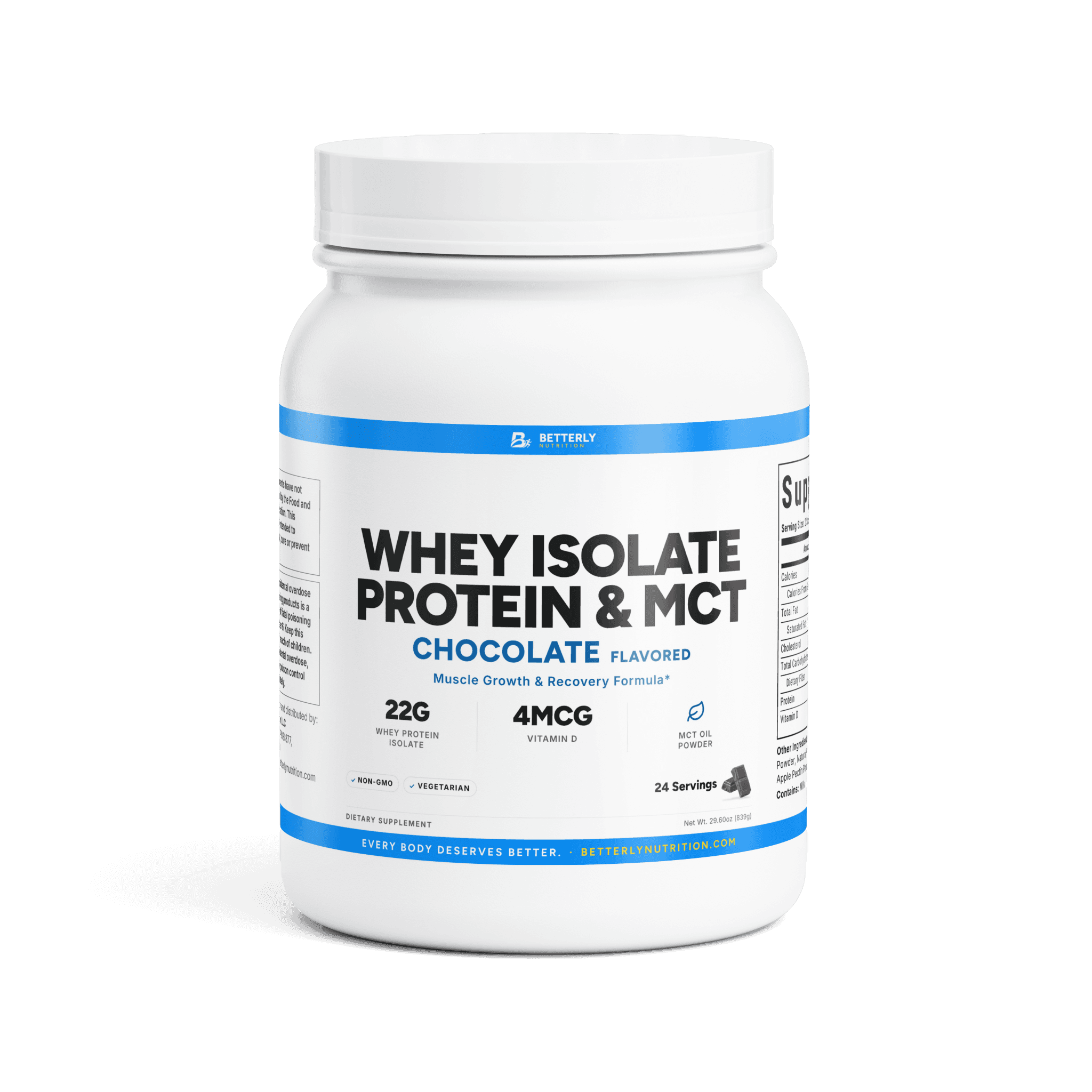
| Whey Protein Isolate & MCT Powder (Chocolate) | 2 Scoops (35g) | 1 g (5%) | Not listed |
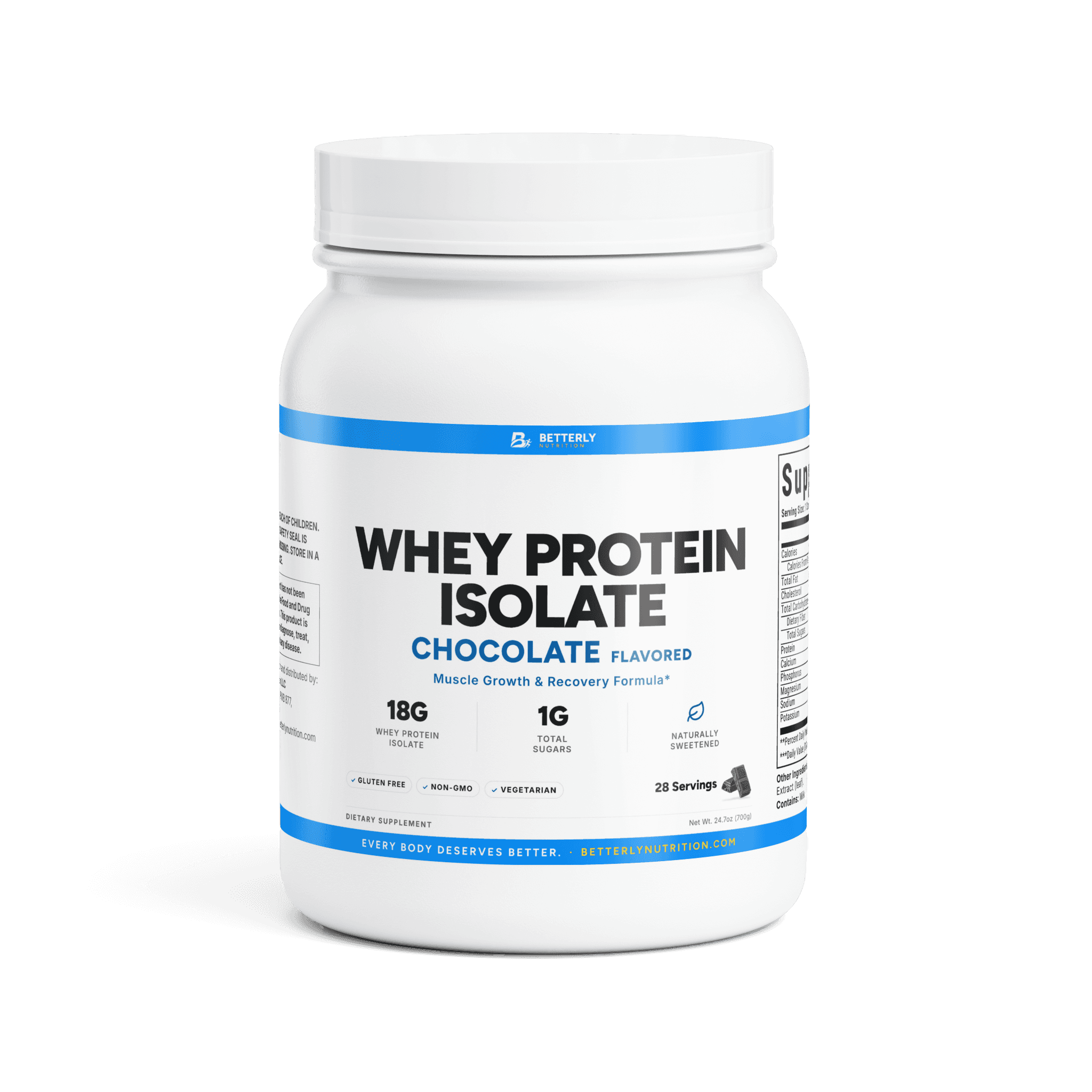
| Whey Protein Isolate Powder (Chocolate) | 1 Scoop (25g) | 1 g (3%) | 1 g |
The fiber column tops out at 2 g, printed as 7% DV. No scoop here reaches 10%, because protein is the job these powders do.
So is there fiber in whey protein powder? In ours, it depends on the tub. Whey Isolate & Concentrate Blend Powder (Vanilla) matches the chocolate blend at 2 g per 2 scoops (approximately 32 g) serving. Whey Protein Isolate Powder (Vanilla) and Whey Protein Isolate & MCT Powder (Vanilla) have no Dietary Fiber row on their panels, so check the flavor you want in our protein collection instead of assuming.
From our shop: Whey Isolate & Concentrate Blend Powder (Chocolate) — Solnul® resistant potato starch and guar gum sit on its ingredient list, and each 2 scoops (approximately 35 g) serving lists 2 g of dietary fiber with 22 g of protein.
How far does 2 g of fiber go toward your daily amount?
The 2 g of fiber in one serving of Whey Isolate & Concentrate Blend Powder is 7% of the FDA's 28 g Daily Value, a small slice of a day's fiber.
The FDA's table of Daily Values lists 28 g for dietary fiber, and 2 divided by 28 is just over 7%. The same page offers a rule of thumb: a serving at 5% DV or under counts as low, and one at 20% DV or over counts as high. A 7% shake clears "low" by a whisker.
Against MedlinePlus's 21 to 38 grams a day, 2 g is just under a tenth of the low end and about a nineteenth of the high end.
Picture a day at the U.S. average of about 16 grams. One serving of the blend takes you to about 18 g, still 3 g short of the lowest recommendation.
Doubling up isn't the answer: the label directs one serving (2 scoops) per shake and says not to exceed the recommended dose. Food is the better lever. MedlinePlus points to cereals, dried beans and peas, fruits, vegetables and whole grains, and notes that peeling produce cuts the fiber you get.
Protein powder with fiber and low sugar: which label rows matter?
For a protein powder with fiber and low sugar, compare the Dietary Fiber and Total Sugars rows per serving, then find the sweetener in the ingredient list.
Our Whey Isolate & Concentrate Blend Powder (Chocolate) prints 2 g of total sugars per 2 scoops (approximately 35 g) serving, the same number as its fiber. Stevia leaf extract does the sweetening, and no sugar or syrup appears in its ingredient list. The Fava Bean Protein Isolate Powder (Chocolate) prints 1 g of total sugars per 2 scoops (34.7g) serving and uses stevia extract (leaf).
The blend's 6 g of total carbohydrates hides a small puzzle: take away 2 g of fiber and 2 g of sugars, and 2 g go unnamed. Panels break out fiber and sugars, not every carbohydrate type.
Compare per serving, not per scoop. Our blend's serving is 2 scoops, while a serving of Whey Protein Isolate Powder (Chocolate) is 1 Scoop (25g). The FDA's Daily Value page nudges shoppers the same way we would: more often, choose foods higher in dietary fiber and lower in added sugars. None of our protein labels carries a "low sugar" badge, so we'll give you the grams and let you judge.
Protein powder with fiber or a fiber supplement: which fits?
Pick a protein powder with fiber when protein is the goal and a couple of fiber grams are a bonus; pick a fiber product when more fiber is the goal.
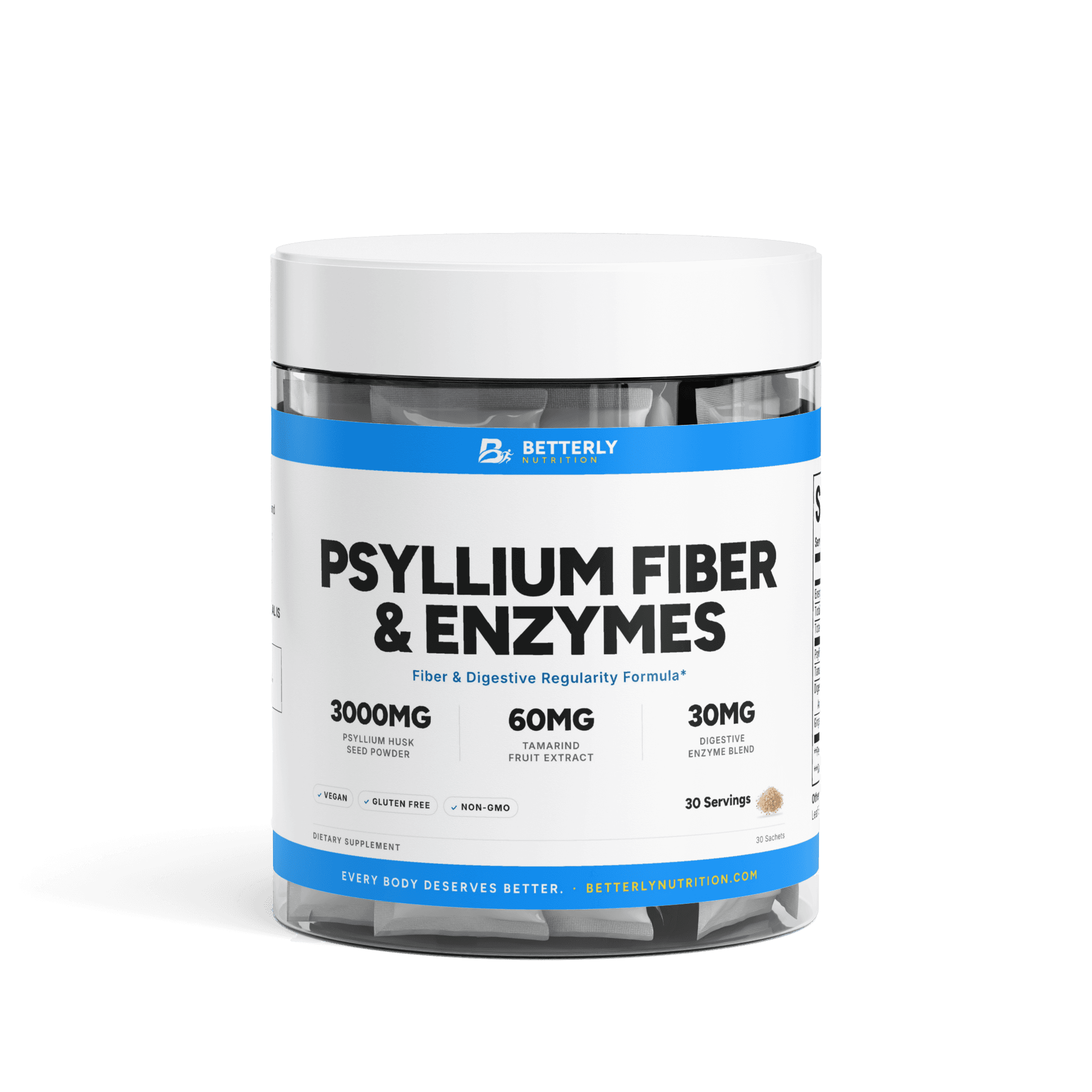
Our Psyllium Fiber & Digestive Enzyme Powder shows the difference. Its main ingredient is 3000mg of Psyllium Husk Seed Powder (Plantago ovata) per 1 Sachet serving, and psyllium husk is one of the added fibers on the FDA's main list.
One honest caveat: that panel prints no separate Dietary Fiber row, so we won't turn 3000mg of psyllium powder into a fiber gram figure. Still, the sachet is built around fiber, and the shake is built around 22 g of protein.
| What you're after | Better fit | What the label shows |
|---|---|---|
| Protein with a little fiber | Whey Isolate & Concentrate Blend Powder | 22 g protein, 2 g fiber per serving |
| Fiber as the main event | Psyllium Fiber & Digestive Enzyme Powder | 3000mg psyllium husk per sachet |
| Vegan protein | Fava Bean Protein Isolate Powder (Chocolate) | 21 g protein, 1 g fiber, labeled vegan |
| The shortest ingredient list | Whey Protein Isolate Powder (Chocolate) | 18 g protein, three ingredients |
Shop for the main job. If fiber wins, our fiber supplement buying guide compares psyllium with other fiber types.
From our shop: Psyllium Fiber & Digestive Enzyme Powder — 3000mg of psyllium husk seed powder per 1 Sachet serving, in 30 single-serve sachets, labeled vegan, gluten free and non-GMO.
How do you take a fiber-added protein shake, going by the label?
Mix one serving of Whey Isolate & Concentrate Blend Powder, which is 2 scoops, into 8–12 oz (240–355 ml) of cold water and blend or shake it thoroughly, as its label directs.
Whether you pour 8 oz or 12 oz, the glass still holds 2 g of fiber, because water adds none. The other labels here set their own directions:
- Fava Bean Protein Isolate Powder (Chocolate): two scoops with 6-8 oz (177-237 ml) of water or your favorite beverage daily. For best results, the label suggests taking it 20-30 minutes before a meal with 8 oz (237ml) of water.
- Psyllium Fiber & Digestive Enzyme Powder: 1 sachet in 6.8 fl oz (200 mL) of water, drunk right away, 1–2 times daily, away from meals.
- Every label here: do not exceed the recommended dose.
Bring new fiber in slowly. MedlinePlus's fiber page suggests spreading any increase across a few weeks and drinking plenty of fluids, and it warns that a lot of fiber at once can bring intestinal gas, bloating and cramps. So start one fiber-containing product at a time, not a new shake and a new sachet in the same week. For clock-time questions, see our guide to fiber timing.
When is the extra fiber in a shake not worth it?
The 2 g of fiber in Whey Isolate & Concentrate Blend Powder adds little when meals bring plenty, when you take a fiber product, or when the shake replaces a high-fiber meal.
If our psyllium powder or another fiber product is already in your routine, that's where your fiber plan lives. Choosing a protein tub for its fiber row adds only a gram or two, so judge it on protein, ingredients and flavor.
Say a shake replaces your usual whole-grain cereal and fruit. The scoop's 2 g then becomes that meal's whole fiber count, so let fruit or whole grains turn up at another meal or snack.
And when dried beans, vegetables and whole grains show up at most of your meals, the fiber row on a protein label is a tiebreaker at most.
Who should check with a healthcare provider first?
Ask a doctor or pharmacist before starting a fiber-containing shake or sachet if you're on medication, pregnant, nursing, under 18 or managing a medical condition.
Our psyllium sachet carries the most specific caution in this guide: "Consult a physician before use or if taking medication; take at least 2 hours apart." Ask your pharmacist how that spacing fits the medicines you take.
The same sachet's label rules out children under 12. The protein labels draw their line at 18 instead, and each asks you to consult a physician if you're pregnant, nursing, under 18 or have a medical condition. Surgery on the calendar is another reason to mention any new supplement.
Fiber also stacks across products. A 2 g shake, a psyllium sachet and a bean-heavy lunch all land in one day's total, even though the sachet lists psyllium in milligrams instead of fiber grams. MedlinePlus's go-slowly advice is about that total, not any single label.
Whey comes from milk, and each whey tub named here prints milk in its "Contains" line. If you avoid milk, the vegan-labeled Fava Bean Protein Isolate Powder is the tub to read.
FAQ: protein powder with fiber
Is there a protein powder with fiber and probiotics?
Some brands put protein, fiber and probiotics in one scoop, but none of our protein powder labels lists probiotic strains. Probiotics usually come as their own capsules or strips. If you want both, buying them separately lets you judge each label on its own terms.
Is resistant potato starch the same as regular potato starch?
No. Resistant potato starch is potato starch that resists being broken down the way ordinary starch is, so it behaves like fiber. MedlinePlus says the body breaks most starches down into glucose, and fiber is the part it doesn't break down. Our Whey Isolate & Concentrate Blend label names the ingredient as Solnul® (Resistant Potato Starch), and it doesn't print a separate gram amount for it.
Is there a collagen powder with fiber?
Yes, some collagen powders include fiber. Our Collagen Peptides Powder (Chocolate) prints 2 g of dietary fiber and 18 g of protein per 2 Scoops (27 g) serving. Its ingredient list includes acacia powder, and acacia (gum arabic) is on the FDA's list of fibers it plans to propose adding.
Can you mix a psyllium sachet into a protein shake?
We wouldn't, because the label points another way. Our Psyllium Fiber & Digestive Enzyme Powder directs 1 sachet in 6.8 fl oz (200 mL) of water, drunk immediately, 1–2 times daily and away from meals. Stirring it into a protein shake swaps the water for a drink the label never mentions. Keep the sachet in plain water and mix the shake as its own label directs.
Is it OK to drink a protein shake with fiber every day?
Daily use is what the Fava Bean Protein Isolate Powder label describes, and the Whey Isolate & Concentrate Blend label directs one serving per shake without naming a frequency. Both say not to exceed the recommended dose. The fiber side is small, 1 g to 2 g per serving, but if you're adding fiber from several places, MedlinePlus suggests building up over a few weeks. If the label caution fits your situation, talk to a provider before starting.
Sources
- Fiber (MedlinePlus Medical Encyclopedia)
- Carbohydrates (MedlinePlus Medical Encyclopedia)
- Daily Value on the Nutrition and Supplement Facts Labels (FDA)
- Questions and Answers on Dietary Fiber (FDA)
If this left you looking for somewhere to start, read chocolate whey protein powder with 2 g of fiber per serving — its amounts per serving are listed on the page. For the practical questions this raises, how dosing, sourcing and subscriptions work is answered in one place.