On this page
- Key takeaways
- Should you mix a protein shake with water or milk?
- What does milk add to a protein shake that water doesn't?
- Do protein shakes taste better with water or milk?
- Almond, oat or soy: which plant milk suits a protein shake?
- How do the gums in our whey blend change a water shake?
- How do you make a protein shake taste better with water?
- How do you mix each Betterly powder, going by the label?
- When don't you need a protein shake at all?
- Who should check with a healthcare provider first?
- FAQ: protein shakes with water or milk
- Sources
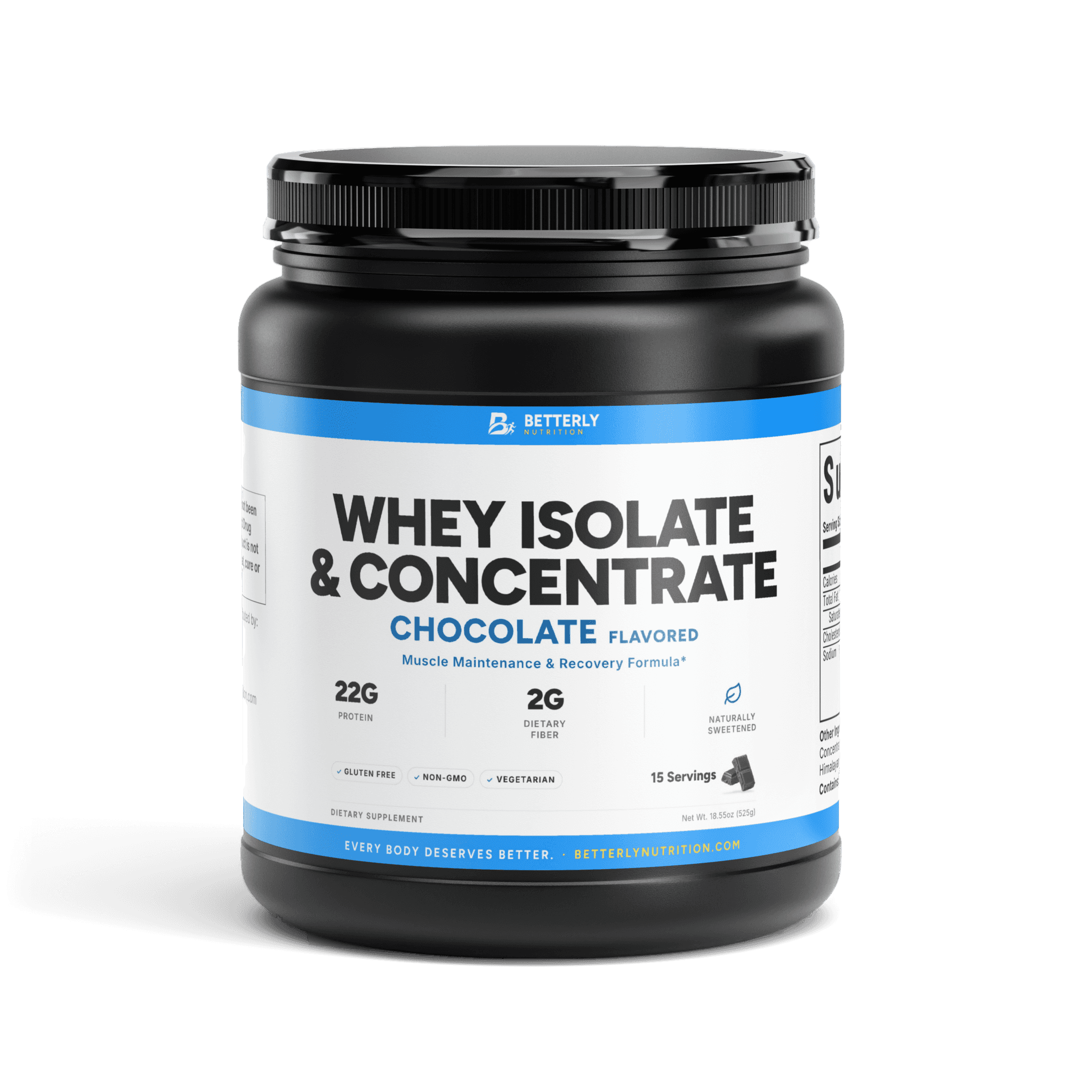
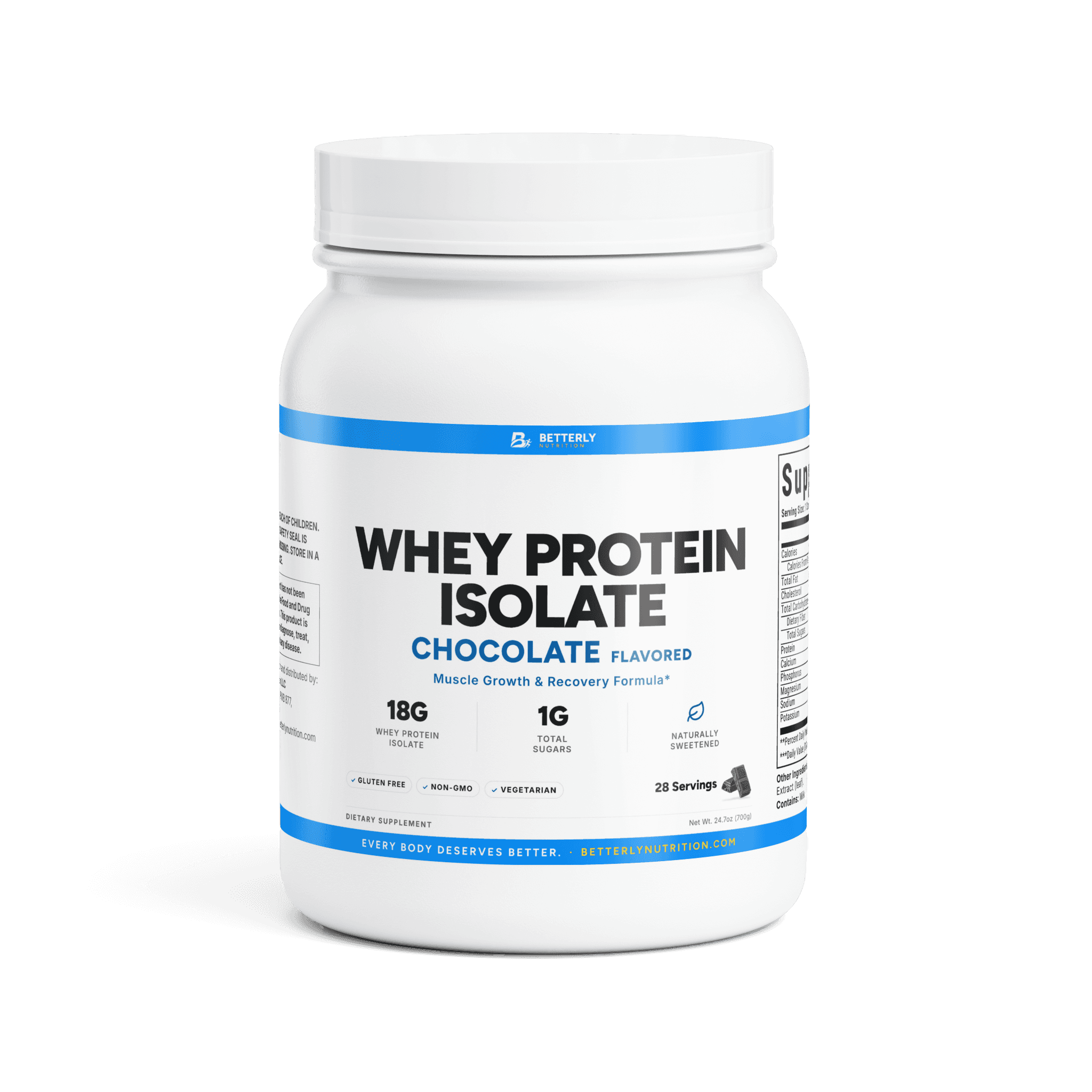
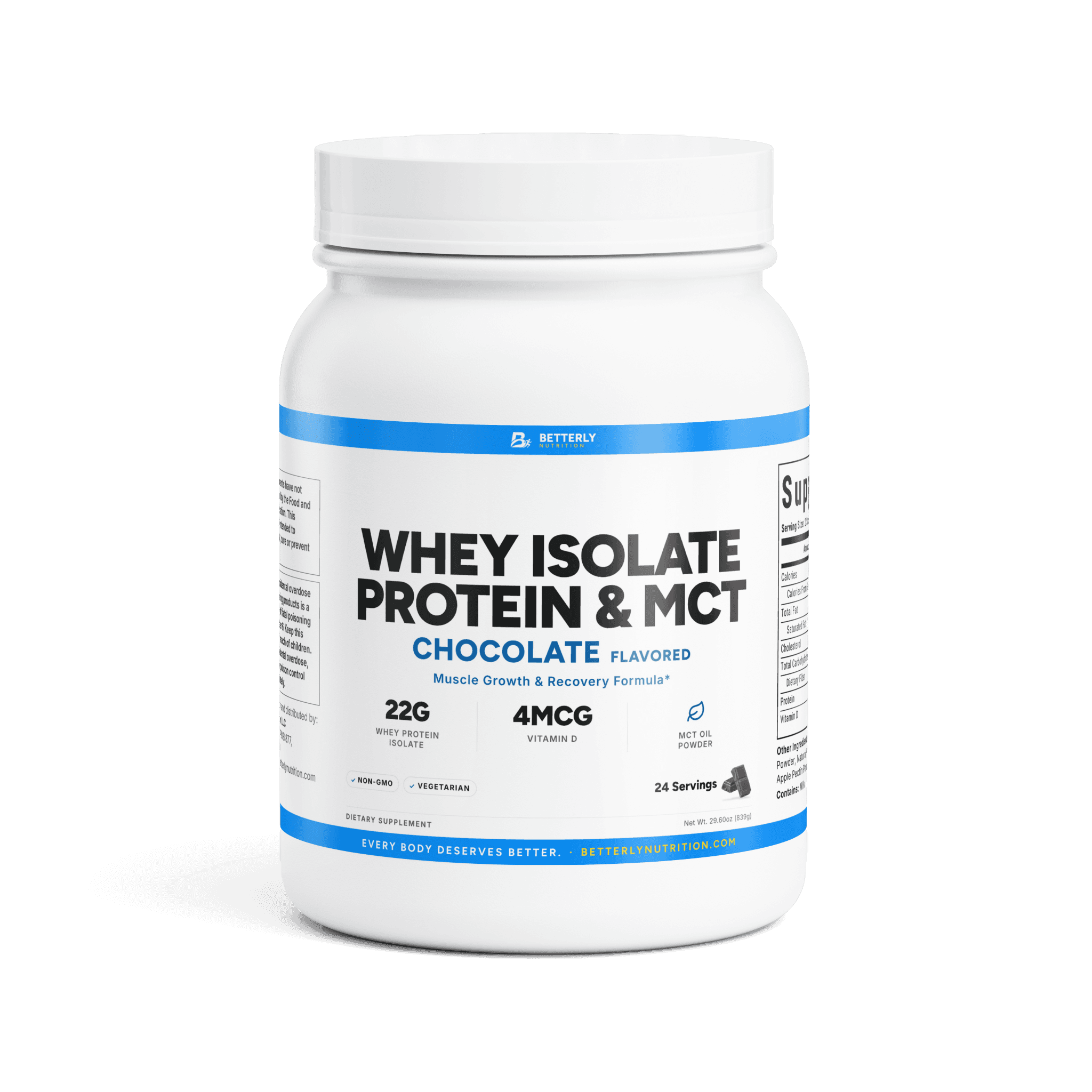
The short answer: A protein shake with water or milk holds the same powder either way, so the liquid decides what else lands in the glass. Water adds nothing: our Whey Protein Isolate Powder (Vanilla) stays at 90 calories per 1 Scoop (24.4g) serving. Made with a cup of whole milk, it's about 240, going by USDA figures. For our Whey Isolate & Concentrate Blend Powder (Vanilla), the label settles it: 8–12 oz of cold water.
Key takeaways
- Water keeps a shake at the label's numbers, while a cup of whole milk adds about 8 g of protein, 150 calories and some milk sugar (lactose), per USDA.
- Unsweetened almond milk adds only about 1 g of protein per cup, so it changes a shake's taste and texture more than its protein or calories.
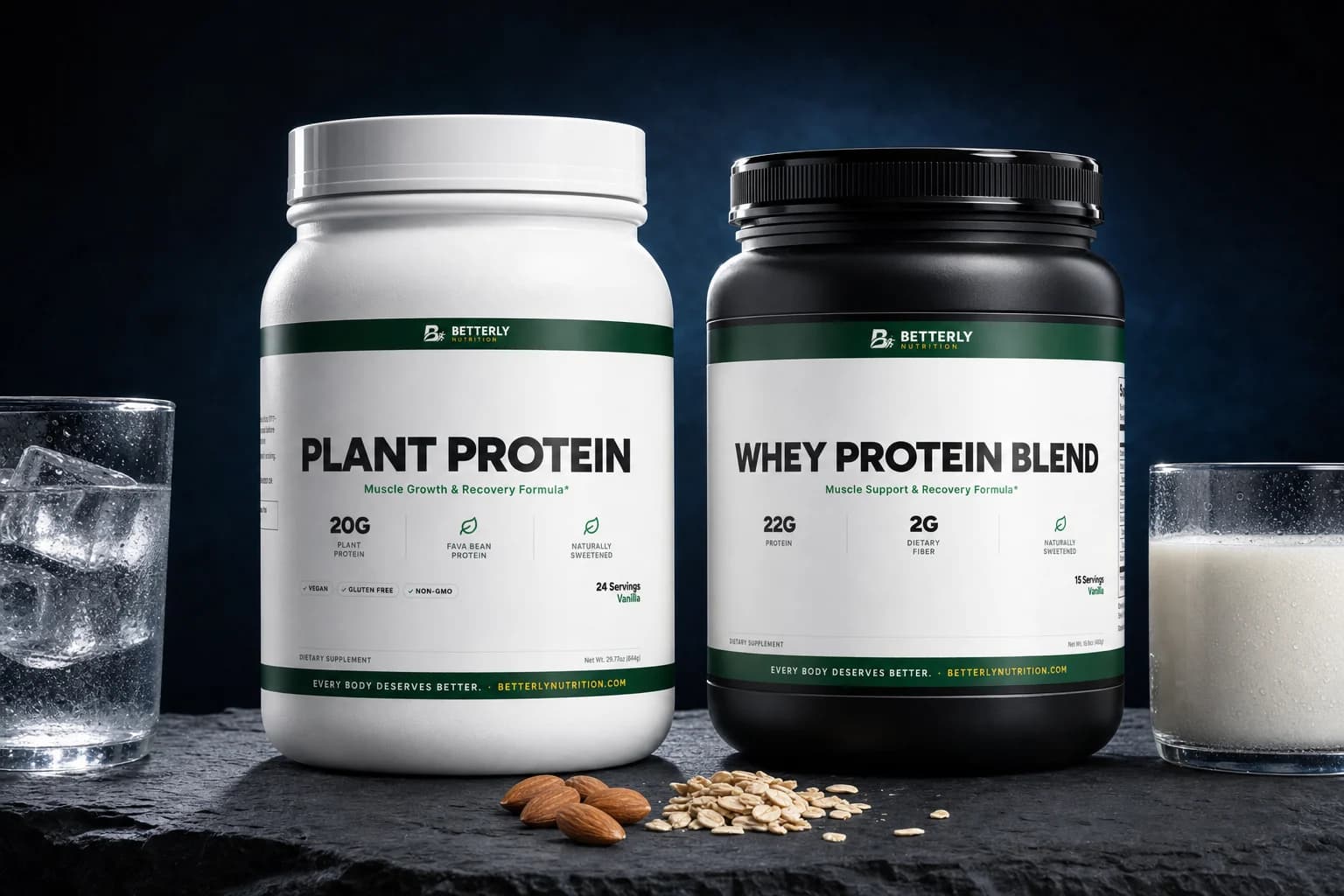
- Our whey blend's label calls for cold water, while our whey isolate and plant protein labels allow "water or favorite beverage."
- A water shake tastes fuller when it's ice-cold, well blended and mixed at the low end of the label's liquid range.
- Both whey powders here print "Contains: Milk," so mixing them with water doesn't make a shake dairy-free.
Full disclosure: we sell all three powders in this guide. That's why the powder numbers below come straight off their labels and the milk numbers come from USDA, so you can check both.
Should you mix a protein shake with water or milk?
Mix a protein shake with water when you want the label's numbers and a light drink, and with milk when you want extra protein, calories and creaminess.
The liquid never changes the powder. Mix protein powder with water or milk, and the whey isolate still brings 19 g of protein per 1 Scoop (24.4g) serving. Our Fava Bean Protein Isolate Powder (Vanilla) still brings 20 g per 2 Scoops (35g) serving. What changes is everything the liquid carries in, plus how the drink feels.
| If you want | Reach for | Why |
|---|---|---|
| The label's exact numbers | Cold water | Adds no calories, protein or sugar |
| More protein per glass | Dairy or soy milk | About 7 to 8 g extra per cup |
| Creaminess without dairy | Oat or soy milk | Plant-based, so no lactose |
| The fewest added calories | Water or unsweetened almond milk | About 0 to 40 extra per cup |
| To follow our blend's label | Cold water, 8–12 oz | The only liquid its directions name |
Water is the neutral choice; every other liquid is an add-on with its own numbers.
What does milk add to a protein shake that water doesn't?
Milk adds its own protein, calories, fat and lactose to a protein shake, while plain water adds none of them. How much depends on the milk.
These figures are for one 8 oz cup, worked out from USDA's per-100-gram values and its own cup weights:
| 1 cup (8 oz) | Protein | Calories | Total sugars |
|---|---|---|---|
| Water | 0 g | 0 | 0 g |
| Whole milk | About 8 g | About 150 | About 12 g, all lactose |
| Unsweetened soy milk | About 7 g | About 80 | About 1 g |
| Unsweetened almond milk | About 1 g | About 40 | About 2 g |
They come from USDA FoodData Central's entries for whole milk, unsweetened soymilk with added calcium and unsweetened shelf-stable almond milk. Branded cartons differ, so read these as ballpark figures.
Dairy and soy milk land close together on protein, while almond milk barely moves it.
Whole milk also brings nearly 8 g of fat and about 276 mg of calcium per cup. USDA's soy entry is one made "with added calcium," a reminder that a plant milk's calcium depends on its maker, so check the carton.
Do protein shakes taste better with water or milk?
Most protein shakes taste richer with milk, since its fat and natural sugar round out the flavor, while water makes a thinner drink where the powder's own flavor leads.
All three vanilla powders in this guide are sweetened with stevia extract. In plain water, that sweetness and the natural flavors are the whole show.
With whole milk, the same scoop drinks more like a thin vanilla milkshake. Some people love that after training; others find it heavy in the morning.
Taste is personal. Before you buy a new carton, try one serving of the isolate or plant powder made with half water and half the milk you already have.
Almond, oat or soy: which plant milk suits a protein shake?
Soy milk is the plant milk that adds real protein to a shake, about 7 g per cup, while almond and oat milk mostly add flavor and texture.
- Soy milk is the closest plant match to dairy on protein. It's creamy, with a mild bean note.
- Almond milk is the lightest pick, at about 40 calories per unsweetened cup. It's mild, slightly nutty and thin, closer to water than to dairy.
- Oat milk is fuller-bodied, with a gentle grain sweetness. USDA's unsweetened oat milk entry gives no cup weight, so compare it per 100 grams: 0.8 g of protein and 48 calories, against 3.15 g and 61 for whole milk. That's about a quarter of dairy's protein for roughly four-fifths of its calories.
Sweetened and flavored cartons read higher on sugar, so compare panels.
Allergens change too. Almond milk swaps milk for a tree nut, and soy milk swaps it for soy. All three sit on the FDA's list of nine major food allergens in Food Allergies: What You Need to Know.
Pairing a plant milk with a plant powder keeps dairy ingredients out of the glass entirely. The plant powder's label says vegan and shows no "Contains: Milk" line. If flavor is your sticking point, our guide on making plant protein taste better goes beyond the liquid.
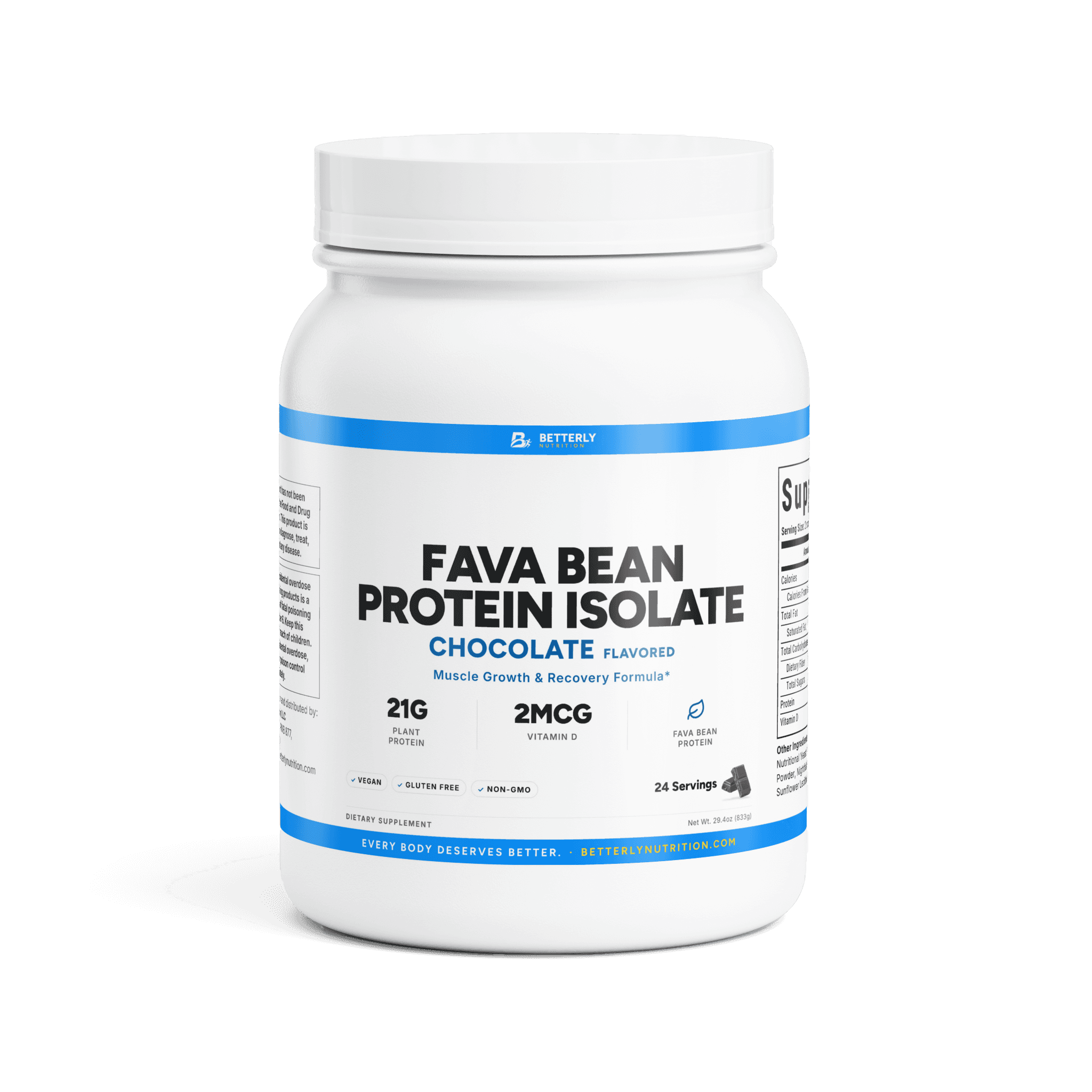
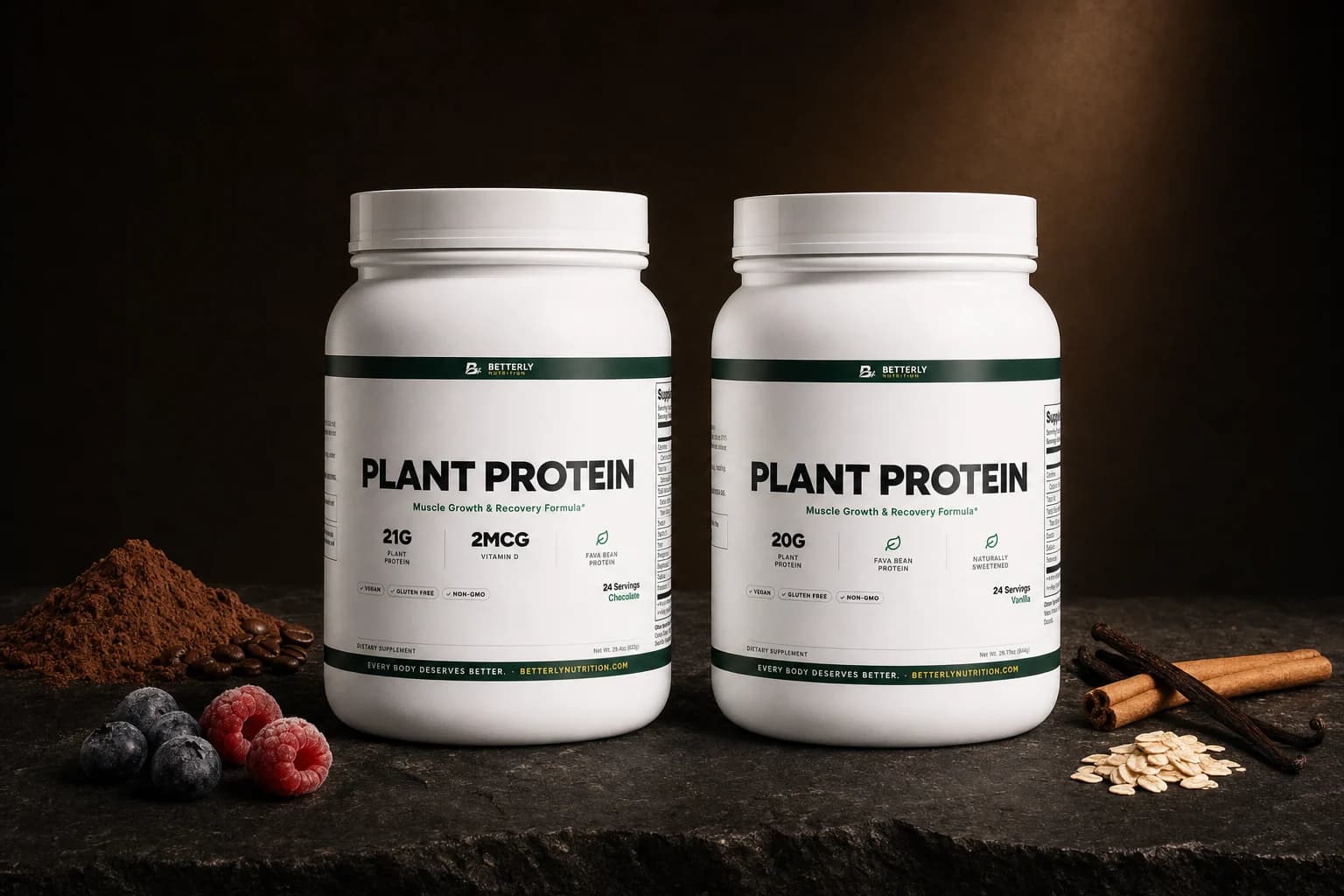
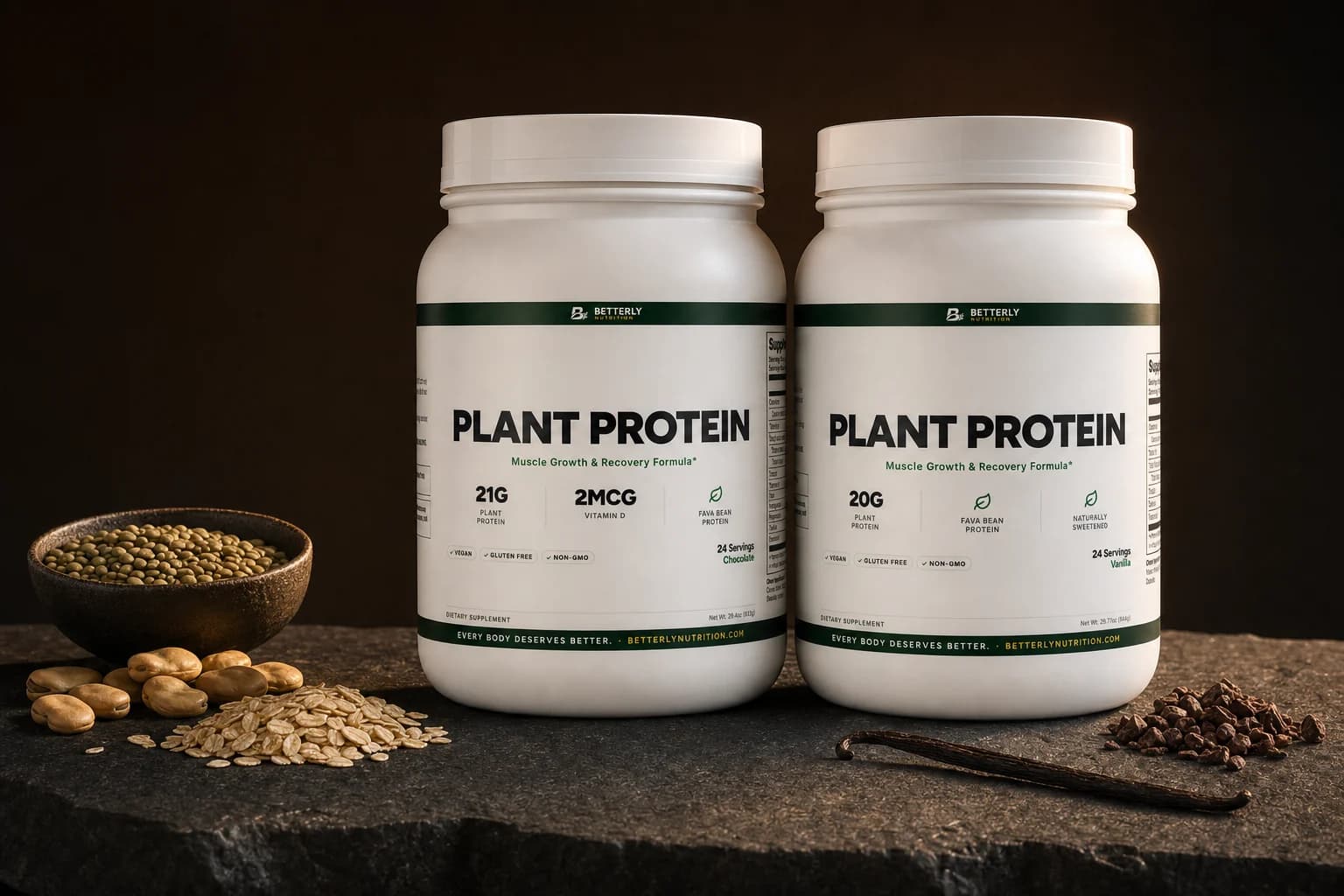
From our shop: Fava Bean Protein Isolate Powder (Vanilla) — 20 g of protein per 2 Scoops (35g) serving, with fava bean protein isolate listed first, labeled vegan and made for water or your favorite beverage.
How do the gums in our whey blend change a water shake?
Guar gum and xanthan gum thicken our Whey Isolate & Concentrate Blend Powder (Vanilla), so a shake made from it with plain water has body that an isolate in water lacks.
In most shakes, milk is what brings the creaminess. This tub carries its own thickeners instead, and its directions name only cold water. So you don't need milk for texture here, and pouring it in would take the shake off its label. What each gum is, and where it sits on the tub, is covered in our xanthan gum explainer.
The Whey Protein Isolate Powder (Vanilla) is the opposite case. With no gum among its three ingredients, it drinks thinner in water. If you want that tub creamier without a thickener, milk is the on-label way to get there, since its directions allow "water or favorite beverage."
How do you make a protein shake taste better with water?
A protein shake with water tastes better ice-cold, fully mixed and made at the low end of the label's liquid range, where the flavor is least diluted.
- Use the coldest water you have. The blend's label asks for it, and we think any vanilla shake tastes cleaner cold.
- Start at the bottom of the range. That's 6 oz for the isolate or plant powder and 8 oz for the blend. Add more only if it's too thick, staying inside the label's range.
- Blend it with ice. A blender chills the shake and whips in air, so a water shake feels thicker and frothier.
- Go half water, half milk. For the isolate and plant powders, 4 oz of each still totals 8 oz. Half a cup of whole milk adds about 4 g of protein and 75 calories.
- Reach for spices before sugar. Cinnamon or a little unsweetened cocoa adds flavor without much else.
- Count any fruit. Frozen berries or half a banana add body, plus calories and sugar the powder's label won't show.
Cold brew can replace the water with the isolate or plant powder; our protein powder in coffee walkthrough covers which labels allow it.
How do you mix each Betterly powder, going by the label?
Each Betterly powder has its own liquid direction: cold water for the whey blend, and water or another drink for the whey isolate and plant protein.
- Whey Isolate & Concentrate Blend Powder (Vanilla): "Add one serving (2 scoops) to 8–12 oz (240–355 ml) of cold water and blend or shake thoroughly." It prints "Contains: Milk."
- Whey Protein Isolate Powder (Vanilla): "adults mix one (1) scoop with 6-8 oz (177-237ml) of water or favorite beverage daily." Its best-results note points to 20-30 minutes before a meal, with 8 oz of water. Its label claims gluten free, non-GMO and vegetarian, and it prints "Contains: Milk."
- Fava Bean Protein Isolate Powder (Vanilla): two scoops with 6-8 oz of water or favorite beverage daily, with the same best-results line. Per 2 Scoops (35g) serving it lists 110 calories. It's labeled vegan, gluten free and non-GMO.
Adding USDA's cup figures to each panel shows what one label serving becomes in 8 oz of liquid:
| One label serving + 8 oz liquid | Protein | Calories |
|---|---|---|
| Whey isolate + water | 19 g | 90 |
| Whey isolate + whole milk | About 27 g | About 240 |
| Whey isolate + unsweetened almond milk | About 20 g | About 130 |
| Fava bean protein isolate + water | 20 g | 110 |
| Fava bean protein isolate + unsweetened soy milk | About 27 g | About 190 |
| Whey blend + cold water (its label's liquid) | 22 g | 130 |
Whole or soy milk lifts a shake by roughly 7 to 8 g of protein. Whole milk also more than doubles the isolate shake's calories, while unsweetened almond milk adds only about 1 g of protein and 40 calories.
Each label prints "Do not exceed recommended dose." Milk changes what surrounds a serving, not the serving, so it's never a reason to add a scoop.
From our shop: Whey Isolate & Concentrate Blend Powder (Vanilla) — 22 g of protein and 130 calories per 2 scoops (approximately 32 g) serving, with a label written for 8–12 oz of cold water.
When don't you need a protein shake at all?
You don't need a protein shake, with water or milk, when your meals already cover your protein. Protein powder is a shortcut, not a must.
Even for athletes, food usually covers protein. That's the read of the NIH Office of Dietary Supplements in its exercise and athletic performance fact sheet. The same page notes there's no benefit to going past the recommended amounts.
- If your meals already hit your protein target, a shake is extra, not essential.
- For a little protein with a snack, a glass of whole milk brings about 8 g on its own, no powder needed.
- Avoiding dairy while holding a whey tub? Water won't change what's in the powder, so the plant protein fits better, or food does.
- Don't enjoy shakes? Eggs, yogurt, beans or fish do the job on a plate.
If you do want a powder, our protein collection puts all four of our powder lines side by side, so you can compare them before you choose.
Who should check with a healthcare provider first?
Talk to a doctor or pharmacist before a protein shake becomes routine if you're expecting, breastfeeding, under 18, on prescription medicine, scheduled for an operation or managing a health condition.
The caution printed on all three labels names most of those groups: "Consult a physician if pregnant, nursing, under 18, or have a medical condition." Before an operation, mention your protein powder along with your other supplements.
- Allergens sit on both sides of the glass. Both whey powders print "Contains: Milk," almond milk adds a tree nut, and soy milk adds soy, so read the tub and the carton if you've been told to avoid any of them.
- If you've been given daily limits, count the milk too. A cup of whole milk carries about 12 g of lactose, and the plant powder has 180 mg of sodium per 2 Scoops (35g) serving before any liquid.
- If anything feels off after a shake, stop and get advice from a pharmacist or your doctor.
FAQ: protein shakes with water or milk
Is it okay to drink a protein shake with just water?
Yes, a protein shake made with just water is fine, and it still delivers every gram of protein on the label. Our Whey Isolate & Concentrate Blend Powder (Vanilla) is written for 8–12 oz of cold water. The shake is thinner than a milk version, with no added calories or lactose. If it tastes flat, chill it hard and blend in ice.
How much milk should you put in a protein shake?
Milk in a protein shake should stay inside the label's liquid range. Our whey isolate and plant protein labels pair one serving with 6-8 oz of "water or favorite beverage," so up to one cup of milk fits. Our whey blend's label names cold water, not milk. Half milk and half water is a sensible middle path.
Is a protein shake with milk better after a workout?
A protein shake with milk isn't automatically better after a workout; it just holds more protein and calories. Our whey isolate gives 19 g in water and about 27 g in a cup of whole milk. The NIH ODS sheet reports sports-science guidance of about 20 g for a 150-pound athlete, including within 2 hours after exercise, and both land near or above that. For how milk's own proteins behave, see our whey isolate vs casein comparison.
Is a protein smoothie better with water or milk?
A protein smoothie works with either, because frozen fruit gives a water-based smoothie the body a plain shake lacks. Milk or yogurt adds protein, creaminess and calories. Our whey blend's label doesn't mention fruit, but blending one serving into 8–12 oz of cold water keeps the powder and liquid amounts on-label. Any fruit you add brings calories and sugar the label won't show.
Can you make a protein shake that's completely dairy-free?
Yes, a dairy-free protein shake needs both a milk-free powder and a milk-free liquid. Going by its label, our Fava Bean Protein Isolate Powder (Vanilla) is vegan and prints no "Contains: Milk" line, so mixing it with water or a plant milk keeps dairy out. Whey comes from milk, so a whey shake made with water still contains milk, as both whey labels state.
Sources
- Dietary Supplements for Exercise and Athletic Performance - Consumer, NIH Office of Dietary Supplements
- Food Allergies: What You Need to Know, U.S. Food and Drug Administration
- Milk, whole, 3.25% milkfat, with added vitamin D, USDA FoodData Central
- Soymilk (all flavors), unsweetened, with added calcium, vitamins A and D, USDA FoodData Central
- Beverages, almond milk, unsweetened, shelf stable, USDA FoodData Central
- Oat milk, unsweetened, plain, refrigerated, USDA FoodData Central
If this left you looking for somewhere to start, read vanilla whey protein blend for cold water shakes, 22 g per serving — its amounts per serving are listed on the page. For the practical questions this raises, how dosing, sourcing and subscriptions work is answered in one place.