On this page
- Key takeaways
- Whey isolate vs casein: what's the actual difference?
- Which digests faster, whey isolate or casein?
- Whey protein vs casein for muscle building: does speed matter?
- Should you take whey protein before bed, or casein?
- Casein vs whey for baking and texture: which works better?
- How much lactose is in whey isolate, and what do milk labels say?
- How do you take whey isolate, going by the label?
- When don't you need whey isolate or casein?
- Who should check with a healthcare provider first?
- FAQ: whey isolate vs casein
- Sources
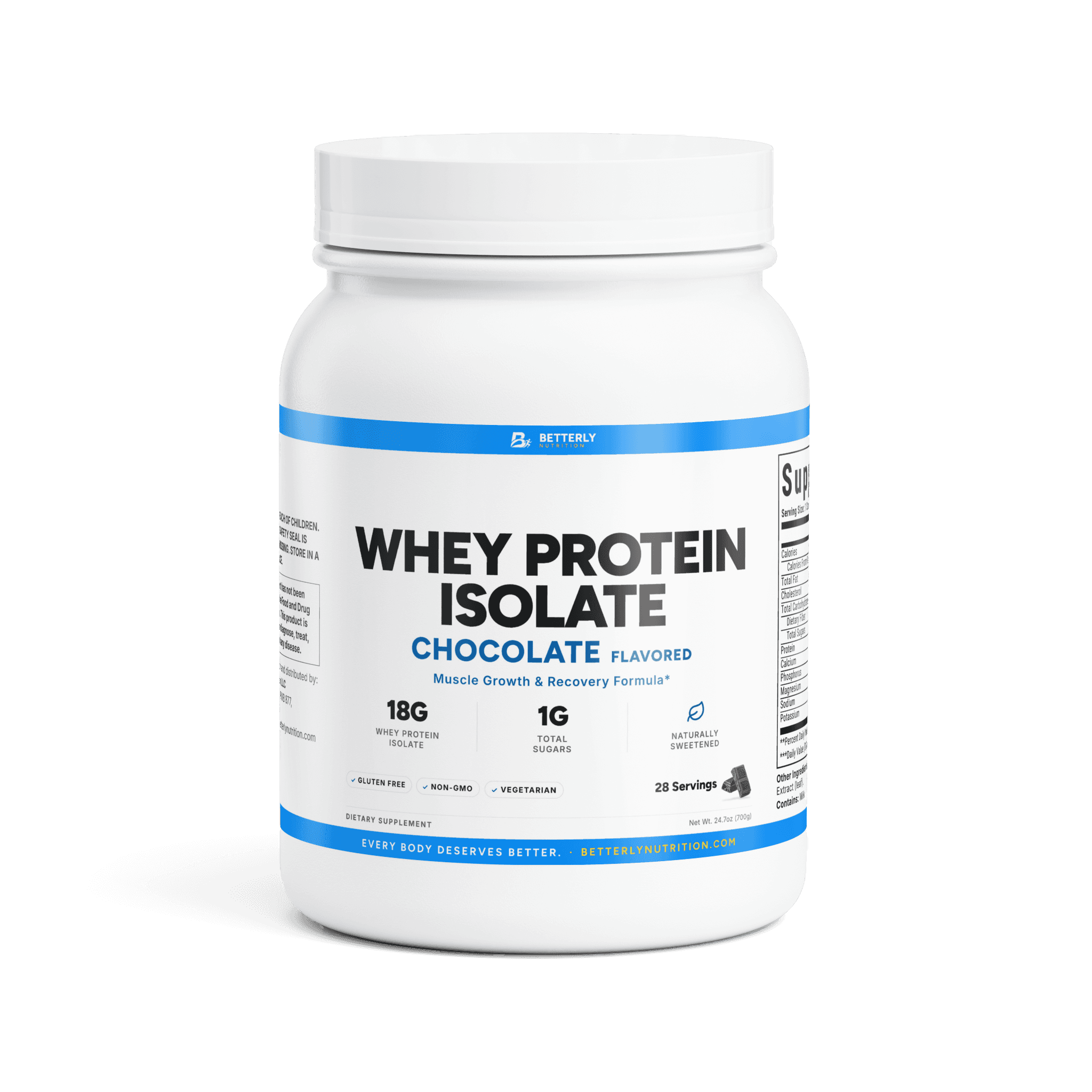
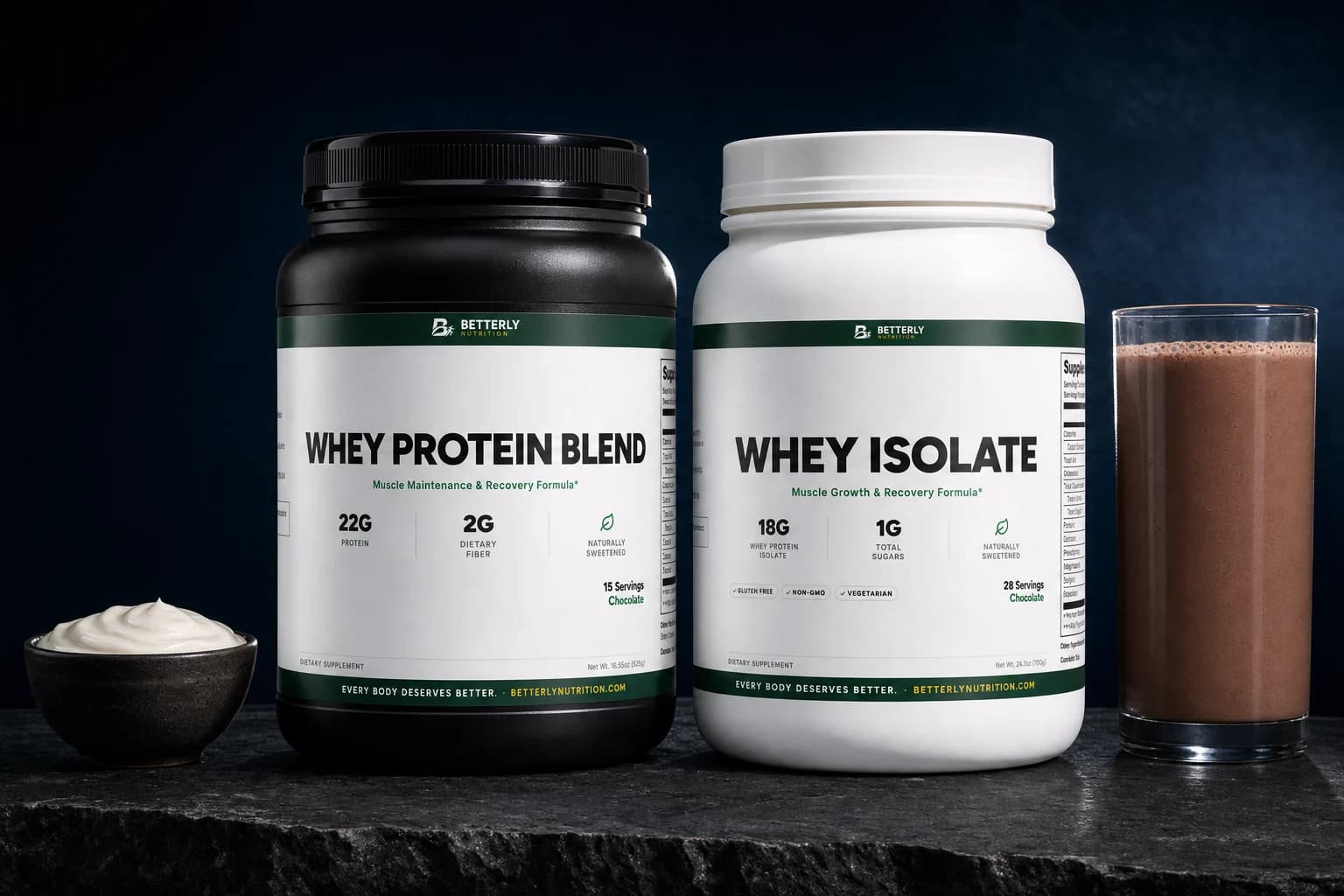
The short answer: Whey isolate vs casein is a choice between two milk proteins that behave very differently. Isolate mixes thin, while casein turns thick. In a single-meal study, whey raised blood amino acids quickly but briefly, and casein's rise was slower and longer. Isolate suits most daytime shakes. At night, casein or casein-rich Greek yogurt is the real alternative. Our Whey Protein Isolate Powder (Chocolate) lists 18 g of protein per 1 Scoop (25g) serving.
Key takeaways
- Whey isolate and casein both come from cow's milk: casein forms the curds when cheese is made, and whey is the liquid left behind.
- In a 1997 single-meal study, whey produced a sharp, short rise in blood amino acids, while casein produced a moderate rise that lasted longer.
- The NIH Office of Dietary Supplements relays a sports-science target for athletes of about 0.14 g of high-quality protein per pound of body weight (about 20 g for a 150-pound person) every 3 to 5 hours, before sleep included, without favoring whey or casein.
- Whey isolate and casein are both milk proteins, so a low Total Sugars figure on either tub doesn't make it milk free.
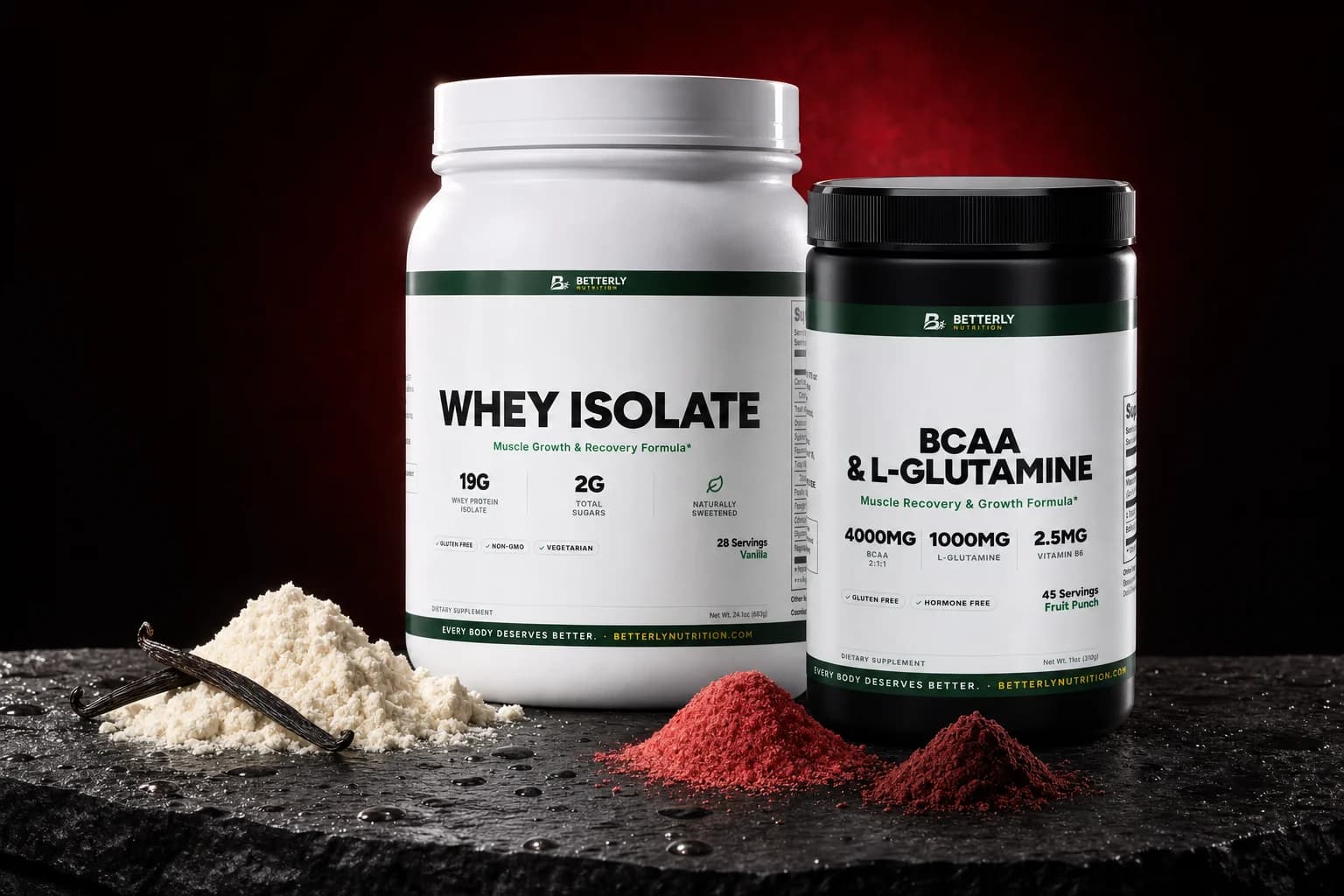
Where we stand: Betterly sells whey isolate and a whey blend, but no casein. When casein is the better tool, we'll say so, and every Betterly number below comes from our own Supplement Facts panels.
Whey isolate vs casein: what's the actual difference?
Whey isolate and casein both come from cow's milk, and cheesemaking splits them apart: casein forms the solid curds, while whey stays in the watery liquid.
Casein is the bigger share of milk's protein. It sits in milk as tiny clusters called micelles, which is why casein powders often say "micellar casein."
"Isolate" is about processing. Whey is filtered further to strip out most of its fat and carbohydrate. Our chocolate isolate's panel shows the result: 1 g of total fat and 2 g of total carbohydrates beside 18 g of protein per 1 Scoop (25g) serving.
| Question | Whey isolate | Casein |
|---|---|---|
| Part of milk | The liquid after curds form | The curds |
| In a shaker | Thin, mixes fast | Thick, close to pudding |
| Amino acid rise (1997 study) | Sharp and short | Moderate and long |
| Natural slot | Daytime, after training | Before bed |
| Sold by Betterly | Yes | No |
Read the table by job: whey isolate for a fast, thin drink, casein for something thick that trickles in slowly.
Which digests faster, whey isolate or casein?
Whey digests faster than casein: in a 1997 single-meal study, whey raised blood amino acids sharply but briefly, while casein held them at a lower, longer plateau.
That study, published in the Proceedings of the National Academy of Sciences and listed on PubMed, gave healthy adults a single meal of either whey or casein, each carrying a tagged form of the amino acid leucine so researchers could follow it. The paper's title calls them "slow" and "fast" proteins, and the authors suggest casein's pattern probably came from the stomach emptying more slowly.
There's a kitchen version of this. Casein is the protein that sets when milk meets acid, which is how yogurt thickens and curds form, while whey proteins stay dissolved in the liquid.
Keep the limits in mind: one meal, measured across the whole body for 7 hours. It shows how the proteins behave, not that either is better for you.
Whey protein vs casein for muscle building: does speed matter?
Speed matters less than you'd think, because the NIH Office of Dietary Supplements (ODS) frames muscle support around enough total protein, spread out, rather than whey or casein specifically.
The ODS consumer fact sheet on exercise and athletic performance credits protein with helping to build, maintain and repair muscle. For athletes, it gives a range of 0.5 to 0.9 g of protein per pound of body weight a day, about 75 to 135 g for someone who weighs 150 pounds.
On timing, ODS relays a sports-science recommendation of high-quality protein "every 3 to 5 hours, including before sleep and within 2 hours after exercising." The amount is 0.14 g per pound of body weight, about 20 g at a time for a 150-pound athlete, from animal foods or a mix of plant foods. Notice what it leaves out: any preference between whey and casein.
The 1997 study adds a wrinkle. Whey drove a bigger rise in protein building across the body, while only casein held back protein breakdown, and over the 7 hours measured, casein's net balance came out ahead. Again, that's the whole body, not muscle alone.
So a neat "whey builds, casein protects" rule is too tidy. Both support muscle recovery as part of adequate daily protein. Whey isolate's thin texture makes it an easy drink after training, and our post-workout routine guide covers fitting protein into the couple of hours afterward. ODS also points out that whey supplies every essential amino acid, the thread our BCAA vs EAA breakdown follows.
Should you take whey protein before bed, or casein?
Before bed, casein is the more natural pick because it releases amino acids slowly, though the ODS guidance asks for high-quality protein before sleep without choosing between the two.
We couldn't find a federal source that ranks casein above whey at night. We sell whey and not casein, so weigh our view with that in mind.
The Whey Protein Isolate Powder directions call for one scoop "daily," with a best-results line of "20-30 minutes before a meal with 8 oz (237ml) of water." Bedtime isn't mentioned. An evening scoop still fits "daily," but the label points at mealtimes, and we make no claim that a scoop does anything for your sleep.
If you want the slow option, it's probably already in your fridge. Greek yogurt is strained, which drains off much of the liquid whey, so what's left leans toward casein. Cottage cheese curds are casein, too. If you'd rather use a powder, look for "micellar casein" or a caseinate near the top of the ingredient list.
Compare protein grams on each food's Nutrition Facts label rather than the front of the carton. Whether a shake belongs in your morning instead is covered in our guide to a protein shake in the morning.
From our shop: Whey Protein Isolate Powder (Chocolate) — 18 g of protein per 1 Scoop (25g) serving, labeled for water or your favorite beverage, from three listed ingredients.
Casein vs whey for baking and texture: which works better?
Casein usually works better for baking and thick textures because it soaks up liquid, while whey isolate drinks thin and can turn dry and rubbery in the oven.
In a glass, casein behaves almost like instant pudding mix: a scoop stirred with a splash of milk sets into something you eat with a spoon.
Whey isolate dissolves fast and drinks light. In the oven, though, it firms up a little like egg white, and a muffin made mostly from it can come out tough. Two kitchen fixes help: swap it for only part of the flour, and add something moist, like Greek yogurt or mashed banana.
One label point before you bake. Our isolate's directions are written for a drink: one scoop "with 6-8 oz (177-237ml) of water or favorite beverage daily." So count the scoops in the whole batch. Six muffins made with 3 scoops come to half a scoop each, and 2 muffins use up the day's single scoop.
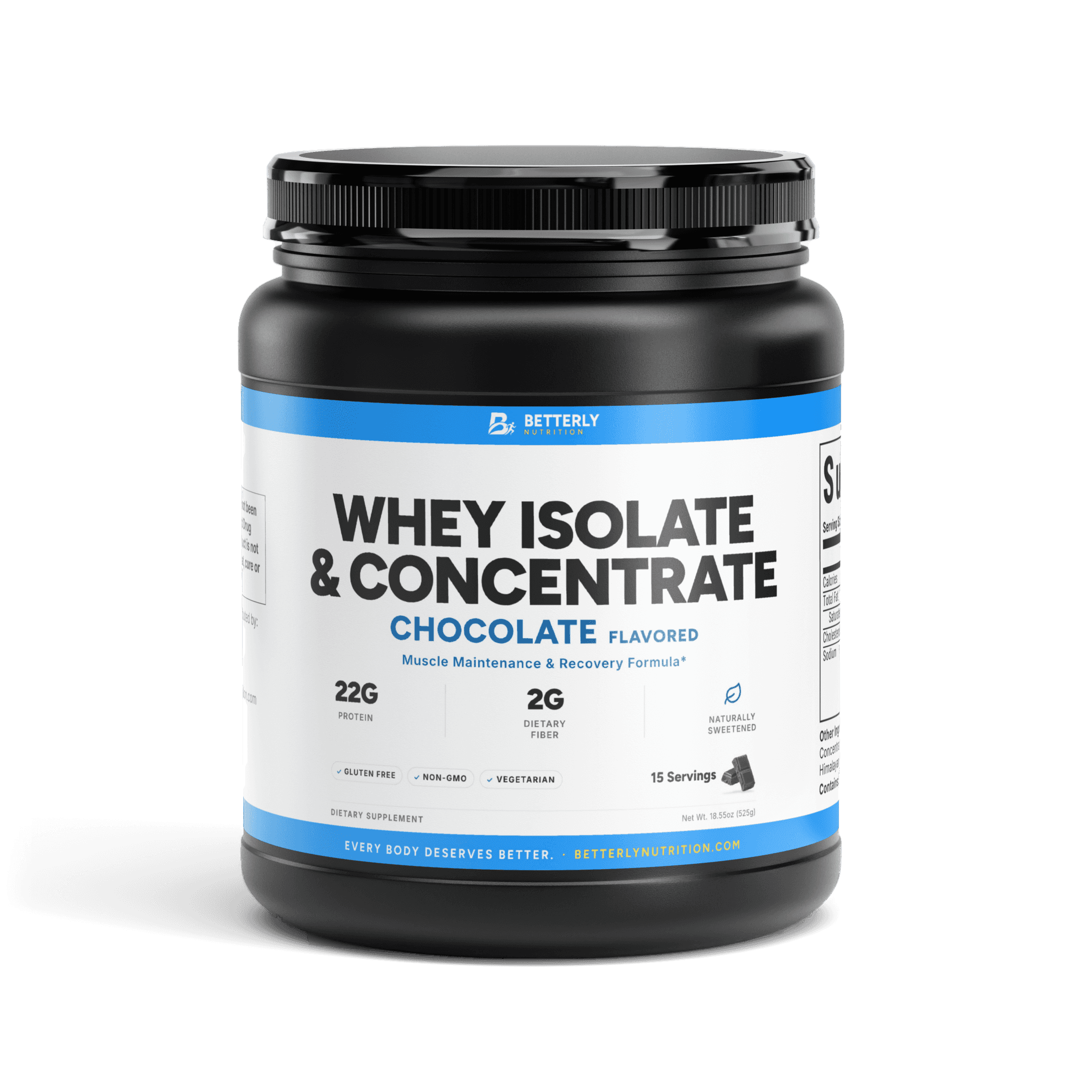
Our Whey Isolate & Concentrate Blend Powder (Chocolate) has a longer ingredient list than the plain isolate. It adds guar gum, xanthan gum and Solnul® (resistant potato starch), with 2 g of dietary fiber per 2 scoops (approximately 35 g) serving. It's still whey, a mix of isolate and concentrate, and casein doesn't appear anywhere in that list. For whey in hot drinks, see our guide to protein powder in coffee.
How much lactose is in whey isolate, and what do milk labels say?
Our Whey Protein Isolate Powder (Chocolate) panel has no lactose line, only 1 g of Total Sugars per 1 Scoop (25g) serving, and it declares milk, as any casein powder must.
So why can't that 1 g answer the lactose question? The FDA's guide to the Nutrition Facts label says Total Sugars includes sugars naturally present in foods, "such as sugar in milk and fruit," plus any added sugars. Milk sugar gets folded into that one total instead of getting its own row. The panel also prints the total in whole grams, so 1 g is a rounded figure for all the sugars in the scoop, not a lactose reading.
A casein tub's sugar line can't separate out lactose either. What you can count on is the allergen line.
Casein and whey both come from milk, and the FDA's Food Allergies: What You Need to Know lists milk among the major food allergens a label has to name. That can happen in parentheses after an ingredient, as in the FDA's example "whey (milk)," or in a "Contains" statement next to the ingredient list. Our isolate uses the second style and prints "Contains: Milk." A small sugar number never means milk free.
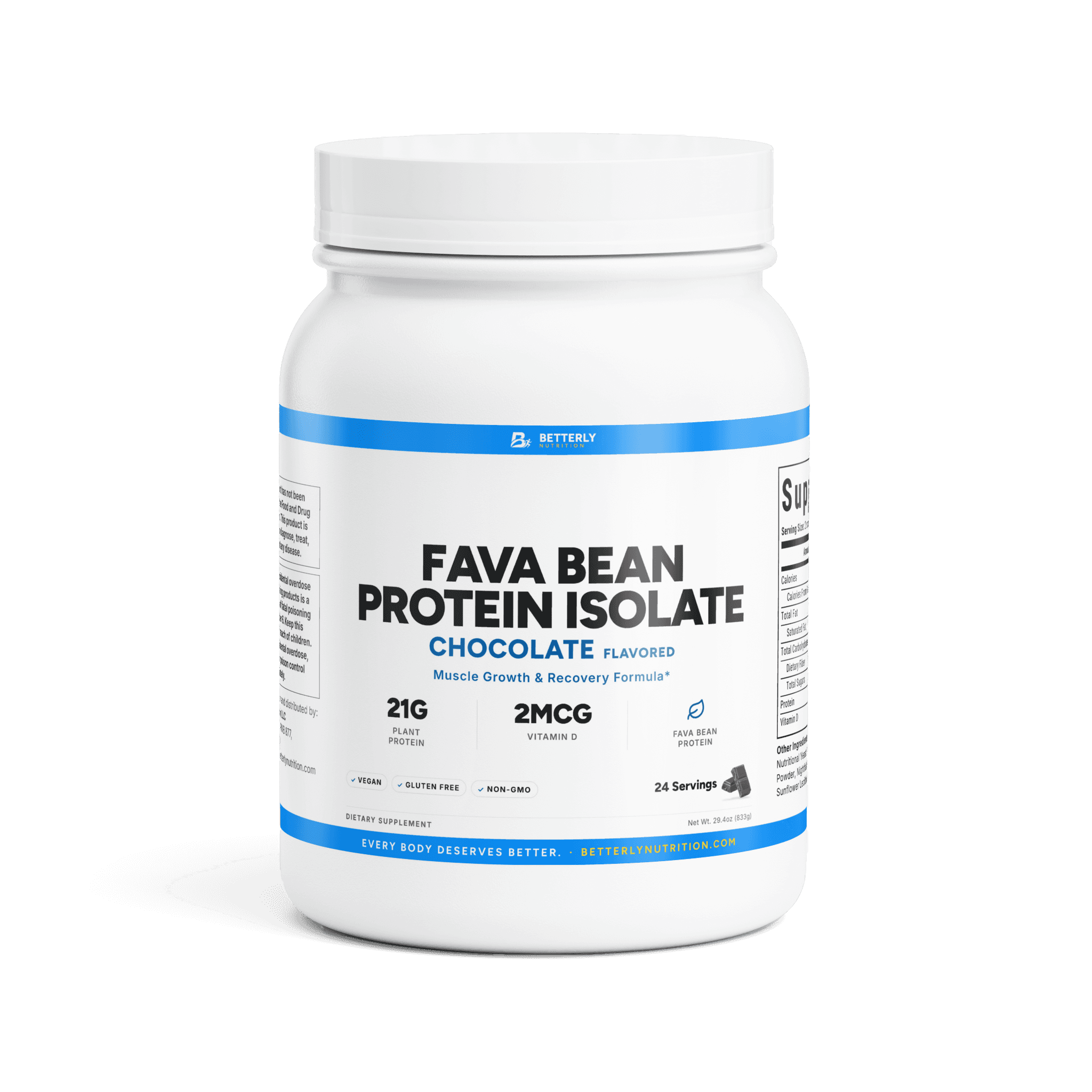
If milk is off your list, neither protein fits. Our Fava Bean Protein Isolate Powder (Chocolate) is labeled vegan and lists 21 g of protein per 2 scoops (34.7g) serving, from fava bean protein isolate and YESTEIN™ fermented nutritional yeast protein.
How do you take whey isolate, going by the label?
The Whey Protein Isolate Powder label says adults mix one scoop into 6-8 oz of water or your favorite beverage daily, ideally 20-30 minutes before a meal with 8 oz of water.
- Adults use one scoop. On the chocolate tub, that's 1 Scoop (25g).
- Mix it into 6-8 oz (177-237ml) of water or another drink you like.
- Take it once a day. The label adds, "Do not exceed recommended dose."
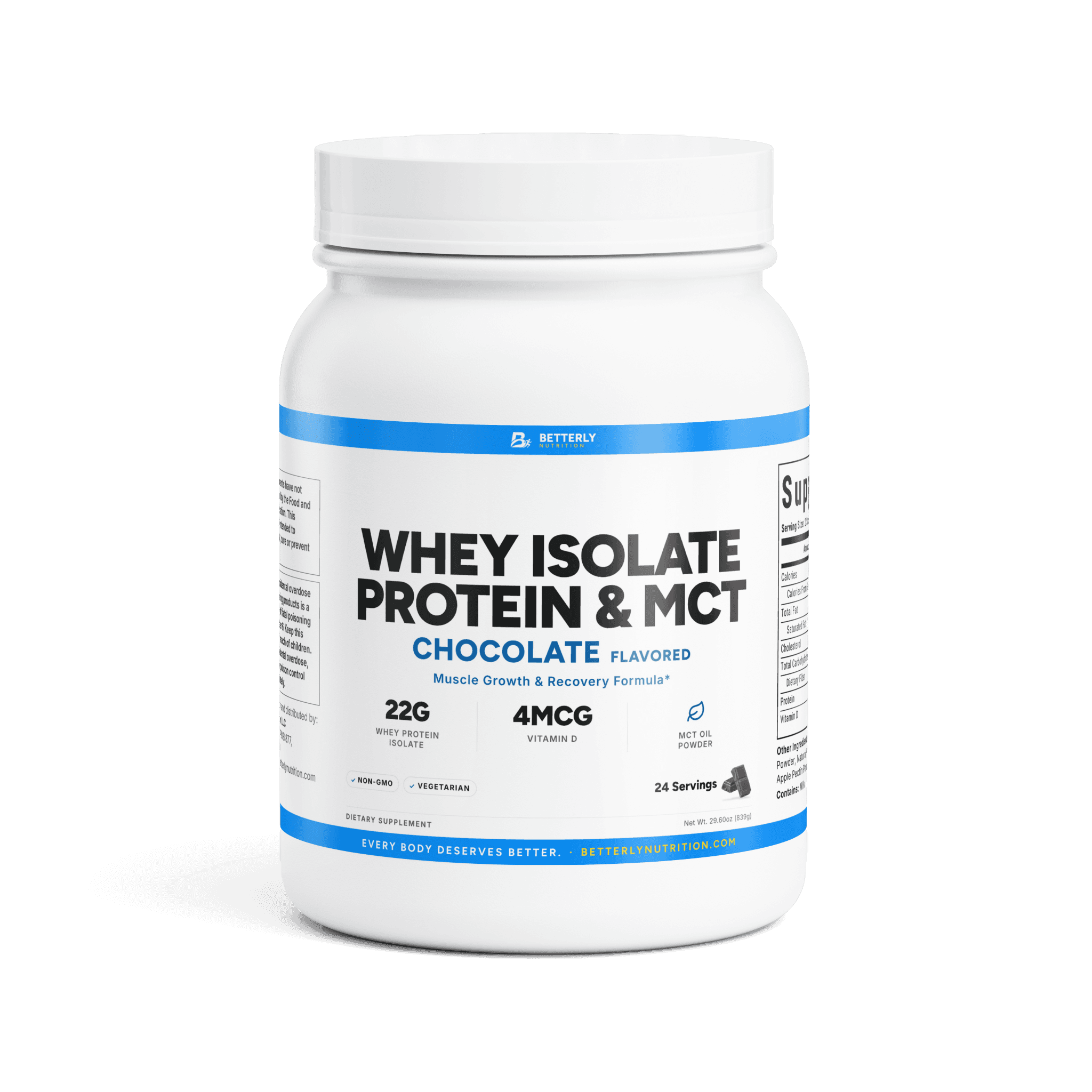
Our Whey Protein Isolate & MCT Powder (Chocolate) also lists whey protein isolate first, with MCT oil powder among its other ingredients. Here's how it and the other chocolate tubs in our protein collection compare, straight from their panels:
| Powder | Label serving | Protein | Mixing direction |
|---|---|---|---|
| Whey Protein Isolate Powder | 1 Scoop (25g) | 18 g | 6-8 oz water or favorite beverage |
| Whey Protein Isolate & MCT Powder | 2 Scoops (35g) | 22 g | 6-8 oz water or favorite beverage |
| Whey Isolate & Concentrate Blend Powder | 2 scoops (approx. 35 g) | 22 g | 8-12 oz cold water, blend or shake |
| Fava Bean Protein Isolate Powder | 2 scoops (34.7g) | 21 g | 6-8 oz water or favorite beverage |
The plain isolate is the only single-scoop serving and the lightest one, at 90 calories. The blend is the only tub labeled for cold water alone, and it asks for the most liquid.
From our shop: Whey Isolate & Concentrate Blend Powder (Chocolate) — 22 g of protein per 2 scoops (approximately 35 g) serving from whey protein isolate and whey protein concentrate, labeled for 8-12 oz of cold water.
When don't you need whey isolate or casein?
You don't need whey isolate or casein if your meals already cover your protein, and ODS says most athletes can probably get enough from food alone.
Skip both if any of these sound like you:
- Your plates already get you there. Eggs, fish, beans and dairy add up faster than most people expect.
- You already eat yogurt or cottage cheese at night. That's casein, no tub required.
- You're tempted to double up. ODS says there's no benefit to eating more protein than recommended amounts.
- You avoid milk. Both proteins are dairy.
Who should check with a healthcare provider first?
Check with a healthcare provider before starting whey isolate or casein if you're pregnant or nursing, under 18, taking any prescription medication, facing surgery, or managing a medical condition.
Most of that list is printed on our whey labels: "Consult a physician if pregnant, nursing, under 18, or have a medical condition." If you take prescriptions or have surgery coming up, mention your protein powder too.
If a provider has given you a daily protein target or limit, count every source, from the scoop to the bedtime yogurt. And if you've been told to avoid milk, both proteins are off the table, whatever the sugar line says.
FAQ: whey isolate vs casein
Does whey isolate have casein in it?
Whey isolate is made from whey rather than casein, but our Whey Protein Isolate Powder (Chocolate) isn't labeled casein-free. Its only protein ingredient is whey protein isolate, and the label declares milk. Whey and casein start out in the same milk, so if you've been told to avoid casein, ask your provider before using any whey product.
Can you take whey isolate and casein on the same day?
Yes, whey isolate and casein can share a day, such as a whey shake after training and Greek yogurt or casein at night. Follow each product's own label. Ours says one scoop daily and "Do not exceed recommended dose." According to the NIH Office of Dietary Supplements, a lot of protein appears to be quite safe, though going past recommended amounts brings no benefit.
Can you drink whey protein with milk before bed?
Whey isolate can go into milk, since our label allows 6-8 oz of "water or favorite beverage," but bedtime isn't the timing it suggests. The label calls for one scoop daily, with a best-results window 20-30 minutes before a meal. An evening scoop still fits "daily." The NIH Office of Dietary Supplements relays sports-science advice to spread protein through the day, before sleep included. Milk brings its own casein, so count its protein and calories from the carton.
How long does casein take to digest?
Casein digests more slowly than whey, but there's no exact hour count you can rely on. The 1997 study behind the "slow protein" idea followed healthy adults for 7 hours after one meal. Casein's amino acid rise stayed moderate and long, while whey's rose high and fell. Be skeptical of precise digestion times online that don't cite a source.
Is whey or casein better for breakfast?
Whey isolate is usually the easier breakfast protein because it mixes thin and fast, but casein works if you like a spoonable bowl. Our isolate label's "for best results" window, 20-30 minutes before a meal, lines up neatly with a shake before breakfast. A Greek yogurt bowl brings casein to the same table without any powder at all.
Sources
- Dietary Supplements for Exercise and Athletic Performance: Fact Sheet for Consumers, NIH Office of Dietary Supplements
- Slow and fast dietary proteins differently modulate postprandial protein accretion, Proceedings of the National Academy of Sciences (1997), abstract via PubMed
- How to Understand and Use the Nutrition Facts Label, U.S. Food and Drug Administration
- Food Allergies: What You Need to Know, U.S. Food and Drug Administration
If this left you looking for somewhere to start, read chocolate whey isolate with 18 g protein per scoop — its amounts per serving are listed on the page. For the practical questions this raises, how dosing, sourcing and subscriptions work is answered in one place.