On this page
- Key takeaways
- Which protein powder ingredients to avoid, and which are fine?
- How do you read a protein powder label?
- What does a three-ingredient whey isolate label show, line by line?
- Are proprietary blends a reason to skip a protein powder?
- Are sweeteners, gums and fillers in protein powder bad for you?
- What can't a protein powder label tell you?
- How do you take a protein powder, going by the label?
- When don't you need a protein powder at all?
- Who should check with a healthcare provider first?
- FAQ: protein powder ingredients
- Sources
The short answer: Most of the protein powder ingredients to avoid that you'll find listed online are ordinary food ingredients. The ones worth a second look hide or dilute what you're paying for: a proprietary blend with no amounts, a scoop that's mostly not protein, sugar high on the ingredient list, or an allergen you already avoid. Our vanilla whey isolate lists three ingredients and 19 g of protein per 1 Scoop (24.4g) serving.
Key takeaways
- A protein powder label shows the serving's weight, the protein and sugars in it, and every ingredient in order by weight.
- A proprietary blend is the clearest reason to pause, because FDA rules require its total weight but not each ingredient's amount.
- Gums, pectin, silicon dioxide and sugar substitutes are common food ingredients, so skipping them is mostly a taste or texture preference.
- Supplement Facts panels don't list heavy metals, so ask the brand for a certificate of analysis that matches your lot. We don't publish batch documents yet, and our quality page says so.
In our protein collection we sell four powder lines, each in vanilla and chocolate, starting with Whey Protein Isolate Powder (Vanilla). So the examples below are our own labels, including ingredients some shoppers skip.
Which protein powder ingredients to avoid, and which are fine?
The protein powder ingredients to avoid are the ones that hide amounts, crowd out protein or clash with your diet, not the gums and flavorings most online lists target.
The FDA's page on types of food ingredients lists gums, sweeteners and anti-caking agents among everyday food ingredients. Here's how we'd sort a tub's label:
| On the label | Its job | Worth avoiding? |
|---|---|---|
| "Proprietary blend" over the protein | One total weight for several ingredients | Yes, if no protein amounts show |
| Sugar or a syrup near the top | Sweetness and bulk | If you want a low-sugar shake |
| Sucralose, stevia, monk fruit, sugar alcohols | Sweetness with little or no sugar | Mostly a taste call |
| Guar gum, xanthan gum, pectin | Thicker, smoother texture | Optional, a texture choice |
| Silicon dioxide | Keeps powder from clumping | Rarely a reason on its own |
| Milk, soy, egg or another allergen you avoid | Usually the protein itself | Yes, every time |
Only two firm yeses stand out: a blend that won't show its protein amounts, and an allergen you already steer clear of. The rest are choices about taste, texture or sugar.
So what protein powders should you avoid? The ones whose labels leave you guessing. Every tub in our protein powder collection prints its full list.
A ready-to-drink protein shake gets the same check. See how many servings the bottle holds, then weigh the protein against the total and added sugars and find the sweetener. Gums on a bottle's list do the thickening job they do in a tub. The allergen line matters just as much.
How do you read a protein powder label?
To read a protein powder label, start with the serving's weight in grams, then check the protein, the sugars, the ingredient order and the allergen line.
- Find the serving in grams. The FDA's Dietary Supplement Labeling Guide, Chapter IV defines a serving as the maximum amount the label recommends per eating occasion.
- Compare protein to that weight. Protein grams over serving grams gives the protein share of each scoop.
- Check the sugars. Read Total Sugars, plus Added Sugars if listed, then scan for sugar or syrups.
- Read the ingredients in order. They're listed from most to least by weight, so the first one is what you get the most of.
- Find the "Contains" line. On our whey tubs it reads "Contains: Milk."
Here's step 2 on five of our labels:
| Powder | Serving weight | Protein | Protein share |
|---|---|---|---|
| Whey Protein Isolate Powder (Vanilla) | 24.4 g, 1 scoop | 19 g | About 78% |
| Whey Protein Isolate Powder (Chocolate) | 25 g, 1 scoop | 18 g | About 72% |
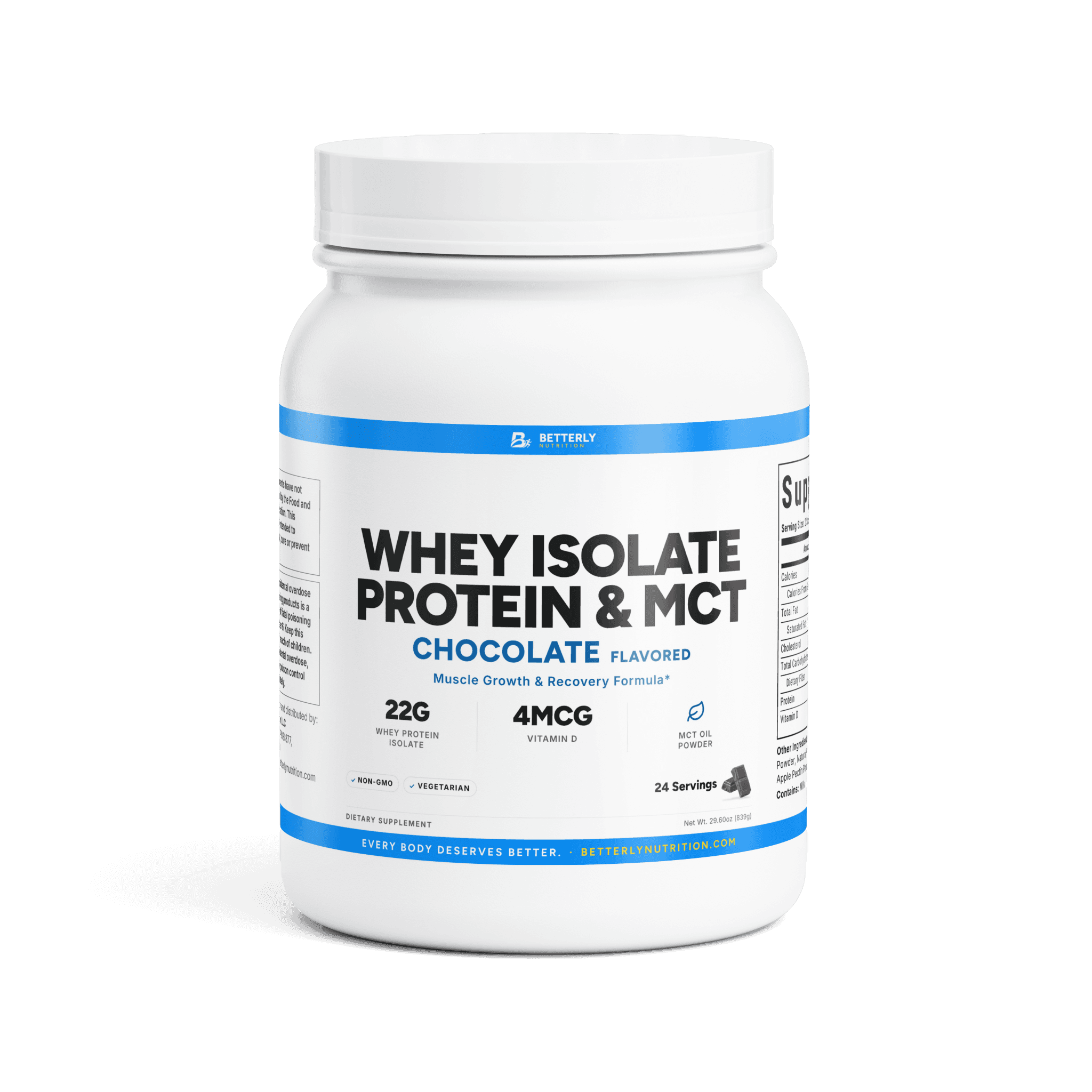
| Whey Protein Isolate & MCT Powder (Vanilla) | 34 g, 2 scoops | 22 g | About 65% |
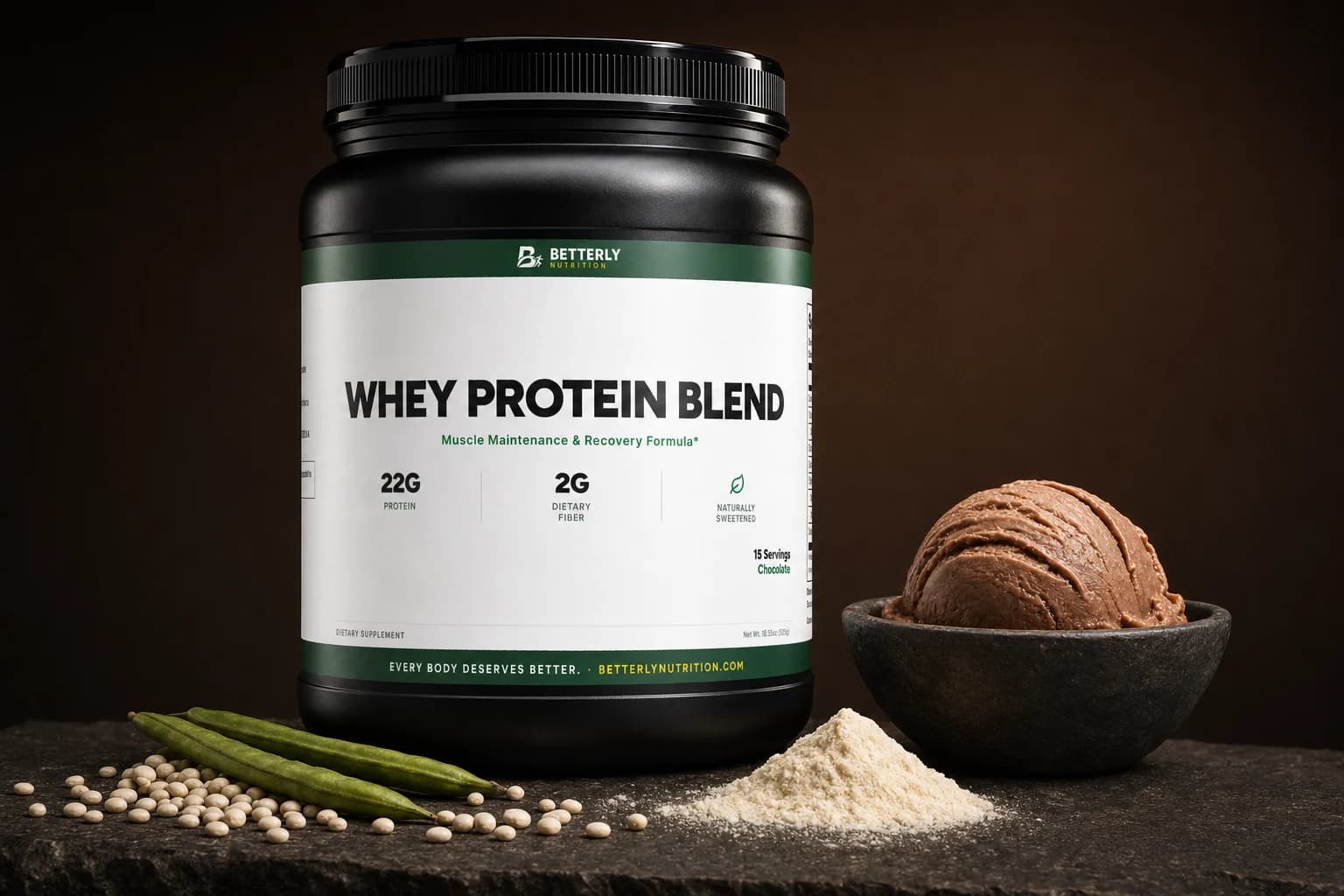
| Whey Isolate & Concentrate Blend Powder (Chocolate) | About 35 g, 2 scoops | 22 g | About 63% |
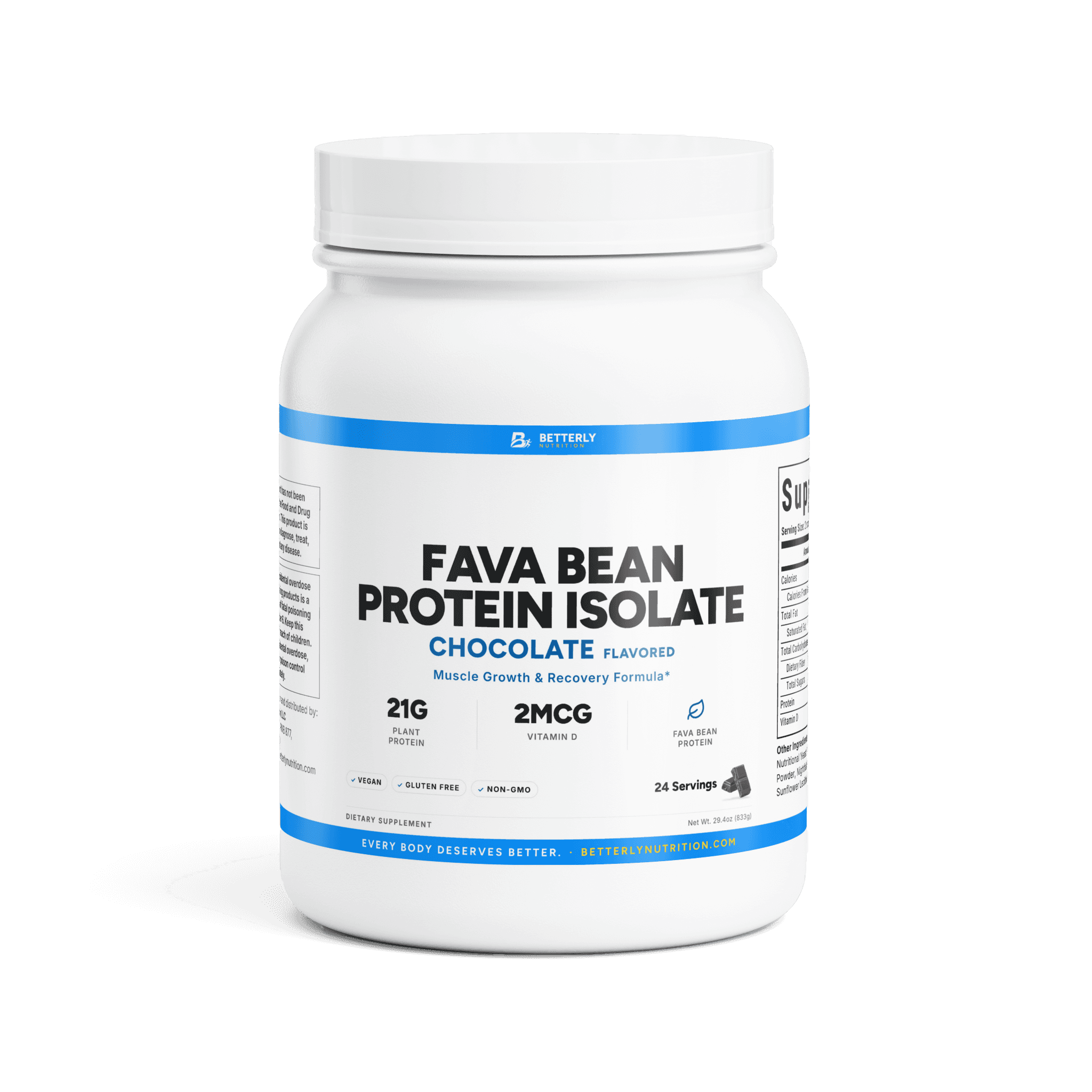
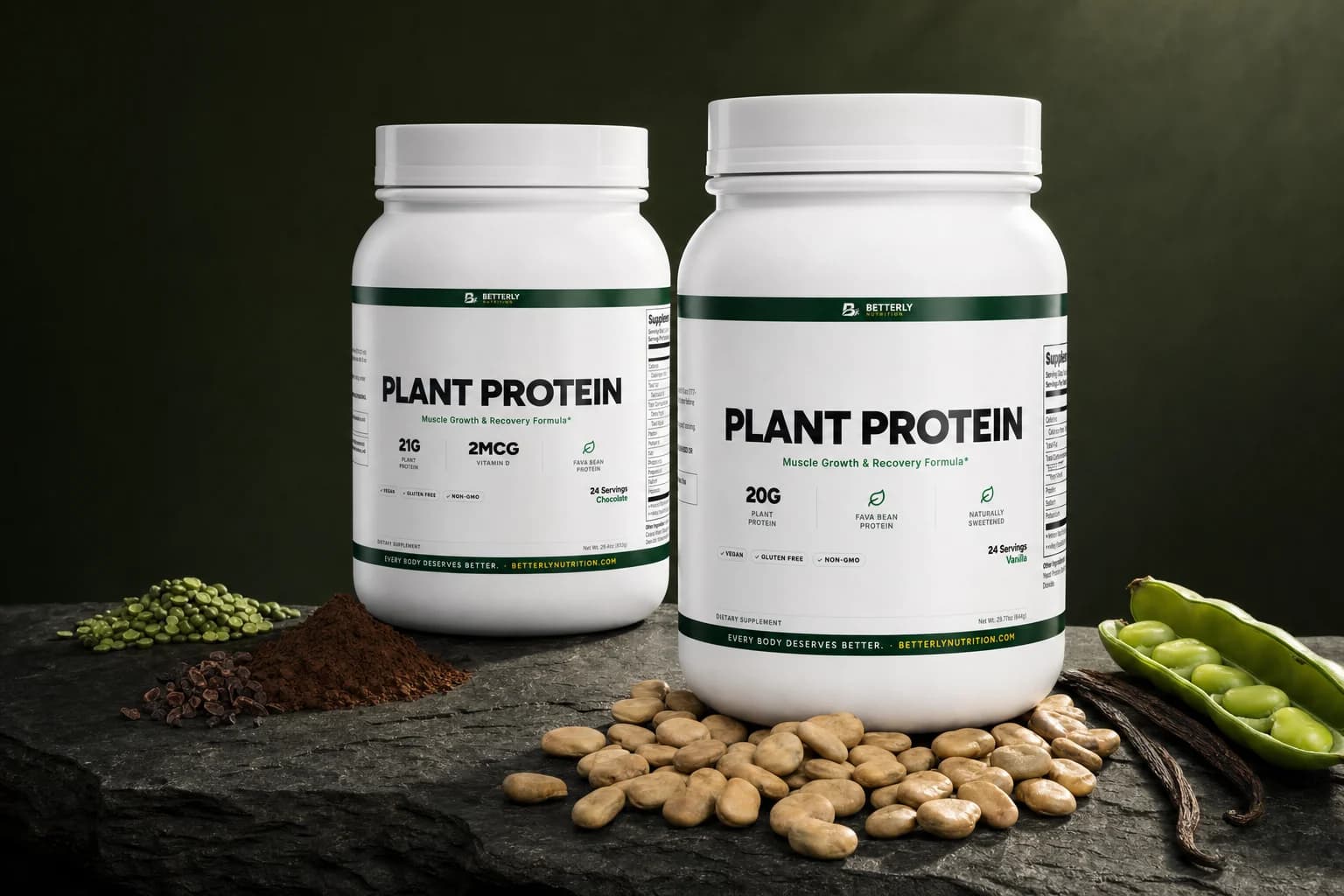
| Fava Bean Protein Isolate Powder (Vanilla) | 35 g, 2 scoops | 20 g | About 57% |
The share tends to fall as non-protein ingredients join the scoop. The blend adds resistant potato starch, salt and two gums, while the MCT and plant tubs add MCT oil powder, apple pectin, sea salt and silicon dioxide. The table also shows why 22 g against 19 g isn't the win it looks like: the bigger number rides on a bigger scoop.
What does a three-ingredient whey isolate label show, line by line?
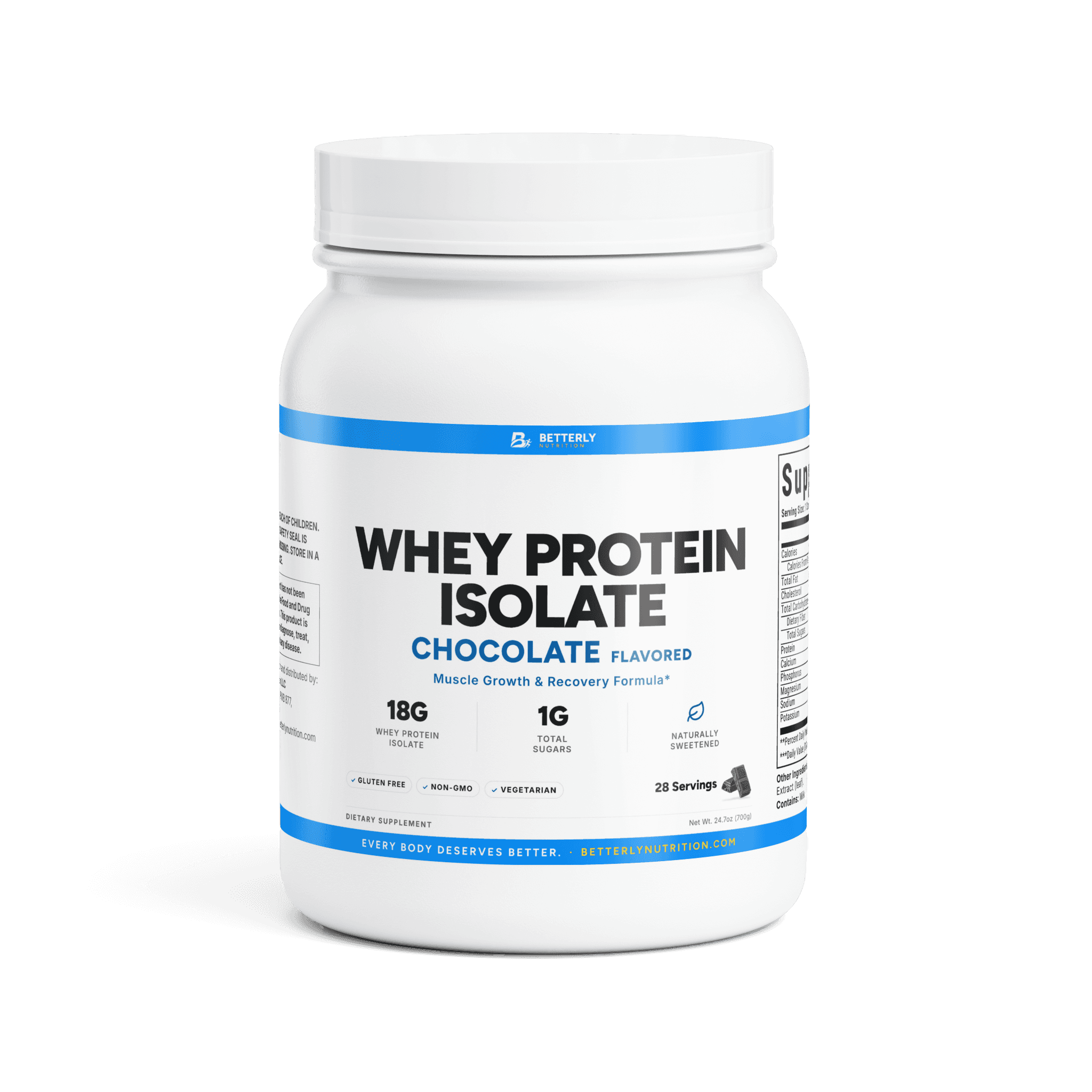
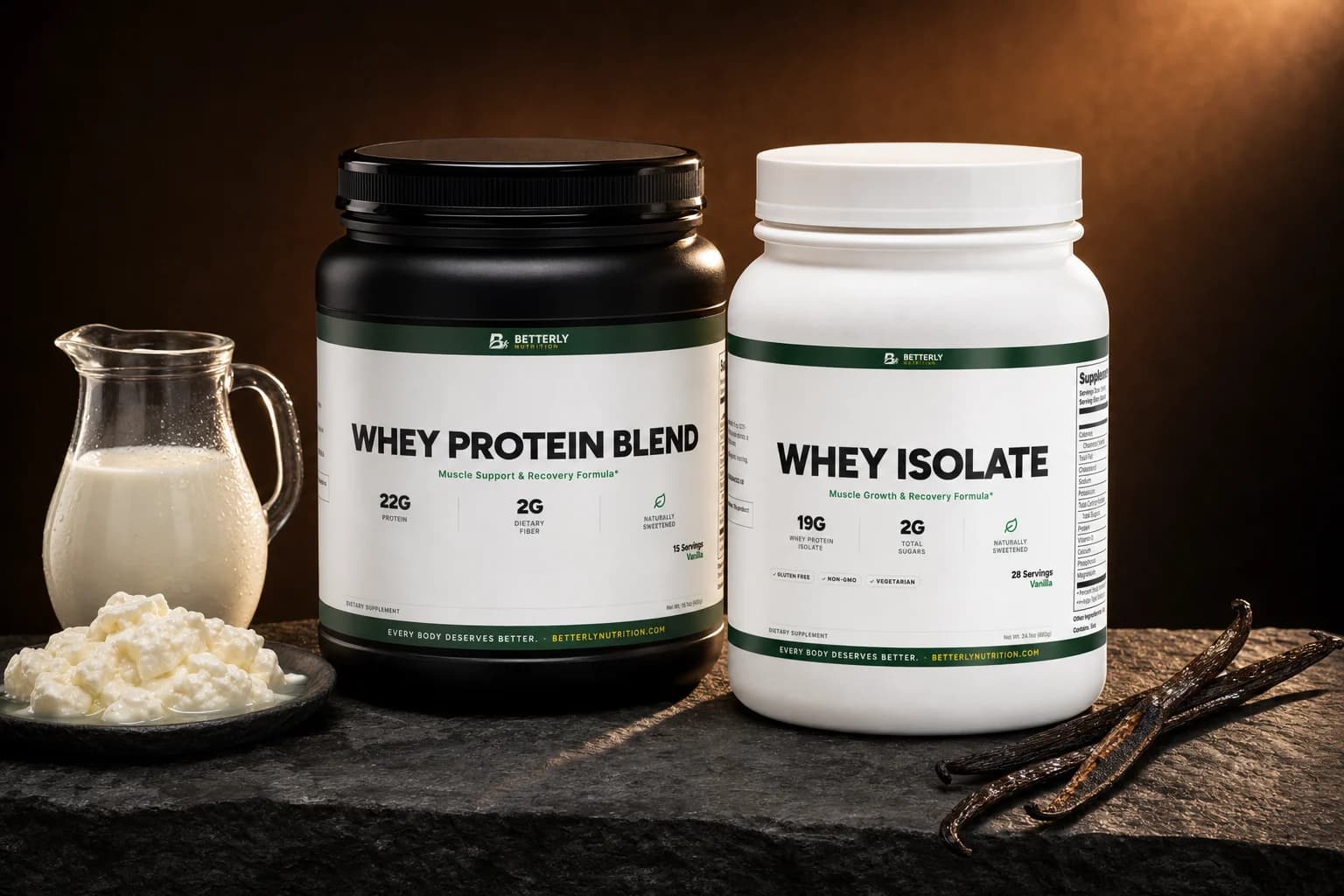
Betterly's Whey Protein Isolate Powder (Vanilla) lists three ingredients, whey protein isolate, natural flavors and stevia leaf extract, with 19 g of protein per 1 Scoop (24.4g) serving.
- Serving: 1 Scoop (24.4g), 28 per container.
- Calories: 90, with 5 from fat and 0.5 g of total fat.
- Protein: 19 g, or 36% of the Daily Value.
- Carbohydrates: 2 g, with 2 g listed as total sugars, though no sugar or syrup appears among the ingredients.
- Minerals: 97 mg of calcium (7% DV), 109 mg of phosphorus (9% DV), 16 mg of magnesium (4% DV), 110 mg of potassium and 55 mg of sodium.
- Other ingredients: Whey Protein Isolate, Natural Flavors, Stevia Extract (leaf).
- Contains: Milk.
- Label claims: gluten free, non-GMO and vegetarian.
Two gaps remain. "Natural flavors" doesn't name the flavors, and we don't sell an unflavored whey. The chocolate twin prints the same three-ingredient list, with 18 g of protein and 1 g of total sugars per 1 Scoop (25g) serving.
From our shop: Whey Protein Isolate Powder (Vanilla) — 19 g of protein per 1 Scoop (24.4g) serving, from a list of just whey protein isolate, natural flavors and stevia leaf extract.
Are proprietary blends a reason to skip a protein powder?
A proprietary blend is a fair reason to skip a protein powder when it covers the protein sources, because the label then won't say how much of each you're getting.
The FDA labeling guide says a blend needs a name, the total weight of its ingredients on the same line, and those ingredients listed "in descending order of predominance by weight." That gives you rank, not grams. With two protein forms under one weight, the second could be a big share or a pinch.
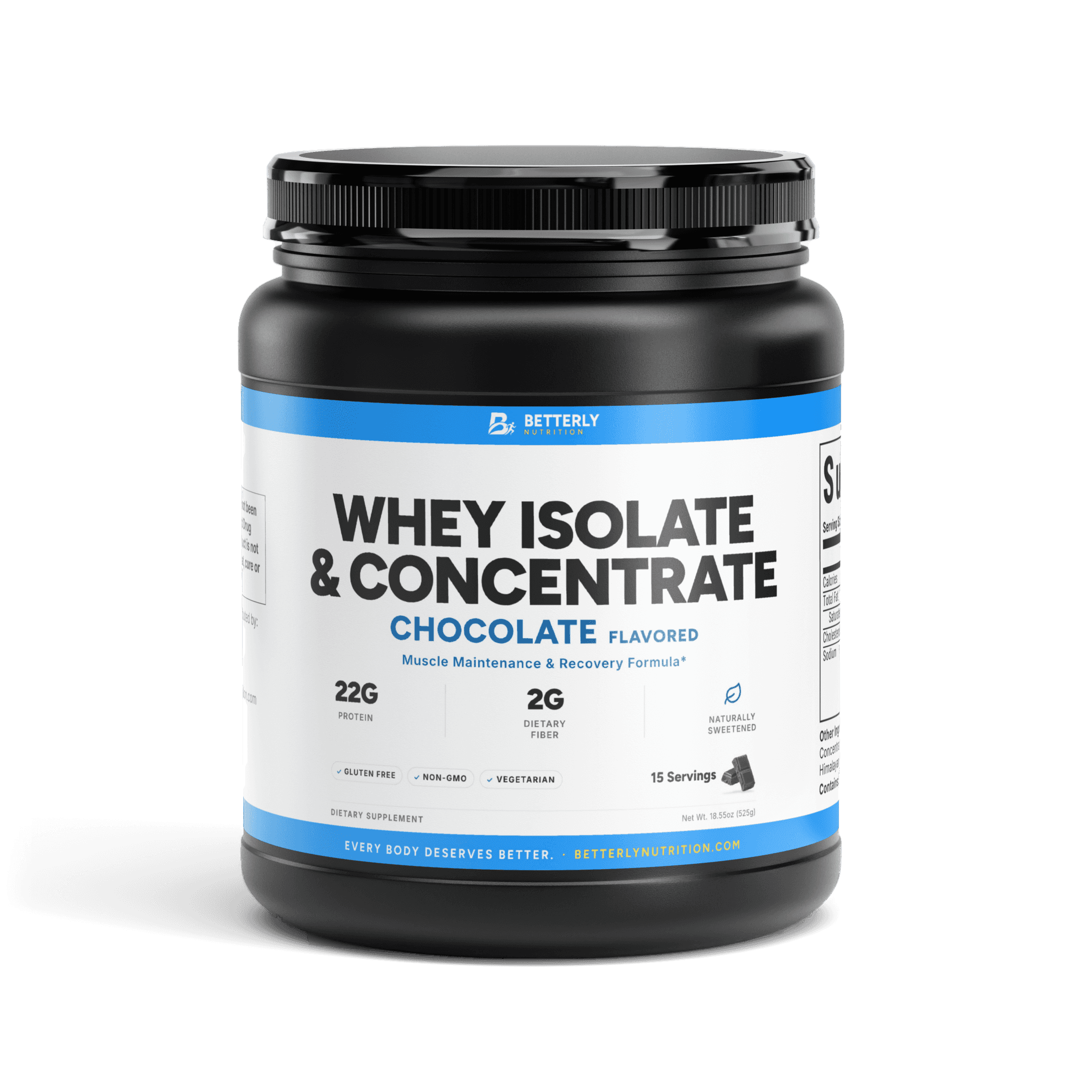
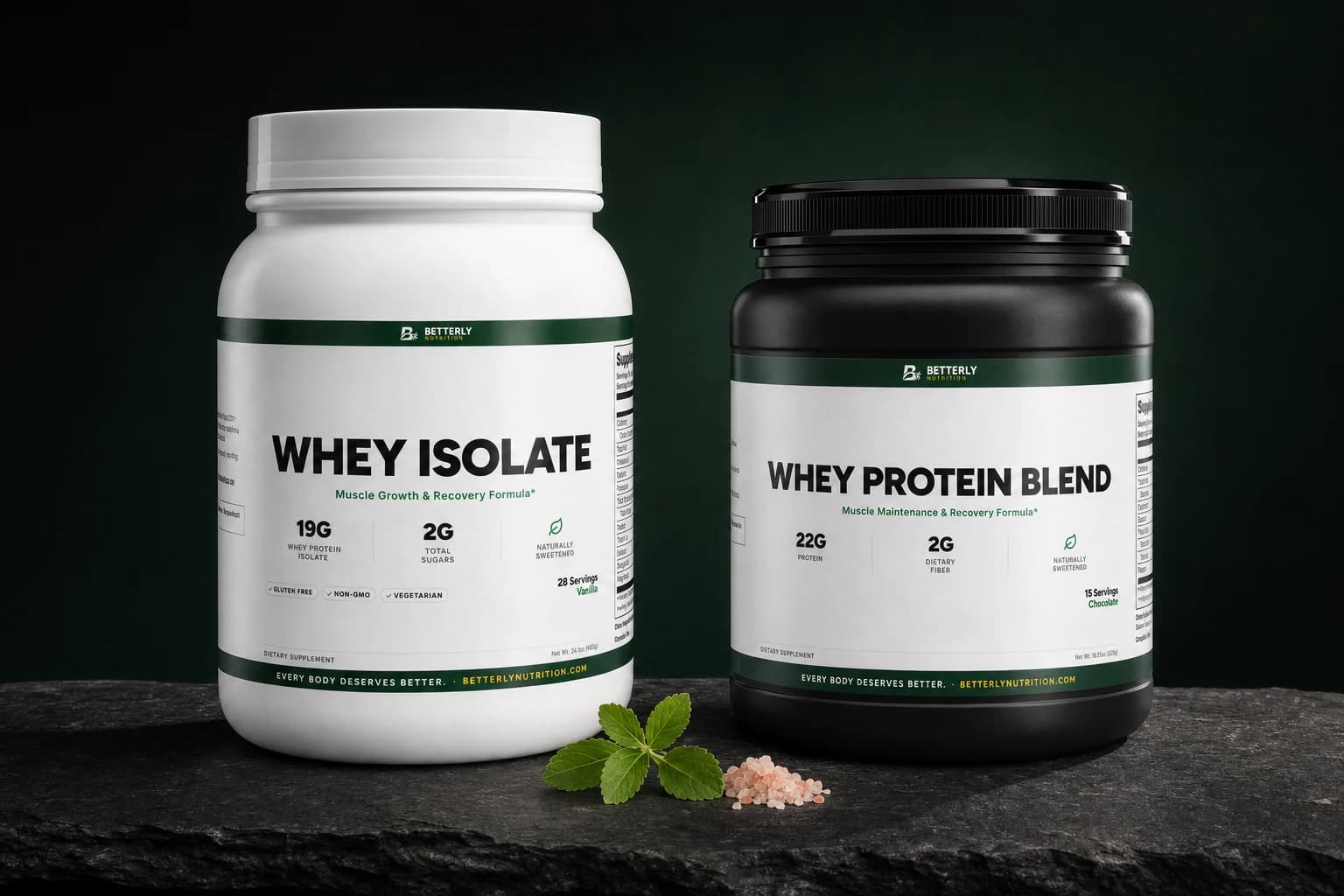
Our Whey Isolate & Concentrate Blend Powder (Chocolate) shows a milder version. It isn't labeled a proprietary blend, and it prints total protein: 22 g per 2 scoops (approximately 35 g) serving. But its first ingredient reads "Whey Protein Blend (Whey Protein Isolate and Whey Protein Concentrate)," with no split between the two. If that split matters to you, our isolate tubs answer it.
Are sweeteners, gums and fillers in protein powder bad for you?
Sweeteners, gums and fillers in protein powder are mostly common food ingredients with specific jobs, so avoiding them comes down to taste and texture.
Sugar and sweeteners
None of the eight powders in our protein collection lists sugar or a syrup as an ingredient; all use stevia leaf extract. Where our panels print Total Sugars, it reads 1 to 4 g per serving.
The FDA's page on aspartame and other sweeteners notes that some sweeteners are far sweeter than table sugar, so smaller amounts do the job. That's why a high-intensity sweetener usually lands low on an ingredient list; on our protein tubs, stevia sits in the back half of every list. The page puts sucralose at about 600 times sweeter than table sugar and high-purity steviol glycosides, the sweet compounds from stevia leaves, at 200 to 400 times.
So which sweetener should you avoid? The one you don't like, and every tub in our protein collection uses stevia.
Gums, starches and anti-caking agents
The FDA groups guar gum, xanthan gum and pectin as stabilizers and thickeners that "produce uniform texture, improve 'mouth-feel'," and lists silicon dioxide as an anti-caking agent that keeps powders free-flowing.
Our Whey Isolate & Concentrate Blend Powder is the only one of our four protein powder lines with gums: guar gum and xanthan gum, plus Solnul® (Resistant Potato Starch), with 2 g of dietary fiber per 2-scoop serving. Why do some people skip gums? Usually they want a thinner shake or a shorter list, or a thickened drink doesn't sit well with them. Our guide to xanthan gum in protein powder goes deeper.
From our shop: Whey Isolate & Concentrate Blend Powder (Chocolate) — 22 g of protein and 2 g of dietary fiber per 2 scoops (approximately 35 g) serving, thickened with guar and xanthan gums for a fuller shake.
What can't a protein powder label tell you?
A Supplement Facts panel doesn't list contaminants such as heavy metals, so your next step is asking the brand for a certificate of analysis.
A certificate of analysis, or CoA, is a lab report for one production batch. A useful one names the lab, carries a lot number matching your tub and shows a date.
Why ask? The NIH Office of Dietary Supplements' consumer guide to performance supplements notes that the FDA doesn't test or approve these products before they're sold.
We don't manufacture our powders, and we don't publish batch documents yet. Our quality page lays out where that line sits.
In a tested sport? ODS says FDA has warned that some performance products may contain unlabeled stimulants, steroids or prescription drugs. It names three programs that check for banned substances: NSF Certified for Sport, Informed-Choice and the Banned Substances Control Group. None of our labels carries those marks, so pick a powder listed on a certifier's website.
How do you take a protein powder, going by the label?
Take a protein powder the way its label says: Betterly's Whey Protein Isolate Powder calls for 1 scoop a day in 6-8 oz of water or another drink.
- Whey Protein Isolate Powder: 1 scoop with 6-8 oz (177-237ml) of water or your favorite drink daily, ideally 20-30 minutes before a meal with 8 oz (237ml) of water, or as your healthcare professional directs.
- Whey Isolate & Concentrate Blend Powder: 2 scoops in 8-12 oz (240-355 ml) of cold water, blended or shaken well. No time of day is given.
- Fava Bean Protein Isolate Powder (Vanilla): 2 scoops with 6-8 oz (177-237 ml) of water or another drink daily, with the same before-a-meal note.
All three say not to exceed the recommended dose. The isolate and plant labels say one serving daily; the blend's gives no daily count.
ODS says athletes need about 0.5 to 0.9 grams of protein per pound of body weight daily, about 75 to 135 grams at 150 pounds, and that going past recommended amounts brings no benefit. One scoop is a slice of that. Wondering how soon after a session protein matters? Our post-workout recovery guide takes that up.
When don't you need a protein powder at all?
You don't need a protein powder if food already covers your protein, and you don't need a particular tub if most of its scoop isn't protein.
On the food side, if a real protein source anchors most of your meals, a scoop isn't fixing a shortfall.
On the label side, divide protein grams by serving grams, as in our table. Under half, and most of the scoop is carbs, fat, flavor or thickeners. That may suit a meal-style shake, but it's a weak pick when protein is the point.
If you're fitting one around other products, our walkthrough for lining up daily supplements helps you spot overlaps.
Who should check with a healthcare provider first?
Check with a healthcare provider before using a protein powder if you're pregnant, nursing, under 18, taking prescription medication or managing any medical condition.
- The label caution. All three featured labels say to consult a physician if you're pregnant, nursing, under 18, or have a medical condition.
- Milk. All three of our whey lines print "Contains: Milk," so skip them if you're allergic to milk. The plant tub names no allergen and carries a vegan claim, but read its full list anyway.
- Fava beans. The plant tub's protein comes mainly from fava bean protein isolate, plus a fermented nutritional yeast protein. Anyone advised to steer clear of fava beans should read our fava bean vs pea protein guide and talk to a provider before buying.
- Protein or sodium limits. If a provider has you watching either, bring the panel. Across the eight powders in our protein collection, sodium runs from 50 mg to 190 mg per serving.
FAQ: protein powder ingredients
Is stevia in protein powder bad for you?
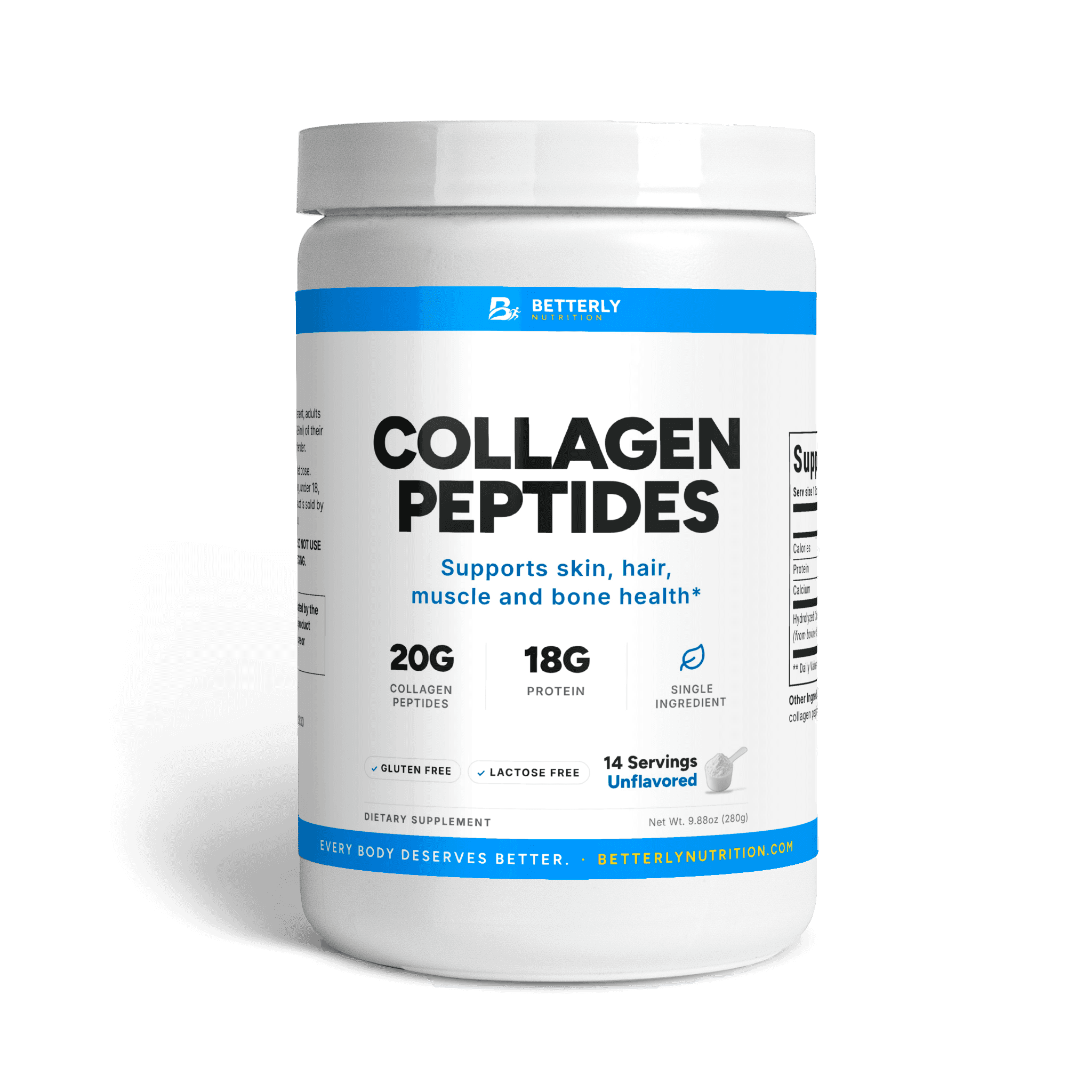
Stevia in protein powder is mostly a question of taste, not a red flag. It's intensely sweet, so only a little goes into each scoop, and people differ on whether they enjoy its flavor. All eight powders in our protein collection use stevia leaf extract, so if you already dislike it, look for an unsweetened powder. Our Collagen Peptides Powder (Unflavored) lists only bovine hide collagen peptides. It's collagen, not whey or plant protein, so compare panels first.
What should you avoid in whey protein powder?
In whey protein powder, skip any tub that won't print total protein per serving, lists sugar near the top, or tucks its protein sources inside a proprietary blend. If the isolate-to-concentrate split matters to you, choose an isolate, because blends like our Whey Isolate & Concentrate Blend Powder don't print it. If you're allergic to milk, skip whey entirely; every Betterly whey label reads "Contains: Milk."
Is a protein powder with fewer ingredients better?
A protein powder with fewer ingredients isn't automatically better, but it's easier to judge. With three ingredients, as on Betterly's Whey Protein Isolate Powder, you can account for nearly everything in the scoop. A longer list can still have a reason behind each line: our Whey Isolate & Concentrate Blend Powder adds resistant potato starch, and its panel shows 2 g of dietary fiber per serving.
Is it safe to drink a protein shake every day?
For most adults, a daily protein shake at the label's amount is fine; our Whey Protein Isolate Powder and Fava Bean Protein Isolate Powder labels each call for one serving daily. The NIH Office of Dietary Supplements says high protein intakes seem quite safe, but eating more than recommended amounts brings no benefit. If you're pregnant, nursing, under 18 or managing a medical condition, get a provider's go-ahead first.
How long does a tub of whey isolate last?
A tub of Betterly's Whey Protein Isolate Powder lasts 28 days at the label's suggested use, because both flavors hold 28 servings and the label calls for one scoop daily. Our Whey Isolate & Concentrate Blend Powder holds 15 servings. Store any tub in a cool, dry place, as the labels direct.
Sources
- Types of Food Ingredients (FDA)
- Dietary Supplement Labeling Guide: Chapter IV. Nutrition Labeling (FDA)
- Aspartame and Other Sweeteners in Food (FDA)
- Dietary Supplements for Exercise and Athletic Performance: Fact Sheet for Consumers (NIH Office of Dietary Supplements)
If this left you looking for somewhere to start, read three-ingredient whey protein isolate — its amounts per serving are listed on the page. For the practical questions this raises, how dosing, sourcing and subscriptions work is answered in one place.