On this page
- Key takeaways
- How much whey protein per day do you actually need?
- How do you find your protein gap before you reach for a scoop?
- How many scoops of protein per day do our labels direct?
- Why doesn't one scoop hold the same protein on every tub?
- How much whey protein is too much in a day?
- When in the day does a whey serving fit best?
- How do you measure and mix a whey serving?
- When don't you need whey protein?
- Who should check with a healthcare provider first?
- FAQ: how much whey protein per day
- Sources
The short answer: How much whey protein per day you need is the gap between your daily protein target and what your meals already supply. MedlinePlus puts healthy adults at 10% to 35% of calories from protein, which works out to 50 to 175 g on a 2,000-calorie day. Our Whey Protein Isolate Powder (Vanilla) directs one scoop daily and lists 19 g of protein per 1 Scoop (24.4g) serving.
Key takeaways
- Whey has no daily requirement of its own; it counts toward the same protein total as eggs, fish and beans.
- MedlinePlus gives healthy adults a range of 10% to 35% of calories from protein, and the NIH Office of Dietary Supplements puts athletes at about 0.5 to 0.9 g per pound of body weight a day.
- A scoop isn't a standard unit: our plain isolates list 18 or 19 g of protein per 1-scoop serving, versus 22 g per 2-scoop serving (about 11 g a scoop, by our math) on the other two.
- Every Betterly whey label points to a single serving and says "Do not exceed recommended dose," so a gap bigger than one serving is a job for food.
We sell three whey powders, so we have a stake in your answer. The product figures here are copied from our tubs' Supplement Facts panels, and the gap method works the same with any brand you own.
How much whey protein per day do you actually need?
There's no fixed answer to "how much whey protein should I take?" because whey protein has no target of its own. What you need is enough total protein; whey is one way to add some.
Start with the total. According to MedlinePlus, run by the U.S. National Library of Medicine, protein should supply 10% to 35% of a healthy adult's daily calories. Each gram of protein carries 4 calories, so on a 2,000-calorie day that range runs from 50 g to 175 g. MedlinePlus's own example sits in the middle: 100 g, or 20% of calories.
If you train hard, the NIH Office of Dietary Supplements (ODS) offers a tighter range. Its consumer fact sheet on exercise and athletic performance sets athletes' needs at roughly 0.5 to 0.9 g of protein for each pound they weigh, every day. At 150 pounds, the range is about 75 to 135 g.
Whichever range fits you, whey only covers the part your food doesn't.
How do you find your protein gap before you reach for a scoop?
Your protein gap is your daily target minus the protein your usual meals already provide, and MedlinePlus offers a quick shortcut for the food side.
The shortcut: 1 ounce of most protein-rich foods holds about 7 g of protein. MedlinePlus counts each of these as one such ounce: 1 oz of meat, fish or poultry, 1 large egg, ¼ cup of tofu, or ½ cup of cooked beans or lentils.
Here's a sample day, tallied that way:
- Breakfast: 2 large eggs, about 14 g.
- Lunch: 3 oz of tuna, about 21 g.
- Dinner: 4 oz of chicken with ½ cup of black beans, about 35 g.
That's roughly 70 g, before the milk, yogurt, bread and nuts that nudge it higher. For packaged foods, read the protein line on the Nutrition Facts label.
Now hold that same 70 g against three different targets:
| Daily target | Food tally | Gap | One whey serving |
|---|---|---|---|
| 60 g | 70 g | None | Not needed |
| 90 g | 70 g | 20 g | Roughly covers it |
| 120 g | 70 g | 50 g | Leaves 28 to 31 g for food |
The same three meals can mean no scoop, one scoop that fits, or a gap no single serving closes. In that last row, another 4 oz of fish or poultry, about 28 g by the MedlinePlus shortcut, covers most of what's left.
How many scoops of protein per day do our labels direct?
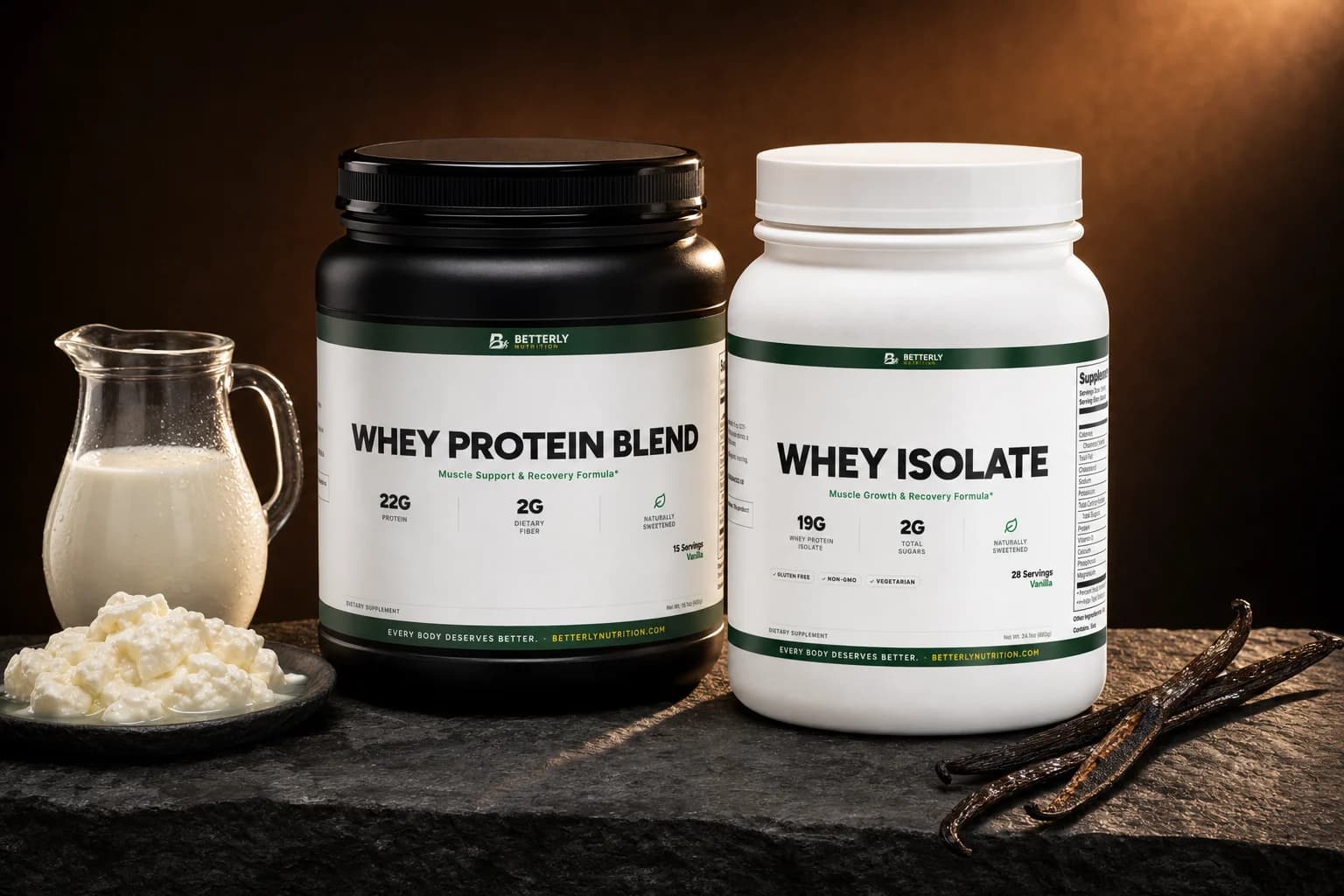
Betterly's whey labels each point to a single serving: 1 scoop of Whey Protein Isolate Powder, or 2 scoops of our Whey Protein Isolate & MCT Powder or Whey Isolate & Concentrate Blend Powder.
The vanilla tubs word it this way:
- Whey Protein Isolate Powder (Vanilla): adults mix "one (1) scoop with 6-8 oz (177-237ml) of water or favorite beverage daily."
- Whey Protein Isolate & MCT Powder (Vanilla): adults mix "two (2) scoops with 6-8 oz (177-237 ml) of water or favorite beverage daily."
- Whey Isolate & Concentrate Blend Powder (Vanilla): "Add one serving (2 scoops) to 8–12 oz (240–355 ml) of cold water and blend or shake thoroughly."
The blend's directions describe one serving but never say how many a day or at what time. All three labels share one caution, though: "Do not exceed recommended dose." We read one serving a day as the ceiling for each tub, and we won't suggest going past it.
The one exception runs through your healthcare provider. ODS's Dietary Supplements: What You Need to Know notes that the manufacturer sets a label's serving size, and your provider might pick a different amount for you.
Why doesn't one scoop hold the same protein on every tub?
Scoops are sized by each manufacturer, so one scoop of our Whey Protein Isolate Powder holds 18 or 19 g of protein, against about 11 g, by our math, in our two-scoop tubs.
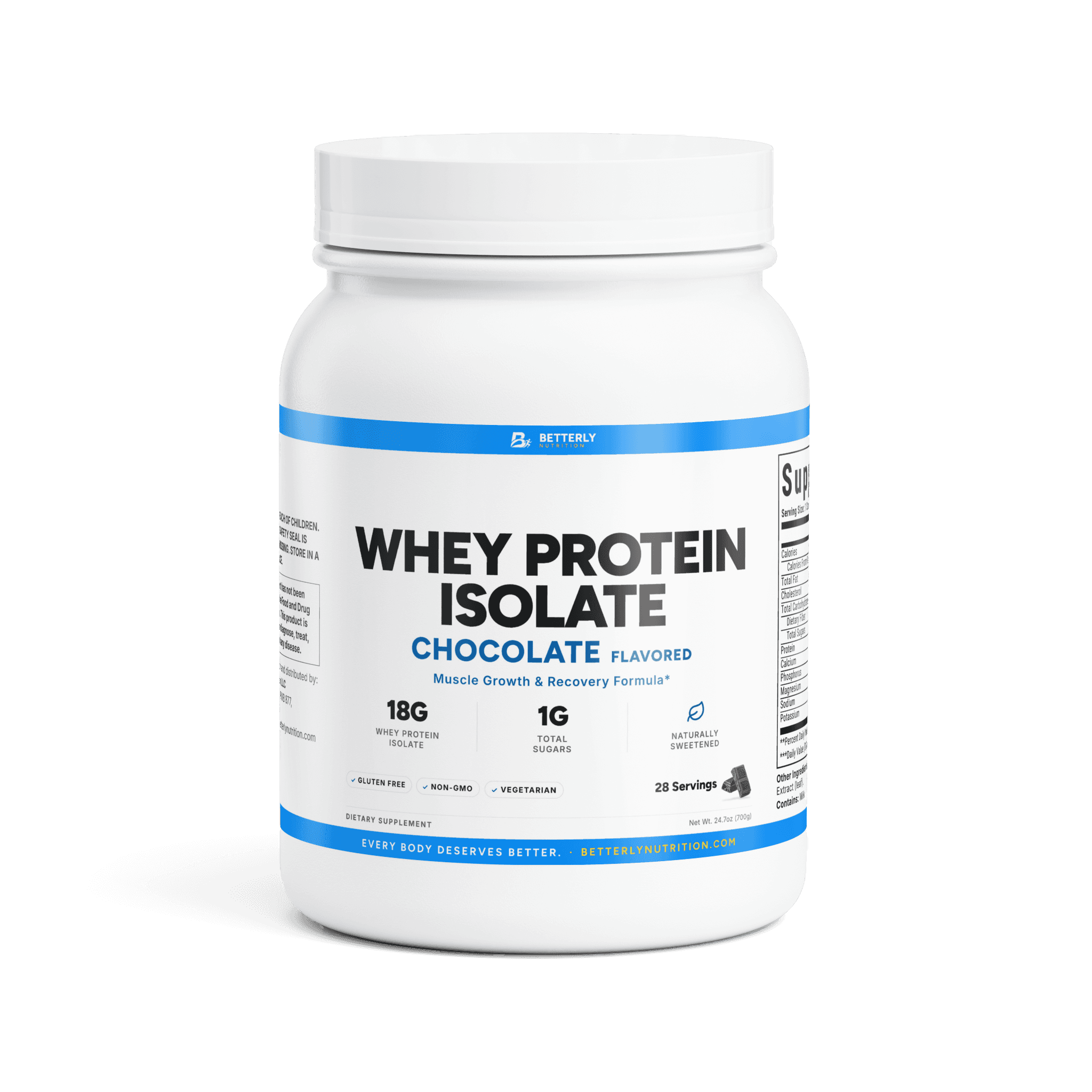
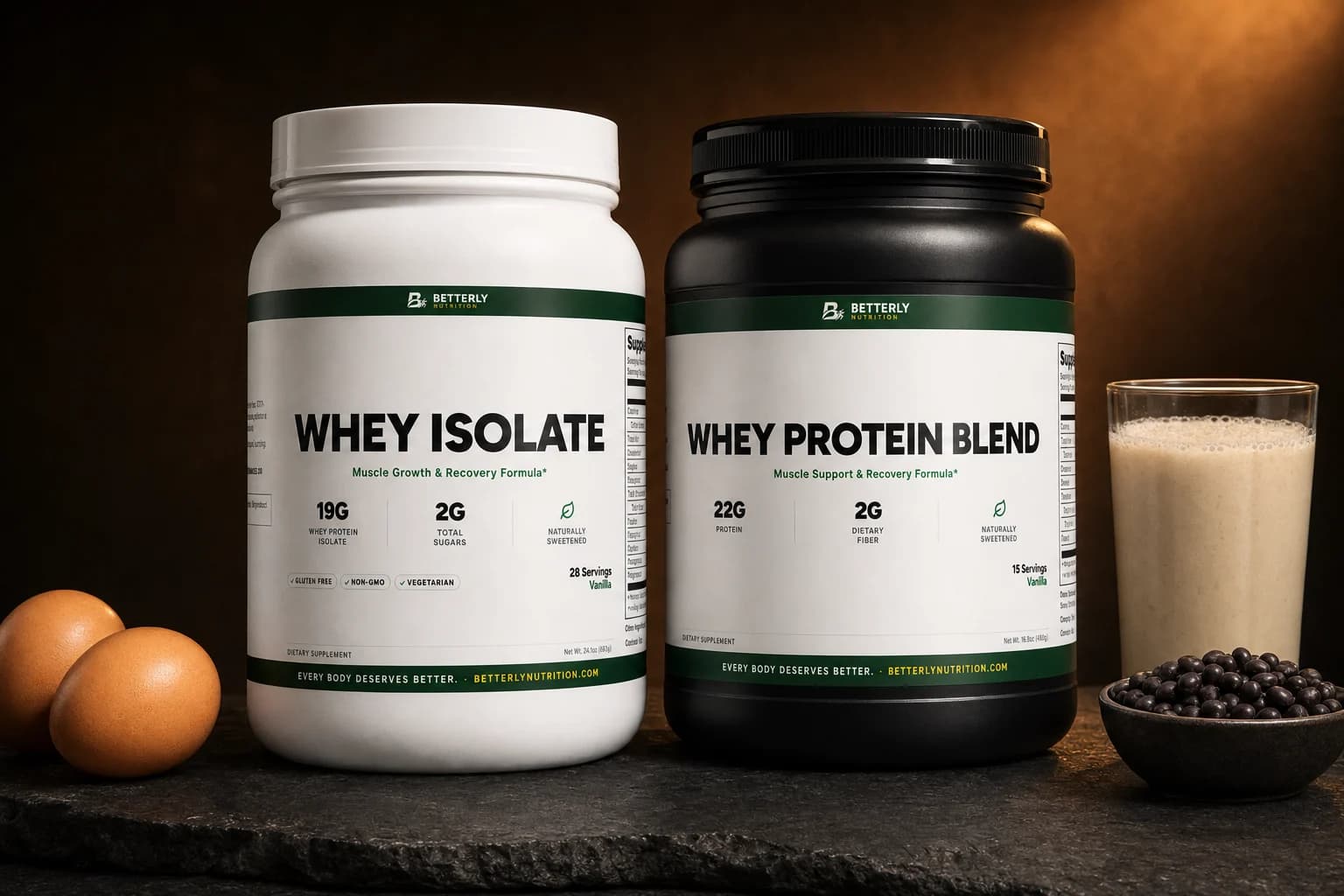
The vanilla isolate lists 19 g per 1 Scoop (24.4g), and Whey Protein Isolate Powder (Chocolate) lists 18 g per 1 Scoop (25g). The per-scoop column below is our own division, not a label line.
| Powder | Label serving | Protein per serving | Protein per scoop |
|---|---|---|---|
| Whey Protein Isolate Powder (Vanilla) | 1 Scoop (24.4g) | 19 g | 19 g |
| Whey Protein Isolate Powder (Chocolate) | 1 Scoop (25g) | 18 g | 18 g |
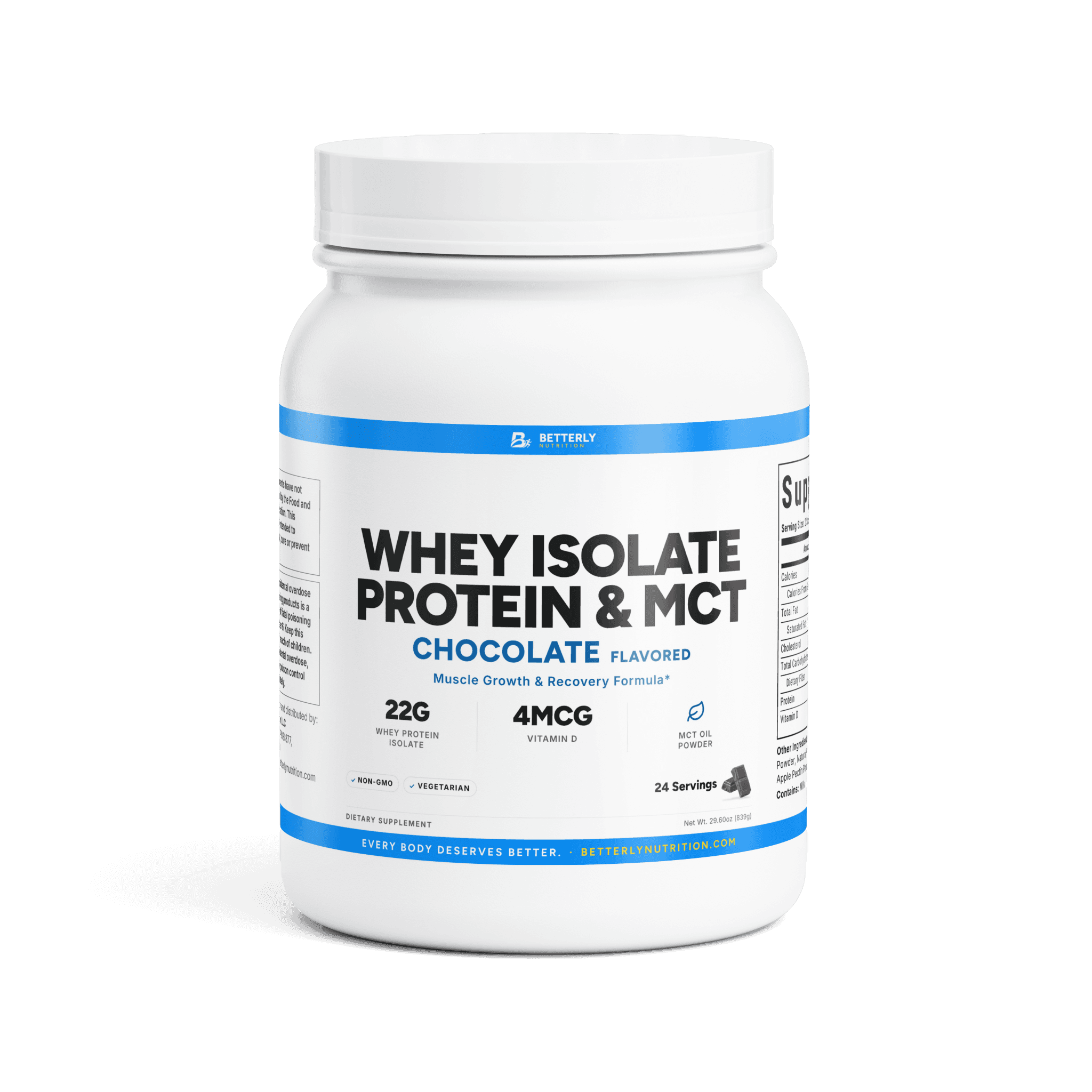
| Whey Protein Isolate & MCT Powder (Vanilla) | 2 Scoops (34g) | 22 g | About 11 g |
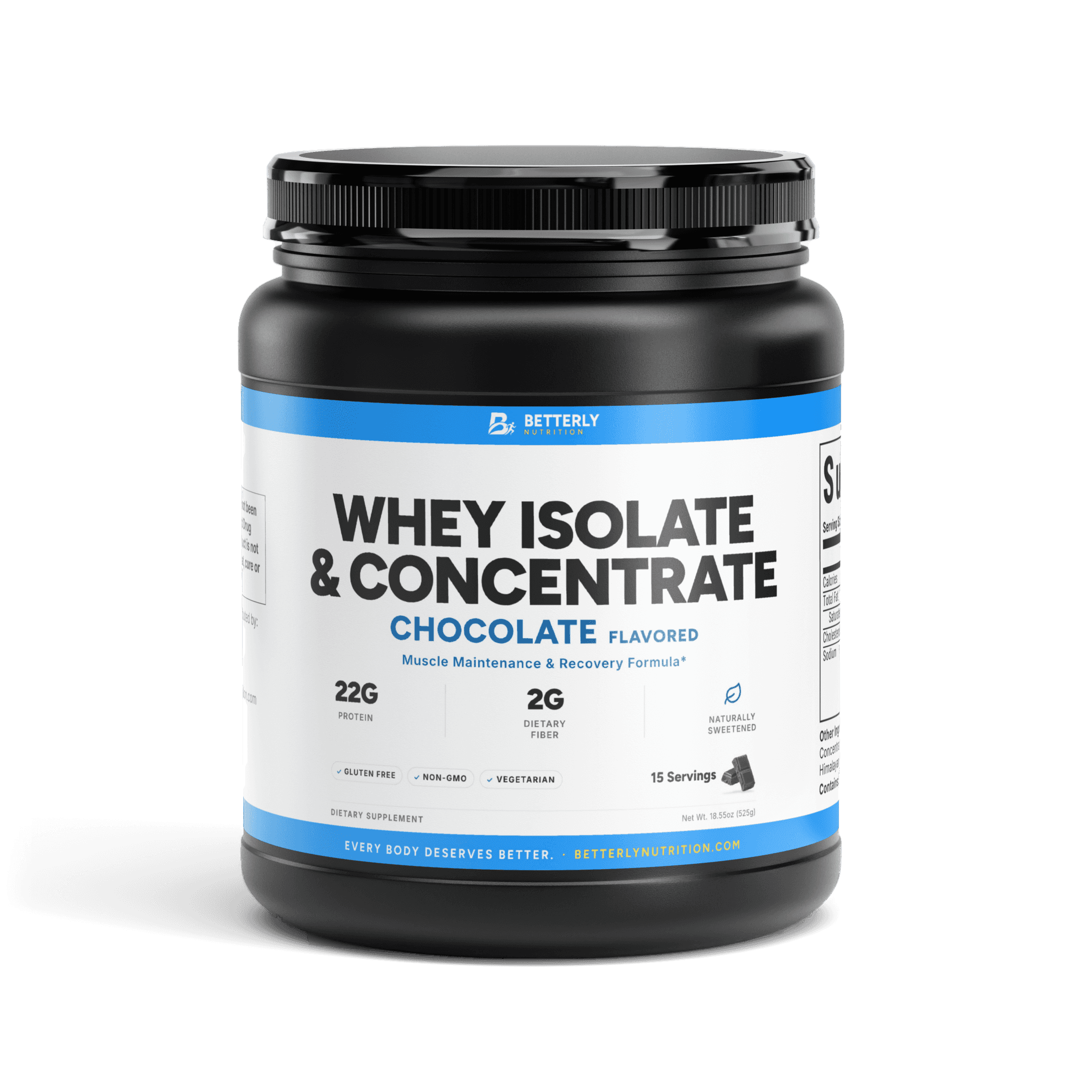
| Whey Isolate & Concentrate Blend Powder (Vanilla) | 2 scoops (approximately 32 g) | 22 g | About 11 g |
A plain isolate scoop carries roughly 1.6 to 1.7 times the protein of a scoop from the two-scoop tubs, so "two scoops a day" has no fixed meaning. On the blend, it's 22 g and exactly one label serving. On the vanilla isolate, it would be 38 g, which is double what that label directs.
The scoops aren't interchangeable either. The vanilla isolate's scoop is sized for about 24.4 g of powder, while each vanilla Isolate & MCT scoop holds about 17 g. Borrow the wrong one and your dose quietly shifts. Lost a scoop? Weigh the serving line's gram amount on a kitchen scale.
Our whey protein blend vs isolate comparison covers what else differs between the tubs, and our guide to protein powder ingredients to avoid walks through the rest of a panel.
From our shop: Whey Protein Isolate Powder (Vanilla) — one level scoop is the full daily serving on this tub, giving 19 g of protein per 1 Scoop (24.4g) serving, where our other two vanilla wheys take two scoops.
How much whey protein is too much in a day?
For any single tub, too much whey protein means anything past its label serving, and ODS adds that protein beyond recommended amounts brings no benefit.
The ODS exercise sheet says high protein intakes "seem to be quite safe, but there is no benefit to consuming more than recommended amounts." An extra scoop isn't doing extra work. It's adding calories and emptying the tub sooner.
Those calories show on our panels: 90 per serving of the vanilla isolate, 120 for the Isolate & MCT and 130 for the blend. ODS's What You Need to Know sheet adds that with supplements, more might not be better, and it costs more.
Scoops also count toward your day's total. The top of MedlinePlus's recommended range, 35% of calories, works out to 175 g on a 2,000-calorie day. If a 28-serving isolate tub runs dry in two weeks, you've drifted past the label.
When in the day does a whey serving fit best?
A whey serving fits best at the meal that runs lightest on protein, and our isolate labels add their own suggestion: 20-30 minutes before a meal.
If your tally shows breakfast as toast and coffee, that's the hole a shake can fill. ODS also passes along a sports-science recommendation: athletes eat high-quality protein every 3 to 5 hours, at 0.14 g per pound each time, or about 20 g at 150 pounds. Our servings of 18 to 22 g sit close to that, so one can stand in for a light meal's protein without overshooting.
Both isolate tubs say, "For best results, take 20-30 minutes before a meal with 8 oz (237ml) of water or as directed by your healthcare professional." The blend's label names no time at all. Drinking yours after training? Our guide to what to take after a workout fits that shake into a wider recovery routine. And if evenings are where your protein runs short, our whey isolate vs casein guide looks at casein, the other protein in milk.
How do you measure and mix a whey serving?
Measure one whey serving from the label's serving line: 1 scoop of our isolate in 6-8 oz of liquid, or 2 scoops of our other two wheys.
That also settles how many scoops of protein powder go in a shake: one serving, never two stacked into one glass.
- Find the serving line on the Supplement Facts panel. It gives the scoop count and the powder's weight: 1 Scoop (24.4g), 2 Scoops (34g) or 2 scoops (approximately 32 g) on our vanilla tubs.
- Use the scoop packed in that tub, leveled off so it matches the gram weight on the label.
- Add your liquid. The two isolate powders call for 6-8 oz (177-237 ml) of water or your favorite beverage. The blend calls for 8–12 oz (240–355 ml) of cold water, blended or shaken thoroughly.
- Have one serving a day. The isolate labels suggest 20-30 minutes before a meal.
One catch with "favorite beverage": milk brings its own protein, so add the carton's grams to your tally.
Every protein powder we carry sits in our protein collection, each with its amounts per serving listed.
From our shop: Whey Isolate & Concentrate Blend Powder (Vanilla) — one scoop is only half of its 2 scoops (approximately 32 g) serving, so it takes both to reach the 22 g of protein on the panel, and the tub holds 15 servings.
When don't you need whey protein?
You don't need whey protein when your food tally already meets your target, and ODS expects that even athletes can usually eat enough protein-containing foods.
A tub also isn't the answer in these cases:
- Your gap is small and easy to close at the table. By the MedlinePlus shortcut, one more large egg adds about 7 g.
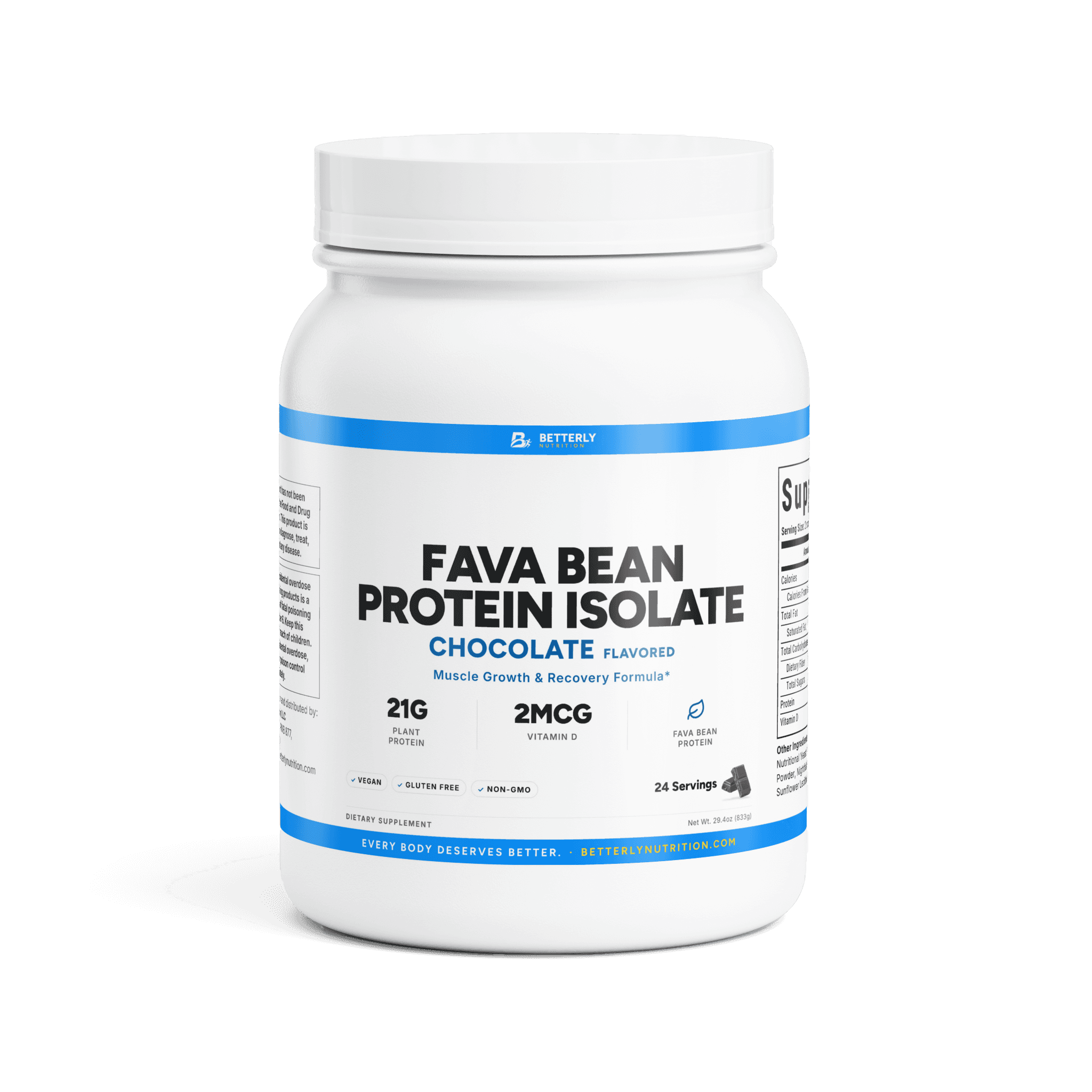
- You avoid milk. All three of our whey labels declare it, and MedlinePlus notes you don't need animal products to get all the protein you need. Our Fava Bean Protein Isolate Powder (Vanilla) is labeled vegan and lists 20 g of protein per 2 Scoops (35g) serving.
- You already drink a ready-made protein shake. Count its grams before adding a scoop.
- You'd use shakes in place of meals. Our whey labels describe a scoop mixed into a drink, not a meal replacement.
Who should check with a healthcare provider first?
Talk to a healthcare provider before starting a daily whey serving if you're pregnant or nursing, under 18, taking prescription medicine, scheduled for surgery, or living with a medical condition.
Our whey labels print most of that list: "Consult a physician if pregnant, nursing, under 18, or have a medical condition." Prescriptions and surgery aren't on the label, but ODS advises telling your providers about every supplement you take, especially before a surgical procedure. A daily protein powder counts.
If a provider has set a protein amount for you, whether a minimum or a maximum, that number replaces every range in this guide. MedlinePlus adds that children and teens may need different amounts by age. Only our two isolate labels name adults in their directions, and all three of our whey labels say to consult a physician if you're under 18.
FAQ: how much whey protein per day
Is 2 scoops of whey protein a day too much?
Two scoops of whey protein a day can be exactly the label serving or double it, depending on the tub. On our Whey Protein Isolate & MCT Powder and Whey Isolate & Concentrate Blend Powder, 2 scoops is the single serving, with 22 g of protein. On our Whey Protein Isolate Powder, the serving is one scoop, so a second doubles the vanilla tub's 19 g to 38 g. Each label says "Do not exceed recommended dose."
How much whey protein per day to build muscle?
No whey-specific amount exists for building muscle. Protein supports building, maintaining and repairing muscle, according to the NIH Office of Dietary Supplements, which sets athletes' daily range at about 0.5 to 0.9 g for each pound they weigh, from every source combined. Whey adds to that total just like food protein does. Our labels still stop at one serving, so meals supply the rest.
How many grams of protein are in a scoop of whey?
The grams of protein in a scoop of whey vary by brand, so read them off the tub's Supplement Facts panel. Check how many scoops the serving size names beside the protein line. One scoop means the protein line is your number; two means you halve it. If a panel gives only a gram weight with no scoop count, a kitchen scale shows how many of that tub's level scoops reach it.
How much whey protein isolate per day?
One serving of whey protein isolate a day is what our isolate labels direct. On our Whey Protein Isolate Powder, that's a single scoop: 19 g of protein per 1 Scoop (24.4g) serving in vanilla and 18 g per 1 Scoop (25g) serving in chocolate. Our Whey Protein Isolate & MCT Powder is isolate-based too, but its daily serving is 2 Scoops (34g) in vanilla or 2 Scoops (35g) in chocolate, with 22 g of protein in each. Each of these labels says "Do not exceed recommended dose."
Can you take whey protein while pregnant or nursing?
Talk with your healthcare provider before taking whey protein while pregnant or nursing. Our whey labels say to consult a physician if you're pregnant or nursing. The NIH Office of Dietary Supplements urges care with any supplement other than a standard prenatal while you're pregnant or nursing. MedlinePlus notes protein matters for growth and development in pregnant women, so your provider can also help set your daily protein amount.
Sources
- Protein in diet, MedlinePlus Medical Encyclopedia, U.S. National Library of Medicine
- Dietary Supplements for Exercise and Athletic Performance: Fact Sheet for Consumers, NIH Office of Dietary Supplements
- Dietary Supplements: What You Need to Know, NIH Office of Dietary Supplements
If this left you looking for somewhere to start, read vanilla whey isolate with 19 g protein per scoop — its amounts per serving are listed on the page. For the practical questions this raises, how dosing, sourcing and subscriptions work is answered in one place.