On this page
- Key takeaways
- What's the difference between BCAA and EAA?
- BCAA vs EAA: which is better for making muscle protein?
- BCAA vs whey protein: which covers more?
- Should you take BCAAs or EAAs during a workout?
- Is BCAA or EAA better for recovery?
- Can you take BCAA and EAA together?
- How do you take 2:1:1 BCAA & L-Glutamine Powder?
- When don't you need a BCAA or EAA supplement?
- Who should check with a healthcare provider first?
- FAQ: BCAA vs EAA
- Sources
The short answer: BCAA vs EAA comes down to coverage. BCAAs are three amino acids: leucine, isoleucine and valine. EAAs are all nine essential amino acids, and those three are part of the set. If your goal is giving your body what it uses to make new muscle protein, a complete source such as an EAA product or a scoop of whey is the stronger pick. A BCAA drink is a flavored extra, not a stand-in for protein.
Key takeaways
- BCAAs are 3 of the 9 essential amino acids, so every EAA product and every complete protein already contains them.
- The NIH Office of Dietary Supplements says it isn't clear that BCAA supplements help you build more muscle than simply eating enough high-quality protein.
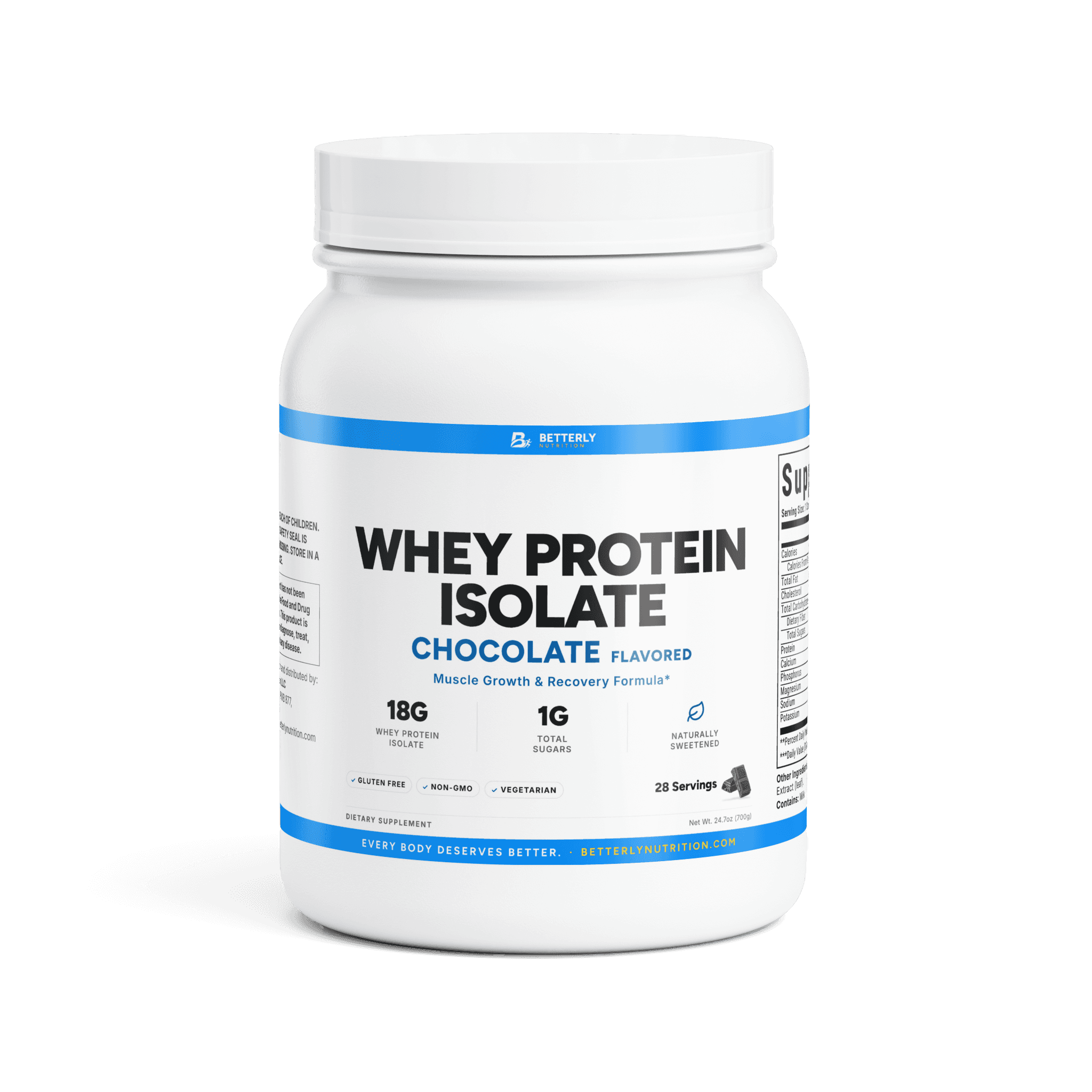
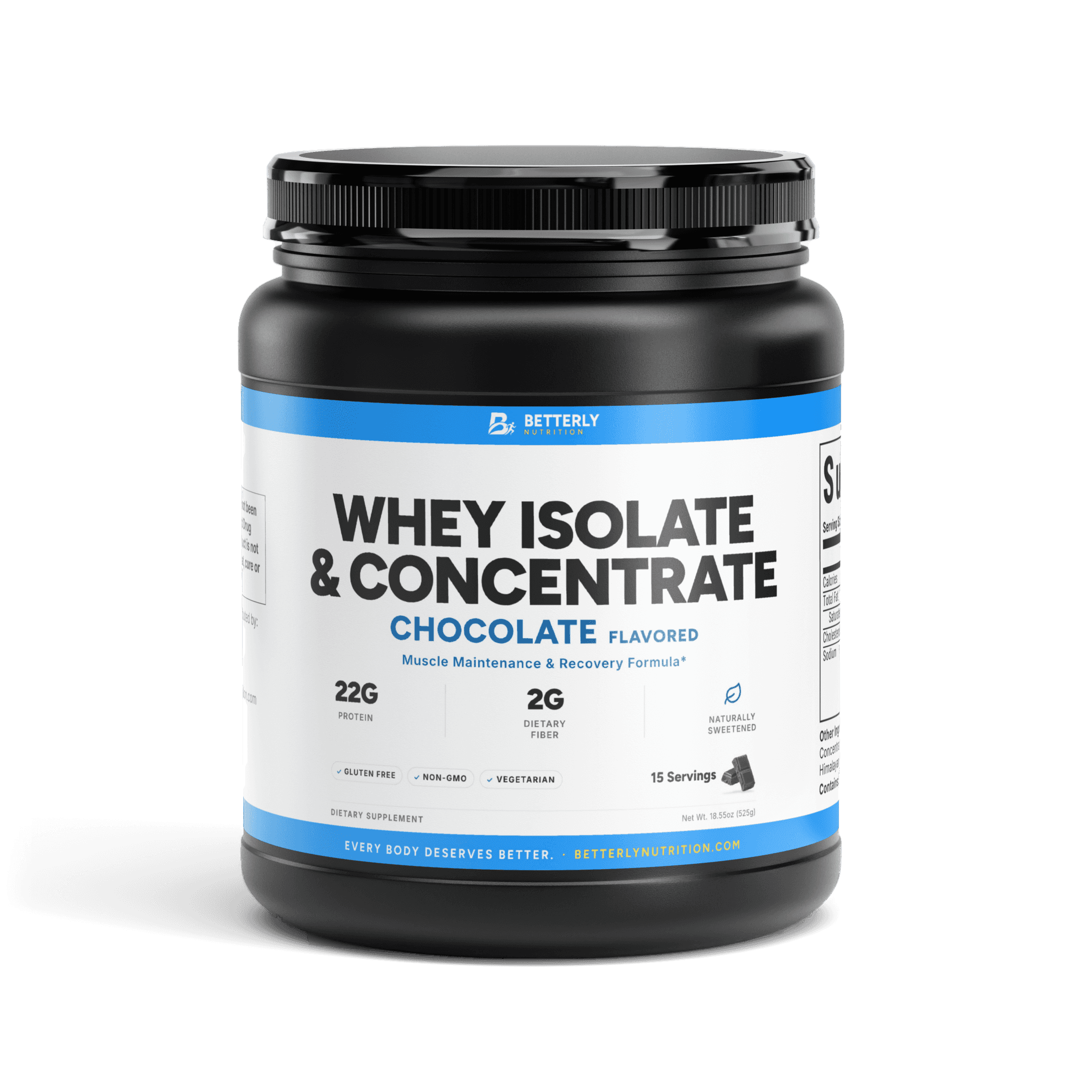
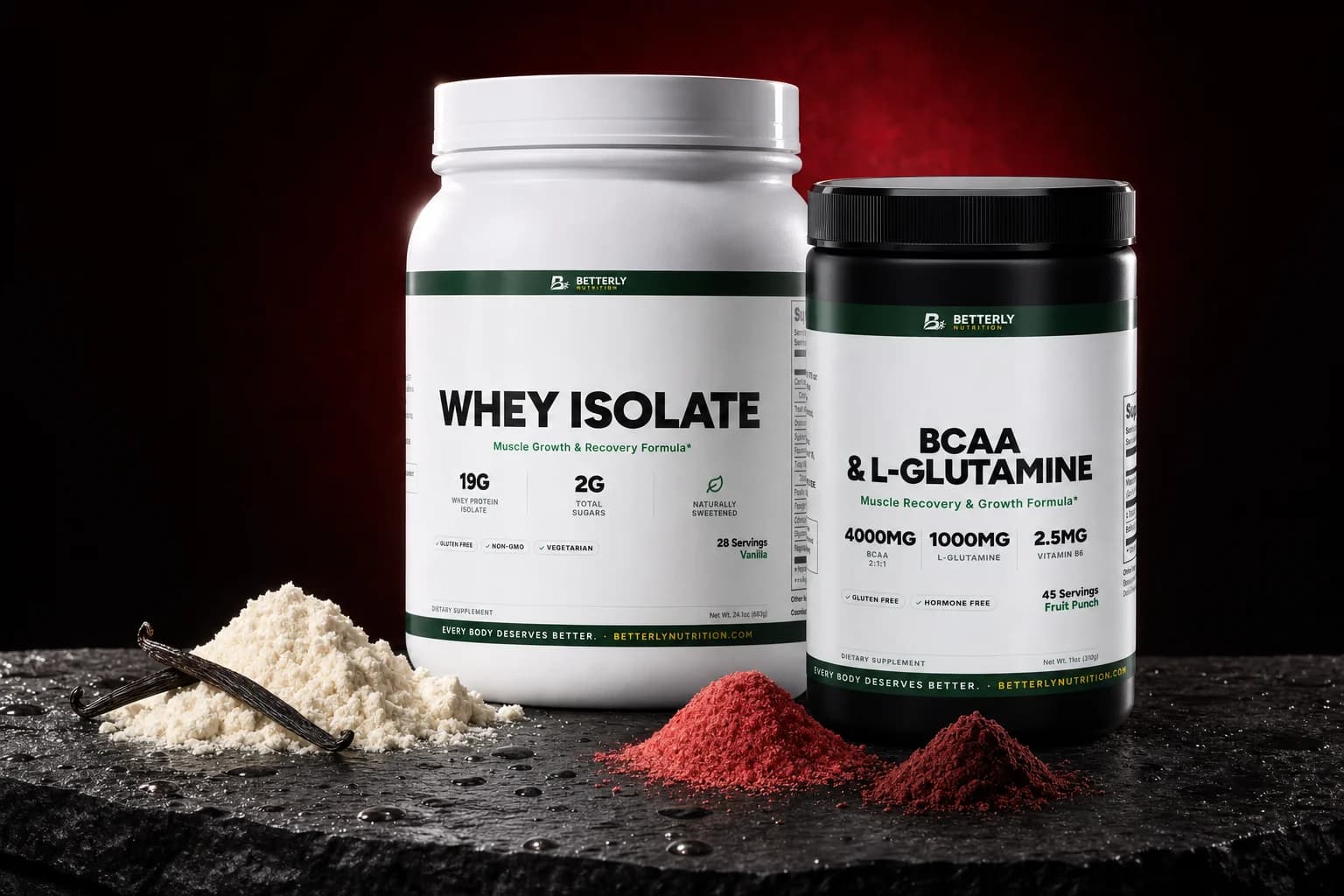
- Our Whey Protein Isolate Powder (Vanilla) lists 19 g of protein per 1-scoop (24.4 g) serving, and the NIH notes that whey provides all the essential amino acids.
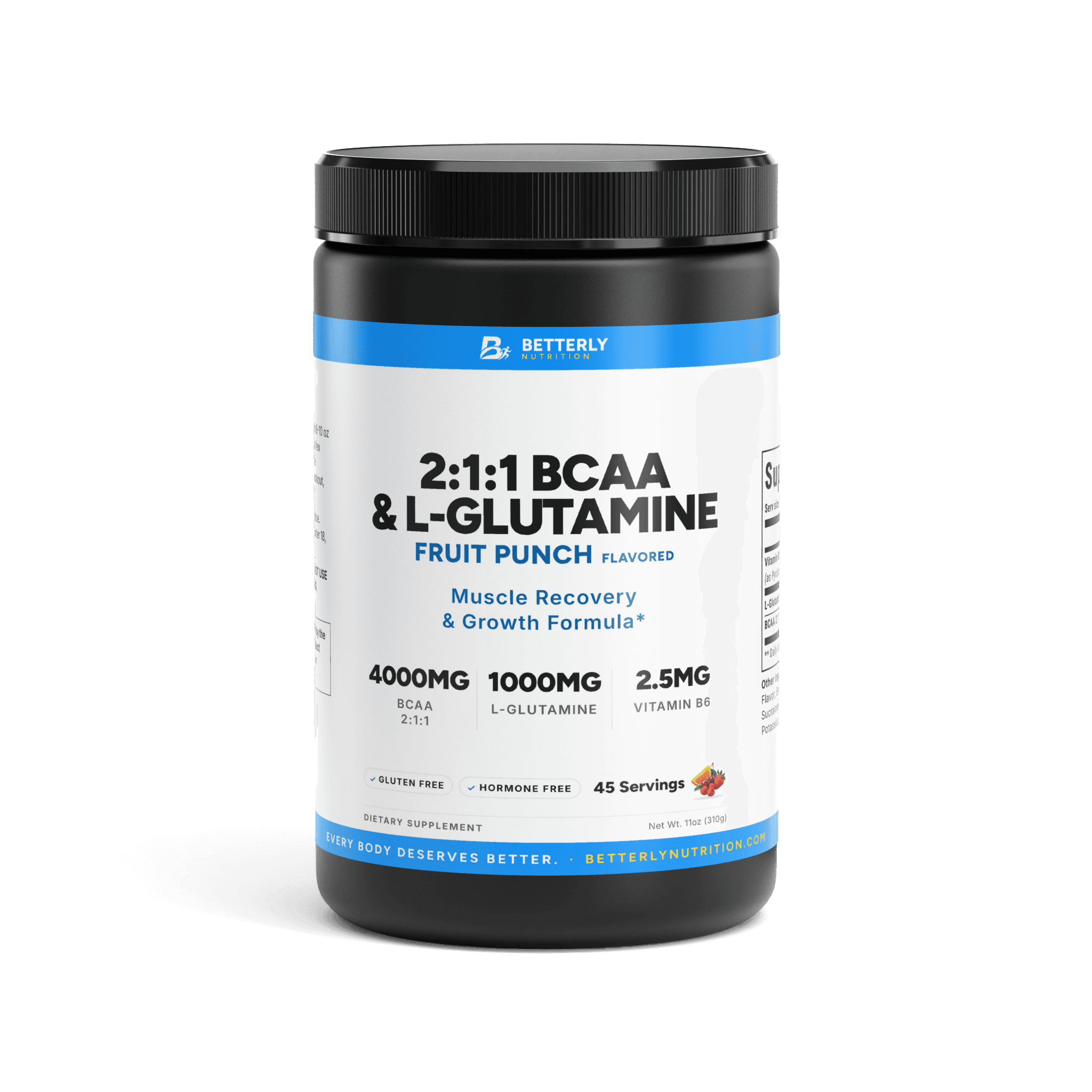
- Our 2:1:1 BCAA & L-Glutamine Powder (Fruit Punch) lists 4,000 mg of BCAAs in a 2:1:1 ratio plus 1,000 mg of L-glutamine per 1/2-scoop (6.5 g) serving.
- If your meals already cover your protein, you may not need an amino acid powder at all.
Where we stand: Betterly sells a BCAA powder and several protein powders, but no stand-alone EAA product. So every product number below comes straight off our own Supplement Facts panels, including the spots where our BCAA tub comes up short.
What's the difference between BCAA and EAA?
BCAAs (branched-chain amino acids) are three specific amino acids, while EAAs (essential amino acids) are the full group of nine your body can't make by itself.
Amino acids are the small units that link up to form proteins. According to MedlinePlus, the nine essential ones are histidine, isoleucine, leucine, lysine, methionine, phenylalanine, threonine, tryptophan and valine. Because your body can't produce them, they have to come from what you eat.
Leucine, isoleucine and valine share a branch-shaped side chain, which is where the BCAA name comes from. So this is a subset question, not a rivalry. Anything that supplies all nine EAAs supplies the three BCAAs too, but a BCAA product can't supply the other six.
| Question | BCAA product | EAA product | Whey protein |
|---|---|---|---|
| Essential amino acids | 3 of 9 | All 9 | All 9 (per the NIH) |
| Contains the BCAAs? | Yes, only those | Yes | Yes |
| Does Betterly sell one? | Yes, with L-glutamine | No | Yes |
| Where it fits | Flavored drink near training | Amino drink with all nine | Topping up daily protein |
The first row is the verdict. EAA products and whey both cover the full set of nine, while a BCAA product covers three.
BCAA vs EAA: which is better for making muscle protein?
For making muscle protein, EAAs or a complete protein like whey come out ahead of BCAAs alone, because a BCAA drink supplies only three of the nine essential building blocks.
The NIH Office of Dietary Supplements (ODS) says getting enough protein gives your body the essential amino acids it needs to make muscle proteins. ODS adds that adequate protein reduces the breakdown of protein in your muscles. That's a job for all nine, not three.
On BCAAs specifically, ODS is careful. It says your muscles can use the three for energy during exercise. It allows that BCAA supplements might help alongside a weight-training program, then adds the catch: it isn't clear they help you build more muscle than just eating enough high-quality protein foods.
The fact sheet's bottom line is blunt: not much scientific evidence supports taking BCAAs to improve performance or build muscle. It also notes that eating protein foods raises your BCAA intake automatically.
What about EAA powders? ODS doesn't rate them separately in its consumer sheet. It does say animal foods contain all the EAAs, and that whey, the milk protein in most protein powders, provides all of them. So pick something that brings all nine. Food comes first, and a protein powder or an EAA product can fill a gap.
BCAA vs whey protein: which covers more?
Whey protein covers more than a BCAA drink, because ODS says whey provides all the essential amino acids, and a scoop of ours lists 19 g of protein.
Against an EAA product, whey is a closer call, since both bring all nine. Whey is a whole protein from milk. ODS doesn't rate EAA products on their own, so we won't call a winner between those two.
Here's how three of our tubs compare, using nothing but their labels.
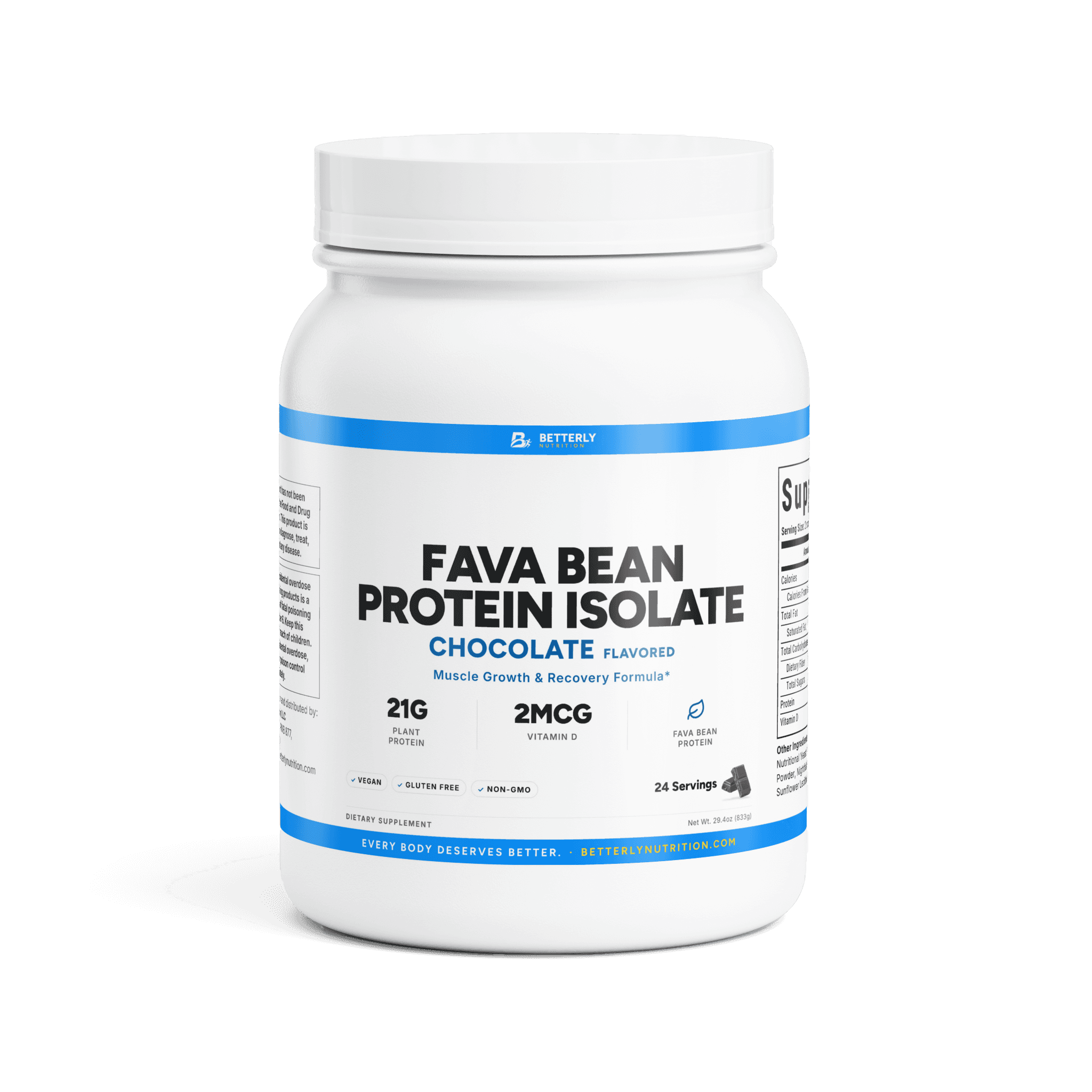
| Per labeled serving | 2:1:1 BCAA & L-Glutamine Powder | Whey Protein Isolate Powder | Fava Bean Protein Isolate Powder |
|---|---|---|---|
| Serving size | 1/2 scoop (6.5 g) | 1 scoop (24.4 g) | 2 scoops (35 g) |
| Main listed actives | 4,000 mg BCAA 2:1:1, 1,000 mg L-glutamine | 19 g protein | 20 g protein |
| Calories on the panel | Not listed | 90 | 110 |
| Sweetener | Sucralose, acesulfame potassium | Stevia extract (leaf) | Stevia extract (leaf) |
The takeaway is the second row. The two protein powders list 19 to 20 g of protein each, while the BCAA powder lists 5 g of amino acids in total.
Now set the whey number next to a published target. ODS says sports-science experts recommend that athletes get about 0.14 g of high-quality protein per pound of body weight every 3 to 5 hours, or about 20 g for a 150-pound person. One scoop of our whey isolate lists 19 g.
One honest limit: neither protein label prints an amino acid breakdown. Our "all nine" point for whey rests on the ODS statement about whey in general, not on a figure from our panel.
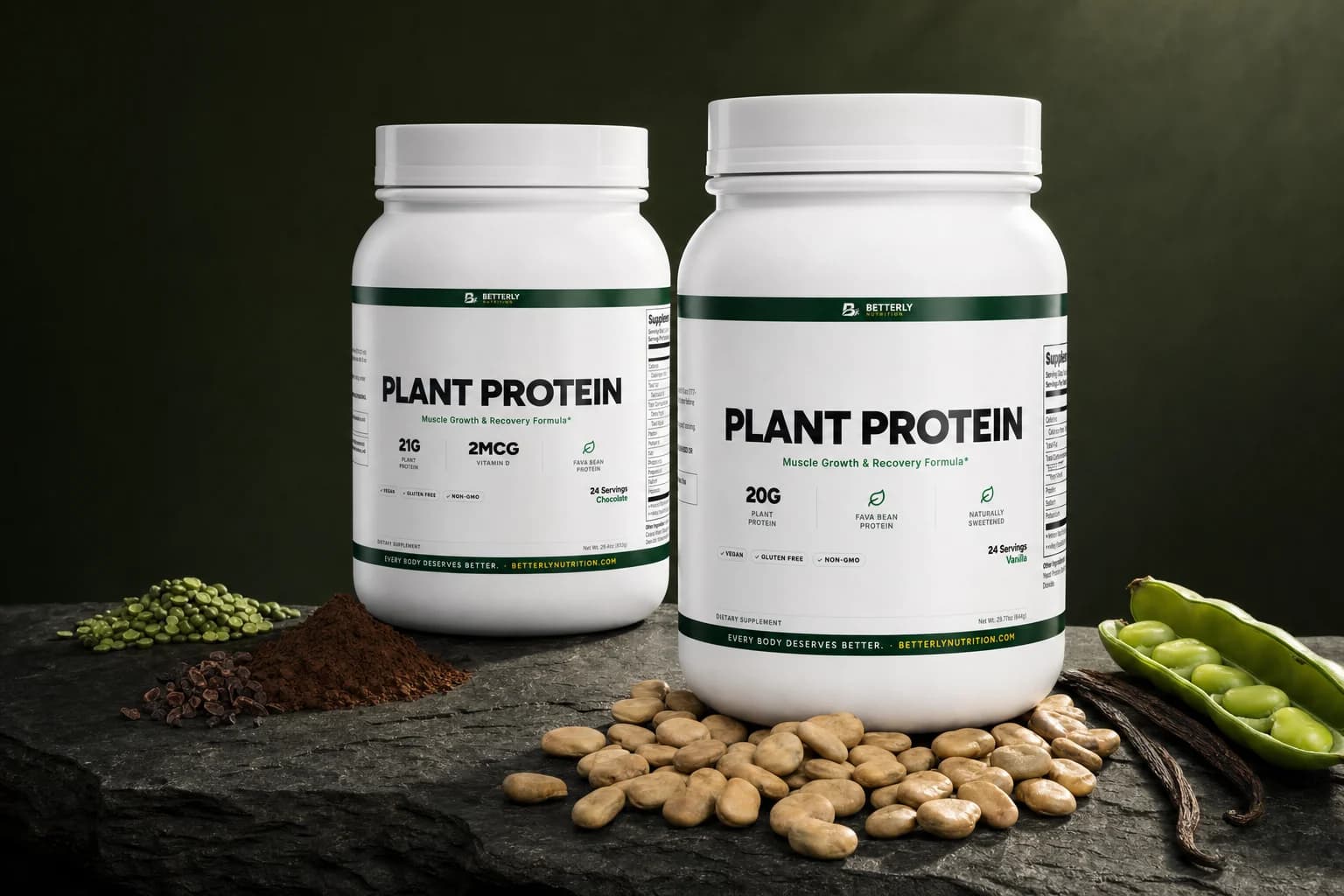
Our Fava Bean Protein Isolate Powder (Vanilla) blends fava bean protein isolate with YESTEIN™ fermented nutritional yeast protein, and it's labeled vegan. Plant proteins mix their amino acids differently, which our fava bean vs pea protein comparison breaks down.
From our shop: Whey Protein Isolate Powder (Vanilla) — 19 g of protein and 2 g of total sugars per 1-scoop (24.4 g) serving, sweetened with stevia leaf extract, with 28 servings per tub.
Should you take BCAAs or EAAs during a workout?
Most people don't need BCAAs or EAAs during a workout, and our BCAA label names three other windows instead: before training, after training or between meals.
ODS says there's little evidence that BCAA supplements help performance in endurance activities like distance running. During a long or hot session, the drink that can't wait is fluid. If sweat is why you're reaching for a bottle, our electrolyte explainer covers when salt belongs in it.
Our label says the powder is best taken pre-workout, post-workout or between meals. It doesn't mention sipping it through a session, so we won't suggest that either.
Where a BCAA drink honestly fits is as a light, flavored option around training. A serving is 6.5 g of powder, against 24.4 g for a scoop of whey isolate. If you want a fruity drink before you start and not a full shake, that's the niche.
Training before breakfast? Whether a BCAA drink counts as eating is its own question, covered in do BCAAs break a fast.
Is BCAA or EAA better for recovery?
For recovery, a complete protein that carries all nine EAAs is a better bet than BCAAs alone.
ODS finds not much evidence that BCAA supplements help tired, sore muscles recover, while it credits protein with helping build, maintain and repair muscle.
That points you back to total protein, which already includes all nine EAAs. ODS mentions that experts recommend athletes get high-quality protein within 2 hours after exercising, and a meal with protein in it counts. That's why our guide to what to take after a workout starts with fluids, then protein.
What about the 1,000 mg of L-glutamine in our BCAA tub? Glutamine isn't one of the nine essential amino acids, so it doesn't change the BCAA vs EAA math. Whether it earns its spot is a separate question, covered in BCAA and glutamine together.
Can you take BCAA and EAA together?
You can take BCAAs and EAAs together, but it's usually redundant, since a full EAA serving already contains leucine, isoleucine and valine.
Adding a BCAA scoop to an EAA drink mostly doubles up on three amino acids you already had.
ODS gives useful scale here. It says a diet with enough protein can easily provide 10 to 20 g of BCAAs a day, and that taking up to another 20 g a day from supplements seems safe. Our BCAA powder lists 4,000 mg (4 g) of BCAAs per 1/2-scoop (6.5 g) serving.
Stacking adds up the extras, too. Our BCAA powder also lists 2.5 mg of vitamin B6 per serving, and the ODS vitamin B6 fact sheet lists an adult upper limit of 100 mg a day from all sources. Our BCAA side effects guide walks through that check.
How do you take 2:1:1 BCAA & L-Glutamine Powder?
The label's suggested use for 2:1:1 BCAA & L-Glutamine Powder is 1/2 scoop (6.5 g) mixed into 8-10 oz of cold beverage, taken before training, after training or between meals.
Here's the label, step by step:
- Measure half a scoop. The serving is 1/2 scoop (6.5 g). That's easy to miss if you're used to a whey tub, where one full scoop is the serving.
- Use 8-10 oz (237-296 ml) of a cold drink. The label says it takes a few minutes for all the powder to dissolve, so give it a stir and a moment.
- Pick one window. Pre-workout, post-workout or between meals are the three the label names.
- Stay at the labeled dose. The label says not to exceed the recommended dose. It doesn't list a number of servings per day, so plan on one serving a day and don't exceed the recommended dose.
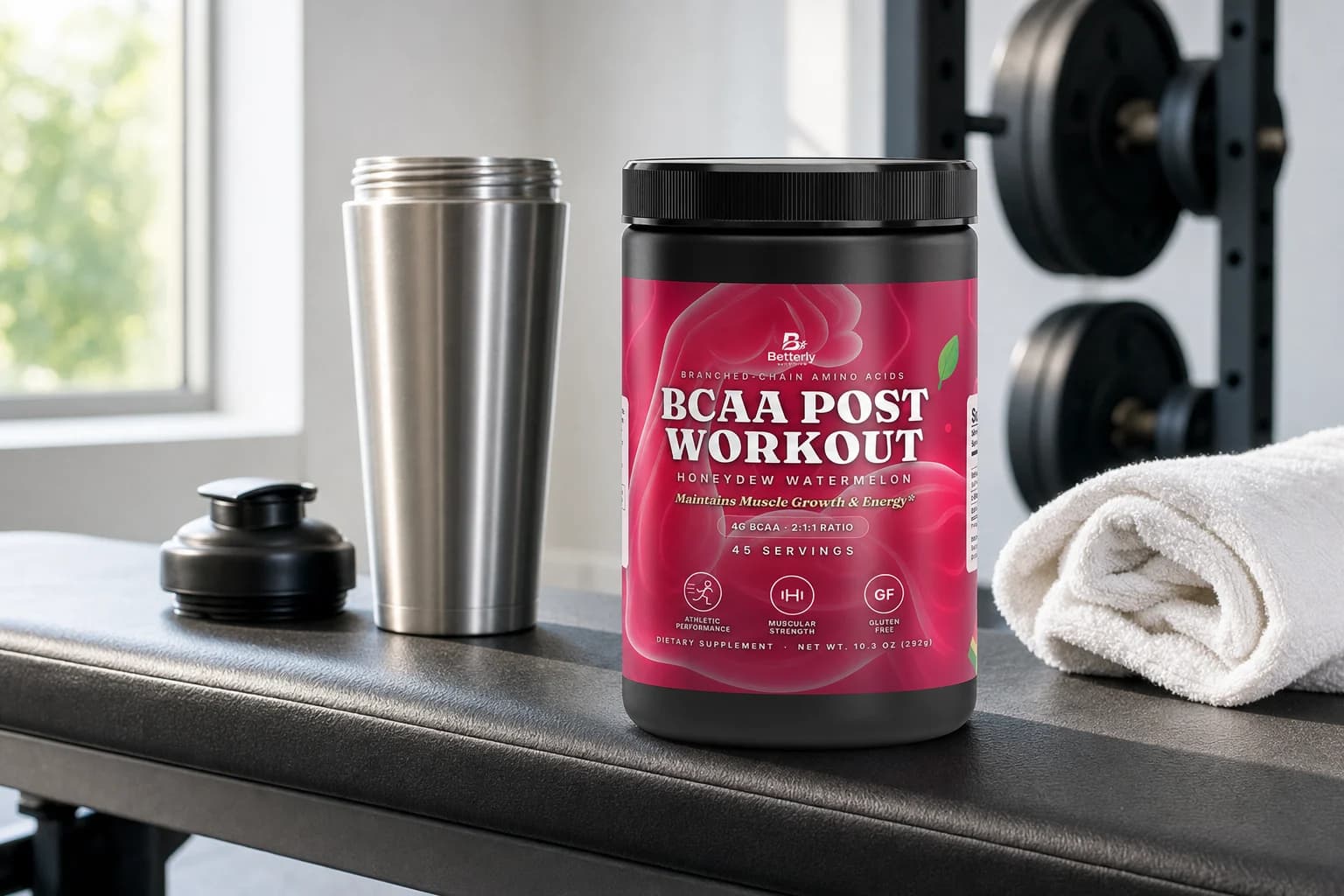
A tub holds 45 servings. The Honeydew Watermelon version lists the same amounts per serving, so the steps apply to it too.
The protein tubs read differently. The whey isolate label suggests one scoop in 6-8 oz (177-237 ml) of water or another drink daily, and the plant protein label calls for two scoops. Neither protein label mentions training. Both suggest taking the serving 20-30 minutes before a meal with 8 oz (237 ml) of water. The ODS point about protein within 2 hours after exercise is about protein in general, and a protein-rich meal counts toward it.
From our shop: 2:1:1 BCAA & L-Glutamine Powder (Fruit Punch) — 4,000 mg of BCAAs (2:1:1), 1,000 mg of L-glutamine and 2.5 mg of vitamin B6 per 1/2-scoop (6.5 g) serving, labeled gluten free, with 45 servings per tub.
When don't you need a BCAA or EAA supplement?
You likely don't need a BCAA or EAA supplement if your meals already give you enough protein, because food protein brings the essential amino acids along with it.
ODS says athletes can probably eat enough protein foods to meet their needs, which it puts at about 0.5 to 0.9 g per pound of body weight a day. For a 150-pound person, that's about 75 to 135 g. If your meals land there, an amino powder adds little.
You also don't have to hit every amino acid at every meal. MedlinePlus says what matters is getting a balance of essential and nonessential amino acids over the whole day.
An amino acid powder is probably skippable if:
- You already drink a protein shake on most training days.
- Your meals regularly include meat, fish, eggs, dairy or a mix of plant proteins.
- You were hoping a scoop would stand in for sleep, training and real meals. ODS is clear that performance supplements can't replace a healthy diet.
If a real gap does show up, start with our performance collection and compare each product's amounts per serving before you pick one.
Who should check with a healthcare provider first?
Anyone who is pregnant, nursing, under 18, managing a medical condition or taking medication should check with a healthcare provider before starting BCAAs, EAAs or protein powder.
All three of our labels carry the same caution: don't exceed the recommended dose, and consult a physician if you're pregnant, nursing, under 18 or have a medical condition. ODS adds that you should ask whether your medications could interact, and that performance supplements are generally meant for adults.
A few product-specific checks:
- Milk. Our whey isolate's label lists milk under "Contains."
- Fava beans. The plant protein's first ingredient is fava bean protein isolate. If a clinician has told you to steer clear of fava beans, check before you buy.
- Sweeteners. The BCAA powder is sweetened with sucralose and acesulfame potassium, so skip it if you avoid either one.
- Upcoming surgery. Tell your surgical team about every supplement you take, amino acids and protein powders included.
FAQ: BCAA vs EAA
Are EAA and BCAA the same thing?
No, EAAs and BCAAs aren't the same thing. EAAs are all nine essential amino acids your body can't make, so they have to come from food. BCAAs are three of those nine: leucine, isoleucine and valine. That means every EAA product contains BCAAs, but a BCAA product leaves out the other six essential amino acids, including lysine, methionine and tryptophan.
What are the benefits of BCAA vs EAA?
The main benefit of an EAA product over a BCAA product is coverage: EAAs supply all nine essential amino acids, and BCAAs supply three of them. ODS doesn't rate EAA products, and it finds not much evidence behind BCAA supplements for performance, muscle or recovery. A BCAA drink's plus is practical. Our serving is 6.5 g of flavored powder in a cold drink, which is lighter than a full shake.
Do I need BCAAs if I drink a protein shake?
You probably don't need BCAAs if your shake is whey, because ODS says whey provides all the essential amino acids, and leucine, isoleucine and valine are three of them. Our whey isolate lists 19 g of protein per 1-scoop (24.4 g) serving but prints no amino acid breakdown, so that point rests on whey in general. Stirring a BCAA scoop into the same routine mostly repeats those three.
How long does a tub of 2:1:1 BCAA & L-Glutamine Powder last?
A tub of 2:1:1 BCAA & L-Glutamine Powder holds 45 servings of 1/2 scoop (6.5 g) each. At one serving on each training day, that's 45 training days. If you train four days a week, one tub covers a little over 11 weeks. The label lists no set number of servings per day, so we plan around one.
Sources
- Dietary Supplements for Exercise and Athletic Performance: Fact Sheet for Consumers (NIH Office of Dietary Supplements)
- Amino acids (MedlinePlus Medical Encyclopedia, National Library of Medicine)
- Vitamin B6: Fact Sheet for Consumers (NIH Office of Dietary Supplements)
If this left you looking for somewhere to start, read BCAA powder with L-glutamine — its amounts per serving are listed on the page. For the practical questions this raises, how dosing, sourcing and subscriptions work is answered in one place.