On this page
- Key takeaways
- Can you take BCAA and glutamine together?
- What's the difference between BCAA and glutamine?
- What are the benefits of BCAA and glutamine together?
- Glutamine vs BCAA: which is better for recovery?
- Should you take BCAA and glutamine during a workout?
- Combo tub or plain glutamine: which should you buy?
- How do you take BCAA and glutamine by the label?
- When don't you need BCAA or glutamine at all?
- Who should check with a healthcare provider first?
- FAQ: BCAA and glutamine
- Sources
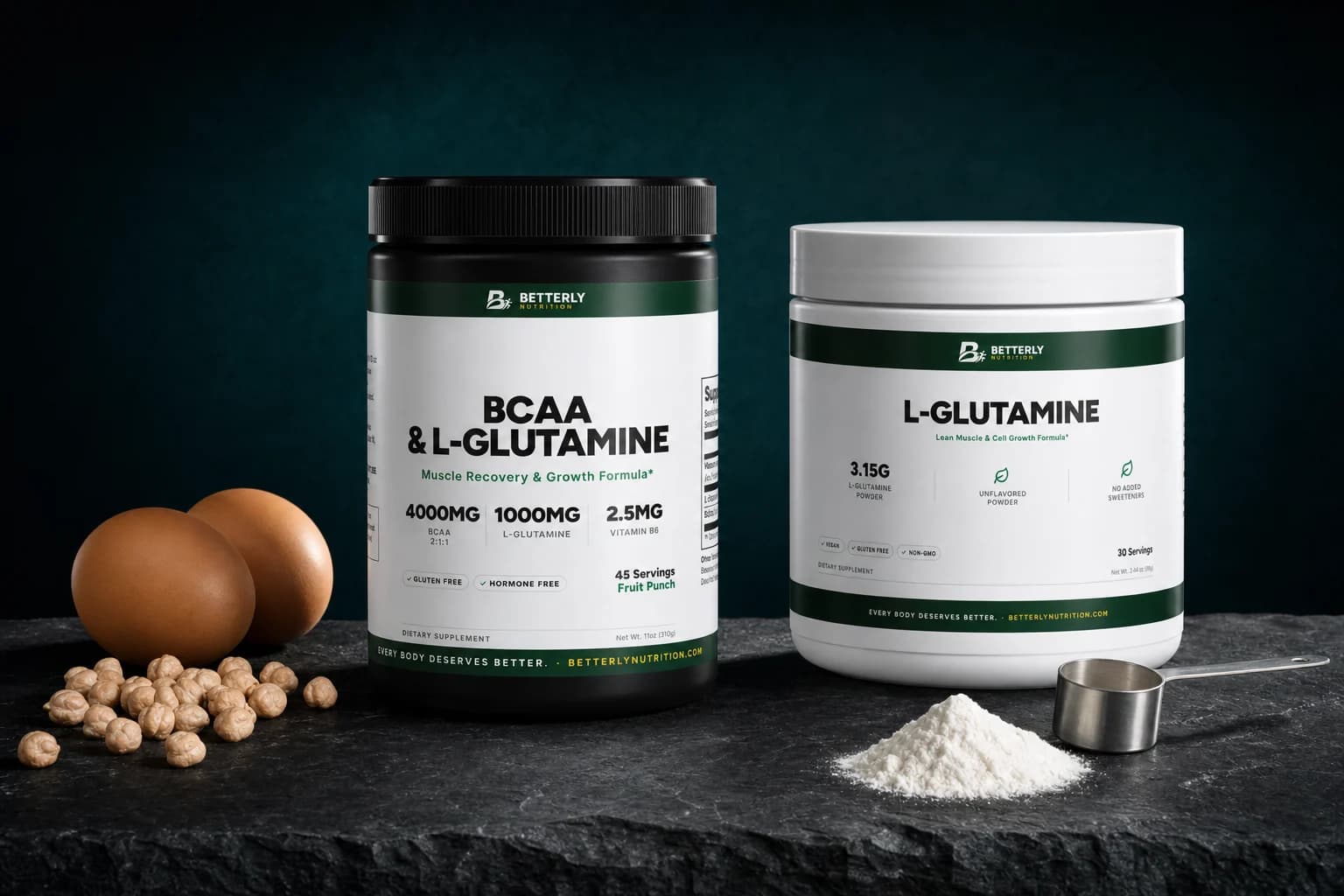
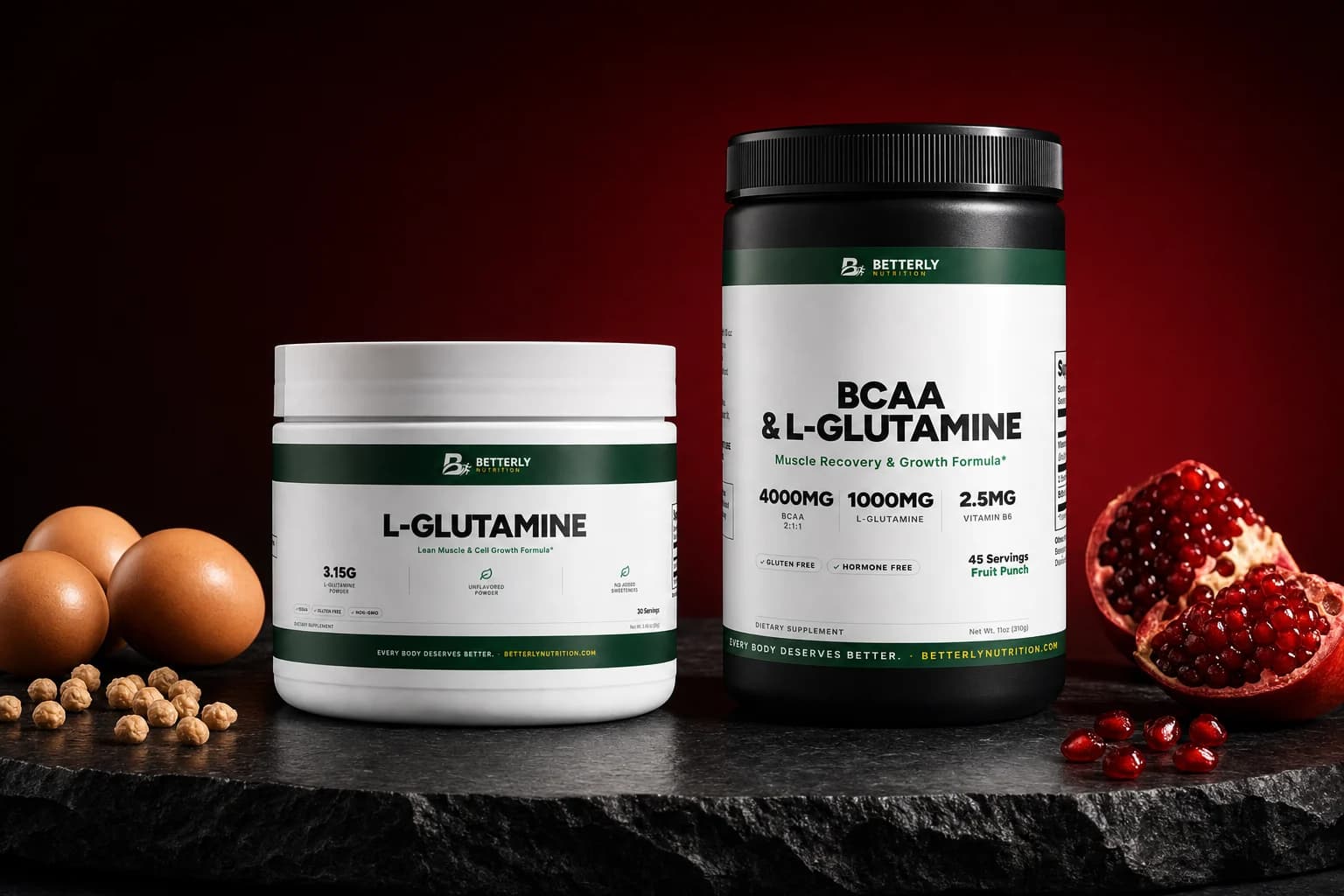
The short answer: Yes, you can take BCAA and glutamine together, and neither of our labels flags the pairing. Just don't expect a team-up effect. BCAAs are essential amino acids your food must supply, while your body can make glutamine itself. The NIH finds little evidence that either one improves performance, and most combinations haven't been studied for safety or effect. So a combined scoop is about convenience. Ours lists 4,000 mg of BCAAs and 1,000 mg of L-glutamine per 1/2-scoop (6.5 g) serving.
Key takeaways
- BCAAs (leucine, isoleucine and valine) are essential amino acids that have to come from food, while glutamine is one your body can make for itself.
- The NIH Office of Dietary Supplements says your body makes some glutamine mainly from BCAAs. That link is why brands, us included, sell the two together.
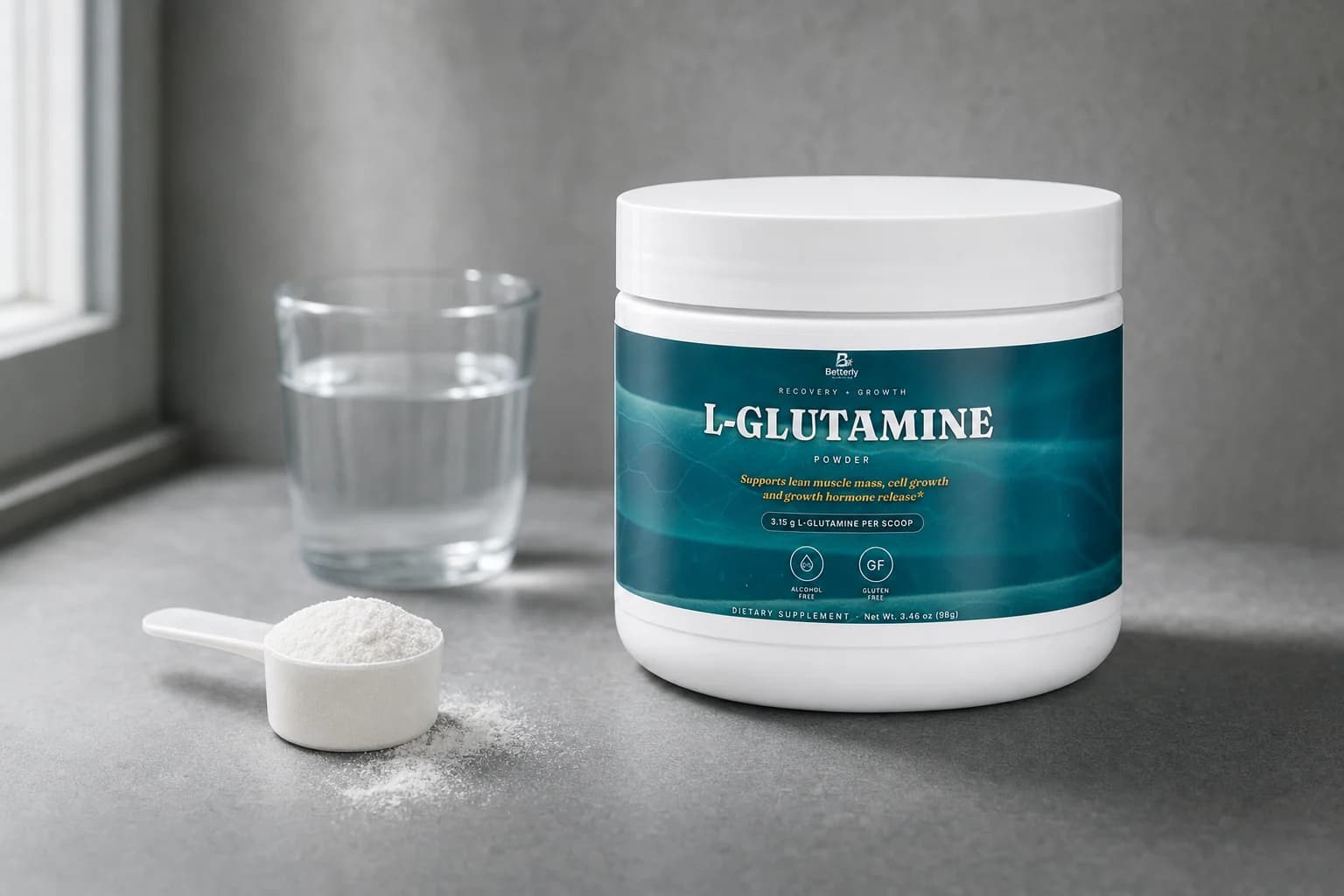
- Our L-Glutamine Powder lists 3.15 g of L-glutamine per 1 Scoop (3.3 g) serving, more than three times the 1,000 mg per 1/2 scoop (6.5 g) serving of our 2:1:1 BCAA & L-Glutamine Powder.
- Per ODS, eating enough protein already brings in 10 to 20 g of BCAAs a day, which makes the 4,000 mg per 1/2-scoop (6.5 g) serving of our 2:1:1 BCAA & L-Glutamine Powder a modest extra.
Full disclosure: we sell both tubs covered here, and they compete for the same glutamine money. If glutamine is the part you want, our plain tub beats our own combo per scoop, and the math is below.
Can you take BCAA and glutamine together?
Yes, you can take BCAA and glutamine together, and nothing on our two labels or in the NIH's exercise fact sheet says to keep them apart.
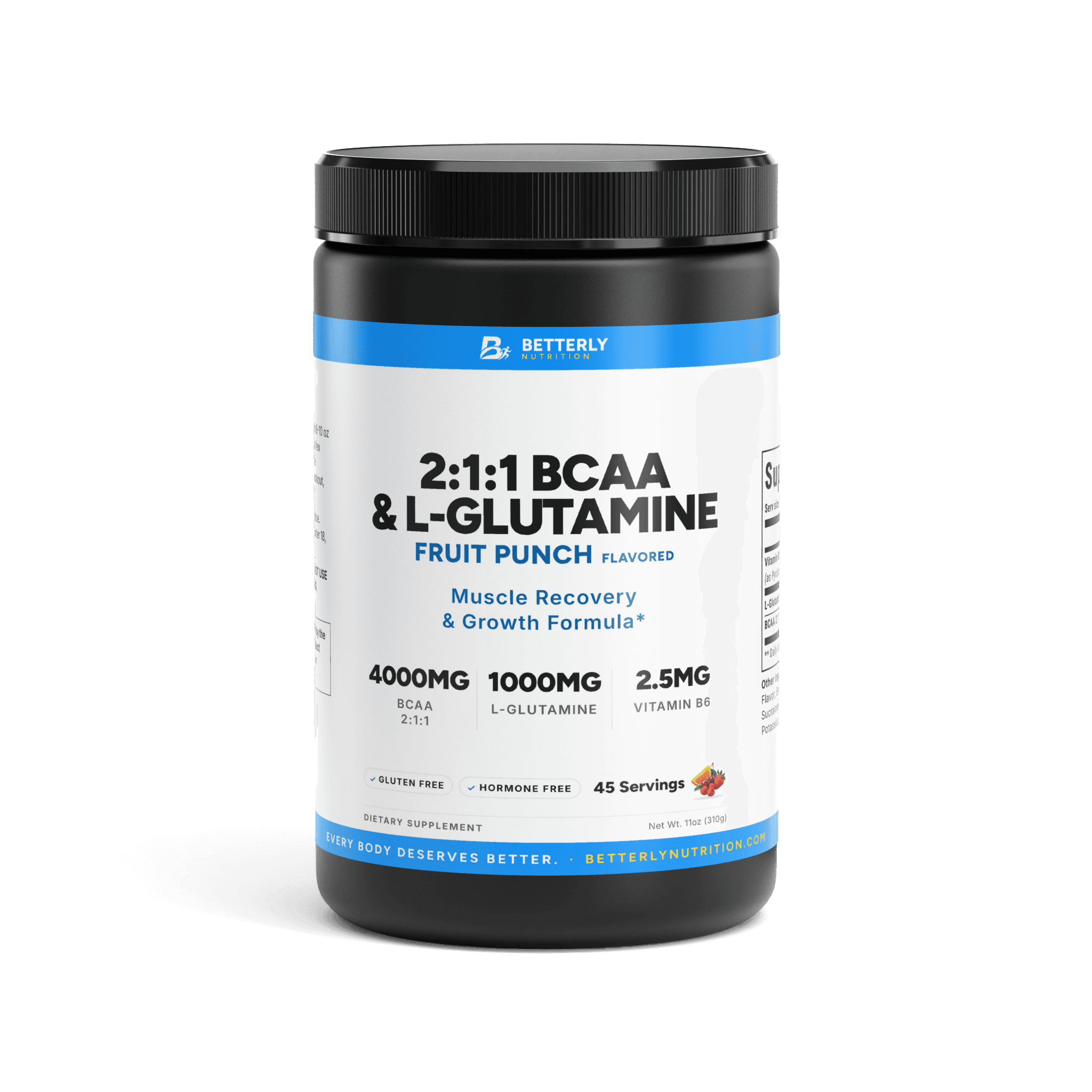
Ours come premixed in 2:1:1 BCAA & L-Glutamine Powder (Fruit Punch), which lists 4,000 mg of BCAAs in a 2:1:1 ratio and 1,000 mg of L-glutamine per 1/2-scoop (6.5 g) serving. You can also build the pair from two tubs. The L-Glutamine Powder directions allow any beverage you like, so a scoop can go right into your BCAA drink.
Whether combining them helps is a separate question. The NIH Office of Dietary Supplements (ODS) says ingredients can work differently once they're mixed, and most combinations haven't been studied, so their effectiveness and safety aren't known. It adds that makers of performance supplements usually don't run studies in people. We sell one of these blends and have no study on it to show you.
What's the difference between BCAA and glutamine?
The difference between BCAA and glutamine is that BCAAs are three essential amino acids your diet must supply, while glutamine is a single amino acid your body can produce.
The National Library of Medicine's MedlinePlus encyclopedia lists leucine, isoleucine and valine with the essential amino acids, the group your diet has to provide. Glutamine sits on its nonessential list, so your body produces it without help from your meals.
Their day jobs differ, too. ODS says your muscles can use BCAAs for energy during exercise, and that leucine may have a hand in building muscle. Glutamine, per ODS, is something your body uses to produce energy.
What are the benefits of BCAA and glutamine together?
The benefits of BCAA and glutamine together are practical rather than proven: one drink covers both, but no NIH source shows the pair outperforming either one alone.
The case for pairing them rests on a real link. ODS says your body makes some of its glutamine mainly from BCAAs, so the two are neighbors in your metabolism. That's a fair reason to sell them side by side.
What the link can't tell you is that a scoop of both beats either one, or beats the chicken or eggs on your plate. Taken one at a time, both get thin support from ODS: not much evidence for BCAAs on performance, muscle or recovery, and little for glutamine on performance. The one real difference: ODS says BCAAs might help increase muscle size and strength alongside a weight-training program.
So we'd call our blend a convenience product: one measured serving, one flavor, two amino acids you'd otherwise buy separately. That's an honest reason to buy.
Glutamine vs BCAA: which is better for recovery?
Of the two, BCAAs get the slightly warmer ODS write-up, though neither has much recovery evidence behind it, and protein outranks both.
The BCAA edge is that muscle-size point, and ODS hedges even that: it isn't clear BCAA supplements build more muscle than eating enough high-quality protein foods. On soreness and fatigue after exercise, its BCAA bottom line finds not much evidence.
Glutamine's record is shorter still. ODS counts only a handful of studies on glutamine and bouncing back from strength work, soreness included, and the results ran from nothing measurable to a slight benefit.
Protein is the clear winner here. ODS credits it with building, maintaining and repairing muscle and with a quicker turnaround after exercise. Every protein-rich meal brings BCAAs and glutamine along, too.
Should you take BCAA and glutamine during a workout?
You don't need BCAA and glutamine during a workout: the 2:1:1 BCAA & L-Glutamine Powder label lists pre-workout, post-workout or between meals, and L-Glutamine Powder names no training time.
A popular routine online splits the pair: sip BCAAs through the session, then save glutamine for afterward. BCAAs are fuel your muscles can draw on while you train, and glutamine gets billed as a recovery ingredient.
Neither idea becomes a timing rule, though. ODS describes what BCAAs do in the body, not a benefit from drinking them mid-session. The few glutamine studies it mentions don't tie any result to taking it right after a workout.
Our labels don't split them either. The combo holds both in one glass, so following its directions means they arrive together. The plain tub doesn't pick an hour at all, so a glutamine scoop after training fits it, and so does one at breakfast. If you like the split anyway, that's a preference, not something the evidence asks for.
Combo tub or plain glutamine: which should you buy?
Buy the combo tub for a flavored BCAA drink with some glutamine in it. Buy plain L-Glutamine Powder if glutamine is the ingredient you actually want.
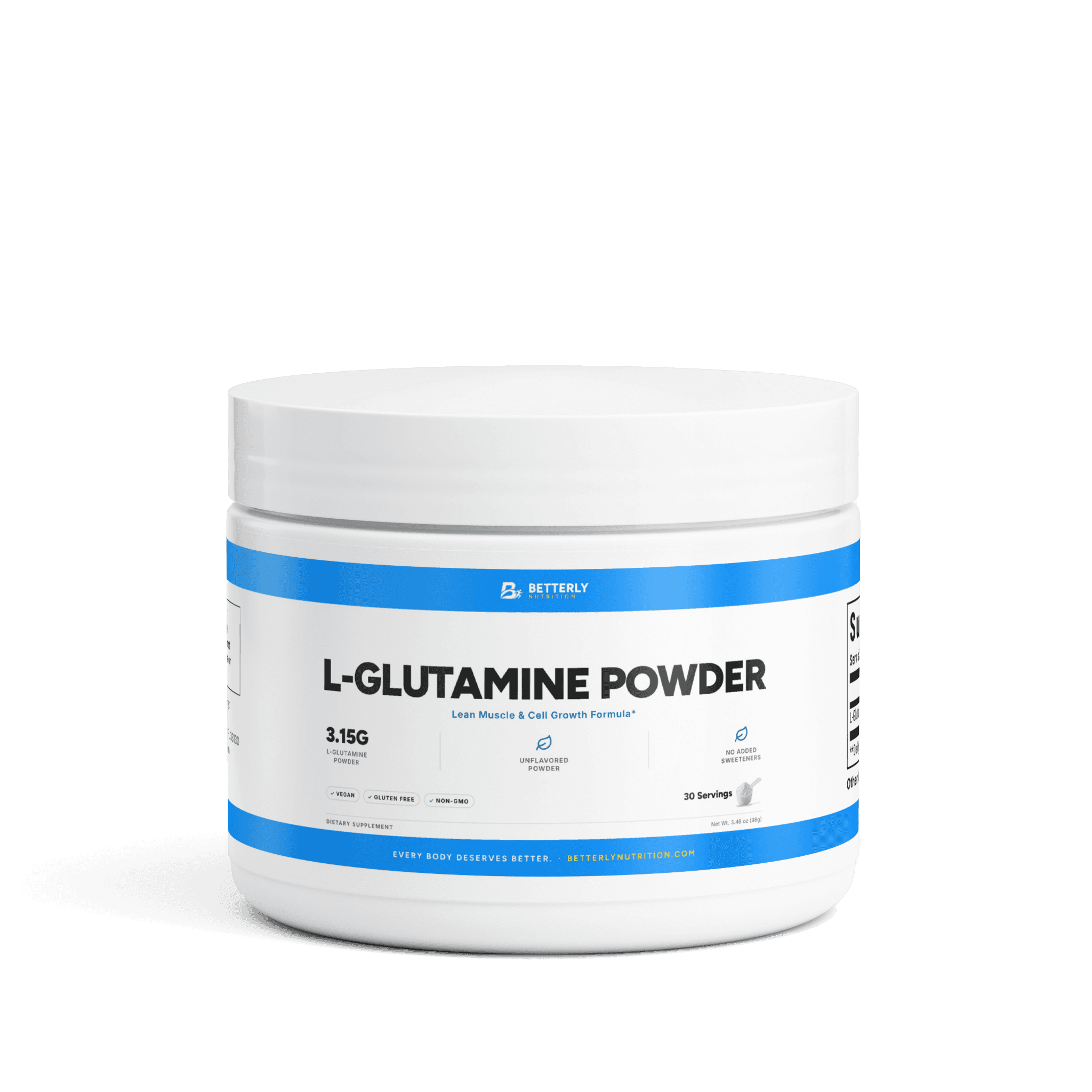
The label math shows why. A 1/2-scoop (6.5 g) serving of the combo lists 1,000 mg of L-glutamine. One scoop (3.3 g) of the plain powder lists 3.15 g, over three times as much in about half the powder.
| If this sounds like you | Our pick | What the label lists |
|---|---|---|
| You want a flavored drink around training | 2:1:1 BCAA & L-Glutamine Powder | 4,000 mg BCAAs plus 1,000 mg L-glutamine |
| You want glutamine only, with no sweetener | L-Glutamine Powder | 3.15 g per scoop, no sweetener in its ingredients |
| You want more glutamine in your BCAA drink | One of each, same glass | 4.15 g L-glutamine in total, by our math |
| You're short on protein overall | Whey Protein Isolate Powder (Vanilla) | 19 g protein per 1 Scoop (24.4g) |
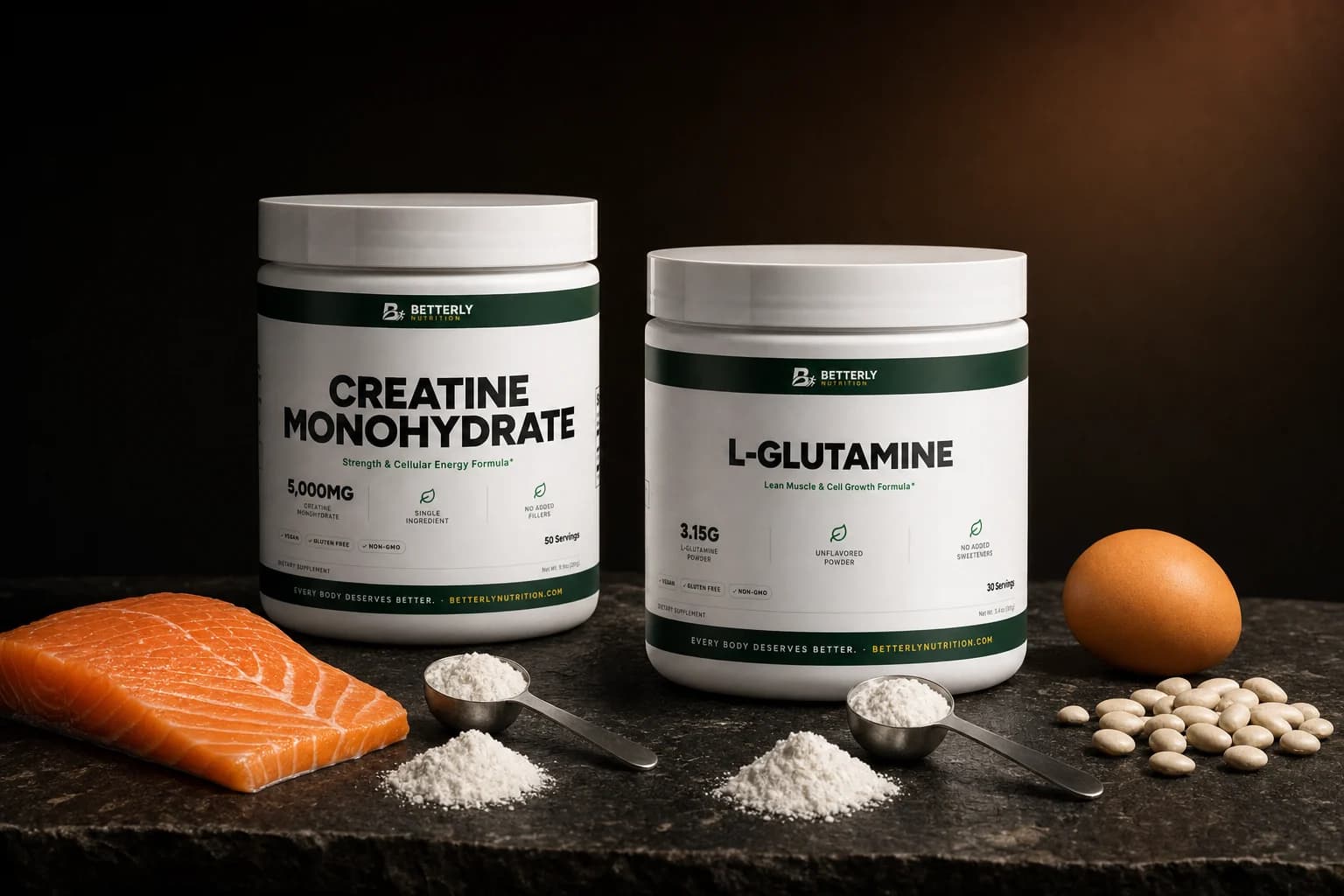
| You want an ingredient with a stronger ODS evidence summary than either amino acid | Creatine Monohydrate Powder | 5,000 mg per 1 Scoop (5.6g) |
The bottom two rows are the ones people skip. If your real gap is total protein, an amino acid drink is a detour. And ODS saves its stronger write-up for creatine, saying sports-medicine experts agree it can improve performance in intense efforts with short recovery periods.
The combo also comes in 2:1:1 BCAA & L-Glutamine Powder (Honeydew Watermelon), with the same amounts per serving. Each flavor's ingredient list includes sucralose and acesulfame potassium; the plain tub's lists neither. For what glutamine does outside the gym, see our complete L-glutamine guide.
From our shop: 2:1:1 BCAA & L-Glutamine Powder (Fruit Punch) — 4,000 mg of BCAAs (2:1:1) and 1,000 mg of L-glutamine per 1/2-scoop (6.5 g) serving, with 45 servings per tub.
How do you take BCAA and glutamine by the label?
2:1:1 BCAA & L-Glutamine Powder is 1/2 scoop (6.5 g) in 8-10 oz of cold beverage; L-Glutamine Powder is 1 Scoop (3.3 g) in any drink, 1 to 3 times daily.
The combo's label adds that it can take a few minutes to fully dissolve, and it names three windows: pre-workout, post-workout or between meals. The plain tub sets no temperature and no time.
Here's how a day could run on both. Each row holds the combo to a single serving, because its label sets a serving size without a daily count, and each caution tells you not to exceed the recommended dose.
| Day | 2:1:1 BCAA & L-Glutamine Powder | L-Glutamine Powder | L-glutamine total, by our math |
|---|---|---|---|
| Training day, one glass | 1 serving before or after training | 1 scoop in the same glass | 4.15 g |
| Training day, plain tub at its limit | 1 serving | 3 scoops across the day | 10.45 g |
| Rest day | None | 1 scoop, any time | 3.15 g |
Every row stays inside both labels. The middle row is the most glutamine the two labels allow with one combo serving. Since the combo also lists between meals, a rest-day serving fits its directions too.
From our shop: L-Glutamine Powder — 3.15 g of L-glutamine per 1 Scoop (3.3 g) serving, with silicon dioxide its only other listed ingredient and 30 servings per tub.
When don't you need BCAA or glutamine at all?
BCAA and glutamine powders add little to a day with enough protein in it, since food supplies several times the amounts in one serving of our combo.
| Where it comes from | BCAAs | L-glutamine |
|---|---|---|
| Food, per ODS | 10-20 g a day (diet with enough protein) | About 3-6 g a day (typical adult intake) |
| 2:1:1 BCAA & L-Glutamine Powder, 1/2 scoop (6.5 g) | 4,000 mg | 1,000 mg |
| L-Glutamine Powder, 1 Scoop (3.3 g) | None listed | 3.15 g |
Read the combo row against the food row. One serving adds 4 g of BCAAs to the 10 to 20 g a protein-adequate diet covers, and 1,000 mg of glutamine to the 3 to 6 g adults typically eat. That's a top-up, not a missing piece.
Two habits leave our combo with even less to add. If you already take the plain tub, one of its scoops brings more than three times the combo's glutamine, so you'd be buying the combo mainly for 4 g of BCAAs and a fruit flavor. And if whey is already in your day, ODS points out that whey carries all the essential amino acids, the three BCAAs included. The combo would then repeat what your shake delivered.
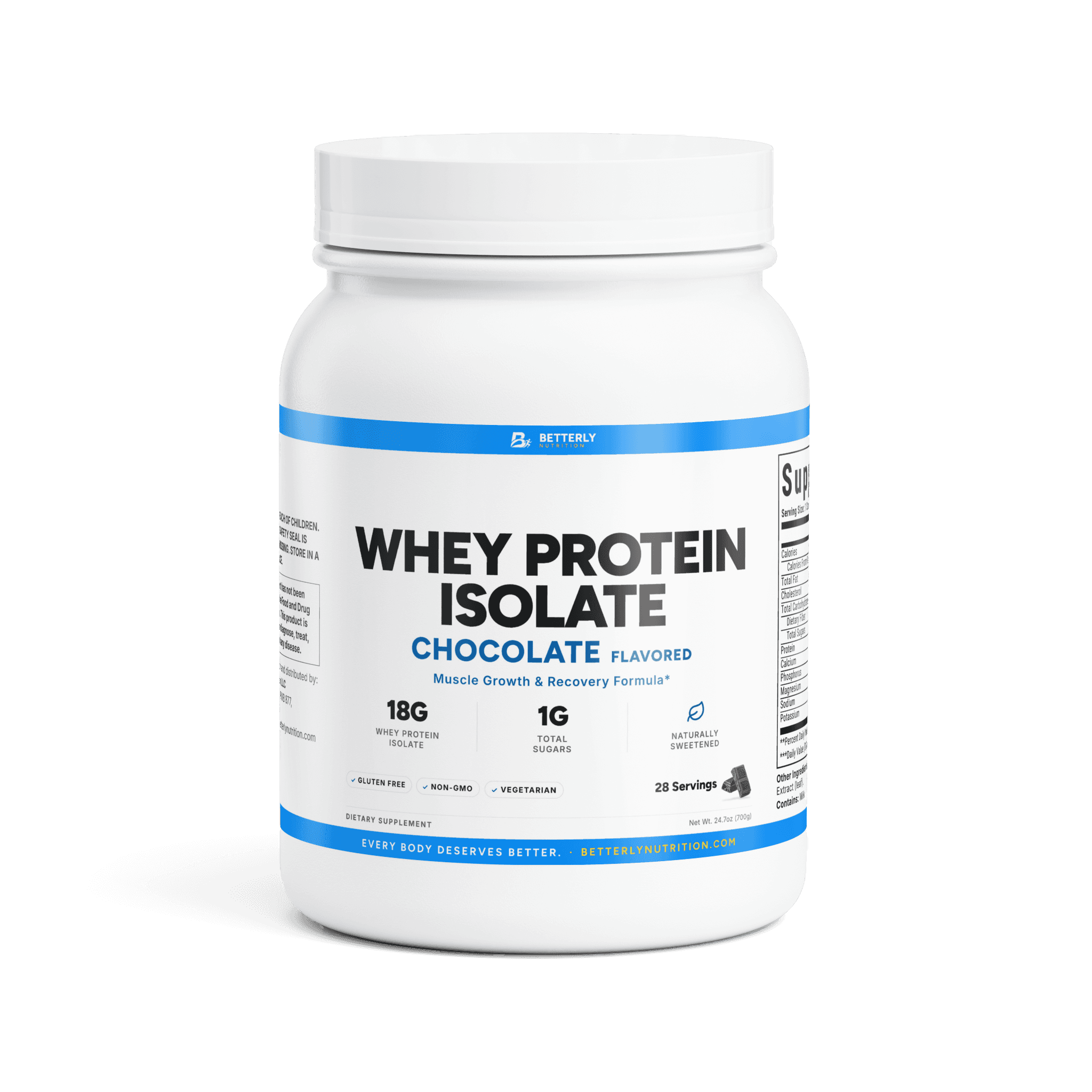
Neither amino drink fixes a real protein shortfall; our whey isolate, with 19 g of protein per 1 Scoop (24.4g) serving, covers more. You'll find both amino tubs and the creatine in our Performance Essentials collection.
Who should check with a healthcare provider first?
Check with a healthcare provider before BCAA and glutamine if you're pregnant, nursing, under 18, managing a medical condition, taking medication or scheduled for surgery.
If you use both tubs, take them to that appointment, or clear photos of their Supplement Facts. Each carries the same caution: don't go past the recommended dose, and see a physician first if you're pregnant, nursing, under 18 or have a medical condition.
Your provider will want the stacked numbers, which neither label adds up for you. By our math, one combo serving plus the plain tub's three-scoop maximum reaches 10.45 g of L-glutamine in a day. That day also carries 2.5 mg of vitamin B6 (147% DV), all from the combo.
That B6 is a small slice of the 100 mg daily upper limit for adults in the vitamin B6 fact sheet from ODS, which counts food and supplements together. That sheet also mentions a lower figure: 12 mg a day for all adults, set by the European Food Safety Authority in 2023.
Your pharmacist should see both tubs as well, because the ODS exercise sheet cautions that performance products may interact with both prescription drugs and ones you buy off the shelf. If surgery is scheduled, mention both tubs when you're asked what supplements you take. Our guide to BCAA side effects covers the sweeteners and B6 in more detail.
FAQ: BCAA and glutamine
Can you take creatine with BCAA and glutamine?
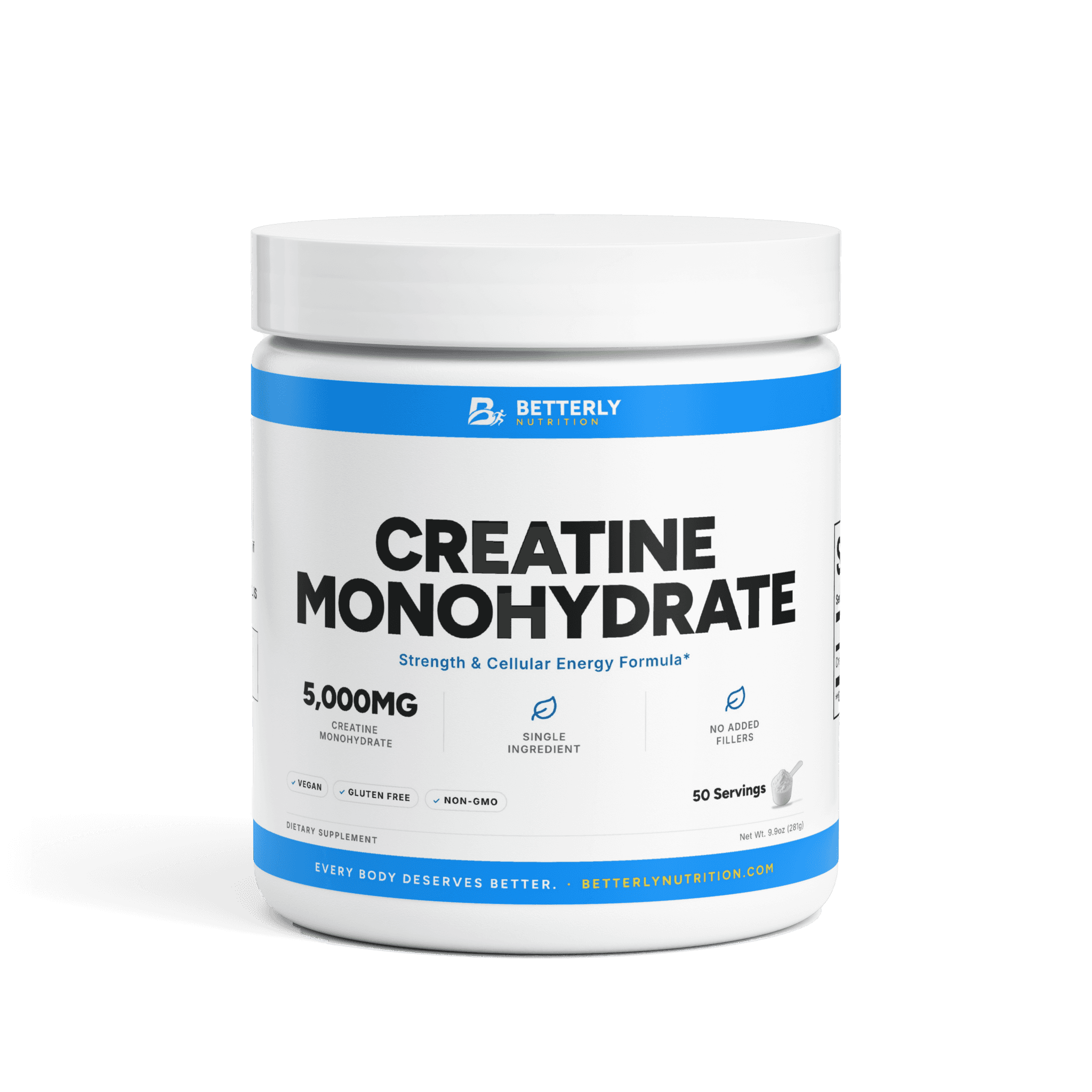
Yes, creatine can join BCAA and glutamine in your routine, and none of our three labels objects to that. ODS still points out that few ingredient mixes have been studied for safety or effect. Our creatine tub lists 5,000 mg per 1 Scoop (5.6g) serving, mixes with water or juice, and its directions begin with a 5-day stretch of 4 scoops daily. Our glutamine vs creatine guide compares those two directly.
Does taking BCAA and glutamine together cause side effects?
Yes, BCAA and glutamine together can cause side effects, mostly digestive ones. An ODS consumer fact sheet says glutamine can bring nausea, bloating, burping, pain, gas or vomiting, with bigger doses raising the odds. For BCAAs, the ODS exercise sheet says up to 20 g a day from supplements seems safe. One combo serving lists 1,000 mg of L-glutamine and 4,000 mg of BCAAs. Our L-glutamine side effects guide does the gram math.
Can you mix BCAA and glutamine into a protein shake?
You can mix BCAA and glutamine into a protein shake, but the BCAAs would mostly double up, because ODS says whey already contains every one of the essential amino acids. The directions don't line up neatly either: our whey label calls for 6-8 oz of liquid, while the combo asks for 8-10 oz. The plain glutamine fits a shake more easily, because its label allows any beverage.
Is BCAA and glutamine powder vegan?
No, our 2:1:1 BCAA & L-Glutamine Powder isn't labeled vegan, so we won't describe it that way. Its label carries a gluten free claim, but no vegan claim. The plain L-Glutamine Powder is different: its label says vegan, gluten free and non-GMO, so it's the one of our two to pick if you eat vegan.
Which tub runs out first if you use both?
L-Glutamine Powder usually runs out first, because it holds 30 scoops to the combo's 45 servings and its label allows up to 3 a day. Say you take one plain scoop daily and one combo serving on three training days a week. By our math, that's 30 days for the plain tub and 15 weeks for the combo. At three plain scoops a day, the glutamine tub is gone in 10 days.
Sources
- Dietary Supplements for Exercise and Athletic Performance: Fact Sheet for Consumers (NIH Office of Dietary Supplements)
- Amino acids (MedlinePlus Medical Encyclopedia, National Library of Medicine)
- Vitamin B6: Fact Sheet for Consumers (NIH Office of Dietary Supplements)
- Dietary Supplements for Immune Function: Fact Sheet for Consumers, glutamine section (NIH Office of Dietary Supplements)
If this left you looking for somewhere to start, read BCAA powder with 1,000 mg L-glutamine — its amounts per serving are listed on the page. For the practical questions this raises, how dosing, sourcing and subscriptions work is answered in one place.