On this page
- Key takeaways
- Glutamine vs creatine: which is better for training?
- Is L-glutamine the same as creatine?
- Glutamine or creatine for muscle growth: what does the NIH say?
- Is glutamine or creatine better for muscle recovery?
- How do our glutamine and creatine powders compare per scoop?
- Can you take L-glutamine and creatine together?
- How should you take each one, according to the labels?
- When can you skip glutamine, creatine or both?
- Who should check with a healthcare provider first?
- FAQ: glutamine and creatine
- Sources
The short answer: In the glutamine vs creatine choice, creatine has the stronger case for training. The NIH Office of Dietary Supplements says creatine can increase strength and power in repeated short, hard efforts, while glutamine shows no effect or only a small one on muscle-building exercise. So most lifters start with creatine. If you'd like both, one label scoop of each can share a glass.
Key takeaways
- The NIH's exercise fact sheet finds little evidence that glutamine supplements improve athletic performance, while it says sports-medicine experts agree creatine can help with bursts of intense effort.
- L-glutamine is an amino acid, and creatine is a separate compound your liver and kidneys make from three other amino acids, so one can't stand in for the other.
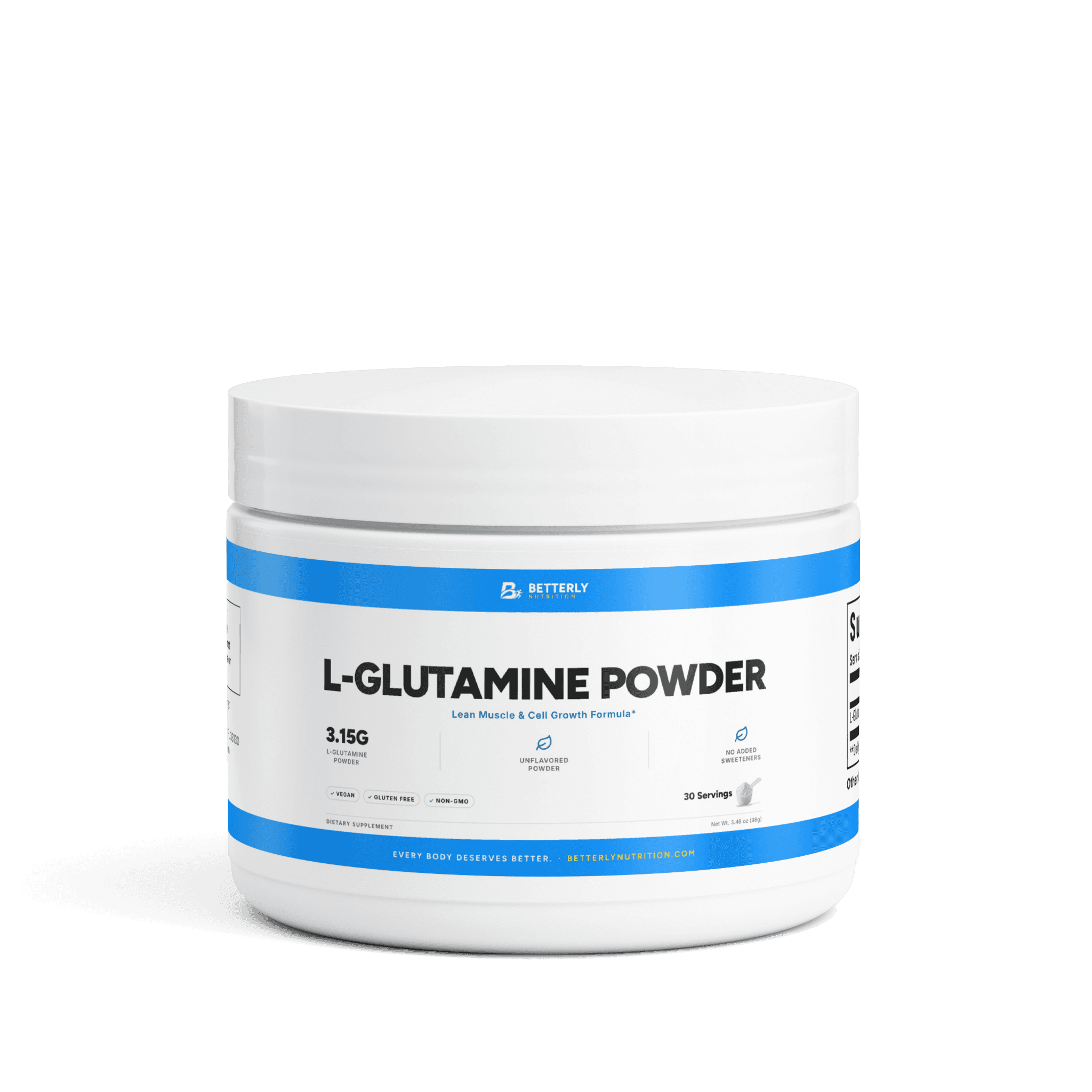
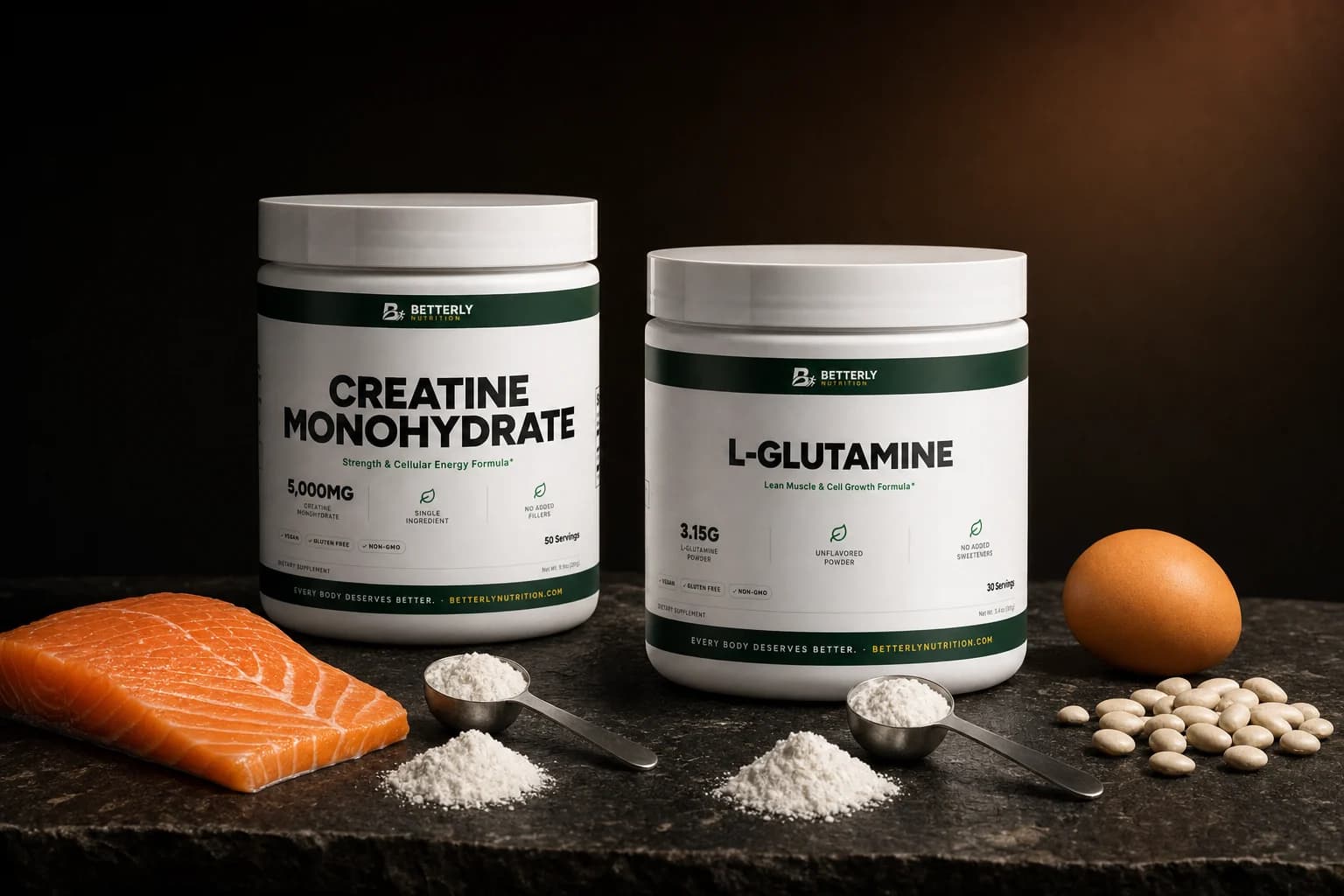
- Our L-Glutamine Powder has 3.15 g of L-glutamine per 1 Scoop (3.3 g) serving, which falls inside the 3 to 6 g a day the NIH says adults already get from food.
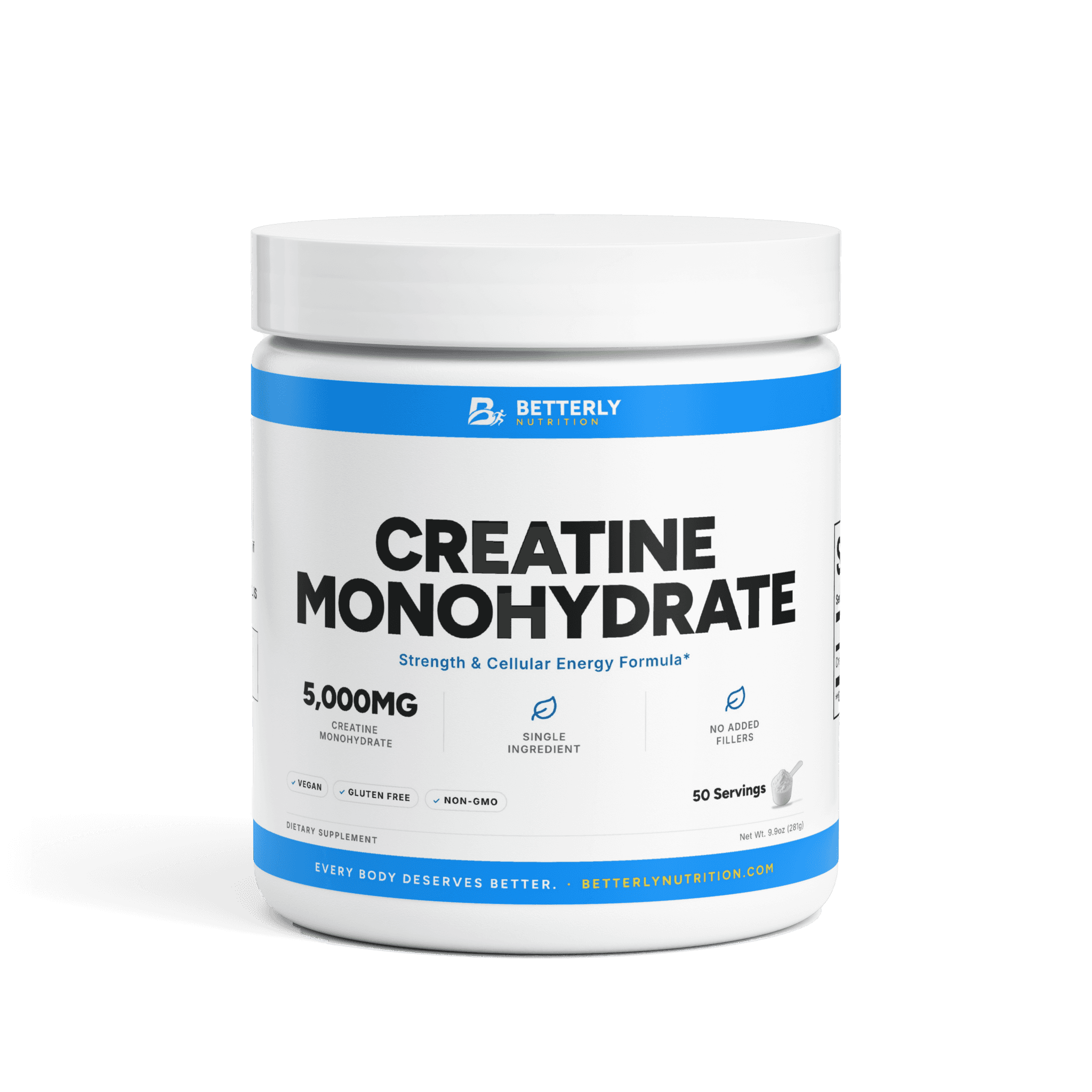
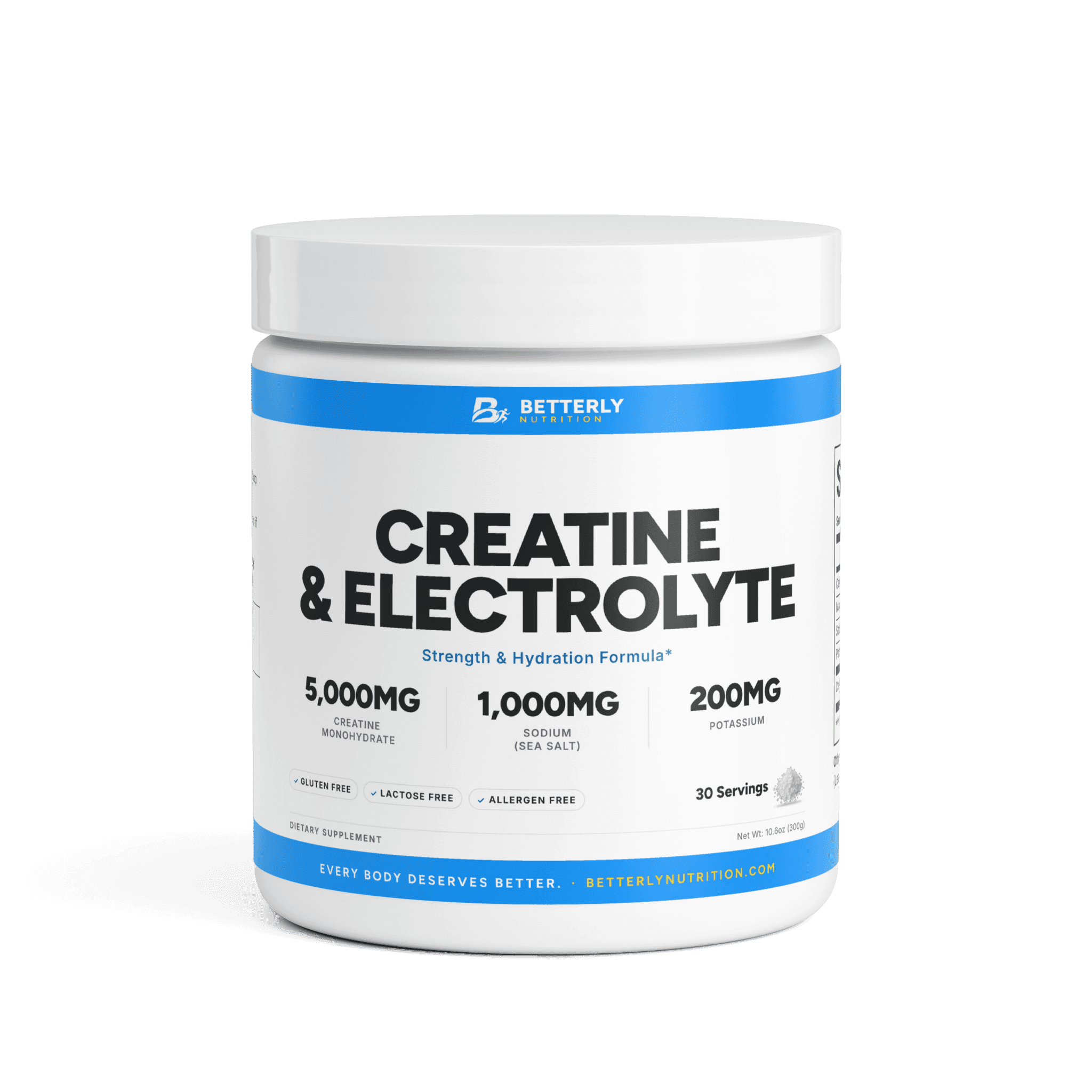
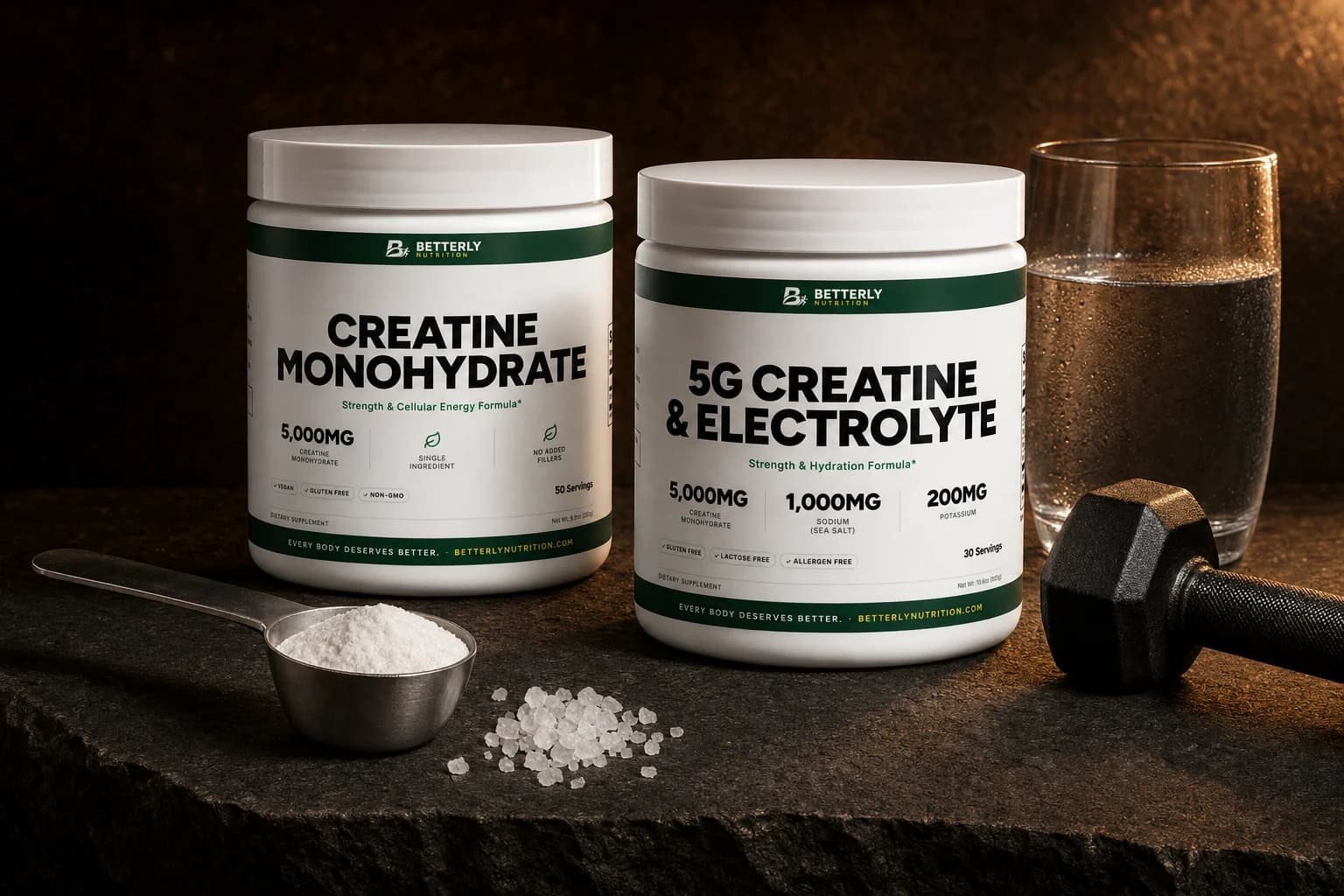
- Both of our creatine powders print 5,000 mg per scoop: the plain tub as creatine monohydrate, the blend as creatine (as creatine monohydrate). The blend adds 1,000 mg of sodium, and the plain tub lists no other ingredients.
- None of our labels warns against pairing the two. The real limits are each label's suggested use and its caution line.
We sell all three tubs compared below, glutamine included, even though we'd tell most lifters to buy it second. Every product number is read off its Supplement Facts panel, and each research point names the federal page behind it.
Glutamine vs creatine: which is better for training?
For training, creatine is the better pick: it's stored in muscle and fuels short, all-out efforts, while glutamine is an amino acid with little performance evidence.
| Question | L-glutamine | Creatine monohydrate |
|---|---|---|
| What it is | An amino acid | A compound built from 3 amino acids |
| Does your body make it? | Yes, mostly from branched-chain amino acids (BCAAs) | Yes, about 1 g a day |
| From food | 3 to 6 g a day | About 500 mg per 4 oz of beef or salmon |
| NIH verdict for training | Little evidence | Helps repeated short, intense bursts |
| Our scoop | 3.15 g per 1 Scoop (3.3 g) | 5,000 mg per 1 Scoop (5.6g) |
The verdict row decides it for most people. Creatine has a clear job in a training plan, and ODS finds little support for one for glutamine.
Those rows mostly come from the NIH Office of Dietary Supplements' consumer fact sheet on performance supplements (ODS). Its creatine entry places the benefit in repeated bursts that last up to about 2.5 minutes each, like sprints and heavy sets.
The glutamine entry is much thinner: a few studies on strength training and the soreness afterward, and a bottom line of little scientific evidence.
Is L-glutamine the same as creatine?
No, L-glutamine and creatine are different molecules: glutamine is one of the amino acids that make up protein, and creatine is built from three other amino acids.
MedlinePlus, from the National Library of Medicine, lists glutamine on its page about amino acids as nonessential. That means your body can make it even when food doesn't supply it. The same page also calls glutamine conditionally essential, meaning your body can usually make enough on its own.
Creatine has a different origin story. According to the ODS health professional fact sheet on exercise supplements, your liver and kidneys make about 1 g of creatine a day from glycine, arginine and methionine. Almost all of your body's creatine sits in skeletal muscle and the heart. There it helps produce ATP, the energy your muscles spend at the start of intense work.
The two get mixed up because they often sell as unflavored powders in look-alike tubs. Our L-Glutamine Powder and Creatine Monohydrate Powder each have just one dosed row on their panels, and that row settles which is which.
Glutamine or creatine for muscle growth: what does the NIH say?
Neither powder builds muscle on its own, but the NIH says creatine can increase strength and power during training, and it finds little support for glutamine.
ODS adds two limits: the effect differs from person to person, and creatine seems to have little value for distance running, cycling or swimming. The professional sheet notes one more wrinkle. Vegetarians, who tend to carry less creatine in their muscles, might respond more than meat eaters.
For glutamine, the few studies ODS describes on muscle-building exercise found either no effect or a small benefit.
Protein is the other piece ODS points to. It says protein helps build, maintain and repair your muscles, and it puts athletes' needs at roughly 0.5 to 0.9 g per pound of body weight a day. Protein foods bring glutamine along with them, too.
Is glutamine or creatine better for muscle recovery?
Neither has strong NIH backing for recovery: glutamine's few soreness studies found little or no benefit, and creatine's NIH entry focuses on performance, not post-workout soreness.
Recovery mostly comes from ordinary habits. ODS says you "recover most quickly" when you eat a nutritionally adequate diet, drink enough fluids and train properly. It also credits protein with helping shorten the time you need to recover after exercise.
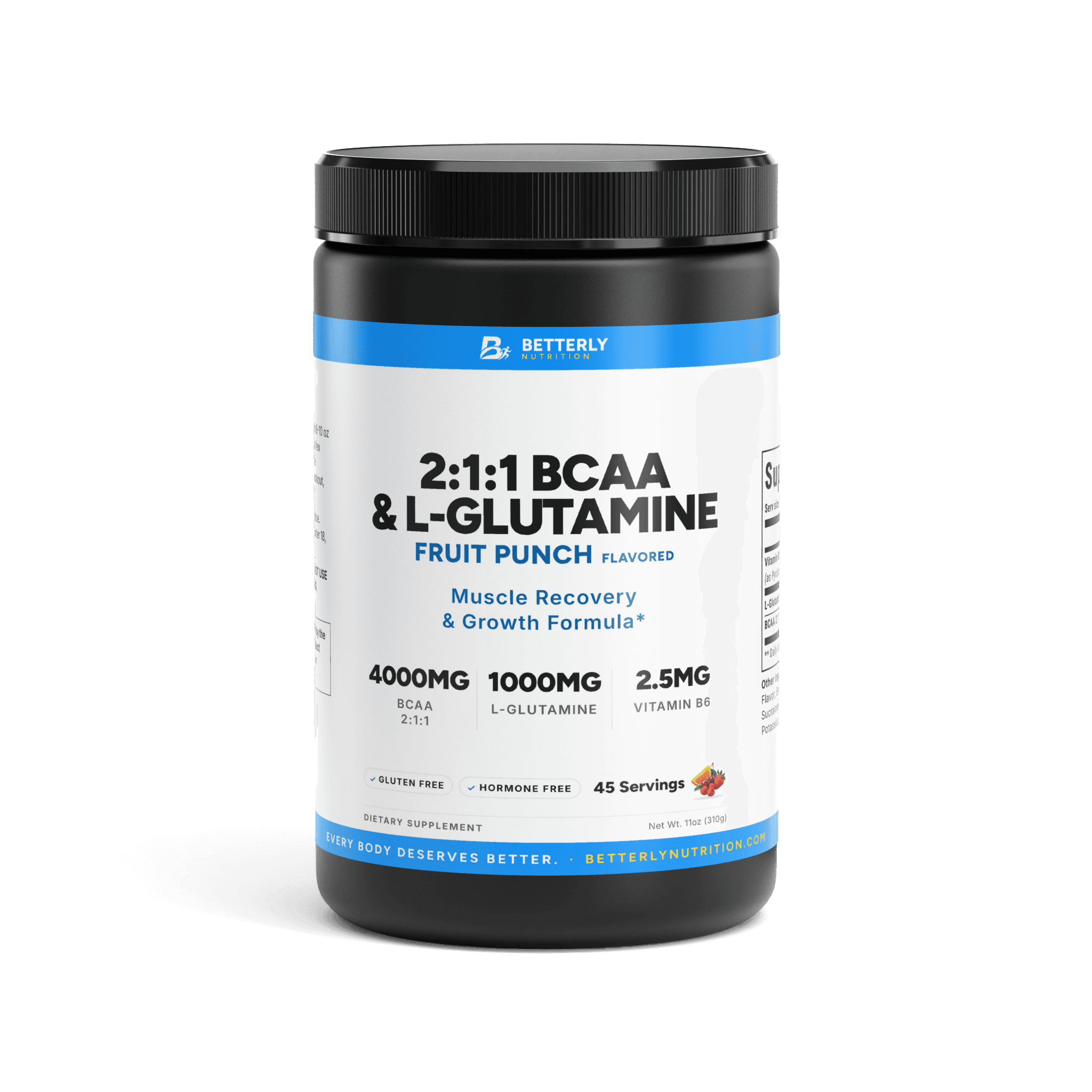
Glutamine also turns up inside some recovery drinks. Our 2:1:1 BCAA & L-Glutamine Powder (Fruit Punch) lists 1000 mg of L-glutamine per 1/2 scoop (6.5 g) serving, next to 4000 mg of BCAAs in a 2:1:1 ratio. If that's already in your bottle, count it before adding a separate glutamine scoop.
How do our glutamine and creatine powders compare per scoop?
Betterly's L-Glutamine Powder gives 3.15 g of L-glutamine per scoop. Our plain creatine tub gives 5,000 mg of creatine monohydrate, and the blend lists 5,000 mg of creatine (as creatine monohydrate) plus minerals.
The table adds our 5g Creatine & Electrolyte Powder, the blend, to the lineup.
| Per labeled serving | L-Glutamine Powder | Creatine Monohydrate Powder | 5g Creatine & Electrolyte Powder |
|---|---|---|---|
| Serving size | 1 Scoop (3.3 g) | 1 Scoop (5.6g) | 1 scoop (10 g) |
| Main active | 3.15 g L-glutamine | 5,000 mg creatine monohydrate | 5,000 mg creatine (as creatine monohydrate) |
| Minerals | None listed | None listed | 1,000 mg sodium, 200 mg potassium, 60 mg magnesium |
| Other ingredients | Silicon dioxide | None listed | Natural flavors, stevia, silicon dioxide |
| Label's daily use | 1 to 3 servings | 4 for 5 days, then 1 to 2 | 1 scoop |
| Servings per tub | 30 | 50 | 30 |
For training, both creatine panels print the same 5,000 mg figure. The real choice between them is whether you want the blend's 1,000 mg of sodium, which is 43% of the Daily Value, in every scoop. The glutamine and plain creatine tubs are both labeled vegan, gluten free and non-GMO.
Our glutamine won't move the needle on training, and the food math shows why. ODS says creatine only seems to help at amounts far beyond the roughly 500 mg in 4 oz of beef or salmon, and a creatine scoop clears that easily. A glutamine scoop doesn't: 3.15 g is within the 3 to 6 g food already supplies. It suits people who want a measured, unflavored amino acid, or who are curious about glutamine's role in the gut, which our guide to L-glutamine for gut health covers.
From our shop: Creatine Monohydrate Powder — 5,000 mg of creatine monohydrate per 1 Scoop (5.6g) serving, with no other ingredients listed and 50 servings per tub.
Can you take L-glutamine and creatine together?
Yes, you can take L-glutamine and creatine together, and none of our labels warns against it.
ODS does offer a fair caution: most mixes of performance ingredients have never been tested together, so nobody can promise the pair beats either one alone.
Sharing a glass works within both labels. The plain creatine label directs one scoop into 8 oz (237ml) of water or juice, and the glutamine label allows any beverage, so a glutamine scoop can go in that same glass. The blend's 6-8 oz (177-237ml) of water or a favorite beverage works the same way.
Timing is flexible, too. None of our three labels ties its scoop to a workout, and none of the panels lists caffeine.
How should you take each one, according to the labels?
Follow each label: L-Glutamine Powder is 1 serving 1 to 3 times daily, and creatine is either a daily scoop or, for the plain tub, a loading phase first.
- L-Glutamine Powder: the label's suggested use is 1 serving taken 1 to 3 times daily with a beverage of choice. A full label day is 3 scoops, or 9.45 g of L-glutamine.
- Creatine Monohydrate Powder: mix one scoop with 8 oz (237ml) of water or juice. The label calls for 4 scoops daily for the first 5 days, the loading phase, then 1 to 2 scoops daily.
- 5g Creatine & Electrolyte Powder: adults mix 1 scoop with 6-8 oz (177-237ml) of water or a favorite beverage, once daily, with no loading phase.
Some label math on that loading week: 4 scoops is 20,000 mg of creatine monohydrate a day, plus 32 oz (about 948 ml) of mixing liquid. It matches the load ODS describes from studies, about 20 g a day in four portions for 5 to 7 days, then 3 to 5 g a day. The professional sheet also describes a no-loading approach of about 3 to 6 g a day for 3 to 4 weeks.
About that second scoop: after loading, one 5,000 mg scoop already reaches the high end of the 3 to 5 g a day ODS mentions for maintenance. A second would double it, so we'd stick with one unless your provider suggests otherwise.
After loading, a day that fits both labels could look like this:
- Morning: 1 scoop of Creatine Monohydrate Powder and 1 scoop of L-Glutamine Powder in 8 oz of water.
- Afternoon or evening: a second glutamine scoop in any drink, if you want one.
That day adds up to 5,000 mg of creatine monohydrate and 6.3 g of L-glutamine.
From our shop: L-Glutamine Powder — 3.15 g of L-glutamine per 1 Scoop (3.3 g) serving, unflavored and labeled vegan, gluten free and non-GMO, with 30 servings per tub.
When can you skip glutamine, creatine or both?
You can usually skip glutamine if you eat protein at most meals, and skip creatine if your training is mostly long, steady cardio rather than short, hard efforts.
- Glutamine: ODS says adults already get 3 to 6 g a day from foods like meat, fish, eggs, dairy and legumes. Its immune function fact sheet adds that your body makes enough glutamine to meet your needs, except in rare hospital situations such as major surgery, where it's given by IV or tube feeding under medical care.
- Creatine: if your training is mostly distance running, cycling or swimming, ODS sees little value in it. Think twice if you compete in a weight class too, since ODS says creatine usually brings some weight gain from water retention.
- Both, if you're under 18: ODS advises that performance supplements are, in most cases, for adults only.
- Both, for now, if regular meals, fluids and a training plan aren't in place yet. ODS lists those ahead of any supplement.
If creatine does fit your training, you'll find both creatine tubs, and our glutamine, in the Performance Essentials collection.
Who should check with a healthcare provider first?
Check with a healthcare provider before starting glutamine or creatine if you're pregnant, nursing, under 18, taking any medication, have surgery coming up or manage a medical condition.
Each of our three labels prints an identical caution: "Do not exceed recommended dose. Consult a physician if pregnant, nursing, under 18, or have a medical condition." The ODS exercise sheet warns that these supplements can interact with medicines, prescription or over the counter. For glutamine, its immune sheet says no interactions with medications have been reported, but your pharmacist should still see your full list.
Two more ODS details matter here. Glutamine's side effects can include nausea, bloating, burping, pain, gas and vomiting, and they're more likely at higher doses; our guide to L-glutamine side effects goes further. And your body turns used creatine into creatinine, a waste product your kidneys clear, so name your creatine whenever you share a supplement list.
FAQ: glutamine and creatine
Should you take glutamine and creatine on rest days?
Yes, glutamine and creatine can both stay in your rest days. Both creatine labels give daily directions with no mention of training, and the glutamine label is daily too, at 1 serving taken 1 to 3 times a day. With no session to plan around, take your scoops whenever you'll remember them.
Can you mix creatine, glutamine and protein powder in one shake?
Mixing creatine, glutamine and protein powder in one shake depends on your creatine tub. Our glutamine label allows any beverage, and the creatine blend allows water or a favorite beverage, so both can go in a shake. The plain creatine label names water or juice, so give that scoop its own glass. Since ODS says most ingredient mixes are untested, a three-in-one shake is about convenience.
Is creatine or glutamine better for women?
Creatine is the stronger pick for women too: the ODS professional sheet describes creatine studies in both men and women and calls the typical protocol the same "regardless of sex or body size." The consumer sheet adds a fair caveat: much of the research on performance supplements is in young, healthy men. Our creatine guide for women goes deeper on daily amounts, water weight and side effects.
Does creatine or glutamine cause bloating or weight gain?
Creatine usually causes some weight gain, according to ODS, because it makes your body hold more water. Glutamine's side effects, per the ODS immune function sheet, can include bloating, burping and gas, among others, and they're more likely at higher doses. Our glutamine label tops out at 3 servings a day, or 9.45 g. If either powder bothers your stomach, cut back and talk with your provider.
Can you take glutamine and creatine before bed?
Yes, glutamine and creatine can go in an evening glass, since none of our three panels lists caffeine and no label sets a time of day. The glutamine label allows up to three servings through the day, so a late scoop can count as one of them. If a full glass right before bed wakes you later, take it with dinner instead.
Sources
- NIH Office of Dietary Supplements: Dietary Supplements for Exercise and Athletic Performance, Fact Sheet for Consumers
- NIH Office of Dietary Supplements: Dietary Supplements for Exercise and Athletic Performance, Fact Sheet for Health Professionals (creatine section)
- NIH Office of Dietary Supplements: Dietary Supplements for Immune Function, Fact Sheet for Consumers (glutamine entry)
- MedlinePlus, National Library of Medicine: Amino acids
If this left you looking for somewhere to start, read unflavored L-glutamine powder — its amounts per serving are listed on the page. For the practical questions this raises, how dosing, sourcing and subscriptions work is answered in one place.