On this page
- Key takeaways
- What does creatine do for women?
- How much creatine should a woman take a day?
- Does creatine make women gain water weight or look bulky?
- What are the side effects of creatine for women?
- Is creatine worth it for women over 40 and over 50?
- Plain creatine or creatine with electrolytes: which fits you?
- How do you fit a daily creatine scoop into your training week?
- Do you need creatine if you don't lift?
- Who should check with a healthcare provider first?
- FAQ: creatine for women
- Sources
The short answer: Creatine for women is the same supplement at the same amount. The NIH describes one adult protocol, whatever your sex or size: 3 to 5 g a day, often after a loading week. Creatine can support strength and power in short, intense efforts, and it usually adds some water weight. In an NIH-described study of female soccer players, strength rose more than with a placebo, but lean tissue didn't.
Key takeaways
- Women and men take the same molecule at the same NIH-described amount: 3 to 5 g a day, after an optional loading phase.
- In an NIH-described study of female college soccer players, creatine plus training brought bigger strength gains than a placebo, with no extra lean tissue.
- The NIH's professional fact sheet reports 1 to 2 kg of weight gain in a month in several strength-training studies, linked to water retention.
- After 40 or 50, lifting comes first; the National Institute on Aging recommends it at least two days a week.
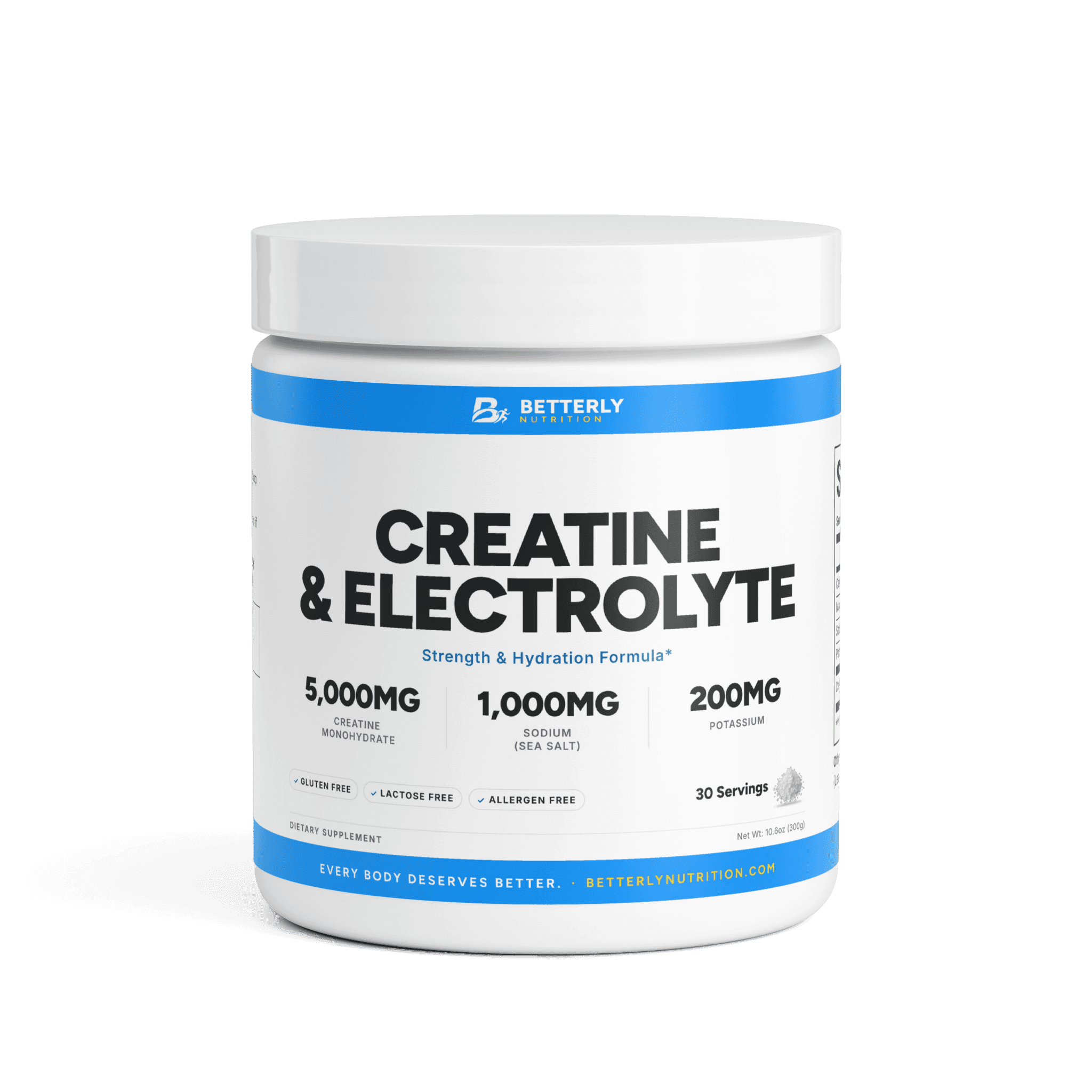
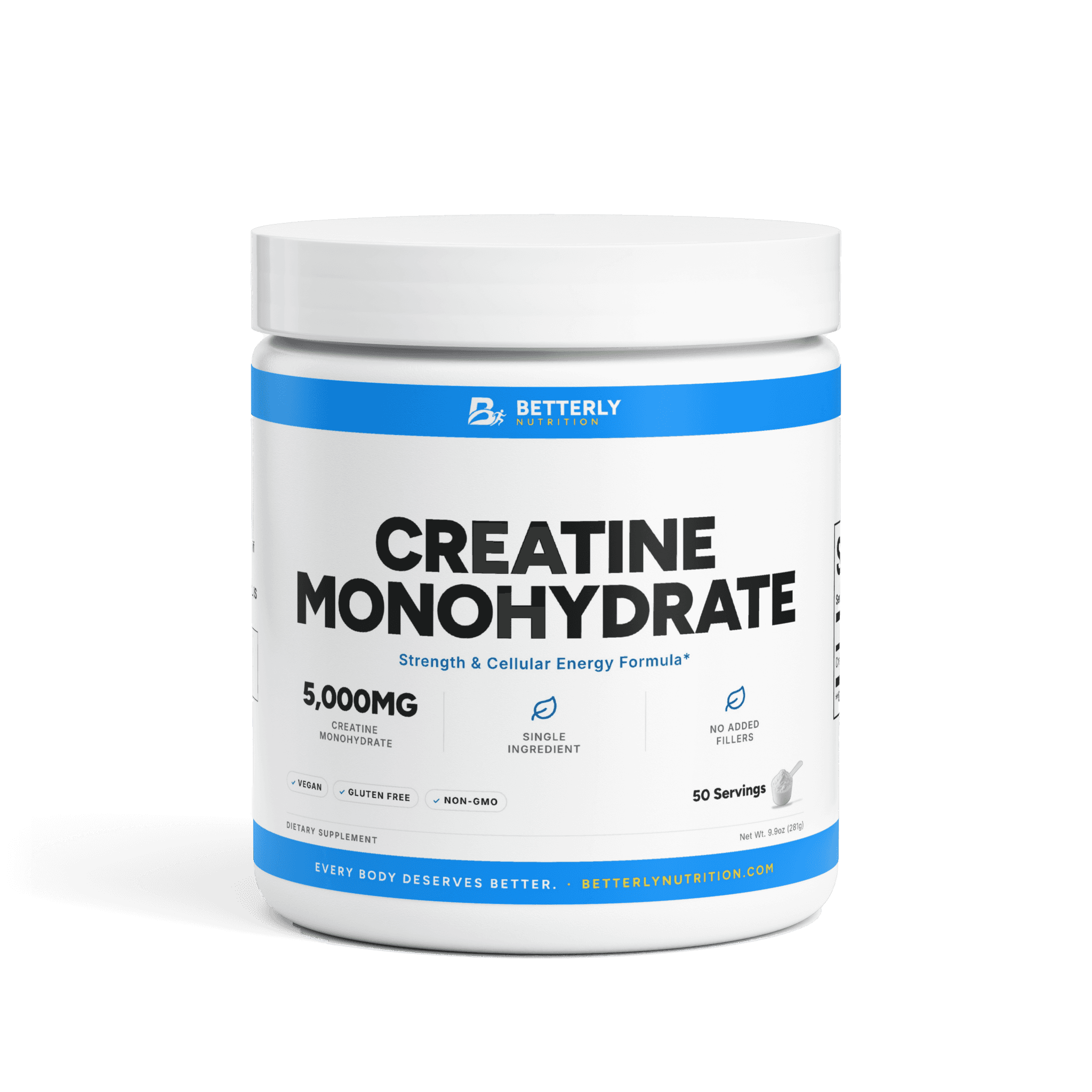
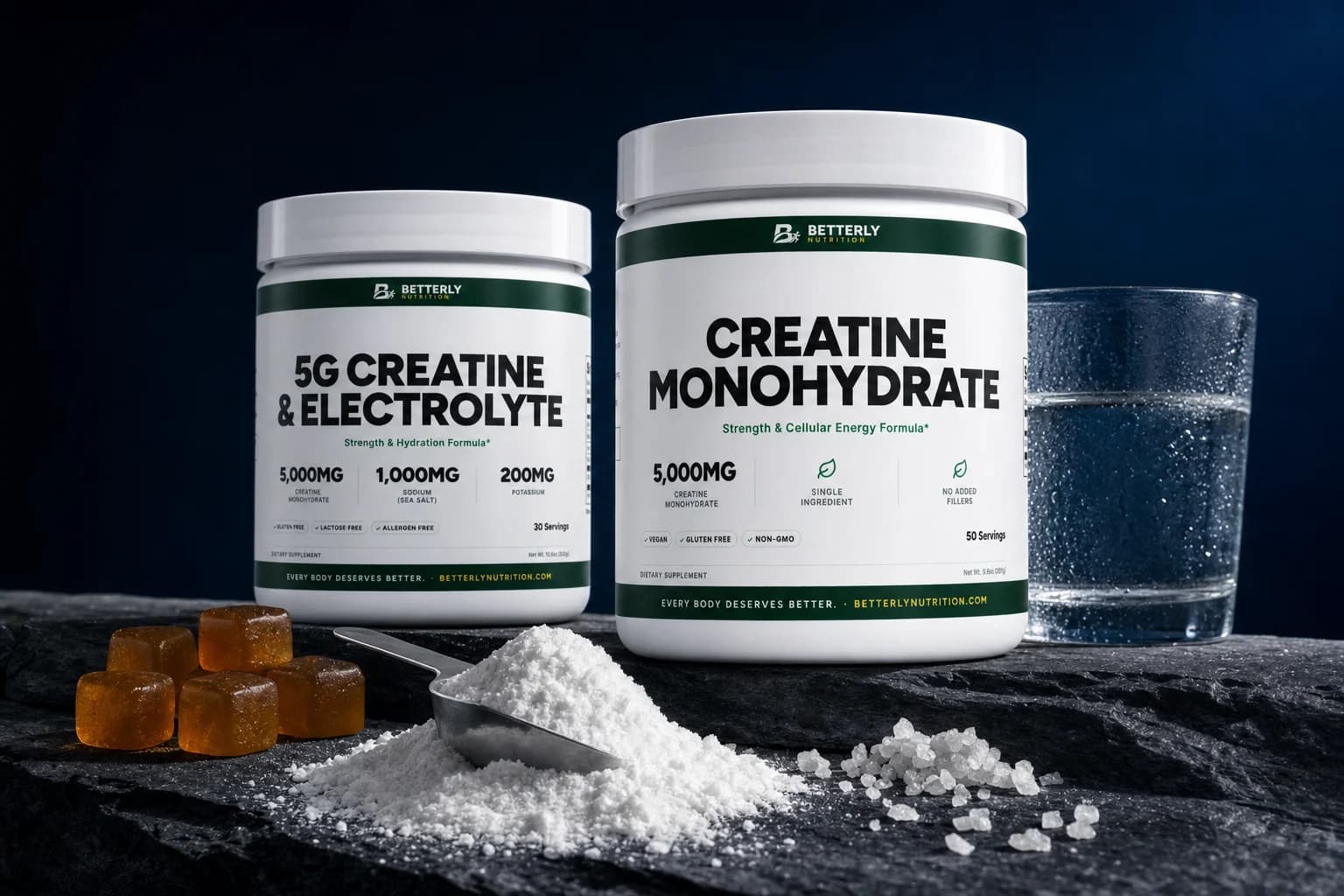
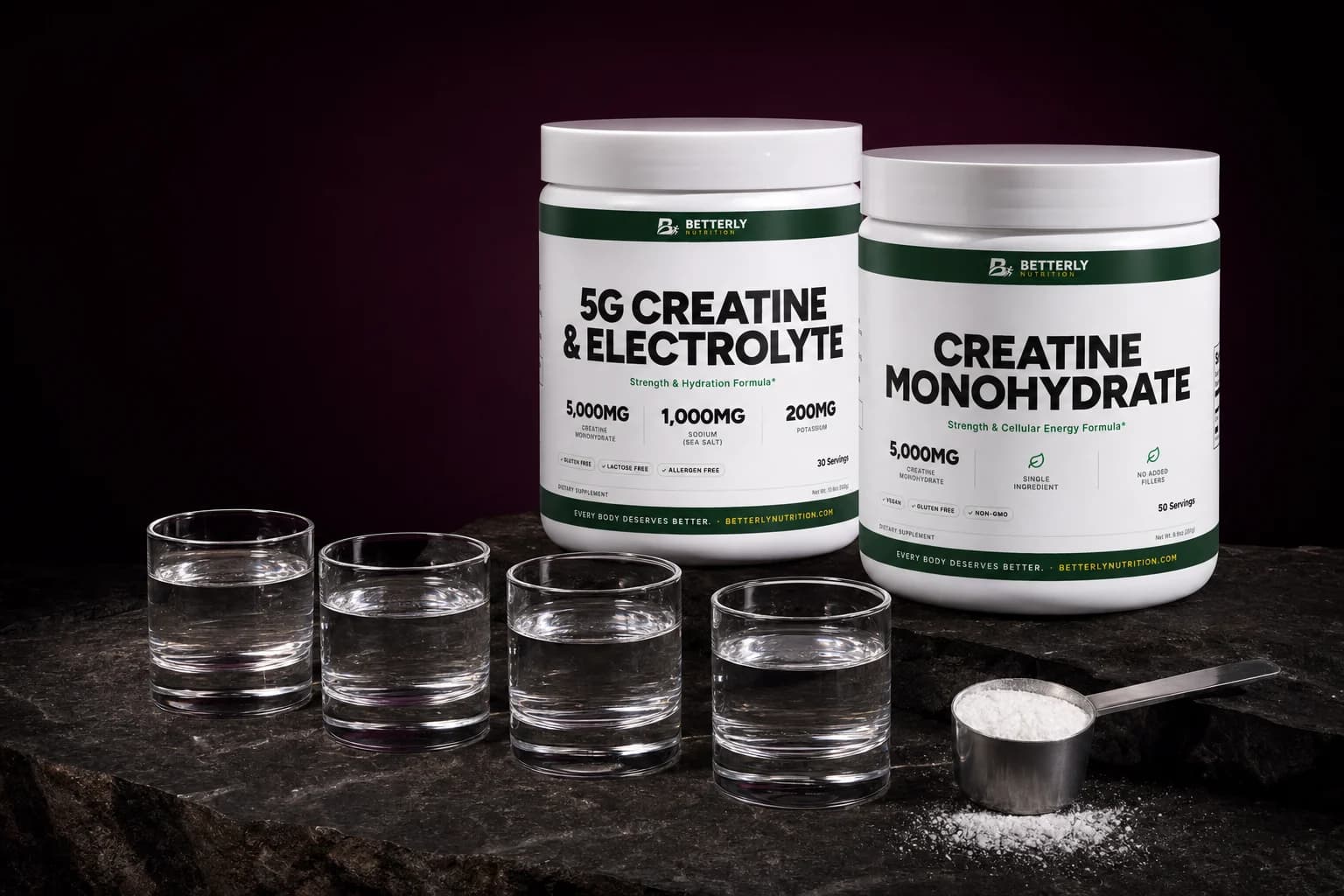
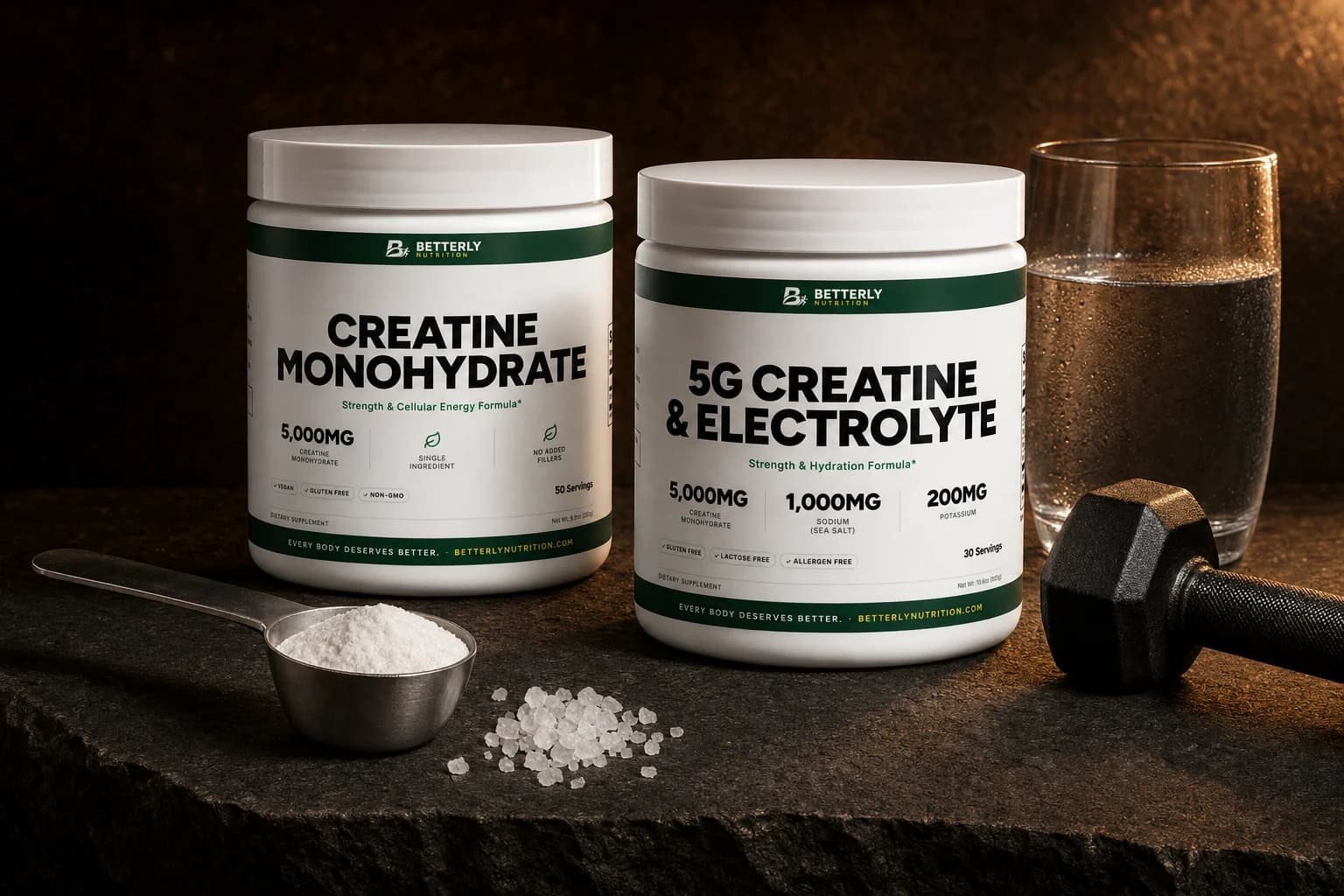
- Betterly's plain powder lists 5,000 mg of creatine monohydrate per 1 Scoop (5.6g) serving; the electrolyte version adds 1,000 mg of sodium (43% DV) per 1 scoop (10 g) serving.
Full disclosure: we sell both creatine powders and the plant protein named below, so we'll say where each one fits and where it doesn't.
What does creatine do for women?
Creatine supplies women's muscles with quick energy for short, all-out efforts, the same job it does for anyone, and that can support strength and power in training.
The NIH Office of Dietary Supplements (ODS) exercise fact sheet has a longer health professional version whose creatine section speaks to women directly. It says short-term creatine use often brought significant strength and power gains in both men and women.
It also describes a randomized study of 14 female college soccer players in their off-season. Those given creatine (a higher amount for a week, then 5 g a day) gained significantly more bench-press and squat strength than a placebo group. Their lean tissue didn't differ.
Both ODS sheets tie the benefit to repeated short, hard bursts, such as sprints and lifting sets. The professional sheet explains why: in mostly aerobic exercise lasting more than about 150 seconds, your body relies on an energy pathway that doesn't need creatine.
Here's a caveat worth knowing. The consumer version says much of the research on performance supplements "is done in young healthy men, but not women, middle-aged and older adults, or teenagers." A 14-player study is small, so be wary of any brand promising results made just for women. Creatine is also pitched for uses far beyond the gym; we don't cover those here or make claims about them.
How much creatine should a woman take a day?
A woman's creatine amount matches anyone's: about 3 to 5 g a day, sometimes after a 5-to-7-day loading phase of about 20 g daily.
The ODS professional sheet says its typical adult protocol applies "regardless of sex or body size." Loading means 20 g a day of creatine monohydrate in four 5 g portions, then 3 to 5 g a day. Our first-timer's guide to creatine weighs whether loading is worth it.
Our two labels handle it differently:
- The 5g Creatine & Electrolyte Powder lists 5,000 mg of creatine (as creatine monohydrate) per 1 scoop (10 g) serving. Its label says one scoop daily, with no loading phase.
- The Creatine Monohydrate Powder lists 5,000 mg of creatine monohydrate per 1 Scoop (5.6g) serving. Its label gives four scoops a day for 5 days, then one to two a day.
Because the protocol doesn't shrink for a smaller frame, there's no half-scoop "women's dose" to hunt for. One scoop of either tub puts 5,000 mg on the creatine line, the top of that daily range. The plain label's second daily scoop goes past what the NIH describes, so one is enough unless a healthcare professional advises more.
Does creatine make women gain water weight or look bulky?
Creatine usually adds some body weight, which the NIH links to water retention and possibly muscle protein synthesis, so expect the scale to move.
How much? The ODS professional sheet says several studies found that creatine monohydrate, used with a strength-training program, can add 1 to 2 kg (about 2.2 to 4.4 pounds) of total body weight in a month. Plan around that if you weigh in for a sport.
Note the day you start, so a jump has a known cause, and judge creatine by your training log, since strength is what the studies measured.
The "bulky" worry pictures a quick change in size. The soccer study points the other way: the creatine group's strength gains beat the placebo group's, while their lean tissue didn't. Visible muscle comes slowly, from heavier lifting and enough protein, and a scoop can't do that work for you.
What are the side effects of creatine for women?
The NIH lists one set of creatine side effects, not split by sex: some water-related weight gain and, rarely, muscle stiffness, cramps or stomach upset.
Per ODS, healthy adults can take creatine safely for several weeks or months, and several years of use also seems safe. The professional sheet adds anecdotal reports of nausea, diarrhea and heat intolerance.
Bloating comes up a lot, but neither ODS sheet uses that word for creatine; the stomach effects they name are nausea, diarrhea and GI distress.
Hair is the other big question, often searched as "does creatine make women lose their hair." Neither ODS creatine summary lists a hair effect. That isn't proof either way, so if you notice changes, see a healthcare provider.
The professional sheet says adequate hydration while taking creatine might minimize these uncommon risks. Both of our labels mix each scoop into liquid: 6 to 8 oz for the blend and 8 oz for the plain powder.
Is creatine worth it for women over 40 and over 50?
Past 40 or 50, creatine makes the most sense as a partner to strength training, which the National Institute on Aging recommends at least two days a week.
The National Institute on Aging's guide to three types of exercise calls muscle-strengthening exercise key to keeping the strength you have and slowing the loss of muscle mass. It suggests working the major muscle groups at least two days a week, but not the same group on back-to-back days.
That NIA advice is about lifting itself, not supplements. Creatine's role, per ODS, is supporting the training: it says several weeks or months of use can help with training. Creatine with no lifting isn't much of a plan, while lifting with no creatine is still a very good one.
The ODS research note matters here, too, since the studies behind the adult protocol skew young and male. We make no hormone or bone claims for this age group. If you take any prescription medication, ask your provider first.
Plain creatine or creatine with electrolytes: which fits you?
Pick the plain Creatine Monohydrate Powder for creatine on its own, or the 5g Creatine & Electrolyte Powder if you sweat hard and want electrolytes in the same scoop.
| Per serving | Creatine Monohydrate Powder | 5g Creatine & Electrolyte Powder |
|---|---|---|
| Serving size | 1 Scoop (5.6g) | 1 scoop (10 g) |
| Creatine line on the panel | Creatine Monohydrate, 5,000 mg | Creatine (as Creatine Monohydrate), 5,000 mg |
| Sodium | Not listed | 1,000 mg (43% DV) |
| Potassium | Not listed | 200 mg (4% DV) |
| Magnesium | Not listed | 60 mg (14% DV) |
| Other ingredients | None listed | Natural flavors, stevia extract (leaf), silicon dioxide |
| Claims on label | Vegan, gluten free, non-GMO | Gluten free, lactose free, allergen free |
| Servings per tub | 50 | 30 |
Both panels list 5,000 mg on their creatine line, but the rows are worded differently. The plain tub counts creatine monohydrate, which the ODS professional sheet says is 88% creatine by weight, so that scoop carries about 4,400 mg of creatine itself. The NIH protocol is written in grams of monohydrate too, so the two share a yardstick. The rest of the blend's label is electrolytes plus flavor and sweetener.
Is the blend's sodium a lot? At 43% DV, one scoop covers close to half the Daily Value, which the FDA's Sodium in Your Diet page sets at less than 2,300 mg a day. The FDA counts 20% DV or more in a serving as high, and puts typical American intake near 3,400 mg a day.
That sodium has a job if you finish sessions drenched, and our plain-English guide to electrolytes explains when a mix beats water. Here's how the choice breaks down:
| If this sounds like you | Better fit | Why |
|---|---|---|
| Hot or hard sessions leave you soaked | The blend | Sodium, potassium and magnesium ride along |
| Your meals already run salty | Plain | No sodium on the panel |
| You want a vegan claim on the label | Plain | Only the plain tub carries one |
| You'd rather drink it flavored | The blend | Natural flavors and stevia |
In short, plain is the default, and the blend is for training that truly leaves you sweaty. Both sit in our Performance Essentials collection.
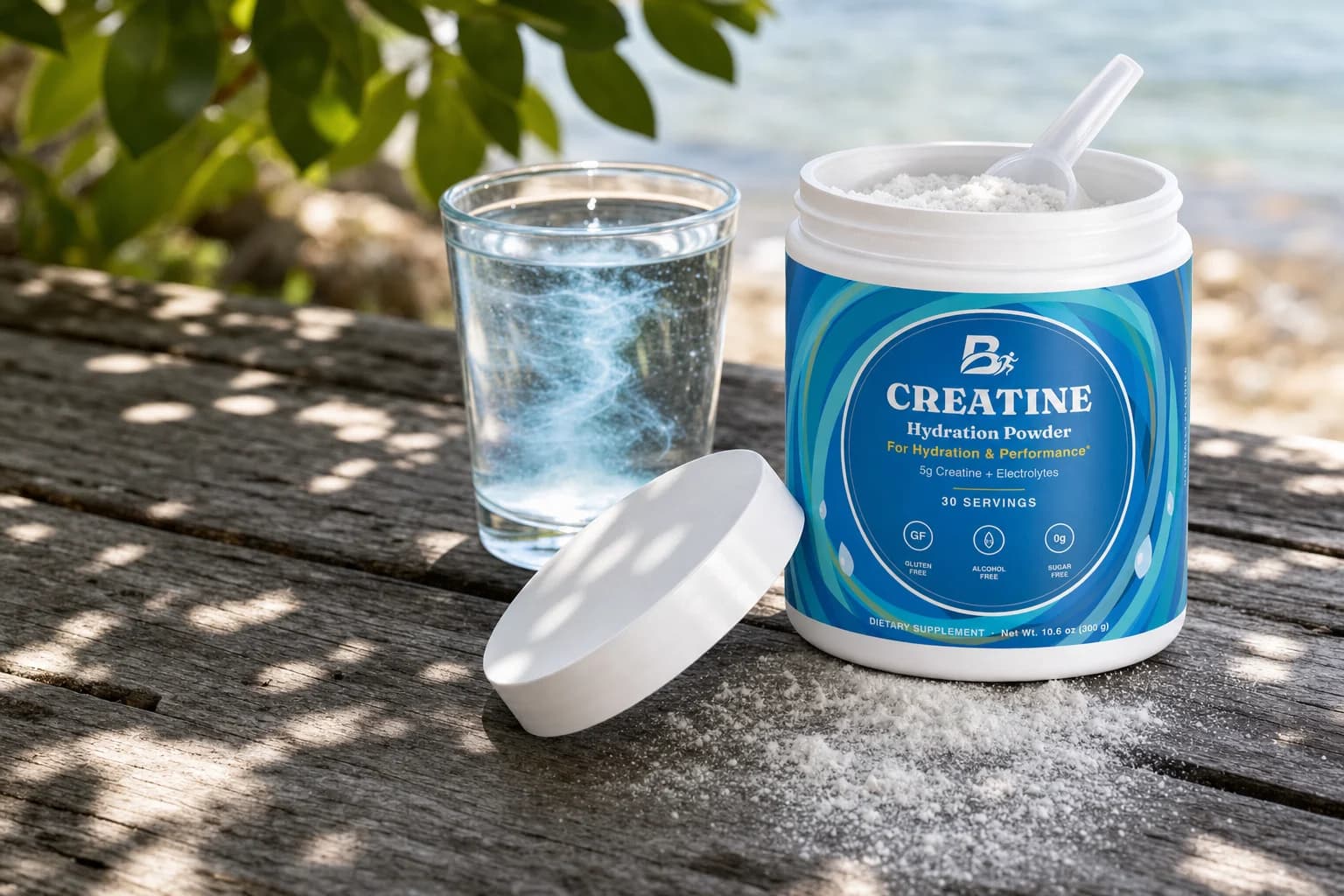
From our shop: 5g Creatine & Electrolyte Powder — each 1 scoop (10 g) serving pairs 5,000 mg of creatine (as creatine monohydrate) with 1,000 mg of sodium from sea salt, taken once a day per the label.
How do you fit a daily creatine scoop into your training week?
Take the 5g Creatine & Electrolyte Powder as one scoop every day, rest days included; the plain powder's label starts with a 5-day loading phase before daily scoops.
Here's what each label says:
- The blend: "adults mix one (1) scoop with 6-8 oz (177-237ml) of water or favorite beverage daily."
- The plain powder: one scoop in 8 oz (237 ml) of water or juice, four times daily for 5 days, then one to two times daily, or as directed by a healthcare professional.
- Both: "Do not exceed recommended dose."
Picture a week with at least two strength sessions, the NIA's minimum, plus walks, classes or rest days. The scoop is the same on all of them.
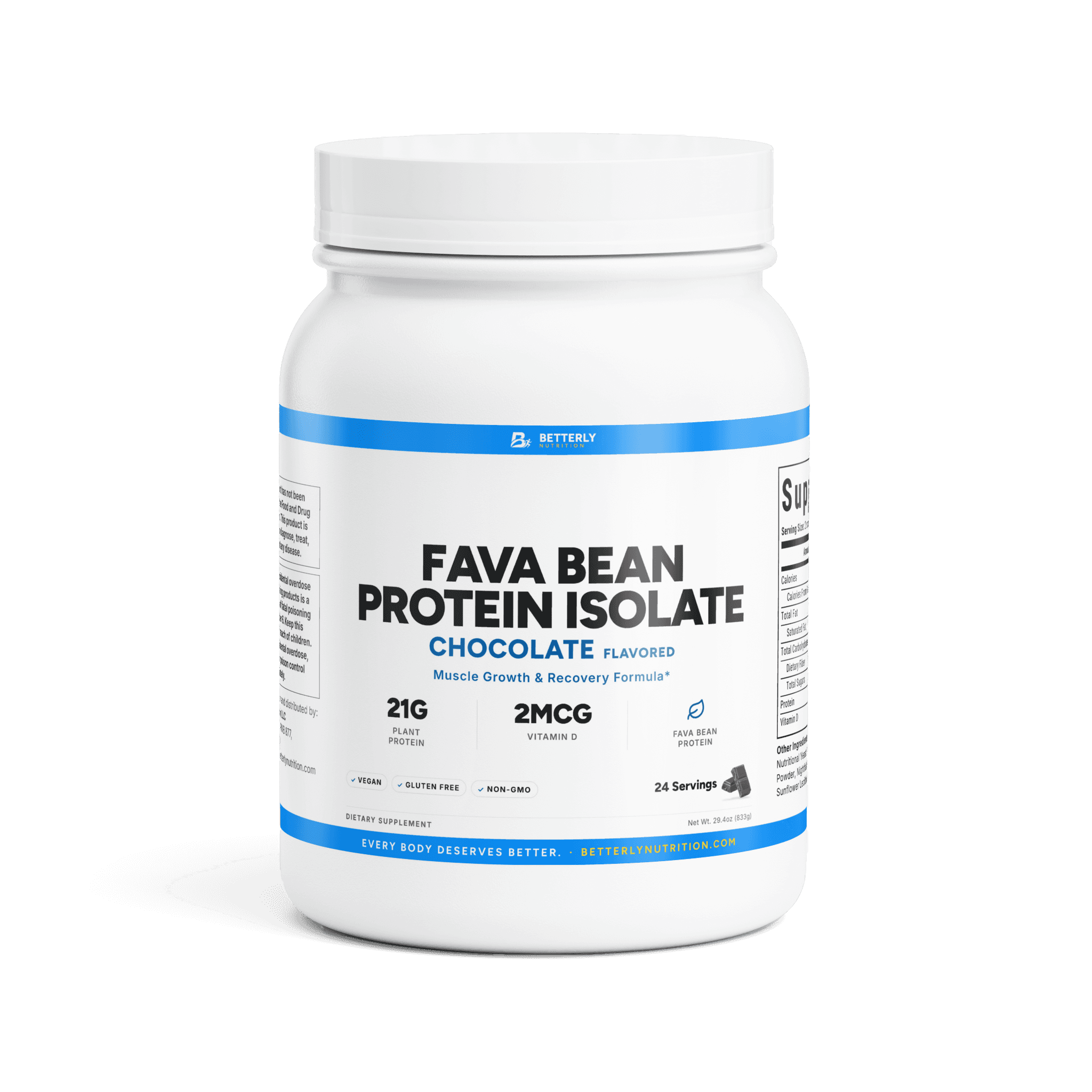
Creatine carries no protein, so it doesn't cover what training asks of your meals. Our Fava Bean Protein Isolate Powder (Vanilla) lists 20 g of protein per 2 Scoops (35g) serving, from fava bean protein isolate and YESTEIN™ fermented nutritional yeast protein. Its label's suggested use is two scoops in 6 to 8 oz of liquid daily, ideally 20 to 30 minutes before a meal.
Its honest limit: if your meals already give you enough protein, you don't need it. Each serving also adds 180 mg of sodium (8% DV) and 4 g of total sugars.
Eat mostly plants? The ODS professional sheet lists beef, pork and salmon among creatine's food sources, and says vegetarians, with lower muscle creatine, might respond more to supplementation than meat eaters. The plain creatine and the vanilla plant protein both carry a vegan claim.
From our shop: Creatine Monohydrate Powder — one ingredient on the panel, 5,000 mg of creatine monohydrate per 1 Scoop (5.6g) serving, for anyone who'd rather keep sodium out of their creatine.
Do you need creatine if you don't lift?
Creatine probably isn't worth buying if you don't do short, hard efforts, because the NIH ties its benefits to training such as sprinting and weightlifting.
If you've searched whether women should take creatine if not working out, the honest answer is usually no. You can skip it if:
- Your exercise is mostly long, steady cardio, where ODS sees little value in creatine.
- You haven't started strength training yet. Build the twice-a-week habit first.
- You mainly want a different number on the scale. Creatine tends to nudge it up, not down.
Who should check with a healthcare provider first?
Check with a healthcare provider before taking creatine if you're pregnant, nursing, under 18, managing a medical condition, or taking any prescription medication.
The first four come from the caution on both our creatine labels: "Consult a physician if pregnant, nursing, under 18, or have a medical condition." The medication point is ODS advice: find out whether your medications might interact with a performance supplement.
A sodium limit from your provider is another reason to ask before choosing the blend and its 1,000 mg per scoop. So is surgery on the calendar.
FAQ: creatine for women
Does creatine affect women differently than men?
Creatine isn't described as working differently in women in the NIH sources we used. The ODS professional fact sheet reports strength and power gains in studies of both men and women, and it gives one adult protocol regardless of sex or body size. Responses vary with diet and muscle fiber type. The caveat is volume: much performance research used young men, so there's less data in women.
Can women take creatine every day?
Yes, both Betterly creatine labels are written for daily use, and the NIH says creatine also seems safe for healthy adults over several years. Stay within the label: one scoop of the blend a day, or one plain scoop after its optional loading days. Both labels say not to exceed the recommended dose, and to consult a physician if pregnant, nursing, under 18 or managing a medical condition.
Can creatine help women who do yoga or Pilates?
Creatine isn't a natural fit for yoga or Pilates on their own, because the NIH ties its benefits to repeated short bursts of hard effort like sprints and heavy lifts. The ODS professional sheet also says creatine may reduce range of motion and cause muscle stiffness and resistance to stretching. If your week includes strength sessions too, that's where creatine fits.
Is creatine safe while pregnant or breastfeeding?
Creatine isn't something to start on your own while pregnant or nursing, and both Betterly creatine labels say to consult a physician first. The NIH's creatine safety summary covers healthy adults and gives no pregnancy guidance, so let your physician weigh it for you.
Are creatine products marketed to women different?
Creatine products marketed to women can differ in flavor, format and extras, but the creatine itself is the same compound. Read the Supplement Facts panel for the form and milligrams per serving, and how many scoops or pieces reach 5,000 mg. Our comparison of creatine gummies and powder runs that math for chewables. Sweeteners and added minerals are extras, not a different kind of creatine.
Sources
- NIH Office of Dietary Supplements: Dietary Supplements for Exercise and Athletic Performance, Fact Sheet for Health Professionals
- NIH Office of Dietary Supplements: Dietary Supplements for Exercise and Athletic Performance, Fact Sheet for Consumers
- U.S. Food and Drug Administration: Sodium in Your Diet
- National Institute on Aging: Three Types of Exercise Can Improve Your Health and Physical Ability
If this left you looking for somewhere to start, read 5 g creatine and electrolyte powder — its amounts per serving are listed on the page. For the practical questions this raises, how dosing, sourcing and subscriptions work is answered in one place.