On this page
- Key takeaways
- Creatine gummies vs powder: which format fits you?
- Do creatine gummies work as well as powder?
- How many creatine gummies does it take to reach 5 g?
- Creatine pills vs powder: are capsules the middle ground?
- Are creatine gummies different from creatine monohydrate?
- How do you take our two creatine powders, per the label?
- When don't you need creatine in any format?
- Who should check with a healthcare provider first?
- FAQ: creatine gummies and powder
- Sources
The short answer: Creatine gummies vs powder is really a question about dose. Both formats can carry creatine monohydrate, and the NIH says studies often used 3 to 5 g a day after a loading phase. Our Creatine Monohydrate Powder reaches 5 g in one scoop. A gummy takes however many pieces its label says, and each one can bring sugar and binders along.
Key takeaways
- ODS describes creatine by daily amount, not by format, so start by checking how much a gummy, capsule or scoop actually delivers.
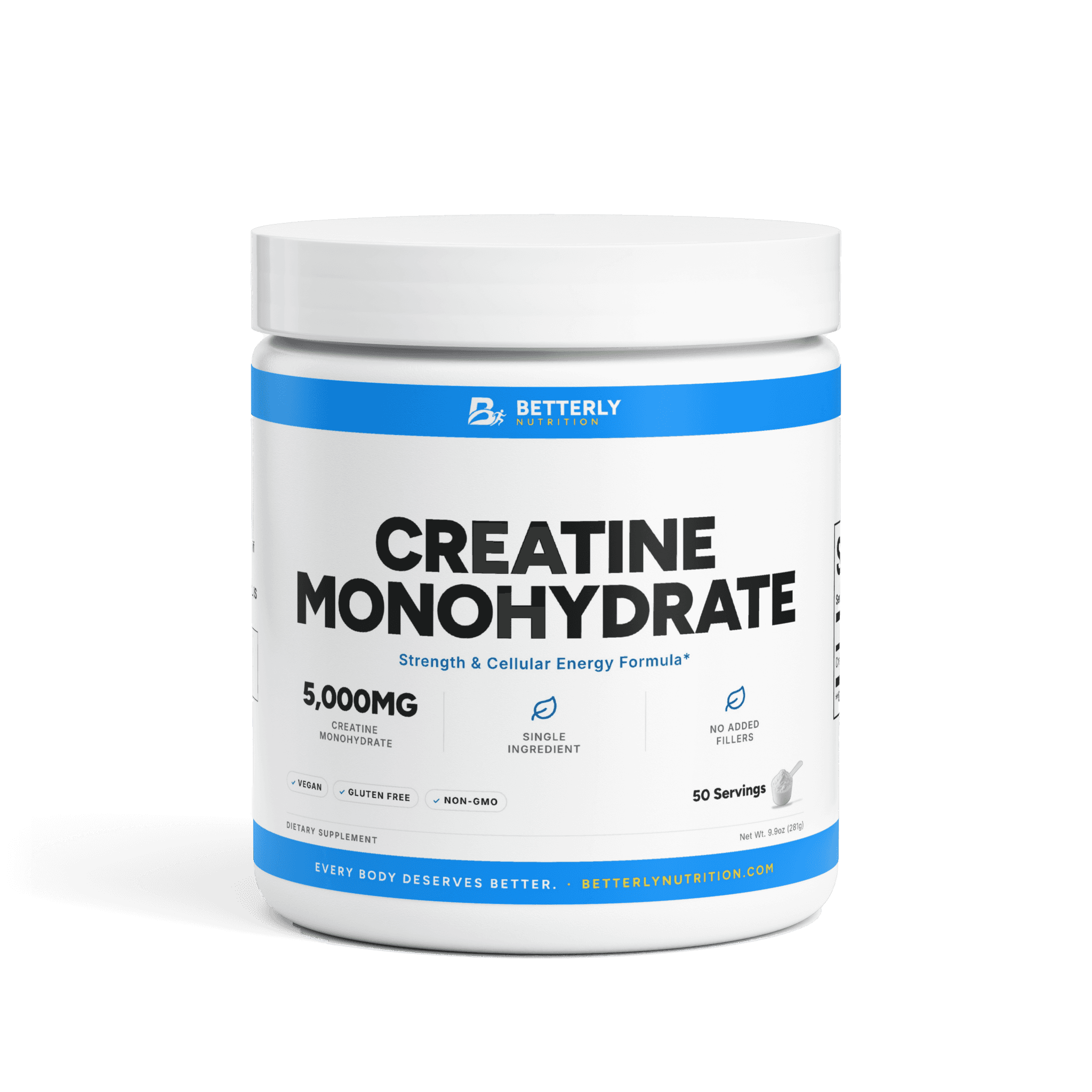
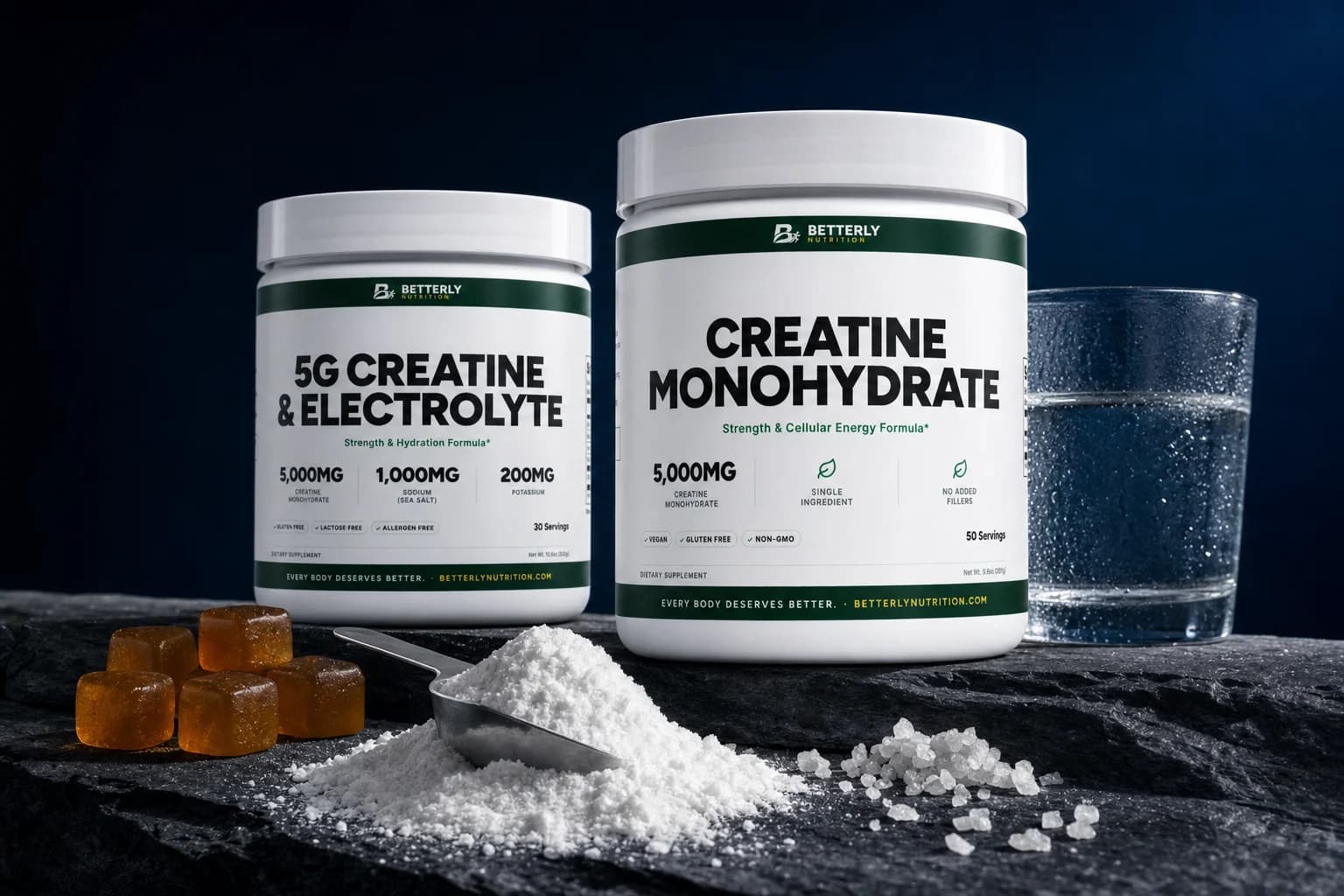
- Betterly's Creatine Monohydrate Powder lists 5,000 mg of creatine monohydrate per 1 Scoop (5.6g) serving and no other ingredients.
- To size up a creatine gummy, divide 5,000 mg by the creatine per gummy (the creatine line divided by gummies per serving), then multiply the sugar per gummy by that count.
- Compare the price of one 5 g dose, not the price of a bottle, because gummy and capsule counts per dose vary by brand.
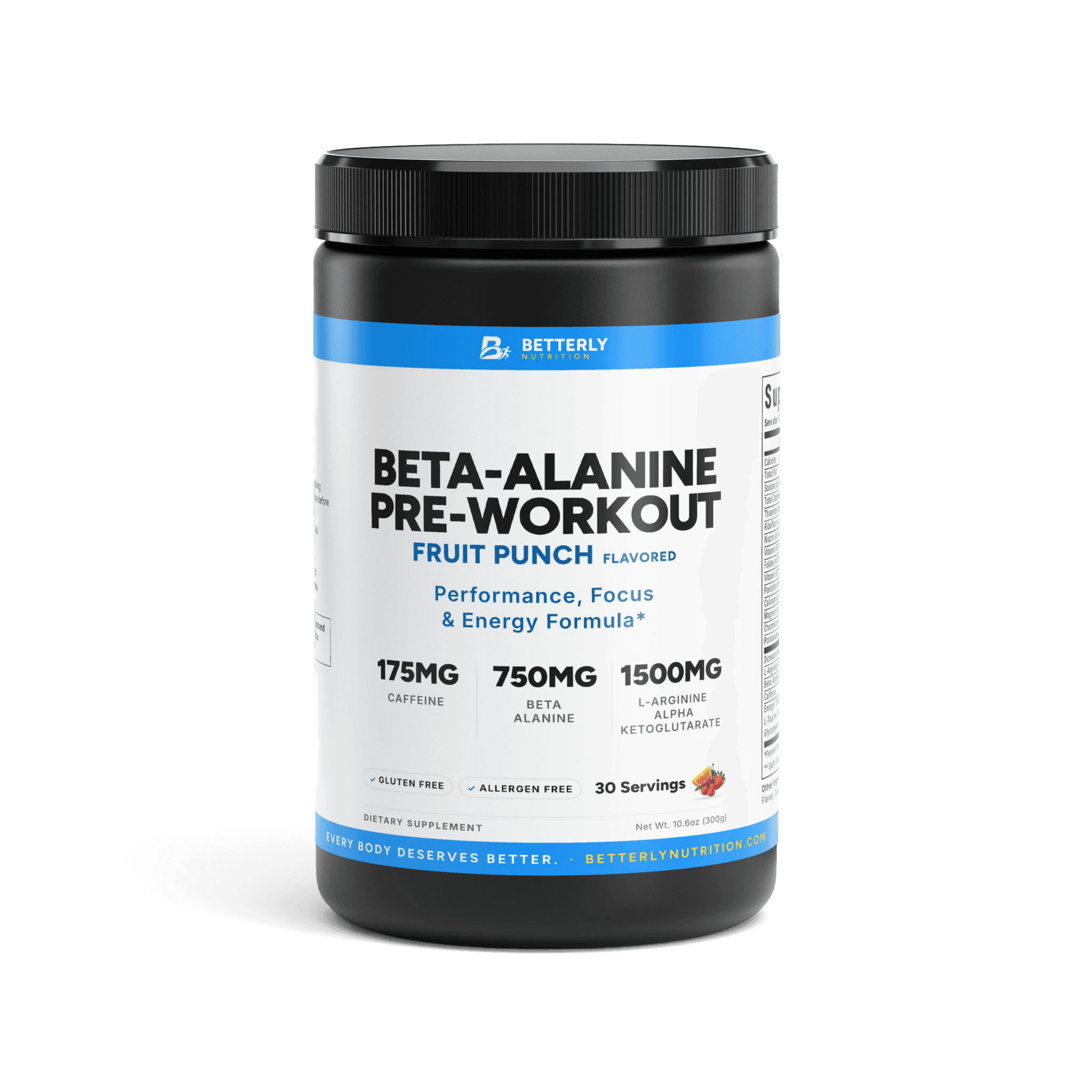
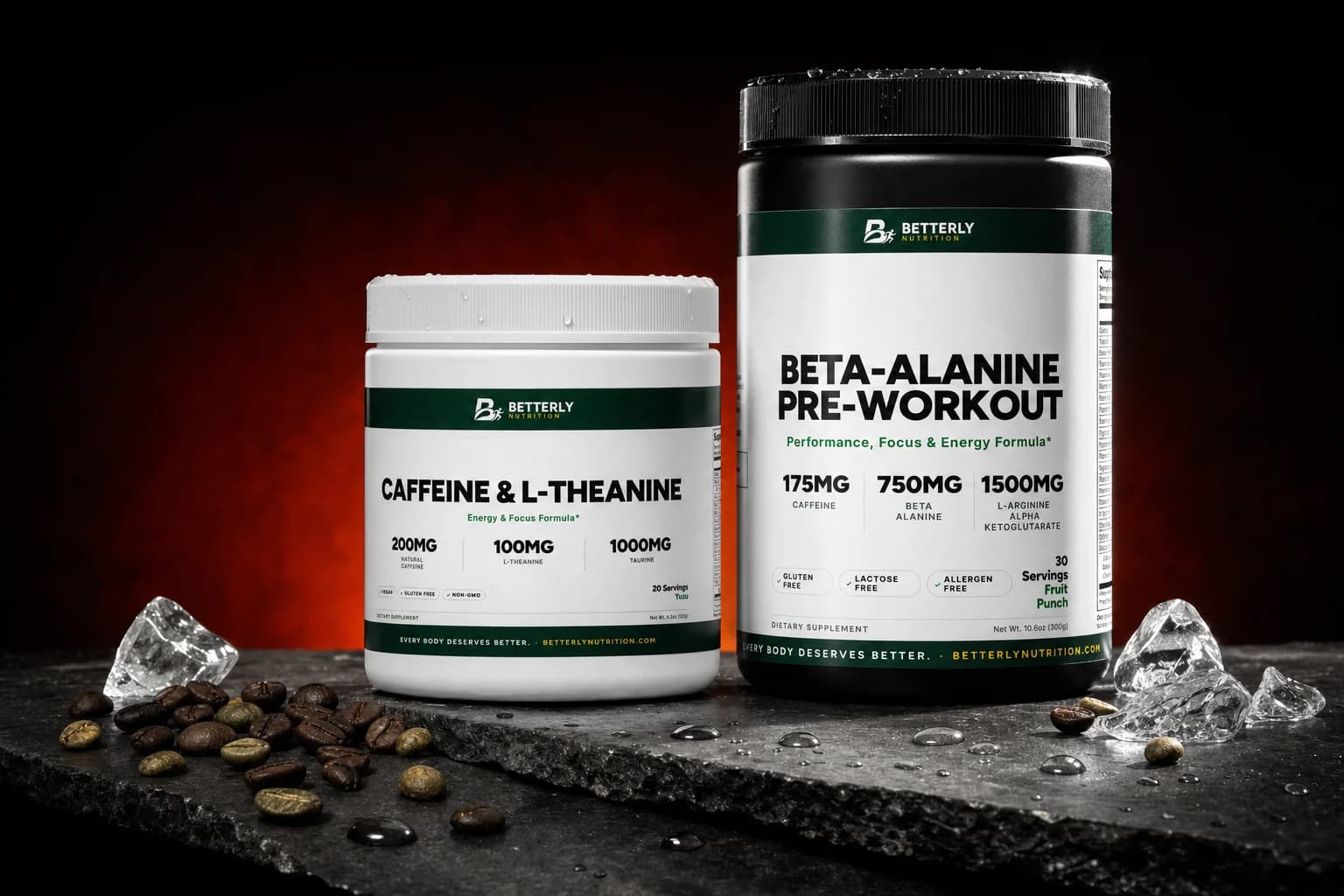
A quick disclosure: we sell two creatine powders and no creatine gummies or capsules, so we're not neutral. Our Beta-Alanine & Caffeine Pre-Workout Powder (Fruit Punch) also lists 1500 mg of dicreatine malate, a different creatine form, per 10 g (1 Scoop) serving. Every number of ours below comes off our Supplement Facts panels.
Creatine gummies vs powder: which format fits you?
Creatine powder suits you if you want 5 g in one scoop and a short ingredient list, and creatine gummies suit you if chewing beats mixing a drink.
Our two rows come from the labels of our Creatine Monohydrate Powder and 5g Creatine & Electrolyte Powder. The gummy and capsule rows are formulas, since those numbers vary by brand.
| Format | Pieces for 5 g of creatine | What else comes along | Suits you if |
|---|---|---|---|
| Plain powder (ours) | 1 scoop (5.6 g) | Nothing else listed | You want the fewest ingredients |
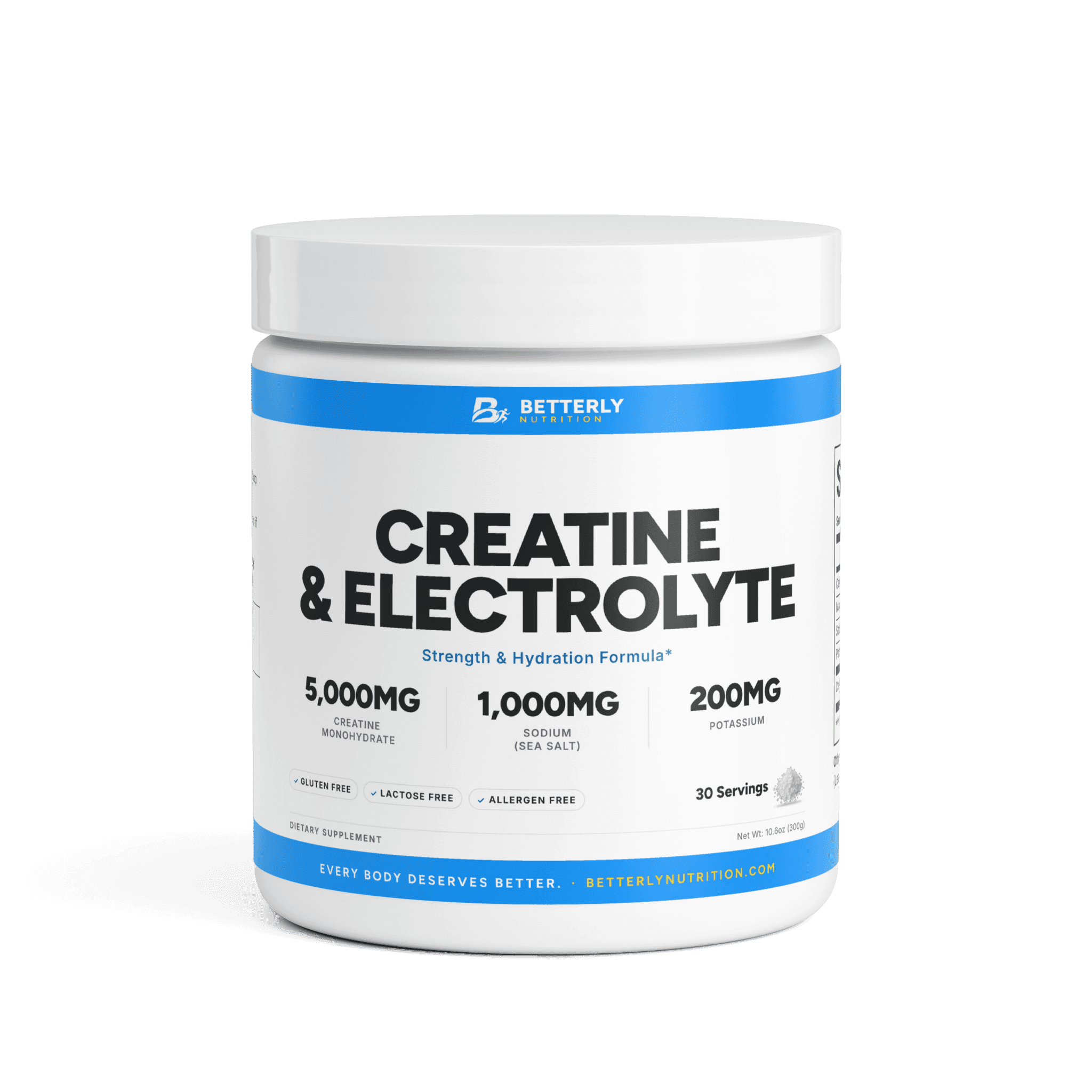
| Creatine + electrolyte powder (ours) | 1 scoop (10 g) | Sodium, potassium, magnesium, natural flavors, stevia, silicon dioxide | You'd like electrolytes in the same glass |
| Gummies (any brand) | 5,000 mg ÷ mg per gummy | A sweetener, a gelling agent, flavor | You'd rather chew than mix |
| Capsules (any brand) | 5,000 mg ÷ mg per capsule | The shell, plus any listed extras | You want no taste and can swallow several |
A scoop gets you to 5 g in one step, while gummies and capsules get there in several. If that count is more than you'll keep up with, the format doesn't fit. Both tubs sit in our Performance Essentials collection.
Do creatine gummies work as well as powder?
A creatine gummy can do what a scoop does if it delivers the same amount of creatine every day; we found no federal source comparing the two formats directly.
The NIH Office of Dietary Supplements fact sheet on exercise and athletic performance covers creatine itself. It says creatine supplements can increase strength, power and the ability to contract muscles for maximum effort, though the effect differs from person to person. Creatine does the most, it says, for repeated short bursts of up to about 2.5 minutes, like sprinting and weightlifting.
The same fact sheet describes studies where people took about 20 g a day, in four equal portions, for 5 to 7 days, then 3 to 5 g a day. ODS doesn't tie any of that to a format. So the useful question is whether the gummies you'd buy reach that range every day.
How well creatine holds up inside a moist, chewy gummy is a fair question, but we couldn't find a federal source that measures it, so we won't guess. Work from the panel's creatine line, the brand's own statement of what each serving holds.
If you're tested for banned substances in your sport, that's a separate check. ODS names NSF's Certified for Sport program, Informed-Choice and the Banned Substances Control Group as companies that certify products are free from many banned ingredients and drugs, and products that pass may carry the certifier's logo. That logo speaks to banned substances, not to a gummy's creatine content. Neither of our creatine tubs carries one.
How many creatine gummies does it take to reach 5 g?
The number of creatine gummies it takes to reach 5 g is 5,000 mg divided by the creatine per gummy, so the panel decides, not the front of the bag.
The front of a gummy bag might say "5 g" in big type, and only the back tells you whether that's one gummy or a handful. FDA 101: Dietary Supplements says the Supplement Facts panel has to give the amount per serving of every dietary ingredient, so a gummy's creatine milligrams must be printed there even when the front shows only a total.
- Start with the serving size. If it says 4 gummies, the creatine line covers all four.
- Find the creatine row and its form: creatine monohydrate with a milligram amount, not a blend total.
- Divide 5,000 mg by the creatine in one gummy to get your count.
- Multiply the sugar per gummy by that count.
- Use servings per container to work out how many 5 g doses the bottle holds, then divide the price by that number.
- Scan the other ingredients for sweeteners, colors and the gelling agent.
Here's the math with made-up round numbers, not any brand's label. Say a bottle holds 120 gummies, each listing 1,000 mg of creatine and 1 g of added sugar. Five gummies make 5 g, so the bottle holds 24 doses, and each dose adds 5 g of added sugar.
The FDA's page on added sugars on the Nutrition Facts label sets the Daily Value for added sugars at 50 g a day, based on a 2,000-calorie diet. In that example, a tenth of it would come from your creatine.
What about sugar-free creatine gummies?
A sugar-free creatine gummy still needs something to sweeten it and hold its shape, so the other ingredients show what replaced the sugar. For gummies that do list added sugars, the same FDA page calls 20% DV or more a high source and 5% DV or less a low one.
For comparison, our Creatine Monohydrate Powder lists no other ingredients, and the 5g Creatine & Electrolyte Powder panel shows 22 Kcal, no sugar line and stevia leaf extract as the sweetener. Our mushroom gummy comparison runs the same sugar check on gummies we do sell.
From our shop: Creatine Monohydrate Powder — 5,000 mg of creatine monohydrate per 1 Scoop (5.6g) serving, labeled vegan, gluten free and non-GMO, with 50 servings per tub.
Creatine pills vs powder: are capsules the middle ground?
Creatine capsules sit between gummies and powder: no taste to deal with and usually no sugar, but the capsule count for 5 g depends on each capsule's milligrams.
The same division works. If a capsule lists 1,000 mg, 5 g is five capsules. At 750 mg, seven capsules get you just past 5 g. Those are examples; use your own label's number.
Check whether the serving size is one capsule or several, the same trap gummies set. If you eat plant-based, the other ingredients line tells you what the shell is made from.
Between gummies and capsules, the capsule skips the sugar and the gummy skips the swallowing. We found no federal source showing that either format absorbs better, so pick the one you'll still take on a busy Tuesday.
Are creatine gummies different from creatine monohydrate?
Creatine gummies and creatine monohydrate aren't rivals: a gummy is a format, creatine monohydrate is a form, and a gummy's creatine row names the form inside.
Of the creatine forms sold in supplements, ODS says monohydrate is the one most widely used and studied. If a gummy lists a different form, you're changing two things at once. Our own pre-workout is an example: its panel names dicreatine malate, so it isn't a like-for-like swap for a scoop of monohydrate.
Our electrolyte tub spells its form out as "Creatine (as Creatine Monohydrate)," the kind of wording to look for. If a panel just says "creatine," it's fair to ask the brand which form before you buy. New to the ingredient itself? Our beginner's guide to creatine covers what it is and how it fits a training week.
How do you take our two creatine powders, per the label?
Our Creatine Monohydrate Powder label calls for a 5-day loading phase of four scoops a day, then one to two scoops daily; the electrolyte version is one scoop daily.
The label's suggested use for the plain tub is to mix one scoop with 8 oz (237 ml) of water or juice, four times daily for the first 5 days, then one to two times daily, or as directed by a healthcare professional. Loading comes to 20,000 mg a day, in line with the roughly 20 g in four portions that ODS describes.
After loading, one scoop gives you 5,000 mg, the top of the 3 to 5 g range ODS describes. The label allows a second scoop, 10,000 mg in all, but ODS doesn't describe a daily amount above 5 g after loading, so we'd stay at one unless a healthcare professional says otherwise.
For a tub, the 5 loading days use 20 of its 50 scoops, and the other 30 last 30 days at one scoop a day. Your first tub covers about 35 days.
The electrolyte version's label says adults mix one scoop with 6 to 8 oz (177 to 237 ml) of water or a favorite beverage daily. There's no loading phase on this label, and its 30 servings last 30 days. Each 1 scoop (10 g) serving has 5,000 mg of creatine (as creatine monohydrate), 1,000 mg of sodium (43% DV), 200 mg of potassium (4% DV) and 60 mg of magnesium (14% DV).
Don't use the electrolyte version to load. Four scoops would add up to 4,000 mg of sodium, and the FDA's Sodium in Your Diet page puts the Daily Value for sodium at less than 2,300 mg a day. That page also calls 20% DV or more per serving high, so one scoop at 43% is a high-sodium serving. Our Electrolytes 101 guide covers when that sodium earns its place.
So which of ours fits? The plain tub, if you want the loading option and nothing but creatine. The electrolyte version, if you sweat through training and want one drink for both, sodium counted. If you'll only take creatine you can chew, neither fits, and the checklist above works on any brand.
From our shop: 5g Creatine & Electrolyte Powder — 5,000 mg of creatine plus 1,000 mg of sodium, 200 mg of potassium and 60 mg of magnesium per 1 scoop (10 g) serving, labeled gluten free.
When don't you need creatine in any format?
You may not need creatine in any format if your training is mostly long, steady endurance work, because the ODS fact sheet says creatine seems to have little value there.
It names distance running, cycling and swimming. ODS also notes that your body makes about 1 g of creatine a day, and a 4-ounce serving of beef or salmon has about 500 mg. Only the much larger amounts in supplements, it says, might improve certain types of performance.
You can also skip it if a daily habit won't stick. ODS describes creatine use over several weeks or months, so a tub that sits in the cupboard isn't part of that picture. And if gummies appeal mostly because they taste like candy, run the sugar math first.
Who should check with a healthcare provider first?
Check with a healthcare provider before taking creatine in any format if you're pregnant, nursing, under 18, taking prescription medication, planning surgery or managing a medical condition.
Both of our creatine labels carry the same caution: "Do not exceed recommended dose. Consult a physician if pregnant, nursing, under 18, or have a medical condition." FDA 101 adds that some supplements can interact with medications, interfere with lab tests or cause problems during surgery, so tell the team running your bloodwork or procedure that you take creatine.
ODS lists muscle stiffness, cramps and GI distress as rare reactions to creatine. If you've been asked to watch your sodium, count the electrolyte version's 1,000 mg per scoop first.
FAQ: creatine gummies and powder
Do creatine gummies make you bloated?
Creatine gummies aren't tied to bloating in the NIH Office of Dietary Supplements fact sheet, which doesn't list it for creatine. ODS does say creatine usually causes some weight gain because it increases water retention, and it names GI distress as a rare reaction. A gummy also brings its own ingredient list, so if your stomach is touchy, check what sweetens it before you blame the creatine.
Should you take creatine gummies before or after a workout?
Creatine gummies don't have to be timed around a workout unless their label says so, and your bottle's directions come first. Neither of our creatine powder labels names a time of day or ties a scoop to training, only how many scoops to take. So the right slot is the one you'll keep, at the label's count.
Can you mix creatine powder into juice?
Yes, creatine powder can go into juice: our Creatine Monohydrate Powder label names water or juice, at one scoop per 8 oz (237 ml). The 5g Creatine & Electrolyte Powder label says water or your favorite beverage, which leaves more room. Juice brings its own sugar, though, listed on its Nutrition Facts label.
Can you take creatine gummies and powder together?
You can, but creatine gummies and powder taken together stack two doses, and one scoop of either of our tubs already holds 5,000 mg. ODS describes 3 to 5 g a day after loading, so any gummy on top of that scoop puts you past the range. Both of our creatine labels also say "Do not exceed recommended dose." Pick one format for your daily amount, and run the same check on any pre-workout that lists creatine, ours included.
Can teenagers take creatine gummies?
Creatine gummies usually aren't for teenagers: the ODS fact sheet says that in most cases only adults should use performance supplements. It cites the American Academy of Pediatrics, which states that these products don't improve teen athletes' abilities beyond what proper nutrition and training bring. Both of our creatine labels also list under 18 in their caution. ODS calls talking to an expert important for teens, so start with a pediatrician.
Sources
- Dietary Supplements for Exercise and Athletic Performance: Fact Sheet for Consumers, NIH Office of Dietary Supplements
- FDA 101: Dietary Supplements, U.S. Food and Drug Administration
- Added Sugars on the Nutrition Facts Label, U.S. Food and Drug Administration
- Sodium in Your Diet, U.S. Food and Drug Administration
If this left you looking for somewhere to start, read creatine monohydrate powder with 5 g per scoop — its amounts per serving are listed on the page. For the practical questions this raises, how dosing, sourcing and subscriptions work is answered in one place.