On this page
- Key takeaways
- What are the most common creatine side effects?
- Does creatine cause weight gain, or is it just water?
- Does creatine cause bloating, gas or diarrhea?
- Does creatine cause hair loss?
- Creatine vs creatinine: why does it matter on a blood test?
- What are the long-term side effects of creatine?
- How do you take creatine so side effects stay small?
- When don't you need creatine at all?
- Who should check with a healthcare provider first?
- FAQ: creatine side effects
- Sources
The short answer: For healthy adults, the common creatine side effects are a few pounds of water weight and, now and then, an upset stomach. Dose size matters: in one study, a single 10 g daily dose caused more diarrhea than the same 10 g split into two 5 g doses. Hair loss didn't show up in the one controlled trial that measured it, and creatine can raise the number on a creatinine blood test.
Key takeaways
- Some weight gain is the only creatine effect that turns up study after study, says the NIH Office of Dietary Supplements, which ties it to water retention and possibly muscle protein building.
- In one study, diarrhea was more common when 10 g went down in one dose than when it came as two 5 g doses, so keep each drink to a 5 g portion.
- A 12-week trial in 38 resistance-trained men found no difference in DHT or hair measures between creatine and a placebo.
- Your body breaks creatine down into creatinine, so tell anyone ordering your blood work that you take it.
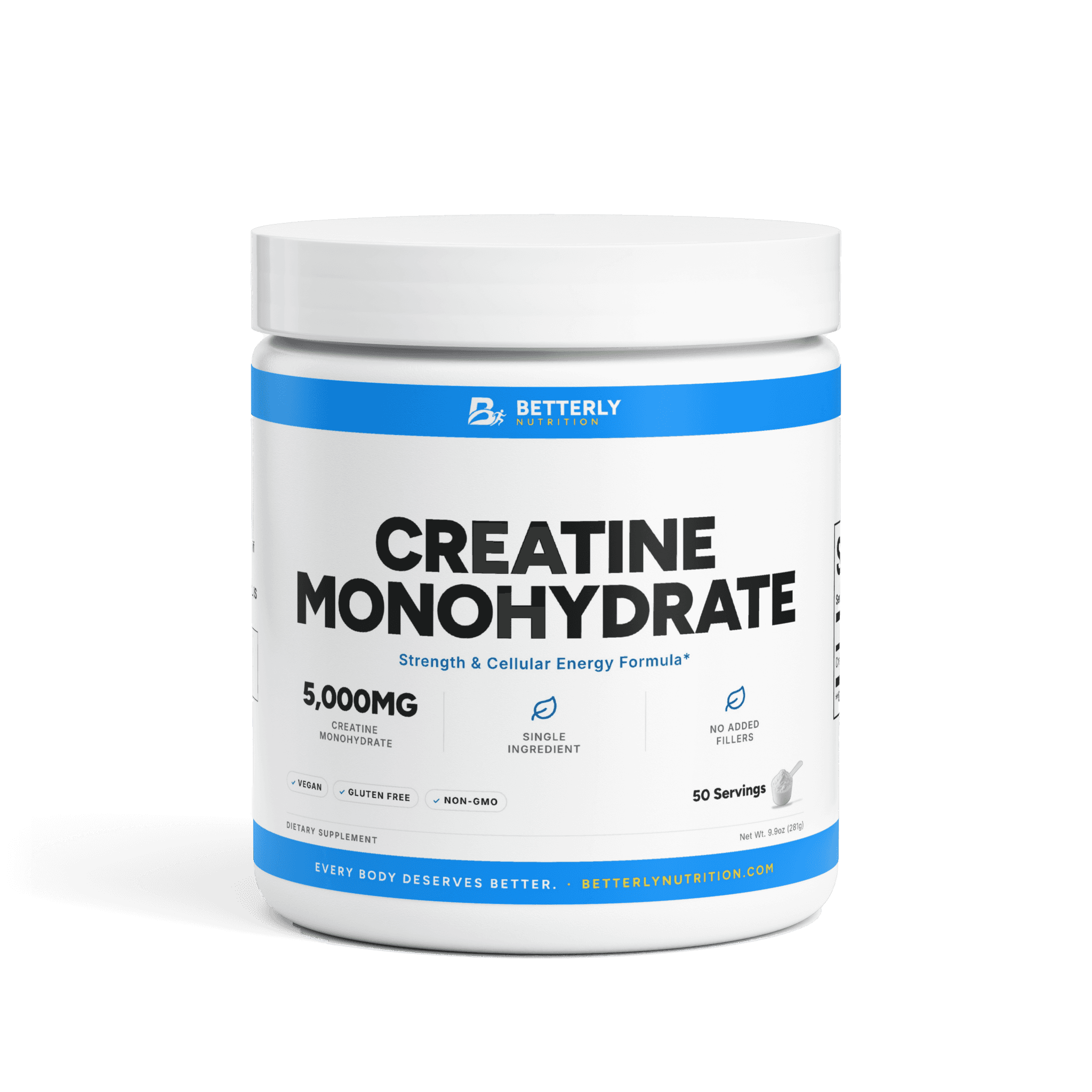
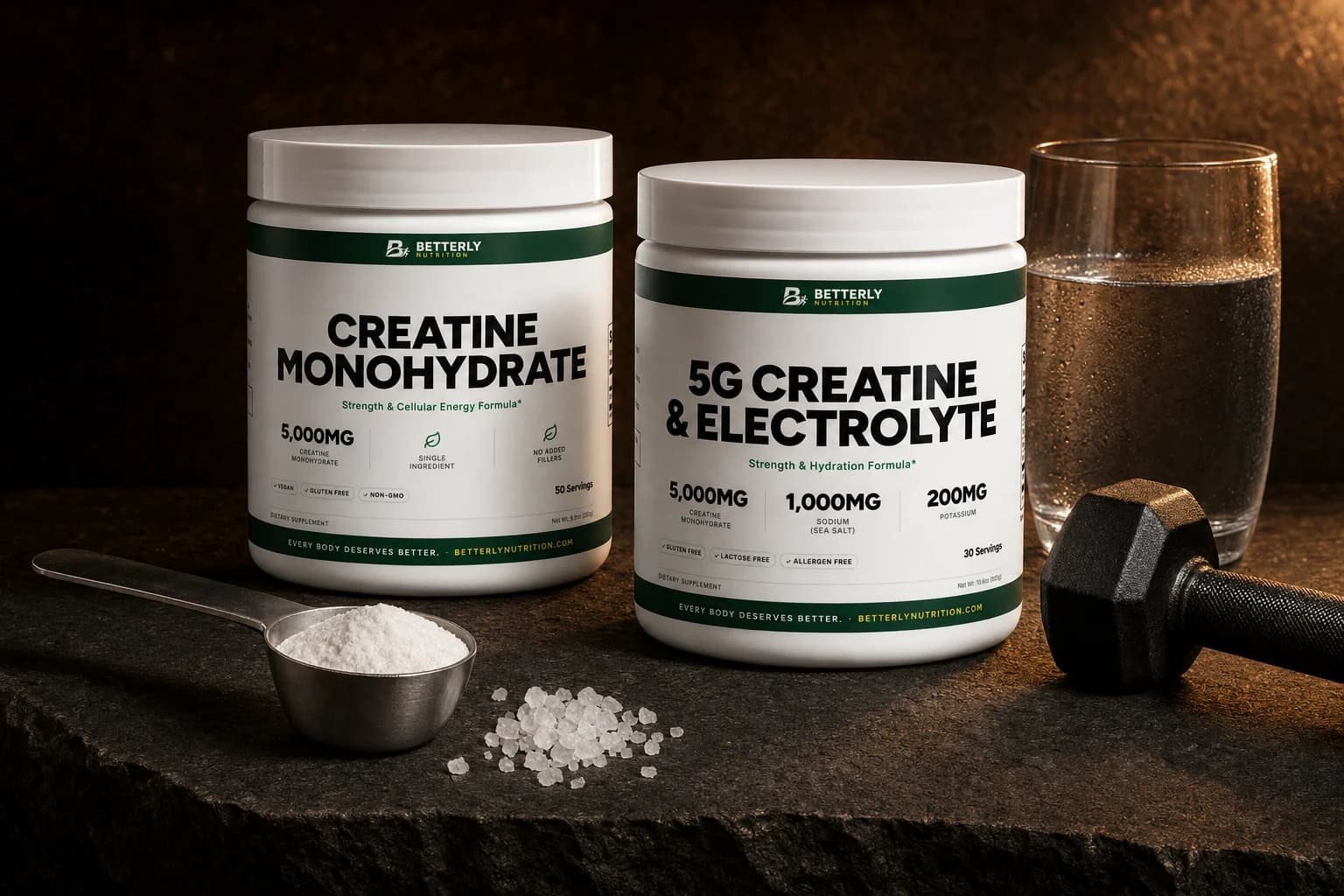
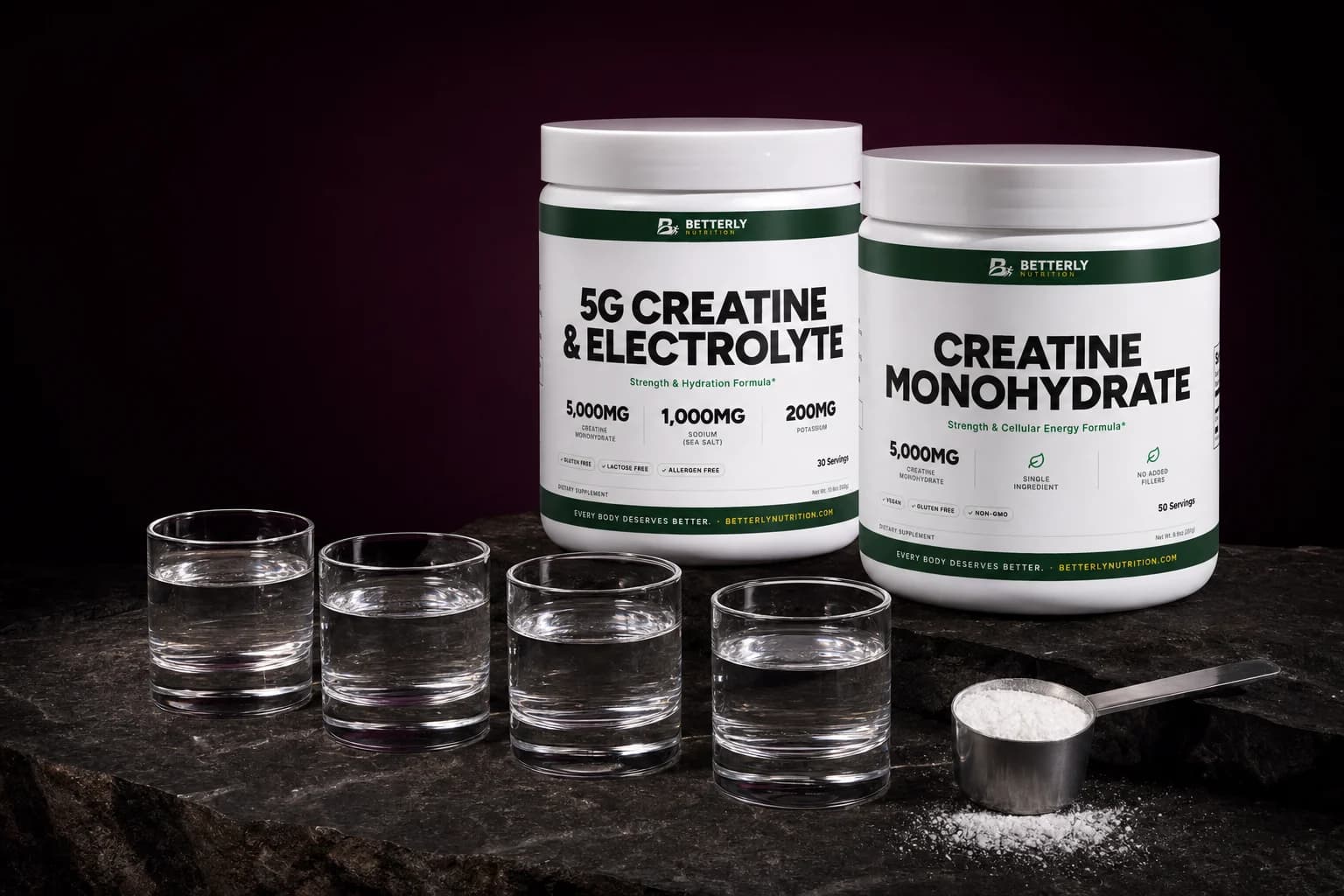
- Each 1 Scoop (5.6g) serving of Betterly's Creatine Monohydrate Powder holds 5,000 mg of creatine monohydrate, matching the 5 g portion size the split-dose advice points to.
Where we stand: we sell two creatine powders. So every fix below is tied to what our own labels say, and we'll flag the spot where a label allows more than you need.
What are the most common creatine side effects?
Creatine's most common side effects are water-related weight gain and occasional stomach upset, and the NIH calls several other reported reactions anecdotal.
The NIH Office of Dietary Supplements (ODS) covers creatine in its exercise-supplement fact sheet for clinicians. It says studies have found no consistent set of side effects, except that creatine often leads to weight gain.
The reports it calls anecdotal are nausea, diarrhea and related stomach distress, muscle cramps and heat intolerance. In a separate line, it says creatine may reduce range of motion in places like the shoulders and ankles and lead to muscle stiffness. Adequate hydration, it adds, might minimize these uncommon risks.
Here's the quick version:
| Side effect | What the evidence says | What to do |
|---|---|---|
| Water weight | Common; NIH ties it to water retention | Expect it; judge by the month |
| Diarrhea | Rose with one 10 g dose in one study | One scoop per drink |
| Upset stomach, bloating or burping | Placebo groups report it too | Space loading scoops apart |
| Cramps or stiffness | Cramps anecdotal; NIH says stiffness may occur | Stay well hydrated through the day |
| Hair loss | Not shown in a 12-week trial | Ask a provider about shedding |
| Higher creatinine reading | Possible, since creatine breaks down into creatinine | Tell whoever orders your labs |
The pattern is plain: most of what gets blamed on creatine is either water that's meant to be there or too much powder in one glass.
Does creatine cause weight gain, or is it just water?
Creatine usually adds some body weight, and whether you load decides how fast it shows up. The sources we cite trace it mainly to water.
Loading moves the scale fastest. A 2025 review of common creatine safety concerns in Frontiers in Nutrition says 20 g a day for 5 days can add 1 to 3 kg, or 2.2 to 6.6 pounds. It puts most of that down to added body water.
The ODS figure covers a longer stretch. Several studies it cites found that creatine monohydrate, taken during a strength-training program, added 1 to 2 kg (2.2 to 4.4 pounds) over a month.
So judge the scale by the month, not the morning: a loading week can move it within days.
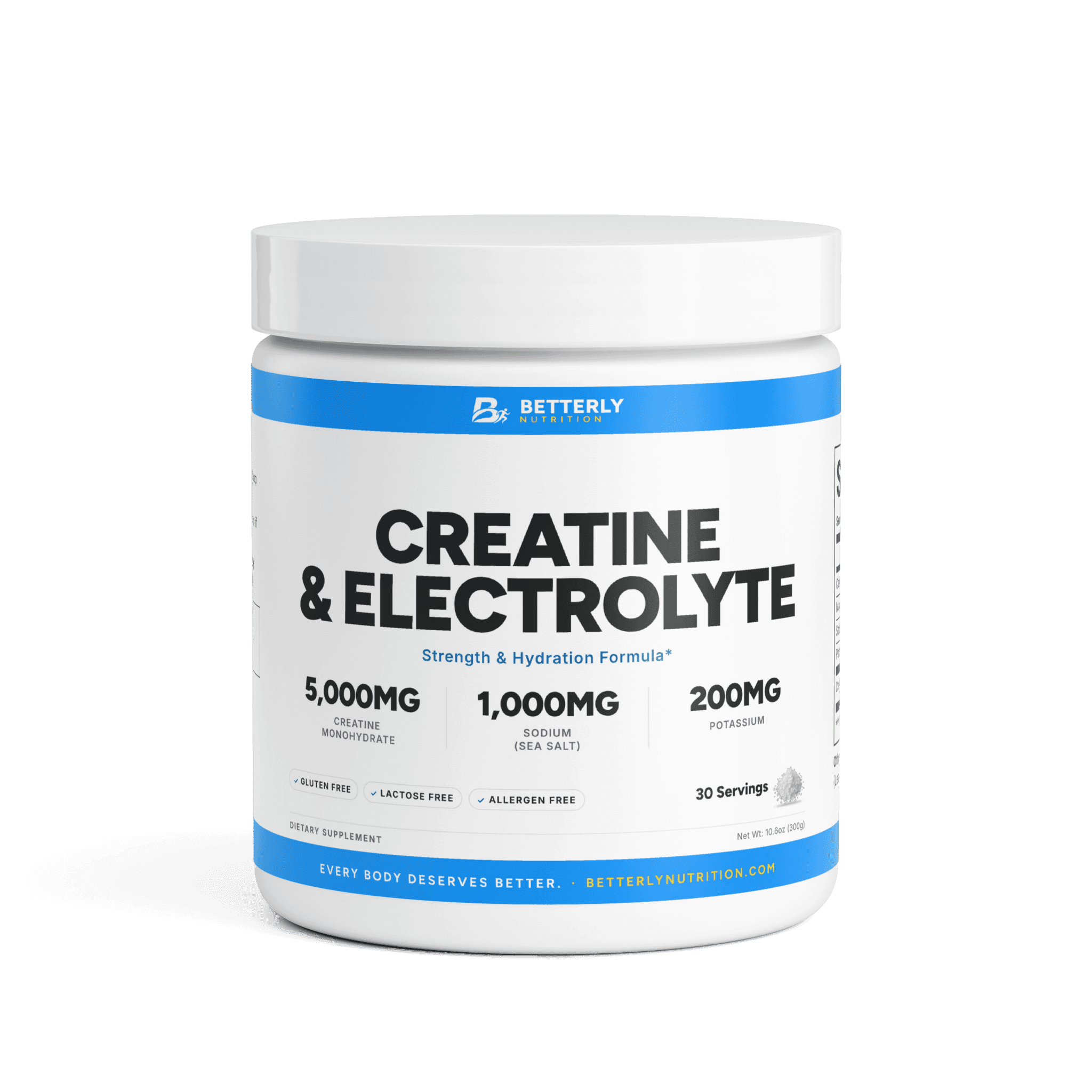
The powder isn't a calorie source to speak of, either. Our plain creatine panel lists no calories at all, and the 5g Creatine & Electrolyte Powder lists 22 Kcal per 1 scoop (10 g) serving.
Does creatine cause bloating, gas or diarrhea?
Creatine can cause diarrhea, mainly when a large amount goes down at once, but across trials stomach complaints look about the same with creatine and a placebo.
The clearest evidence on dose size comes from a study the 2025 review describes. Researchers split 59 soccer players into three groups for 28 days: two daily 5 g doses, one daily 10 g dose, or a placebo.
Diarrhea hit 55.6% of the single-10 g group, compared with 28.6% of the two-5 g group and 35% on placebo. Stomach upset and belching turned up in every group, placebo included, and bloating, nausea and heartburn showed no group differences.
The review's explanation is that a large single dose may leave some creatine undissolved in the intestine, where it draws in water. Its advice is to keep each dose at 5 g or less, splitting your daily intake if you need more.
Over a third of players on placebo reported diarrhea too, so plenty of gut trouble shows up with no creatine involved.
The wider picture is calmer. The same review cites an analysis of 685 randomized trials with over 26,000 people, where stomach issues showed up in 5.5% of creatine users and 4.2% on placebo. That gap wasn't statistically significant.
One caveat: two of the review's authors report grants or creatine donations from supplement companies.
Bloating can mean two different things. The review describes studies where creatine raised the water held inside cells, which isn't the same as a gassy, tight stomach. For gas and burping, the review's split-dose advice is the one lever you control. Paying more for a different form won't necessarily help, as our look at creatine monohydrate vs HCl explains.
From our shop: Creatine Monohydrate Powder — nothing on the panel but creatine monohydrate, 5,000 mg in each 1 Scoop (5.6g) serving, so one scoop per glass keeps every drink at a 5 g portion.
Does creatine cause hair loss?
Creatine hasn't been shown to cause hair loss. The worry traces to a 2009 study that measured DHT, a hormone the body makes from testosterone, but never measured hair.
The authors of a 2025 randomized trial on creatine and hair, published in the Journal of the International Society of Sports Nutrition, describe that earlier study. Young male athletes took 25 g a day for 7 days, then 5 g a day for 14 days. DHT rose 56% after loading and stayed 40% above baseline after that.
DHT is linked to hair thinning, so people connected the dots. But no trial checked hair directly until 2025.
The 2025 trial did. Thirty-eight resistance-trained men, aged 18 to 40, took either 5 g of creatine monohydrate or a 5 g placebo powder every day for 12 weeks. The researchers measured DHT, testosterone, hair density, follicle count and hair thickness.
They found no differences between groups in DHT, the DHT-to-testosterone ratio or any hair measure.
That's reassuring, not final. The trial included only men, lasted 12 weeks, and didn't record family history of hair loss. Some authors also disclosed ties to creatine makers. The ODS side-effect list doesn't mention hair either.
If you notice more shedding than usual, bring it up with a healthcare provider, since hair changes have many possible triggers.
Creatine vs creatinine: why does it matter on a blood test?
Creatine is the compound in your scoop; creatinine is the waste product your body makes as it breaks creatine down, and a common blood test measures it.
The ODS sheet says metabolized creatine becomes creatinine, which leaves the body through the kidneys.
MedlinePlus explains the creatinine test is used to check how well your kidneys are working. It says normal levels depend on how much muscle you have, what you eat, your age and how active you are, and you may be told to skip meat for 24 hours beforehand. Certain medicines and supplements can affect results too, so tell your provider everything you take.
The 2025 review goes a step further. It says people who take creatine may show higher blood creatinine even when their kidneys work normally, and suggests clinicians check kidney function in creatine users with other markers, such as cystatin C. The 12-week hair trial, at 5 g a day, saw no change in creatinine.
What to do: tell whoever orders your labs about your daily scoop, and let them decide whether you pause it first.
What are the long-term side effects of creatine?
The NIH considers creatine safe for short-term use by healthy adults, and it says evidence shows use over several years is safe too.
Two words carry that sentence: healthy and adults. The research behind it doesn't answer questions for teens, pregnancy or anyone managing a medical condition. That's why both our labels send those groups to a physician first.
The ODS doesn't keep a separate side-effect list for long-term use. Cramps and heat intolerance appear only as anecdotal reports, and it notes creatine may reduce range of motion and leave muscles stiff. Hydration and cramping get their own look in does creatine dehydrate you.
There's no cycling schedule on either of our labels, and nothing in our sources ties breaks to fewer side effects.
How do you take creatine so side effects stay small?
Take creatine one scoop per drink, mix it into the full amount of liquid the label names, and space any extra scoops through the day.
Here's the plain powder's label, word for word: "Mix one (1) scoop with 8 oz (237ml) of water or juice. Take four (4) times daily for the first 5 days (loading phase), then take 1–2 times daily thereafter, or as directed by a healthcare professional."
That loading phase adds up to four 5 g portions, or 20 g in total each day, the same protocol the ODS describes. It's already split. The mistake is doubling scoops into fewer glasses to get it over with.
- One scoop, one glass. 8 oz of water or juice for the plain powder, 6 to 8 oz for the blend.
- Spread the loading scoops. Try breakfast, lunch, mid-afternoon and dinner, as four separate drinks.
- Or skip loading. The ODS also describes a route with no loading at all: roughly 3 to 6 g daily, taken for 3 to 4 weeks. Our creatine starter guide weighs that choice.
- Settle at one scoop. After day 5, the label allows one or two. One scoop holds 5,000 mg (5 g) of creatine monohydrate, already the top of the 3 to 5 g maintenance range the ODS describes. Two make 10 g a day, the total that brought the most diarrhea in the soccer study when swallowed at once. If you ever take a second, give it its own drink at another time of day.
- Use one tub a day. Both powders list 5,000 mg on the creatine line. Stirring a scoop of each into one shaker recreates that single 10 g dose.
The blend's label is simpler: one scoop daily, with no loading phase. Each 1 scoop (10 g) serving lists 1,000 mg of sodium (43% DV), so by a third scoop you'd be past the full sodium Daily Value from powder alone. Both labels say, "Do not exceed recommended dose."
From our shop: 5g Creatine & Electrolyte Powder — one scoop a day is the whole label, with 5,000 mg of creatine (as creatine monohydrate) plus sodium, potassium and magnesium in each 1 scoop (10 g) serving.
When don't you need creatine at all?
Creatine isn't worth taking if your workouts are mainly long, steady endurance sessions, since the NIH sees little value there and the added weight could hold you back.
The ODS ties creatine's benefits to repeated short, hard efforts like sprints and lifting sets. You can skip it if:
- Your week is distance running, cycling or swimming, with no heavy sets or sprints.
- You haven't started training, so there are no short, hard efforts for creatine to support.
- You compete in a weight class and can't spare a few pounds of water right now.
- One scoop per drink still upsets your stomach. Stop, rather than pushing through.
If creatine isn't a fit, our Performance Essentials collection also carries electrolyte and amino acid powders.
Who should check with a healthcare provider first?
A healthcare provider should weigh in before you start creatine if you're under 18, pregnant or nursing, on prescription medication, or managing any medical condition.
Most of that list comes straight from the caution on both of our creatine labels: "Do not exceed recommended dose. Consult a physician if pregnant, nursing, under 18, or have a medical condition."
Four other situations call for that conversation too:
- An existing kidney condition.
- Blood work on the calendar, for the creatinine reason above.
- A low-sodium eating plan, since each blend scoop brings 1,000 mg.
- An upcoming operation.
FAQ: creatine side effects
Does creatine cause acne?
Creatine isn't linked to acne in the NIH creatine safety summary, which lists no skin reactions. Neither 2025 paper cited here looked at skin, so they can't answer it either way. If breakouts start after you begin a daily scoop, note the timing and mention it to a healthcare provider rather than changing your dose on a hunch.
Does creatine cause headaches?
Headaches aren't among the creatine reactions the NIH lists, which center on water weight, stomach upset, cramps, stiffness and heat intolerance. If headaches keep showing up after you start, stop taking creatine and talk to a healthcare provider. Don't try to fix it by changing the dose on your own.
Does creatine cause constipation?
Creatine hasn't been tied to constipation in the sources cited here. In the 59-player soccer study the 2025 review describes, constipation showed no difference between the two creatine groups and placebo. It isn't on the NIH's anecdotal list either, which leans the other way, toward diarrhea. If your digestion changes after you start and stays that way, stop taking creatine and bring it up with a healthcare provider.
Are creatine side effects different for women?
Not that we can find, but creatine's hair evidence leaves women out: the 2025 trial enrolled only men. Both of our creatine labels print one caution for all adults, with a physician check if you're pregnant or nursing. Water weight and occasional stomach upset are still the effects to plan for. Our guide to creatine for women covers sodium, loading and training past 40 in more depth.
Sources
- NIH Office of Dietary Supplements: Dietary Supplements for Exercise and Athletic Performance, Fact Sheet for Health Professionals
- MedlinePlus: Creatinine Test
- Lak M, Forbes SC, Ashtary-Larky D, et al. Does creatine cause hair loss? A 12-week randomized controlled trial. Journal of the International Society of Sports Nutrition, 2025.
- Longobardi I, Solis MY, Roschel H, Gualano B. A short review of the most common safety concerns regarding creatine ingestion. Frontiers in Nutrition, 2025.
If this left you looking for somewhere to start, read single-ingredient creatine monohydrate powder — its amounts per serving are listed on the page. For the practical questions this raises, how dosing, sourcing and subscriptions work is answered in one place.