On this page
- Key takeaways
- Creatine monohydrate vs HCl: what's actually different?
- Is creatine HCl better than creatine monohydrate?
- How much actual creatine is in each form?
- What do micronized, Creapure and other creatine labels mean?
- Does creatine HCl cause less bloating than monohydrate?
- How do you compare the cost of creatine monohydrate vs HCl?
- Creatine HCl vs monohydrate dosage: how do our labels read?
- When is switching creatine forms not worth it?
- Who should talk to a doctor before trying any creatine form?
- FAQ: creatine monohydrate vs HCl
- Sources
The short answer: In the creatine monohydrate vs HCl choice, monohydrate has the stronger case. The NIH Office of Dietary Supplements calls it the most widely used and studied creatine form. HCl is sold on easier mixing and smaller scoops, but nothing we read shows it works better or bloats less. Gram for gram, HCl also carries about 11% less creatine, going by PubChem's molecular weights.
Our conflict of interest, up front: both creatine tubs we sell are monohydrate, and we don't stock HCl. So we show the math behind every number, and you can run it on any label, ours included.
Key takeaways
- By PubChem's molecular weights, creatine monohydrate is about 88% creatine by weight, and creatine HCl is about 78%.
- Matching the creatine in 5 g of monohydrate takes about 5.6 g of creatine HCl powder, so any HCl scoop lighter than that holds less creatine than a 5 g monohydrate scoop.
- Micronized creatine and Creapure are both creatine monohydrate: one is a finer grind, the other a trademarked raw-material brand.
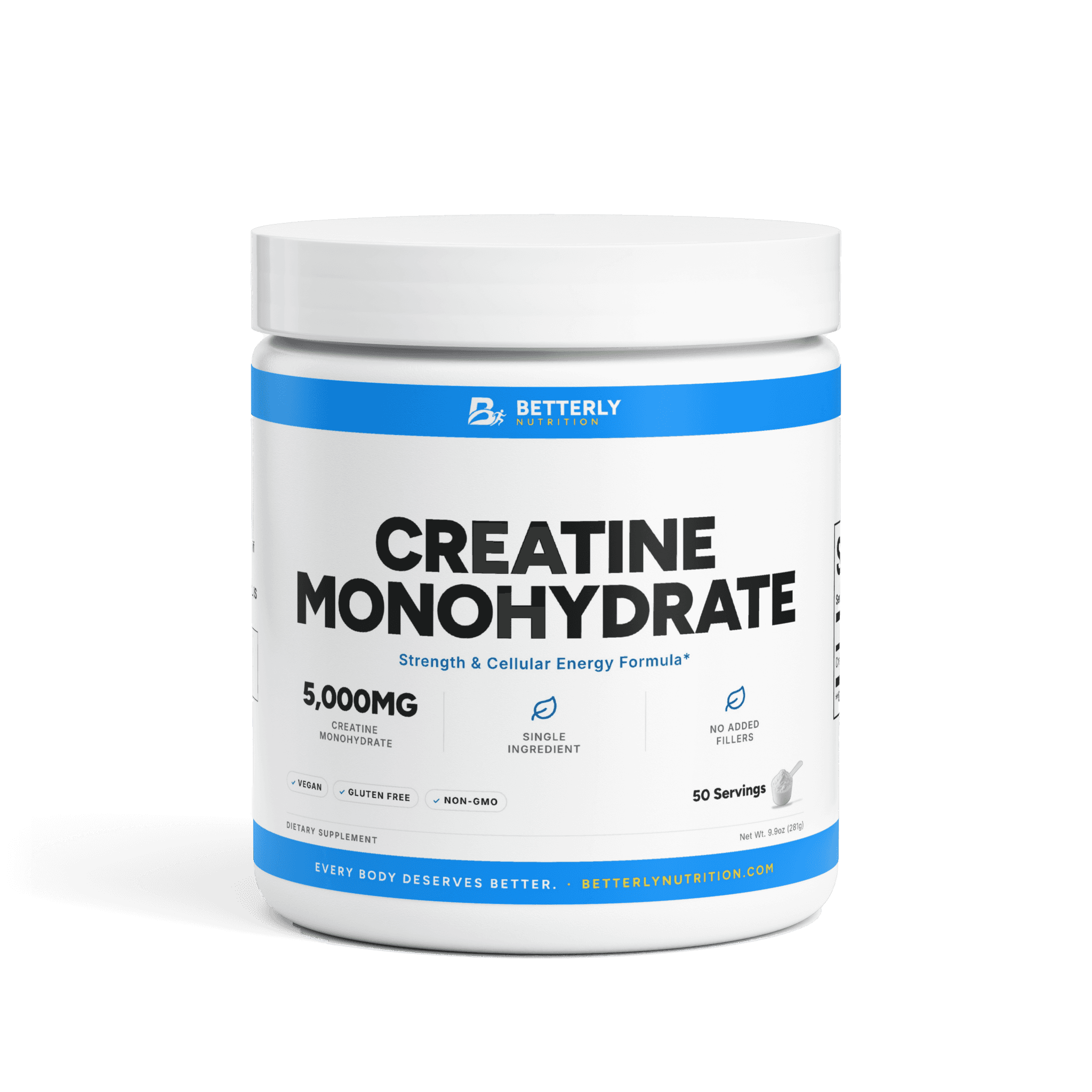
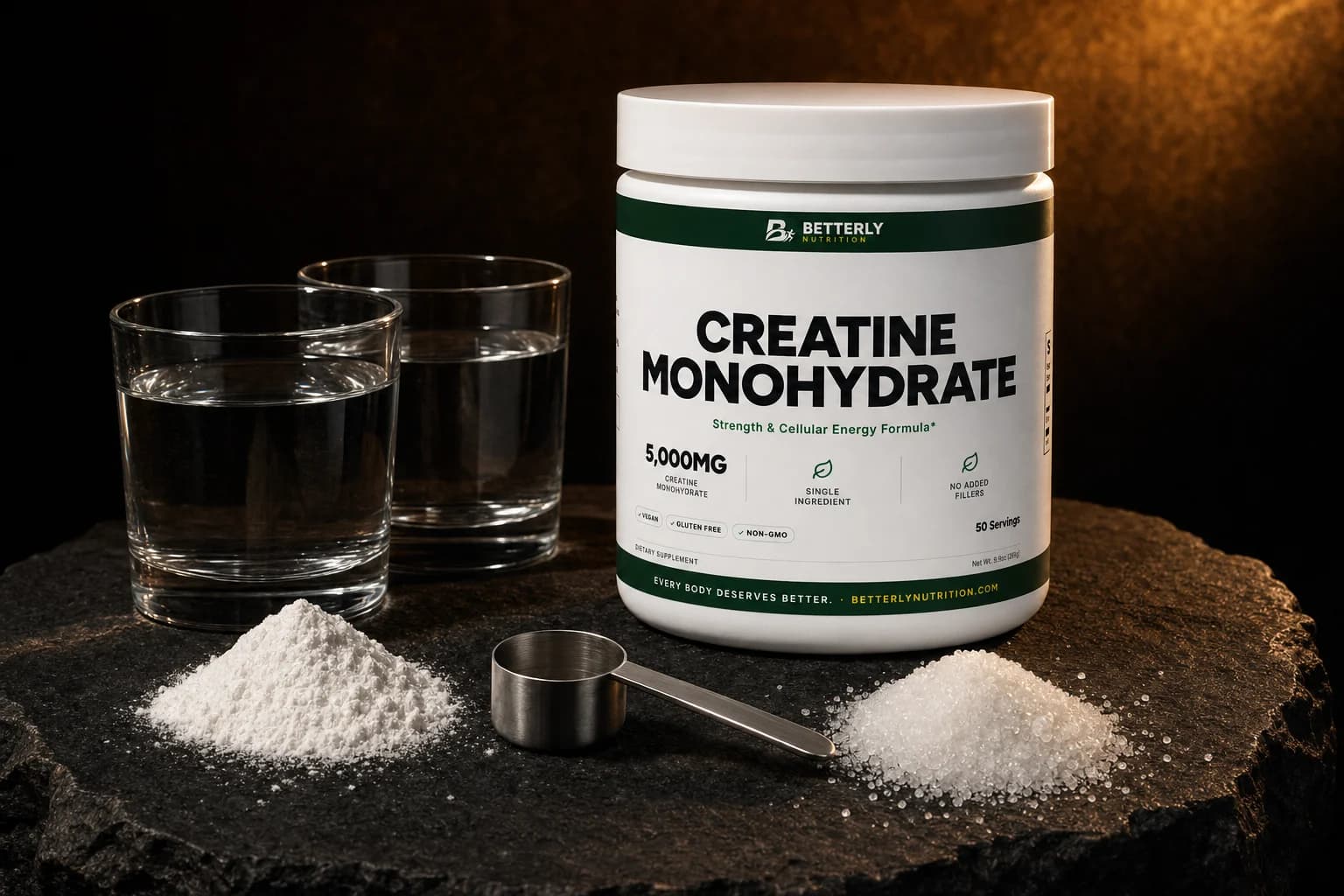
- The only line on Betterly's Creatine Monohydrate Powder panel is creatine monohydrate, 5,000 mg per 1 Scoop (5.6g) serving, which works out to about 4,400 mg of creatine.
Creatine monohydrate vs HCl: what's actually different?
Creatine monohydrate and creatine HCl carry the identical creatine molecule, bound to a different partner: one water molecule for monohydrate, and hydrochloric acid for HCl.
On labels, HCl stands for hydrochloride, so you'll also see creatine hydrochloride.
Molecular weight is how heavy one unit of a compound is. The heavier the partner, the smaller the share of each gram that's creatine. The weights below come from the creatine monohydrate and creatine hydrochloride records in PubChem, the chemistry database of the NIH's National Library of Medicine.
| Question | Creatine monohydrate | Creatine HCl |
|---|---|---|
| Partner bound to creatine | One water molecule | Hydrochloric acid |
| Molecular weight (PubChem) | 149.15 g/mol | 167.59 g/mol |
| Share that's creatine | About 88% | About 78% |
| Powder to match 5 g of monohydrate | 5 g | About 5.6 g of HCl powder |
| Named by NIH ODS | Most widely used and studied form | Not mentioned |
| What sellers stress | Track record | Easier mixing, smaller scoops |
The takeaway: HCl can't beat monohydrate on creatine per gram. Its whole case rests on two ideas, that it mixes better and that a smaller scoop is enough.
Is creatine HCl better than creatine monohydrate?
Creatine HCl hasn't been shown to beat monohydrate in the NIH fact sheets we read, and both of those sheets name monohydrate as the most widely used and studied form.
According to the NIH's consumer fact sheet on supplements for exercise and athletic performance, creatine can help with strength, power and maximum-effort muscle contractions, though how much varies by person. HCl gets no row, amount or verdict of its own there.
The health professional version of that fact sheet puts monohydrate at 88% creatine by weight, matching our PubChem math below. It also says other, usually more expensive forms "have not been proven to have superior ability" to monohydrate for raising muscle creatine levels, digestibility, product stability or safety.
Its named examples are creatine ethyl ester, creatine alpha-ketoglutarate and buffered creatine. HCl isn't on that list, so read the line as the NIH's general stance on alternative forms, not a ruling on HCl.
How much actual creatine is in each form?
A gram of creatine monohydrate holds about 0.88 g of creatine, and a gram of creatine HCl holds about 0.78 g, based on PubChem's molecular weights.
The arithmetic takes one step. PubChem lists plain creatine at 131.13 g/mol. Divide that by each form's weight, 149.15 for monohydrate and 167.59 for HCl, to get the share that's creatine.
Start with our own label. Betterly's Creatine Monohydrate Powder lists 5,000 mg of creatine monohydrate per 1 Scoop (5.6g) serving. About 4,400 mg of that is creatine, and the rest is bound water.
Here's the catch in the smaller-scoop pitch. Matching the creatine in 5,000 mg of monohydrate, the amount on our panel, takes about 5.6 g of creatine HCl powder, not less. That's a weight of HCl powder, not the scoop size on our tub. If an HCl label promises the same results from a fraction of it, ask the brand what evidence it's relying on.
What do micronized, Creapure and other creatine labels mean?
Creatine label terms either name a chemical form, like HCl or nitrate, or describe monohydrate itself, like how finely it's ground or who made it.
| Term on the tub | What it means | Creatine-per-gram math |
|---|---|---|
| Creatine monohydrate | Creatine bound to one water molecule | About 88% creatine |
| Micronized | Monohydrate milled into finer particles | Same as monohydrate |
| Creapure | A trademarked raw-material brand of monohydrate | Same as monohydrate |
| Creatine anhydrous | Creatine with no bound water | All creatine |
| Creatine HCl | Creatine bound to hydrochloric acid | About 78% creatine |
| Creatine nitrate | Creatine paired with nitrate | Ask for mg of creatine |
| Dicreatine malate | Two creatine units with malic acid | Not worked out here |
| HMB | Not creatine at all | Not comparable |
Creatine monohydrate vs micronized comes down to particle size, not chemistry, so micronized is still monohydrate. Our label doesn't say micronized, so we don't claim it.
Creatine monohydrate vs Creapure works the same way. Creapure is a trademarked raw-material brand of monohydrate, so the name points to whose raw material went in, not to a new form. Our label names no raw-material brand.
Creatine monohydrate vs creatine nitrate is harder to settle. Neither NIH creatine section mentions nitrate, and a "creatine nitrate" line weighs both parts together. Ask the brand for milligrams of creatine per serving, then compare that with the roughly 4,400 mg in our 5,000 mg monohydrate serving.
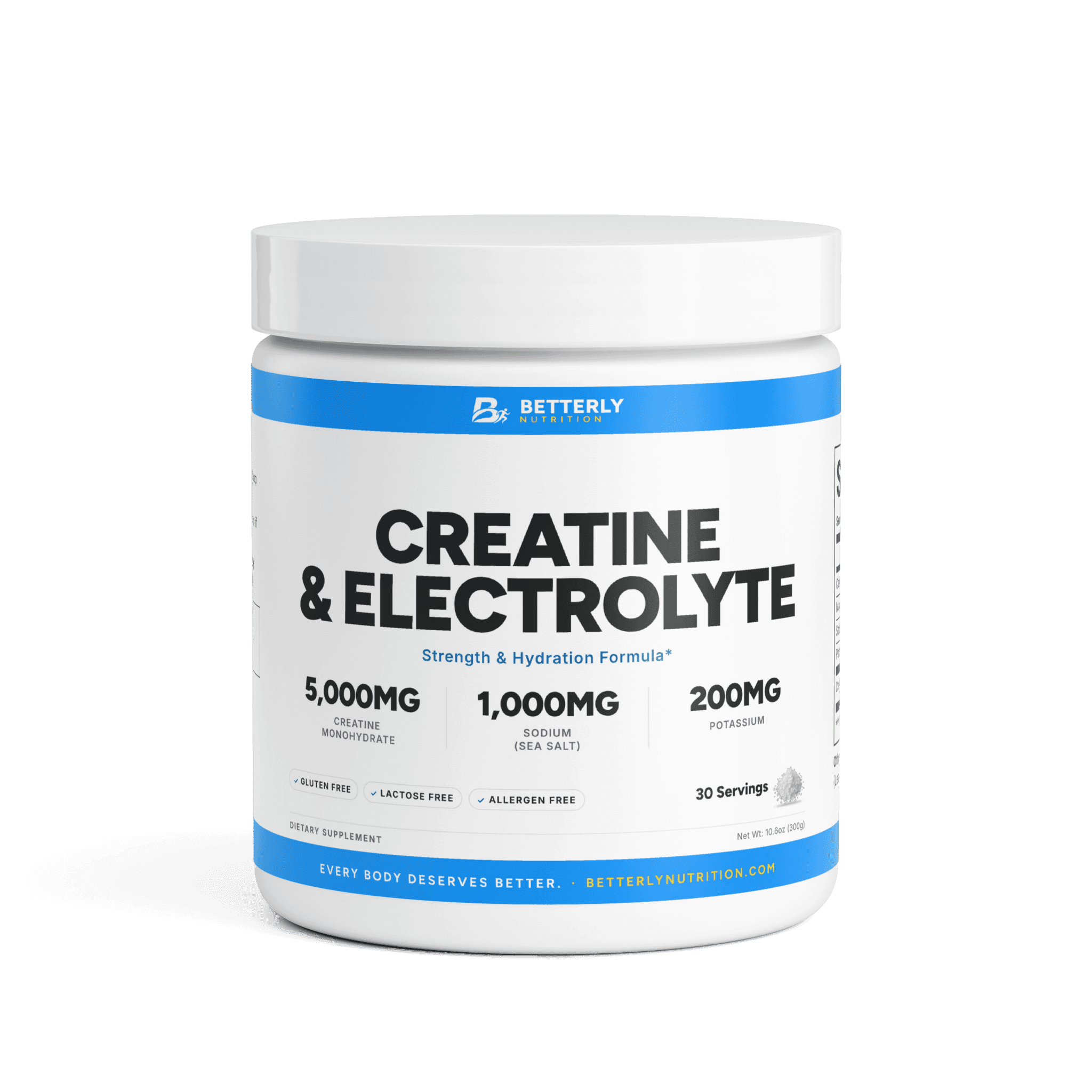
And creatine vs creatine monohydrate? PubChem files them separately: creatine (CID 586) is the compound, and creatine monohydrate (CID 80116) is one form of it. On a panel, the form sits in parentheses, as in "Creatine (as Creatine Monohydrate)" on our 5g Creatine & Electrolyte Powder. A line reading just "creatine" leaves the per-gram math with nothing to plug in.
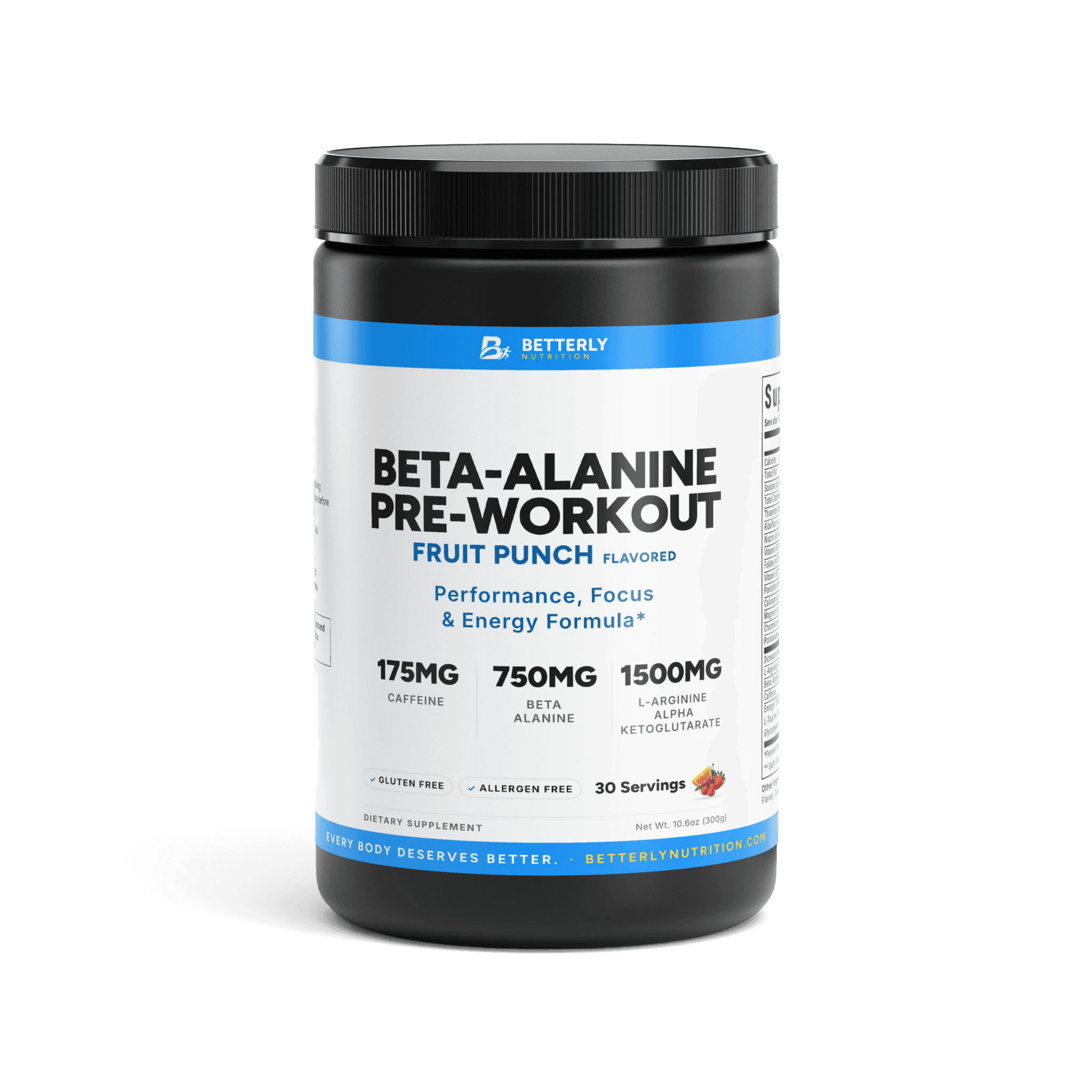
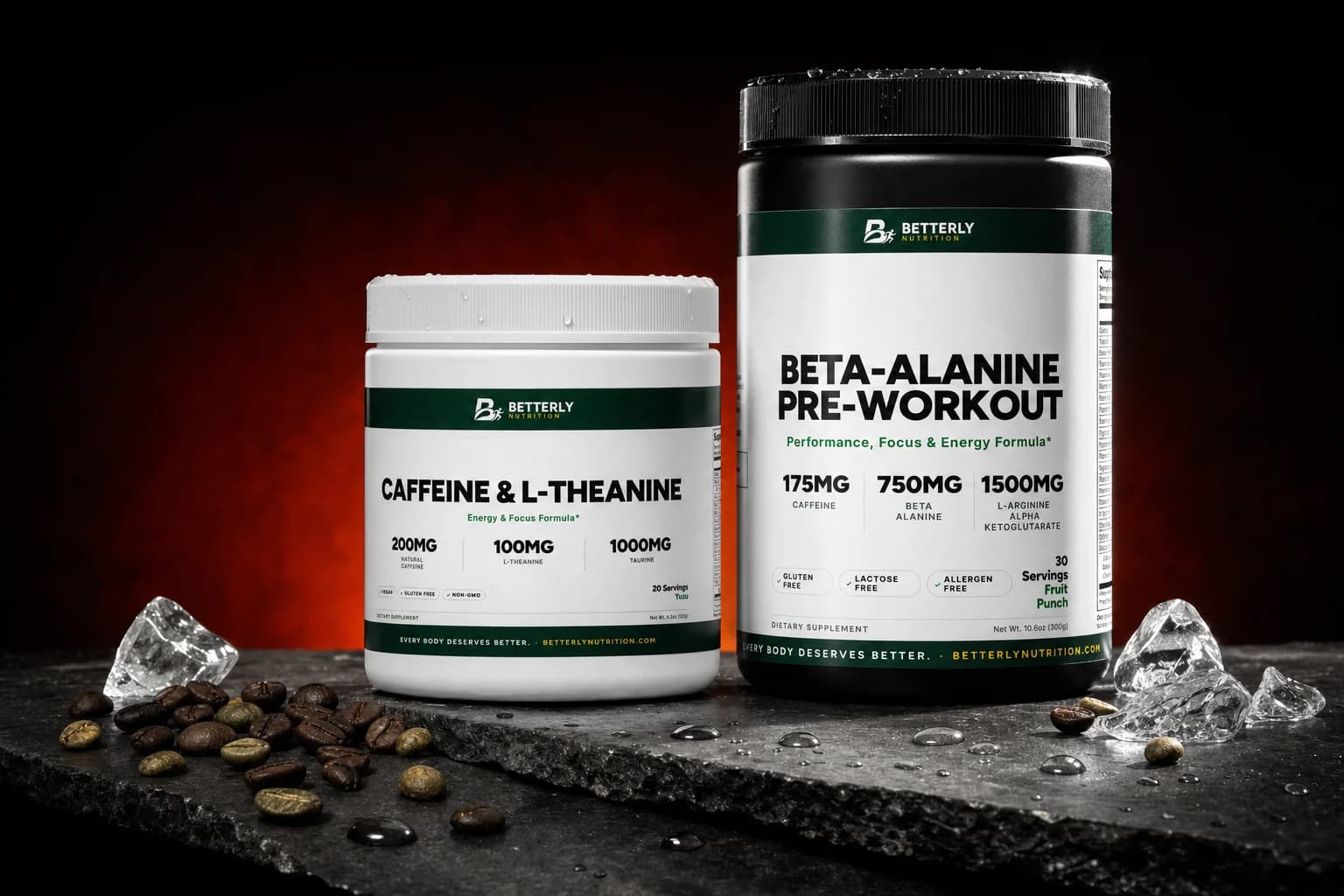
One more form sits on our shelf: the Beta-Alanine & Caffeine Pre-Workout Powder (Fruit Punch) lists 1500 mg of dicreatine malate per 10 g (1 Scoop) serving. Its panel gives no creatine-only figure, so this form stays out of the matched-dose math.
From our shop: Creatine Monohydrate Powder — creatine monohydrate is the only line on its Supplement Facts panel, at 5,000 mg per 1 Scoop (5.6g) serving, with 50 servings a tub.
Does creatine HCl cause less bloating than monohydrate?
Creatine HCl is often pitched as gentler on the stomach, but the ODS consumer fact sheet doesn't compare stomach comfort between creatine forms.
The health professional sheet comes closer: pricier forms like creatine ethyl ester haven't been proven better than monohydrate for digestibility. HCl isn't among its examples, so that's the nearest NIH word on the question, not a test of HCl.
The consumer sheet covers creatine in general. Some weight gain from water retention is usual, it says, and muscle stiffness, cramps and GI distress are rare individual reactions. None of it is tied to a form.
If creatine doesn't sit well with you, talk with a provider before paying more for a different form, since nothing above shows a form change fixes that.
How do you compare the cost of creatine monohydrate vs HCl?
To compare creatine monohydrate vs HCl on cost, convert each tub into doses that hold the creatine of a 5 g monohydrate scoop, then divide the price by that count.
Here's the method for any tub:
- Multiply servings per container by the amount per serving to get the tub's total grams of that form.
- Divide by the grams that match 5 g of monohydrate: 5 for monohydrate or micronized, about 5.6 for HCl, about 4.4 for anhydrous.
- Divide the tub's price by that number of matched doses.
Fifty servings of our Creatine Monohydrate Powder at 5,000 mg is 250 g of monohydrate, or 50 matched doses, so the price divided by 50 is your cost per dose. The 5g Creatine & Electrolyte Powder holds 30 servings, and part of what you pay covers its electrolytes.
Now picture an HCl tub holding 120 g: about 21 matched doses. Sold as 120 servings of 1 g, its per-serving price looks tiny, but the matched-dose price is the fair one.
Both of our tubs sit in the Performance Essentials collection, where live prices appear.
Creatine HCl vs monohydrate dosage: how do our labels read?
The Creatine Monohydrate Powder label loads with four scoops daily for 5 days, then one to two daily, and each scoop holds about 4,400 mg of creatine.
The label's suggested use is to mix one scoop with 8 oz (237 ml) of water or juice, four times daily for the first 5 days, then 1 to 2 times daily, "or as directed by a healthcare professional." In creatine terms, a loading day's four scoops are 20,000 mg of monohydrate, or about 17,600 mg of creatine.
The NIH health professional sheet writes its typical protocol in monohydrate grams: 20 g a day in four 5 g portions for 5 to 7 days, then 3 to 5 g a day. So matching HCl figures would be about 12% heavier, not lighter.
After loading, our label allows one or two scoops a day. The first alone equals the top of that maintenance amount, and the second goes past anything the protocol describes.
Coming from an HCl tub? These steps keep the switch clean:
- Stop the HCl product when you start, rather than taking two creatine forms on the same day.
- Follow the new label from day one. An HCl serving size doesn't carry over, since a gram of each form holds a different amount of creatine.
- Use one of our tubs at a time. Each lists 5,000 mg on its creatine line, so both in one day would double that.
- Want no loading week? The 5g Creatine & Electrolyte Powder label has none: one scoop a day in 6 to 8 oz (177 to 237 ml) of water or another drink.
Neither label ties a scoop to a time of day, and our plain-English creatine guide for beginners covers fitting one into your routine.
From our shop: 5g Creatine & Electrolyte Powder — a stevia-sweetened scoop that pairs 5,000 mg of creatine (as creatine monohydrate) with sea-salt sodium, potassium and magnesium per 1 scoop (10 g) serving, 30 servings a tub.
When is switching creatine forms not worth it?
Switching from creatine monohydrate to HCl makes little sense when monohydrate already mixes and sits well with you, because those are the two problems HCl is sold to solve.
You can skip the switch, or creatine altogether, in a few other cases:
- Your sport is about distance, not bursts. ODS says creatine seems to add little for endurance sports like distance running, and it points to repeated short, all-out efforts like sprints and heavy lifts instead.
- The draw is a clearer glass. Run the matched-dose math first; if HCl costs more per dose, the extra money buys mixability, not more creatine.
- You'd be layering a second form over one you already take. Add up every creatine line, pre-workouts included, before buying more.
If your real question is gummies or pills versus a scoop, that's format, not form. Our creatine gummies vs powder breakdown handles that side.
Who should talk to a doctor before trying any creatine form?
If you're pregnant, nursing, under 18, on prescription medication, facing surgery or managing a medical condition, get a healthcare provider's go-ahead before starting creatine in any form.
That list starts with the caution printed on each of our creatine tubs: "Do not exceed recommended dose. Consult a physician if pregnant, nursing, under 18, or have a medical condition." ODS says performance supplements are mostly for adults, and it asks you to check whether any medication you take could interact with one.
One label-specific note: the 5g Creatine & Electrolyte Powder carries 1,000 mg of sodium (43% DV) per 1 scoop (10 g) serving. If your provider keeps an eye on how much salt you eat, show them that line before choosing it over the plain tub. Our plain guide to electrolytes and when you need them explains what that sodium is there for.
FAQ: creatine monohydrate vs HCl
Is creatine HCl better for women than monohydrate?
No, creatine HCl isn't better for women than monohydrate. Both carry the same creatine molecule, and the NIH health professional sheet describes its typical monohydrate protocol for adults whatever their sex or body size. The consumer sheet notes that much of the research used young healthy men, which means less data on women, not a better form for them. Our guide to creatine for women goes further.
Is creatine HCl safe?
Creatine HCl gets no safety verdict of its own in the NIH's creatine write-ups, so what's known applies to creatine broadly. ODS calls creatine safe for healthy adults across several weeks or months, and says multi-year use also appears safe. Whatever form you choose, stay within the label, and ask a provider before starting if you take medication or manage a medical condition.
Is creatine anhydrous the same as monohydrate?
Yes, creatine anhydrous holds the same creatine as monohydrate, just without the bound water. Going by PubChem's molecular weights, anhydrous is all creatine by weight while monohydrate is about 88%. That's why about 4.4 g of anhydrous matches a 5 g monohydrate scoop.
Does creatine HCl need a loading phase?
Creatine HCl has no single loading rule, so the HCl tub's own directions decide it. For creatine in general, the NIH health professional sheet describes studies that loaded for 5 to 7 days and others that used about 3 to 6 g a day for 3 to 4 weeks without loading. Our Creatine Monohydrate Powder label includes a 5-day loading phase, and our 5g Creatine & Electrolyte Powder label doesn't.
Does creatine HCl dissolve better than monohydrate?
Creatine HCl is marketed as the easier-mixing form, and mixing is a convenience rather than a result. What you get is set by the grams of each form in the serving: a gram of HCl holds about 0.78 g of creatine, against about 0.88 g for monohydrate. A clearer glass doesn't change that arithmetic, so weigh mixability against the matched-dose price.
Sources
- NIH Office of Dietary Supplements: Dietary Supplements for Exercise and Athletic Performance, Fact Sheet for Consumers
- NIH Office of Dietary Supplements: Dietary Supplements for Exercise and Athletic Performance, Fact Sheet for Health Professionals
- PubChem, National Library of Medicine: Creatine (CID 586)
- PubChem, National Library of Medicine: Creatine Monohydrate (CID 80116)
- PubChem, National Library of Medicine: Creatine hydrochloride (CID 134732)
If this left you looking for somewhere to start, read single-ingredient creatine monohydrate powder — its amounts per serving are listed on the page. For the practical questions this raises, how dosing, sourcing and subscriptions work is answered in one place.