On this page
- Key takeaways
- Can you take creatine and electrolytes together in one drink?
- Does creatine need electrolytes to work?
- What are the benefits of creatine with electrolytes?
- Creatine hydration vs monohydrate: what's the difference?
- Plain, blended or two products: which setup fits your week?
- How do you take creatine and electrolytes by the label?
- Is it better to take creatine and electrolytes morning or before bed?
- When don't you need electrolytes with your creatine?
- Who should check with a healthcare provider first?
- FAQ: creatine and electrolytes
- Sources
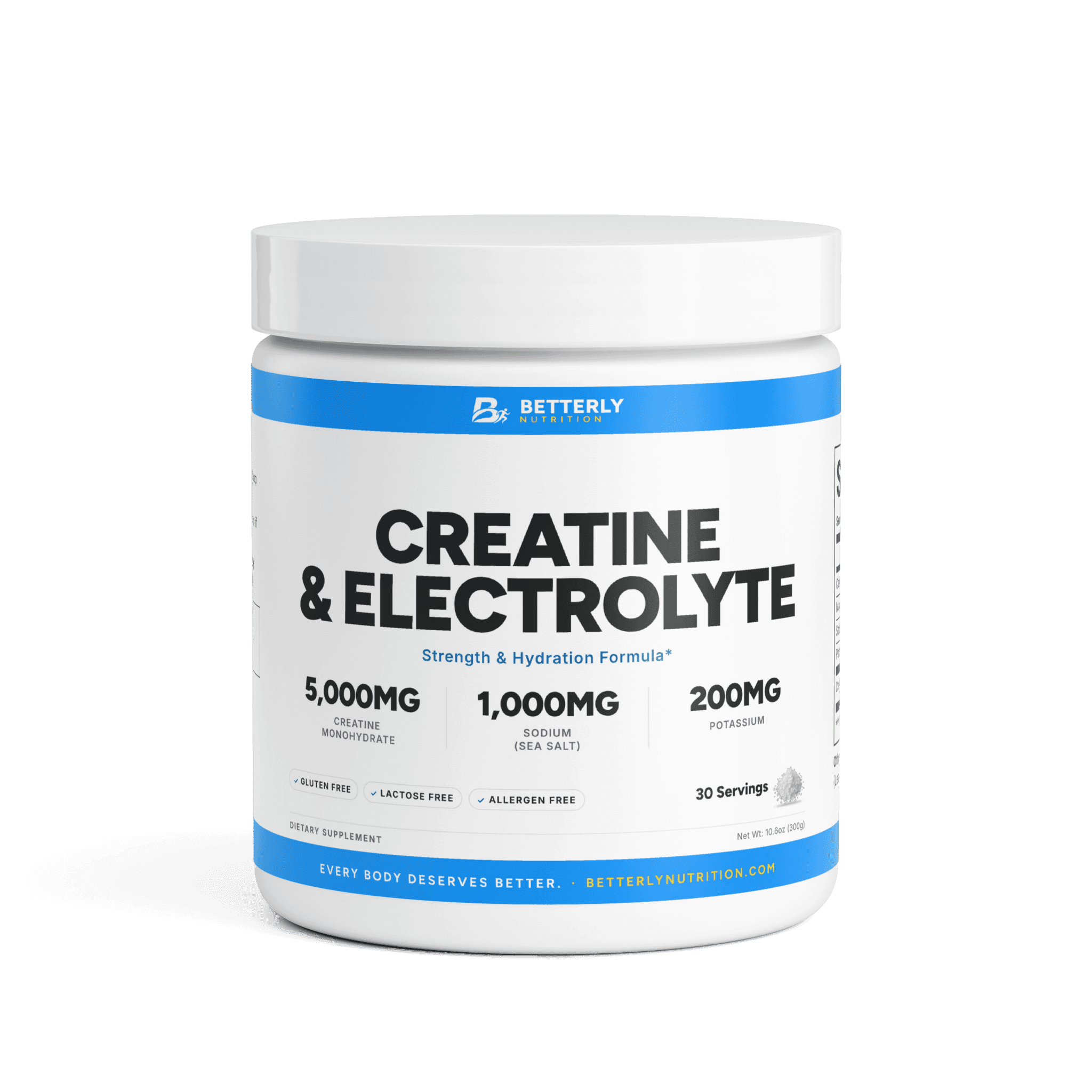
The short answer: Yes, you can take creatine and electrolytes together, either in one blended scoop or as two separate drinks. The honest reasons to pair them are convenience and replacing what you sweat out, not better creatine absorption. Our 5g Creatine & Electrolyte Powder pairs 5,000 mg of creatine monohydrate with 1,000 mg of sodium (43% DV) per 1 scoop (10 g) serving, so it suits heavy sweaters more than quiet desk days.
Key takeaways
- Creatine doesn't need electrolytes to work, and the NIH's fact sheet on performance supplements describes creatine without pairing it with any mineral.
- Betterly's 5g Creatine & Electrolyte Powder lists 1,000 mg of sodium per 1 scoop (10 g) serving, which is 43% of the Daily Value.
- The FDA calls 20% DV or more of sodium per serving high, so the 5g Creatine & Electrolyte Powder makes the most sense on days you sweat hard.
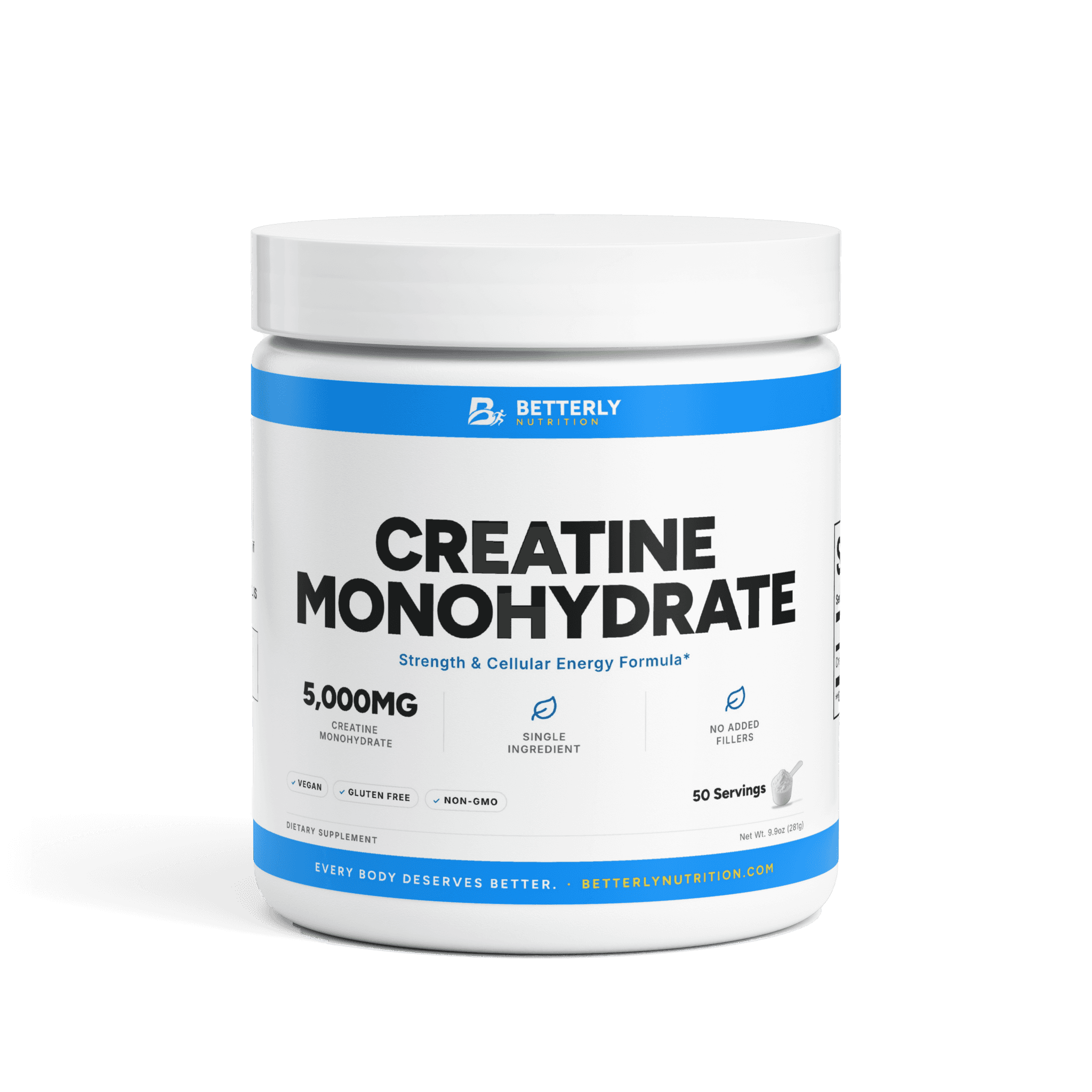
- Plain Creatine Monohydrate Powder gives the same 5,000 mg of creatine per 1 Scoop (5.6g) serving with nothing else on its panel.
- Two separate products let you take creatine daily and add electrolytes only on sweaty days.
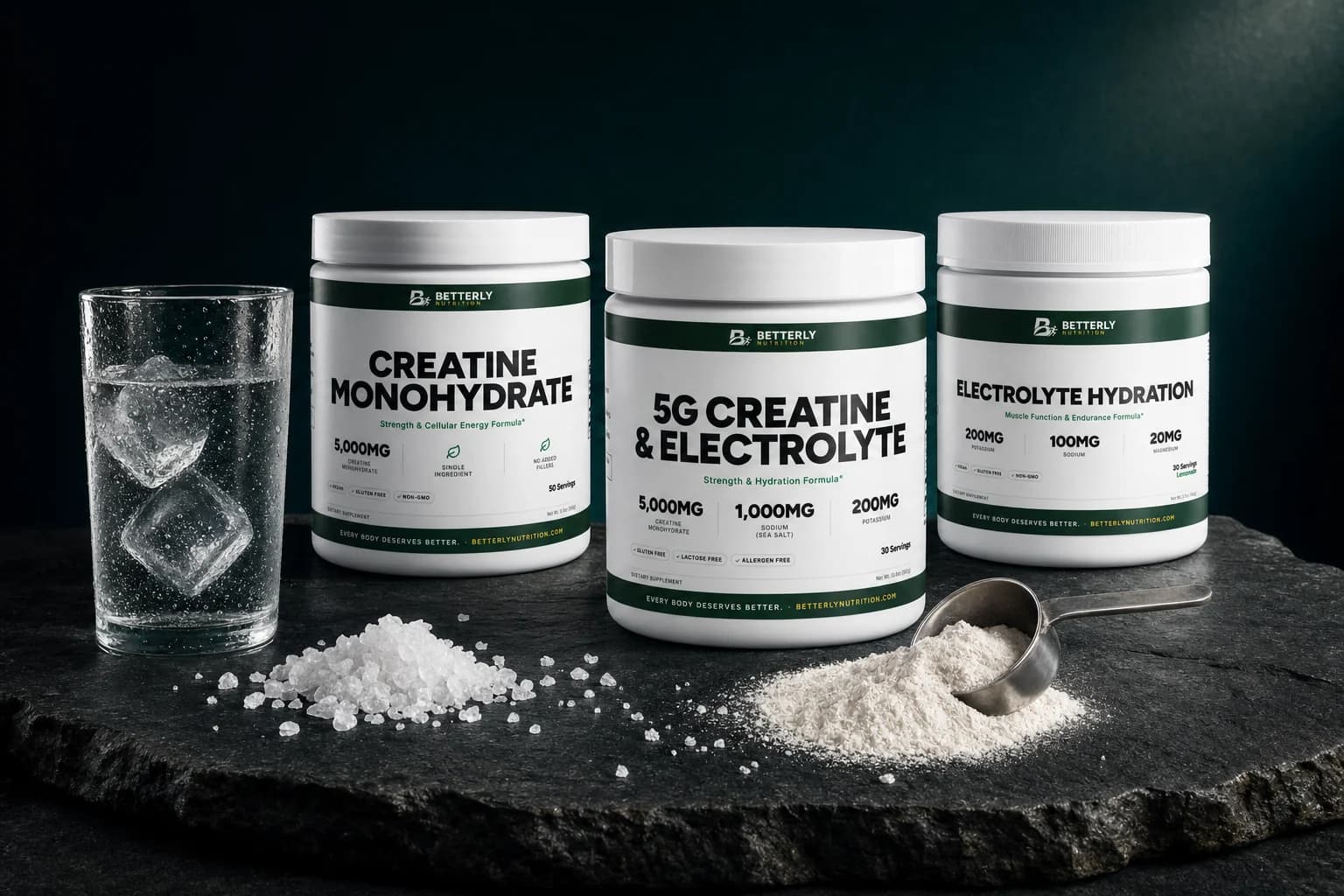
Betterly sells all three tubs compared here, so check us rather than trust us. The sodium row on each Supplement Facts panel is what separates them, and you can read it the same way on any brand's creatine drink.
Can you take creatine and electrolytes together in one drink?
Yes, creatine and electrolytes can share one drink, and the 5g Creatine & Electrolyte Powder is built that way, with a label that allows water or your favorite beverage.
Our 5g Creatine & Electrolyte Powder puts the creatine and the minerals in one scoop. None of our three labels warns against pairing creatine with electrolytes.
Building the pair yourself is different. Our plain Creatine Monohydrate Powder label names water or juice, one scoop to 8 oz (237 ml), so stirring it into a drink made from electrolyte tablets falls outside its directions. Give it its own glass.
The blend's wider wording means a sports drink technically qualifies, but that drink's own sodium, sugar and sometimes caffeine then land on top of the blend's 1,000 mg of sodium.
Does creatine need electrolytes to work?
No, creatine doesn't need added electrolytes to work, and the NIH's creatine guidance never names a mineral as a partner.
The NIH Office of Dietary Supplements' consumer sheet on performance supplements gives creatine a full entry. It says your body makes about 1 gram a day and that beef and salmon add more. It then covers study doses, safety and the training creatine seems to help. Sodium, potassium and magnesium don't appear anywhere in that entry.
Some brand pages say the salt in a creatine drink helps your muscles take the creatine in. The NIH entry doesn't say that, and we don't claim it for our blend. If a label promises better uptake, ask for its source.
What are the benefits of creatine with electrolytes?
The real benefits of creatine with electrolytes are one scoop instead of two and a meaningful sodium top-up on heavy-sweat days. Better creatine uptake isn't on the list.
Here's what each row on the 5g Creatine & Electrolyte Powder panel brings, per 1 scoop (10 g) serving:
- Creatine (as Creatine Monohydrate): 5,000 mg, the same form and amount as our plain tub.
- Sodium (as Sea Salt): 1,000 mg, or 43% DV. This is the number that defines the product.
- Potassium (as Potassium Chloride): 200 mg, or 4% DV. That's a small share of the 3,400 mg (men) and 2,600 mg (women) a day that the NIH's potassium fact sheet lists for adults.
- Magnesium (as Magnesium Malate): 60 mg, or 14% DV.
- Calories: 22 Kcal, with natural flavors, stevia leaf extract and silicon dioxide as the other ingredients.
The FDA's page on sodium in your diet says the body needs sodium "in relatively small amounts (provided that substantial sweating does not occur)." That parenthesis is the whole case for a salty creatine drink.
MedlinePlus on fluid and electrolyte balance agrees from another angle. It lists heavy sweating, and too little fluid during intense exercise or hot weather, among common reasons electrolyte levels change.
One mismatch matters for long cardio. The sessions that soak a shirt, like a hot run or ride, are the kind the NIH sheet gives creatine little credit for, so on those days the blend's sodium row is the part that matches the session.
Creatine hydration vs monohydrate: what's the difference?
A creatine hydration powder and a plain creatine monohydrate powder can hold the very same creatine. "Creatine hydration" describes a blend, not a new form of creatine.
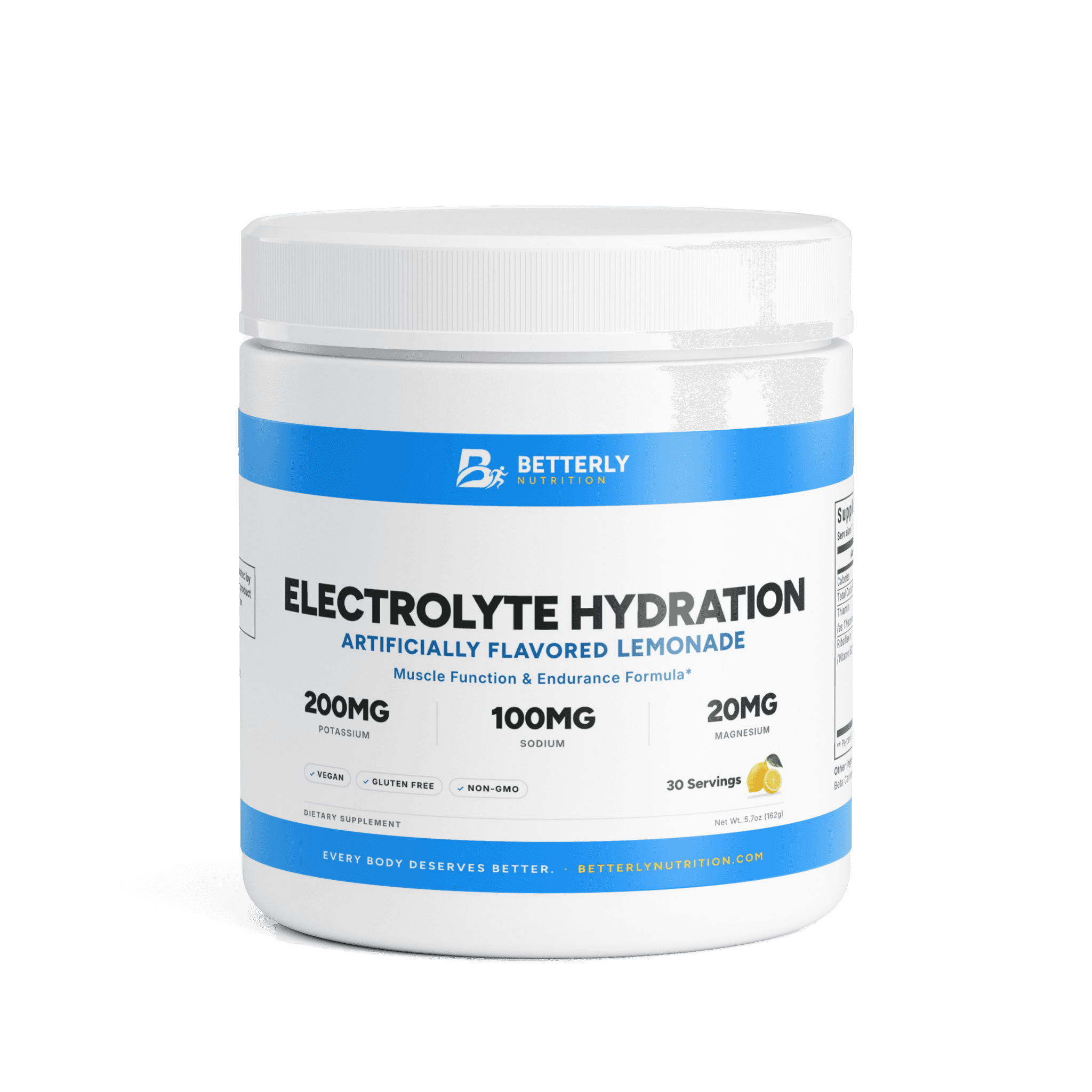
Our two creatine tubs both read 5,000 mg of creatine monohydrate. What changes is sodium, flavor, sweetener and scoop size. A third route pairs plain creatine with our Electrolyte Hydration Powder (Lemonade), which has no creatine.
| Setup | Creatine | Sodium | What else comes along |
|---|---|---|---|
| Plain creatine, 1 Scoop (5.6g) | 5,000 mg | None listed | Nothing; no other ingredients |
| The blend, 1 scoop (10 g) | 5,000 mg | 1,000 mg (43% DV) | 200 mg potassium, 60 mg magnesium, stevia |
| Plain creatine + 1 Scoop (5.4g) lemonade mix | 5,000 mg | 100 mg (4% DV) | 200 mg potassium, 20 mg magnesium, 40 mg calcium, seven B vitamins, sucralose |
Every route lands on the same 5,000 mg of creatine, so the real choice is sodium. The blend carries ten times the sodium of one lemonade scoop. It's even double what five lemonade scoops add up to, and five is that label's daily maximum.
Plain, blended or two products: which setup fits your week?
The 5g Creatine & Electrolyte Powder fits people who sweat hard most days. Plain creatine fits light sweaters, and a separate electrolyte mix suits anyone whose sweat changes day to day.
Creatine is a daily habit, but heavy sweat usually isn't. Here's the sodium each setup adds over a week with three hard training days and four rest days.
| Weekly setup | Training days (3) | Rest days (4) | Sodium from scoops |
|---|---|---|---|
| The blend every day | 3,000 mg | 4,000 mg | 7,000 mg |
| Blend on training days, plain on rest days | 3,000 mg | 0 mg | 3,000 mg |
| Plain daily + 2 lemonade scoops on training days | 600 mg | 0 mg | 600 mg |
| Plain creatine only | 0 mg | 0 mg | 0 mg |
Every row gives you the same daily creatine. But more than half of the blend-every-day total arrives on rest days, when you aren't sweating it back out. So:
- You're soaked after most sessions, most days. The blend earns its sodium.
- You train hard two or three times a week. Keeping both tubs lets the salt follow the sweat.
- You lift in a cool gym and sit at a desk. Plain creatine is enough.
- A clinician has asked you to limit sodium. Choose plain, and ask before adding any electrolyte mix.
Our Performance Essentials collection has all three tubs side by side.
From our shop: 5g Creatine & Electrolyte Powder — each 1 scoop (10 g) serving covers 5,000 mg of creatine monohydrate plus a 1,000 mg sodium top-up for sweaty training days.
How do you take creatine and electrolytes by the label?
Take the 5g Creatine & Electrolyte Powder as one scoop in 6-8 oz of liquid once a day, and follow each tub's own directions if you use two.
The blend's suggested use is for adults to mix one (1) scoop with 6-8 oz (177-237 ml) of water or favorite beverage daily. Its caution panel adds: "Do not exceed recommended dose." There's no loading phase on this label.
Don't borrow the plain tub's loading week for the blend. Following that schedule with the blend would mean 4,000 mg of sodium a day for 5 days, 1,700 mg a day over the 2,300 mg limit the FDA cites, before food adds any.
Our Creatine Monohydrate Powder reads differently. Its label says to mix one scoop with 8 oz (237ml) of water or juice, four times a day for the first 5 days as a loading phase, then one or two times a day after that.
In the studies the NIH describes, a typical loading dose was about 20 grams a day, split into four equal portions for 5 to 7 days, followed by 3 to 5 grams a day. One scoop matches the top of that range, while a second daily scoop goes past it, so one is our pick. Our beginner's guide to creatine weighs whether the loading week is worth it.
The lemonade mix's label calls for 1 scoop with 14–20 fl oz (414–591 mL) of water, or 2 scoops with double the water. Its caution says "Do not exceed 5 scoops daily."
Using two products on the same day means two drinks, since neither the plain creatine label nor the lemonade label mentions sharing a bottle. Add up sodium across everything you mix, too. The blend plus one lemonade scoop is 1,100 mg, with no food counted yet.
Is it better to take creatine and electrolytes morning or before bed?
Our creatine labels set scoops per day, not hours, so take the 5g Creatine & Electrolyte Powder near when you sweat, since that's when its sodium has losses to replace.
Taking creatine and electrolytes first thing in the morning fits people who train early. If your workout comes after work, though, the blend's sodium lands hours before the sweat does.
Creatine and electrolytes before bed is the blend's weakest slot. A full glass right before lights-out can mean a 3 a.m. bathroom trip, and on an evening with no sweat, 1,000 mg of sodium arrives when there's nothing to replace.
Around a sweaty session is where the blend makes the most sense. The label doesn't pick before or after, so either side of your workout fits its directions. Our guide on what to take after a workout covers where fluids and protein fit around the same session.
When don't you need electrolytes with your creatine?
You don't need electrolytes with creatine on low-sweat days, when your meals already carry plenty of salt, or when you're already drinking another electrolyte product.
Skip the blend, or at least question it, when:
- It's a rest day, a desk day or a short session that leaves your shirt dry.
- You eat salty food most days. The FDA says Americans already average about 3,400 mg of sodium a day, above the 2,300 mg limit it cites for adults.
- You already use a sports drink or electrolyte mix, which would stack more sodium on top.
- You only want the creatine. Plain gets you the same 5,000 mg.
If the scale nudges up after you start creatine, don't read it as a cue for more salt. The NIH sheet ties that to the extra water creatine keeps in your body, not to sodium. Our guide on whether creatine dehydrates you takes on the fluid question, and our guide to choosing a hydration powder shows how sodium varies across electrolyte mixes.
From our shop: Creatine Monohydrate Powder — no sodium row at all, just 5,000 mg of creatine monohydrate per 1 Scoop (5.6g) serving for the days you'd rather skip the salt.
Who should check with a healthcare provider first?
Anyone pregnant or nursing, under 18, on prescription medication, or managing a medical condition should get a healthcare provider's okay before taking creatine and electrolytes.
Both creatine tubs tell you to consult a physician if you're pregnant, nursing, under 18 or have a medical condition. The lemonade label's list swaps under 18 for taking medication. A few more reasons to ask first:
- A clinician has asked you to limit sodium or potassium. One scoop of the blend is 43% of the sodium Daily Value on its own.
- You take prescription medication. The NIH potassium fact sheet says some medications may interact with potassium, so bring the labels to your pharmacist.
- You have surgery coming up. Mention every supplement you take.
- You're a teen athlete. The blend's directions are written for adults, and the NIH performance sheet names teenagers among the people who should talk to an expert first.
- You notice an unusual reaction after starting creatine. The NIH sheet does list rare individual ones, so stop and call a provider rather than adding more salt or scoops.
FAQ: creatine and electrolytes
Are creatine and electrolyte packets better than a tub?
No, creatine and electrolyte packets aren't better by format alone. A packet is pre-measured, while a tub asks you to scoop. What counts is the panel on either one: grams of creatine per serving and the sodium row. Our 5g Creatine & Electrolyte Powder comes as a 30-serving tub, and each 1 scoop (10 g) serving holds 5,000 mg of creatine and 1,000 mg of sodium.
Does creatine monohydrate have electrolytes in it?
No, plain creatine monohydrate has no electrolytes of its own. Our Creatine Monohydrate Powder panel has a single row, 5,000 mg of creatine monohydrate per 1 Scoop (5.6g) serving, and no other ingredients line. A creatine powder that lists sodium, potassium or magnesium has added those minerals on purpose, and its panel shows exactly how much.
Can you take creatine with electrolytes on rest days?
Yes, you can take creatine with electrolytes on rest days, but that's where the two halves split apart. The 5g Creatine & Electrolyte Powder label says one scoop daily, so a rest day still brings 1,000 mg of sodium. If that's more salt than a quiet day needs, plain creatine keeps your routine going, and electrolytes can wait for the next sweaty session.
Can you take creatine with electrolytes and vitamins?
Yes, you can cover creatine, electrolytes and B vitamins by pairing two of our tubs, since none has all three. The 5g Creatine & Electrolyte Powder lists no vitamins. The Electrolyte Hydration Powder (Lemonade) adds seven B vitamins at 33% DV each per 1 Scoop (5.4g) serving, plus 100 mg of sodium, while plain Creatine Monohydrate Powder brings the 5,000 mg of creatine. If you take a multivitamin, count its B vitamins too.
Is it safe to take creatine and electrolytes every day?
Yes, for healthy adults the NIH calls creatine safe for several weeks or months, but the blend's sodium is the part to budget daily. At 1,000 mg of sodium per scoop, the blend uses 43% of the Daily Value before you eat anything, and the FDA says Americans already average about 3,400 mg a day. Daily use suits people who sweat daily.
Sources
- NIH Office of Dietary Supplements: Dietary Supplements for Exercise and Athletic Performance, Fact Sheet for Consumers
- NIH Office of Dietary Supplements: Potassium, Fact Sheet for Consumers
- U.S. Food and Drug Administration: Sodium in Your Diet
- MedlinePlus: Fluid and Electrolyte Balance
If this left you looking for somewhere to start, read creatine and electrolyte powder with 5 g of creatine per scoop — its amounts per serving are listed on the page. For the practical questions this raises, how dosing, sourcing and subscriptions work is answered in one place.