On this page
- Key takeaways
- Is creatine good for runners, or only for sprinters?
- Which running workouts does creatine actually fit?
- Does creatine help endurance athletes and cyclists?
- Is creatine worth it for marathon runners?
- When should runners take creatine?
- Which creatine tub fits a summer of long runs?
- Which creatine side effects matter most for runners?
- When don't runners need creatine?
- Who should check with a healthcare provider first?
- FAQ: creatine for runners
- Sources
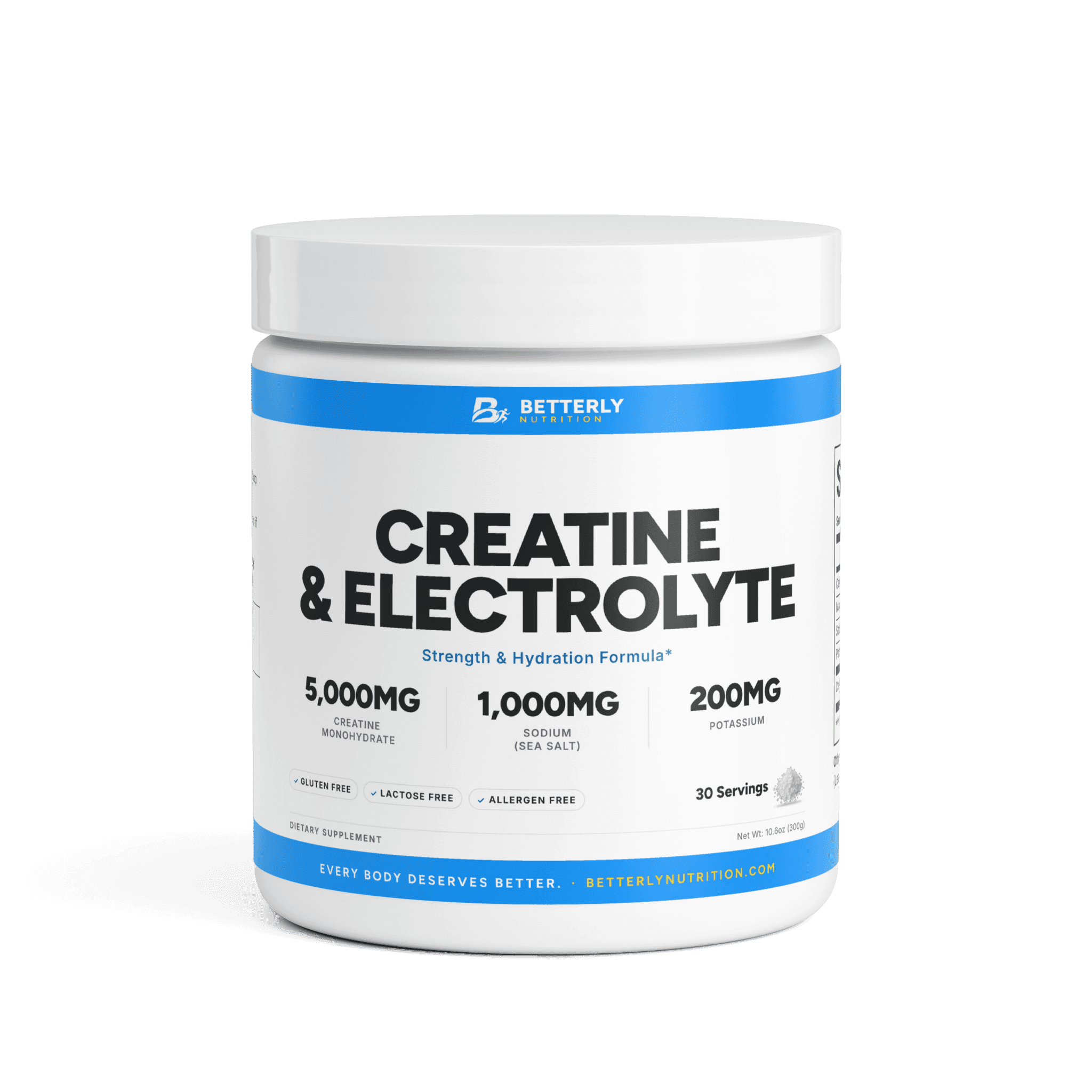
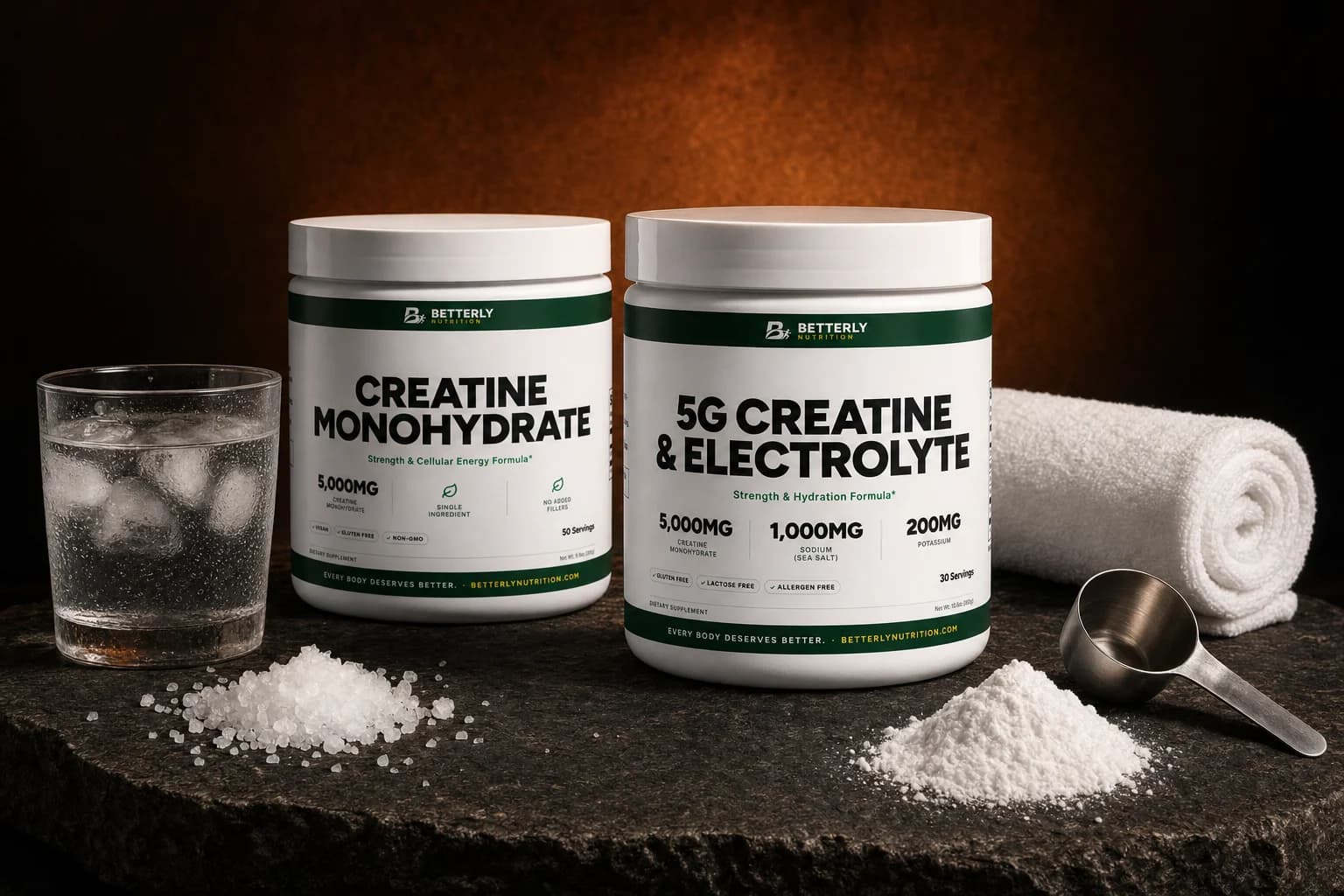
The short answer: The NIH Office of Dietary Supplements says creatine helps performance in repeated hard efforts of up to about 2.5 minutes and sees little value for distance running. So creatine for runners belongs with hills, strides and lifting. The trade-off, per the NIH, is 1 to 2 kg of scale weight in a month alongside strength training. Our 5g Creatine & Electrolyte Powder holds 5,000 mg of creatine per 1 scoop (10 g) serving.
Key takeaways
- According to the NIH, creatine does its best work in repeated hard efforts of 2.5 minutes or less, the kind found in sprints and weight rooms.
- Creatine can move the scale: the NIH reports 1 to 2 kg (2.2 to 4.4 lb) gained within a month by people pairing it with strength training, so time it well before a goal race.
- The 5g Creatine & Electrolyte Powder isn't running fuel, since its label shows 22 Kcal and no carbohydrate row per 1 scoop (10 g) serving.
- Runners who want creatine should start it weeks before a training block, never during race week.
Full disclosure: Betterly sells creatine, and a tub earns us the same whether you race the 400 m or the marathon. So a good share of this guide covers the runners who can skip it, and any product number you see is read off our own labels.
Is creatine good for runners, or only for sprinters?
Creatine is good for the sprint-like slices of a runner's week, not the steady miles, because the energy system it feeds powers brief, all-out efforts.
Your muscles store creatine as phosphocreatine, a fast reserve that helps rebuild ATP, the molecule muscles spend as energy. The NIH Office of Dietary Supplements' professional fact sheet on athletic performance says this system matters most at the start of intense exercise and in short events.
Past roughly 150 seconds of mainly aerobic work, the same sheet says, oxidative phosphorylation becomes the body's main energy source. That pathway doesn't need creatine, and it's where distance runners spend nearly all their time.
Which running workouts does creatine actually fit?
Creatine fits workouts built from hard reps with short recoveries, like strides, hill sprints, short track repeats and strength sessions, and adds little to tempo, easy or long runs.
The NIH's consumer guide to athletic performance supplements puts a number on "short": bursts of intense, intermittent activity lasting up to about 2.5 minutes at a time. Here's how a typical running week lines up against that line.
| Session | What the effort looks like | Inside the NIH's 2.5-minute window? |
|---|---|---|
| Strides and hill sprints | 10 to 30 seconds fast, full rest | Yes |
| 200 m to 400 m repeats | Hard reps well under 2.5 minutes | Yes |
| Gym strength work | Short sets of heavy lifts | Yes |
| 800 m to mile repeats | Roughly 2 to 8 minutes per rep | Partly, only the shorter reps |
| Tempo and threshold runs | 20 minutes or more of steady, hard running | No |
| Easy runs and long runs | Aerobic miles at a conversational pace | No |
Read the table as a share of your week. If two weekly runs include hills or strides and you lift twice, creatine touches a real slice of your training. If every run is easy mileage, it has almost nothing to work on.
A "Yes" is a match on effort length only. The NIH's examples are sprinting and weightlifting, and its consumer sheet warns that a study in weightlifters might not apply to a distance runner.
The gym matters too. The NIH says creatine taken over weeks or months helps training adaptations to structured, increasing workloads, and its example is strength testing in female college soccer players.
Does creatine help endurance athletes and cyclists?
Creatine does little for steady endurance work, and the NIH puts long runs, rides and swims in the category where its value looks small.
A cyclist's scoop isn't useless, though. The NIH's health professional sheet cites short-term studies where creatine often increased power in cycling. Picture a sprint for a town-line sign or a punchy one-minute climb, not a three-hour ride.
Weight counts here too. A cyclist hauls every extra pound up every climb, and the NIH flags creatine's added weight as a possible drag in endurance sports. Riders after a bottle mix will find creatine-free electrolyte powders in our performance collection.
Is creatine worth it for marathon runners?
For the marathon itself, creatine isn't worth much, since the race is almost entirely aerobic and the NIH warns its weight gain might impede endurance performance.
Here's the number to weigh: in several strength-training studies the NIH cites, total body weight climbed 1 to 2 kg in a month on creatine monohydrate. That's 2.2 to 4.4 lb, which the NIH puts down to extra water held in the body and possibly some new muscle protein.
On a 130 lb runner, that gain works out to roughly 1.7% to 3.4% of body weight, carried for all 26.2 miles. The NIH doesn't put a race-time figure on that, and we won't either.
The training block is a different story. One sensible pattern is to use creatine during base and strength-focused weeks, then decide before your race block whether the scale change bothers you.
When should runners take creatine?
Runners should start creatine weeks before a training block, never during race week, and neither of our creatine labels sets a time of day, only scoops per day.
The NIH describes two ways to begin, and each of our creatine labels follows one:
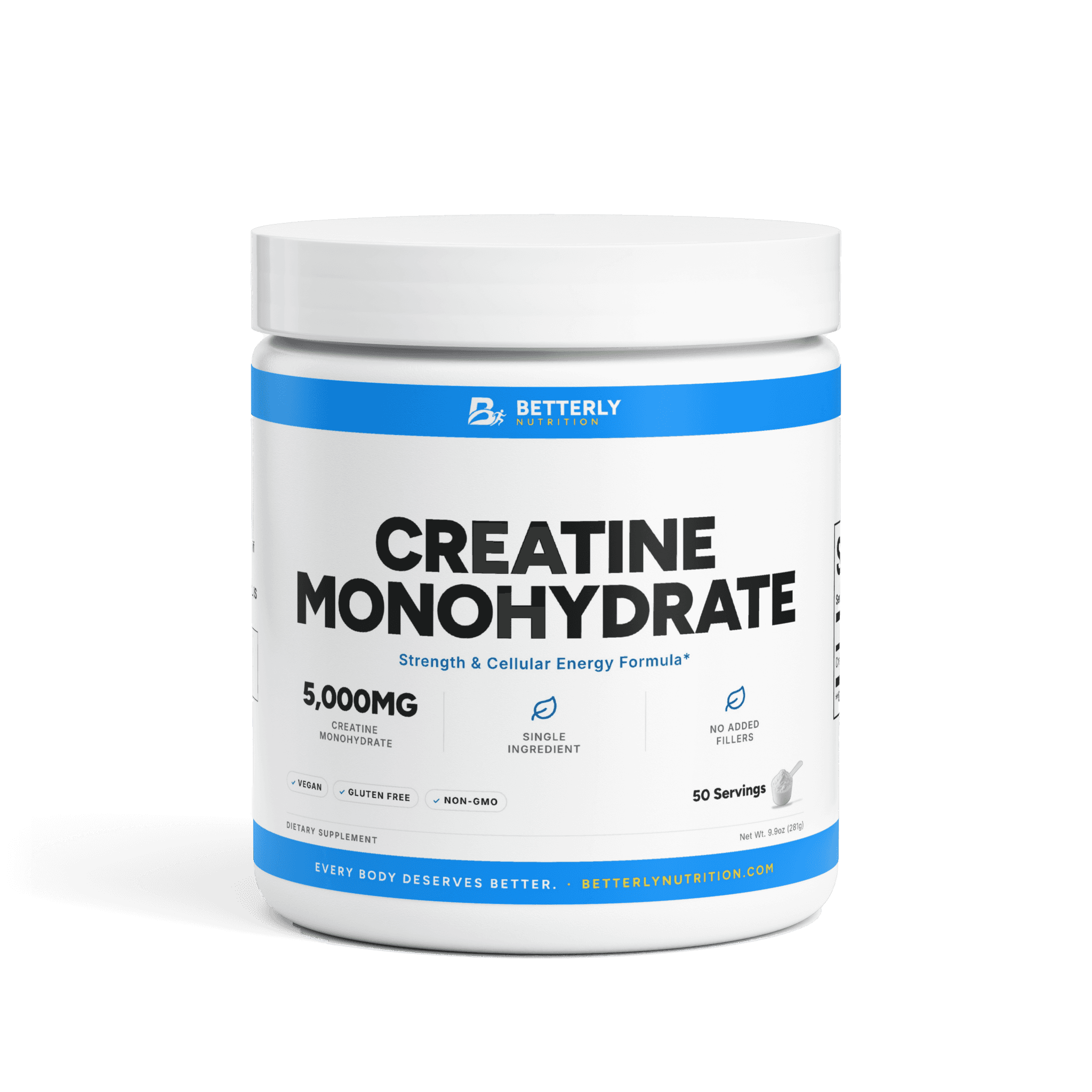
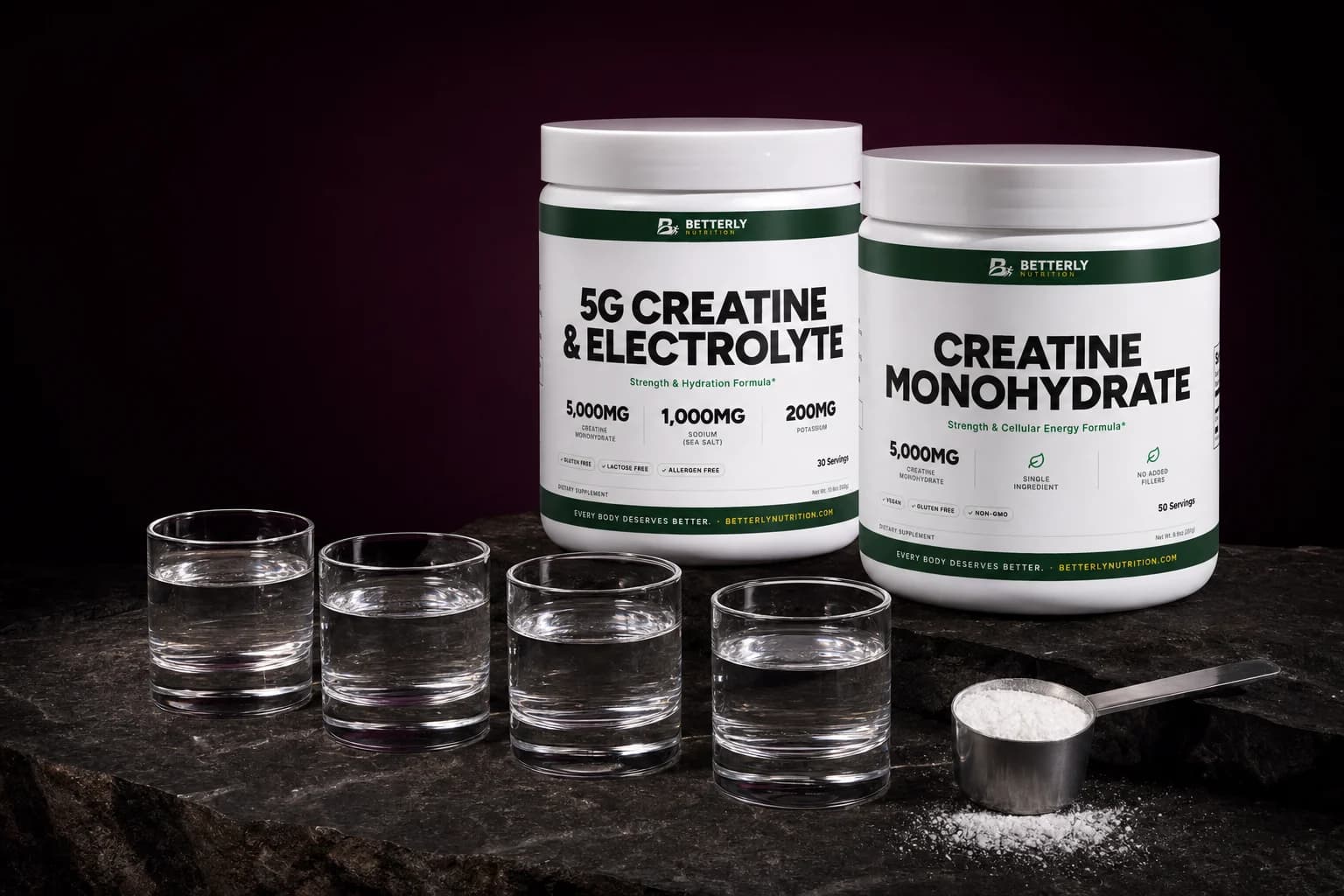
- The loading route. The label on our Creatine Monohydrate Powder suggests one scoop in 8 oz (237ml) of water or juice, taken four times daily for the first 5 days (the loading phase) and 1-2 times daily after that. Four scoops at 5,000 mg per 1 Scoop (5.6g) serving add up to 20 g a day, which lines up with the NIH's typical loading phase of four 5 g portions a day for 5 to 7 days.
- The steady route. The 5g Creatine & Electrolyte Powder label has adults mix one scoop with 6-8 oz (177-237ml) of water or favorite beverage daily and never mentions loading. That matches the NIH's other protocol, about 3 to 6 g a day for 3 to 4 weeks, with a 5,000 mg scoop sitting inside the range.
Plan backward from the first hard workout of your block. On the steady route, start about a month ahead, during easy base weeks. On the loading route, put the 5 loading days in a light week. Either way, get the scale change behind you before the sessions that count.
When loading ends, the NIH's usual maintenance range is 3 to 5 g a day. One plain scoop holds 5,000 mg of creatine monohydrate per 1 Scoop (5.6g) serving, so the second daily scoop the label permits (10 g a day) would push you past that range. Nothing in the NIH's protocols ties the amount to mileage, so a big training week doesn't call for extra. We'd stay at one.
Before or after a run? The NIH writes its protocols in grams per day, not minutes before exercise, so pick a slot you'll keep.
Which creatine tub fits a summer of long runs?
For long, sweaty summer runs, the 5g Creatine & Electrolyte Powder is the tub to consider, since each scoop adds 1,000 mg of sodium from sea salt.
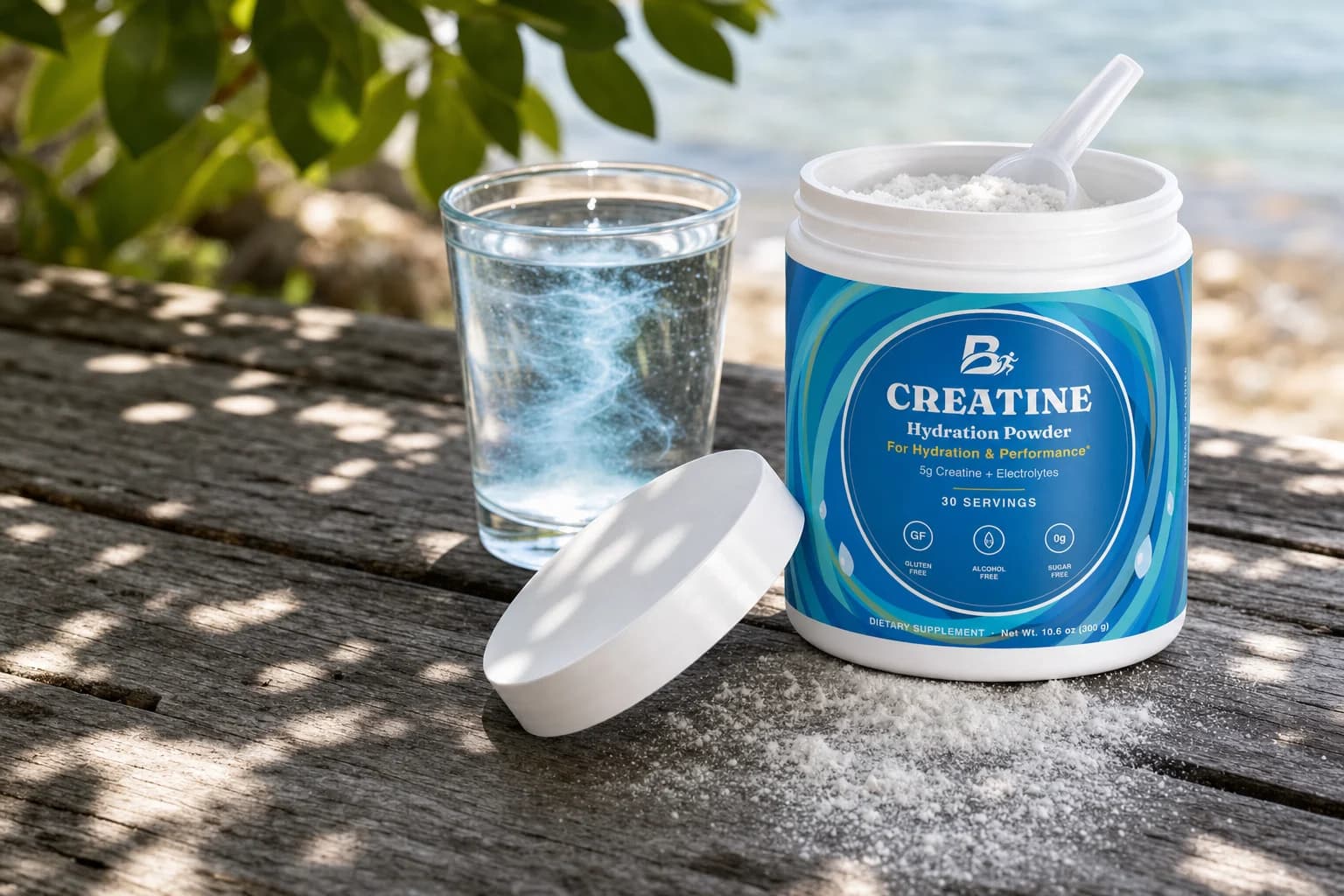
Swap tubs and the creatine doesn't change: both of our labels read 5,000 mg. What you're really choosing between is the salt.
Long runs that end with a salt-crusted cap are what the blend is built around. If most of your miles are short, shaded or done before sunrise, the plain tub is the simpler pick.
Don't count the blend as running fuel, though. It lists 22 Kcal per serving and no carbohydrate row, so keep your usual gels, chews or snacks for a two-hour run.
Its directions also make it a poor bottle to sip for miles. The label has adults mix one scoop with 6-8 oz of liquid daily, which is one small glass. On hot days, that glass fits best after the run, once you've actually sweated.
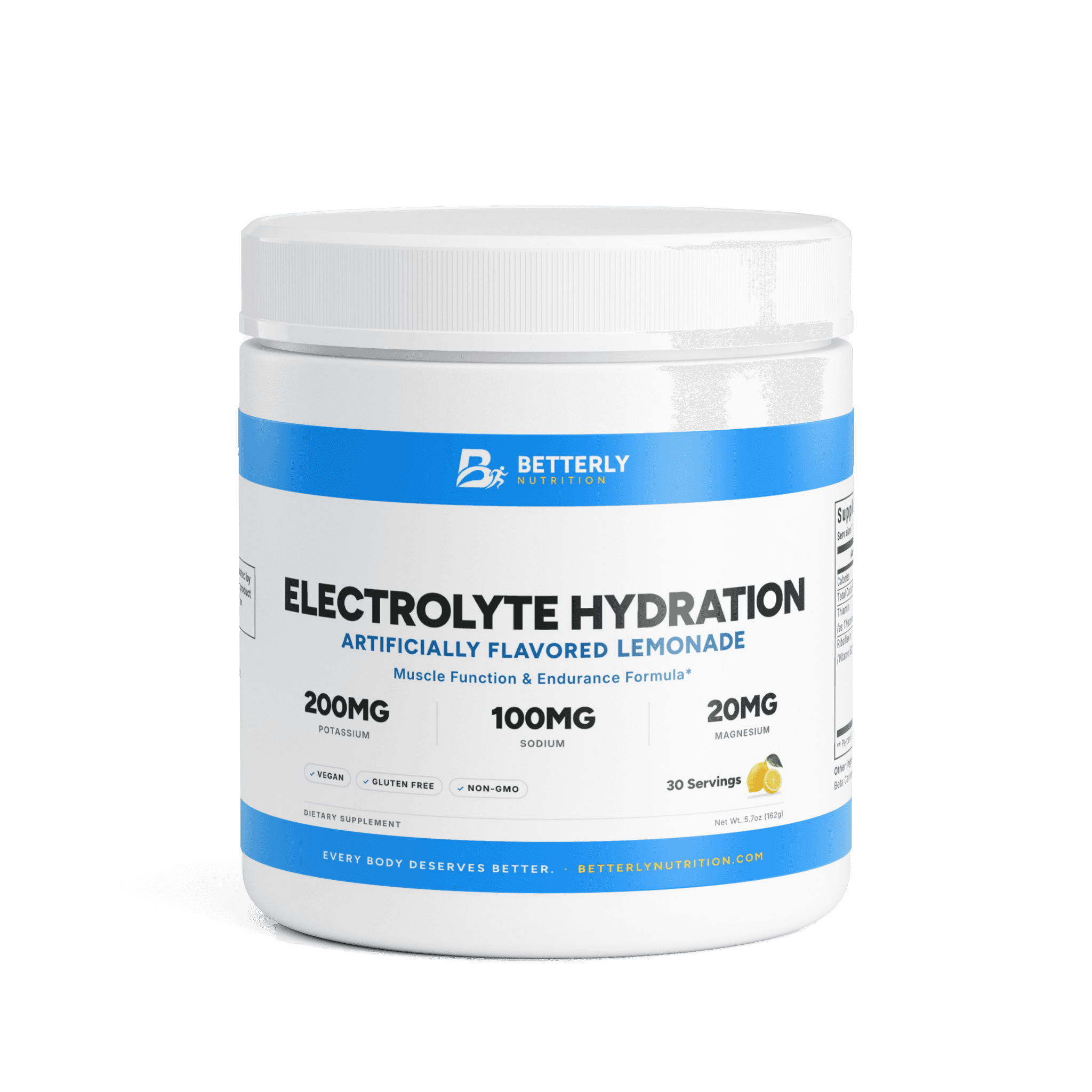
For a second drink later in the day, our Electrolyte Hydration Powder (Lemonade) holds no creatine. Its label lists 100 mg of sodium per 1 Scoop (5.4g) serving, mixed with 14-20 fl oz of water, and caps use at 5 scoops a day. With 10 kcal and 2 g of total carbohydrates per serving, it isn't fuel either.
From our shop: 5g Creatine & Electrolyte Powder — a once-daily scoop for hot-weather training, with each 1 scoop (10 g) serving listing 1,000 mg of sodium (as sea salt) beside 5,000 mg of creatine.
Which creatine side effects matter most for runners?
For runners, the creatine side effects worth watching are water weight before a race, stiffness in the ankles and lower legs, and hot runs feeling harder.
Start with your lower legs. Of the body parts the NIH's health professional sheet lists for possible lost range of motion, the ankles and lower legs are the ones a runner leans on hardest, and it adds that muscles may stiffen and resist stretching. If your calves or ankles feel unusually tight in the weeks after you start, stop and talk with your healthcare provider rather than running through it.
Heat comes next. Heat intolerance sits on the sheet's list of anecdotal reactions to creatine, and it matters more to someone logging July miles than to someone lifting indoors. If summer runs suddenly feel much harder after you start, stop and ask rather than pushing on. The sheet adds one precaution: adequate hydration, which it says "might minimize these uncommon risks."
Water weight is the effect the NIH says happens often, and the marathon section has the numbers. Our full rundown of creatine side effects covers the rest, including stomach upset and cramps.
When don't runners need creatine?
Runners don't need creatine if they only run easy aerobic miles, are close to a goal race, compete under drug testing, or would rather skip the scale change.
Hold off for now if:
- All your running is easy mileage, with no strides, hills, track work or lifting.
- You're in a goal marathon or half marathon build, and 2.2 to 4.4 lb mid-block bothers you.
- Your race is only a few weeks away, which is the worst time for new weight and a new product.
- You race in college or in other drug-tested events. The NIH consumer sheet passes along an FDA warning that some performance products hold unlabeled banned ingredients, which can get an athlete disqualified. Before a tested season, check any tub you're considering on the sites of the certifiers the sheet names: NSF's Certified for Sport, Informed-Choice and the Banned Substances Control Group. Neither of our creatine tubs carries one of their certifications.
- Your runs are mostly short and cool, so the blend's salt has little sweat to replace. That argues against the blend, not creatine itself.
From our shop: Creatine Monohydrate Powder — a vegan-labeled tub whose panel lists only creatine monohydrate, 5,000 mg per 1 Scoop (5.6g) serving, for runners who get their salt from meals and their own drinks.
Who should check with a healthcare provider first?
A runner who is pregnant, nursing, under 18, taking a prescription or managing any medical condition should clear creatine with a healthcare provider before the first scoop.
The two creatine labels say to consult a physician if pregnant, nursing, under 18 or managing a medical condition, and the lemonade label lists pregnancy, nursing, taking medication or a medical condition. It's also worth asking first if:
- Your provider wants you keeping salt down. The blend lists 1,000 mg of sodium per 1 scoop (10 g) serving, while the FDA's consumer page on dietary sodium sets the Daily Value for a full day at less than 2,300 mg.
- You're on a prescription. Medicines and performance products can interact, per the NIH consumer sheet, so let a pharmacist compare the panel with your prescriptions.
- A provider has raised your kidney function with you. Per the NIH sheet, spent creatine ends up as creatinine, and your kidneys are what clear it from the body.
- You have surgery on the calendar.
- You're a high school runner. The NIH sheet reserves performance supplements for adults in most cases, so start with a pediatrician, plus a coach who knows sports medicine.
FAQ: creatine for runners
Is creatine good for female runners?
Yes, creatine can suit female runners on the same label directions as anyone else, because the NIH's typical adult protocol doesn't change with sex. The runner's catch is proportion. If a 120 lb runner gained the 1 to 2 kg the NIH describes, that would be about 1.8% to 3.7% of body weight, so start well away from a goal race. Our women's guide to creatine covers the rest.
Do vegetarian runners get more out of creatine?
Vegetarian runners might get more out of creatine, since the NIH's health professional sheet says vegetarians start with less muscle creatine and may respond more to it. The practical question is which route to start on. Our one creatine with a vegan claim, the plain Creatine Monohydrate Powder, opens with a 5-day loading phase on its label, so schedule those days in an easy week far from any race. The 5g Creatine & Electrolyte Powder skips loading but carries no vegan claim.
Can you put creatine in your water bottle for a long run?
Not if you follow our creatine labels. The 5g Creatine & Electrolyte Powder label pairs one scoop with 6-8 oz of liquid, and the plain tub's calls for 8 oz per scoop. A big bottle dilutes that and stretches a single scoop across hours. Drink it before or after the run, and carry a separate drink with no creatine. Our explainer on creatine and water covers how much fluid to drink around each scoop.
Is it safe for runners to take creatine every day?
Yes, daily creatine is considered safe for healthy adults, so a runner can keep the habit through base and strength phases. The NIH consumer sheet covers weeks or months of use and says several years also appears safe. Before each goal race, check the scale, and watch your calves and ankles for new tightness. Get a provider's okay first if you're under 18, pregnant, nursing or managing a medical condition.
Sources
- NIH Office of Dietary Supplements: Dietary Supplements for Exercise and Athletic Performance, Fact Sheet for Health Professionals
- NIH Office of Dietary Supplements: Dietary Supplements for Exercise and Athletic Performance, Fact Sheet for Consumers
- U.S. Food and Drug Administration: Sodium in Your Diet
If this left you looking for somewhere to start, read creatine powder with 1,000 mg sodium for sweaty runs — its amounts per serving are listed on the page. For the practical questions this raises, how dosing, sourcing and subscriptions work is answered in one place.