On this page
- Key takeaways
- L-glutamine vs glutathione: are they the same thing?
- What is glutathione, and does your body make its own?
- Does L-glutamine raise glutathione levels?
- Glutamine vs glutathione vs NAC: how do the three compare?
- L-glutamine vs glutathione for gut health or recovery: which fits?
- Which Betterly labels list glutamine or a glutathione building block?
- How much L-Glutamine Powder does the label suggest?
- Who can skip glutamine and glutathione supplements?
- Who should check with a healthcare provider first?
- FAQ: L-glutamine and glutathione
- Sources
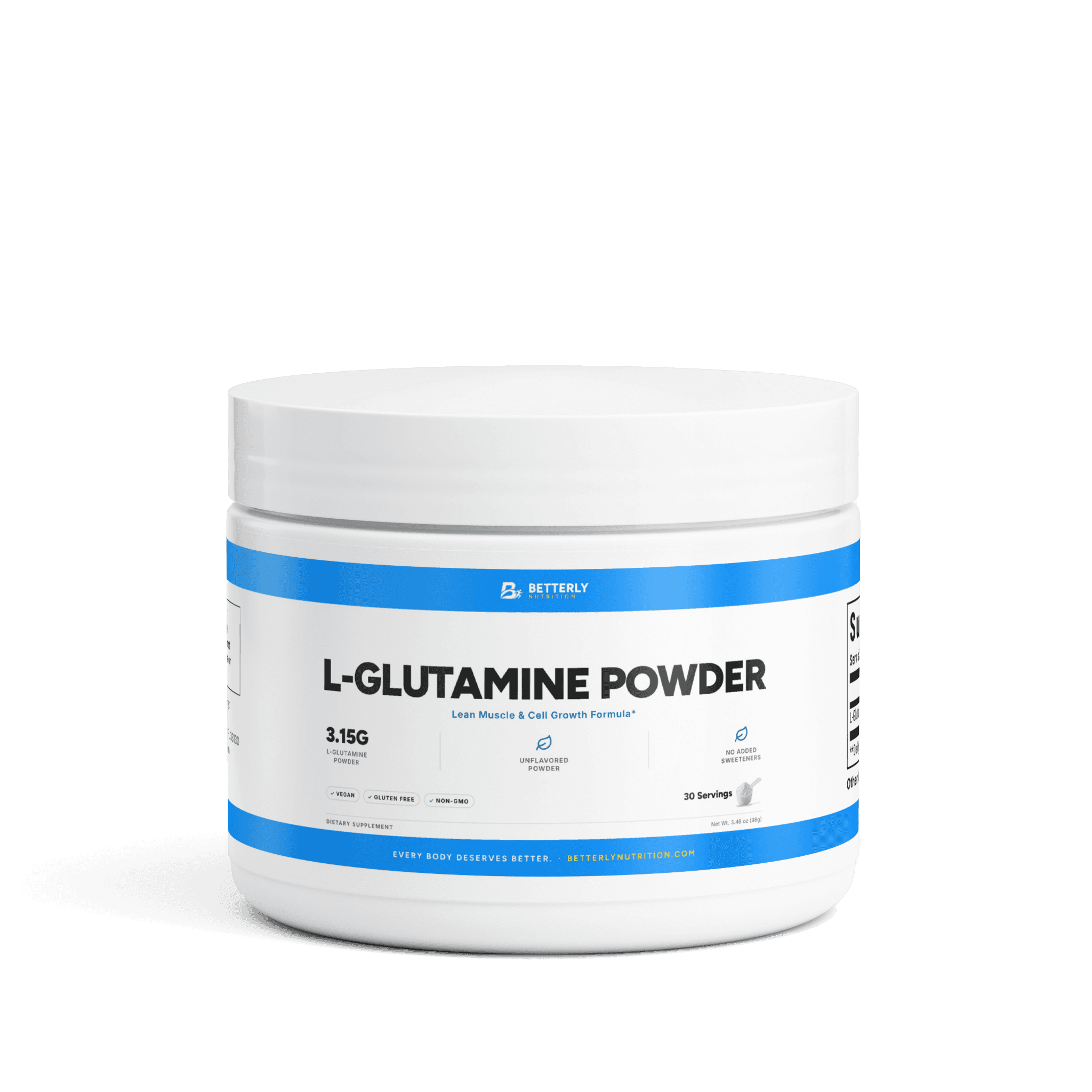
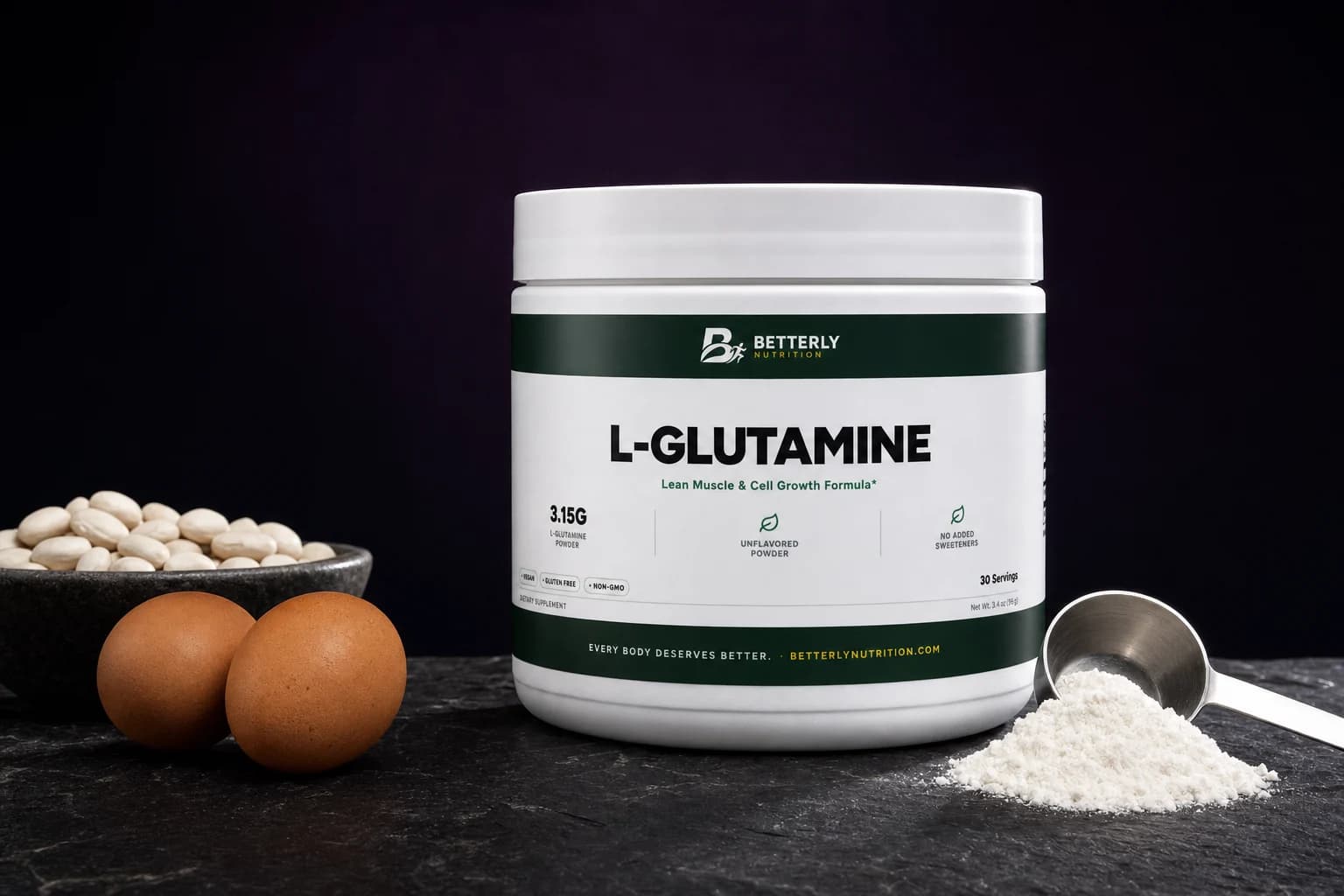
The short answer: L-glutamine vs glutathione comes down to size. L-glutamine is one amino acid. Glutathione is a small molecule your cells build from three amino acids: glutamate, cysteine and glycine. So they aren't interchangeable, and a glutamine label tells you nothing about glutathione. We sell L-Glutamine Powder, with 3.15 g of L-glutamine per 1 Scoop (3.3 g) serving, and we don't sell glutathione.
Key takeaways
- L-glutamine is a single amino acid, while glutathione is a three-amino-acid molecule that your own cells assemble.
- MedlinePlus Genetics describes a reaction that turns glutamine into glutamic acid, the source of one of glutathione's three parts, but no federal page we read says a glutamine supplement raises glutathione.
- The NIH Office of Dietary Supplements ties higher glutathione levels to NAC, a compound similar to the amino acid cysteine, and not to glutamine.
- MedlinePlus lists glutamine, glutamic acid, cysteine and glycine as nonessential amino acids, so a healthy body can make every piece involved here.
- No Betterly label lists glutathione, and our L-Glutamine Powder makes no glutathione claim.
Only one of these two earns us money: the glutamine. The product numbers below are copied from our printed facts panels, and the federal pages we leaned on are named in the text and listed at the end.
L-glutamine vs glutathione: are they the same thing?
No, L-glutamine and glutathione are different substances: L-glutamine is a single amino acid, and glutathione is three amino acids joined into one molecule.
| L-glutamine | Glutathione | |
|---|---|---|
| What it is | One amino acid | A molecule made of 3 amino acids |
| Built from | n/a (one amino acid) | Glutamate, cysteine, glycine |
| Does your body make it? | Yes, mainly from BCAAs | Yes, in most of your cells |
| Job named by federal pages | Energy and immune function | Protecting cells as an antioxidant |
| On a Betterly label | 3.15 g per 1 Scoop (3.3 g) | Not on any of our labels |
The last row settles the shopping question. If a panel row reads L-glutamine, that's the amino acid you're buying, not glutathione.
You'll also see glutathione called a tripeptide, a chemistry word for three amino acids linked together. MedlinePlus Genetics, from the National Library of Medicine, describes it as "a small molecule made of three protein building blocks (amino acids)." That page covers glutathione synthetase, one enzyme in the chain of reactions that produces glutathione. One of the alternate names it lists for that enzyme, gamma-L-glutamyl-L-cysteine:glycine ligase, spells out all three pieces.
Glutamine isn't one of those three pieces, even though its name makes it look like it should be.
Why do the names sound so alike?
Glutamine, glutamate and glutathione all share a root with glutamic acid, which is why the four words get mixed up in search bars and on shelves. The shared root makes them relatives, but it doesn't make them swappable. On labels, you'll usually see glutamate and glutamic acid used for the same building block, so those four words really cover three separate ingredients.
What is glutathione, and does your body make its own?
Glutathione is an antioxidant molecule your body makes for itself, through a chain of reactions that MedlinePlus says takes place in most of the body's cells.
That chain is called the gamma-glutamyl cycle. According to the same MedlinePlus Genetics page, glutathione helps protect cells from damage caused by unstable oxygen-containing molecules, which are byproducts of energy production. That protective role is why it's called an antioxidant. The same page says it also helps build DNA, proteins and other important parts of the cell.
The NIH Office of Dietary Supplements (ODS) uses similar words. Its consumer fact sheet on immune function calls glutathione a substance that "also acts as an antioxidant."
What about the raw materials? The MedlinePlus page on amino acids sorts them into three groups. Cysteine, glutamic acid and glycine all sit on its nonessential list, which it defines as amino acids your body can produce even when your food doesn't supply them. Cysteine and glycine, along with glutamine, also appear on its conditionally essential list, which MedlinePlus describes as usually not essential except in times of illness and stress. Glutamic acid isn't on that list.
Does L-glutamine raise glutathione levels?
L-glutamine can be converted into glutamic acid, one of glutathione's parts, but none of the federal pages we read says a glutamine supplement raises glutathione levels.
MedlinePlus Genetics' page on the ASNS gene describes one reaction where that happens, with glutamine turned into glutamic acid along the way. Chemistry like this is why many brand pages call glutamine a glutathione "precursor." That's fair as far as it goes, but a building block isn't a promise, for two reasons.
- Glutamic acid has its own supply. MedlinePlus lists it as nonessential, so your body makes it whether or not you take glutamine.
- ODS points to the cysteine side. When the immune function sheet talks about raising glutathione, it names N-acetylcysteine (NAC), which it describes as similar to cysteine. It says NAC raises levels of glutathione in your body.
We also read the two ODS entries on glutamine itself. The immune sheet says glutamine helps your immune system work properly. The exercise and athletic performance fact sheet says your body uses glutamine to produce energy. Neither entry mentions glutathione.
So we don't present L-Glutamine Powder as a glutathione product, and its label doesn't either. If glutathione is what you're curious about, ask your healthcare provider before buying a glutamine tub.
Glutamine vs glutathione vs NAC: how do the three compare?
Glutamine, glutathione and NAC are three separate things: an amino acid, an antioxidant molecule built from three amino acids, and a cysteine-like compound that ODS links to higher glutathione.
| Per ODS and MedlinePlus | L-glutamine | Glutathione | NAC |
|---|---|---|---|
| What it is | Amino acid | 3-amino-acid molecule | Similar to cysteine |
| Role it describes | Immune function | Acts as an antioxidant | Antioxidant; raises glutathione |
| Side effects listed | Stomach upset, gas, bloating | No separate entry | Stomach upset, diarrhea, heartburn |
| Medicine interactions | None reported | No separate entry | Possible, including blood thinners |
| Sold by Betterly | Yes | No | No |
Read the interaction row before anything else. ODS reports no interactions between glutamine and medications, while NAC might interact with blood thinners and some other prescription medicines. Glutathione appears only inside the NAC entry.
Spelled out, the glutamine list on that sheet reads nausea, bloating, burping, pain, gas and vomiting, with higher doses raising the odds. The NAC list reads nausea, vomiting, stomach pain, diarrhea, indigestion and heartburn.
L-glutamine vs glutathione for gut health or recovery: which fits?
For gut health or training recovery, L-glutamine is usually the one people mean; federal descriptions of glutathione center on its antioxidant role, not on digestion or muscles.
Glutamine is the name that keeps turning up in gut routines. Our write-up on what L-glutamine does in a gut routine explains why, and where the human research is still early. Glutathione has no gut-specific role on the federal pages we read. If you're putting a routine together, our Gut Health & Digestion collection puts glutamine next to fiber, enzymes and probiotics.
Training recovery is the other place people ask about glutamine. On the ODS exercise sheet, a few studies tested glutamine for strength training and for recovery, such as muscle soreness afterward. They found either no effect or only a small benefit, and the same sheet doesn't list glutathione at all.
ODS gives the credit for recovery to the basics: a nutritionally adequate diet, enough fluids, fitness and proper training. Any powder comes after those. And if a training drink is already in your bottle, check it for a glutamine row before adding a separate scoop.
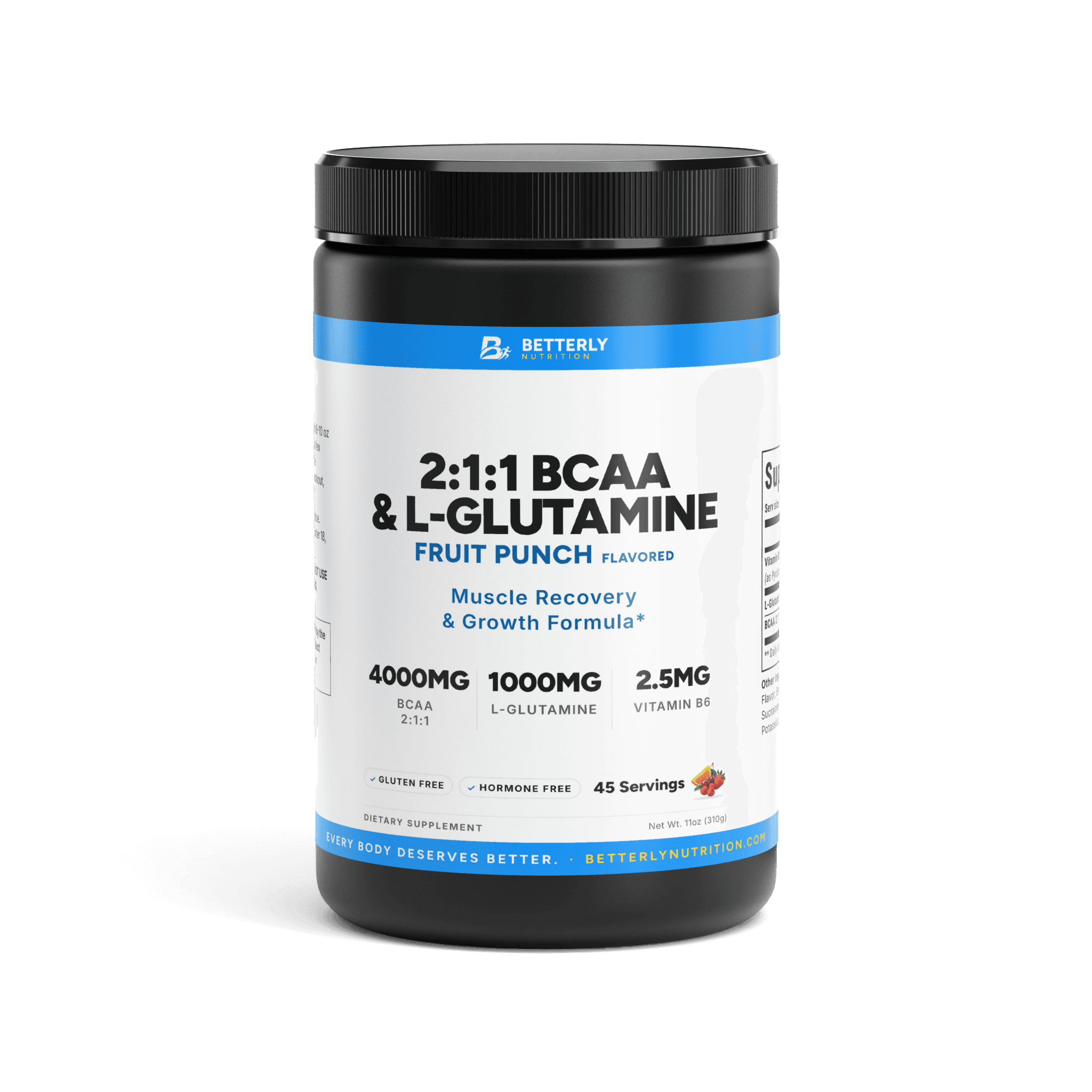
From our shop: 2:1:1 BCAA & L-Glutamine Powder (Fruit Punch) — 4000 mg of BCAA 2:1:1 and 1000 mg of L-glutamine per 1/2 scoop (6.5 g) serving, labeled for use before or after a workout or between meals.
Which Betterly labels list glutamine or a glutathione building block?
Our L-Glutamine Powder prints 3.15 g of L-glutamine per 1 Scoop (3.3 g) serving, the most we carry, and no Betterly label lists glutathione itself.
These are the rows on our panels that print an amount of glutamine or of one of glutathione's parts.
| Product | Panel row | Amount per serving |
|---|---|---|
| L-Glutamine Powder | L-Glutamine Powder | 3.15 g per 1 Scoop (3.3 g) |
| 2:1:1 BCAA & L-Glutamine Powder | L-Glutamine | 1000 mg per 1/2 scoop (6.5 g) |
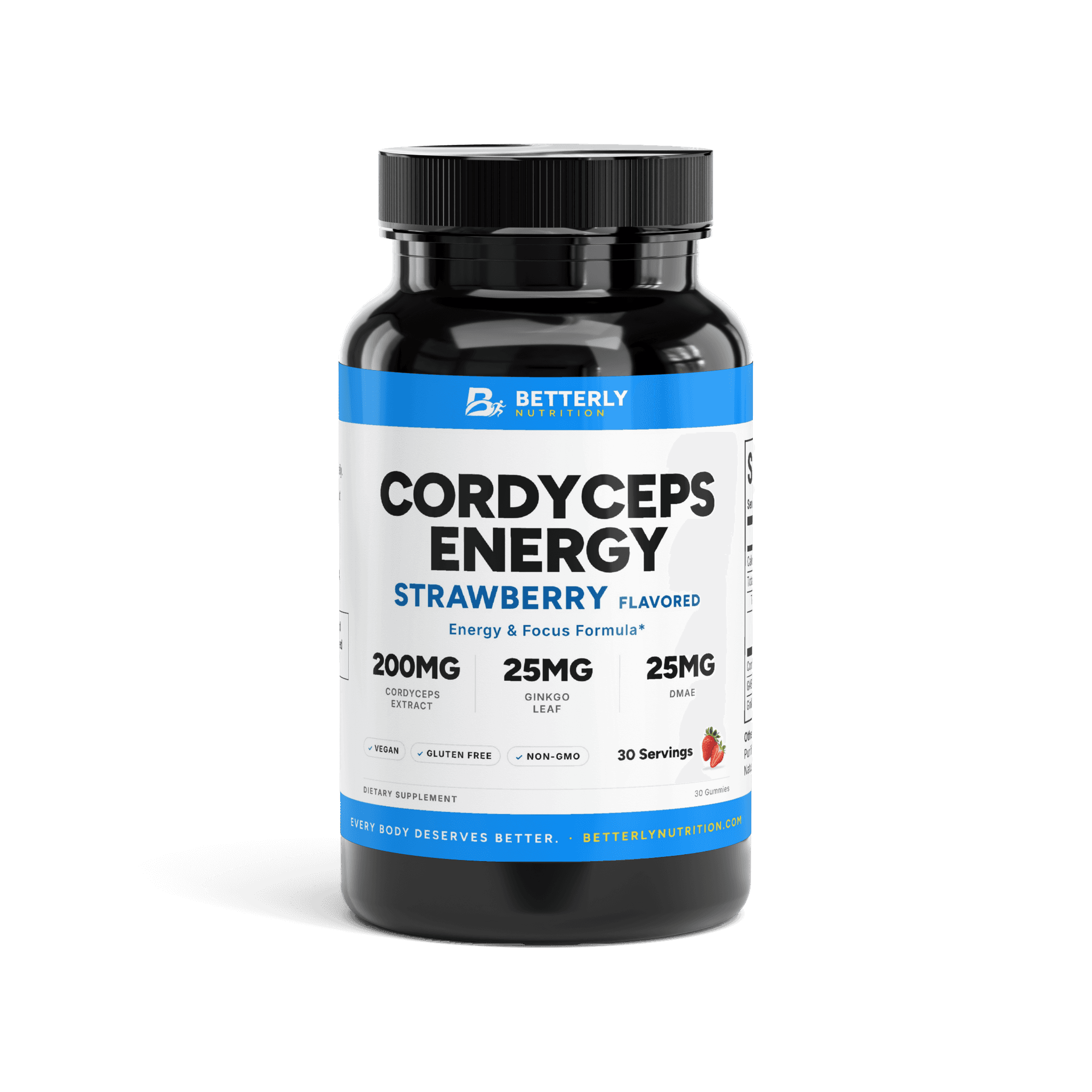
| Cordyceps Mushroom Energy Gummies | L-Glutamine | 25 mg per 1 Gummy |
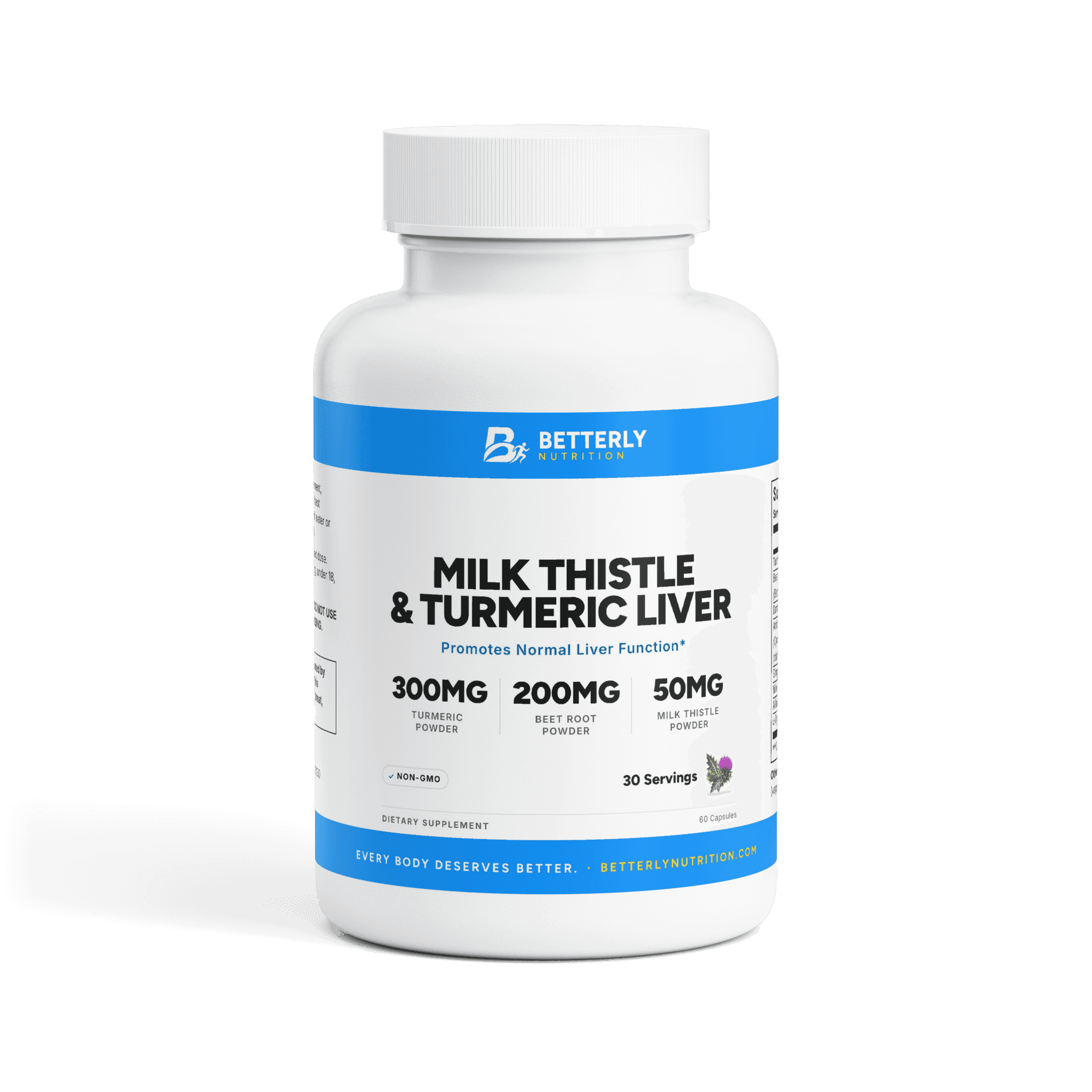
| Milk Thistle & Turmeric Liver Capsules | L-Cysteine Hydrochloride | 10 mg per 2 Capsules |
The gap in scale is the takeaway: by our math, one scoop of the powder holds 126 times the L-glutamine in one gummy. Both BCAA flavors print the same 1000 mg.
The liver capsule's 10 mg row is the only cysteine amount on our shelf. Its label makes no glutathione claim, so we won't make one for it. Our honest look at liver support supplements covers that formula's other seven ingredients.
How to tell these ingredients apart on any label
- Read past the first five letters. "Glutamine" and "glutathione" only split at the sixth, so a quick skim is how the wrong tub ends up in a cart.
- Count glutamic acid as its own row. It's the glutamate building block, not glutamine and not glutathione.
- Look for a printed amount. Our Choline & DHA Focus Capsules list L-glutamine HCl and glutamic acid inside a 609 mg proprietary blend per 2 Capsules serving, so the label doesn't show how much of either is there.
- Don't read "Glycine max" as glycine. It's the botanical name for soybean, and our Biotin & Horsetail Hair Capsules and the focus capsules above both print it beside soy-derived ingredients.
- Expect asterisks. None of these amino acids has a Daily Value, so their panels print a footnote saying so instead of a percentage.
How much L-Glutamine Powder does the label suggest?
Betterly's L-Glutamine Powder label suggests 1 serving taken 1 to 3 times daily with a beverage of choice, or as directed by a healthcare professional.
- Measure 1 Scoop (3.3 g), which holds 3.15 g of L-glutamine.
- Stir it into any drink. The powder is unflavored, and its only other listed ingredient is silicon dioxide.
- Stop at 3 servings in a day, since the label reads "Do not exceed recommended dose."
Our guide to L-glutamine side effects and tolerance already adds up the daily grams, BCAA drinks included. We have no glutathione label to offer, so on that side, the directions on whichever product you're considering are the ones that count.
From our shop: L-Glutamine Powder — a glutamine powder, not a glutathione one, with 3.15 g of L-glutamine per 1 Scoop (3.3 g) serving and no added sweeteners.
Who can skip glutamine and glutathione supplements?
Most healthy adults can skip both: ODS says your body makes enough glutamine except in rare situations, and your cells assemble glutathione from amino acids your body can make.
You can likely pass on a glutamine tub if:
- You eat protein foods most days. ODS lists beef, fish, poultry, dried beans, eggs, rice, grains and dairy as sources.
- You hoped it would work as glutathione. Our label doesn't claim that, and we'd rather you know before you buy.
- You want a performance edge. The ODS exercise sheet finds little scientific evidence that glutamine supplements improve exercise or athletic performance.
- You're under 18. Our label sends anyone younger than 18 to a physician before starting.
The rare situations ODS describes are hospital ones, such as recovery from major surgery, where glutamine is given by IV or tube feeding.
Who should check with a healthcare provider first?
Get a healthcare provider's input before you try L-glutamine, glutathione or NAC if you're pregnant, nursing, under 18, taking medication, facing surgery or managing a medical condition.
Our L-Glutamine Powder label carries this caution word for word: "Do not exceed recommended dose. Consult a physician if pregnant, nursing, under 18, or have a medical condition."
Bring every label to that conversation. ODS reports no glutamine interactions with medications but flags possible ones for NAC, and a BCAA drink or any formula with "gluta" on its panel belongs on the list too.
FAQ: L-glutamine and glutathione
Is L-glutamate the same as glutathione?
No, L-glutamate isn't glutathione; it's one of glutathione's three building blocks, alongside cysteine and glycine. It's also separate from L-glutamine, though the two are chemical relatives. MedlinePlus Genetics describes a reaction that turns glutamine into glutamic acid, the name glutamate usually goes by on labels. MedlinePlus also lists glutamic acid as a nonessential amino acid, so your body produces it whether or not your meals do.
Is glutamine or glutathione better?
Neither glutamine nor glutathione is better overall, because they aren't competing for the same job. ODS says your body uses glutamine for energy and that it helps your immune system work properly. Glutathione is an antioxidant your cells build for themselves. People asking about gut routines or training usually mean glutamine, while glutathione questions are about antioxidants, and a glutamine tub doesn't answer those.
Can you take L-glutamine and glutathione together?
No federal page we read addresses taking L-glutamine and glutathione together. ODS reports no interactions between glutamine and medications. Its safety notes under the heading that names NAC and glutathione describe NAC only, and we don't sell glutathione, so we can't speak for another brand's label. If you're weighing both, show both labels to your pharmacist or healthcare provider and stay within each label's directions.
Is glutathione an amino acid?
No, glutathione isn't an amino acid. It's a small molecule assembled from three of them, which is how MedlinePlus Genetics describes it. L-glutamine, by contrast, is a single amino acid on the MedlinePlus nonessential list. So a label row reading L-glutamine means one amino acid, while a row reading glutathione means the finished three-part molecule.
Does L-glutamine powder contain gluten?
No, our L-Glutamine Powder carries a gluten-free claim on its label, along with vegan and non-GMO claims. The question usually comes from the spelling, but the claim printed on the tub is what answers it. The panel lists silicon dioxide as the only other ingredient, with no flavoring or sweetener. With another brand's glutamine, look for a gluten-free claim on that label rather than assuming.
Sources
- NIH Office of Dietary Supplements: Dietary Supplements for Immune Function and Infectious Diseases, Fact Sheet for Consumers (glutamine; N-acetylcysteine and glutathione)
- NIH Office of Dietary Supplements: Dietary Supplements for Exercise and Athletic Performance, Fact Sheet for Consumers (glutamine entry)
- MedlinePlus Genetics, National Library of Medicine: GSS gene
- MedlinePlus Genetics, National Library of Medicine: ASNS gene
- MedlinePlus, National Library of Medicine: Amino acids
If this left you looking for somewhere to start, read unsweetened L-glutamine powder — its amounts per serving are listed on the page. For the practical questions this raises, how dosing, sourcing and subscriptions work is answered in one place.