On this page
- Key takeaways
- Electrolyte tablets vs powder: which is better for you?
- What's the difference between electrolyte tablets, capsules and powder?
- Are electrolyte pills or capsules as good as powder?
- How do you compare tablets, pills and powder serving for serving?
- Electrolyte powder vs salt: is table salt enough?
- Electrolyte powder vs coconut water: which fits a lighter day?
- How do you take Electrolyte Hydration Powder by the label?
- When don't you need electrolyte tablets or powder at all?
- Who should check with a healthcare provider first?
- FAQ: electrolyte tablets vs powder
- Sources
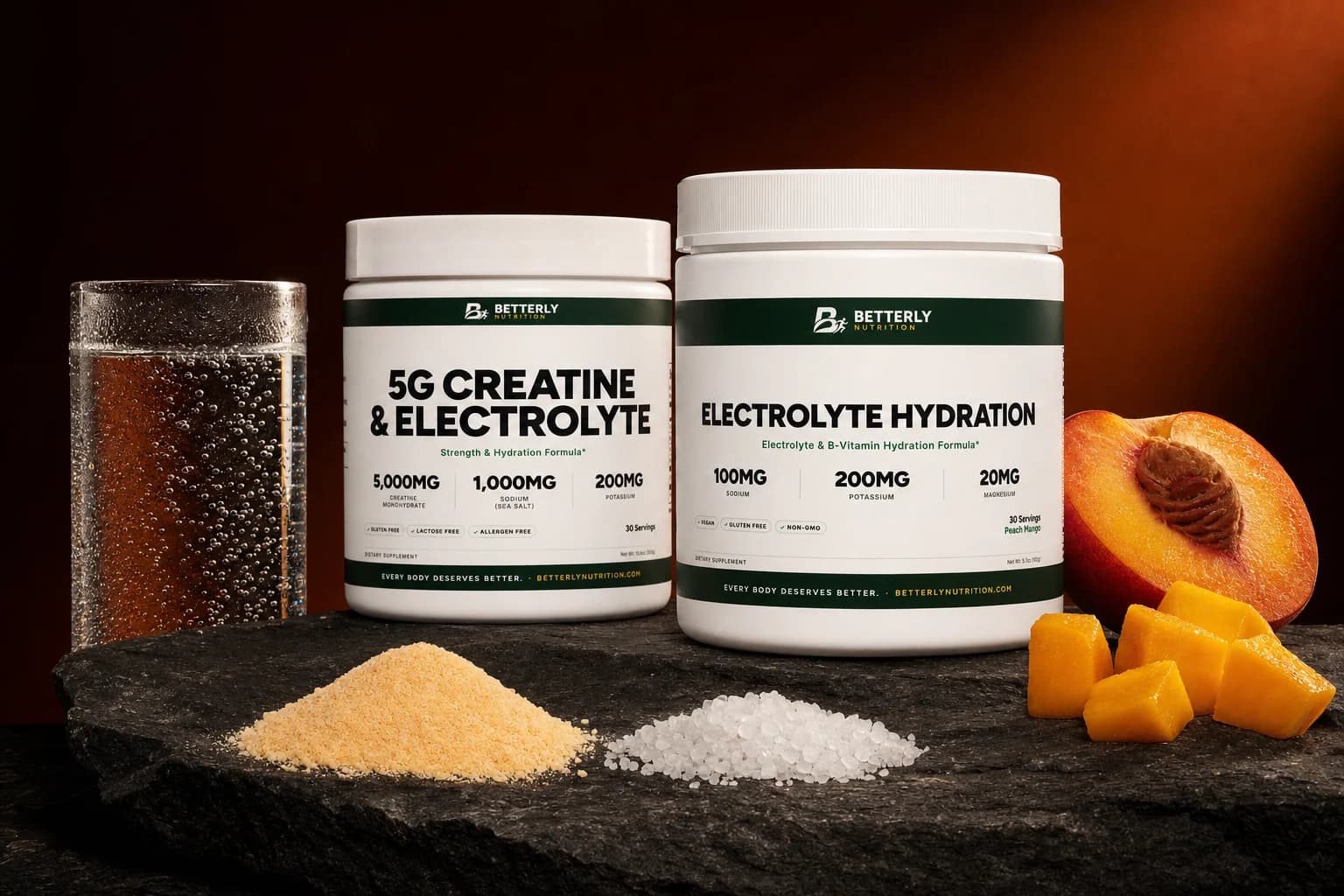
The short answer: When you weigh electrolyte tablets vs powder, the milligrams matter more than the format. Tablets and capsules win on portability. Powders win on adjustable strength and flavor. Compare any option by sodium per serving, sweetener and cost per serving. Our Electrolyte Hydration Powder (Peach Mango) lists 100 mg of sodium and 200 mg of potassium per 1 Scoop (5.4g) serving, stirred into 14 to 20 fl oz of water.
Key takeaways
- Tablets, capsules and powders can carry the same minerals, so the sodium row on a label tells you more than the shape of the product.
- Electrolyte capsules and salt pills bring no water with them, so you still have to drink the fluid you're trying to replace.
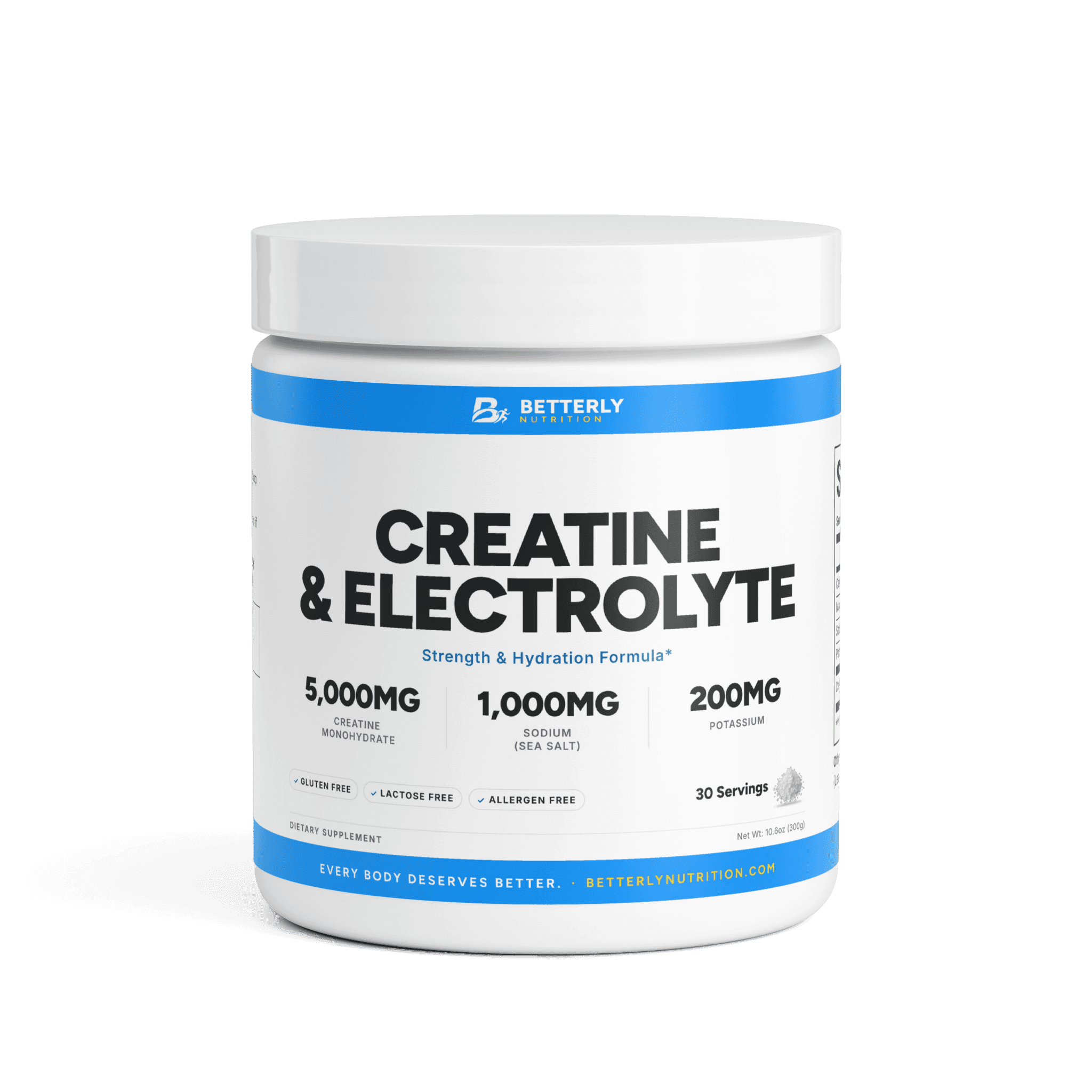
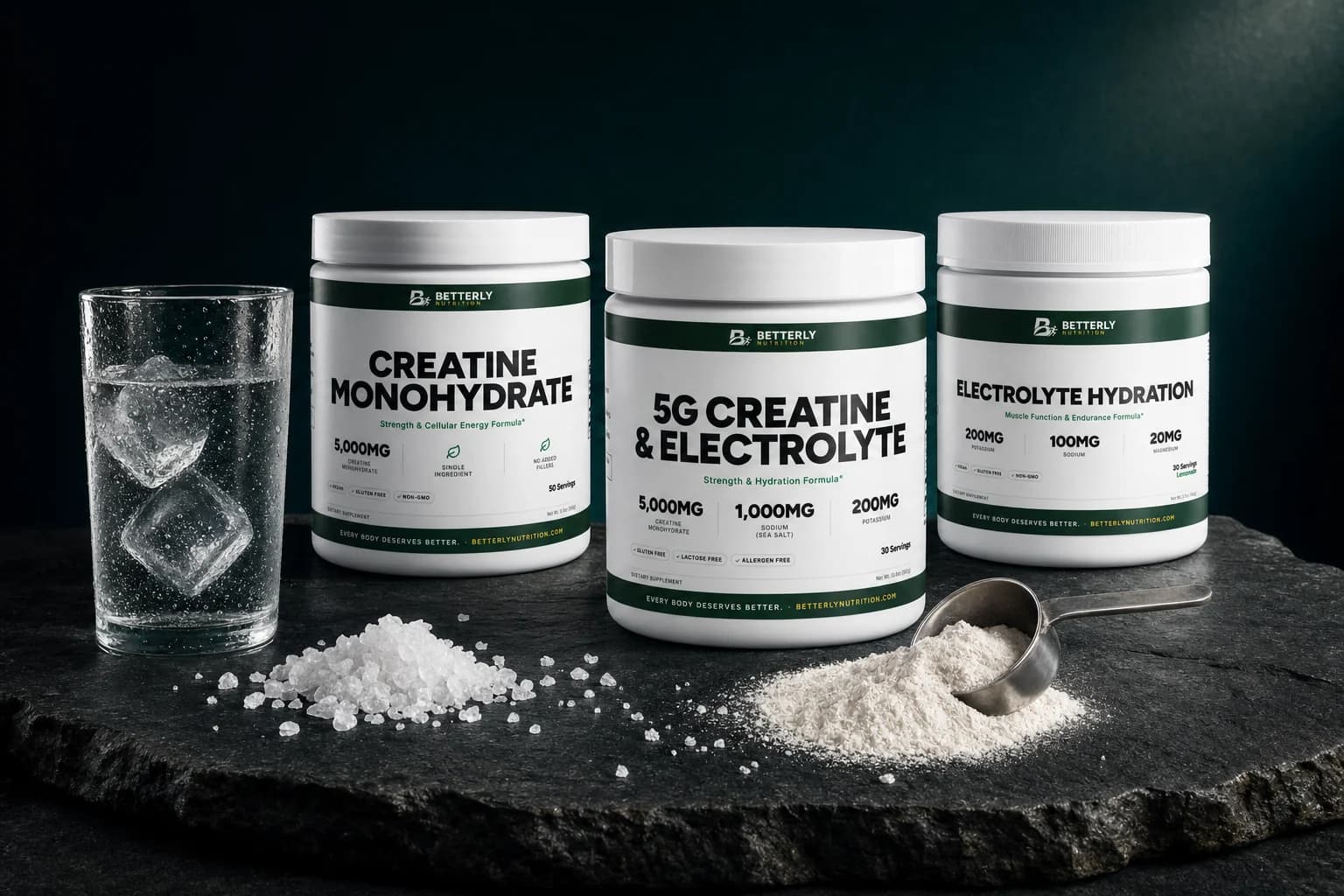
- Betterly's Electrolyte Hydration Powder lists 100 mg of sodium (4% DV) per 1 Scoop (5.4g) serving, and our 5g Creatine & Electrolyte Powder lists 1,000 mg (43% DV) per 1 scoop (10 g) serving.
- By the FDA's teaspoon figure, an eighth of a teaspoon of table salt works out to roughly 290 mg of sodium, with no potassium at all.
We should say up front that both of Betterly's electrolyte products are powders; we don't make an electrolyte tablet or capsule. That gives us a stake here, so hold our format views up against the labels in your own cabinet.
Electrolyte tablets vs powder: which is better for you?
Neither electrolyte tablets nor powder is better across the board. The right pick depends on where you'll be drinking and how much sodium your day actually calls for.
| Format | How you take it | Dose control | Where it shines |
|---|---|---|---|
| Fizzing tablet | Drop one in water | Fixed per tablet | Light to pack, nothing to measure |
| Capsule or salt pill | Swallow with plain water | Fixed per capsule | No taste, no flavored drink |
| Powder tub | Scoop into water | Scoop and water both adjust | Strength and flavor to your liking |
| Single-serve stick | Pour one into water | Fixed per stick | Powder you can pocket |
In short, tablets, capsules and sticks trade flexibility for convenience, and a tub does the reverse. None of that tells you what's inside. Only the label does.
What's the difference between electrolyte tablets, capsules and powder?
Electrolyte tablets dissolve into a drink, electrolyte capsules are swallowed whole with plain water, and electrolyte powder is scooped or poured into water to taste.
Tablets are usually the fizzing kind. The bubbles come from an acid meeting a carbonate or bicarbonate once the tablet hits water. If that base is sodium bicarbonate, some of the tablet's sodium comes from the fizz itself. The FDA notes that baking soda's sodium counts toward a label's sodium total, so trust the sodium row, not how light the bubbly drink tastes.
Capsules and salt pills skip the drink entirely. You swallow them and drink water on the side.
Powders come in tubs or single-serve sticks. A tub lets you pick your scoop and your water amount. A stick is a pre-measured portion, so it behaves more like a tablet in your bag.
The mineral salts inside differ too. Our Electrolyte Hydration Powder uses potassium citrate and the creatine blend uses potassium chloride, and the NIH potassium sheet says research hasn't shown any form of potassium to beat the others.
Are electrolyte pills or capsules as good as powder?
Electrolyte pills and capsules can supply the same minerals as powder, but they arrive without the drink. The fluid part of the job is left to you.
MedlinePlus defines electrolytes as minerals that carry an electric charge when dissolved in water or body fluids. Its page on fluid and electrolyte balance explains that your fluid intake should keep pace with what you lose. Among the everyday triggers for a shift, it names heavy sweating and not drinking enough during hard exercise or in very hot weather. Our Electrolytes 101 guide sorts out which of those days call for added minerals in the first place.
That's the catch with capsules. Swallow two with a small sip and you've handled the minerals but not much of the water. A powder or a fizzing tablet builds the fluid into the habit, because you can't take it without drinking the glass it's mixed into.
Capsules still suit people who dislike sweet drinks or want to carry almost nothing. Pair them with a full bottle, and check how many capsules the label counts as one serving.
How do you compare tablets, pills and powder serving for serving?
Compare electrolyte tablets, pills and powder at one matched serving: read the sodium in milligrams and %DV, check the sweetener, then work out the cost per serving.
For full label reading, see our honest hydration powder buying guide. This is the shortcut for putting different formats on equal footing.
- Sodium first. The FDA's Sodium in Your Diet page rates 5% DV or less of sodium per serving as low, and 20% DV or more as high. Our Electrolyte Hydration Powder sits at 4% DV per scoop and our creatine blend at 43% DV, so two tubs from one shelf land at opposite ends of that scale.
- Then the sweetener. The Electrolyte Hydration Powder lists sucralose, and the creatine blend lists stevia leaf extract. A capsule you swallow may not need one, so see whether it lists a sweetener at all.
- Then cost per serving. Divide the price by the number of servings printed on the label. For capsules, check how many make one serving before you divide. If two products differ a lot in sodium, compare cost per 100 mg of sodium too.
From our shop: Electrolyte Hydration Powder (Peach Mango) — 100 mg sodium, 200 mg potassium, 20 mg magnesium and 40 mg calcium per 1 Scoop (5.4g) serving, with 30 servings per tub.
Electrolyte powder vs salt: is table salt enough?
Table salt can cover sodium by itself, and cheaply. What it can't do is add potassium, magnesium or flavor, and those are the extras an electrolyte powder brings.
The FDA notes that table salt is sodium chloride, and that 2,300 mg of sodium equals about 1 teaspoon of table salt. Do the division and an eighth of a teaspoon carries roughly 290 mg of sodium. That's close to three scoops' worth of sodium from our Electrolyte Hydration Powder.
Side by side, per our labels and the FDA's salt figure:
| Option | Sodium | Potassium | What else comes along |
|---|---|---|---|
| 1 scoop Electrolyte Hydration Powder (5.4 g) | 100 mg (4% DV) | 200 mg (4% DV) | 20 mg magnesium, 40 mg calcium, 7 B vitamins |
| 2 scoops, double the water | 200 mg | 400 mg | Everything above, doubled |
| 1 scoop 5g Creatine & Electrolyte Powder (10 g) | 1,000 mg (43% DV) | 200 mg (4% DV) | 5,000 mg creatine, 60 mg magnesium |
| 1/8 teaspoon table salt | About 290 mg | None | Chloride (iodine too, if iodized) |
If sodium is all you're after, salt on your food or in your water is the cheapest route. Our 5g Creatine & Electrolyte Powder is the salty option in our range, and it only makes sense if you want the creatine too. The Electrolyte Hydration Powder is the gentler one, with more potassium than sodium.
Potassium is the mineral salt never supplies. The NIH Office of Dietary Supplements' potassium fact sheet puts adult needs at 3,400 mg a day for men and 2,600 mg for women, so our 200 mg per scoop is a small slice of the day. The same sheet points to fruits, vegetables, beans, lentils, milk and yogurt as everyday food sources.
From our shop: 5g Creatine & Electrolyte Powder — 1,000 mg of sodium from sea salt alongside 5,000 mg of creatine monohydrate per 1 scoop (10 g) serving, the saltiest tub in our range.
Electrolyte powder vs coconut water: which fits a lighter day?
Coconut water and Electrolyte Hydration Powder both suit a light-sweat day. Our panel lists 10 calories per scoop, while coconut water brings food calories and sugars that change from brand to brand.
Coconut water is the clear liquid inside a coconut, and its sodium and potassium vary by brand and flavor too. Take the numbers off the carton in your hand, not a figure you read online.
That carton is easy to read. The FDA's summary of changes to the Nutrition Facts label says food makers must list the actual amount of potassium, and added sugars in grams. Our tub carries a Supplement Facts panel instead, with no sugars row. Its Total Carbohydrates line reads 2 g per 1 Scoop (5.4g) serving.
So compare the four rows both labels share: sodium, potassium, calories and total carbohydrates. If you enjoy coconut water and don't mind the calories, it's a fair pick for an easy afternoon. If you'd rather keep calories low, the scoop does that.
How do you take Electrolyte Hydration Powder by the label?
Mix 1 scoop of Electrolyte Hydration Powder with 14 to 20 fl oz of water, or 2 scoops with double the water, and stop at 5 scoops a day.
The label's directions read: "Mix 1 scoop with 14–20 fl oz (414–591 mL) of water, or to taste. Use 2 scoops with double the water." The caution adds: "Do not exceed 5 scoops daily."
From the panel and the ingredient list:
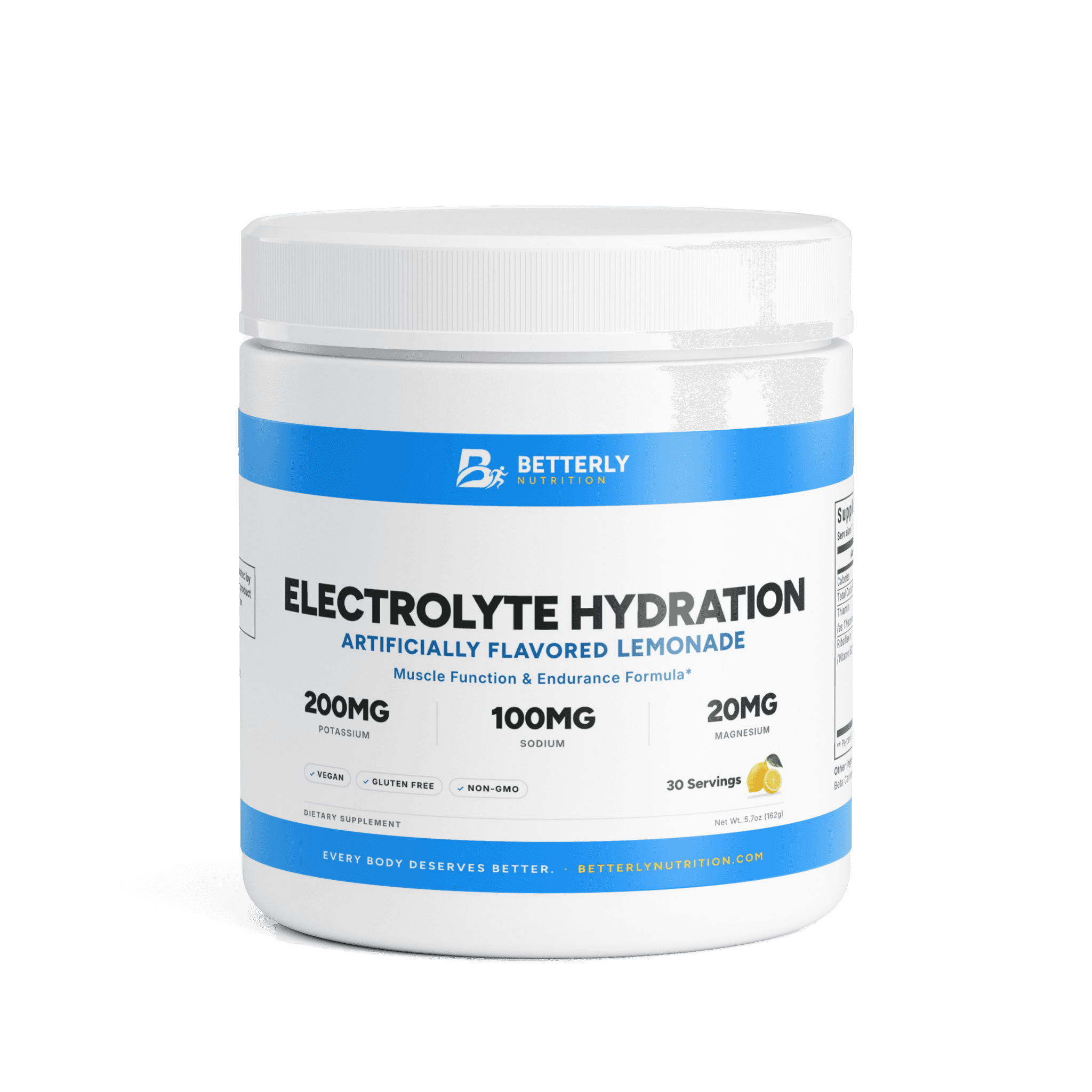
- Flavors: Peach Mango, Lemonade, Lychee and Passion Fruit share one panel. Lychee gets its color from beet juice powder, and the other three use beta carotene.
- Label claims: Each flavor's label reads vegan, gluten free and non-GMO.
- Portability: It comes in a tub only, with no sticks or tablets, so it's a counter-and-locker product rather than a pocket one.
The creatine blend has its own directions. Its label says adults mix one scoop with 6-8 oz (177-237 ml) of water or a favorite beverage daily, and its caution reads "Do not exceed recommended dose." Using both tubs on the same day adds up fast, so read our breakdown of how electrolyte scoops stack across a day before you double up.
You'll find both tubs on our Performance Essentials shelf.
When don't you need electrolyte tablets or powder at all?
Electrolyte tablets, capsules and powder are optional on days without real sweat. Typical American meals already carry plenty of sodium: the FDA puts average intake near 3,400 mg a day.
That makes a few format habits worth a second look:
- Salt capsules taken out of habit on a rest day. A capsule goes down without much thought, and on a dry-shirt day it's sodium you never lost.
- A tube of tablets in your desk drawer. In an air-conditioned office, the tablet is mostly flavoring your water. That's a fair reason to buy one, as long as you know it's the reason.
- A scoop after a salty lunch because plain water feels dull. That's a taste choice, and it's allowed. Just count the scoop's sodium as extra, not as a replacement.
Our own powder has a limit no format switch fixes. At 100 mg of sodium per scoop, Electrolyte Hydration Powder is a light everyday mix, and a tablet with the same 100 mg would be just as light. When a long, hot session calls for more sodium, the panel's number has to change, not the product's shape.
Who should check with a healthcare provider first?
Whatever the format, electrolyte tablets, capsules and powder deserve a healthcare provider's review first if you're pregnant, nursing, under 18, on medication or managing a medical condition.
Both of our tubs print a version of that list in their cautions, and it applies just as much to a tube of tablets. The medication part matters for any product with a potassium row. The NIH potassium sheet says some prescription drugs cut the potassium you lose in urine, so bring the tube, bottle or tub itself to your pharmacist. Format raises a few questions of its own:
- Fluid limits. A scoop of Electrolyte Hydration Powder comes with 14 to 20 fl oz of water, while a capsule brings only the sip you swallow it with. MedlinePlus lists drinking too much water, not just too little, among the reasons electrolyte levels drift. If your fluids are managed, ask which format fits.
- Fizzing tablets on a sodium target. If you've been given a daily sodium number, count every tablet by its sodium row, fizz included.
- Salt pills as a daily habit. A salt tablet is usually sodium chloride with no drink attached. Check what share of the FDA's 2,300 mg Daily Value one serving uses, and run it by your provider first.
FAQ: electrolyte tablets vs powder
Are hydration tablets the same as electrolyte tablets?
Yes, hydration tablets and electrolyte tablets are usually one product type under two names: a tablet you dissolve in water. Neither name tells you what's inside. Judge the tube by its panel, starting with sodium and potassium in milligrams, then the sweetener and the tablets per serving. Our tub uses the word "hydration" too, and its panel lists 100 mg of sodium per 1 Scoop (5.4g) serving.
Can you swallow an effervescent electrolyte tablet whole?
No, an effervescent electrolyte tablet is meant to dissolve in water before you drink it. Follow the directions on the tube for how much water to use. If you'd rather swallow something, choose a product sold as a capsule or pill, and drink plenty of water alongside it.
Can you make electrolyte powder stronger with less water?
Only in taste. Less water makes Electrolyte Hydration Powder taste stronger, but it adds no sodium or potassium, since the minerals come from the scoop. The label says 14 to 20 fl oz per scoop "or to taste," so the water amount is flexible. If you want more minerals, the label's option is 2 scoops with double the water.
Are salt tablets the same as electrolyte capsules?
Salt tablets aren't always the same as electrolyte capsules. A salt tablet is usually sodium chloride, and MedlinePlus counts both sodium and chloride among the body's main electrolytes. What it may lack is potassium or magnesium, which some electrolyte capsules add. The panel settles it: no potassium row means it's a salt pill, whatever the front says. Drink water with either one.
Can you use electrolyte tablets and powder on the same day?
Yes, you can use electrolyte tablets and powder on the same day if you convert them to milligrams first. A tablet, a capsule serving and a scoop are different units, and one capsule serving may mean two or more capsules. Add the sodium rows, not the pieces. If a provider has set you a sodium limit, that total is what to show them.
Sources
- MedlinePlus (National Library of Medicine): Fluid and Electrolyte Balance
- U.S. Food and Drug Administration: Sodium in Your Diet
- NIH Office of Dietary Supplements: Potassium, Fact Sheet for Consumers
- U.S. Food and Drug Administration: Changes to the Nutrition Facts Label
If this left you looking for somewhere to start, read peach mango electrolyte powder with 200 mg potassium — its amounts per serving are listed on the page. For the practical questions this raises, how dosing, sourcing and subscriptions work is answered in one place.