On this page
- Key takeaways
- What is horsetail, and why is it sold for hair?
- Is horsetail the same as silica?
- Horsetail for hair: what does the evidence actually show?
- Silica vs biotin: how are they different?
- Horsetail vs bamboo silica: what's the difference?
- How much horsetail is in our capsules? Reading the label
- How do you take horsetail capsules, per the label?
- When don't you need a horsetail supplement?
- Horsetail side effects: who should check with a provider first?
- FAQ: horsetail for hair
- Sources
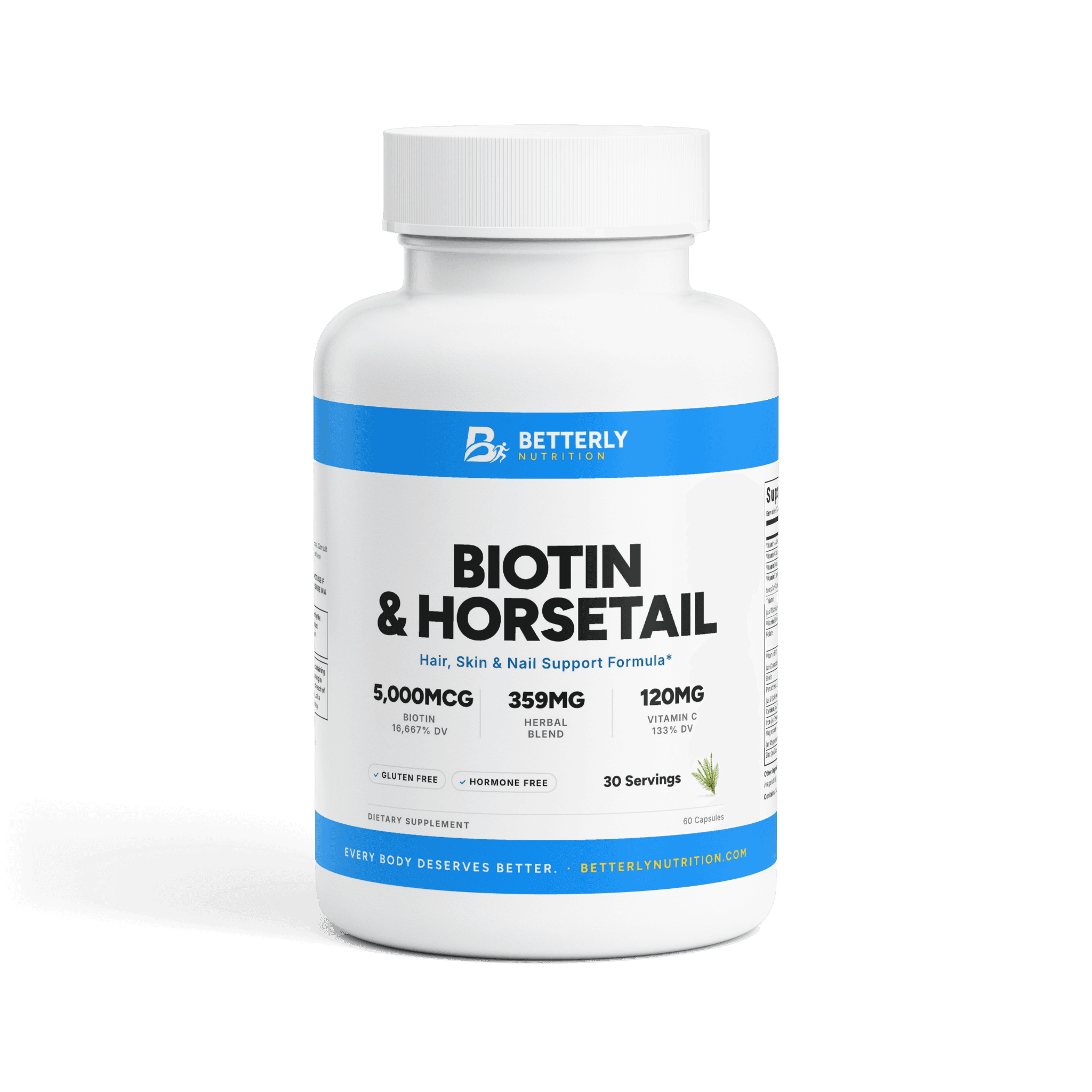
The short answer: The case for horsetail for hair rests on silica, a compound of the mineral silicon that Equisetum arvense builds into the surface of its stems. No federal source we checked shows horsetail does anything for hair, and silicon has no Daily Value. Our Biotin & Horsetail Hair Capsules list horsetail second in a 359 mg blend of 11 ingredients, with no amount of its own.
Key takeaways
- Horsetail (Equisetum arvense) is a fern relative with silica in its stems, but it isn't silica itself, and labels don't have to say how much silica an extract holds.
- Silicon has no Daily Value, and no federal source we checked, NIH's LiverTox entry on horsetail included, ties horsetail to a hair benefit.
- Our Biotin & Horsetail Hair Capsules list horsetail second in a 359 mg blend, which shows its rank by weight but not its dose.
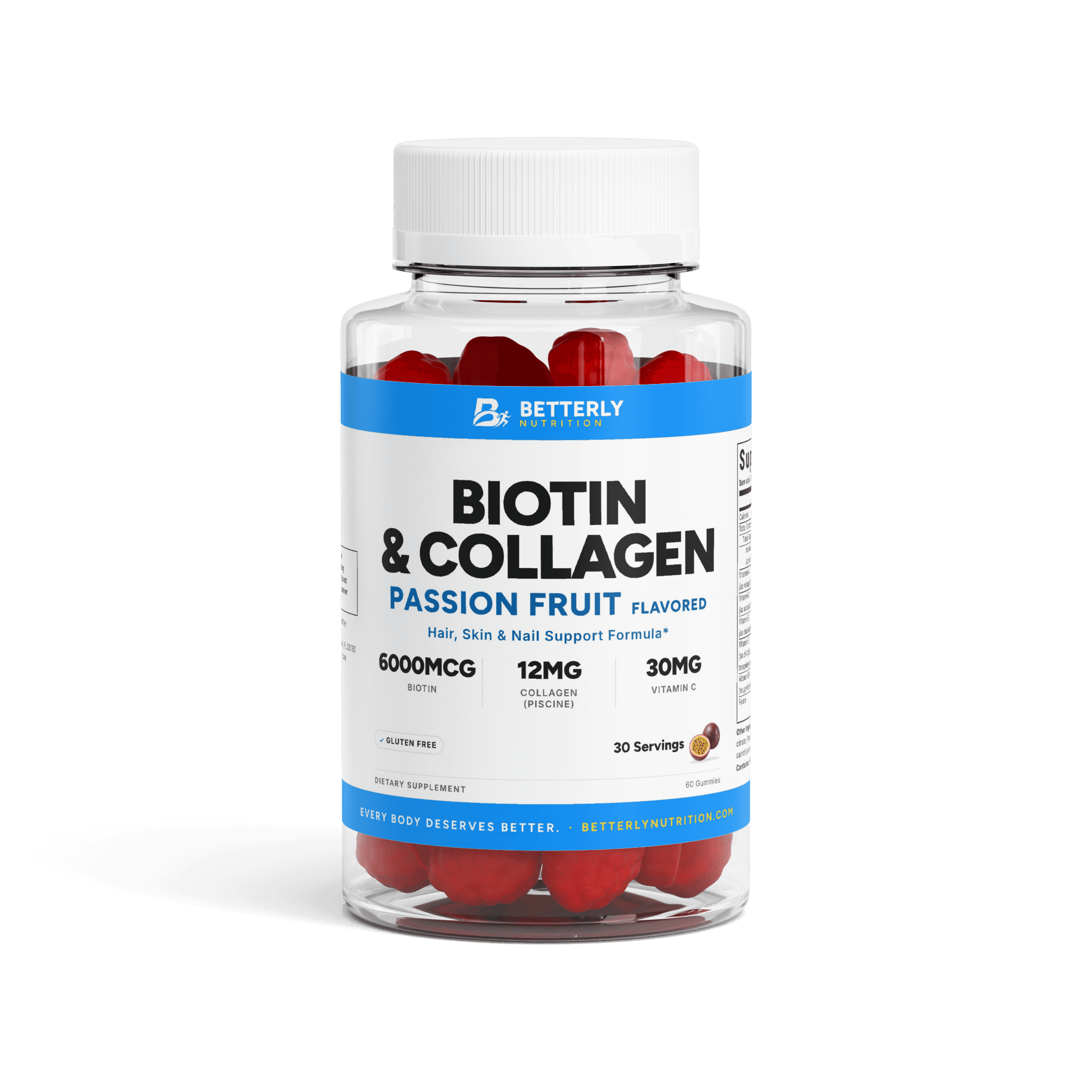
- If a stated silicon amount matters to you, our Biotin & Collagen Gummies list 2 mg per 2-gummy serving, and the capsule lists none.
- LiverTox calls horsetail generally well tolerated, but it gives fo-ti, another herb in the capsule's blend, its top likelihood score (A) as a cause of liver injury.
We sell a capsule with horsetail in it, and you should factor that in. We'll read our own label here, missing numbers and all, and the same questions work on any brand's horsetail product.
What is horsetail, and why is it sold for hair?
Horsetail is Equisetum arvense, a perennial fern relative with jointed, hollow stems, and it's sold for hair because those stems carry silica, a compound of the mineral silicon.
The USDA Forest Service's review of field horsetail, one of the plant's common names, describes two kinds of stems. Pale, unbranched ones appear in early spring, shed their spores and die. Green, branched ones follow in May and last until a hard frost. The review notes that both kinds have "regularly arranged, silicified projections" on their surface, and that people once used the plant for scouring and polishing objects.
Is horsetail the same as silica?
Horsetail isn't the same as silica: horsetail is a whole plant, and silica is silicon dioxide, one mineral compound inside that plant among many others.
According to the background sheet on botanical supplements from the NIH Office of Dietary Supplements (ODS), an extract is made by soaking a plant in a liquid such as water or alcohol, and it can then be dried for capsules. ODS adds that different preparations hold different amounts and concentrations of a plant's constituents.
NIH's LiverTox entry on horsetail, part of a federal database built to track liver reactions to medicines and herbs, lists silicic acid, a silicon compound, in horsetail extracts beside flavonoids, a caffeic acid ester and alkaloids.
So "horsetail extract" on a panel doesn't tell you how much silica you're getting. Federal labeling rules say the milligrams printed for an extract are the weight of the dried extract, not of any one compound in it. A maker may list a constituent like silica with its own amount, but that's optional.
The words trip people up. Silicon is the element, and our Biotin & Collagen Gummies list a "Silicon" row. Silica is silicon bonded to oxygen, or silicon dioxide. On the Biotin & Horsetail Hair Capsules label, "Silicon Dioxide" comes last under Other Ingredients, after rice flour, the capsule shell and magnesium stearate, with no amount. It isn't the horsetail.
Horsetail for hair: what does the evidence actually show?
Horsetail extract benefits for hair aren't established: NIH's LiverTox database says the health claims it lists for horsetail lack support from controlled human trials, and hair isn't among them.
That gap isn't unusual for an herb. ODS says evidence on botanical ingredients "varies widely," and for most botanicals, scientists don't know which compounds drive their effects.
Silicon has no Daily Value either: on our gummy's panel, its 2 mg carries the same "Daily Value not established" footnote as PABA and collagen.
Noticing a change in your hair that concerns you? A healthcare provider can help you find out what's behind it.
Silica vs biotin: how are they different?
Biotin is a B vitamin with a set daily amount, while silica is a mineral compound with no Daily Value, so their doses can't be compared.
The ODS biotin fact sheet says biotin helps your body get energy from the carbohydrates, fats and proteins you eat. Adults need 30 mcg a day, and most people get enough from food. ODS also says there's little scientific evidence behind the hair, skin and nail claims made for biotin supplements.
Neither arrives with strong hair evidence. If the big number on hair labels puzzles you, here's what a 5,000 mcg serving of biotin actually means.
| Question | Biotin | Silicon (silica) | Horsetail extract |
|---|---|---|---|
| What it is | A B vitamin | An element and its oxide | A plant extract |
| Daily Value | Yes (30 mcg) | Not established | Not established |
| Amount on our hair labels | 5,000 to 6000 mcg per serving | 2 mg per 2 gummies | Not stated |
Only biotin has a Daily Value to check a label against. Silicon has a number on one of our panels and horsetail has none, so "how much" is the hardest question on any horsetail label, ours included.
Horsetail vs bamboo silica: what's the difference?
Horsetail and bamboo are two different plants sold as silica sources, and our capsule lists both: horsetail extract from the whole herb and bamboo extract from the leaf.
Search "horsetail vs bamboo silica" and sellers quote silica percentages for each plant, often with bamboo far ahead. We couldn't confirm those figures in any federal source we checked, so we won't repeat them.
What our label can tell you is rank. The same federal rule, 21 CFR 101.36, says ingredients inside a proprietary blend are listed "in descending order of predominance by weight." Horsetail sits second, after PABA, and bamboo sits fourth. So horsetail outweighs bamboo in our blend, and PABA outweighs both. The rule doesn't say by how much.
How much horsetail is in our capsules? Reading the label
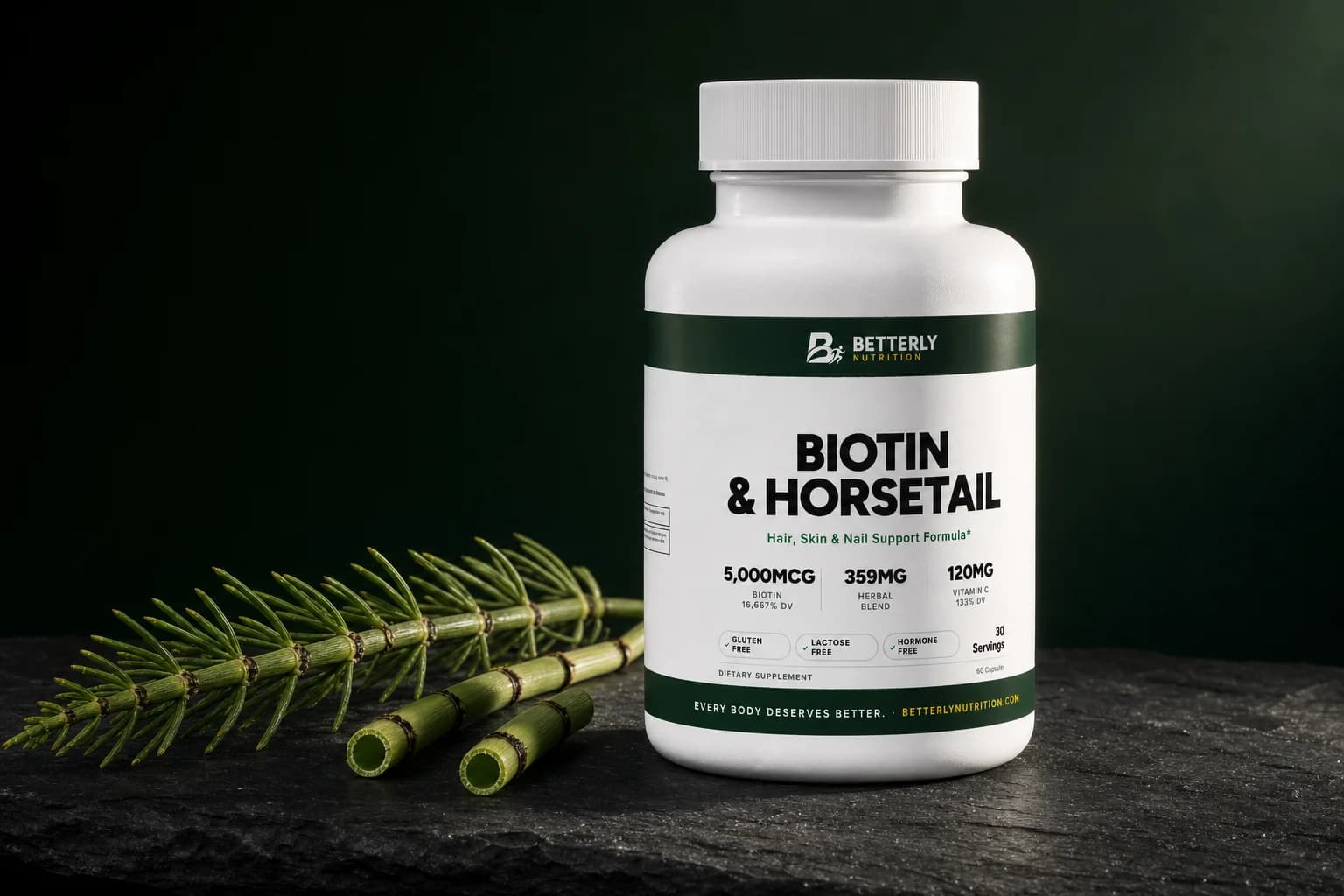
Our Biotin & Horsetail Hair Capsules don't disclose it: horsetail is one of 11 ingredients sharing a 359 mg Proprietary Blend per 2-capsule serving.
In label order, heaviest first, the blend lists PABA, horsetail, fo-ti root, bamboo leaf, stinging nettle, Chinese peony root, spirulina, saw palmetto fruit, soy plant sterols, alfalfa and barley grass. Above it, the panel gives 16 vitamins and minerals their own amounts, including 5,000 mcg of biotin (16,667% DV), 6 mg of thiamin (500% DV) and 14.5 mg of iron (81% DV). Our guide to reading a proprietary blend explains the format.
A four-point check for any horsetail label
- The species. A Latin name such as Equisetum arvense pins down the plant, and ODS notes that this two-part name identifies a botanical's species. LiverTox names mix-ups with other Equisetum species as one possible reason for rare liver problems.
- The plant part and form. "Whole herb," "stem," "extract" and "powder" aren't interchangeable.
- Horsetail's own amount. A milligram figure on its own line beats a share of a blend.
- A silica figure. If you see "standardized" instead, ODS says U.S. law doesn't require standardization and there's no legal definition of the term.
Scored that way, our capsule passes the first two checks and fails the last two. That's the honest limit of this product, and it's why we'll never tell you what horsetail dose it delivers.
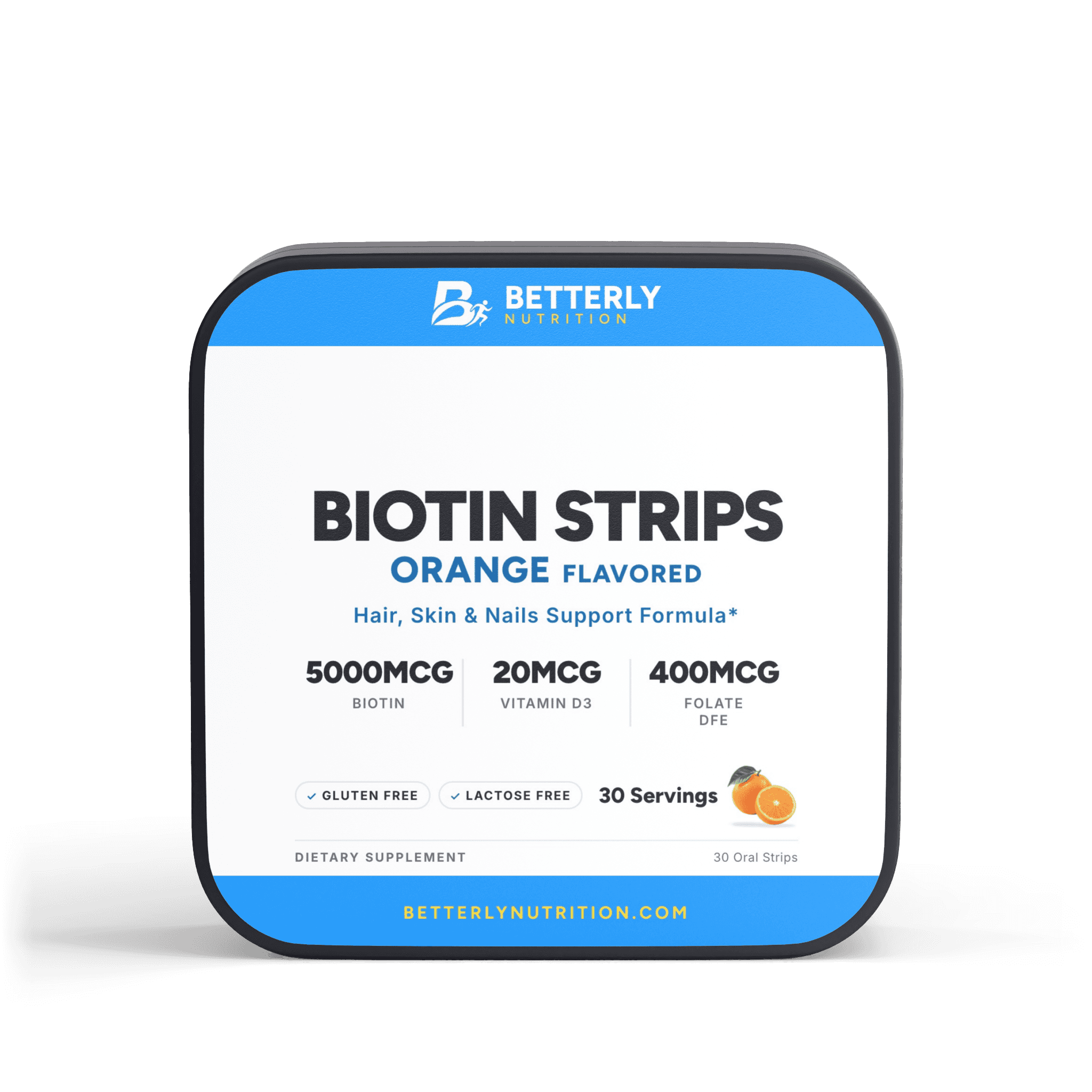
Our gummy runs the other way: it states 2 mg of silicon per 2-gummy serving but names no source, so neither horsetail nor bamboo appears on its label. Our 5,000mcg Biotin Strips skip silica entirely.
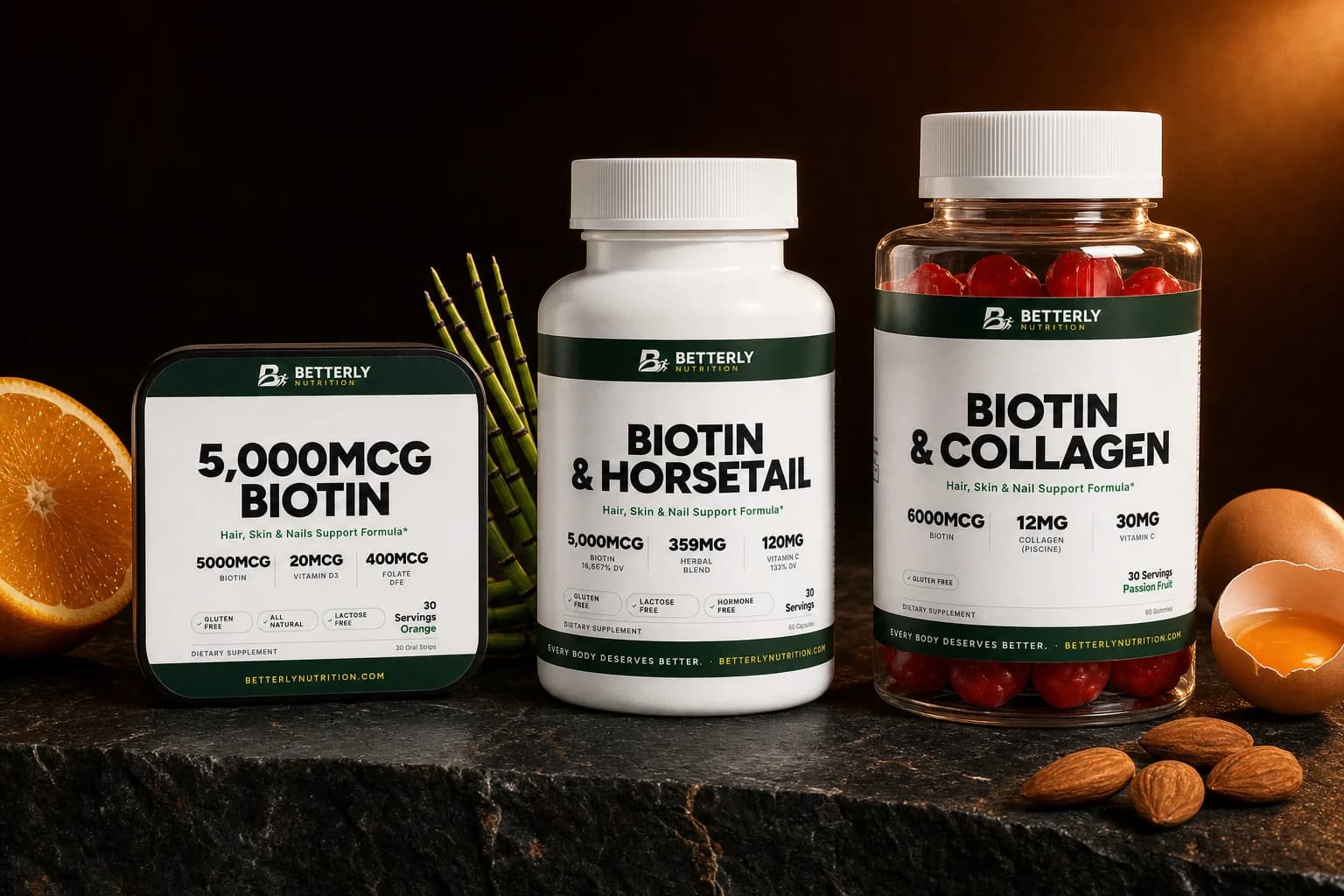
| Product (serving) | Horsetail or bamboo | Silicon stated | Biotin |
|---|---|---|---|
| Biotin & Horsetail Hair Capsules (2 capsules) | Both, in a 359 mg blend | None | 5,000 mcg |
| Biotin & Collagen Gummies (2 gummies) | Neither listed | 2 mg | 6000 mcg |
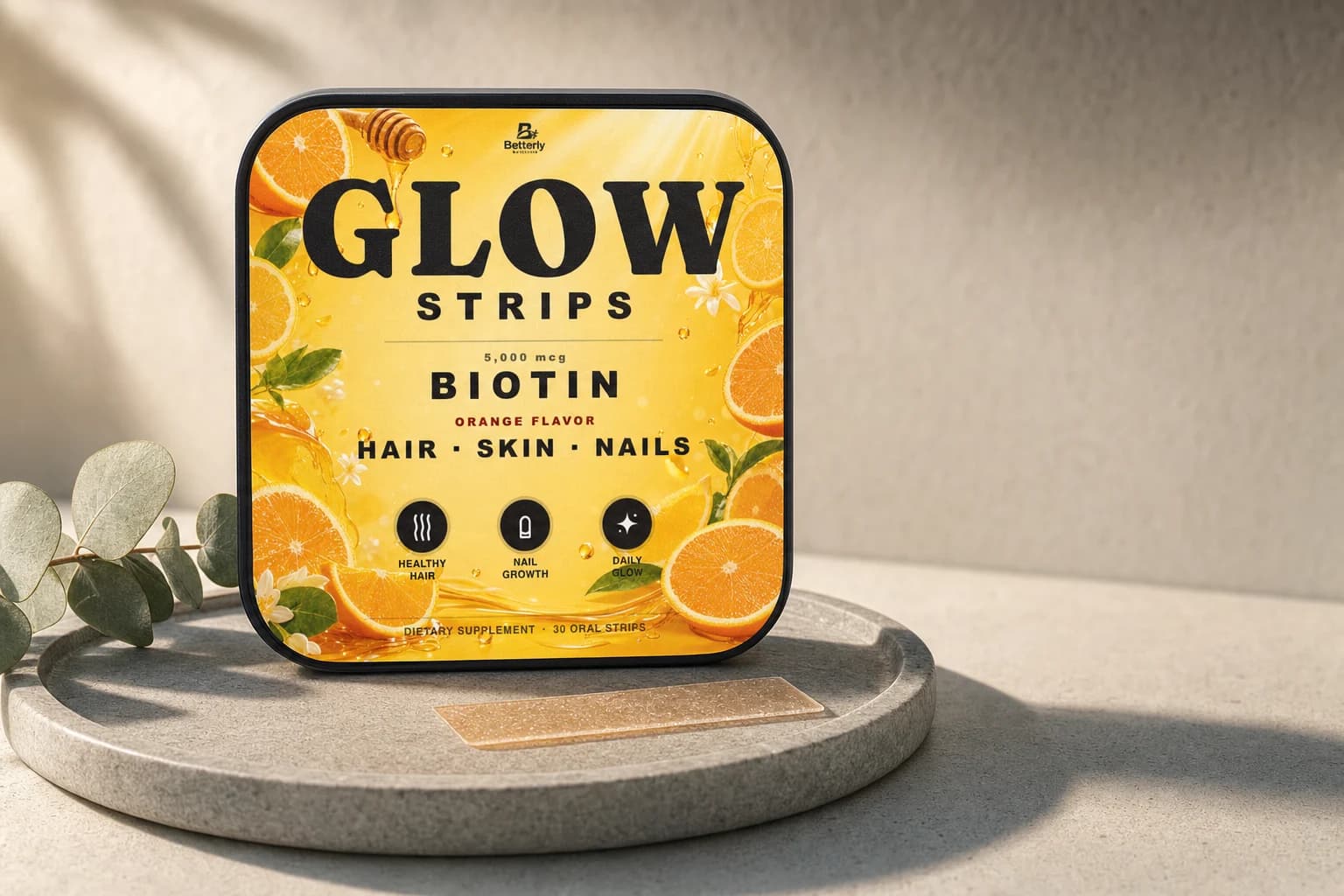
| 5,000mcg Biotin Strips (1 strip) | Neither listed | None | 5000 mcg |
Biotin lands between 5,000 and 6000 mcg on all three, so it won't settle the decision. What separates them is whether you want horsetail named, silicon counted, or a short panel with no herbs at all.
From our shop: Biotin & Horsetail Hair Capsules — 5,000 mcg of biotin plus a 359 mg herbal blend that lists horsetail and bamboo extract per 2-capsule serving, labeled for adults only.
How do you take horsetail capsules, per the label?
The label's suggested use for Biotin & Horsetail Hair Capsules is two capsules daily, for adults only, so one 60-capsule bottle lasts 30 days.
The bottle doesn't tie the dose to a meal or time of day, so pair it with a daily habit you won't skip. It also says: "Do not exceed recommended dose."
Two more lines matter. Each serving has 14.5 mg of iron, and the bottle warns that accidental iron overdose is a leading cause of fatal poisoning in children under 6. The Contains line reads "Soy," from the blend's plant sterols.
Stick to one hair formula at a time. Our capsule and gummy share 11 ingredients, from vitamin A to PABA, so taking both means getting all 11 from two sources at once. Folic acid shows why that matters: 880 mcg per 2-capsule serving plus 400 mcg per 2-gummy serving is 1,280 mcg, above the 1,000 mcg adult upper limit for folate from supplements and fortified foods in the ODS folate fact sheet.
When don't you need a horsetail supplement?
You likely don't need horsetail if you want a known silica dose, already take a multivitamin, only want biotin, avoid soy, or are under 18.
- You want to know your silica intake. Our capsule can't tell you.
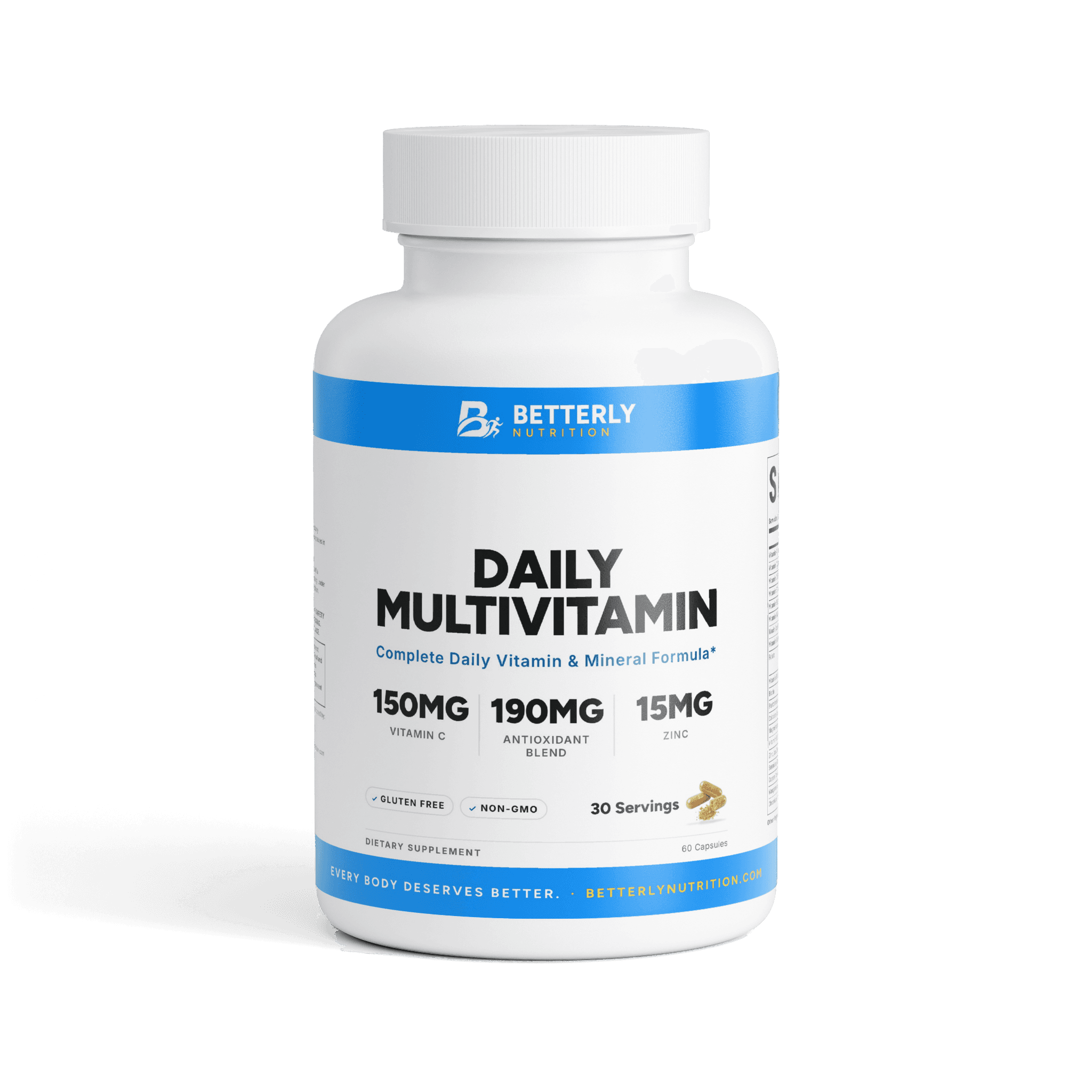
- You already take a multivitamin. With 16 vitamin and mineral rows, iron included, our capsule's panel reads a lot like one.
- You only want biotin. Our strips list just biotin, vitamin D3 and folate.
- You avoid soy, or you're under 18. The capsule lists soy and says "For adults only."
- You're counting on results by a deadline. No label or federal source we used offers one.
For the wider picture, see our overview of hair, skin and nails supplements, or browse the Hair, Skin & Nails shop.
From our shop: Biotin & Collagen Gummies — 2 mg of silicon and 6000 mcg of biotin per 2-gummy serving in a passion fruit chew, with 4 g of added sugars and fish and coconut on its Contains line.
Horsetail side effects: who should check with a provider first?
Horsetail is generally well tolerated, NIH's LiverTox database says, though it lists diarrhea, stomach discomfort and nausea as possible minor side effects, plus rare allergic reactions such as skin rash.
Check with a healthcare provider before you start horsetail if you're pregnant, nursing, under 18, on prescription medicine, managing a medical condition, or scheduled for surgery or bloodwork. Our capsule's caution covers four of those: "Consult a physician if pregnant, nursing, under 18, or have a medical condition."
LiverTox also records rare, short-lived rises in liver-enzyme test results tied to oral horsetail, and it calls liver problems from horsetail rare and generally mild. It advises against high doses taken long term by people with existing liver problems.
The USDA review adds a farm note: hay that's more than 20% horsetail can seriously sicken horses. That's raw plant by the bale, not a capsule, but it fits ODS's point that a botanical's safety depends on its makeup, preparation and amount.
Some horsetail articles also mention thiaminase, an enzyme said to break down thiamin (vitamin B1) in the raw plant. Neither LiverTox nor the USDA review mentions it, so ask your provider. Our capsule lists 6 mg of thiamin (500% DV) per 2-capsule serving, and we don't claim one offsets the other.
Two more things to raise. ODS warns that biotin above recommended amounts can throw off some lab results, thyroid hormone tests among them. And horsetail shares its 359 mg with fo-ti, Chinese peony, saw palmetto and soy plant sterols, so hand your pharmacist the whole panel.
Fo-ti needs the closest look. LiverTox files it under its Latin name, Polygonum multiflorum, and scores it A, a well-documented cause of liver injury, with some serious cases. Our guide to biotin side effects lists the warning signs it describes.
FAQ: horsetail for hair
Does horsetail have silica?
Yes, horsetail has silica. The USDA Forest Service review of Equisetum arvense describes silicified projections on both of its stem types, and people once used the plant to scour and polish objects. How much silica reaches a supplement depends on the plant part and processing, and federal rules let a label leave that figure off.
Is horsetail extract safe to take every day?
Horsetail extract's long-term daily safety isn't well documented, so stay at your product's label amount. NIH's LiverTox database calls horsetail generally well tolerated, but the trials it reviewed were small and short. Our Biotin & Horsetail Hair Capsules are labeled for two capsules daily, for adults only. Skip horsetail tea on top, and have a pharmacist review the whole blend, fo-ti included, if you take medicine.
Can you take silica and biotin together?
Silica and biotin often appear on the same hair label, and none of the sources we used warns against the pair. Of our products, only the Biotin & Collagen Gummies state amounts for both: 2 mg of silicon and 6000 mcg of biotin per 2-gummy serving. Our capsule names two plants sold as silica sources, horsetail and bamboo, but states no silica amount. Whichever you pick, take one hair formula at a time.
Is there a timeline for horsetail and hair?
Horsetail has no established timeline for hair, and our capsule's label doesn't suggest one, so we won't invent one. Be wary of any page that promises a result by a certain week, since no source we used supports those dates. If a change in your hair concerns you, a healthcare provider can help.
Does horsetail interact with medications?
Horsetail's drug interactions aren't documented on the federal pages we checked, which isn't the same as there being none. ODS recommends giving your doctor and pharmacist a full list of your supplements and medicines, because they can tell you whether a supplement might interact with your prescriptions or lab tests. With a blend like ours, share the whole panel.
Sources
- Equisetum arvense, field horsetail, USDA Forest Service Fire Effects Information System
- Botanical Dietary Supplements: Background Information for Consumers, NIH Office of Dietary Supplements
- Horsetail, LiverTox (NCBI Bookshelf), National Institutes of Health
- Polygonum Multiflorum, LiverTox (NCBI Bookshelf), National Institutes of Health
- Biotin: Fact Sheet for Consumers, NIH Office of Dietary Supplements
- Folate: Fact Sheet for Consumers, NIH Office of Dietary Supplements
- 21 CFR 101.36, Nutrition labeling of dietary supplements, Electronic Code of Federal Regulations
If this left you looking for somewhere to start, read biotin and horsetail capsules for hair — its amounts per serving are listed on the page. For the practical questions this raises, how dosing, sourcing and subscriptions work is answered in one place.