On this page
- What biotin actually is: vitamin B7 in plain English
- The keratin connection: what biotin does for hair, skin and nails
- 30 mcg vs 5,000 mcg: making sense of the dose gap
- What research honestly suggests for hair, skin and nails
- Biotin-rich foods vs. a supplement
- Strips, gummies or capsules: choosing a format you'll stick with
- How fast do hair and nails grow?
- An honest heads-up: biotin and blood work
- Who should check with a provider before taking biotin?
- Key takeaways
- FAQ: biotin questions, answered
- Sources
Pick up almost any hair, skin and nails supplement and you'll find the same number on the label: biotin 5,000 mcg. It's an oddly specific figure, and here's the part almost nobody says out loud — it's roughly 167 times the amount your body is thought to need in a day. This guide walks through what biotin actually does, how that 5,000 mcg standard came to be, what research honestly suggests you can expect for your hair and nails, and one heads-up about blood work worth knowing before your next draw.
We sell biotin, so you might expect this to be a sales pitch. It isn't. Biotin is inexpensive, gentle, and genuinely useful in the right situations — and oversold in others. Knowing which is which will save you money and a few months of misplaced expectations.
What biotin actually is: vitamin B7 in plain English
Biotin is vitamin B7, one of the eight B vitamins. Like its siblings, it's water-soluble: your body takes what it needs, uses it, and sends the extra out in urine. There's no long-term storage tank, which is why a steady daily supply matters more than any single large dose.
Its day job is unglamorous. Biotin acts as a helper for the enzymes that convert carbohydrates, fats and protein from your food into usable energy. It's involved in building fatty acids and processing amino acids — quiet, essential background work happening in nearly every cell.
Older research literature sometimes calls it vitamin H, from the German words for hair and skin — "Haar und Haut." That nickname, coined nearly a century ago, is your first clue to why this particular B vitamin ended up on every beauty shelf.
The keratin connection: what biotin does for hair, skin and nails
Hair and nails are built almost entirely from keratin, a tough structural protein. Biotin supports the metabolism of the amino acids — protein building blocks — that keratin production depends on. That's the entire connection, and it's a real one: when biotin intake is genuinely low, hair and nails are often among the first places it shows. Strands shed and thin; nails turn brittle, soft, or peel in layers.
Here's the honest catch, though: the connection runs through sufficiency, not surplus. Biotin appears to matter most when you're short on it. Once your body has what it needs for keratin metabolism, research hasn't shown that adding more builds better hair — much the way adding extra flour doesn't make bread rise higher.
That single idea explains almost everything else in this guide, including why the research looks the way it does.
30 mcg vs 5,000 mcg: making sense of the dose gap
U.S. nutrition guidelines set the adequate intake of biotin for adults at about 30 mcg a day. A typical hair, skin and nails supplement delivers 5,000 mcg. That's not a typo — the standard supplemental dose is roughly 167 times the daily reference amount.
How did that happen? The most-cited nail studies used 2,500 mcg a day, and 5,000 mcg has since become a common label amount.
Two things are worth knowing about that gap:
- Biotin is water-soluble, and no upper intake limit has been established. In research to date, amounts far above the daily requirement have been well tolerated, with the excess passed in urine rather than stored.
- "Well tolerated" and "more effective" are different claims. Research hasn't shown that 5,000 mcg does more for a well-nourished person than a much smaller amount would. The number on the front of the label is not a strength rating.
So the sensible way to read "biotin 5,000 mcg" on a label: it's an abundant daily supply of a vitamin your body can't store — not a mega-strength promise.
What research honestly suggests for hair, skin and nails
Here's the plain version.
Nails have the most encouraging evidence. In small, older studies — mostly using around 2,500 mcg a day — a majority of participants with brittle nails reported firmer, thicker nails after several months of consistent use. Those studies were small and loosely designed, so "encouraging" is the right word, not "settled." But it's the strongest corner of the biotin literature.
Hair is a more modest story. The NIH Office of Dietary Supplements says there is little scientific evidence that biotin supplements improve hair, skin or nails, and that more research is needed. For people who already get enough, research hasn't shown that extra biotin thickens hair. Genetics, age, styling damage, low iron, and ordinary stress move the needle far more than one vitamin can.
Skin is the least studied of the three. A genuinely low biotin intake can show up as dry, flaky, irritated skin, and restoring intake supports normal skin function. Beyond that, evidence for extra benefit in well-nourished people is thin.
Where does that leave you? Think of biotin as insurance with a bonus. If part of your hair-and-nail frustration traces to a shortfall you didn't know about, biotin closes that gap. The NIH Office of Dietary Supplements notes that biotin deficiency is very rare in the United States, and that shortfalls are more likely during pregnancy and breastfeeding or with long-term use of certain prescription medications. A heavy raw-egg habit can also get in the way (more on that below). If your intake is already fine, you're buying inexpensive, well-tolerated coverage plus the possibility of firmer nails that small studies point to. That's a fair deal, honestly described. It's just not a miracle.
For the wider picture — what else supports hair, skin and nails beyond biotin — our guide to hair, skin and nails supplements covers the full landscape.
Biotin-rich foods vs. a supplement
You can reach 30 mcg with food, and most people who eat a varied diet do. The classic biotin-rich foods:
- Cooked eggs, especially the yolk — about 10 mcg each
- Nuts and seeds — almonds, peanuts, walnuts, sunflower seeds
- Salmon and organ meats
- Sweet potatoes, mushrooms, avocado
- Legumes like soybeans and lentils
One genuinely useful piece of trivia: raw egg whites contain avidin, a protein that binds biotin so tightly your body can't absorb it. Cooking deactivates avidin completely. This only becomes a real issue with a serious raw-egg habit — think many raw whites a day for a long stretch — but if that describes your protein shakes, it's worth knowing.
So why supplement at all? Two honest reasons. Consistency: a supplement delivers the same amount every day regardless of what you cooked. And ceiling: if you want the amounts used in the nail research, food alone won't get you anywhere close — no reasonable diet delivers 2,500 mcg.
Strips, gummies or capsules: choosing a format you'll stick with
Here's an unglamorous truth about biotin: the right format is whichever one you'll actually take every day. Format determines consistency.
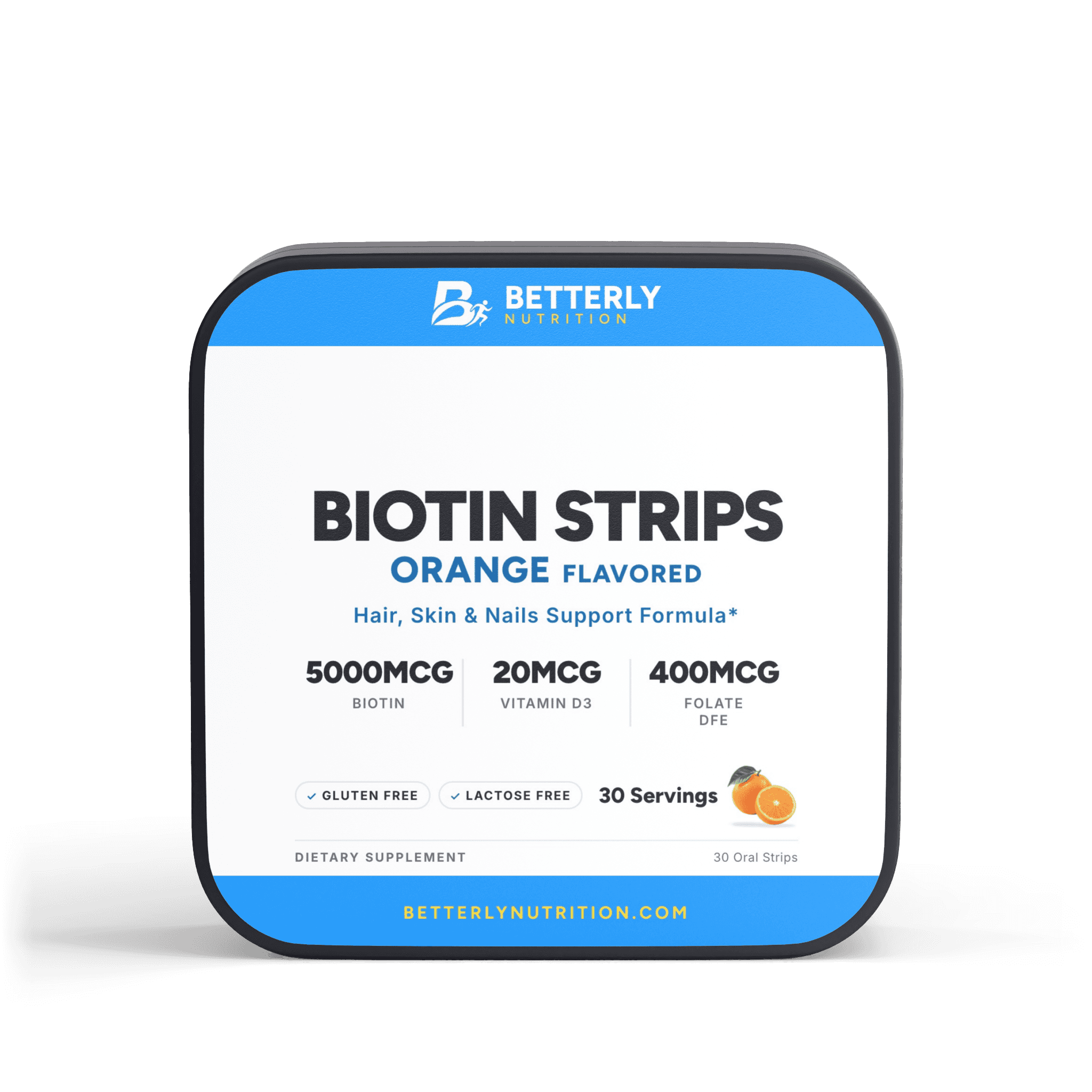
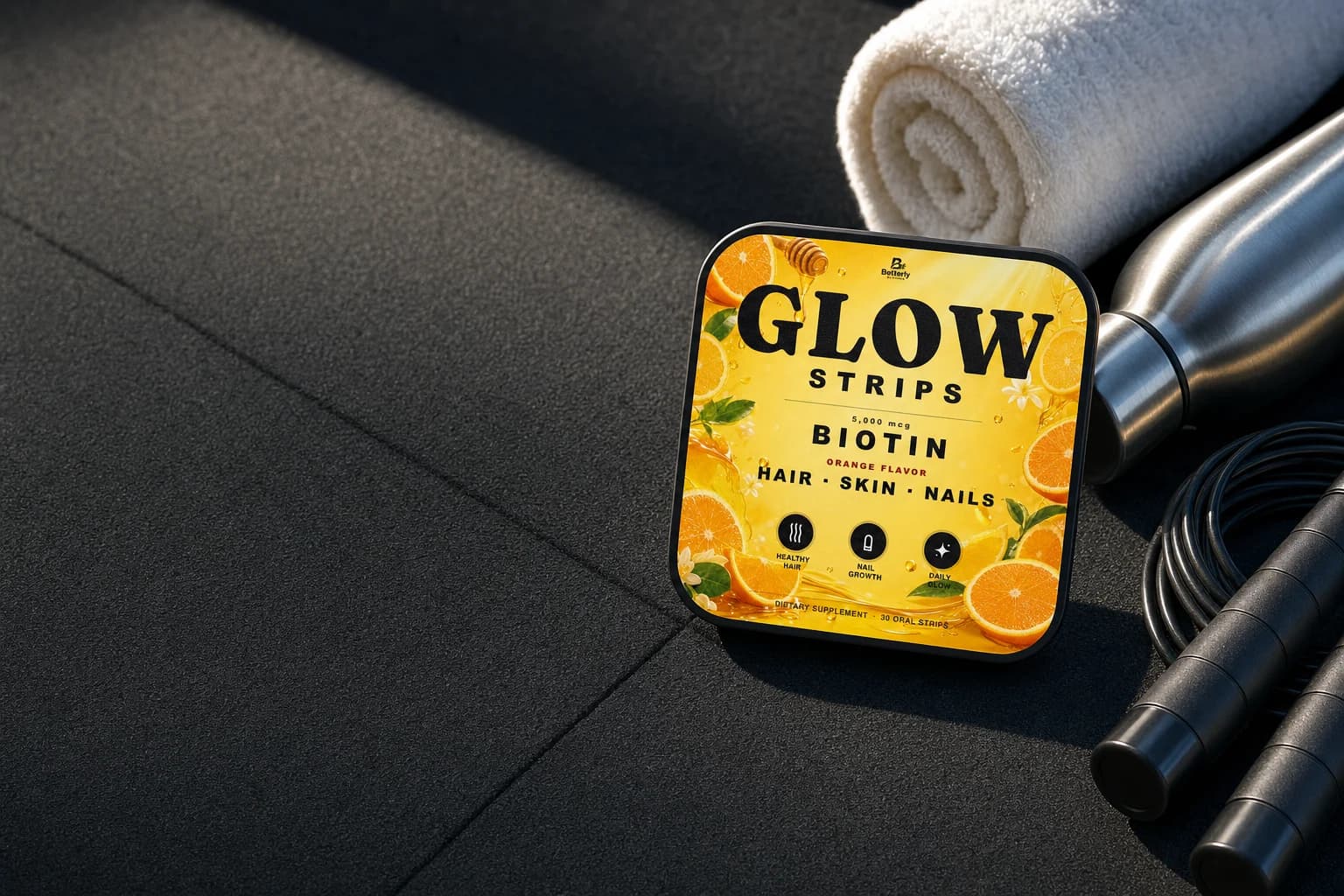
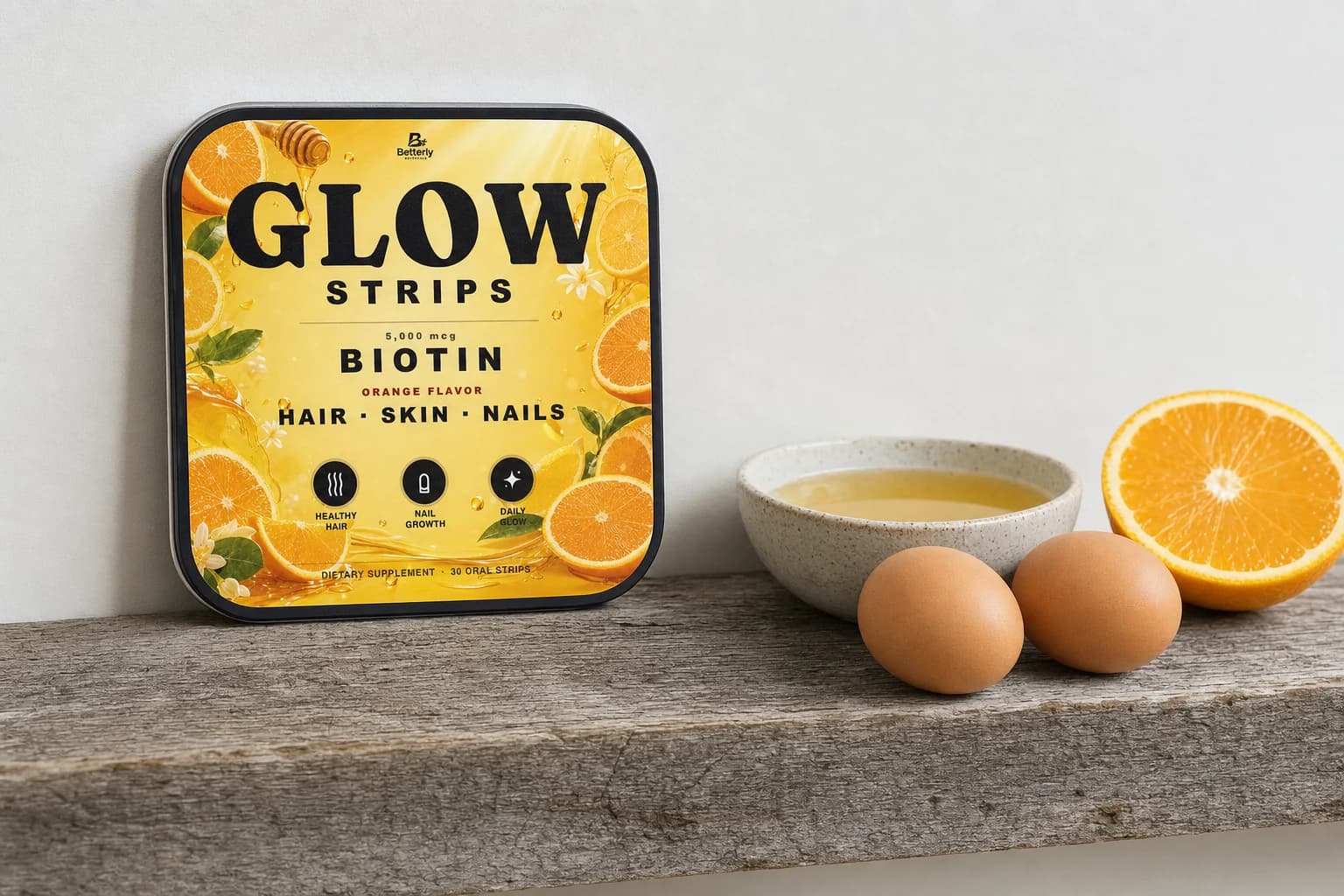
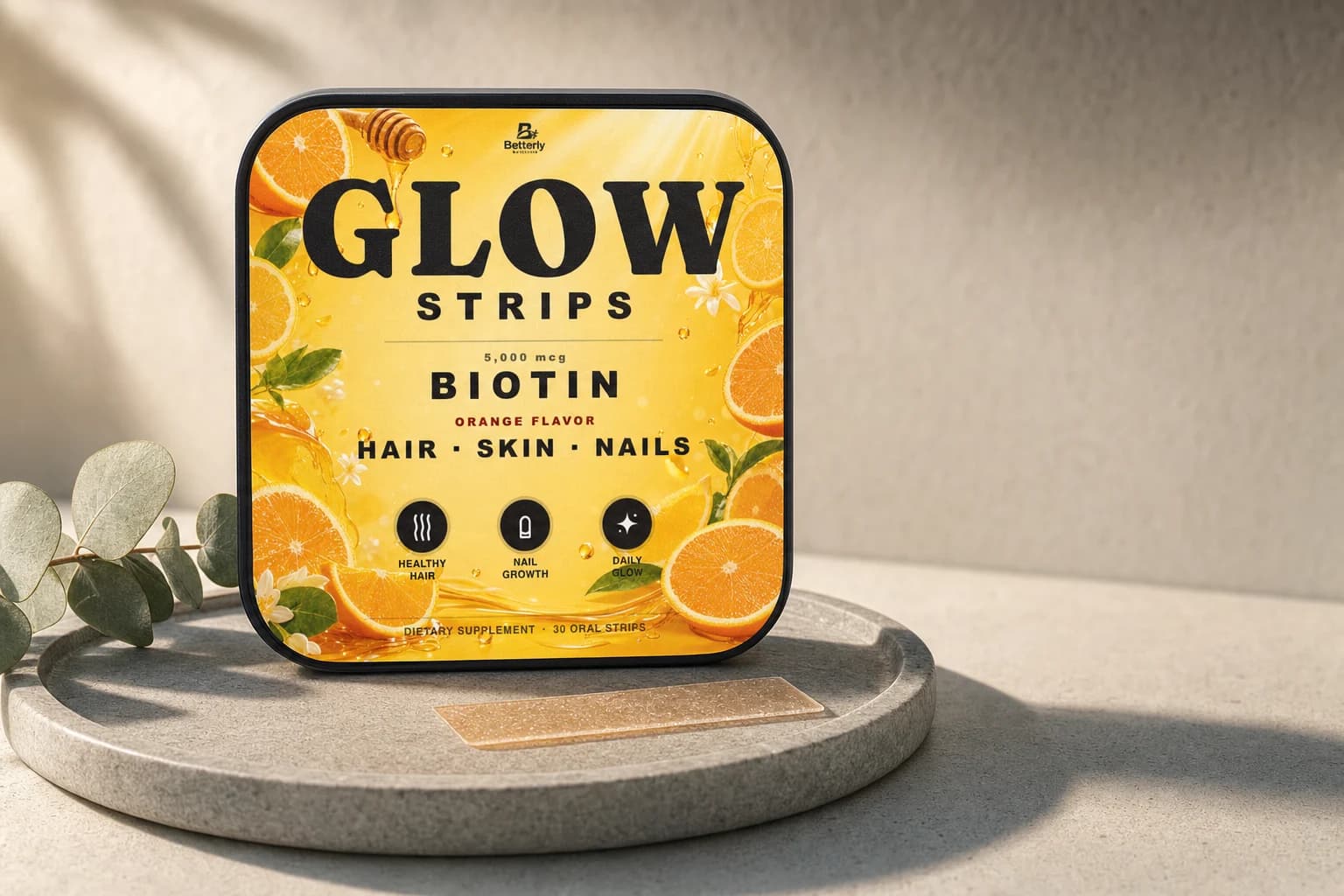
Dissolvable strips. Our 5,000mcg Biotin Strips carry 5,000 mcg of biotin in a strip that melts on your tongue — 30 strips per pack, no water, no swallowing. If pills are the reason your last supplement routine died, strips remove the excuse.
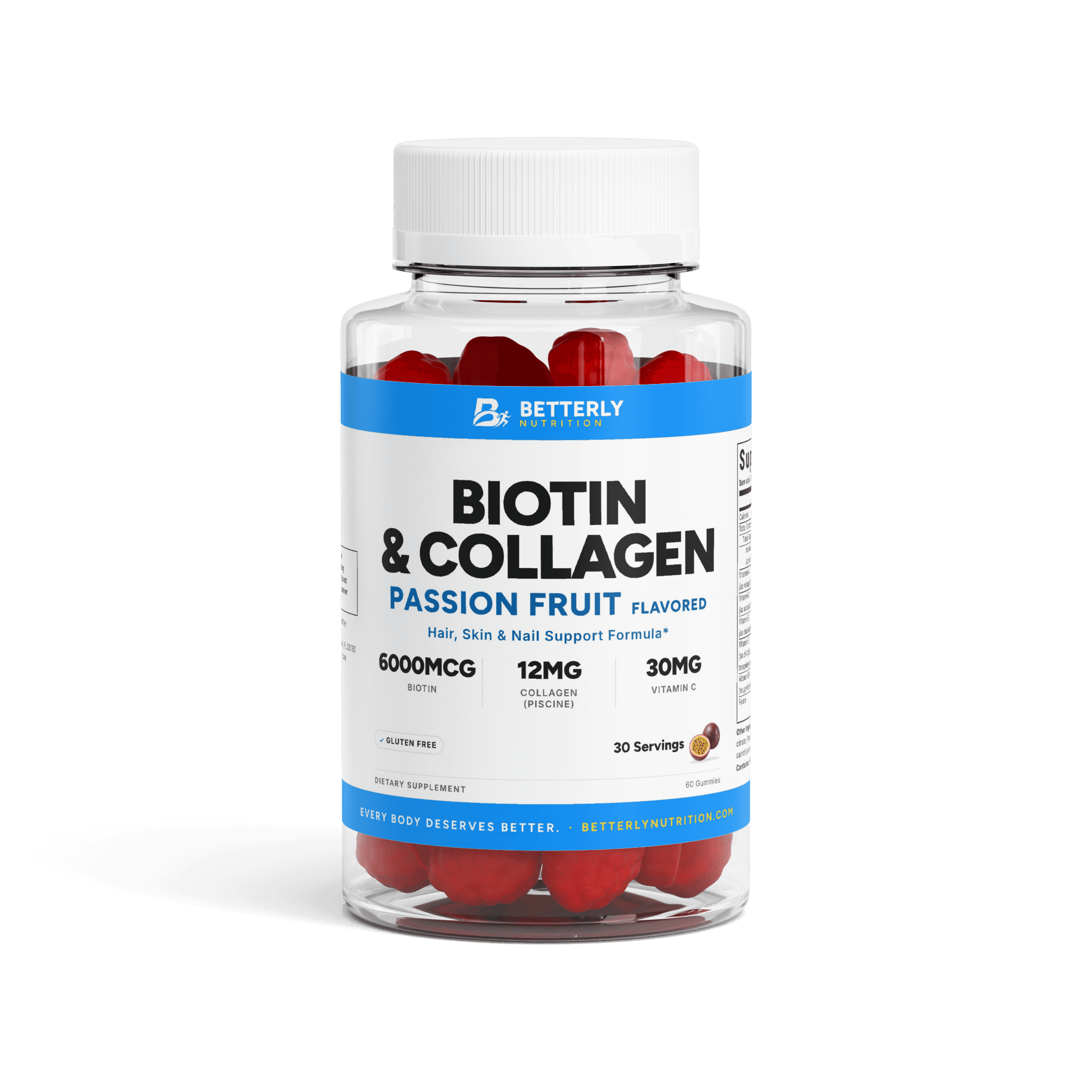
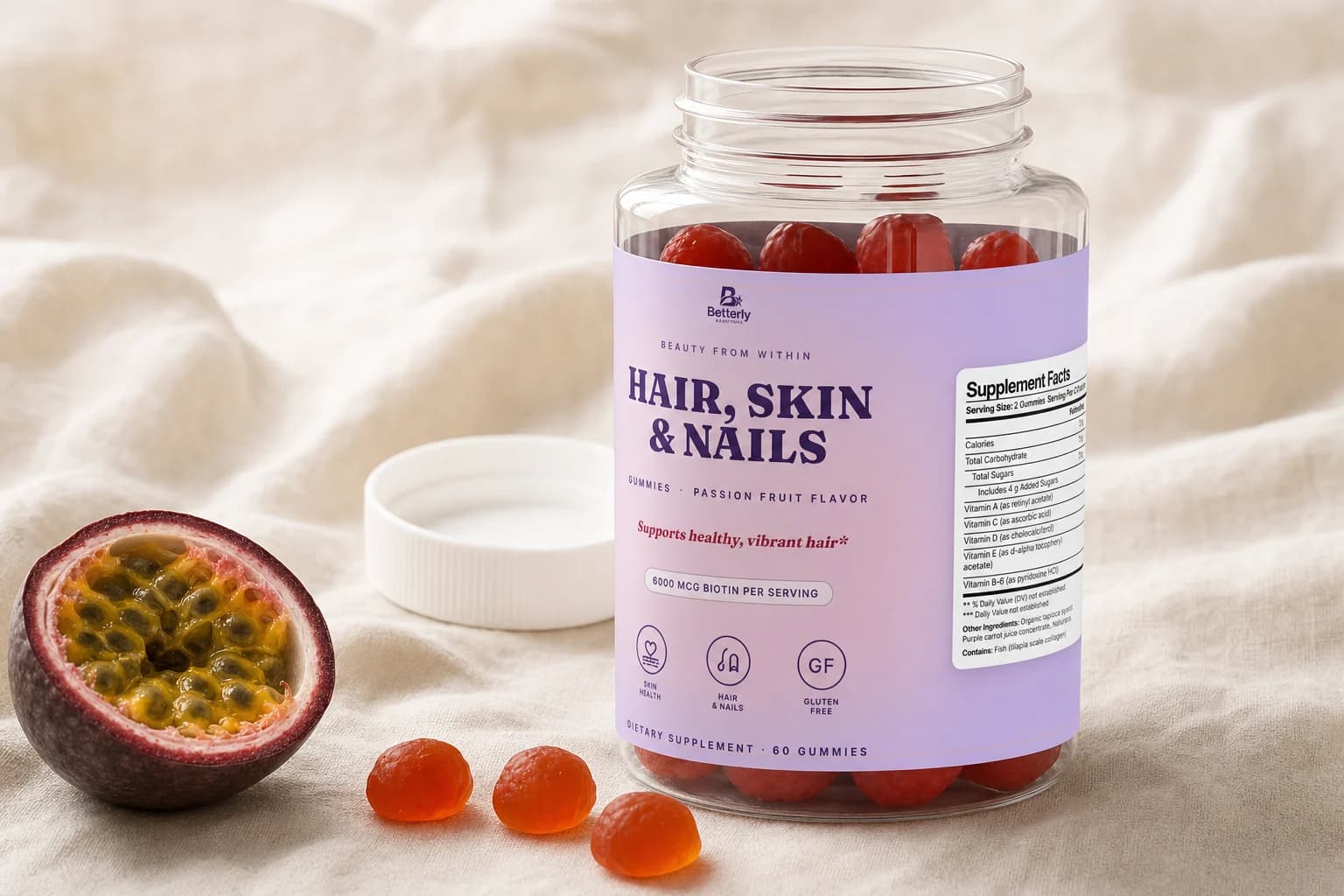
Gummies. Our Biotin & Collagen Gummies come 60 passion-fruit gummies to a jar and carry 6,000 mcg of biotin per 2-gummy serving, alongside several other vitamins and minerals and a small 12 mg of collagen. Think of that collagen as a token amount: collagen brings its own protein logic to the same goal, but only at gram-level amounts. Curious how the two compare? Our companion guide Biotin vs Collagen for Hair breaks down the differences without the hype, and Collagen 101 covers collagen on its own terms.
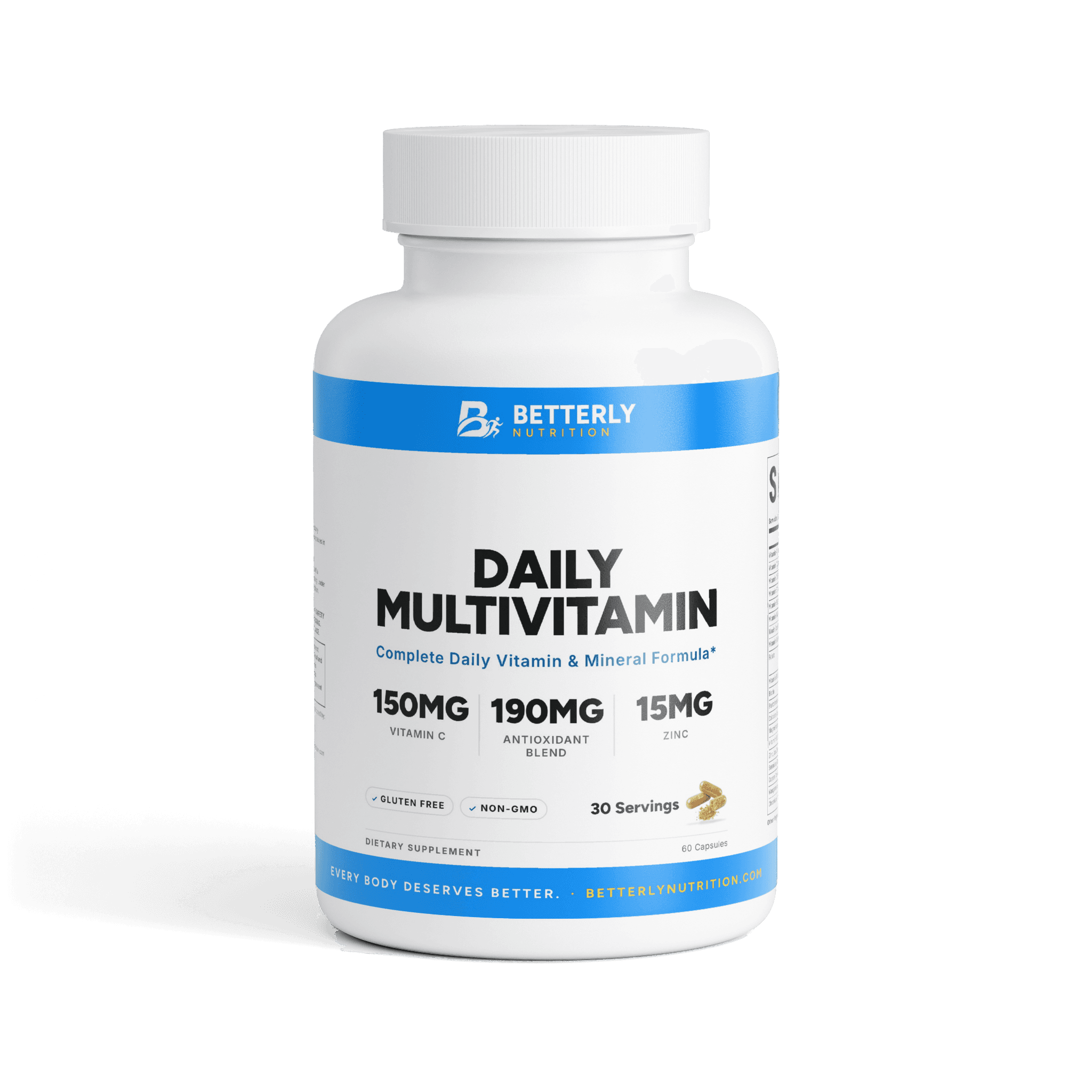
A multivitamin you already take. Check the label — most multis include biotin, and if yours does, your baseline may already be covered. Our Daily Multivitamin Capsules list 20 vitamins and minerals, including 300 mcg of biotin per 2-capsule serving — the product page shows every one. Whether a multi makes sense for you at all is its own honest question — we wrote a whole guide on that.
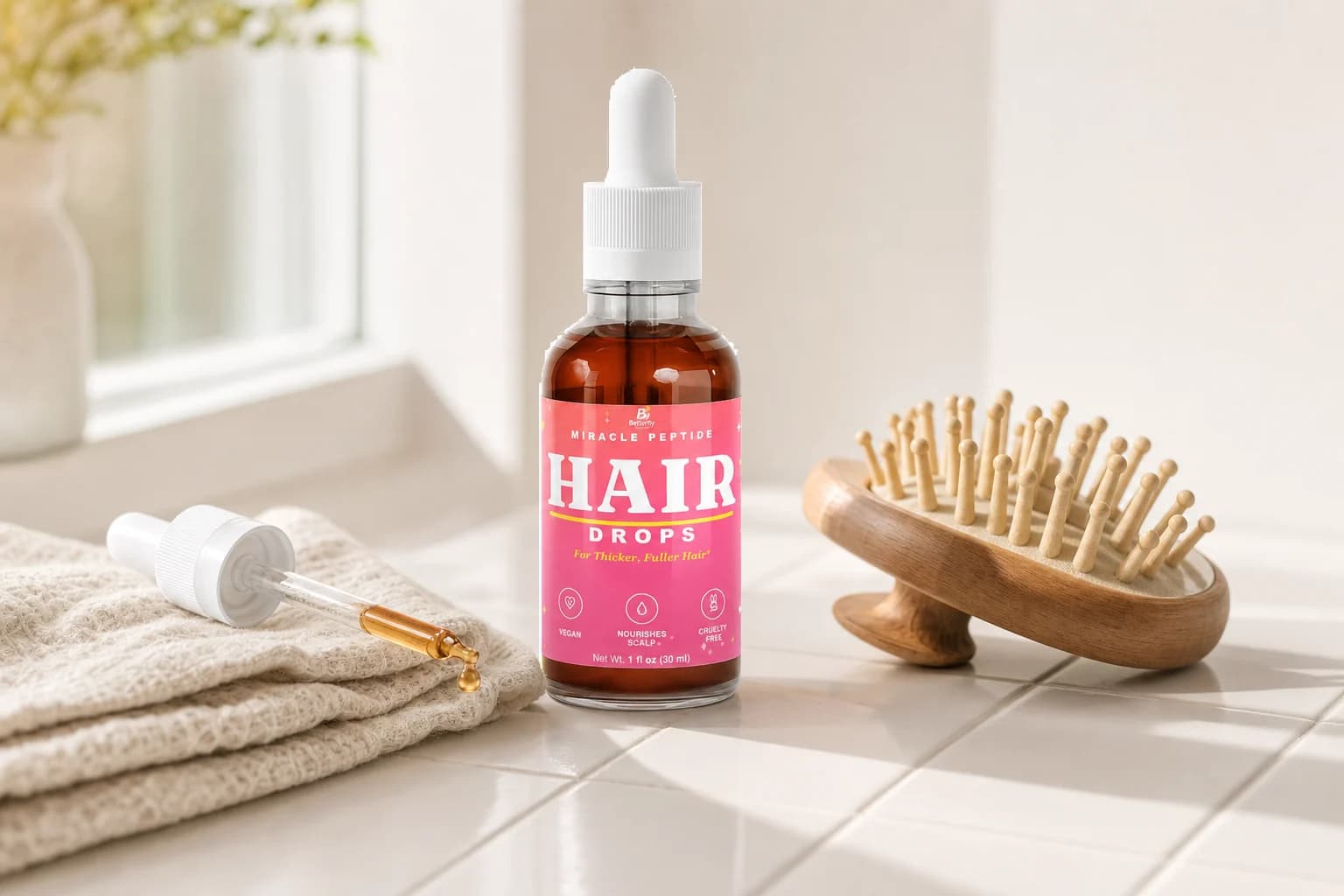
Working from the outside, too. Biotin works from the inside out. If you also want an outside-in option for the look of fuller hair, a scalp serum takes the topical route (we don't currently sell one). Our peptide hair serum buying guide explains what actually matters in that category.
You can compare our biotin strips and gummies alongside the rest of the range in our Hair, Skin & Nails collection. One Betterly habit worth knowing while you shop: each of these product pages prints the exact biotin amount per serving, so you can check the number before you buy.
How fast do hair and nails grow?
Hair grows about half an inch a month, and nails grow a few millimeters a month, so a fully renewed fingernail takes roughly six months. The hair already on your head is finished tissue, and no vitamin changes it. For context, the small biotin nail studies described above ran for several months.
An honest heads-up: biotin and blood work
Here's something worth knowing before any blood draw, and a big part of why we wrote this guide.
High amounts of biotin circulating in your blood can interfere with how certain common blood-work results are measured — including thyroid hormone readings and troponin, a marker used in heart-related blood work. Depending on the method, results can read higher or lower than they truly are. The FDA has issued safety communications about exactly this, and the NIH Office of Dietary Supplements notes that biotin supplements above recommended amounts may cause false results in some lab tests.
The fix is simple:
- Tell your provider you take biotin — at every appointment, and especially before any blood draw.
- Ask whether to pause it beforehand. Your provider or lab can tell you whether, and for how long, to pause it before a draw. Follow their guidance rather than a blog's.
- Don't skip mentioning it because it's "just a vitamin." This is the one situation where that phrase gets people into trouble.
None of this makes biotin unsafe to take. It makes biotin worth mentioning. There's a difference — and a supplement brand that trusts you can say so plainly.
Who should check with a provider before taking biotin?
Check with your healthcare provider before starting biotin if you're pregnant, nursing, under 18, managing a medical condition, taking prescription medication, or have blood work coming up.
- Pregnant, nursing, under 18, or managing a medical condition. The labels on our 5,000mcg Biotin Strips, Biotin & Collagen Gummies and Daily Multivitamin Capsules all ask you to consult a physician first in these cases.
- Taking prescription medication. The NIH Office of Dietary Supplements notes that some medications can affect biotin levels, so ask your doctor or pharmacist to check.
- Blood work coming up. Biotin can skew certain lab results, as covered above, so mention it before the draw.
Key takeaways
- Biotin is vitamin B7 — a water-soluble helper your body uses to turn food into energy and to metabolize the building blocks of keratin.
- The 5,000 mcg standard is abundance, not strength. Daily needs sit around 30 mcg; the extra is well tolerated and passed in urine, but more isn't better once you have enough.
- Research is most encouraging for brittle nails — small studies, several months, firmer and thicker. For hair, NIH notes there is little scientific evidence of benefit.
- Food can cover the baseline — cooked eggs, nuts, salmon, sweet potatoes — while a supplement adds consistency and study-level amounts.
- Pick the format you'll actually take daily. Daily consistency matters more than any number on the front of a label.
- Tell your provider before blood work. It's the most important sentence in this guide.
FAQ: biotin questions, answered
Is 5,000 mcg of biotin too much?
It's far above the roughly 30 mcg daily reference amount, but biotin is water-soluble, no upper intake limit has been established, and research to date has found amounts like this well tolerated, with the excess leaving in urine. The practical caution isn't the amount itself — it's the blood-work interference described above. If you're pregnant, nursing, under 18, taking prescription medication, or managing a medical condition, check with your provider before starting biotin.
What does biotin actually do?
In one sentence: biotin helps enzymes convert food into energy and supports the protein metabolism behind keratin — the structural material your hair and nails are made of.
Does biotin interact with medications?
Yes, biotin and some medications can affect each other. The NIH Office of Dietary Supplements notes that certain medications can lower biotin levels, and that biotin may interact with some medications. Biotin can also skew certain lab tests, as covered above. Tell your doctor, pharmacist and other health care providers about every supplement you take, so they can check it against your prescriptions and any upcoming blood work.
Can I get enough biotin from food alone?
For the ~30 mcg baseline, yes — a varied diet with cooked eggs, nuts, seeds, and vegetables gets most people there. What food can't do is match the higher amounts used in the nail research, or the every-single-day consistency of a supplement.
Should I take biotin in the morning or at night?
Timing doesn't appear to matter — it's water-soluble and fine with or without food. Anchor it to something you already do daily, like brushing your teeth or making coffee, because consistency is the entire game.
Can I take biotin and collagen together?
Yes — they work through different mechanisms and are commonly combined. Our biotin and collagen gummies list both, though the collagen is only 12 mg per 2-gummy serving. For which deserves top billing for your goals, see Biotin vs Collagen for Hair.
Sources
- Biotin: Fact Sheet for Consumers, NIH Office of Dietary Supplements
- Biotin Interference with Troponin Lab Tests, U.S. FDA
If this left you looking for somewhere to start, read biotin 5,000 mcg dissolvable strips — its amounts per serving are listed on the page. For the practical questions this raises, how dosing, sourcing and subscriptions work is answered in one place.