On this page
- Why application technique matters more than you'd think
- How to apply scalp serum, step by step
- Wet or dry hair? When to apply it in your routine
- How often should you use a scalp serum?
- The one-minute scalp massage habit
- Why a scalp routine rewards patience
- Supporting hair from the inside too
- Mistakes that quietly waste your serum
- FAQ: scalp serum application, answered
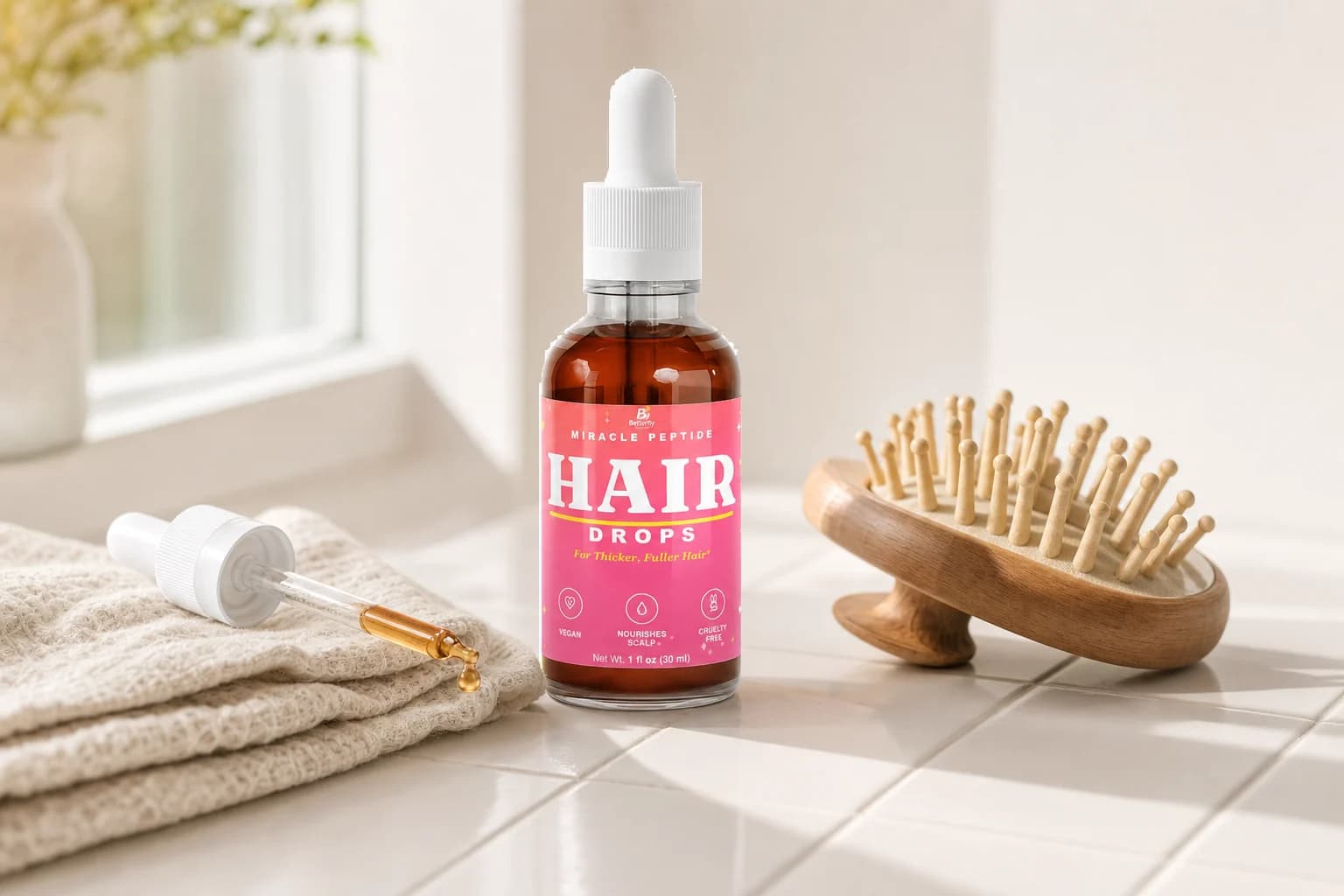
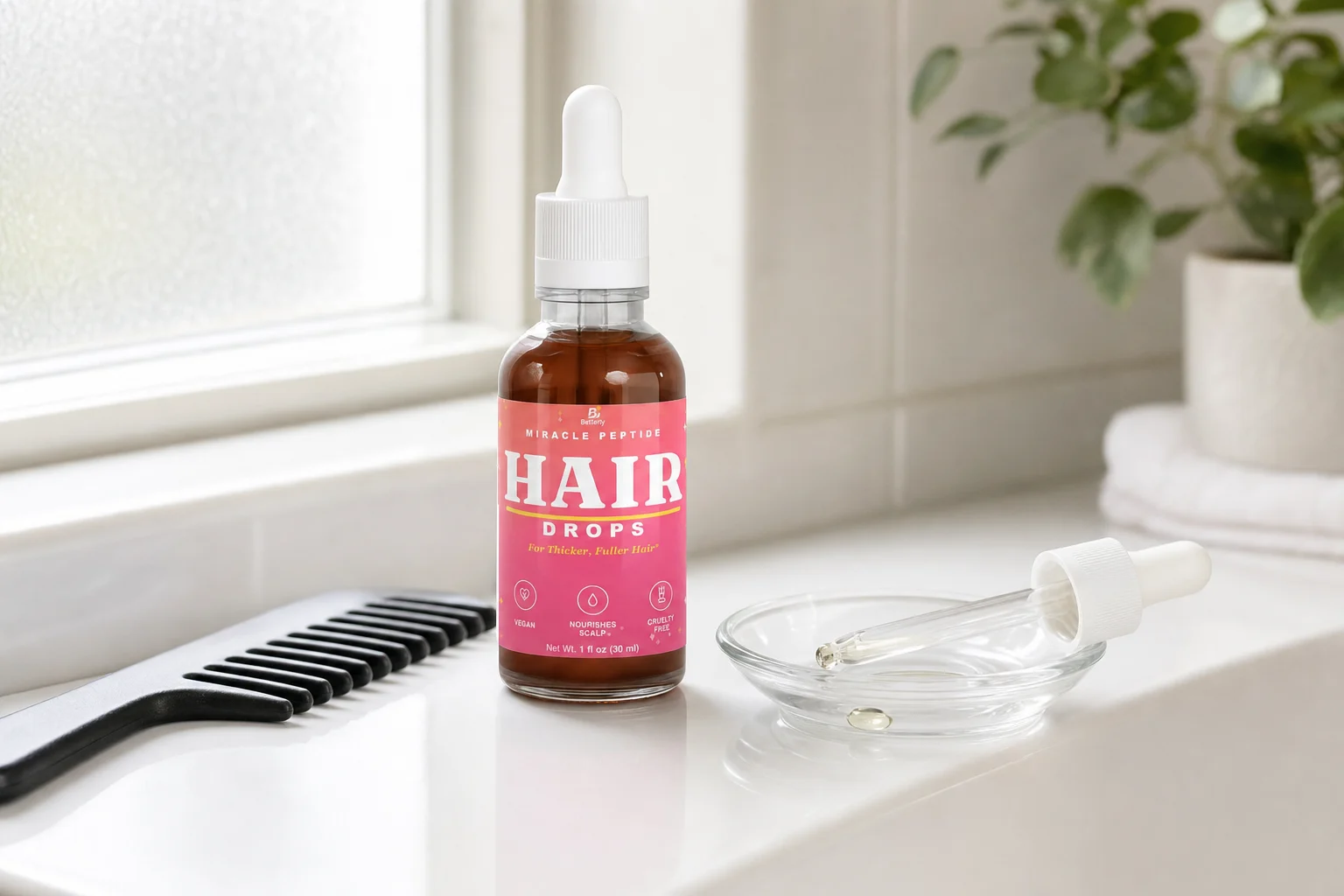
Getting serum onto your scalp sounds like it shouldn't need instructions. But how to apply scalp serum — where the dropper actually goes, whether your hair should be wet or dry, how often to repeat it — is exactly where most people quietly go wrong, and it's why the same bottle can look like a dud in one bathroom and a keeper in another. Technique is free, and it's the single biggest upgrade you can make without buying anything new.
This guide walks through the whole routine step by step: sectioning, timing, frequency, the one-minute massage habit, and the mistakes that waste a perfectly good serum.
Why application technique matters more than you'd think
A scalp serum only works where it lands. That sounds obvious, but it has a real consequence: if the serum ends up coating your hair instead of reaching your scalp, you've essentially bought an expensive leave-in conditioner. The follicles a formula is meant to support sit at skin level, underneath your hair — not on the strands themselves. Hair that feels greasy or coated after application is usually a sign the product never made it to the skin.
Technique also decides whether you stay consistent, and consistency is the whole game with scalp products. A routine with a set time, a simple sectioning method, and a realistic schedule survives contact with real life. A vague "I'll dab some on when I remember" routine doesn't.
One honest note before the steps: no application method turns a serum into a miracle. What good technique does is make sure the formula you chose gets a fair trial. If you're still deciding which bottle to buy, our peptide hair serum buying guide covers what's actually worth comparing. From here on, this guide assumes you have one in hand.
How to apply scalp serum, step by step
The method below works for most dropper and pump serums. Your product's label always wins on specifics like drop count.
- Start with a reasonably clean scalp. Freshly washed is ideal, but the real requirement is no heavy buildup — layers of dry shampoo, wax, or oil can sit between the serum and your skin. If your scalp is coated, wash first.
- Part your hair into sections. Use your fingers, a comb, or clips to create four to six partings across the areas you care about — hairline, temples, crown, part line. You should be able to see scalp in each parting. This is the step most people skip, and it's the one that guarantees coverage.
- Apply directly to the scalp, along each parting. Touch the dropper close to the skin and place a few drops along the exposed line, then move to the next section. A little per section is typical; check your label for the exact amount. You're aiming for the skin, not the hair on either side of it.
- Massage it in with your fingertips. Small, gentle circles with the pads of your fingers — never your nails — for about a minute. This spreads the serum evenly across the skin and makes sure no single spot got everything.
- Leave it alone. Scalp serums are leave-on products. Don't rinse, and give it a few minutes to settle before applying anything else to your hair.
- Wash your hands. Then get on with your day or your evening.
The first few times, this takes maybe three minutes. Once the sectioning pattern becomes muscle memory, it's closer to one — and that's genuinely all there is to how to apply scalp serum. The rest is timing, frequency, and not undoing your own work.
Wet or dry hair? When to apply it in your routine
The short answer for most leave-on scalp serums: a clean, towel-dried scalp is the sweet spot. Damp, not dripping.
Here's the reasoning. Soaking-wet hair carries water that can dilute the serum and send it running down your neck instead of staying put. A completely dry scalp is fine too — plenty of people apply at night to dry hair — as long as it isn't carrying a week of styling products. What you're avoiding is the two extremes: dripping wet and heavily coated.
Where it fits in the order of operations:
- After washing: towel-dry, apply serum to the scalp, massage, then handle the rest of your routine.
- On non-wash days: apply to a dry scalp, ideally in the evening so the serum has quiet hours to sit undisturbed.
- Before stylers: serum goes on the scalp first. Leave-in conditioners, creams, and oils belong on the lengths and ends afterward, once the serum has settled.
Some formulas have their own preferences — a few are designed specifically for post-shower use — so glance at your label. But if you remember nothing else: damp or dry is fine, dripping or dirty is not.
How often should you use a scalp serum?
Frequency is where marketing and reality drift apart. The honest answer to "how often should you use hair serum on your scalp" is: whatever your label says, applied at a pace your skin and your schedule can actually sustain. Some formulas are built for daily use; others suggest a few times a week.
Two principles help more than any universal number:
Consistency beats intensity. Four applications a week, every week, will tell you far more than a heroic daily streak that collapses after ten days. Pick the schedule you can genuinely keep — attach it to something you already do, like brushing your teeth at night.
Ease in for the first two weeks. Even gentle formulas are new information for your scalp. Starting every other day and stepping up to your target frequency lets you watch how your skin responds. Mild, brief tingling on application can be unremarkable; persistent redness, itching, or discomfort is your cue to scale back or stop, and to check in with a healthcare professional or dermatologist if it doesn't settle. A patch test behind the ear a day before your first full application is a boring, sensible move.
Skipped a day? Just continue the next day. Doubling up doesn't recover anything — the extra product mostly ends up on your pillowcase.
The one-minute scalp massage habit
Massage isn't a garnish on this routine. Its job is mechanical: working the serum across the skin so coverage is even and no single spot gets everything. It costs nothing and takes about a minute.
The technique is simple:
- Use the pads of your fingers, not your nails.
- Light to medium pressure — this should feel pleasant, not like exfoliation.
- Small circular motions, moving methodically: hairline, temples, crown, back.
- About sixty seconds after applying, or longer if you enjoy it.
Aggressive rubbing doesn't earn you anything; it just irritates the skin and pulls at hair. Think "slow and thorough," not "scrubbing a pan."
Why a scalp routine rewards patience
A scalp routine rewards patience because hair grows slowly, roughly half an inch a month, and each follicle cycles through a growth phase that lasts years and a resting phase of a few months. Any product working at the scalp level is negotiating with that clock. Results vary from person to person, and no product can promise a timeline. Follow your label and keep the schedule steady.
Keep a simple note of the days you apply it, so you can see whether you're actually following your label's schedule.
Supporting hair from the inside too
A serum works at the surface, but hair is built from raw materials you eat. If your routine only has an outside layer, the inside is worth a look — protein, iron, and overall nutrition do quiet, unglamorous work here.
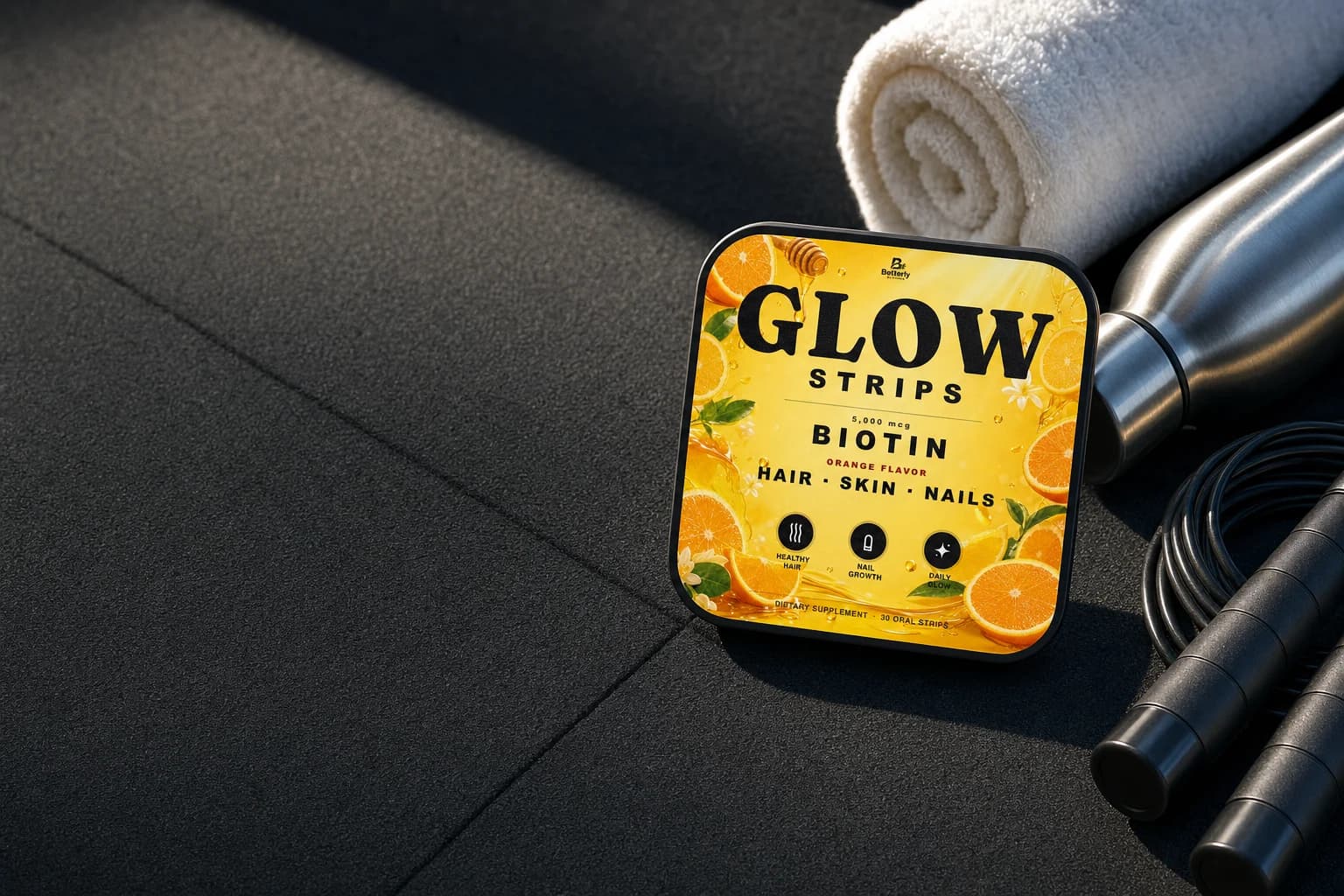
On the supplement side, biotin is the best-known name, though the NIH Office of Dietary Supplements notes there's little scientific evidence behind hair, skin and nail claims for biotin supplements. Our 5,000mcg Biotin Strips deliver 5,000 mcg of biotin per strip, 30 dissolvable strips to a pack — no water, no swallowing, easy to stack with an evening serum habit. If you'd rather chew than dissolve, the Biotin & Collagen Gummies pair 6,000 mcg of biotin with a small 12 mg of collagen per 2-gummy serving, in a passion-fruit gummy. Not sure which nutrient route fits you? Our companion piece on biotin vs collagen for hair breaks down the differences, and the broader hair, skin and nails supplement guide covers the full landscape. You'll find everything in one place in the Hair, Skin & Nails collection.
Both labels advise checking with a physician first if you're pregnant, nursing, under 18, or have a medical condition, and it's worth asking too if you take any prescription medication. According to the NIH Office of Dietary Supplements, biotin above recommended amounts may cause false results in some lab tests, including thyroid hormone tests, so tell your doctor you take it before any blood work. And if adding one more thing to your day sounds like a lot, building a simple supplement routine is the guide for making it stick.
Mistakes that quietly waste your serum
Most scalp serum disappointment traces back to one of these:
- Applying to hair instead of scalp. The big one. If your strands feel coated and your skin got nothing, the product can't do its job.
- Skipping the sectioning. Random dabs leave random gaps. Partings take thirty seconds and guarantee the serum lands where you intended.
- Using too much. More isn't absorbed better — it just makes hair greasy, which tempts you to wash more often and interrupt the routine.
- Rinsing it out. Leave-on means leave on. Washing your hair an hour after applying mostly washes your money down the drain.
- Applying over buildup. Serum on top of three days of dry shampoo is serum on top of dry shampoo, not on your scalp.
- An erratic schedule. Two weeks on, ten days off, a guilty weekend catch-up — the follicle cycle doesn't work that way. Steady and modest beats sporadic and enthusiastic.
- Quitting too soon. Hair grows slowly, so a scalp routine needs steady use at your label's schedule to get a fair trial.
- Expecting the serum to out-work everything else. Chronic tight hairstyles, crash diets, poor sleep, and unmanaged stress all show up in hair. A serum is one input, not a force field.
None of these are moral failings — they're just fixable. Fix the first two and you're ahead of most people who've ever bought a dropper bottle.
FAQ: scalp serum application, answered
Should I apply scalp serum to wet or dry hair?
Either works — the target is the skin, not the hair. The ideal is a clean, towel-dried scalp: damp, not dripping. Dry is fine too as long as there's no heavy product buildup. Avoid applying to soaking-wet hair, which dilutes the serum, and always check your specific product's label.
How often should you use hair serum on your scalp?
Follow your label — daily for some formulas, a few times weekly for others. Ease in over the first two weeks, watch how your skin responds, and prioritize a schedule you can keep for months over an intense one you'll abandon. Consistency matters more than frequency.
Do you wash scalp serum out?
No. Leave-on scalp serums are designed to stay put and absorb. Apply after washing, not before, and try to leave several hours between application and your next shampoo — evening application before bed handles this neatly.
How long does scalp serum take to work?
There's no reliable timeline for a scalp serum, because results vary from person to person. Hair grows slowly, about half an inch a month, so steady use at your label's schedule over months matters more than any single week. If your scalp gets irritated, scale back and check in with a dermatologist.
Can I style my hair as usual after applying?
Yes. Let the serum settle for a few minutes, then apply stylers to your lengths and ends rather than the scalp. On heat-styling days, apply the serum to the scalp first and keep direct heat focused on the hair, not the skin.
Is the scalp massage step actually necessary?
Yes, a short scalp massage is worth keeping, because it spreads the serum evenly across the skin so no single spot gets everything. Use the pads of your fingers, not your nails, with light to medium pressure. One minute of fingertip circles is enough to do the distribution job.
If this left you looking for somewhere to start, read biotin strips that dissolve on the tongue — its amounts per serving are listed on the page. For the practical questions this raises, how dosing, sourcing and subscriptions work is answered in one place.