On this page
- What a peptide hair serum actually is (and isn't)
- The peptides worth looking for on a label
- Saw palmetto in a hair serum: why this berry keeps showing up
- What the research honestly says about scalp serums
- Leave-on scalp serum vs shampoo: why format changes everything
- How to read a hair serum label: a plain-English checklist
- How do you give a scalp serum a fair trial?
- Don't forget the inside-out half
- Who should check with a healthcare provider first
- Key takeaways
- FAQ: peptide hair serum questions, answered
- Sources
The "best peptide hair serum" roundups are everywhere, and few explain how they ranked anything. What's much harder to find is the honest version of the question: which peptides are worth looking for, why a leave-on scalp serum beats a rinse-off product, and how to read a label without the hype. This buying guide covers all of it, in plain English.
One thing up front: a serum is a cosmetic, not a drug, and no honest brand should pretend otherwise. What a good one can do is support a well-cared-for scalp and fuller-looking hair with consistent use. That's the standard we'll hold everything to below.
What a peptide hair serum actually is (and isn't)
Peptides are short chains of amino acids — small fragments of the same building blocks that make up proteins like the keratin in your hair. In scalp care, they're used as signaling ingredients: applied to the skin, certain peptides are thought to gently nudge it toward things it already does naturally.
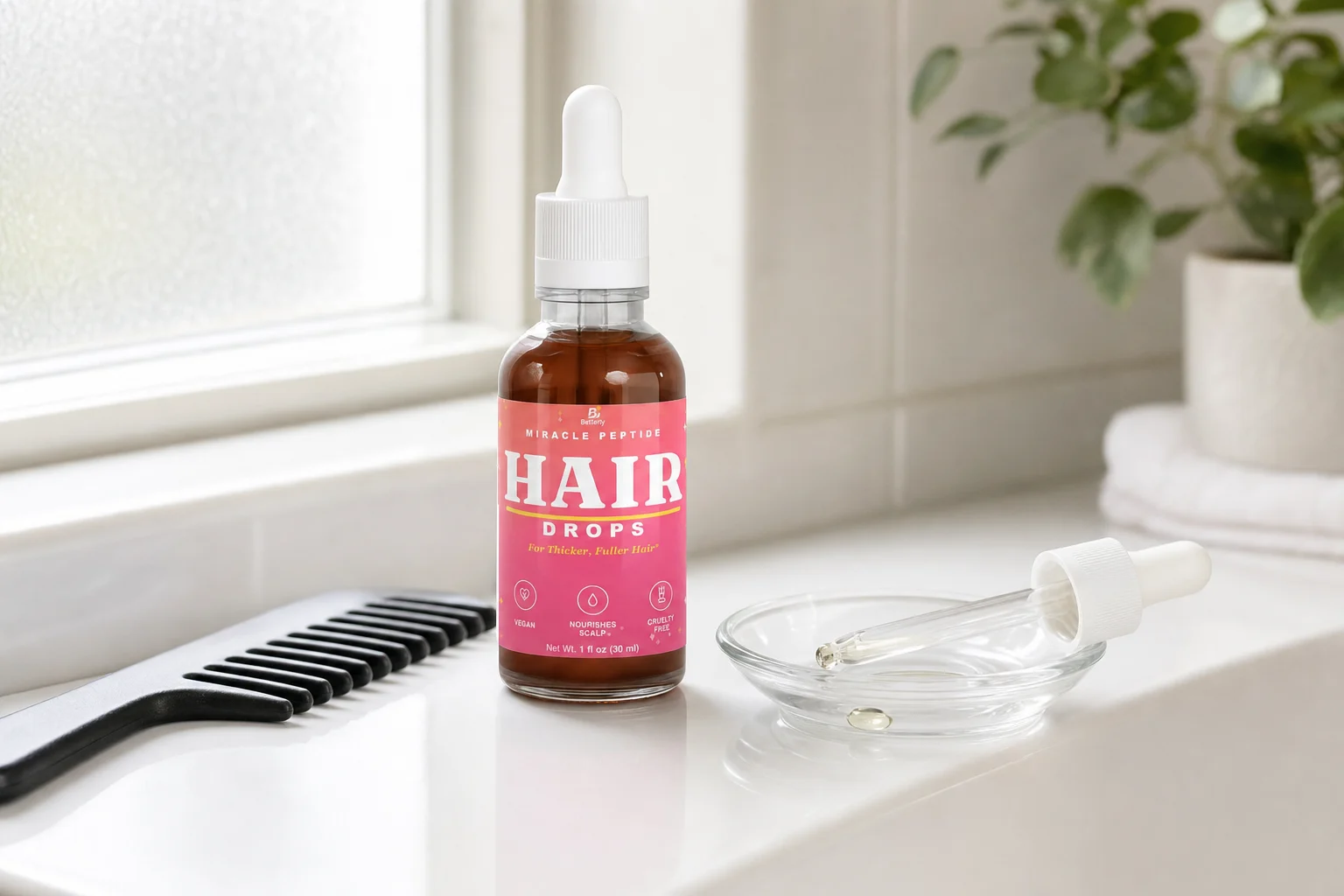
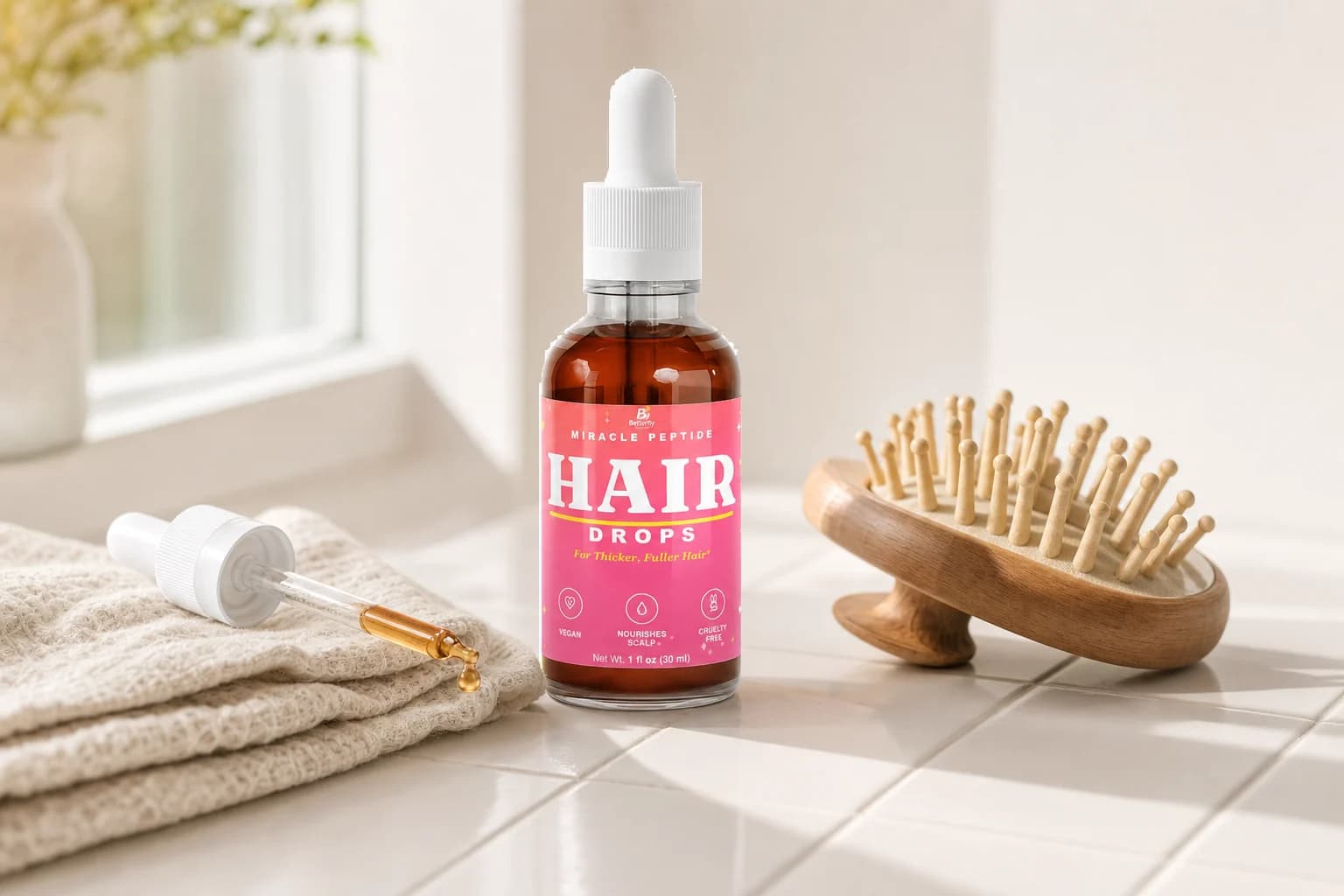
A peptide hair serum is a leave-on liquid you apply directly to the scalp — not down the length of your hair — so those ingredients can sit where follicles actually live. It usually comes with a dropper or targeted applicator, and you don't rinse it out.
Here's what a serum isn't. It isn't a drug, and it won't perform like one. It won't rebuild a hairline, and it can't address whatever is happening beneath the surface if something medical is going on. If your shedding came on suddenly, comes out in patches, or worries you, the right first step is a dermatologist, not a checkout page. A serum is for the everyday, cosmetic version of the problem: hair that looks a little thinner and flatter than you'd like, and a scalp that could use more deliberate care.
The peptides worth looking for on a label
"Peptides" on a front label tells you almost nothing — it's a category, not an ingredient. Flip the bottle over and look for names. These are the ones that show up most often in serious formulas, and how to read each one:
- Copper tripeptide-1 (GHK-Cu). A copper-binding peptide and one of the most common named peptides in scalp formulas. Human research on it is limited, so treat it as a named, checkable ingredient rather than a proven one.
- Acetyl tetrapeptide-3. A synthetic signaling peptide that appears in many density-focused blends, often paired with red clover extract. Human research on it is limited, so hold the enthusiasm loosely — but it's a named, checkable ingredient, which already puts it ahead of vague "peptide complex" claims.
- Biotinoyl tripeptide-1. Biotin bonded to a peptide carrier. It's commonly included to support the look of stronger strands and minimize the appearance of breakage — more of a cosmetic-conditioning role than a follicle story.
If a label lists only a trademarked "complex" with no individual peptides named, read that as decoration. You can't evaluate what you can't see.
We don't currently sell a peptide serum ourselves, so hold any bottle you're considering to that standard: named peptides, a leave-on format, and no miracle language.
Saw palmetto in a hair serum: why this berry keeps showing up
Saw palmetto is an extract from the berries of a small palm, best known as an oral supplement with a long traditional history. More recently, researchers have been looking at what happens when it's applied to the scalp instead.
According to the National Center for Complementary and Integrative Health (NCCIH), a few small studies have tested saw palmetto applied to the scalp, and the evidence is too limited to allow conclusions.
Why the interest? Saw palmetto is a named botanical with a long history of use. With research this limited, it's a reasonable ingredient to see on a label, not a proven one.
So when you see a saw palmetto hair serum, the fair reading is "reasonable ingredient, hedged evidence" — not "plant-based miracle," and not "useless marketing" either.
What the research honestly says about scalp serums
Zoom out and two things hold across the peptide and botanical research:
- The evidence is small. According to NCCIH, the few small studies of saw palmetto on the scalp are too limited to draw conclusions. No cosmetic serum has drug-grade evidence, and any brand implying otherwise is overreaching.
- Use it the way the label says. A serum can only be judged fairly if it's used on its label's schedule, not "when you remember."
If you internalize just those two points, you're already a better serum shopper than most of the internet.
Leave-on scalp serum vs shampoo: why format changes everything
Here's a filter that instantly clarifies a crowded shelf: contact time.
A shampoo touches your scalp for maybe sixty seconds, surrounded by surfactants whose entire job is to lift things off your skin and carry them down the drain. A leave-on serum sits on your scalp for hours. If a peptide is going to do anything at all, it needs time on skin.
That doesn't make peptide shampoos useless; it makes them shampoos. Buy them for how they clean and how your hair feels afterward. But if the active ingredients are the reason you're paying, a leave-on serum is the format that gives them a fighting chance. "Peptide" on a shampoo bottle is mostly a marketing garnish.
How to read a hair serum label: a plain-English checklist
Take this with you next time you're comparing bottles:
- Named ingredients, not vibes. Look for specific peptides (copper tripeptide-1, acetyl tetrapeptide-3, biotinoyl tripeptide-1) or botanicals (saw palmetto) — not just "advanced peptide technology."
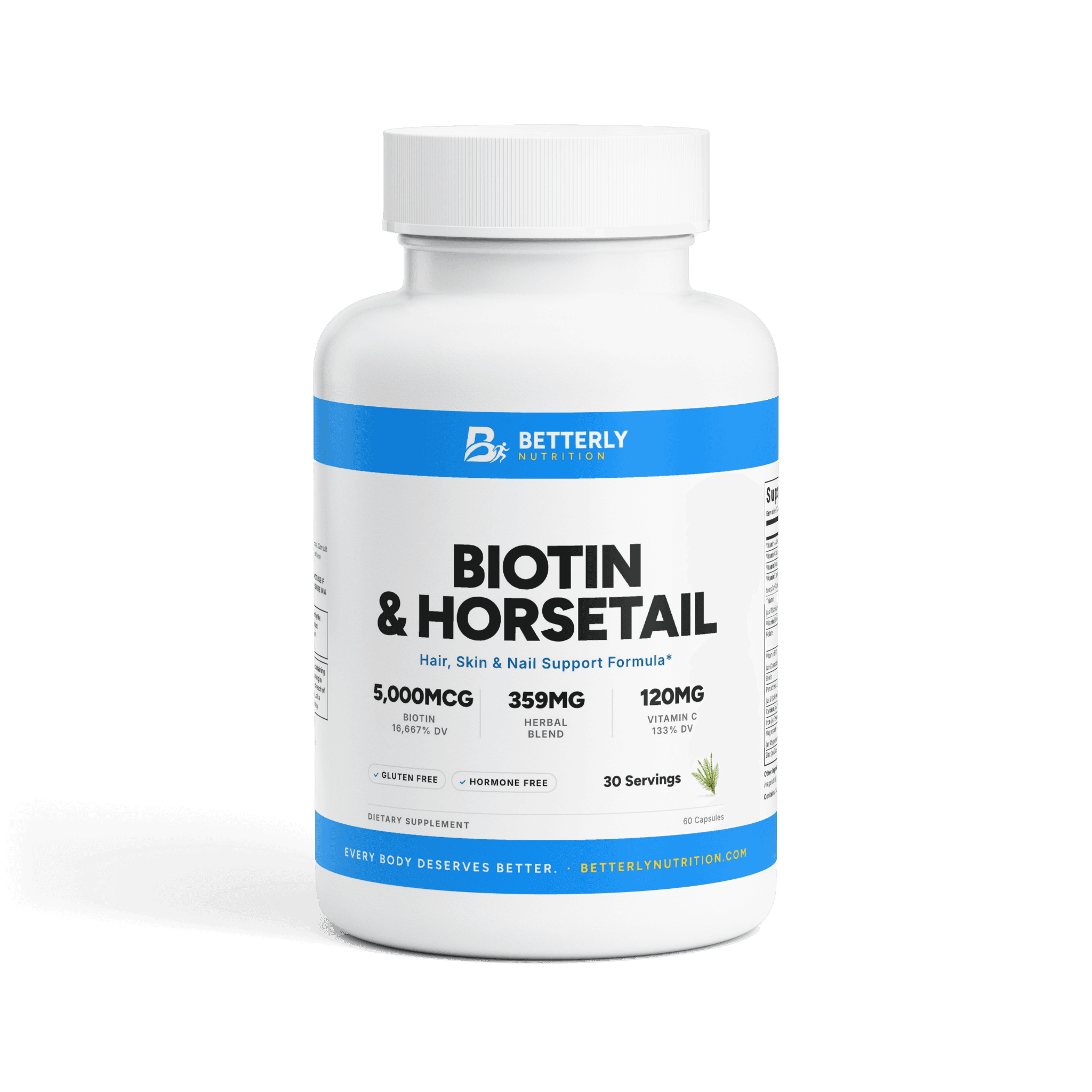
- Amounts you can see. A label that lists each ingredient's amount is making a claim you can check. A proprietary blend shows only its total, so you're trusting the brand on how it's split. That includes us: our Biotin & Horsetail Hair Capsules list 11 ingredients inside one 359 mg proprietary blend per 2-capsule serving, with no individual amounts.
- Leave-on format. For the contact-time reasons above.
- An applicator that reaches skin. A dropper or nozzle you can put against your part lines beats a pump that coats your hair and misses your scalp.
- No promised timeline. "Visible results in 7 days" is a red flag dressed as a benefit. Hair grows slowly, and a bottle that promises a date is selling hope.
- Before-and-after skepticism. Different lighting, different haircuts, damp versus dry hair — most dramatic photo pairs fall apart under one minute of scrutiny.
- A full ingredient list you tolerate. Scan for fragrance and known irritants if your scalp is reactive, and patch test anything new on your inner arm before committing your whole head to it.
None of this requires expertise. It just requires refusing to be rushed.
How do you give a scalp serum a fair trial?
Hair grows roughly half an inch a month, and at any moment a portion of your follicles are in a resting phase that lasts two to three months before those strands shed and restart.
Two practical tips: take a photo of your part line on day one — same mirror, same light — and repeat monthly, because day-to-day memory is a terrible measuring tool. And pick an anchor habit (after brushing your teeth at night works well) so daily application survives busy weeks. Our sibling guide on how to apply a scalp serum walks through technique, timing, and frequency in detail.
If you've been consistent for a good stretch and see nothing, stop. That formula isn't for you, and no amount of brand loyalty changes that.
Don't forget the inside-out half
A scalp serum only works from the outside. Hair is also built from the inside, mostly out of protein. Biotin helps your body turn the carbohydrates, fats and proteins in food into energy. It's a common ingredient in hair, skin and nail formulas, though the NIH Office of Dietary Supplements notes there's little scientific evidence that biotin supplements improve hair.
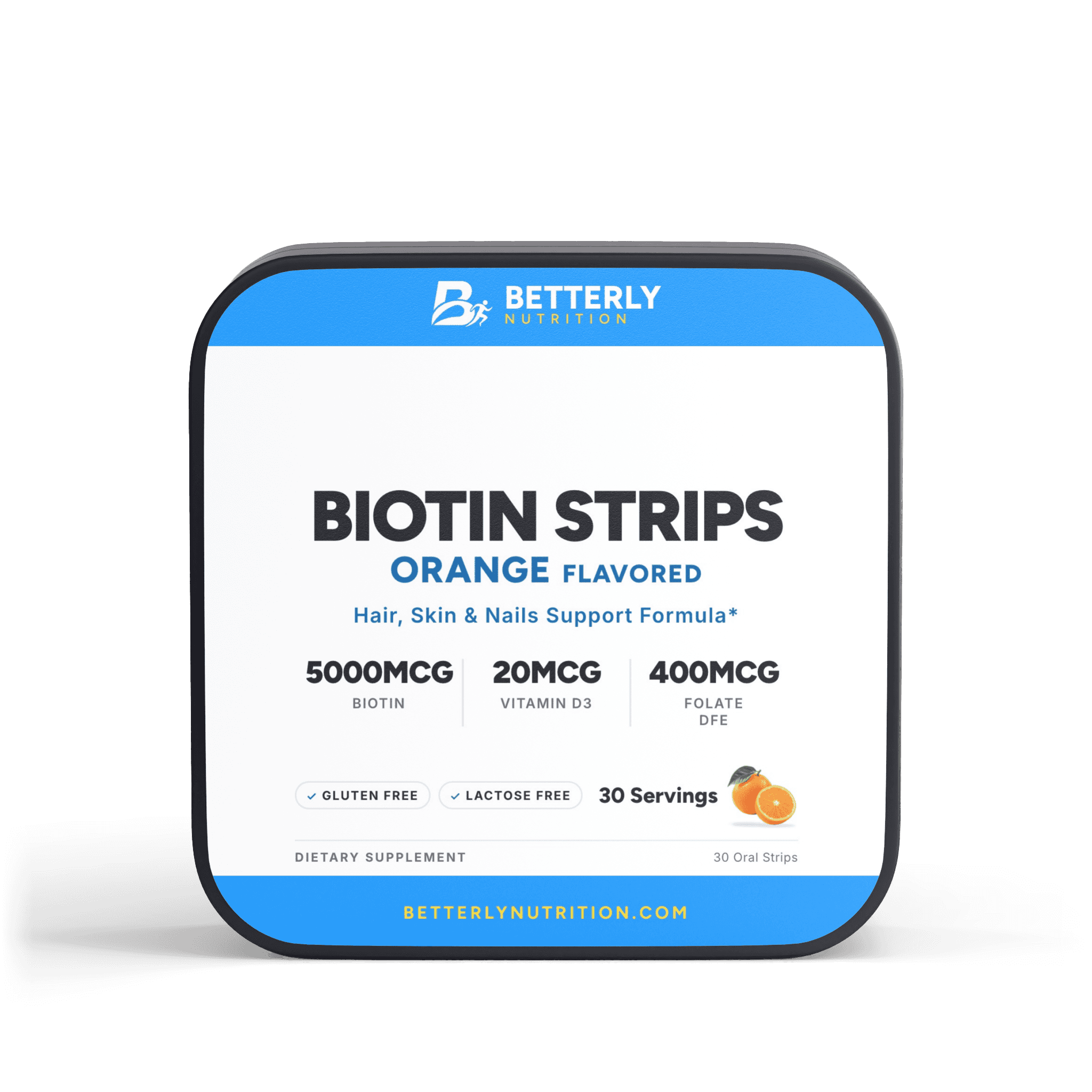
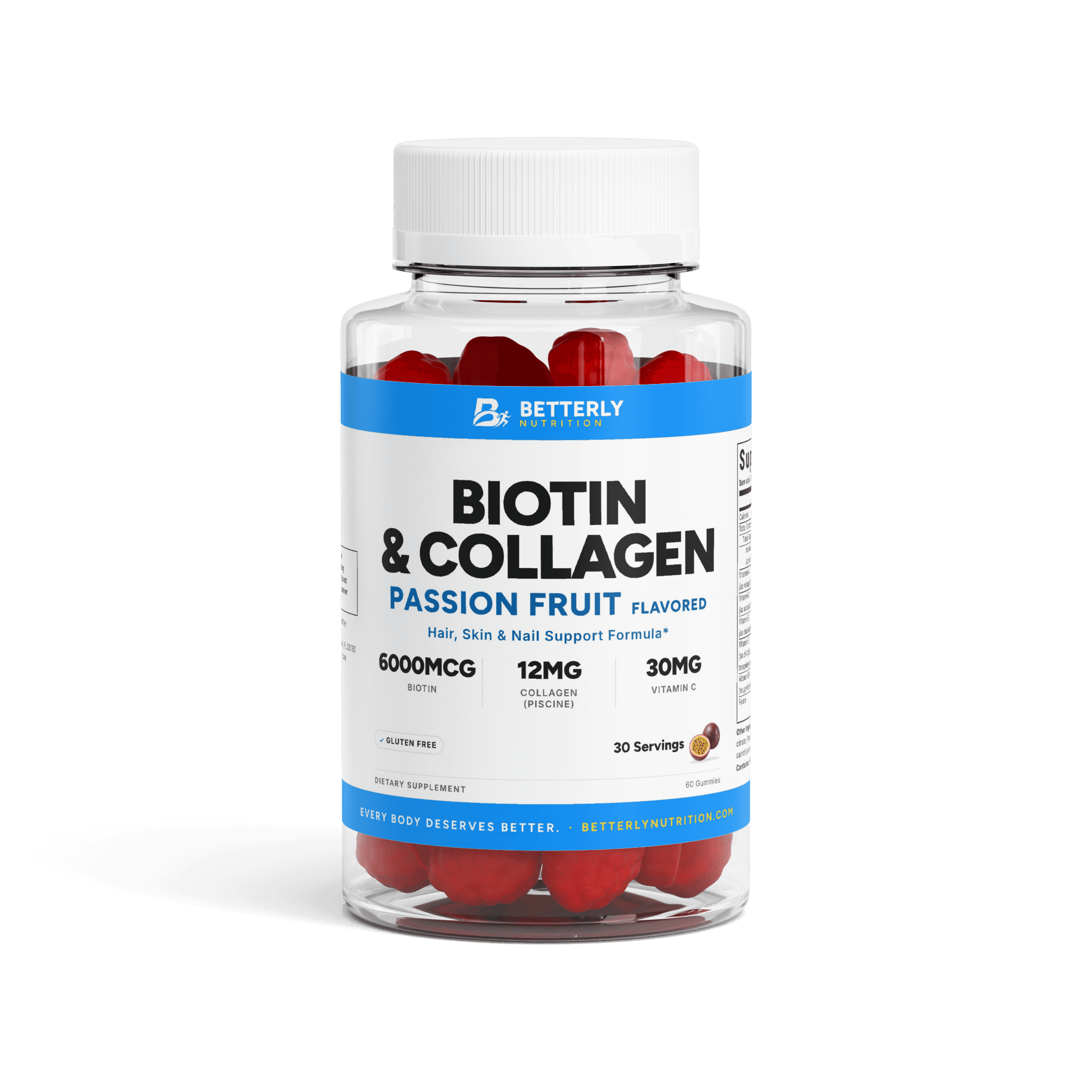
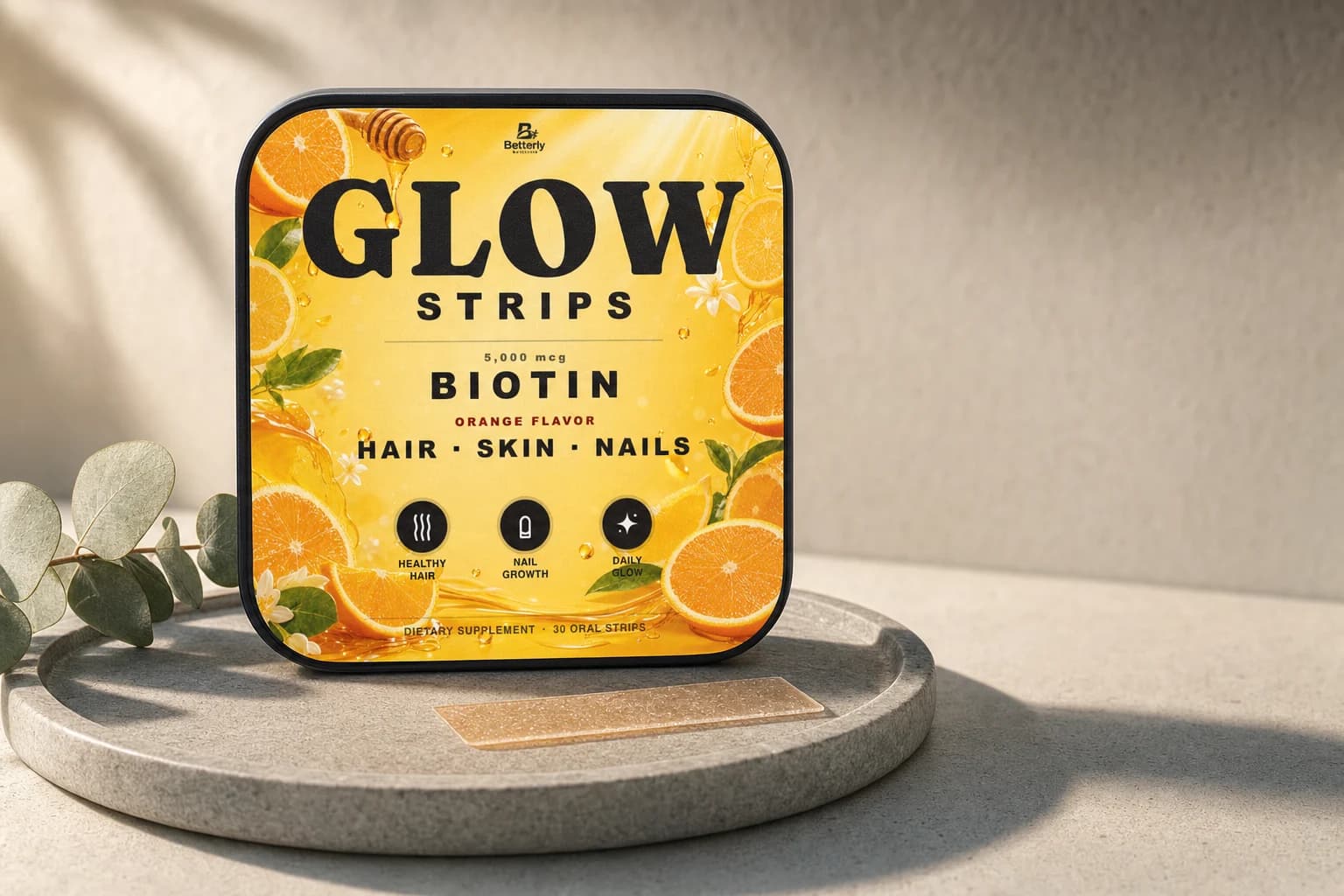
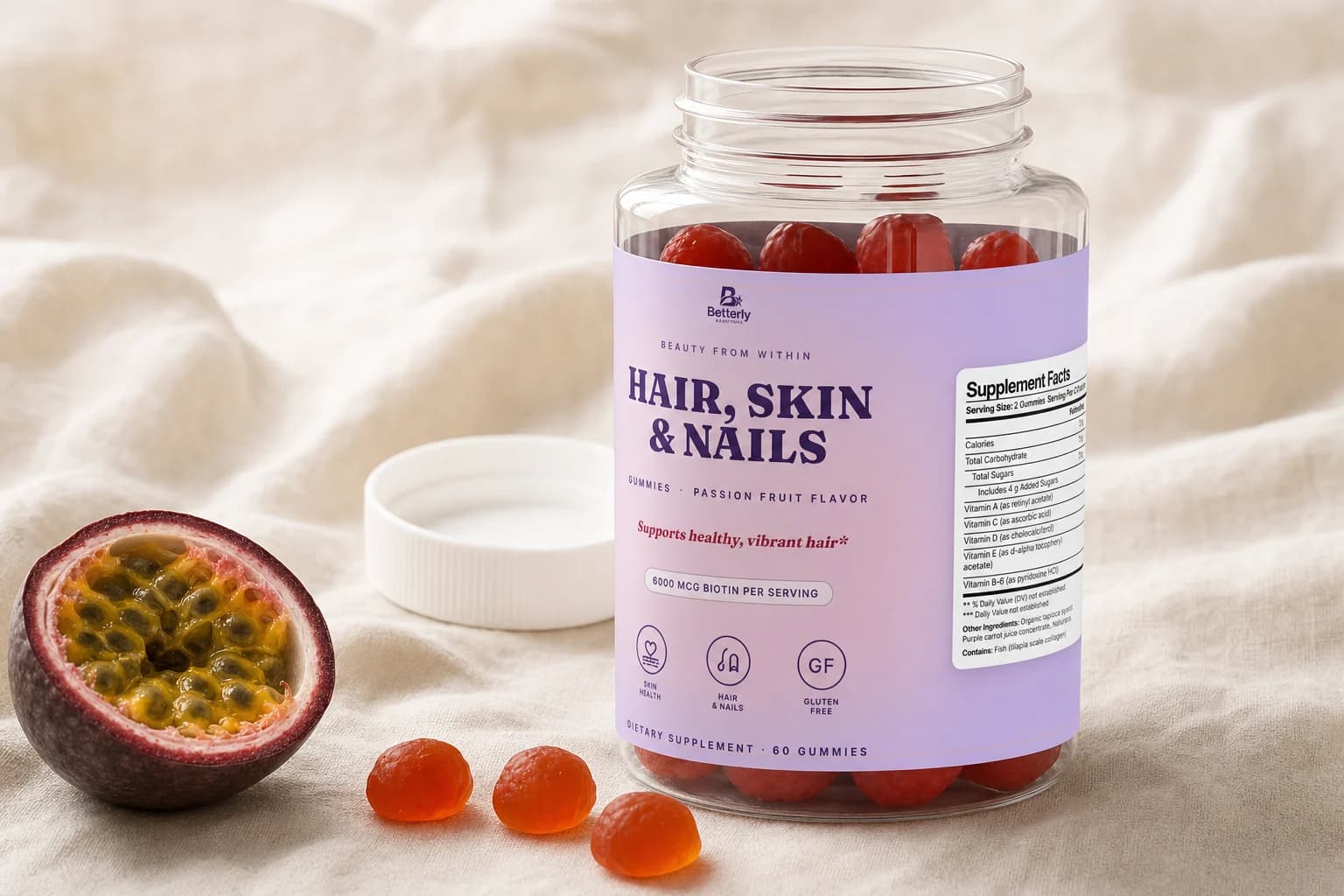
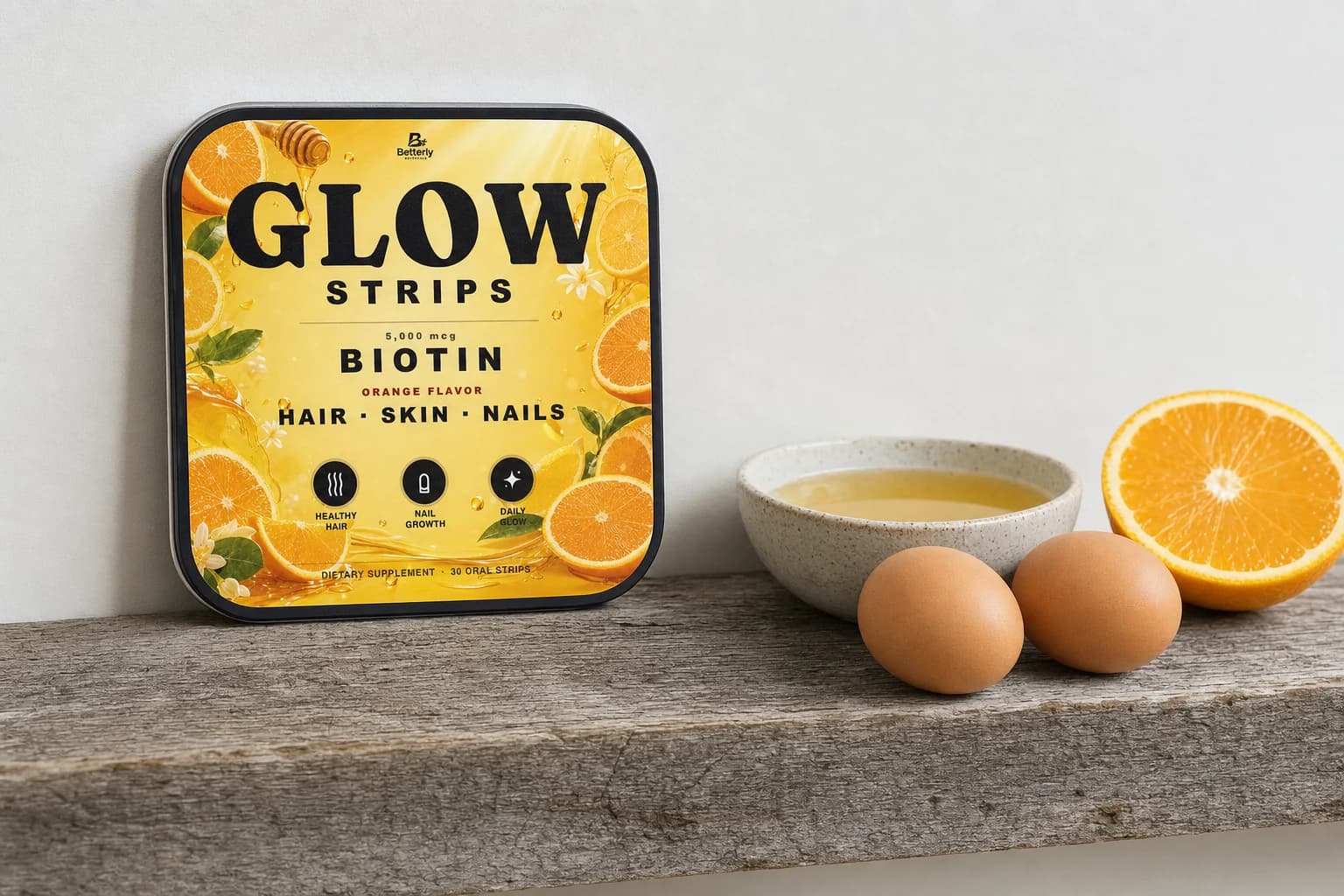
If you'd like a daily biotin product alongside a serum, our 5,000mcg Biotin Strips deliver 5,000 mcg of biotin per strip, 30 dissolvable strips to a pack — no pills to swallow — while the Biotin & Collagen Gummies pair 6,000 mcg of biotin with a small 12 mg of collagen per 2-gummy serving if you prefer a chewable format. If you're weighing those two nutrients against each other, our companion piece on biotin vs collagen for hair breaks down the differences honestly, and our collagen 101 guide covers what collagen is and how people use it.
For the wider picture — what actually supports hair, skin, and nails from within, and what's overhyped — start with our hair, skin and nails supplement guide, and if you're adding several new things at once, build the routine deliberately rather than all in one week. You can browse everything in this lane in our Hair, Skin & Nails collection.
Who should check with a healthcare provider first
Every Betterly label mentioned in this guide carries the same caution: "Do not exceed recommended dose. Consult a physician if pregnant, nursing, under 18, or have a medical condition." Check with your healthcare provider first if any of that applies to you, or if you take prescription medication, since the NIH Office of Dietary Supplements notes that biotin may interact with certain medications. It also notes that biotin above recommended amounts may cause false results in some lab tests, so mention it before any blood work. If you're pregnant or breastfeeding, ask before using a saw palmetto serum too: NCCIH says saw palmetto may be unsafe for use during pregnancy or while breastfeeding.
Key takeaways
- A peptide hair serum is a leave-on cosmetic for the scalp — useful for fuller-looking hair, and honest brands never claim more.
- Look for peptides named on the label; "peptide complex" with no specifics is decoration.
- Saw palmetto shows up in many scalp formulas, but NCCIH says the research on it is too limited to draw conclusions.
- Leave-on beats rinse-off, because contact time is most of the game.
- Be wary of any serum that promises fast results, because hair grows slowly and no bottle can promise a date.
- Pair outside-in with inside-out: a serum on the scalp, and a balanced, protein-rich diet behind it.
FAQ: peptide hair serum questions, answered
Do you rinse out a peptide hair serum?
No. Nearly all peptide scalp serums are leave-on by design — the ingredients need hours of contact with your scalp, not seconds. Apply it, massage it in, and leave it alone. Washing it out shortly after applying largely defeats the purpose.
Should I apply a scalp serum to wet or dry hair?
Most serums work on either a dry or towel-dried scalp; what matters is that the product reaches skin, not strands. Soaking-wet hair can dilute the serum and carry it away from the scalp, so towel-dried or fully dry is the usual recommendation. Follow your specific label — and see our step-by-step application guide for the details.
How often should you apply a peptide hair serum?
How often you apply a peptide hair serum depends on its label, so follow the directions on your bottle. Most leave-on scalp serums are made for regular use on a dry or towel-dried scalp. Hair grows slowly, so be wary of any product that promises visible change in days, and judge a routine by consistent use rather than a single week.
Is a peptide hair serum a medicine?
No. A peptide hair serum is a cosmetic. It's made to support a well-cared-for scalp and the look of fuller hair, not to change how your body works. If your shedding came on suddenly, comes out in patches or worries you, see a dermatologist before buying anything.
Can I take biotin and use a scalp serum at the same time?
Yes, you can, with a few checks first. Biotin is taken by mouth and a scalp serum goes on the skin, so they're used in completely different ways. According to the NIH Office of Dietary Supplements, biotin above recommended amounts may cause false results in some lab tests, so tell your doctor you take it before any blood work. The 5,000mcg Biotin Strips label says not to exceed the recommended dose and to consult a physician first if you're pregnant, nursing, under 18 or have a medical condition.
What does saw palmetto do in a hair serum?
Saw palmetto is added to hair serums as a botanical for the scalp, but its evidence is thin. According to the National Center for Complementary and Integrative Health (NCCIH), a few small studies have tested saw palmetto applied to the scalp, and the evidence is too limited to allow conclusions. Treat it as a reasonable ingredient to see on a label, not a proven one, and check with your healthcare provider first if you're pregnant or breastfeeding, since NCCIH says it may be unsafe then.
Sources
If this left you looking for somewhere to start, read biotin and horsetail capsules with saw palmetto — its amounts per serving are listed on the page. For the practical questions this raises, how dosing, sourcing and subscriptions work is answered in one place.