On this page
- Key takeaways
- Berberine vs dihydroberberine: what's the actual difference?
- Is berberine HCl the same as berberine?
- What are berberine phytosome and liposomal berberine?
- Is dihydroberberine better absorbed than berberine HCl?
- Berberine HCl vs DHB vs phytosome vs liposomal: how do labels compare?
- How do you read an 8% or 97% extract on a berberine label?
- How should you take berberine HCl capsules?
- When don't you need a berberine supplement, in any form?
- Who should check with a healthcare provider before taking berberine?
- FAQ: berberine forms
- Sources
The short answer: Berberine vs dihydroberberine is really a question about form. Berberine HCl is a stable salt you'll see on many berberine labels, ours included. Dihydroberberine (DHB) is a chemically reduced version sold on the promise that your body absorbs more of it. No federal health source we reviewed compares the two, so no form has a verified edge. What you can check is the label: the form, the milligrams and what any percentage measures.
Key takeaways
- Berberine HCl, short for berberine hydrochloride, is berberine bound to chloride as a salt, and many berberine labels list it.
- Dihydroberberine is a reduced form of berberine that brands market as better absorbed, a claim no federal source we checked has weighed in on.
- Phytosome and liposomal berberine pair berberine with phospholipids, so the milligrams on the front can include the carrier.
- An extract percentage only helps if the label says what it's a percentage of.
- Apply NCCIH's berberine cautions to every form; no DHB, phytosome or liposomal label removes them.
We sell one product built around berberine, Berberine HCl Capsules, and no DHB, phytosome or liposomal version. Our Olive Leaf, Moringa & Holy Basil Capsules also list a Phellodendron bark extract standardized to 8% berberine inside a blend, with no separate amount given. That's a bias you should know about, so we'll show you our berberine panel below, including what it doesn't tell you.
Berberine vs dihydroberberine: what's the actual difference?
Berberine is a yellow plant compound, and dihydroberberine is a modified version of it with two added hydrogen atoms, sold as a separate ingredient.
According to the National Center for Complementary and Integrative Health (NCCIH), berberine is found in a variety of plants, including goldenseal, barberry and Oregon grape. Plants containing it have a long history in Ayurvedic and Chinese medicine. Our own panel names bark and root as its plant parts.
"Dihydro" is chemistry shorthand for two extra hydrogen atoms. That change gives DHB its own name and its own line on a Supplement Facts panel, often with a smaller milligram number. Brands selling DHB present that smaller number as a feature, arguing that more of it reaches your bloodstream. Whether that claim holds up is a separate question, covered below.
New to berberine itself? Start with our plain guide to berberine's benefits, dosage and safety. This one is about which form to buy.
Is berberine HCl the same as berberine?
For shopping purposes, yes: berberine HCl is berberine in its hydrochloride salt form, which is how the compound is usually turned into a stable powder for capsules.
"HCl" is the chemical symbol for hydrochloride. You'll see "berberine hydrochloride" spelled out on some labels and "berberine chloride" on others. When a label lists berberine HCl in milligrams, that number is the weight of the salt, and the chloride makes up a small part of it.
The bigger split is berberine extract vs berberine HCl. A label that says "berberine extract" may be describing a plant extract that holds berberine alongside other bark or root material. A label that says "berberine HCl 97%" is describing an ingredient that's mostly the purified salt. The two can look alike on the front and differ on the panel, so check the plant, the plant part and a percentage.
What are berberine phytosome and liposomal berberine?
Berberine phytosome and liposomal berberine are delivery formats that pair berberine with phospholipids, the fat-like molecules found in lecithin, to change how it's carried.
A phytosome binds the berberine to phospholipids. A liposome encloses it inside tiny spheres built from phospholipid layers.
Each is sold on the same pitch, that the carrier helps more berberine get absorbed. As with DHB, we found no federal source that tests it.
For label reading, these formats share one trap. The big number on the front is often the weight of the whole complex, carrier included. Look on the Supplement Facts panel for a line saying how much berberine the complex provides. Without one, you can't compare that product with a berberine HCl capsule on milligrams at all.
Is dihydroberberine better absorbed than berberine HCl?
Dihydroberberine is marketed as better absorbed than berberine HCl, but no federal source we reviewed confirms that, so we can't tell you it is.
DHB and phytosome labels lean on the word bioavailability, meaning how much of a swallowed amount reaches your bloodstream. NCCIH's berberine page never uses it and never mentions dihydroberberine. It does make one point that bears on forms: "the amounts and formulations of berberine used in different studies have varied widely."
That's why we can't rank the forms for you. With studies spread across forms and amounts, there's no federal yardstick that puts DHB, a phytosome or plain HCl on top.
NCCIH's page on goldenseal raises absorption in one setting. When people take goldenseal by mouth, very little of its berberine may be absorbed. That's about a whole herb, not a berberine HCl capsule, but it's a clue to why absorption became the selling point for newer forms.
The same gap shapes berberine vs dihydroberberine dosage. A DHB label's lower milligrams only make sense if the absorption claim is right. So you can't line up a smaller DHB number against a larger HCl number and work out an equivalent. Take whichever product you choose at its own label's suggested use.
Berberine HCl vs DHB vs phytosome vs liposomal: how do labels compare?
The four berberine forms differ in chemistry or carrier, so their milligram numbers don't weigh the same thing; compare the berberine each label says it delivers.
| Form | What it is | What the mg can include | What to look for |
|---|---|---|---|
| Berberine HCl | Berberine as a hydrochloride salt | The salt, or an extract containing it | A % that names its compound |
| Dihydroberberine (DHB) | A reduced form of berberine | The DHB itself | Why the dose is smaller |
| Berberine phytosome | Berberine bound to phospholipids | The whole complex | A "provides X mg berberine" line |
| Liposomal berberine | Berberine inside phospholipid spheres | The whole liposomal blend | The berberine amount inside |
The takeaway: every form asks you to find a second number. For DHB, it's the evidence behind the smaller dose. For phytosome and liposomal products, it's the berberine inside the carrier. For berberine HCl, it's what the percentage measures, which is where our own label needs explaining.
So which is best, berberine or dihydroberberine? No form wins on the evidence we could verify. Pick the label that answers those questions clearly, at a dose you'll actually follow. If you take any medicine, get your healthcare provider's okay first.
How do you read an 8% or 97% extract on a berberine label?
An extract percentage on a berberine label tells you what share of the ingredient's weight is a measured compound, but only when the label names that compound.
The NIH Office of Dietary Supplements (ODS) botanical supplements fact sheet notes that U.S. law never defines the word "standardized." So a berberine percentage is only as clear as the words printed beside it.
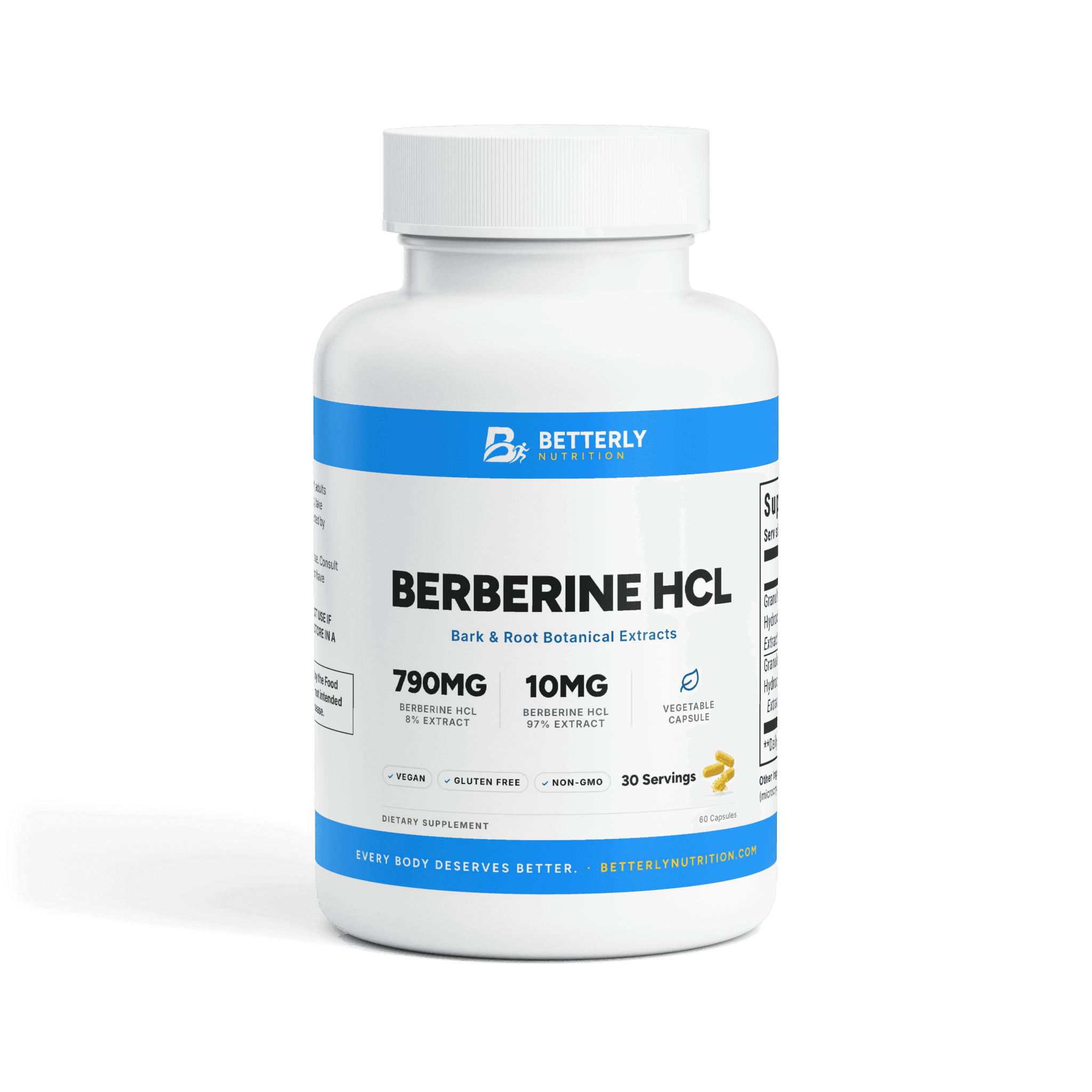
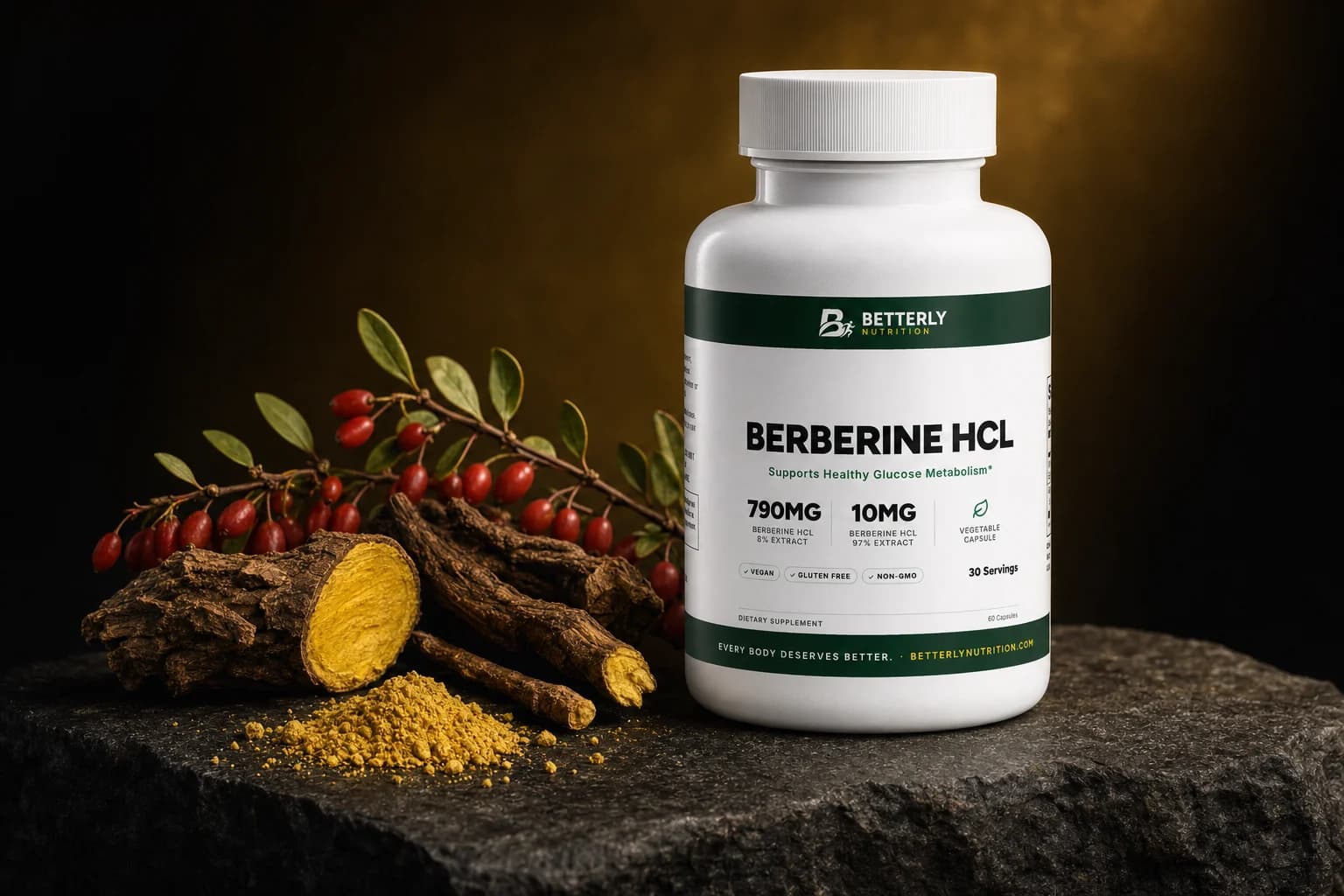
Here's our own panel. Betterly's Berberine HCl Capsules list, per 2-capsule serving:
- Granular Berberine Hydrochloride Extract 8% (bark/root): 790 mg
- Granular Berberine Hydrochloride Extract 97% (bark): 10 mg
Neither line has a Daily Value. The footnote reads "Daily Value (DV) not established."
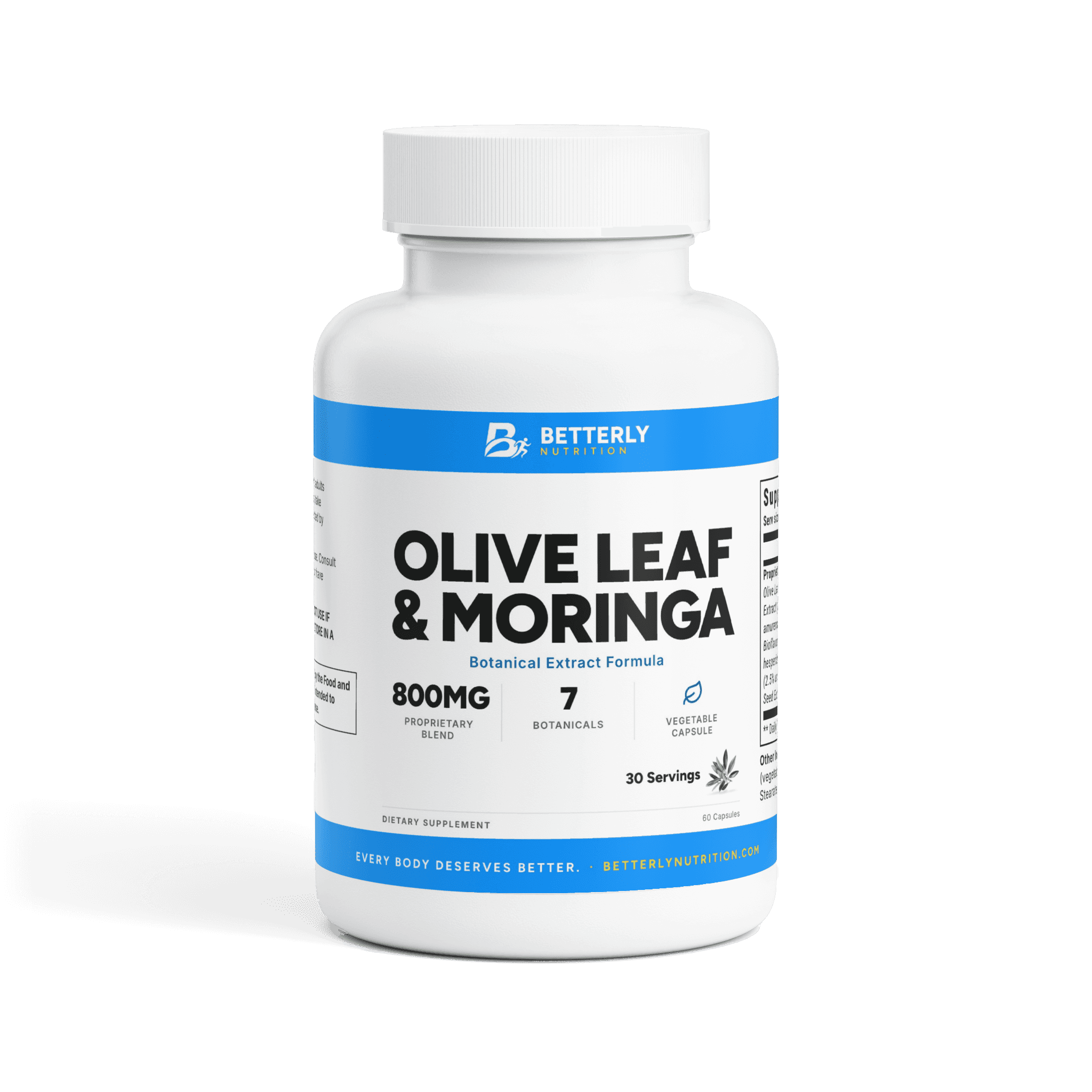
Compare a line from another of our labels. The blend in our Olive Leaf, Moringa & Holy Basil Capsules lists "Phellodendron amurense (bark) Extract (std. to 8% berberine)." It's also an 8%, but this line names the plant, the part and the measured compound. It sits inside an 800 mg proprietary blend per 2-capsule serving, though, so there's no amount for that extract alone.
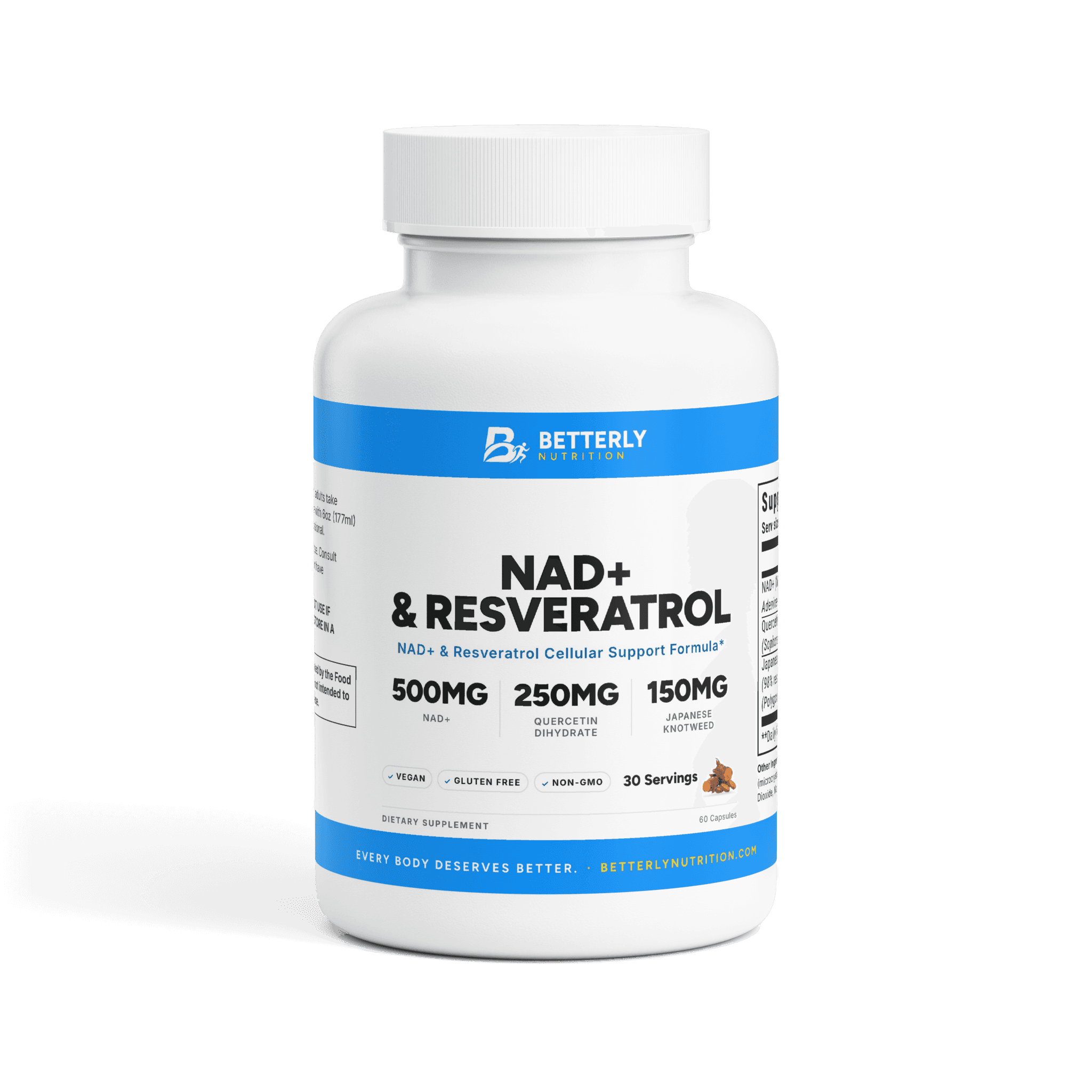
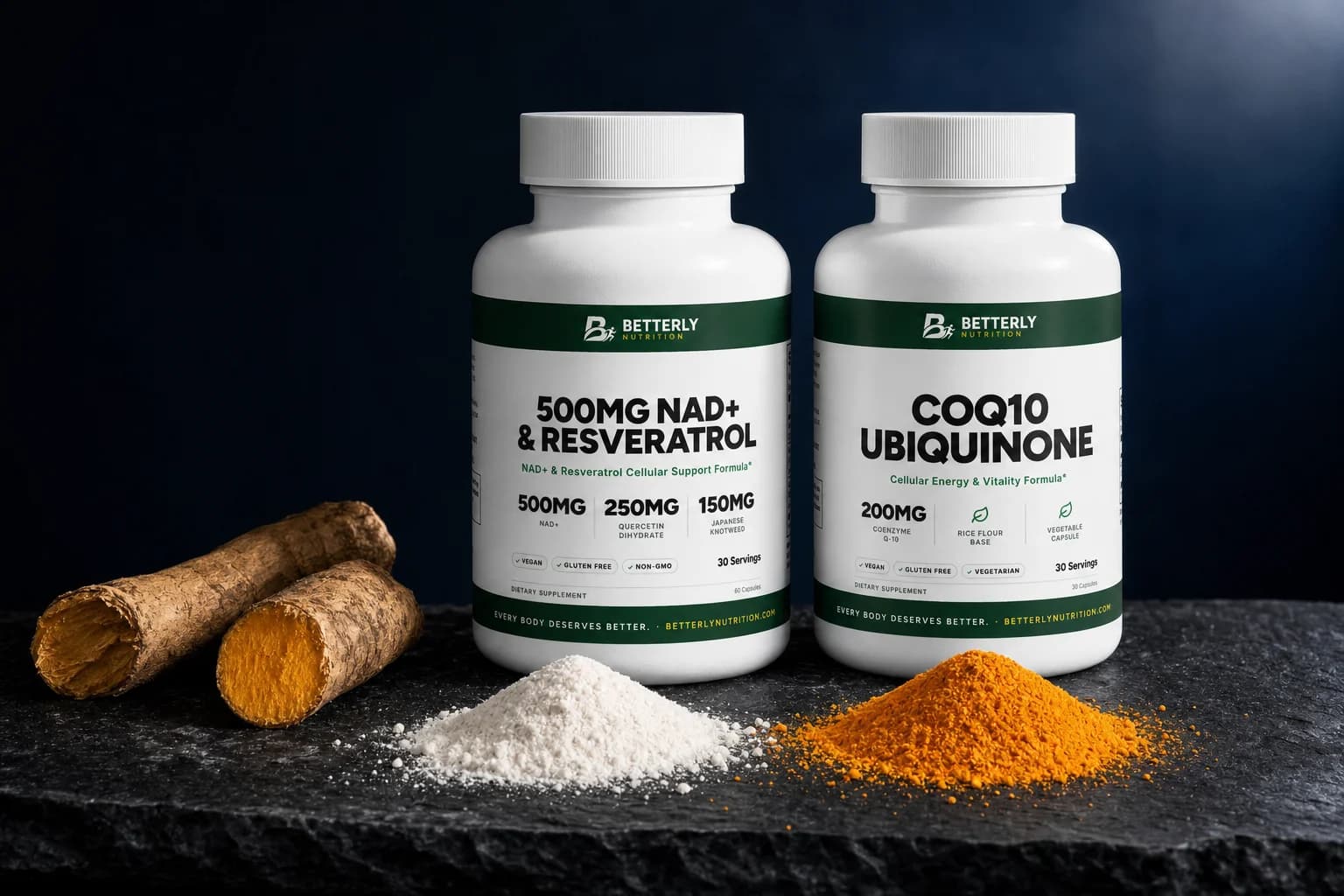
Labels across our NAD+ and longevity collection name their compounds too. Our 500mg NAD+ & Resveratrol Capsules, for example, list Japanese knotweed extract "(98% resveratrol)."
Our berberine label doesn't name its compound. It prints "Extract 8%" without saying 8% of what. The usual reading is berberine's share of a bark-and-root extract.
But our supplier hasn't confirmed in writing what this 8% measures, so we won't turn it into a milligram total. What we can say for certain is that 790 mg is the weight of the extract, not of berberine. The 10 mg line is small either way, at most 10 mg of berberine.
Here's where our capsule comes up short. The panel gives extract weights, 790 mg and 10 mg per 2-capsule serving, but no berberine amount. If you want a label that states milligrams of berberine outright, ours doesn't, and we'd rather you know before buying.
Five answers on a berberine panel settle the form question:
- Which form is it: HCl, DHB, phytosome or liposomal?
- A percentage of what? "97% berberine" tells you something, while "Extract 97%" leaves a gap.
- How much berberine sits inside a carrier?
- Which plant part: bark, root or both?
- What's the daily total at the label's suggested use?
Our guide to milk thistle and silymarin shows the same logic on a botanical whose label states its percentage.
From our shop: Berberine HCl Capsules — 790 mg of an 8% berberine hydrochloride extract plus 10 mg of a 97% extract per 2-capsule serving, in a vegetable capsule.
How should you take berberine HCl capsules?
Take Betterly's Berberine HCl Capsules as the label directs: two capsules a day for adults, alongside 6 to 8 ounces (177 to 237 ml) of water.
Each bottle has 60 capsules, enough for 30 days at that rate. There's no time of day on the label and no instruction about food, so pick a daily moment you'll remember. Its caution is plain: "Do not exceed recommended dose."
Practical points from the label and NCCIH:
- Don't double up on berberine sources. A DHB or phytosome product on top of berberine HCl stacks berberine beyond what either label suggests. So does pairing our Berberine HCl Capsules with our Olive Leaf, Moringa & Holy Basil Capsules, whose blend includes Phellodendron standardized to 8% berberine. Ask a healthcare provider before combining them.
- Pay attention to your stomach. NCCIH says side effects reported in research are mainly digestive, such as nausea, abdominal pain, bloating, constipation or diarrhea. If you notice them, stop and check with a healthcare provider.
- Know the rest of the capsule. The other ingredients are cellulose (the vegetable capsule), microcrystalline cellulose, L-leucine and olive oil.
- Switching forms? Stop one product before starting another.
Our walkthrough on setting up a daily supplement routine you'll keep helps you spot when two products double up.
From our shop: Berberine HCl Capsules — 30 two-capsule servings in each 60-count bottle, labeled vegan, gluten-free and non-GMO.
When don't you need a berberine supplement, in any form?
You may not need any berberine supplement if you haven't settled what you want it for, or if a form's marketing is the main reason you're buying.
Skip it or rethink it if:
- A berberine HCl product agrees with you and you're tempted to switch only because a newer form promises better absorption.
- Your meals, movement and sleep aren't steady yet. A berberine capsule is meant to sit alongside those habits, not stand in for them.
- You're pregnant or breastfeeding, or shopping for someone under 18.
- You take a prescription medicine and haven't asked your prescriber yet. The form question can wait until after that conversation.
Who should check with a healthcare provider before taking berberine?
Anyone pregnant, breastfeeding, under 18, on prescription medicine, living with a medical condition or with surgery coming up should talk to a healthcare provider before starting any berberine form.
- Pregnancy and breastfeeding. NCCIH says exposure to berberine has been linked to a harmful buildup of bilirubin in infants. It calls berberine likely unsafe for infants and possibly unsafe during pregnancy or while breastfeeding.
- Prescription medicines. NCCIH says berberine may interact with medicines, naming cyclosporine, a transplant medicine, as one example. Its goldenseal page adds that goldenseal may change the way your body processes many medications. Bring the label to your prescriber or pharmacist.
- Surgery. The ODS guide Dietary Supplements: What You Need to Know notes that taking some supplements ahead of surgery can change how you respond to anesthesia. List every supplement you take for the team handling your procedure.
- Anyone under 18 or with a medical condition. Our label's caution names both, alongside pregnancy and nursing, as reasons to see a physician first.
NCCIH doesn't address DHB, phytosome or liposomal forms. We apply its cautions to every form anyway, because each one is sold as a way to get berberine.
FAQ: berberine forms
What time of day should you take berberine HCl?
Any time you'll remember works for our berberine HCl, because the label gives no time-of-day or food instruction. It says adults take two capsules daily with 6 to 8 ounces of water, or as a healthcare professional directs. Pick one daily moment and keep it steady. If your provider suggests a specific time, follow that, and don't go past two capsules a day.
Can you take berberine and dihydroberberine together?
Not without a healthcare provider's okay. Taking berberine HCl and dihydroberberine together stacks two forms of the same compound, and neither label's suggested use accounts for the other product. Pick one form and follow its label. Anyone on a prescription should get a prescriber's view first, because NCCIH notes that berberine may interact with medicines.
What are the side effects of dihydroberberine?
We found no federal fact sheet devoted to dihydroberberine, so the most useful guide is what NCCIH says about berberine. It lists mainly digestive side effects reported in research, including nausea, abdominal pain, bloating, constipation and diarrhea, and it flags medicine interactions and use during pregnancy and breastfeeding. Apply those same cautions to any DHB product, and never take more than its label suggests.
Why is dihydroberberine sold in smaller doses than berberine?
Dihydroberberine is often sold in smaller milligram amounts because its sellers say the body absorbs more of it. No federal source we found confirms it, so a smaller DHB dose isn't a proven match for a larger berberine dose. Take any berberine product at its own label's suggested use, and talk to a provider before your first dose if you're on a prescription.
Is berberine phytosome better than berberine HCl?
We can't say berberine phytosome is better, because no federal source we found compares it with berberine HCl. A phytosome binds berberine to phospholipids, so its label weight can include the carrier. To compare fairly, find how much berberine the phytosome says it provides per serving, and follow each label's own directions.
Sources
- Berberine and Weight Loss: What You Need To Know, National Center for Complementary and Integrative Health
- Goldenseal: Usefulness and Safety, National Center for Complementary and Integrative Health
- Botanical Dietary Supplements: Background Information for Consumers, NIH Office of Dietary Supplements
- Dietary Supplements: What You Need to Know, NIH Office of Dietary Supplements
If this left you looking for somewhere to start, read berberine HCl capsules with 8% and 97% extracts — its amounts per serving are listed on the page. For the practical questions this raises, how dosing, sourcing and subscriptions work is answered in one place.