On this page
- Key takeaways
- What are exogenous ketones, and what is BHB?
- Do exogenous ketones work? What the benefits research shows
- Do exogenous ketones put you in ketosis?
- Exogenous ketones vs the keto diet: what's the real difference?
- Ketone salts vs ketone esters: what's the difference?
- How much BHB is in keto BHB capsules like ours?
- How do you take BHB Ketone Capsules, according to the label?
- When don't you need exogenous ketones?
- Who should check with a healthcare provider first?
- FAQ: exogenous ketones
- Sources
The short answer: Exogenous ketones work in one narrow sense: multi-gram doses raise blood D-BHB, one form of beta-hydroxybutyrate, for a few hours. That isn't the ketosis you reach by eating very low-carb, and the sports benefits haven't held up. Our own BHB capsule holds an 800 mg blend per 2-capsule serving, and only part of that blend is BHB.
Key takeaways
- In a 2017 study, drinks carrying about 12 to 24 g of BHB raised blood D-BHB, which was back to baseline within 3 to 4 hours (the L form in the salt drinks lasted over 8 hours).
- Ketone esters pushed blood D-BHB higher than ketone salts in that study (2.8 versus 1.0 mmol/L at peak), though total BHB came out similar once the salts' L form was counted.
- A 2020 review reports that a meta-analysis of 13 studies found single doses of ketone supplements had no effect on exercise performance.
- Betterly's BHB capsule lists calcium citrate and MCT powder ahead of its three BHB salts, so a serving holds well under 800 mg of BHB.
A quick word on bias: we sell a BHB capsule. So we've held it to the same yardstick as everything else here, its panel against research doses, and we say plainly where it falls short.
What are exogenous ketones, and what is BHB?
Exogenous ketones are ketone bodies you swallow, most often beta-hydroxybutyrate (BHB), instead of the ketones your own liver makes. "Exogenous" just means from outside your body.
MedlinePlus says your body makes three types of ketones. It describes ketones as acids your body makes when it breaks down fat for energy because your cells can't get enough glucose.
A 2020 review in Advances in Nutrition counts the three as acetoacetate, acetone and BHB. Your liver builds them from fatty acids during prolonged fasting, very low-carb eating and long bouts of exercise, the review adds, and your brain, heart and muscles can then use them as fuel in place of glucose.
Supplements supply BHB in two main forms:
- Ketone salts: BHB bound to a mineral such as sodium, potassium, calcium or magnesium. Our capsule uses three of these.
- Ketone esters: BHB bonded to another molecule instead of a mineral, so no mineral load comes with it.
MCT oil often gets lumped in, but it's a fat, not a ketone body. We line the two up in exogenous ketones vs MCT oil.
Do exogenous ketones work? What the benefits research shows
In studies, multi-gram doses of exogenous ketones raise blood BHB for a few hours, though by how much varies a lot. Evidence for the benefits sold on top of that is thin.
"Work" can mean three things, so pull them apart:
- Raising blood BHB: yes, at research doses, as a 2017 study in Frontiers in Physiology showed with drinks delivering about 12 or 24 g of BHB.
- Recreating diet-driven ketosis: not really, as the next two sections explain.
- Giving you a benefit you'd notice: here the evidence runs short.
Sports performance is the benefit the 2020 review set out to test, and it hasn't held up. The authors concluded there's currently insufficient evidence that ketone supplements are effective in sports. They found no support for a single dose helping performance, cognition or muscle recovery, and a couple of the studies they discuss even reported worse results.
Research on taking ketones daily for weeks is sparse, the review adds, so promises of lasting energy or focus run ahead of the data.
Our label keeps it narrow, too: the front of our BHB Ketone Capsules bottle says "Ketosis Support Formula," its only claim, and nothing about energy, focus or body weight.
Do exogenous ketones put you in ketosis?
Exogenous ketones can raise the BHB a blood test picks up, but that BHB came from the drink or capsule, not from your liver breaking down fat.
MedlinePlus describes ketosis as what happens on a low-carb ketogenic diet: blood ketones run higher, but your body is able to use them, so they don't build up. It also notes that it's normal to have some blood ketones. In diet-driven ketosis, your liver makes those ketones from fatty acids.
Swallowed BHB skips that process. It lands in your bloodstream whether or not you've eaten carbs, and the rise fades within hours.
Salt drinks deliver less D-BHB, even at big doses. At 12 to 24 g of BHB, the 2017 study's salt drink peaked at just 1.0 mmol/L of D-BHB (millimoles per liter, the unit these studies report). The 2020 review found salt studies averaging about 0.3 to 0.7 mmol/L of plasma D-BHB.
Our label's "Ketosis Support Formula" isn't a promise of any blood reading, and we haven't measured what two capsules do to blood ketones.
Exogenous ketones vs the keto diet: what's the real difference?
The keto diet has your liver produce ketones by keeping carbs very low, while exogenous ketones add BHB from outside. One changes your fuel supply, and the other tops up a blood level.
| Question | Keto diet | Exogenous ketones |
|---|---|---|
| Where the BHB comes from | Your liver, from fat | The drink or capsule |
| How long levels stay up | As long as carbs stay low | A few hours per dose |
| What you have to change | How you eat, every day | Nothing but taking a product |
| Does a meal matter? | Carbs are what it limits | A meal cut an ester's D-BHB peak by a third |
So a capsule can't stand in for the diet: the ketones your body makes itself start with what's on your plate. Food matters with bottled BHB, too: in the 2017 study, a meal before a ketone ester drink cut its D-BHB peak by 33%.
Thinking about the diet itself? MedlinePlus suggests asking your provider whether a keto diet is safe for you.
Ketone salts vs ketone esters: what's the difference?
Ketone salts bind BHB to minerals, while ketone esters bond it to another molecule, and in the 2017 study the ester raised blood D-BHB nearly three times as high.
| Feature | Ketone salts | Ketone esters |
|---|---|---|
| What carries the BHB | A mineral | A partner molecule |
| Form of BHB in the study | About half D, half L | Over 99% D |
| Peak blood D-BHB | 1.0 mmol/L | 2.8 mmol/L |
| Total BHB, D plus L | About the same as the ester | About the same as the salts |
| D-BHB back to baseline | Within 3 to 4 hours | Within 3 to 4 hours |
On D-BHB alone, the ester comes out well ahead. The authors trace that gap to the salts' L form, though: counting D plus L, blood levels were similar for both drinks, and the high-dose salt drink's total peaked at 3.4 mmol/L. Either way, the 2020 review found no clear performance benefit from either form.
BHB comes in two mirror-image forms, D and L. The 2017 authors note that salts are often a mix of both, though L-BHB's metabolism is poorly understood. Our panel lists β-hydroxybutyric acid without naming the form.
Salt drinks also carry a real mineral load: the study's salt drinks delivered 1.6 to 3.2 g each of sodium and potassium. The 2020 review suggests salts cause more stomach symptoms than esters, probably because of those minerals. Our capsule sits at the other extreme, with 1 mg each of sodium and magnesium per 2-capsule serving.
How much BHB is in keto BHB capsules like ours?
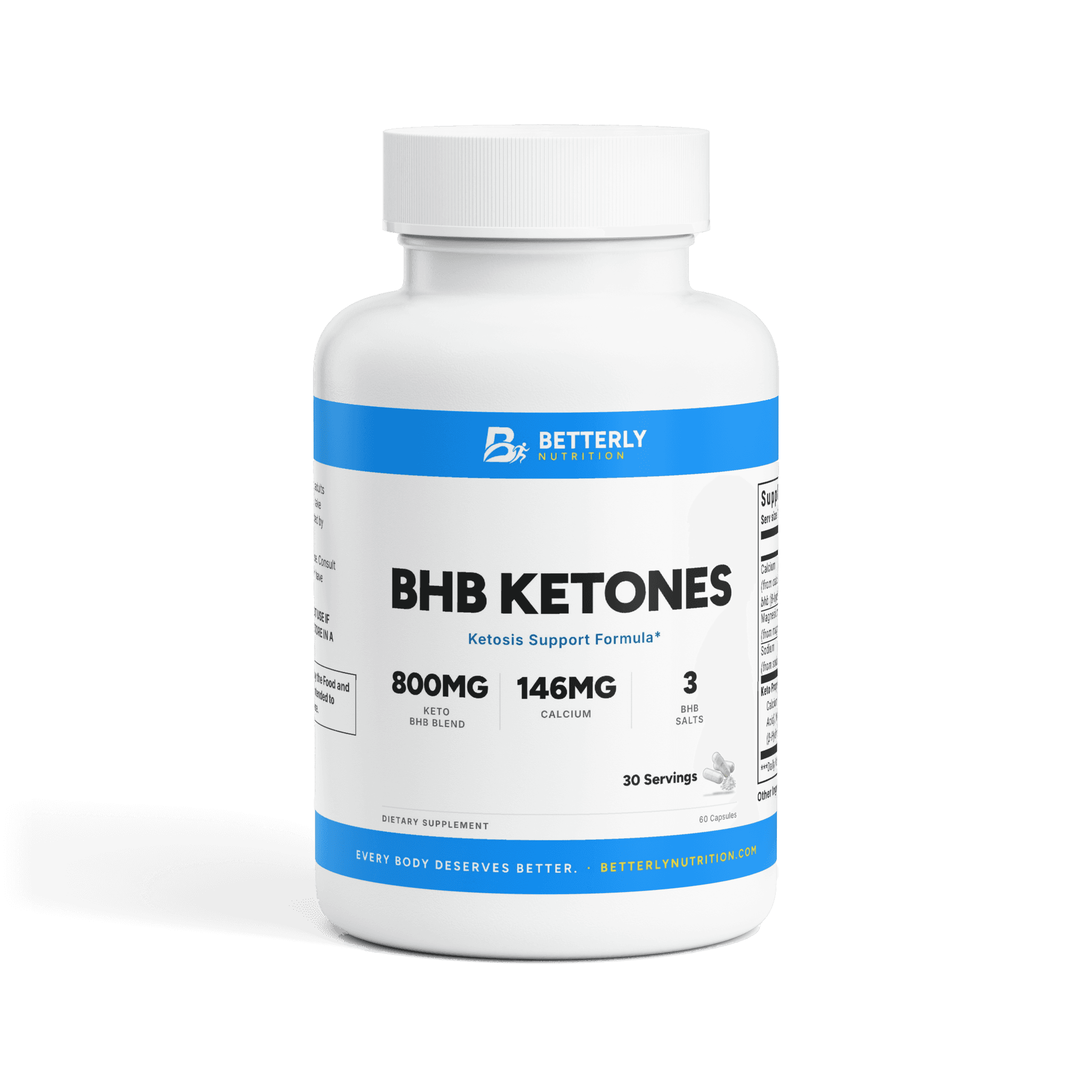
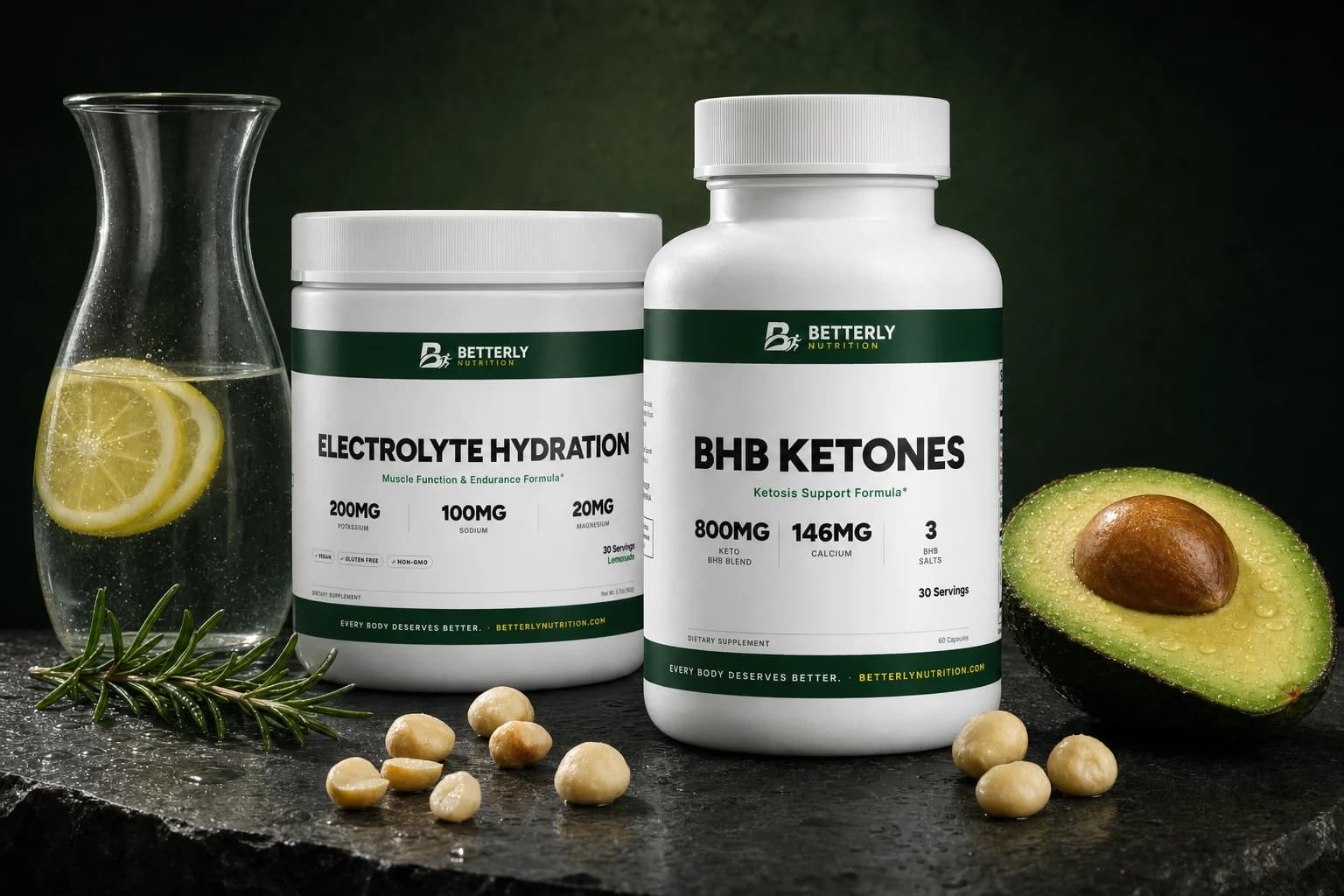
Betterly's BHB Ketone Capsules don't print a BHB amount, because BHB shares the 800 mg Keto Proprietary Blend with calcium citrate and MCT powder in every 2-capsule serving.
What the panel does give you is a ceiling. Calcium BHB sits third in the blend, behind calcium citrate and MCT powder, so it can weigh no more than 800 mg divided by three: about 267 mg per 2-capsule serving, and that includes the calcium bound to it.
For scale, two of the salt studies in the 2020 review used 11,700 mg of ketone salts for a single exercise test. That's more than 14 times our whole blend and over 40 times that calcium BHB ceiling, so two capsules can't come near a research-sized dose.
The ceiling holds because the FDA's Dietary Supplement Labeling Guide has a blend's ingredients listed in descending order by weight, and our raspberry ketones vs BHB comparison reads the rest of this panel beside our raspberry ketone label.
| Panel row, per 2 capsules | Amount | What it adds to the BHB picture |
|---|---|---|
| Keto Proprietary Blend | 800 mg | The outer limit for all five ingredients |
| Calcium (calcium citrate, calcium BHB) | 146 mg, 11% DV | Two sources, not split |
| Magnesium (magnesium BHB) | 1 mg | Only a sliver of magnesium BHB |
| Sodium (sodium BHB) | 1 mg, <1% DV | Only a sliver of sodium BHB |
Read together, the rows cap calcium BHB near 267 mg and leave the other two salts as slivers. Any exact BHB total would be a guess.
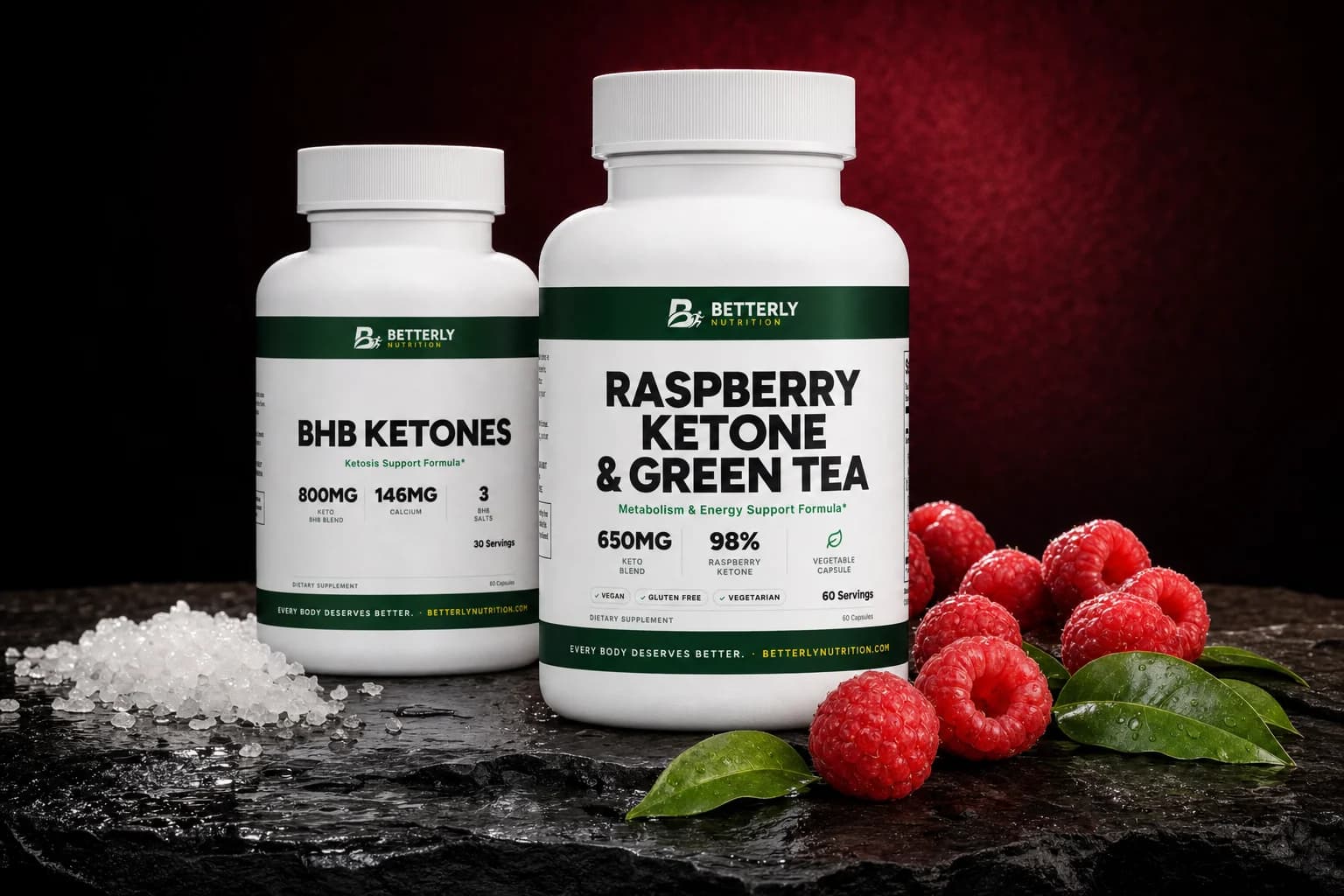
From our shop: BHB Ketone Capsules — 146 mg of calcium and an 800 mg Keto Proprietary Blend per 2-capsule serving, with 30 servings in a 60-capsule bottle.
How do you take BHB Ketone Capsules, according to the label?
The label's suggested use for BHB Ketone Capsules is two capsules daily with 6 to 8 oz (177 to 237 ml) of water, and it says not to exceed that. With 30 servings in the bottle, one serving a day works out to a month's supply.
- Neither a clock time nor a meal appears in the directions, so pick a time you'll remember. Our guide on when to take exogenous ketones digs into timing.
- Taking extra won't reach research doses, and "Do not exceed recommended dose" rules it out anyway.
- If you already take calcium, add this capsule's 146 mg per 2-capsule serving to your daily tally.
- Vegetarians, note the shell: the panel lists gelatin as the capsule.
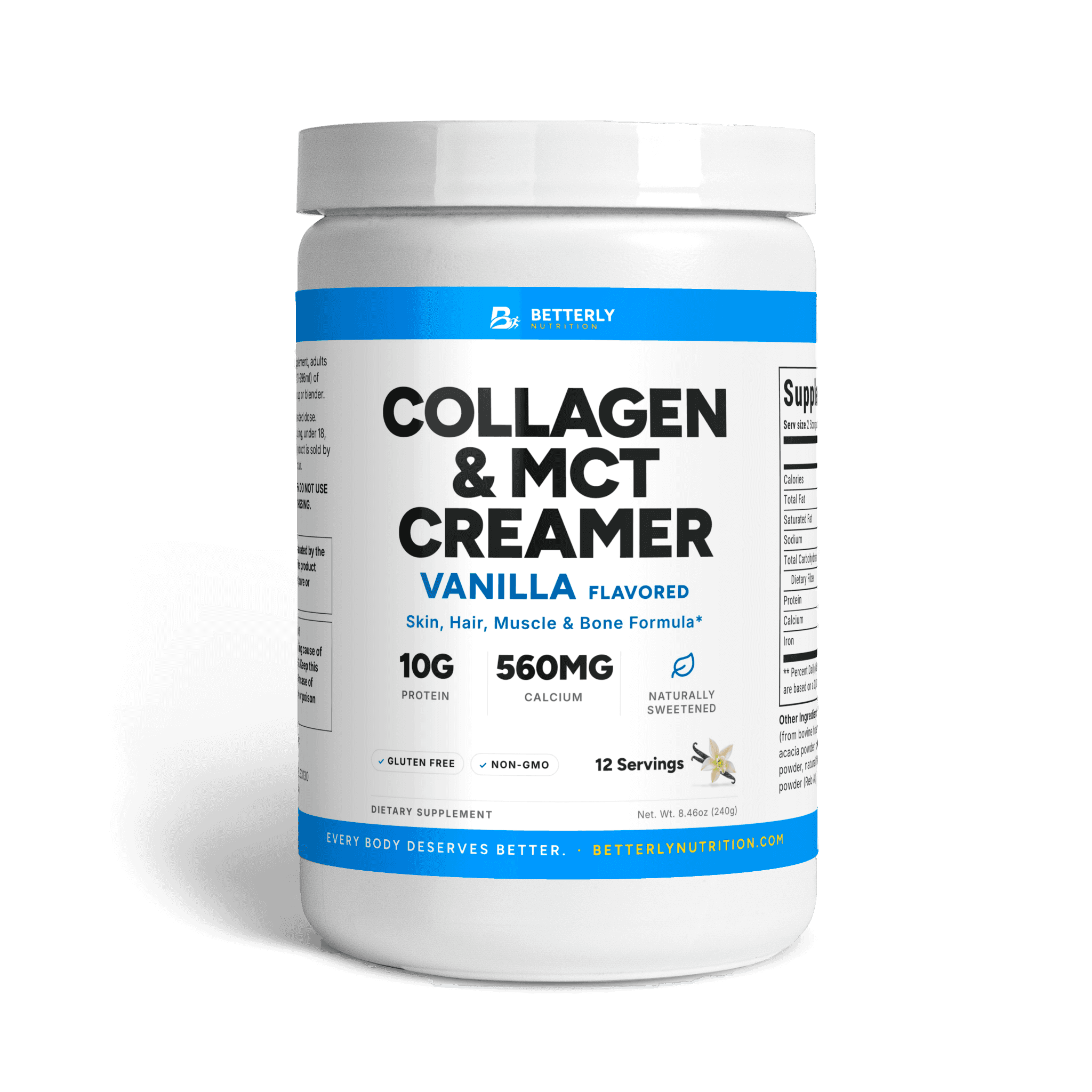
If you really want MCTs in your morning coffee, a BHB capsule is the long way round. Our Collagen Peptides & MCT Creamer (Vanilla) lists medium chain triglycerides second among its ingredients. Each 2-scoop (20 g) serving has 2 g of total fat and 10 g of protein, though the panel gives no MCT amount. We cover whether hot coffee harms collagen separately.
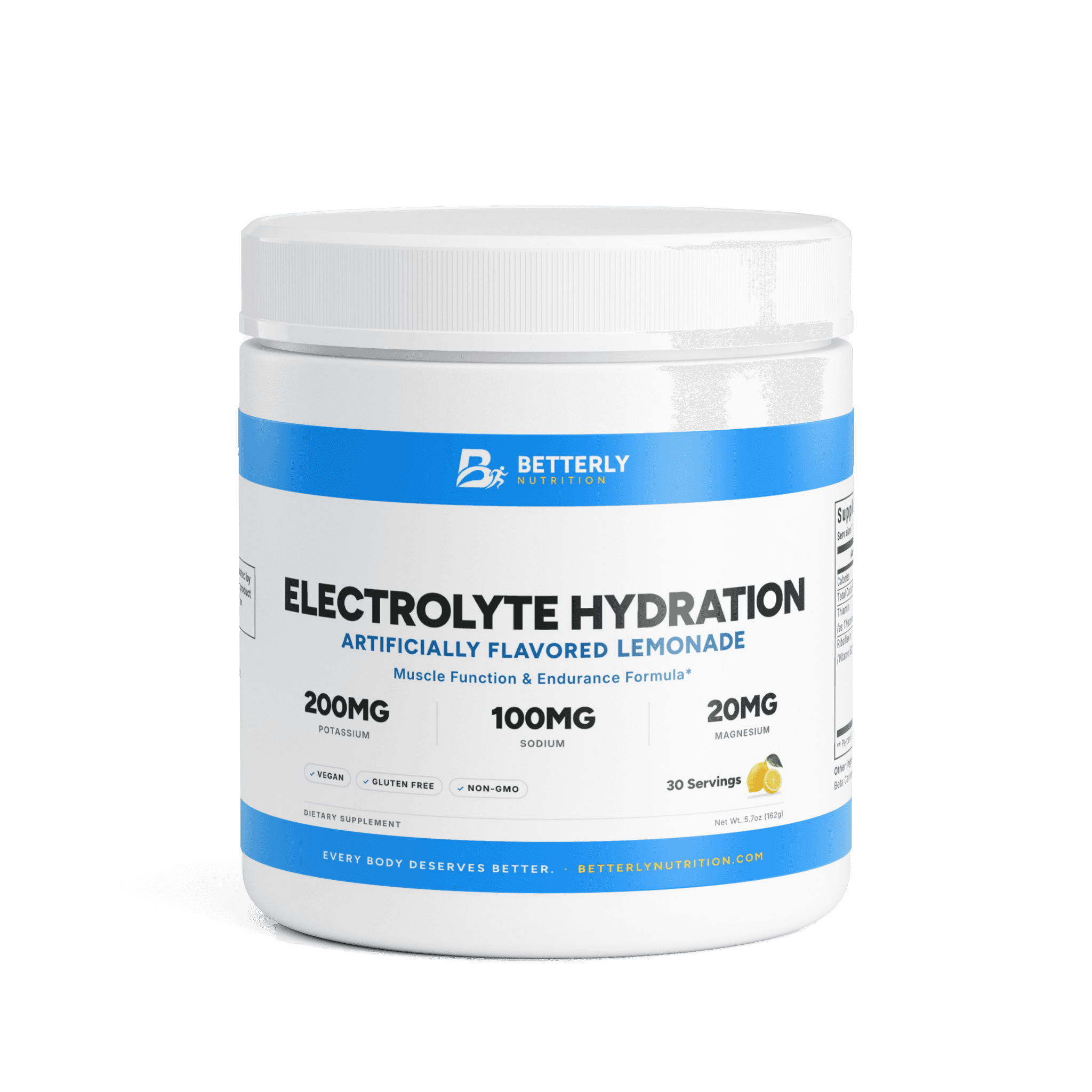
And for minerals on a low-carb day, one scoop of our lemonade electrolyte mix has 100 times the sodium of a 2-capsule BHB serving, with 2 g of total carbohydrate and 10 calories. Our plain-English electrolytes guide covers when a mix is worth adding.
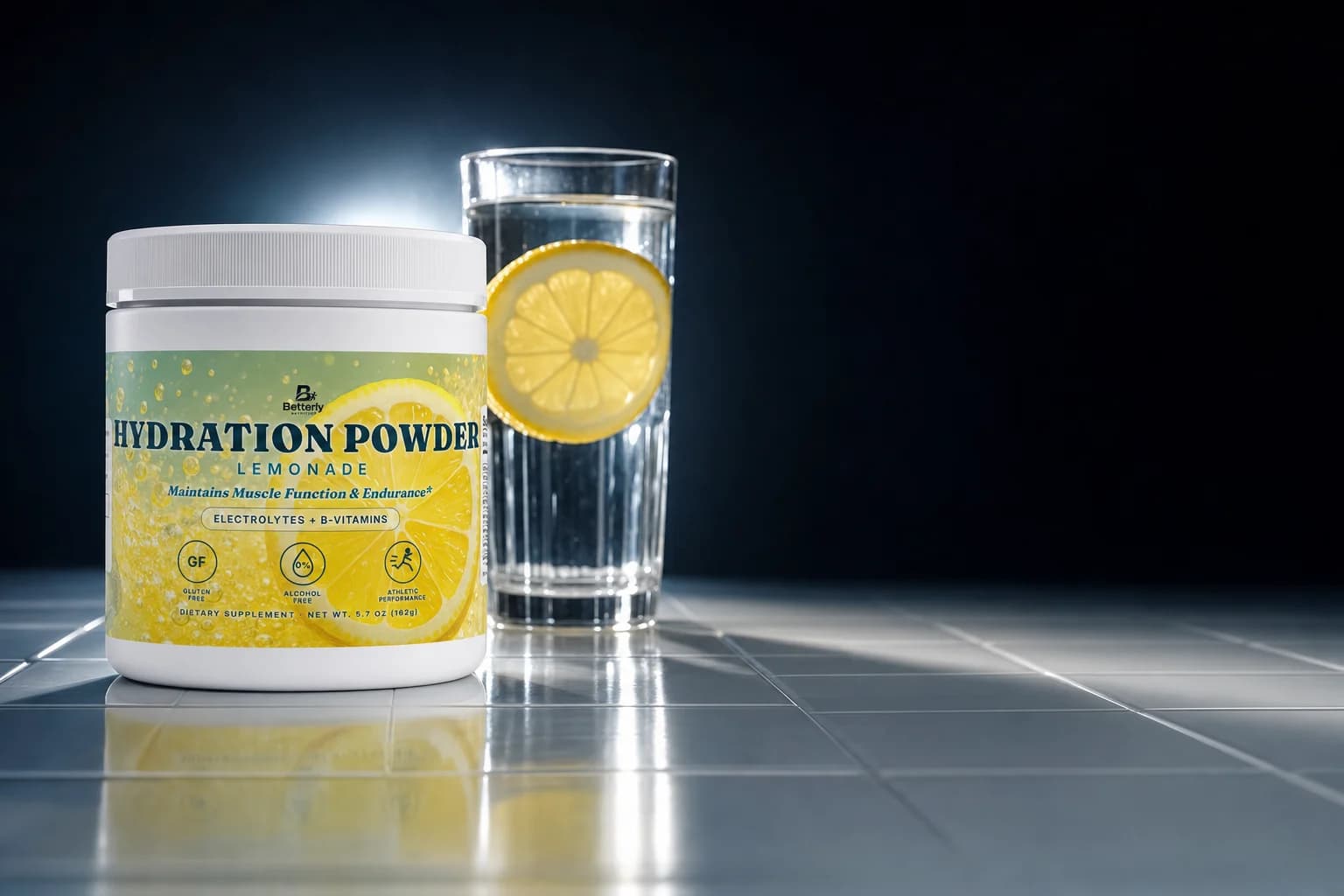
From our shop: Electrolyte Hydration Powder (Lemonade) — 100 mg of sodium, 200 mg of potassium and 20 mg of magnesium per 1-scoop (5.4 g) serving, labeled vegan, gluten free and non-GMO.
When don't you need exogenous ketones?
You probably don't need exogenous ketones if you're hoping they'll replace a low-carb diet, improve your training, or deliver something you'll feel from two capsules.
Skip them, or at least our capsule, if:
- You want the ketosis your body makes itself. That comes from how you eat.
- You're after a training edge, which the 2020 review found insufficient evidence for.
- You want a research-sized dose. Two capsules don't come close.
- You're counting minerals for hydration. Our BHB capsules list 1 mg of sodium per 2-capsule serving.
If you're simply curious and your provider has no concerns, the capsule is a measured way to try BHB at a label-sized dose. Every product in our Weight Support collection lists its amounts per serving if you'd like to compare.
Who should check with a healthcare provider first?
Check with a healthcare provider before taking BHB Ketone Capsules if you're pregnant, nursing, under 18, managing a medical condition, taking prescription medication or have surgery planned.
Our label's caution names four of those groups: "Consult a physician if pregnant, nursing, under 18, or have a medical condition." We've added medication and surgery as sensible checks before any supplement.
A few points specific to BHB:
- On prescription medicine? Ask your pharmacist whether the 146 mg of calcium per 2-capsule serving affects when you take your medicine.
- The 2020 review says ketone supplements might cause digestive symptoms, and salts more so. Our guide to BHB salts side effects goes further.
- If a provider has you tracking blood ketones, tell them before you add BHB, since it can shift your readings.
FAQ: exogenous ketones
Are exogenous ketones the same as raspberry ketones?
No. Exogenous ketones are ketone bodies such as BHB, while raspberry ketone is a compound from raspberries that isn't a ketone body at all. The shared word comes from chemistry naming, not from a shared role in your body. Our guide to raspberry ketones vs BHB compares the two ingredients and our two labels side by side.
How long do exogenous ketones stay in your system?
In the 2017 Frontiers in Physiology study, blood D-BHB from ketone drinks returned to baseline within 3 to 4 hours. The salt drinks were half L-BHB, which stayed raised for over 8 hours but wasn't detectable after 24. Those drinks delivered 12 to 24 g of BHB, so they don't tell you how a capsule-sized dose behaves.
Are exogenous ketones safe to take every day?
Long-term safety of exogenous ketones isn't settled. The 2020 Advances in Nutrition review calls for more research on repeated use and says single doses might cause digestive symptoms. Our BHB label is written for daily use at two capsules and says not to exceed that. Check with a provider first if you're managing a health condition or take medication.
Will a ketone meter show BHB from a supplement?
Yes, a blood ketone meter can show BHB from a supplement, but only the D form. In the 2017 Frontiers in Physiology study, the handheld meter and strips read D-BHB, and the L form needed separate lab analysis. The authors note these monitors don't measure L-BHB, so the L half of many ketone salts won't appear on a finger-stick reading. A reading taken within a few hours of a large dose still partly reflects the product, not just your diet.
Why do ketone drinks taste salty or bitter?
In the 2017 study that served both, the ketone salt drink tasted salty and the ketone ester drink tasted bitter. They were so different that the researchers couldn't disguise which was which. A capsule sidesteps taste because you swallow it whole with water, though it carries far less BHB than those drinks.
Sources
- MedlinePlus: Ketones in Blood
- Stubbs BJ, et al., Frontiers in Physiology (2017), via PubMed Central: On the Metabolism of Exogenous Ketones in Humans
- Valenzuela PL, et al., Advances in Nutrition (2020), via PubMed Central: Perspective: Ketone Supplementation in Sports—Does It Work?
- U.S. Food and Drug Administration: Dietary Supplement Labeling Guide: Chapter IV. Nutrition Labeling
If this left you looking for somewhere to start, read keto BHB capsules with calcium, magnesium and sodium BHB — its amounts per serving are listed on the page. For the practical questions this raises, how dosing, sourcing and subscriptions work is answered in one place.