On this page
- Key takeaways
- What is eyebright, and why is it called that?
- What are the benefits of eyebright, according to the evidence?
- Is eyebright good for your eyes?
- What forms is eyebright sold in: tea, tincture or capsules?
- Are eyebright eye drops or homemade eyewashes safe?
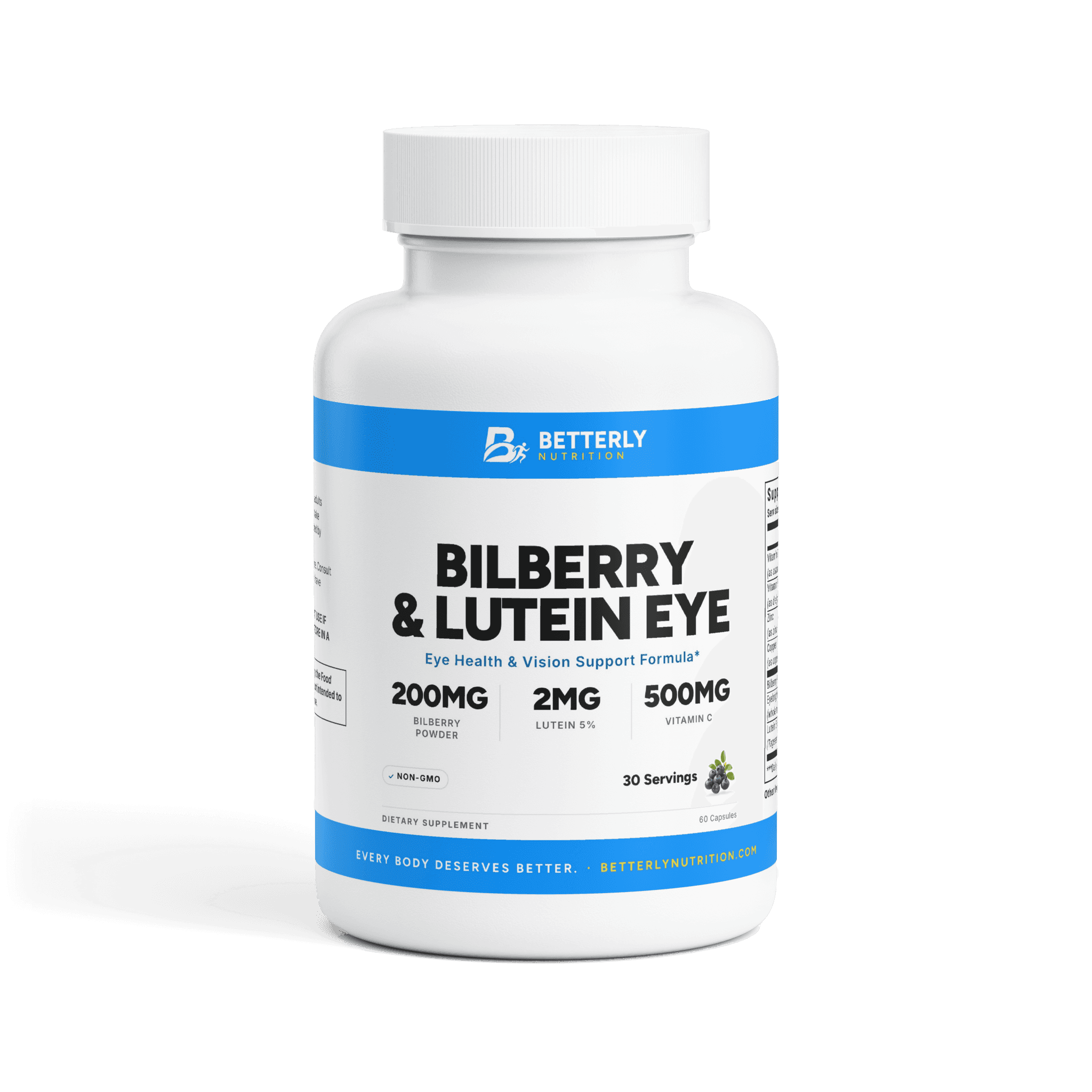
- How much eyebright is in Bilberry & Lutein Eye Capsules?
- How do you take eyebright, going by the label?
- When don't you need an eyebright supplement?
- Who should check with a healthcare provider first?
- FAQ: eyebright benefits and safety
- Sources
The short answer: Eyebright benefits rest mostly on tradition. Eyebright (Euphrasia officinalis) is a small European wildflower that was traditionally used for the eyes, and its name still carries that history. When the European Medicines Agency reviewed it in 2010, it found no adequate data behind those traditional uses. You can buy it as tea, tincture, capsules or eye drops, but a homemade eyebright eyewash isn't safe.
Key takeaways
- Eyebright is the common name for Euphrasia officinalis, a low-growing wildflower whose German name, Augentrost, roughly means "eye comfort."
- In 2010 the European Medicines Agency declined to write an official herbal monograph for eyebright because the data on its traditional use fell short.
- Eyebright comes as tea, tincture, dried-extract capsules and eye drops, and only the forms you swallow can be sold as dietary supplements.
- Never put homemade eyebright tea or any home brew in your eyes, because anything used in the eye needs to be sterile.
- Our Bilberry & Lutein Eye Capsules list 10 mg of eyebright extract per 2-capsule serving, alongside 80 mg of zinc, double the NIH's 40 mg upper limit for adults.
A note on our stake: we sell Bilberry & Lutein Eye Capsules, part of our targeted support shop, and eyebright is one of seven rows on the Supplement Facts panel of those eye capsules. It's a minor row, and we'll show you how minor, zinc warning included.
What is eyebright, and why is it called that?
Eyebright is a small flowering herb in the genus Euphrasia, and both its English and German names come from centuries of folk use for the eyes.
The species name you'll see most is Euphrasia officinalis. When European regulators reviewed the herb, they grouped it with a close relative, Euphrasia rostkoviana, under one ingredient name: eyebright herb.
The plant is short and easy to miss, with small white-to-violet flowers streaked with purple and marked with a yellow patch.
The European Medicines Agency (EMA) found that traditional eyebright preparations were mainly water extracts made fresh, like a strong tea. People soaked a dressing in that liquid and laid it over the eye. The agency also found records of a nasal ointment made with eyebright tincture.
What are the benefits of eyebright, according to the evidence?
The evidence for eyebright's benefits is thin: the European Medicines Agency found no adequate data behind its traditional uses, and no federal herb page covers it.
In 2009 the EMA's herbal committee set out to write a monograph on eyebright, the reference document EU regulators use to describe a traditional herbal medicine. It ran what it called a comprehensive literature search and looked at products already on the European market.
Eyebright passed every requirement but one. It failed the test for traditional-use data: enough long-standing use to show the herb isn't harmful as used, and that its effects are plausible. In its public statement on eyebright herb, adopted on September 16, 2010, the committee said the efficacy of the claimed uses was undocumented, and concluded that no monograph could be written.
In the US, NCCIH, the NIH center that publishes plain-language herb pages, has no page for eyebright, and neither does MedlinePlus's herb list, as of September 2026.
Folk history and lab-dish findings can't tell you what a cup of tea or a capsule does in a person. For now, the honest benefit list has one item: a long tradition of use around the eyes.
Is eyebright good for your eyes?
No reliable research shows that eyebright, taken as tea, tincture or capsules, supports your eyes or vision in people; its reputation comes from tradition.
The tradition the EMA documented was mostly about laying an eyebright-soaked dressing on the eye, not swallowing the herb. A capsule borrows the plant's name, not the practice, and the dressing version is the one you shouldn't copy at home.
Came here because of long hours at a monitor? Start with the habits that cost nothing. Our screen-time eye vitamin guide covers breaks, blinking and common eye-formula ingredients.
What forms is eyebright sold in: tea, tincture or capsules?
Eyebright is sold as tea, tincture, dried-extract capsules and eye drops, and the first three are swallowed while the drops go in your eye.
That split decides which rules a product follows. The NIH Office of Dietary Supplements (ODS) quotes the 1994 law that defines a dietary supplement in its consumer primer on botanical dietary supplements. One condition is that you swallow it, whether it's a pill, capsule, tablet or liquid, so eyebright drops can't be sold as a supplement.
The swallowed forms each give you a different clue on the label. An eyebright tea box may list grams of dried herb per bag, or only the ingredient name. A tincture should name its liquid base, and its strength, which ODS says varies from product to product, is shown as a ratio. Even that detail can go missing: the EMA recorded an old eyebright nasal ointment and noted its tincture's specifications weren't available.
| Form | Where it goes | Can it be a supplement? | Named in the EMA statement? |
|---|---|---|---|
| Tea or infusion | Swallowed | Yes | Yes, as an eye dressing |
| Tincture | Swallowed | Yes | Yes, in a nasal ointment |
| Dried-extract capsule | Swallowed | Yes | No |
| Eye drops | In the eye | No | No |
Read the last column: the capsule, the form ours comes in, isn't named in the EMA's statement, and the infusion it described went on a dressing, not down your throat. The swallowed rows don't convert into each other either. ODS points out that a tea, a tincture and an extract made from the same plant differ in strength, and each draws out different amounts of the plant's compounds.
What about eyebright tea benefits? The tea has the same thin evidence as every other form. If you want to try a cup, check with your healthcare provider first, follow the maker's directions, and keep leftovers away from your eyes. If you avoid alcohol, read a tincture's base before you buy.
Are eyebright eye drops or homemade eyewashes safe?
Homemade eyebright eyewashes aren't safe, and store-bought eyebright (Euphrasia) drops labeled homeopathic are ones the FDA tells consumers not to use.
For the homemade kind, the EMA judged eyebright preparations made fresh and put on the eye neither hygienic nor safe, and said therapeutic use couldn't be recommended. A kitchen brew isn't sterile, and the eye is a bad place for anything that isn't.
US regulators set the same bar. The FDA's consumer page, What You Should Know about Eye Drops, says any drug used in the eyes must be sterile, because eye drops "bypass some of the body's natural defenses."
Please skip these, however natural they sound:
- Rinsing your eyes with eyebright tea, warm or cooled.
- Laying a cloth or cotton pad soaked in a home brew over your eyes.
- Dripping tincture, or capsule powder stirred into water, into or around your eyes.
Store-bought drops need a careful look too. The same FDA page says eye products labeled as homeopathic shouldn't be marketed and aren't approved by the agency. Eyebright drops may carry only the Latin name, Euphrasia, so check those boxes for the word "homeopathic." FDA also says to stop any eye drop that brings on pain, discomfort or a change in your vision, and to talk to your doctor.
How much eyebright is in Bilberry & Lutein Eye Capsules?
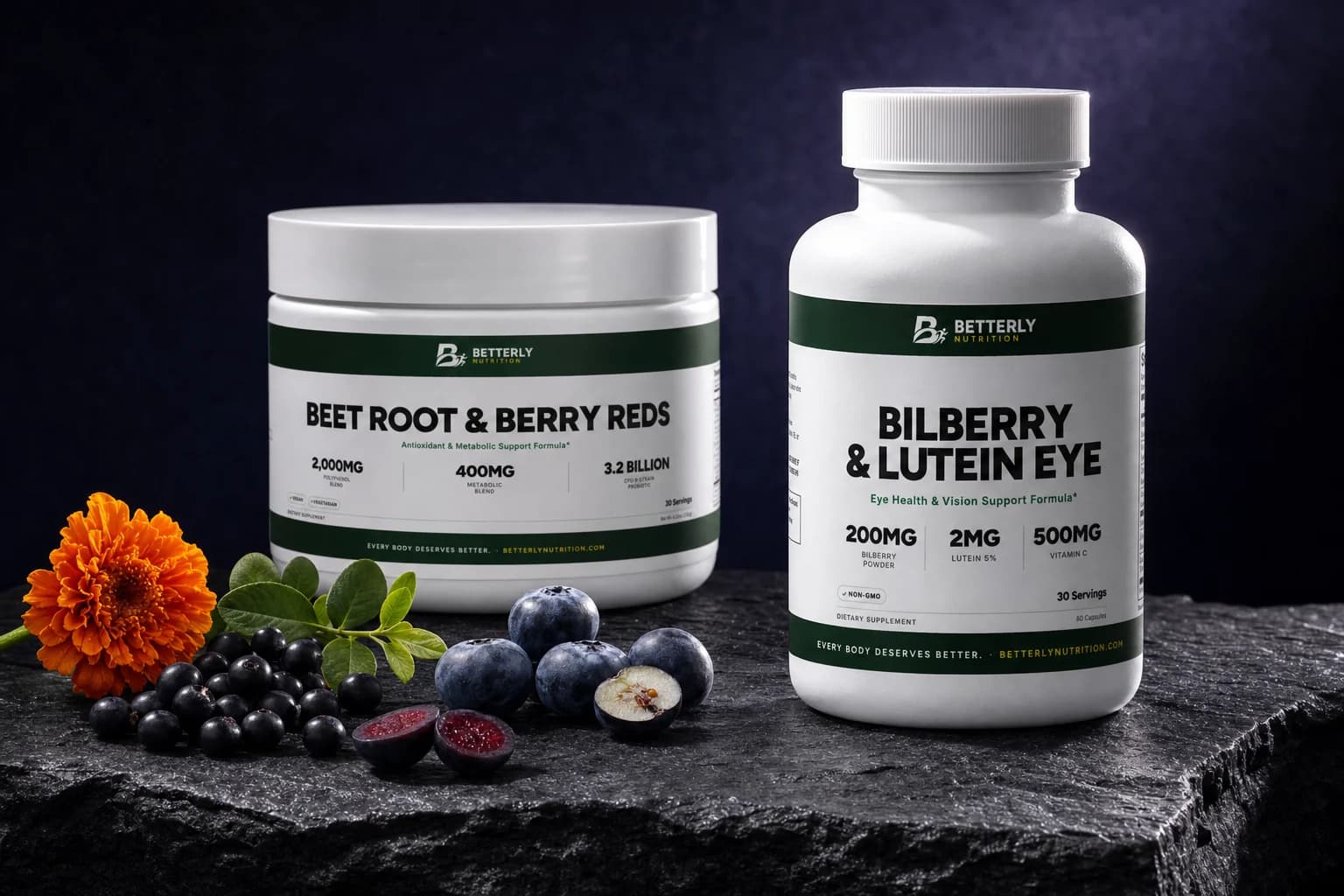
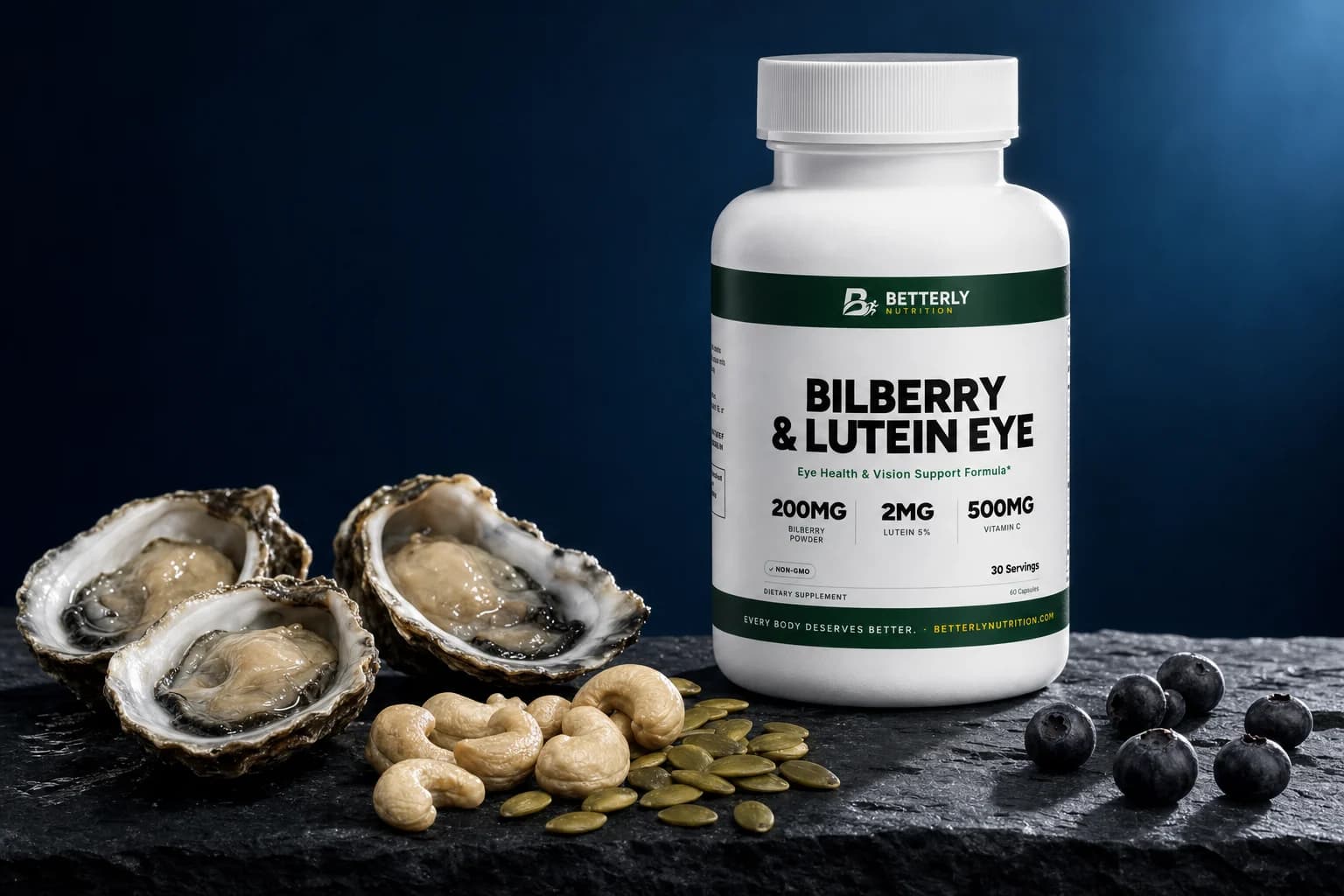
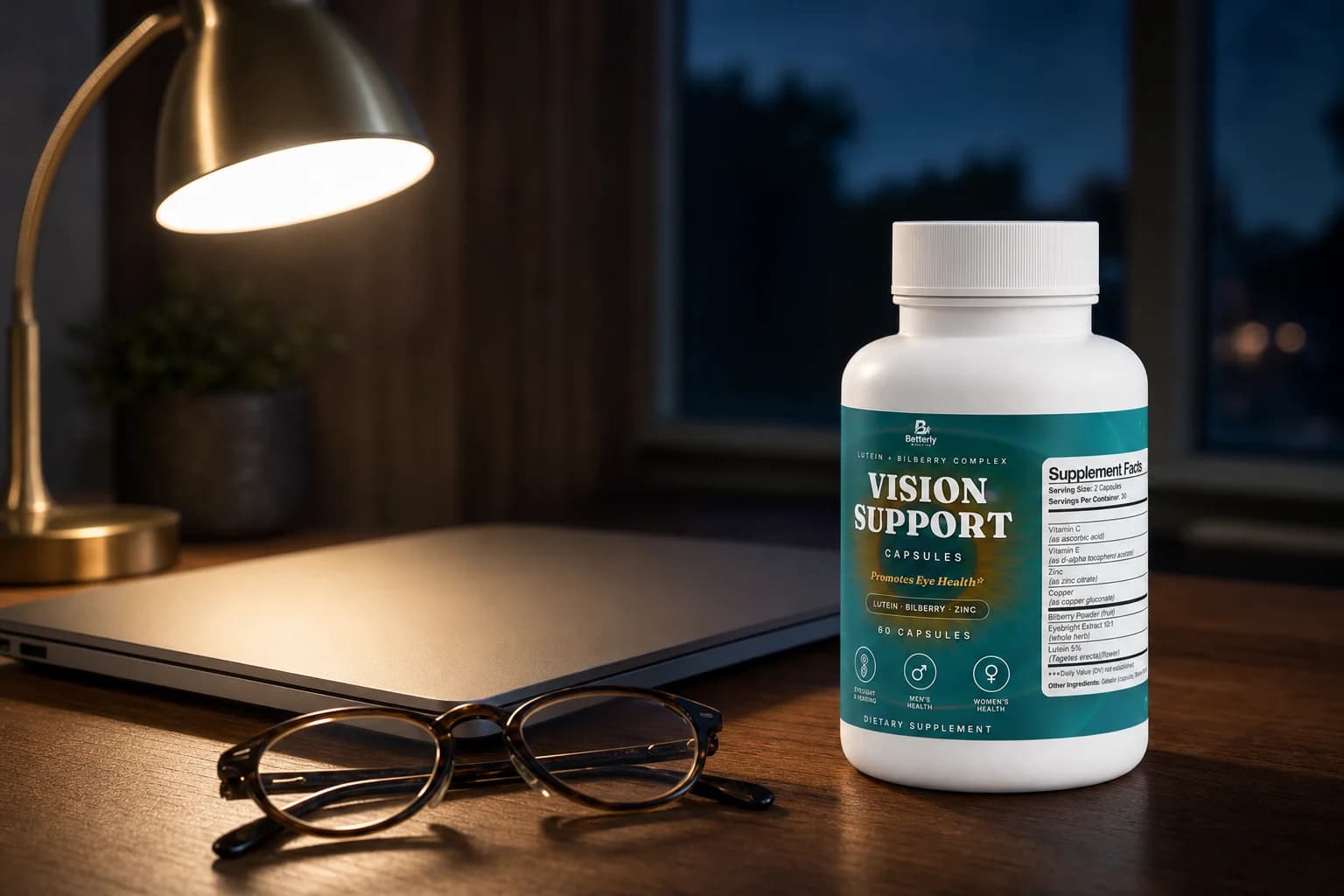
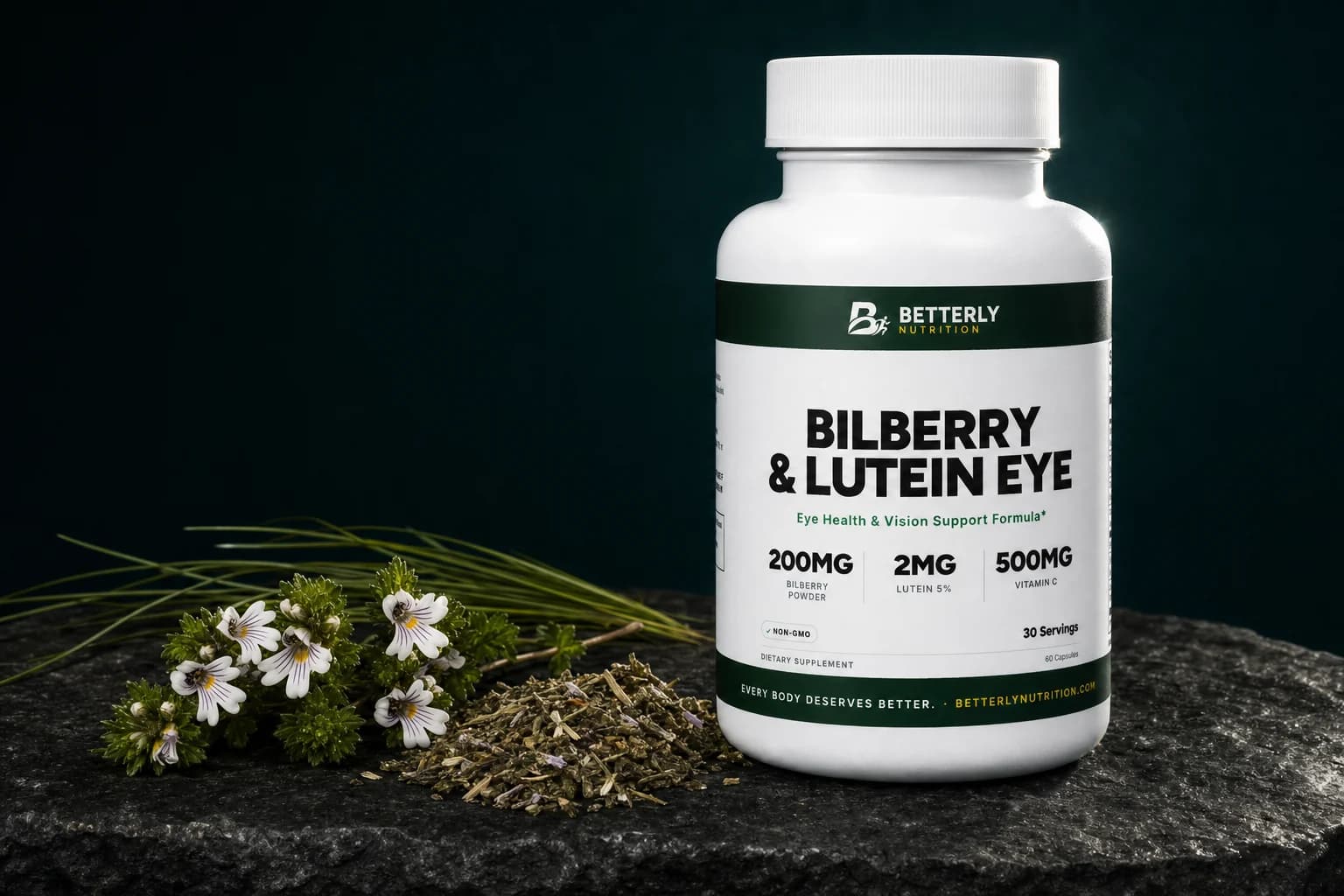
Betterly's Bilberry & Lutein Eye Capsules list 10 mg of Eyebright Extract 10:1 (whole herb) per 2-capsule serving, a supporting ingredient rather than the formula's lead.
Here's the full panel, per 2-capsule serving:
| Panel row | Amount | % Daily Value |
|---|---|---|
| Vitamin C (as ascorbic acid) | 500 mg | 560% |
| Vitamin E (as d-alpha tocopherol acetate) | 30 mg | 200% |
| Zinc (as zinc citrate) | 80 mg | 730% |
| Copper (as copper gluconate) | 0.9 mg | 100% |
| Bilberry Powder (fruit) | 200 mg | Not established |
| Eyebright Extract 10:1 (whole herb) | 10 mg | Not established |
| Lutein 5% (Tagetes erecta) (flower) | 2 mg | Not established |
The seven rows add up to about 823 mg per serving, so eyebright's 10 mg is roughly 1% of it, or 5 mg per capsule. Only the copper and lutein rows are smaller, and eyebright isn't named on the front of the bottle.
What does 10:1 mean? ODS calls numbers like this a botanical-to-extract ratio, with the dried herb on the left and the finished product on the right. Our panel doesn't say how our supplier measured it. If it follows the ODS reading, 10 mg of extract traces back to roughly 100 mg of dried eyebright. That's a note about starting material, not ten times the effect.
The row that matters more is zinc. For adults, the NIH ODS consumer fact sheet on zinc lists an upper limit of 40 mg a day, counted across everything you eat, drink and take, medicines included. A single 2-capsule serving lists 80 mg, so it's twice that ceiling on its own, before any food or other supplement. The one exception ODS allows is zinc taken for a medical reason under a doctor's care.
So our advice is plain: don't start this product at its labeled serving unless a healthcare provider says it suits you. Our look at how 80 mg of zinc stacks up against the limit runs the full math.
From our shop: Bilberry & Lutein Eye Capsules — 10 mg of eyebright extract 10:1 and 200 mg of bilberry fruit powder per 2-capsule serving, plus 80 mg of zinc that calls for a provider's okay first.
How do you take eyebright, going by the label?
Take any eyebright product only as its own label directs, and clear our eye capsules with a healthcare provider first, because of their zinc.
For Bilberry & Lutein Eye Capsules, the label's suggested use is two capsules a day for adults, taken with 6 to 8 oz of water, or as a healthcare professional directs. It gives no timing and says nothing about meals. Its caution line reads: "Do not exceed recommended dose. Consult a physician if pregnant, nursing, under 18, or have a medical condition."
Before your first capsule:
- Show your provider the bottle and point to the 80 mg zinc row.
- List everything else you take that contains zinc, starting with any multivitamin. ODS notes that almost all multivitamin/mineral supplements have it.
- Ask whether any of your medicines interact with zinc.
- If your provider rules it out, leave this bottle on the shelf. Halving the serving isn't something the label offers.
For eyebright teas and tinctures, the ODS primer points you back to the package: use the maker's directions, and add nothing beyond the recommended dose without your provider's say-so.
When don't you need an eyebright supplement?
You don't need an eyebright supplement if you want a proven effect or your eyes have changed, and our zinc-heavy formula is a poor fit if you already take zinc.
- You want a sure result. No reliable research in people backs eyebright, so no label can promise one, ours included.
- You already take zinc. Our eye capsule alone lists 80 mg, twice the 40 mg adult limit, and a multivitamin or zinc product on top pushes the total higher still.
- Your eyes or vision have changed. An eye exam answers that question. An herb doesn't.
- Screens are the real issue. Breaks and full blinks cost nothing and come first.
If broad daily nutrition is the goal, a multivitamin covers more ground.
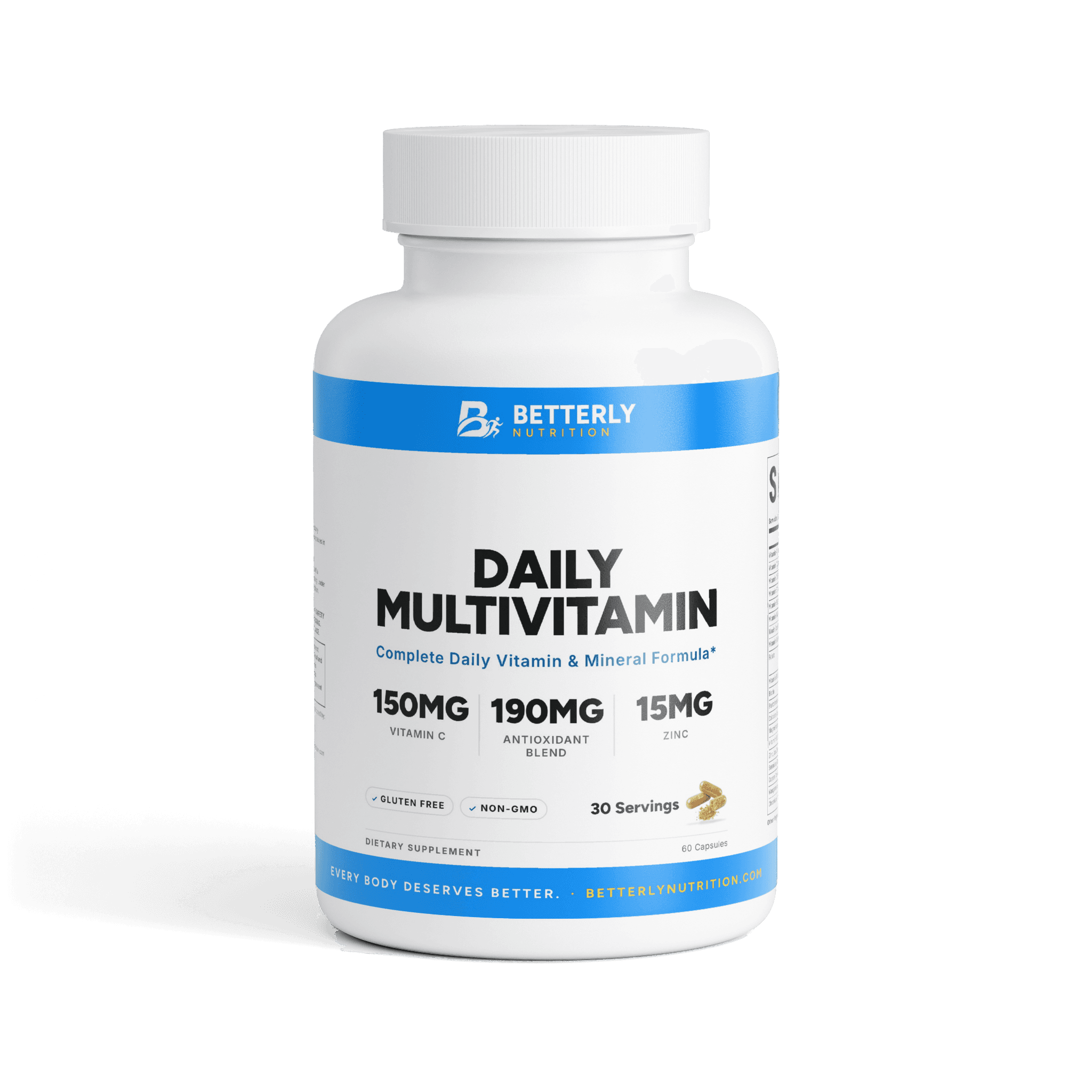
From our shop: Daily Multivitamin Capsules — no eyebright, but per 2-capsule serving it lists lutein inside a 170 mg Health Support blend plus 15 mg of zinc, and the label says to take it in the morning with a meal.
Who should check with a healthcare provider first?
Because eyebright's safety record is thin, get a healthcare provider's okay first during pregnancy or breastfeeding, under 18, on any medication, ahead of surgery, or with a health condition.
- Pregnant or nursing. Our sources hold no safety data on eyebright during pregnancy or breastfeeding, and our label's caution line says to consult a physician.
- Under 18. The capsule directions address adults only, and the ODS table gives teens 14 to 18 an even lower zinc ceiling: 34 mg.
- Taking any medicine. Unknown interactions aren't the same as no interactions.
- Scheduled surgery. Tell your surgical team about eyebright and any other supplement in advance.
- Already seeing an eye doctor. Ask before adding any herb or eye product.
FAQ: eyebright benefits and safety
What is eyebright used for today?
Eyebright is used today mainly as an herbal tea, a tincture and a capsule ingredient, often in eye formulas like ours. Those uses follow folk history rather than solid research; the European Medicines Agency found no adequate data for its traditional uses in 2010. Eyebright eye drops exist too, but they aren't dietary supplements.
Is eyebright the same as bilberry?
No, eyebright and bilberry are unrelated plants. Eyebright is a small wildflower, Euphrasia officinalis, and our label lists the whole herb. Bilberry, Vaccinium myrtillus, is a dark berry and a cousin of the blueberry. Both appear in eye formulas because of their folk reputations. Our guide to bilberry vs blueberry covers the berry side.
How long does eyebright take to work?
Eyebright has no known timeline, because no reliable research in people shows a measurable effect to wait for. A product promising results by a certain week is claiming more than the evidence supports. If you and your provider decide to try one, follow its label, and take any change in your eyes to an eye doctor.
Is eyebright safe to swallow?
Eyebright hasn't been shown to be safe or unsafe to swallow, because the evidence is missing in both directions. The traditional uses the EMA's 2010 review described were mostly an eye dressing and a nasal ointment, not swallowed forms, and even for those it found the record too thin to show the herb isn't harmful as used. NCCIH has no eyebright page to fill the gap. So run any tea, tincture or capsule past your healthcare provider first, and don't assume a meadow plant is harmless.
Does eyebright interact with medications?
No one can say for sure: neither NCCIH nor MedlinePlus has an eyebright page describing its interactions with medications. Tell your provider or pharmacist about any eyebright product you use. The zinc in combination formulas does have known interactions: the ODS zinc sheet flags two antibiotic families (quinolones and tetracyclines), the drug penicillamine, and thiazide diuretics.
Sources
- Public statement on Euphrasia officinalis L. and Euphrasia rostkoviana Hayne, herba, European Medicines Agency, Committee on Herbal Medicinal Products (2010)
- What You Should Know about Eye Drops, U.S. Food and Drug Administration
- Botanical Dietary Supplements: Background Information, NIH Office of Dietary Supplements
- Zinc: Fact Sheet for Consumers, NIH Office of Dietary Supplements
If this left you looking for somewhere to start, read eye capsules with eyebright extract, bilberry and lutein — its amounts per serving are listed on the page. For the practical questions this raises, how dosing, sourcing and subscriptions work is answered in one place.