On this page
- Key takeaways
- Tongkat ali vs maca: what's the basic difference?
- What did maca research actually measure?
- What did tongkat ali research actually measure?
- Tongkat ali vs maca root: how do the amounts compare?
- Maca or tongkat ali: which is better for you?
- Can you take tongkat ali and maca root together?
- How do you take tongkat ali and maca by the label?
- When don't you need tongkat ali or maca?
- Who should check with a healthcare provider first?
- FAQ: tongkat ali vs maca
- Sources
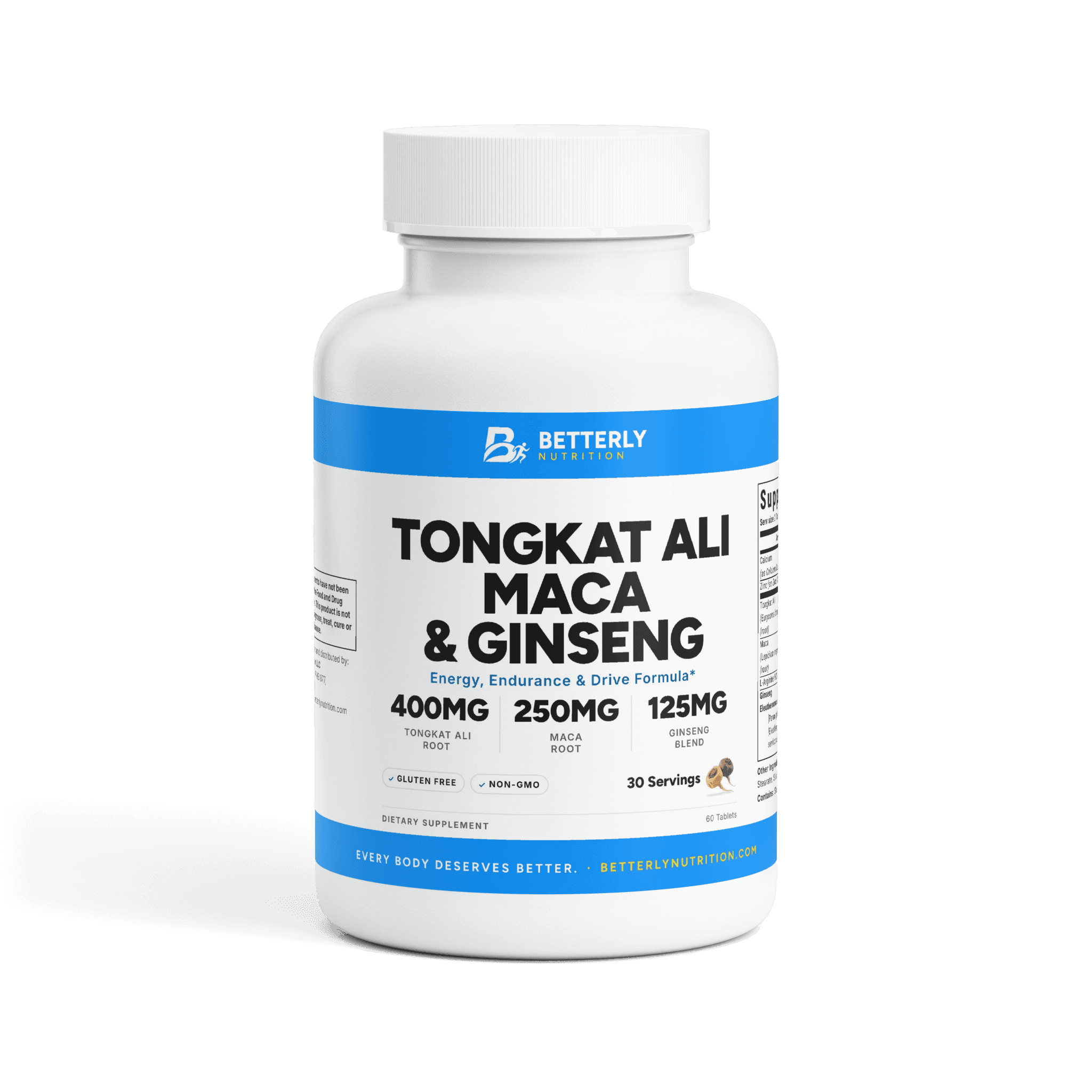
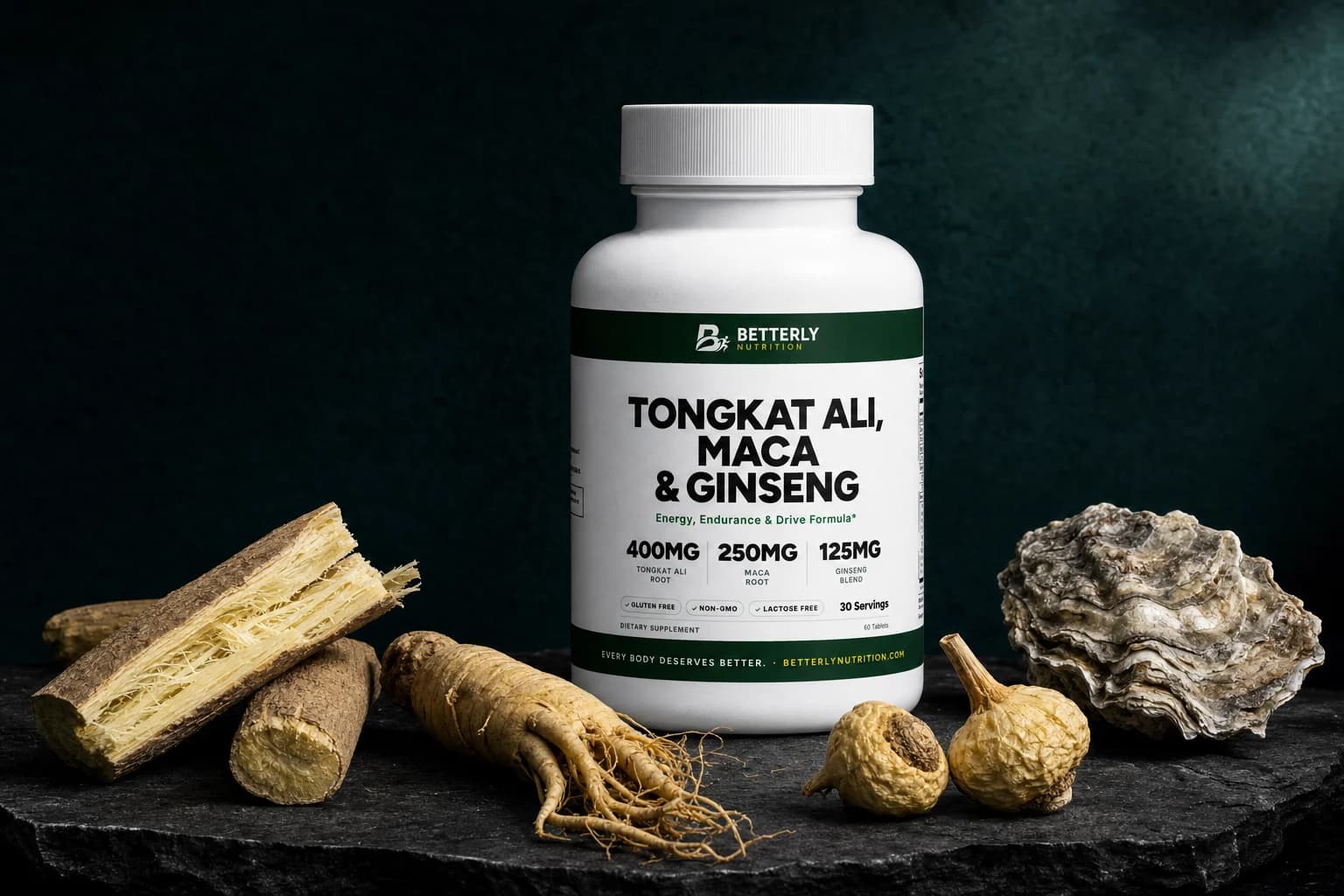
The short answer: Tongkat ali vs maca pits a Southeast Asian tree root (Eurycoma longifolia) taken in milligrams against an unrelated Andean vegetable (Lepidium meyenii) taken by the gram. NIH's LiverTox gives 100 to 400 mg a day for traditional tongkat use and 500 to 3,000 mg for maca. Our Tongkat Ali, Maca & Ginseng Capsules, sold as tablets despite the name, hold 400 mg of tongkat and 250 mg of maca per 2-tablet serving.
Key takeaways
- Tongkat ali is a folk-medicine root from a Southeast Asian tree, while maca is a Peruvian root vegetable that people also eat as food.
- The two roots were studied for different things: maca trials mostly tracked how people felt, like mood and energy, while tongkat ali trials mostly tracked hormone markers and muscle strength.
- NIH's LiverTox rates maca an unlikely cause of liver injury and tongkat ali a possible rare one, and it says tongkat's long-term safety hasn't been well documented in people.
- Betterly's Tongkat Ali, Maca & Ginseng Capsules carry 50 mg of zinc in each 2-tablet serving, more than the 40 mg adult upper limit in the NIH zinc fact sheet.
Full disclosure: we sell all three products in this guide, including the tablet that holds both roots. Its weak spots sit right beside its numbers here, starting with a zinc amount we won't tell you to take.
Tongkat ali vs maca: what's the basic difference?
Tongkat ali is the root of a slow-growing Southeast Asian tree used in folk medicine, while maca is a turnip-like Andean root eaten as food for centuries.
NIH's LiverTox entry on tongkat ali describes a shrubby evergreen whose roots, leaves and bark have a long history in Southeast Asian folk medicine. The LiverTox page on maca describes a mustard-family plant grown above 4,000 m in Peru, with a radish-like edible part that's mostly carbohydrate and protein.
| Question | Tongkat ali | Maca |
|---|---|---|
| Latin name | Eurycoma longifolia | Lepidium meyenii |
| Traditional role | Folk medicine | Food and folk medicine |
| Forms LiverTox names | Raw powder, tea or coffee blends, capsules | Capsules, tablets, liquids, root extract |
| Typical daily amount | 100-400 mg (traditional) | 500-3,000 mg (varies by form) |
| LiverTox liver rating | D: possible rare cause | E: unlikely cause |
| Nicknames | Long Jack, Malaysian ginseng | Peruvian ginseng |
In short, maca is a gram-scale food with a quiet safety record, and tongkat ali a milligram-scale herb with less known about long-term use.
What did maca research actually measure?
Maca studies annotated in NIH's LiverTox mostly measured how people felt, like mood and energy, and the trial that checked hormones in healthy men found no change.
LiverTox sums up the human research on maca as conflicting, and its reference notes show the spread. The hormone check came from 56 healthy men on 1.5 g or 3 g a day: across as many as 12 weeks, their sex and pituitary hormones stayed where they started. A larger trial gave 175 adults 3 g of red or black maca or a placebo daily for 12 weeks, and desire, mood and energy improved more on maca.
So the fair claim is small. Maca might support a healthy libido without nudging hormones, but that rests on a few small, mixed trials. Of maca's promoted effects, LiverTox says: "None of these effects have been proven in prospective, rigorously controlled trials in humans."
Our maca root research roundup covers each study's dose and caveats.
What did tongkat ali research actually measure?
Most tongkat ali trials summarized in NIH's LiverTox enrolled men, often athletes, and tracked hormone markers, muscle strength and exercise results, with modest or mixed findings.
LiverTox's annotated references show the pattern:
- Eighteen young rugby players took 400 mg of tongkat ali or a placebo daily for 7 days, and peak force, strength and soreness came out the same.
- Forty men aged 19 to 25 took 200 mg or a placebo for 8 weeks, and strength rose with weight training, not with tongkat alone.
- Thirteen male recreational athletes took 400 mg daily for 6 weeks, and their liver and kidney tests didn't change.
LiverTox concludes that the changes seen in tongkat trials haven't been linked to better athletic performance. It also notes that extracts contain more than 65 compounds, and it isn't clear which of them are active in people.
We make no hormone claims for tongkat ali, and neither do our two tongkat-led labels. The tablet's front reads "Energy, Endurance & Drive Formula," and its asterisk leads to the standard FDA disclaimer.
Tongkat ali vs maca root: how do the amounts compare?
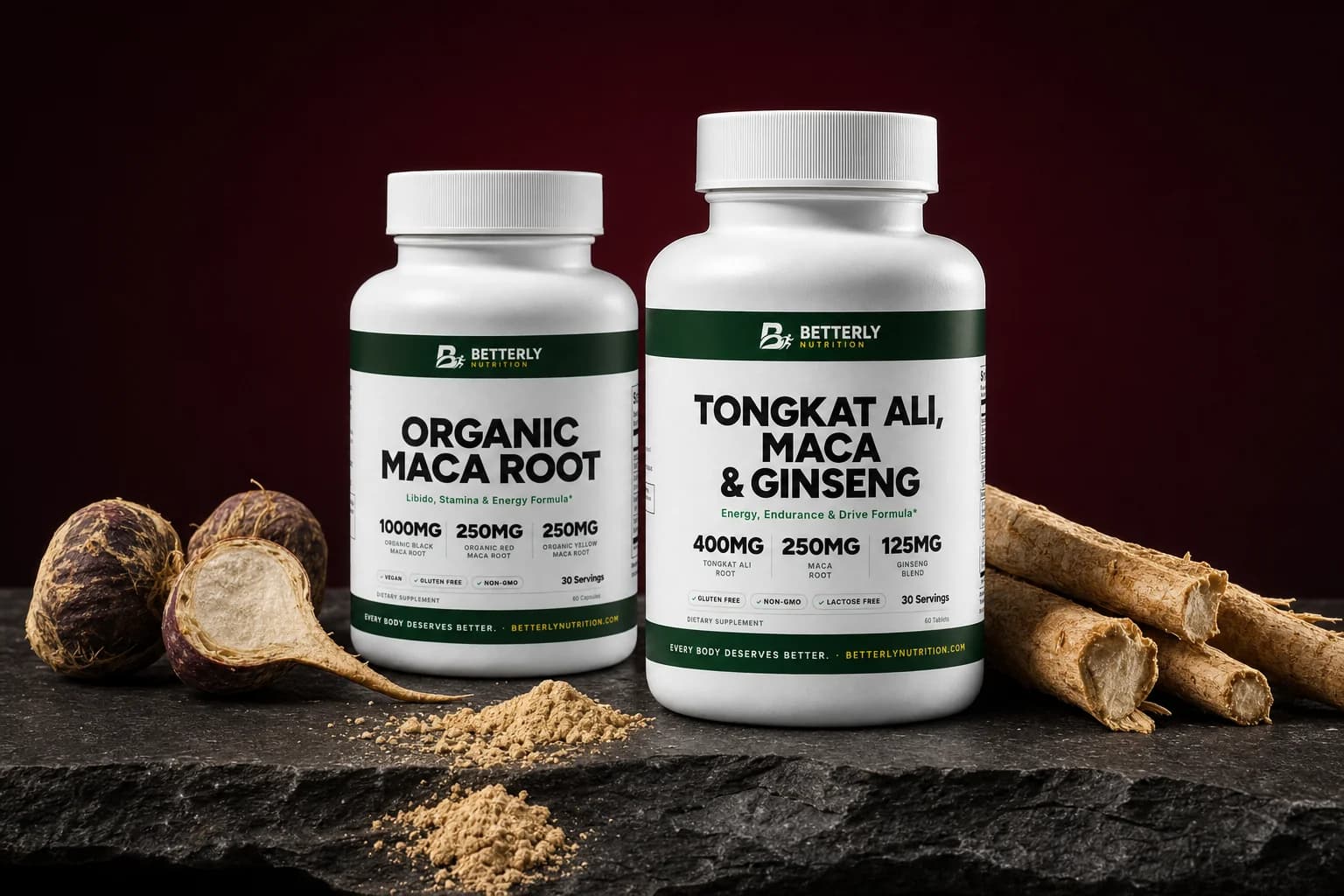
Tongkat ali is typically taken in hundreds of milligrams and maca root in grams, yet our tongkat-maca tablet holds 400 mg of tongkat beside just 250 mg of maca.
| Betterly label | Serving | Tongkat ali | Maca root |
|---|---|---|---|
| Tongkat Ali, Maca & Ginseng Capsules | 2 tablets | 400 mg root | 250 mg |
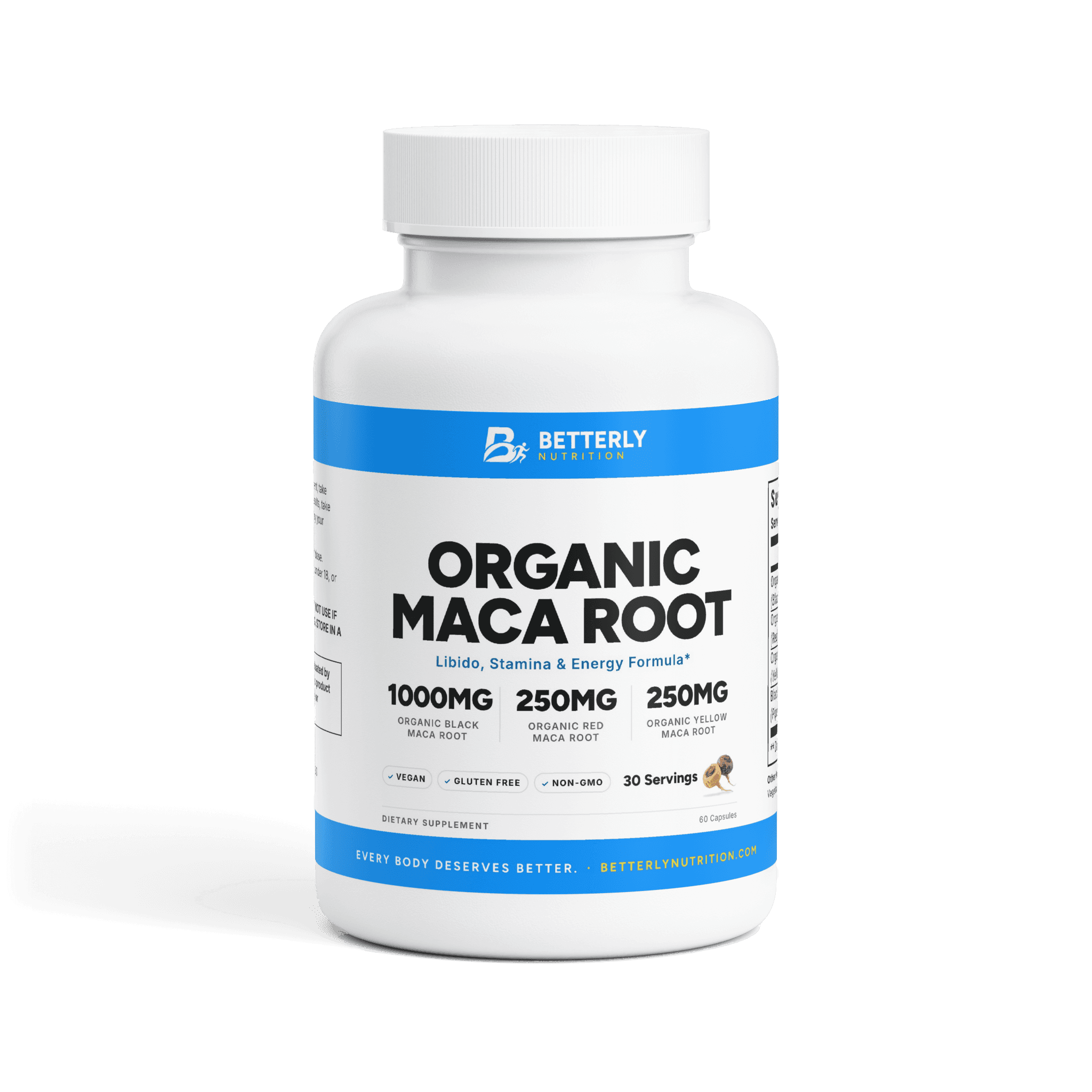
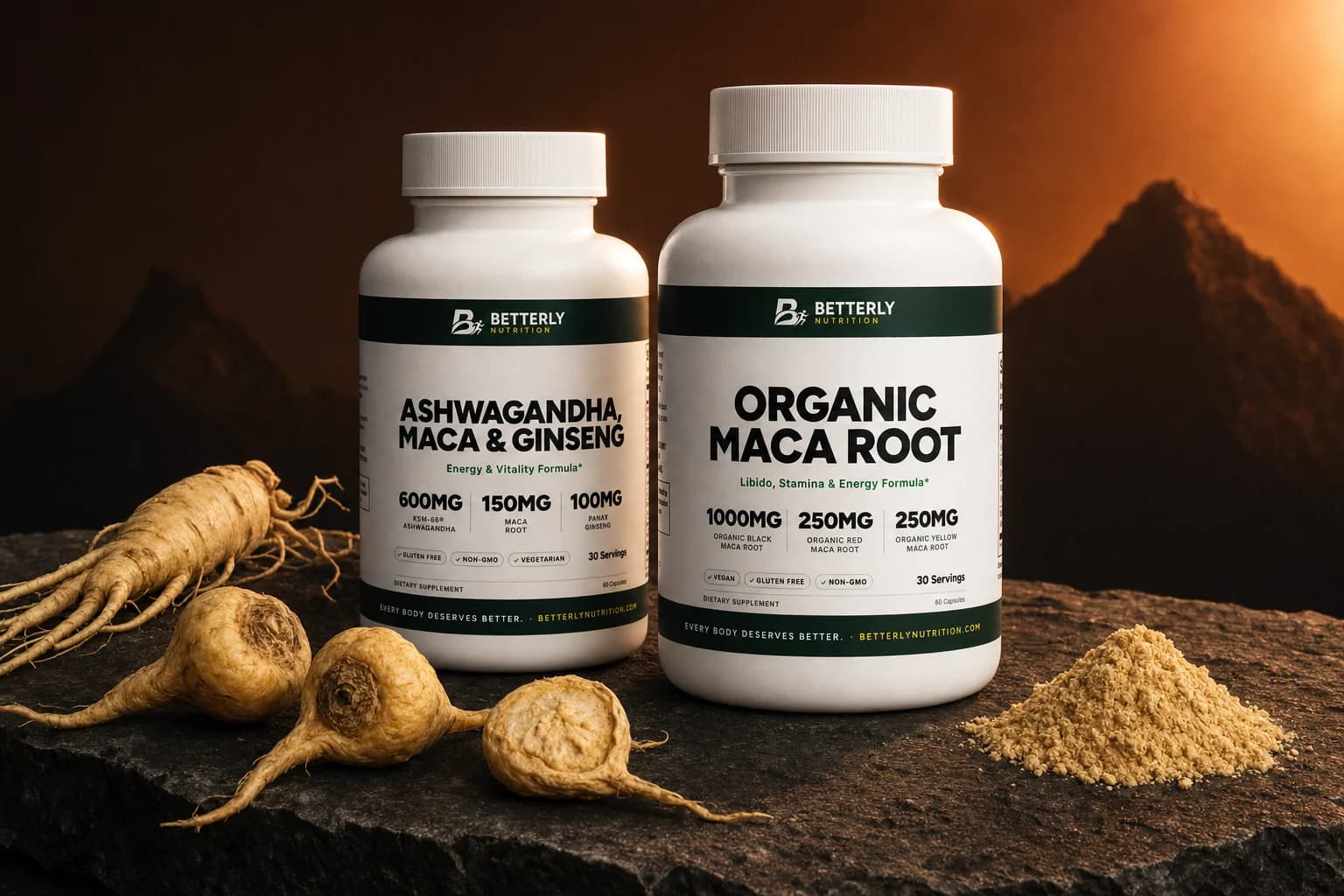
| Organic Maca Root Capsules | 2 capsules | None | 1,500 mg |
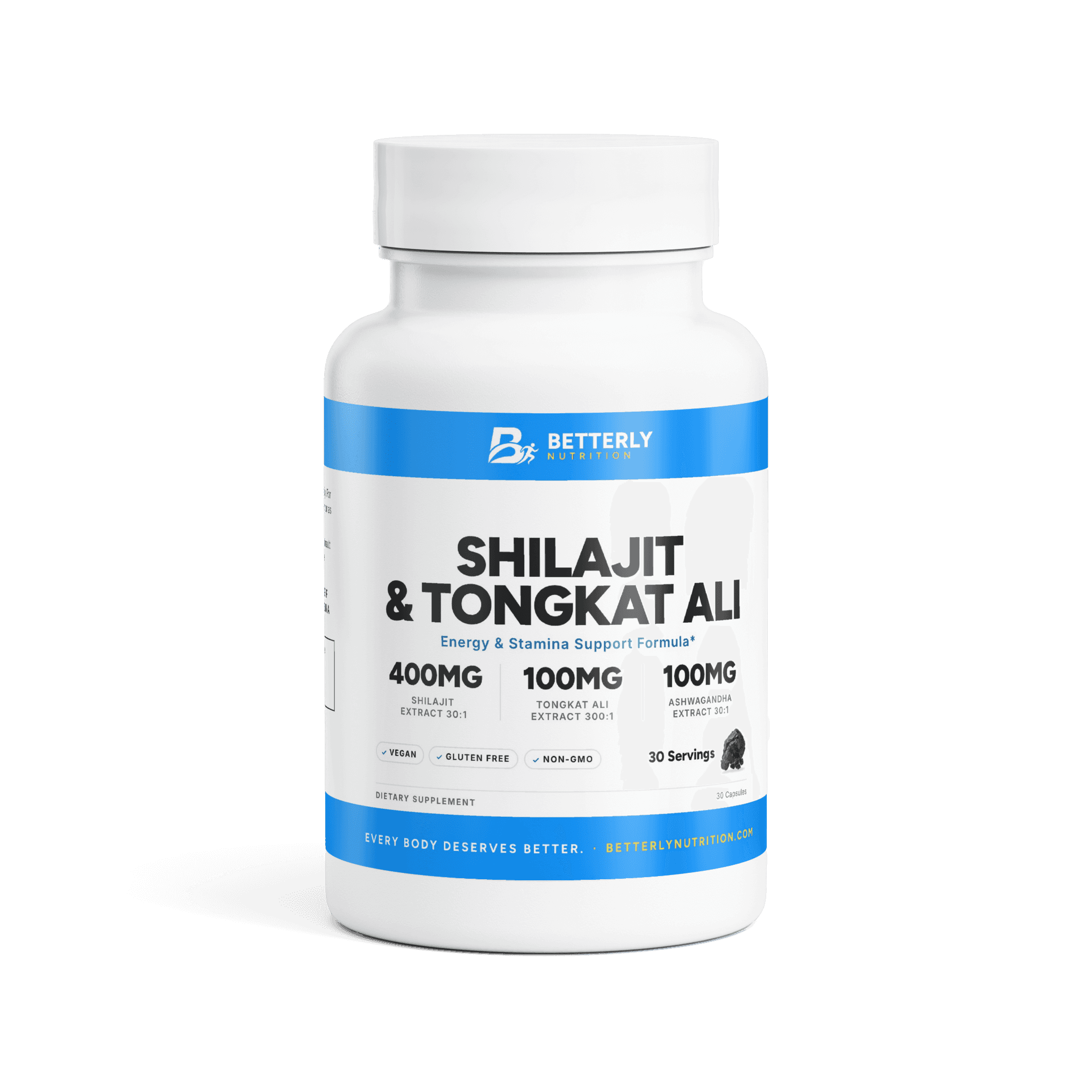
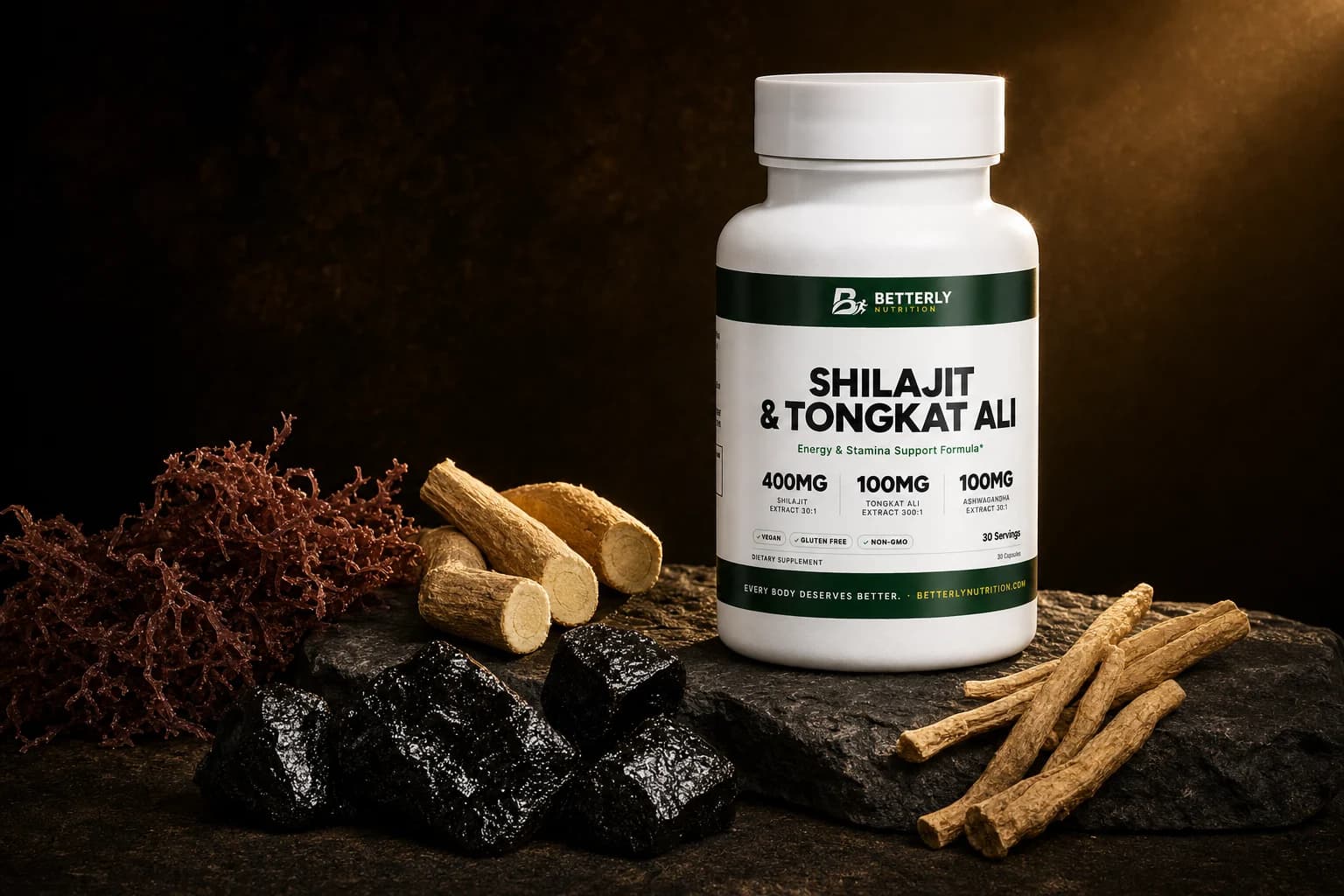
| Shilajit & Tongkat Ali Capsules | 1 capsule | 100 mg extract (300:1) | None |
The takeaway: the tablet leans toward tongkat. Its 400 mg sits at the top of LiverTox's traditional tongkat range, while its 250 mg of maca falls below LiverTox's 500 mg low end for maca and is one-sixth of what a 2-capsule serving of our maca-only capsules lists.
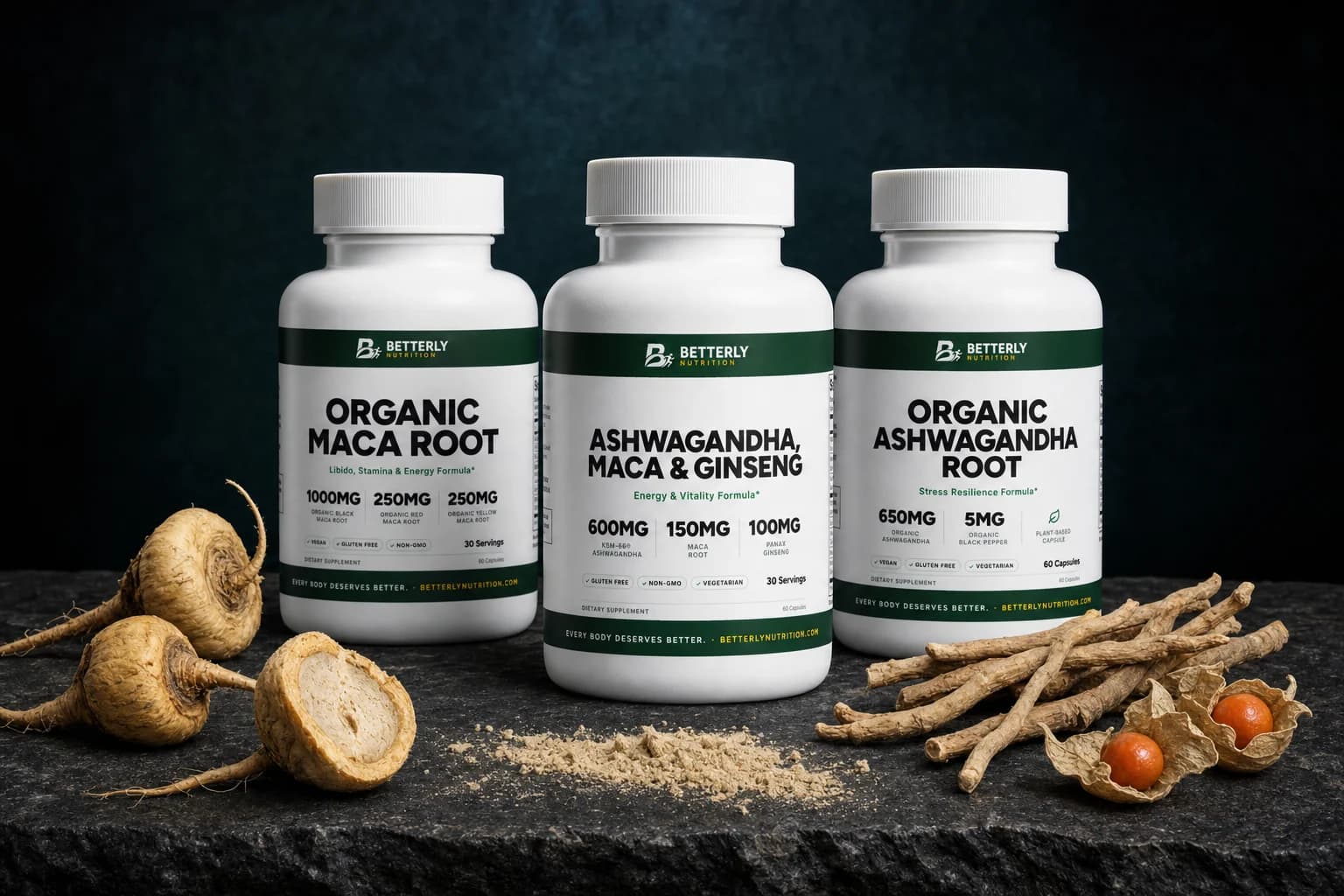
On our Organic Maca Root Capsules, that 1,500 mg per 2-capsule serving comes from three rows of organic maca root: black at 1,000 mg, then red and yellow at 250 mg apiece. A fourth row adds 5 mg of black pepper fruit. None of those maca rows prints an extract ratio.
The two tongkat rows don't line up. The tongkat in our Shilajit & Tongkat Ali Capsules is a concentrated 300:1 extract, while the tablet's row names the root with no ratio, so 100 mg and 400 mg measure different materials.
Maca or tongkat ali: which is better for you?
Neither maca nor tongkat ali wins outright: maca has the calmer liver-safety record and a few small, mixed trials suggesting it may support a healthy libido, while tongkat's long-term safety in people is thinly documented.
Your own situation usually settles it:
| If this sounds like you | Better fit | Why |
|---|---|---|
| You want one clear number for one root | Organic Maca Root Capsules | Our two tongkat-led products are both blends |
| You'd rather stay close to food | Maca | Eaten in Peru for centuries; LiverTox calls its side effects uncommon and mild |
| You're hoping for a hormone change | Neither | None of the three labels claims one |
| You're considering the tongkat-maca tablet | Ask a provider first | Its 50 mg of zinc alone tops the 40 mg adult limit, before food or a multivitamin |
| You avoid animal ingredients | Organic Maca Root Capsules | Labeled vegan; the tablet lists oyster and an orchic glandular |
Maca comes out ahead in most rows, largely because more is known about people eating it. Both roots sit on our adaptogens shelf.
From our shop: Organic Maca Root Capsules — three colors of organic maca root adding up to 1,500 mg per 2-capsule serving, labeled vegan and with no zinc on the panel.
Can you take tongkat ali and maca root together?
You can take tongkat ali and maca root together in one product, since our tablet pairs them, but its 2-tablet serving lists 50 mg of zinc, above the 40 mg adult upper limit in NIH's zinc fact sheet, so check it with a healthcare provider first. It also carries calcium, L-arginine and a 13-ingredient blend.
Neither LiverTox entry mentions the other root, so the panel is what you can check. Per 2-tablet serving, it shows:
- 50 mg of zinc (455% DV) and 367 mg of calcium (28% DV)
- 250 mg of L-arginine HCl
- 125 mg shared by Panax ginseng and Eleutherococcus senticosus root, with no split given
- One 745 mg "Proprietary Blend" line naming 13 ingredients, from pumpkin seed extract and catuaba bark to licorice root extract, Tribulus terrestris and boron, with no individual amounts
Two entries in that blend decide things for some readers. Oyster extract triggers the allergen line, "Contains: Shellfish (Oyster)," and "Orchic (substance)" is a glandular ingredient whose source animal the panel never names. If either is a dealbreaker, the maca-only capsules carry a vegan claim and no allergen line.
The tablet plus a 2-capsule maca serving comes to 1,750 mg of maca a day, and the tablet plus the shilajit capsule means tongkat from two sources. Two more Betterly blends list tongkat in smaller amounts under its other name, Longjack, and one of them also lists 62.5 mg of maca per 2-capsule serving. The overlap table in our shilajit and tongkat ali pairing guide names both blends. No label here plans for doubling up, so ask your provider before combining.
Where zinc tips the choice
Zinc, not either root, is the tablet's sharpest drawback. Its 2-tablet serving lists 50 mg (455% DV). The NIH Office of Dietary Supplements zinc fact sheet gives 40 mg a day as the upper limit for adults, a total that includes food, drinks, supplements and medicines. Nearly every multivitamin/mineral product holds zinc as well, the fact sheet notes.
So the tablet, taken as labeled, puts you past that limit before any food is counted. We won't suggest it at that dose unless a healthcare provider has looked at every zinc source in your day and okayed it. If maca is your main interest, the maca-only capsules sidestep the question, since their panel lists no zinc. Our tongkat ali side effects guide covers what too much zinc can feel like.
How do you take tongkat ali and maca by the label?
Our labels' suggested use is two tongkat-and-maca tablets, two maca capsules or one shilajit-tongkat capsule daily, but the tablets' 50 mg of zinc tops the 40 mg adult limit.
- Tongkat Ali, Maca & Ginseng Capsules. The label says, "Take two (2) tablets once a day." The bottle holds 60 tablets, 30 servings. That same serving delivers the 50 mg of zinc, so we don't suggest this dose without a provider's sign-off.
- Organic Maca Root Capsules. Two capsules once a day, ideally 20 to 30 minutes before a meal, per the label.
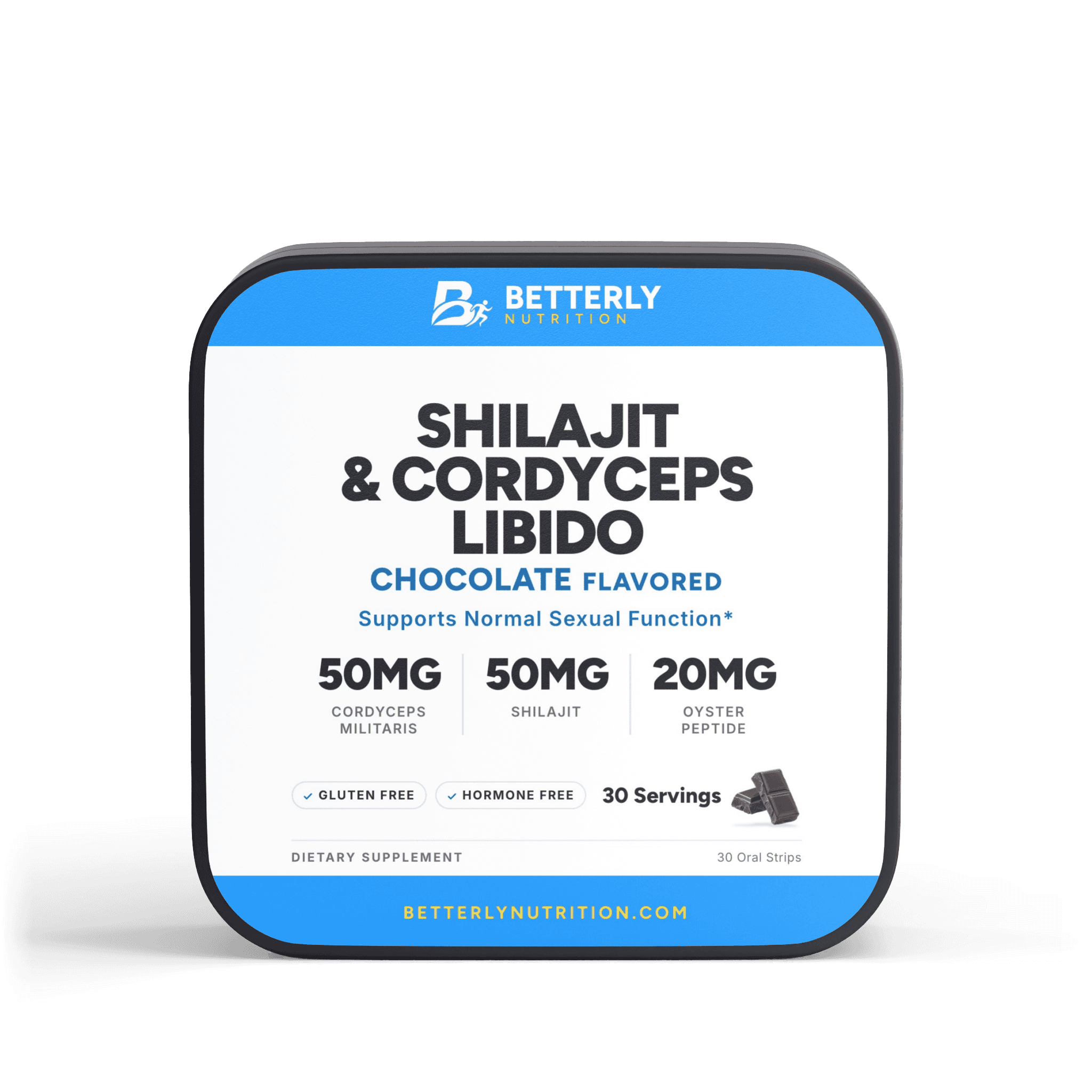
- Shilajit & Tongkat Ali Capsules. One capsule daily with 6-8 oz (177-237 ml) of water. It also contains shilajit, ashwagandha and sea moss extracts.
None of the three panels lists caffeine or names a time of day, so pick a fixed moment, like breakfast, and keep it. Every label also adds, "Do not exceed recommended dose."
From our shop: Tongkat Ali, Maca & Ginseng Capsules — 400 mg of tongkat ali root and 250 mg of maca root per 2-tablet serving, plus 50 mg of zinc (over the adult upper limit), oyster and an orchic glandular, so review it with your provider first.
When don't you need tongkat ali or maca?
You don't need tongkat ali or maca if you want a quick jolt, a hormone change or a dramatic result, since none of our labels claims any of those.
Skip one or both if:
- You're after coffee-style energy. Neither root panel lists caffeine.
- You want to see every amount. The tablet's 13-ingredient blend keeps them hidden.
- Maca is the only root you want. The tablet's 250 mg is a side role, and a maca-only capsule is simpler to judge.
The honest limit here: the only product that pairs both roots is also the one with the zinc problem.
Who should check with a healthcare provider first?
A healthcare provider should weigh in before you start tongkat ali or maca if you're pregnant or nursing, under 18, taking prescription medicine, planning surgery or managing a medical condition.
Three of those come straight from the caution on all three labels: "Consult a physician if pregnant, nursing, under 18, or have a medical condition." More reasons to ask:
- LiverTox describes isolated reports of liver injury linked to tongkat ali, mostly in young male bodybuilders, and says such cases may be more frequent or severe in people with existing liver problems.
- ODS says zinc and two antibiotic families, quinolones and tetracyclines, might each lower how much of the other your body absorbs.
- The tablet also contains ginseng, licorice and tribulus, so show the full panel to your pharmacist.
- If surgery is coming up, tell your surgical team about every supplement well before the date.
If nausea, dark urine or yellowing skin shows up after you start any tongkat product, stop and call your provider.
FAQ: tongkat ali vs maca
Is tongkat ali or maca better for energy?
Neither tongkat ali nor maca has proven energy effects in rigorous trials, and neither root panel lists caffeine. LiverTox says maca's promoted energy and stamina effects haven't been proven in tightly controlled human studies, and tongkat's trials looked mostly at strength and exercise. Our labels use "energy" as a support statement with the FDA asterisk, so don't expect either root to act like coffee.
Can women take tongkat ali or maca?
Women can take maca or tongkat ali, though most of the research enrolled men. LiverTox's maca notes do include a 6-week study of 29 women past menopause, in which hormone levels didn't shift. Every label here sends anyone pregnant or nursing to a physician first. The tablet also lists oyster, an orchic glandular and zinc above the adult upper limit, which is 40 mg for women and men alike.
How does ashwagandha compare with tongkat ali and maca?
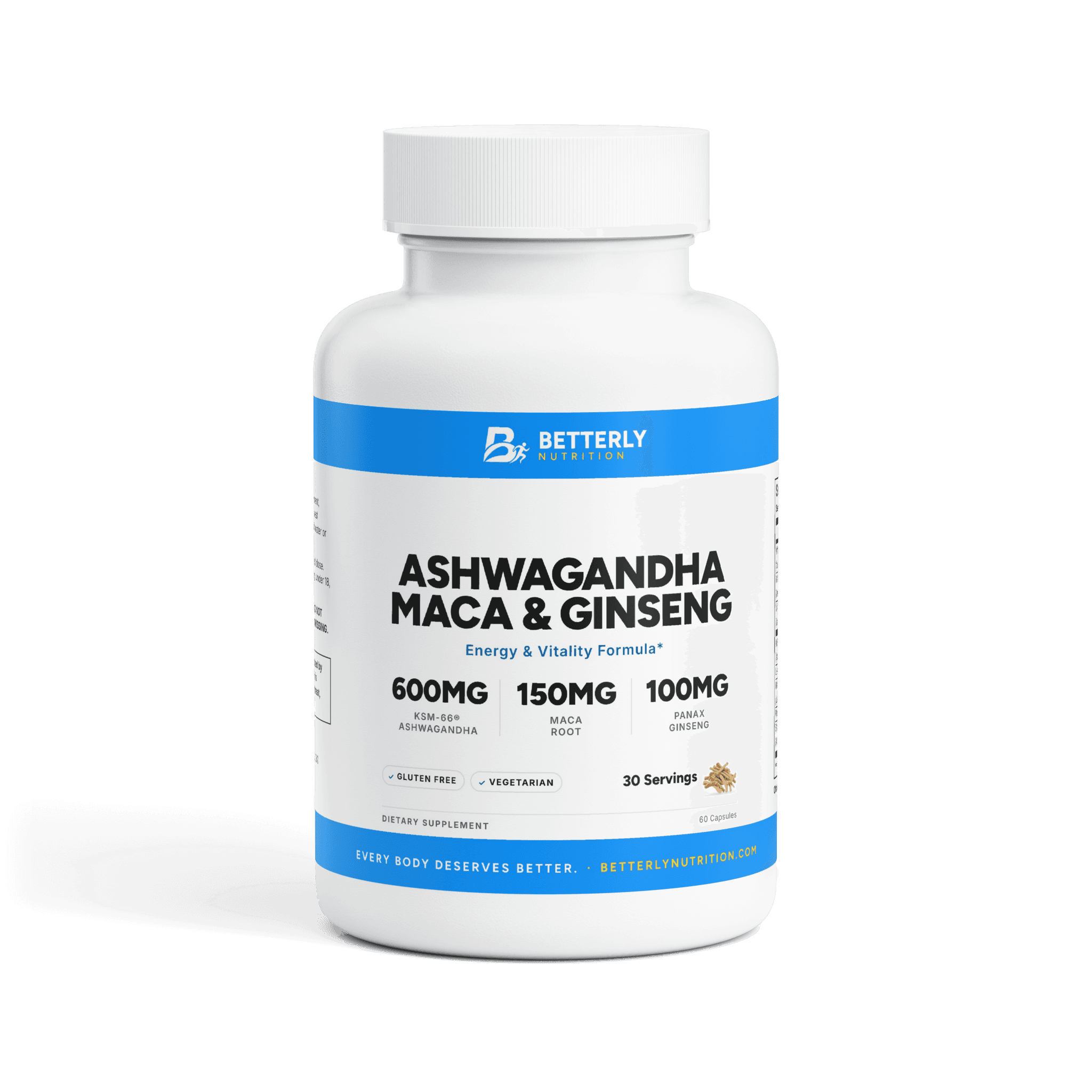
Ashwagandha (Withania somnifera) is a third, unrelated root from India's Ayurvedic tradition, not a stronger or weaker version of either. Our Shilajit & Tongkat Ali Capsules include 100 mg of ashwagandha root extract (30:1) per capsule. For the other pairing, see our maca vs ashwagandha comparison.
Why are tongkat ali and maca both called ginseng?
The "ginseng" in Malaysian ginseng (tongkat ali) and Peruvian ginseng (maca) is a folk nickname, not a family tie. LiverTox lists both names, and neither plant belongs to the Panax genus that Asian ginseng comes from. Our tablet does contain Panax ginseng root, though, inside a 125 mg blend with Eleutherococcus senticosus.
Is it safe to take tongkat ali and maca every day?
Daily use is what our labels describe, but the long-term record differs by root. LiverTox calls maca's side effects uncommon and mild, mostly stomach upset and headaches, while it says tongkat ali's long-term safety hasn't been well documented in people. For our tablet, daily use also means 50 mg of zinc a day, above the adult limit, so a provider's review comes first. If anything feels off, stop and call them.
Sources
- Tongkat Ali, LiverTox, National Institutes of Health
- Maca, LiverTox, National Institutes of Health
- Zinc: Fact Sheet for Consumers, NIH Office of Dietary Supplements
If this left you looking for somewhere to start, read tongkat ali and maca root tablets — its amounts per serving are listed on the page. For the practical questions this raises, how dosing, sourcing and subscriptions work is answered in one place.