On this page
- Key takeaways
- Who should not take black cohosh at all?
- Is black cohosh bad for your liver?
- Why does the full panel matter more than the front label?
- Which side effects does NCCIH list for this formula's herbs?
- What can't you take with black cohosh?
- Why are pregnancy and nursing the firmest no here?
- How do you use this formula once a provider clears it?
- When does this formula make little sense for you?
- Who needs a provider's OK first?
- FAQ: black cohosh safety
- Sources
The short answer: The clearest group who should not take black cohosh is anyone pregnant or breastfeeding. The NIH's National Center for Complementary and Integrative Health (NCCIH) also notes rare reported cases of liver damage. So if you have or have had a liver condition or any medical condition, or take prescription medicines, talk to a provider first. In a blend, black cohosh is just one row: our 11-ingredient label adds soy, licorice and dong quai.
Key takeaways
- NCCIH warns that black cohosh may be unsafe for women who are pregnant or breastfeeding.
- NCCIH has reports of liver damage in people taking products labeled as black cohosh, but it calls the cases rare and says it's uncertain the herb caused them.
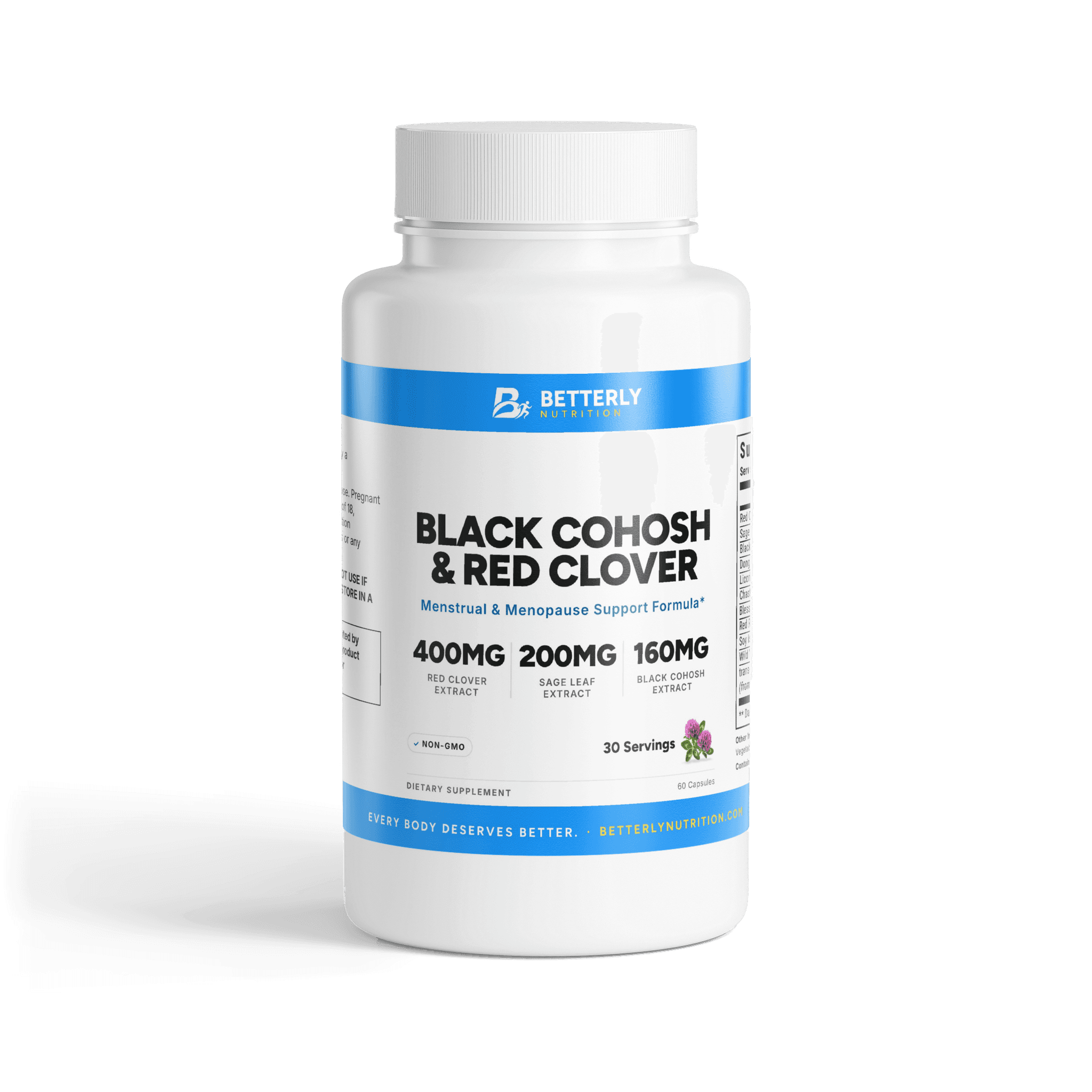
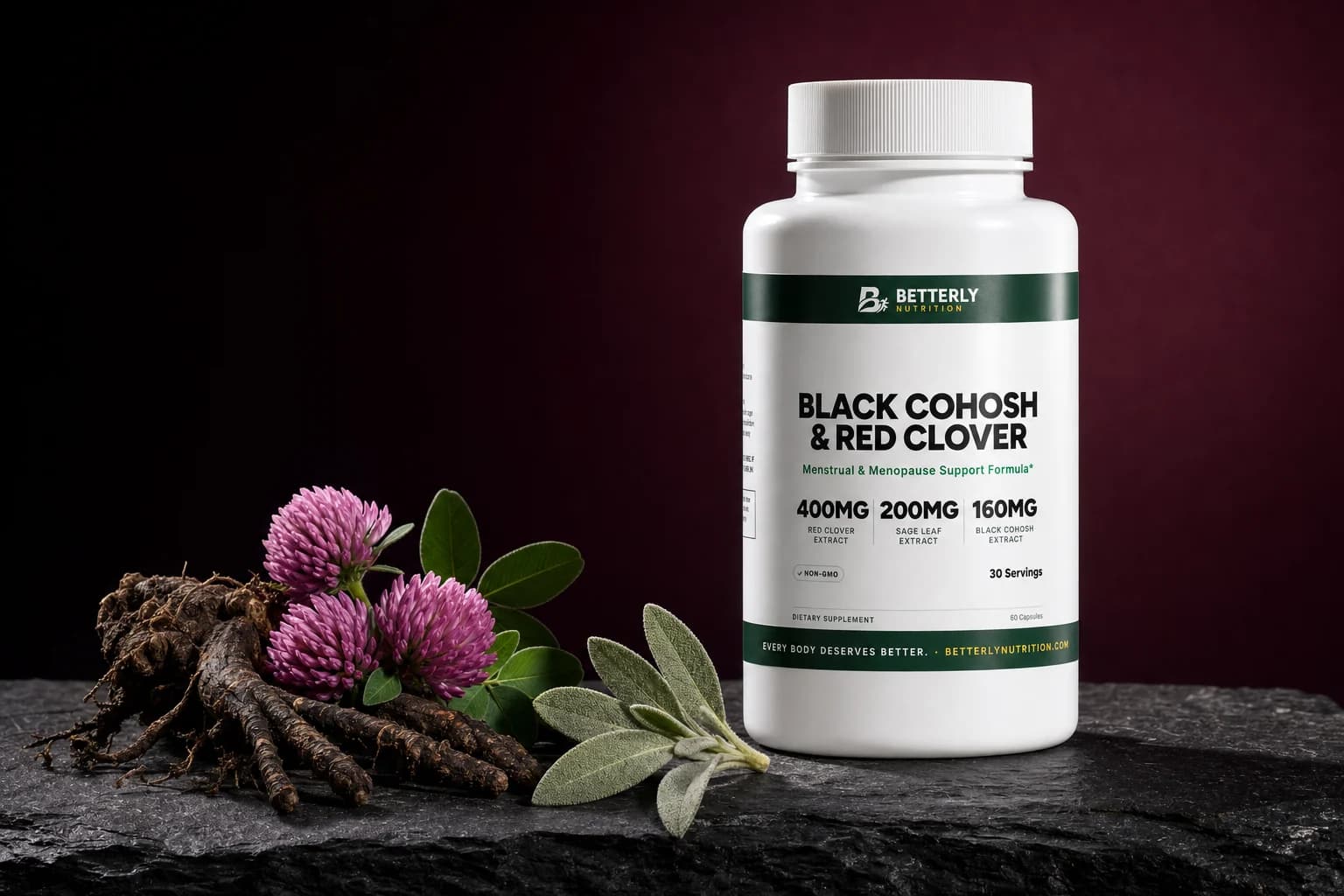
- Our Black Cohosh & Red Clover Capsules list 11 ingredients per 2-capsule serving, and black cohosh is 160 mg of the 1,256 mg total.
- Soy, licorice root, sage and chasteberry carry their own NIH cautions, so the whole panel decides who should skip a combination formula.
We sell a black cohosh blend, the Black Cohosh & Red Clover Capsules, and we'd sell more if this page were shorter. It opens with the people the bottle is wrong for anyway. When we quote a dose, it's the figure printed on our own Supplement Facts panel.
Who should not take black cohosh at all?
Anyone pregnant or breastfeeding should not take black cohosh, and our label asks people under 18 or with a known medical condition to see a physician before starting.
NCCIH's black cohosh safety page puts the pregnancy point plainly: "Black cohosh may not be safe for use during pregnancy or while breastfeeding." We read "may not be safe" as a no.
Beyond those groups, the panel and NCCIH add more:
- You take any medicine. NCCIH's advice is a provider conversation first, because certain herb-and-medicine combinations can do harm.
- You have a hormone-related health history. NCCIH calls black cohosh's safety uncertain for that group, and it flags chasteberry, also on this panel, as well.
- You're allergic to soy. The panel's Contains line reads "Soy," from 30 mg of soy isoflavones.
- You avoid beef products. The capsule shell is bovine gelatin.
- You've been told to avoid isoflavones. NCCIH says red clover and soy both contain these plant compounds, which are similar in structure to estrogen.
Is black cohosh bad for your liver?
Black cohosh has been linked to rare reported cases of liver damage, some very serious, but NCCIH says it's uncertain whether the herb itself was responsible.
The same page notes black cohosh was used safely in studies of up to a year and is generally well tolerated.
Some commercial black cohosh products have turned out to hold the wrong herb, or herbs the label never listed. NCCIH says those contaminants could be behind some of the liver cases, though that's unproven. No panel can reveal a swapped or unlisted herb. Ours lists "Black Cohosh Root Extract" with no Latin name, and that line states what the formula is meant to contain, not which plant is actually in each capsule.
If you take black cohosh, NCCIH's advice is to consult your provider if you develop signs such as dark urine and fatigue. We'd add one step: pause the formula until you've had that conversation. If you have or have had a liver condition, talk before the first capsule rather than after.
Why does the full panel matter more than the front label?
On our Black Cohosh & Red Clover Capsules, the front names two herbs while the panel lists 11, and several of those carry NIH cautions black cohosh doesn't.
The 11 rows total 1,256 mg per 2-capsule serving. Black cohosh root extract is 160 mg of that, about an eighth. Red clover (400 mg) and sage (200 mg) both outweigh it, and dong quai and licorice come in at 150 mg each.
| Ingredient | Per 2-capsule serving | What NCCIH flags | Who should pause |
|---|---|---|---|
| Red clover extract | 400 mg | Pregnancy, nursing | Anyone told to avoid isoflavones |
| Sage leaf extract | 200 mg | Thujone; high doses, long use | Pregnant women |
| Black cohosh root extract | 160 mg | Rare liver reports | Liver history; anyone on medicines |
| Dong quai root extract | 150 mg | No NCCIH page | Unclear; ask first |
| Licorice root extract | 150 mg | Glycyrrhizin | High-salt diets; heart or kidney conditions |
| Chasteberry fruit extract | 50 mg | Pregnancy, nursing; hormone-related history | Pregnant, nursing or with that history |
| Blessed thistle herb powder | 50 mg | No NCCIH page | Unclear; ask first |
| Red raspberry fruit powder | 50 mg | No NCCIH page | Unclear; ask first |
| Soy isoflavones | 30 mg | Allergen | Anyone allergic to soy |
| Wild yam root extract | 15 mg | No NCCIH page | Unclear; ask first |
| trans-Resveratrol | 1 mg | No NCCIH page | Unclear; ask first |
In the right-hand column, the licorice and soy rows flag people black cohosh alone never would, from high-salt diets to soy allergies. Judge any combination formula by its full panel, never by its headline herb.
Five rows get no NCCIH page at all: dong quai (150 mg), blessed thistle (50 mg), red raspberry (50 mg), wild yam (15 mg) and trans-resveratrol (1 mg). Two of those five carry a percentage, dong quai (1%) and wild yam (16%). A figure like that usually marks a standardized extract, but the label never says which compound each one measures. Photograph the panel for your next appointment: your provider will be researching those five rows without a federal summary.
A proprietary blend would hide these amounts inside one group weight, while this panel prints all 11. Our guide to what a proprietary blend leaves off the label explains why that matters for safety.
From our shop: Black Cohosh & Red Clover Capsules — 160 mg of black cohosh root extract and 400 mg of red clover extract per 2-capsule serving, with nine more listed ingredients, in 60 bovine gelatin capsules.
Which side effects does NCCIH list for this formula's herbs?
NCCIH calls black cohosh and red clover well tolerated in studies, and the everyday side effects it names for this formula's herbs belong to other rows: soy and chasteberry.
That doesn't mean the two headline herbs have no downsides. Black cohosh carries the liver reports covered above. NCCIH's red clover page says its extracts have been used in studies for as long as 2 years with apparent safety. Here's what the other rows bring:
- Soy isoflavones (30 mg). NCCIH's soy page lists bloating, constipation, diarrhea and nausea.
- Chasteberry fruit extract (50 mg). Its side effects are generally mild, per NCCIH's chasteberry page, and may include nausea, stomach pain, diarrhea, headache or itching.
- Licorice root extract (150 mg). Nothing on this row says the glycyrrhizin was removed, so treat it as whole licorice root. That compound is the one NCCIH's licorice page connects to an irregular heartbeat, with the risk climbing at large intakes or over long stretches. Salt-heavy eaters and people with heart or kidney conditions are the exception: they've had severe reactions to small amounts.
- Sage leaf extract (200 mg). NCCIH's sage page says some species, common sage included, contain thujone, so large doses or long stretches of use may be unsafe. Our panel doesn't name its sage species.
DGL, sold under other labels, is licorice with the glycyrrhizin taken out, and NCCIH says it might be safe for up to 4 months. Our 150 mg row isn't labeled DGL, so that figure doesn't carry over.
If anything new starts after your first capsule, stop the formula and call your provider before the next serving.
What can't you take with black cohosh?
Talk with a provider before pairing black cohosh with any medicine, NCCIH advises, and don't stack it with other supplements that repeat its herbs.
NCCIH's black cohosh page doesn't single out any drug; its advice covers any type of medicine. The one pairing NCCIH names that clearly fits this panel is licorice: NCCIH reports interactions between licorice and corticosteroids, and this formula holds 150 mg of licorice root extract per 2-capsule serving. NCCIH's soy interaction, with MAOI medicines, involves high-tyramine soy foods like tofu and soy sauce, not an isoflavone extract like our 30 mg row.
We'd also raise two more at the pharmacy counter, though they're our own reasoning, not an NCCIH list:
- Hormone-based prescriptions, because red clover and soy contain isoflavones, plant compounds similar in structure to estrogen.
- Any medicine that comes with liver monitoring, given the black cohosh case reports.
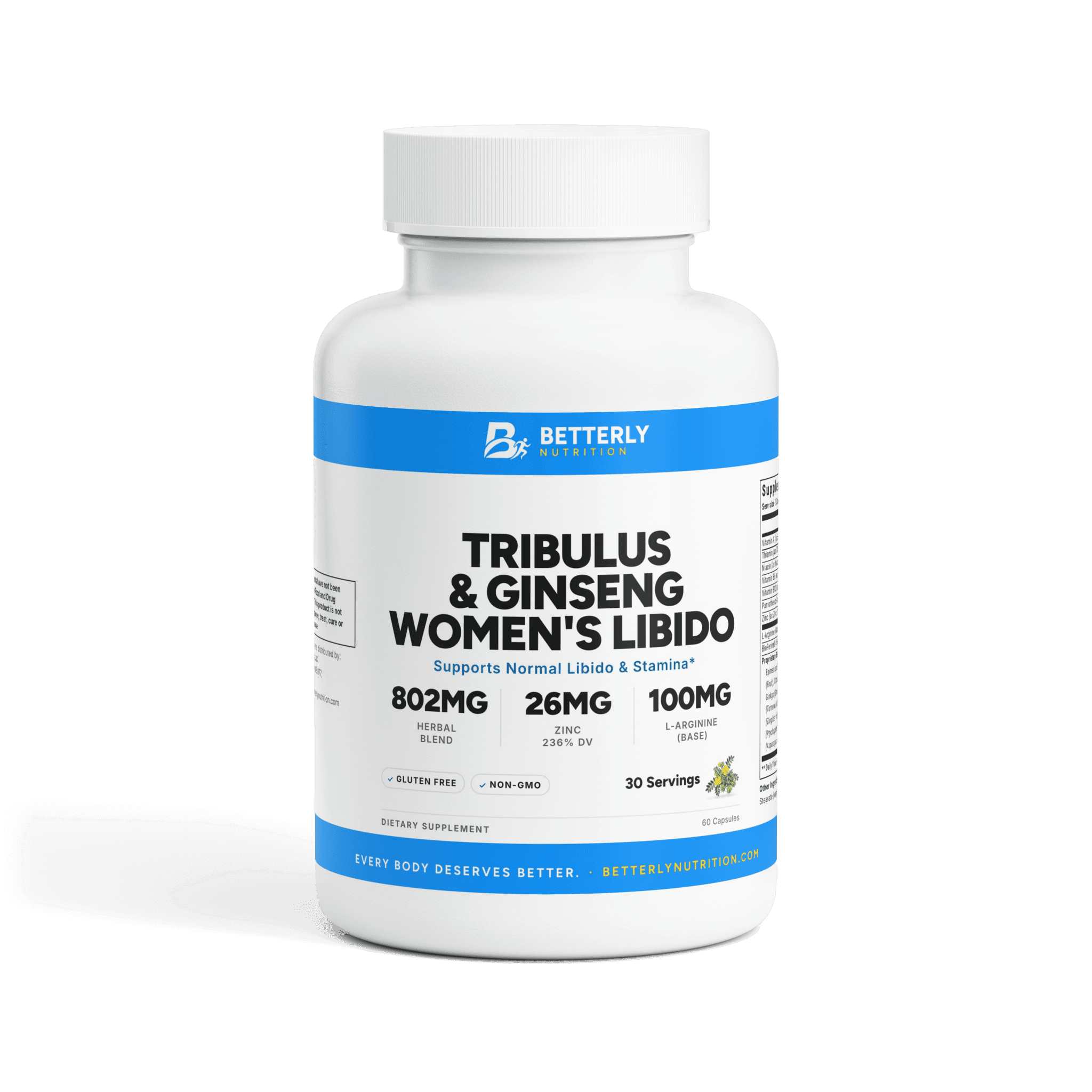
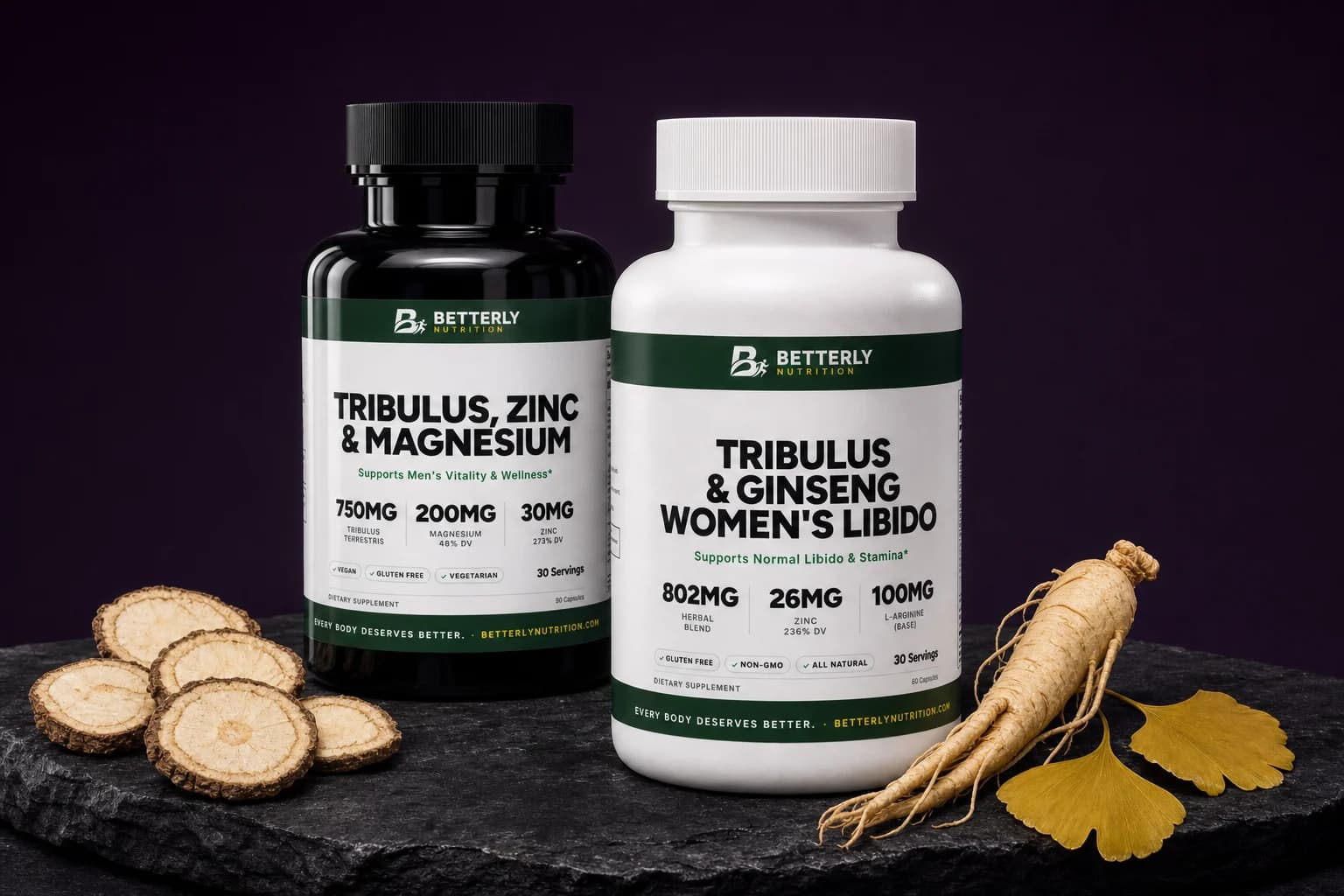
Repeated herbs cause a different kind of trouble. Our Tribulus & Ginseng Women's Libido Capsules include dong quai inside a 14-ingredient proprietary blend totaling 802 mg per 2-capsule serving, with no separate amount for it. Add the black cohosh formula's 150 mg, and your daily dong quai total becomes a number nobody can give you. That blend also holds ginkgo, Asian ginseng and ashwagandha, and our safety review of libido formulas covers ginkgo and ginseng.
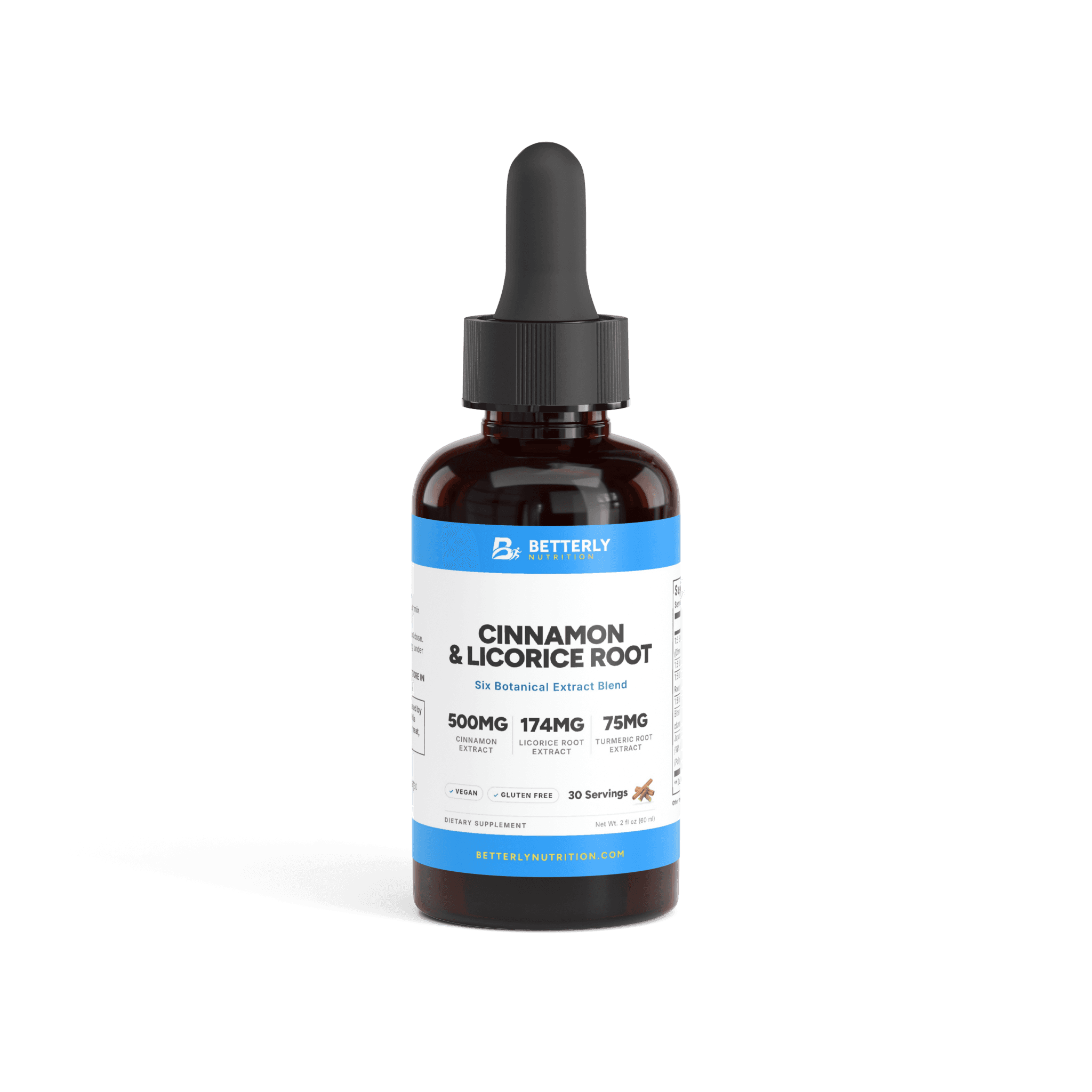
Licorice can land twice, too. Our Cinnamon & Licorice Root Drops carry a 1:5 licorice root extract at 174 mg per 2 ml (40 drops) serving. The extracts are made differently, so the milligrams don't add neatly, but two licorice sources at once is a stack to clear first. So is a second black cohosh, red clover or soy isoflavone product.
From our shop: Tribulus & Ginseng Women's Libido Capsules — 26 mg of zinc (236% DV) and an 802 mg, 14-ingredient proprietary blend per 2-capsule serving, for someone comparing panels rather than taking it alongside the black cohosh formula without a provider's OK.
Why are pregnancy and nursing the firmest no here?
Pregnancy and nursing are the firmest no because NCCIH says black cohosh may not be safe then, and it flags red clover, chasteberry and sage from this panel too.
Per the NCCIH pages:
- Red clover supplements may be unsafe during pregnancy or while breastfeeding.
- Sage may be unsafe in pregnancy because of its thujone.
- Chasteberry may be unsafe during pregnancy or while breastfeeding.
- Licorice extract is unsafe in pregnancy in large amounts, which NCCIH puts at about 250 g of licorice a week.
- Soy may be unsafe in pregnancy in amounts above those common in foods.
Counting black cohosh, that's four rows with a general pregnancy caution. NCCIH ties the other two, licorice and soy, to large or above-food amounts. Our caution line wants pregnant or nursing mothers to consult a physician. We'd go further: don't start this formula while pregnant or nursing unless your physician gives you a specific yes.
How do you use this formula once a provider clears it?
Our Black Cohosh & Red Clover Capsules label says to take 2 capsules daily, preferably with meals, or as directed by a healthcare professional, and not to exceed that dose.
- Take the 2-capsule serving each day, ideally with a meal, as the label suggests. One 60-capsule bottle runs 30 days on that schedule.
- If you miss a day, skip it; don't double the next serving. The label's first warning is "Do not exceed recommended dose."
- Keep it your only source of its herbs unless your provider approves another.
- Note your start date for your provider.
When does this formula make little sense for you?
Our black cohosh formula makes little sense if its label doesn't match your goal, you'd rather track single ingredients, or another product already covers its herbs.
- Nothing's prompting it. The label calls this a menstrual and menopause support formula, not a general wellness add-on.
- You want to know what you're reacting to. With 11 rows, pinning a change on one is close to impossible.
- Another bottle already covers these herbs. If you take a separate red clover, soy isoflavone or licorice product, this one repeats rows instead of filling a gap.
- Your provider advises against it. Follow that advice.
Every product page in our Targeted Support collection lists the amounts per serving from its label, so you can compare them before buying.
Who needs a provider's OK first?
Clear black cohosh with a healthcare provider before your first dose if you take any medicine, have ever had a liver condition, are under 18, or have surgery scheduled.
- Pregnant or nursing: wait for your physician's clear go-ahead.
- Under 18: our label wants a physician involved before use.
- Any prescription or over-the-counter medicine: especially hormone-based ones or corticosteroids.
- A liver condition, now or in the past.
- A hormone-related health history: NCCIH flags both black cohosh and chasteberry here.
- Heart or kidney conditions, or a high-salt diet: the licorice row.
- Surgery coming up: write this formula, all 11 rows of it, on your pre-surgery paperwork.
FAQ: black cohosh safety
Is black cohosh a phytoestrogen?
Unclear: we can't point to a federal source that settles whether black cohosh is a phytoestrogen. NCCIH's black cohosh page doesn't describe it as estrogen-like, but that silence isn't an answer. NCCIH does say red clover and soy both contain isoflavones, plant compounds similar in structure to estrogen, and our panel lists 400 mg of red clover extract and 30 mg of soy isoflavones per 2-capsule serving.
Is blue cohosh the same herb?
No, blue cohosh and black cohosh are different plants, and NCCIH says blue cohosh carries serious safety concerns of its own. Black cohosh is Actaea racemosa, also listed as Cimicifuga racemosa. Blue cohosh is Caulophyllum thalictroides. We compare the two plants in our black cohosh vs blue cohosh guide.
How long can you keep taking the blend?
Black cohosh was taken safely in studies lasting up to a year, according to NCCIH, but a study's length can't vouch for your body or a particular product. A blend also brings shorter windows: chasteberry fruit extract has been used safely in studies of up to 3 months. Settle with your provider how long you'll stay on a combination formula, then pick a date to review it.
Should you stop the formula before surgery?
Possibly: whether to pause black cohosh before surgery is your surgical team's call, so raise it at your planning visit rather than on the day. Our formula has 11 ingredients, so show them the Supplement Facts panel itself rather than just saying "black cohosh." That way they can weigh the licorice, sage and soy rows too.
Can you take black cohosh and ashwagandha together?
Black cohosh and ashwagandha aren't reviewed as a pair on the NCCIH pages we used, so we can't call the combination safe or unsafe. Our Tribulus & Ginseng Women's Libido Capsules include ashwagandha in their blend, so taking them alongside a black cohosh formula combines the two. Our ashwagandha cautions page covers who should pass on that herb. Ask your provider before pairing them.
Sources
- Black Cohosh: Usefulness and Safety (NCCIH)
- Red Clover: Usefulness and Safety (NCCIH)
- Soy: Usefulness and Safety (NCCIH)
- Chasteberry: Usefulness and Safety (NCCIH)
- Licorice Root: Usefulness and Safety (NCCIH)
- Sage: Usefulness and Safety (NCCIH)
If this left you looking for somewhere to start, read black cohosh and red clover capsules with 160 mg of black cohosh — its amounts per serving are listed on the page. For the practical questions this raises, how dosing, sourcing and subscriptions work is answered in one place.