On this page
- Key takeaways
- Can you take zinc and magnesium together?
- What do zinc and magnesium each do in your body?
- How much zinc and magnesium is too much in one day?
- Does zinc interfere with magnesium absorption?
- Which zinc and magnesium combinations stay under both limits?
- What does the Tribulus, Zinc & Magnesium label actually list?
- How should you take zinc and magnesium, and why before bed?
- When don't you need a zinc and magnesium supplement?
- Who should check with a healthcare provider first?
- FAQ: zinc and magnesium together
- Sources
The short answer: Yes, you can take zinc and magnesium together if your daily totals stay under the NIH's adult limits: 40 mg of zinc with food counted in, and 350 mg of magnesium from supplements. Our Tribulus, Zinc & Magnesium Capsules give 30 mg of zinc and 200 mg of magnesium per 3-capsule serving. That leaves 10 mg of zinc for food, less than the 11 mg adult men are advised to get.
Key takeaways
- Zinc and magnesium are separate essential minerals, and no federal source we found says a normal daily amount of one blocks the other.
- The NIH says very high doses of zinc supplements can interfere with how your body absorbs magnesium.
- Our Tribulus, Zinc & Magnesium Capsules leave room for only 10 mg of zinc from food, so a man who eats the recommended 11 mg and takes the full serving reaches 41 mg, over the limit.
- Adding our Daily Multivitamin Capsules to the tribulus formula brings supplement zinc to 45 mg, and adding our Magnesium Glycinate Capsules brings magnesium to 475 mg.
- Of these three products, the multivitamin plus the glycinate is the only pairing that stays under both limits, at 15 mg of zinc and 325 mg of magnesium.
Full disclosure: Betterly makes money on every product named here. That's why our numbers are copied from the printed Supplement Facts panels, and why we'll say which of our own combinations to skip.
Can you take zinc and magnesium together?
Yes, zinc and magnesium can share a routine, and even a capsule, when each stays within its daily limit. The warnings you'll read about apply to very high zinc doses.
Pairing the two is ordinary. The zinc fact sheet from the NIH Office of Dietary Supplements (ODS) mentions that zinc is sold alone or "combined with calcium, magnesium, or other ingredients." Our own multivitamin carries both minerals in the same two capsules.
What ODS flags is the amount, not the pairing. Its consumer pages don't define "very high," so we work to the 40 mg adult zinc limit and count every bottle and every meal.
What do zinc and magnesium each do in your body?
Zinc and magnesium do different jobs. Magnesium helps regulate muscle and nerve function, zinc supports normal immune function and taste, and both help your body make protein and DNA.
Every figure below comes from the ODS consumer fact sheets.
| Zinc | Magnesium | |
|---|---|---|
| Roles ODS lists | Immune function, DNA and proteins, taste | Muscle and nerve function, protein, bone, DNA |
| Adult daily need | 11 mg men, 8 mg women | 400-420 mg men, 310-320 mg women |
| Adult upper limit | 40 mg | 350 mg |
| What the limit counts | Food, drinks, supplements, medicines | Supplements and medicines only |
| Food sources | Oysters, meat, poultry, seafood, beans, nuts | Legumes, nuts, seeds, whole grains, spinach |
Note the fourth row, the one people miss: zinc's limit includes everything you eat, while magnesium's ignores food completely.
How much zinc and magnesium is too much in one day?
For adults, ODS sets the upper limit at 40 mg of zinc a day and 350 mg of supplemental magnesium a day. The two limits are counted differently, so check each on its own terms.
The ODS zinc fact sheet says zinc's limit covers foods, beverages, supplements and medications. So the oysters, meat and fortified cereal on your plate count alongside any capsule.
Run our tribulus formula through that rule. Its 30 mg of zinc leaves just 10 mg for everything you eat. ODS advises 11 mg a day for adult men and says most people in the United States get enough zinc from food. So a man who simply meets that amount and takes the full serving reaches 41 mg, past the limit. Check with a healthcare provider before taking it every day.
Magnesium is scored differently. The ODS magnesium fact sheet counts only supplements and medications toward its 350 mg cap, because magnesium found naturally in food isn't considered harmful. A plate of lentils and spinach uses none of that 350 mg. Capsules, drink powders and magnesium-containing medicines do.
Does zinc interfere with magnesium absorption?
According to ODS, zinc can interfere with magnesium absorption at very high supplement doses. For amounts under the 40 mg zinc limit, we found no federal guidance telling you to split them up.
Both fact sheets tie very high zinc doses to lower magnesium absorption, and the magnesium sheet adds that such doses can also interfere with how your body regulates the mineral. Neither says ordinary amounts cause trouble or need different times of day. Spacing them apart is still fine if you prefer it.
In practice, your products often settle the together-or-separate question for you:
- A combination formula puts both minerals in one serving, so you can't split them. Our tribulus capsules work this way.
- Two separate products follow their own labels, which for ours means a morning multivitamin and a glycinate at any hour.
ZMA, a sports-shelf blend, is a different mix again: zinc and magnesium aspartate plus vitamin B6. Our ZMA comparison goes through it.
Which zinc and magnesium combinations stay under both limits?
Of the three Betterly products in this guide, the Daily Multivitamin Capsules plus the Magnesium Glycinate Capsules are the only pairing that stays under both limits. The tribulus formula fits only if food adds under 10 mg of zinc.
Every row uses each label's own daily serving and counts supplements only, before any zinc from food.
| Daily combination | Zinc | Magnesium | Under both limits? |
|---|---|---|---|
| Tribulus formula alone (3 capsules) | 30 mg | 200 mg | Only if food adds under 10 mg of zinc |
| Glycinate alone (3 capsules) | 0 mg | 275 mg | Yes, but no zinc |
| Multivitamin (2) plus glycinate (3) | 15 mg | 325 mg | Yes, with 25 mg of zinc left for food |
| Tribulus formula plus multivitamin | 45 mg | 250 mg | No, zinc is 5 mg over |
| Tribulus formula plus glycinate | 30 mg | 475 mg | No, magnesium is 125 mg over |
| All three together | 45 mg | 525 mg | No, both are over |
So the route from our range that fits is the multivitamin in the morning plus the glycinate later. It leaves 25 mg of magnesium room under 350 mg and 25 mg of zinc room, enough for the 8 to 11 mg adults are advised to eat. The tribulus formula's 10 mg of food room falls short of the men's 11 mg.
The multivitamin also lists 2 mg of copper, while the tribulus formula lists none, and ODS links long stretches of too much zinc with low copper. Several other Betterly formulas list zinc or magnesium too, a few with 26 to 80 mg of zinc per serving, and the highest of those pass the 40 mg limit on their own. Add every panel you take.
What does the Tribulus, Zinc & Magnesium label actually list?
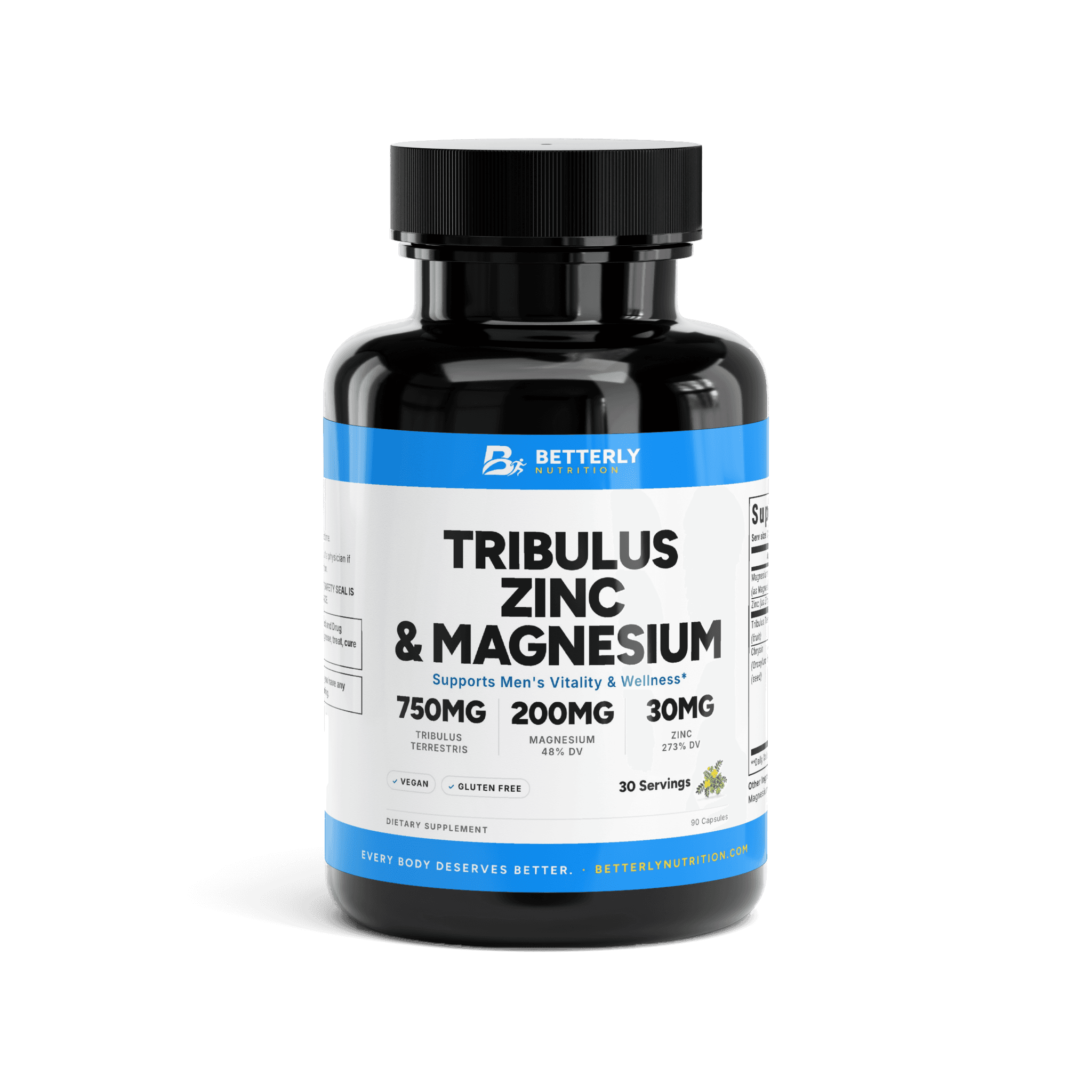
Betterly's Tribulus, Zinc & Magnesium Capsules list two minerals in oxide form plus seven botanicals per 3-capsule serving, led by 750 mg of Tribulus terrestris fruit.
The mineral rows read 200 mg of magnesium as magnesium oxide (48% DV) and 30 mg of zinc as zinc oxide (273% DV). Our multivitamin uses the same two oxide forms.
Here's the honest part about form. The ODS zinc sheet says it isn't clear whether one zinc form beats the others, so zinc oxide isn't a weak spot we can point to. Magnesium is different: the forms ODS calls easier to absorb include citrate, and oxide isn't among them, a fair mark against this bottle. Our breakdown of magnesium glycinate versus citrate goes deeper.
After the minerals, the panel lists these botanicals, none with a Daily Value:
- Tribulus terrestris (fruit): 750 mg
- Chrysin (Oroxylum indicum seed): 75 mg
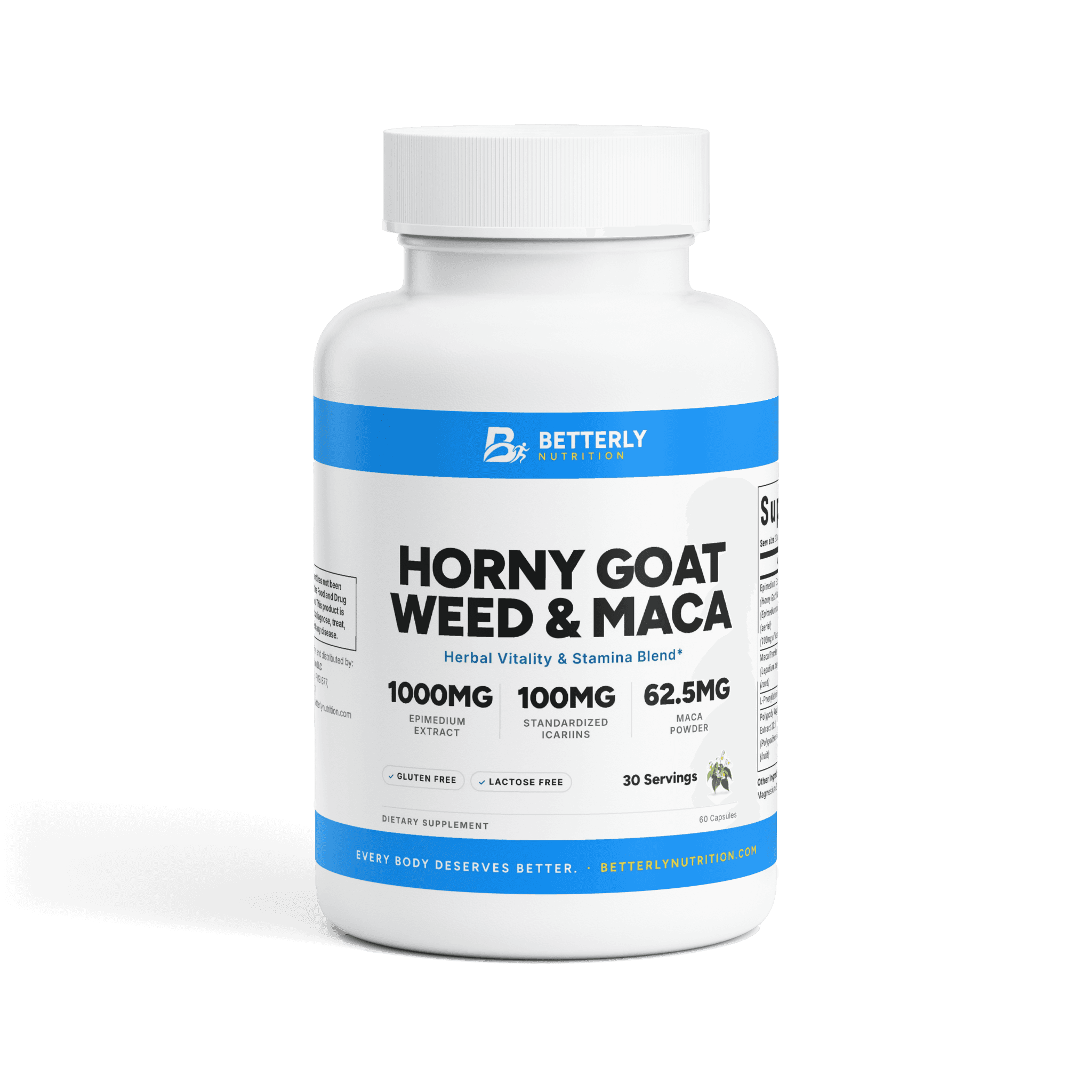
- Horny goat weed (Epimedium sagittatum, aerial parts): 50 mg
- Longjack (Eurycoma longifolia root): 50 mg
- Saw palmetto berries, hawthorn berries and Cissus quadrangularis stem: 50 mg each
The front label reads "Supports Men's Vitality & Wellness." If you only want the two minerals, this bottle carries a lot extra. Tribulus gets its own look in our guide to tribulus side effects, and the bottle sits with our other specialty formulas in the Targeted Support collection.
The label marks it vegan and gluten free.
From our shop: Tribulus, Zinc & Magnesium Capsules — 30 mg of zinc and 200 mg of magnesium per 3-capsule bedtime serving with 750 mg of Tribulus terrestris, a zinc amount that leaves just 10 mg of room for food.
How should you take zinc and magnesium, and why before bed?
Take zinc and magnesium products exactly as each label says. For our Tribulus, Zinc & Magnesium Capsules, the label's suggested use is three capsules before bedtime, without saying why.
The ODS magnesium page doesn't discuss sleep either, so we won't promise anything there. Our guide to magnesium and sleep covers that side. Here's a routine built only from the three labels:
- Pick one route. The multivitamin plus the glycinate is the pairing that fits both limits. The tribulus formula stands alone, never mixed with either.
- On the two-bottle route, split the day. Two multivitamin capsules in the morning with a meal, per its label, and three glycinate capsules once daily, which can be the evening.
- Ask before a daily tribulus routine. The label's suggested use is 3 capsules before bed, but with ordinary food zinc that serving can pass 40 mg, so check with a healthcare provider first.
- Count your food zinc. A lunch built on oysters or a big steak eats into zinc's 40 mg limit, unlike magnesium from food.
- Notice how your stomach responds. Nausea or loose stools can signal too much zinc or magnesium, so stop and recheck your totals.
Never double a serving to make up for a missed day.
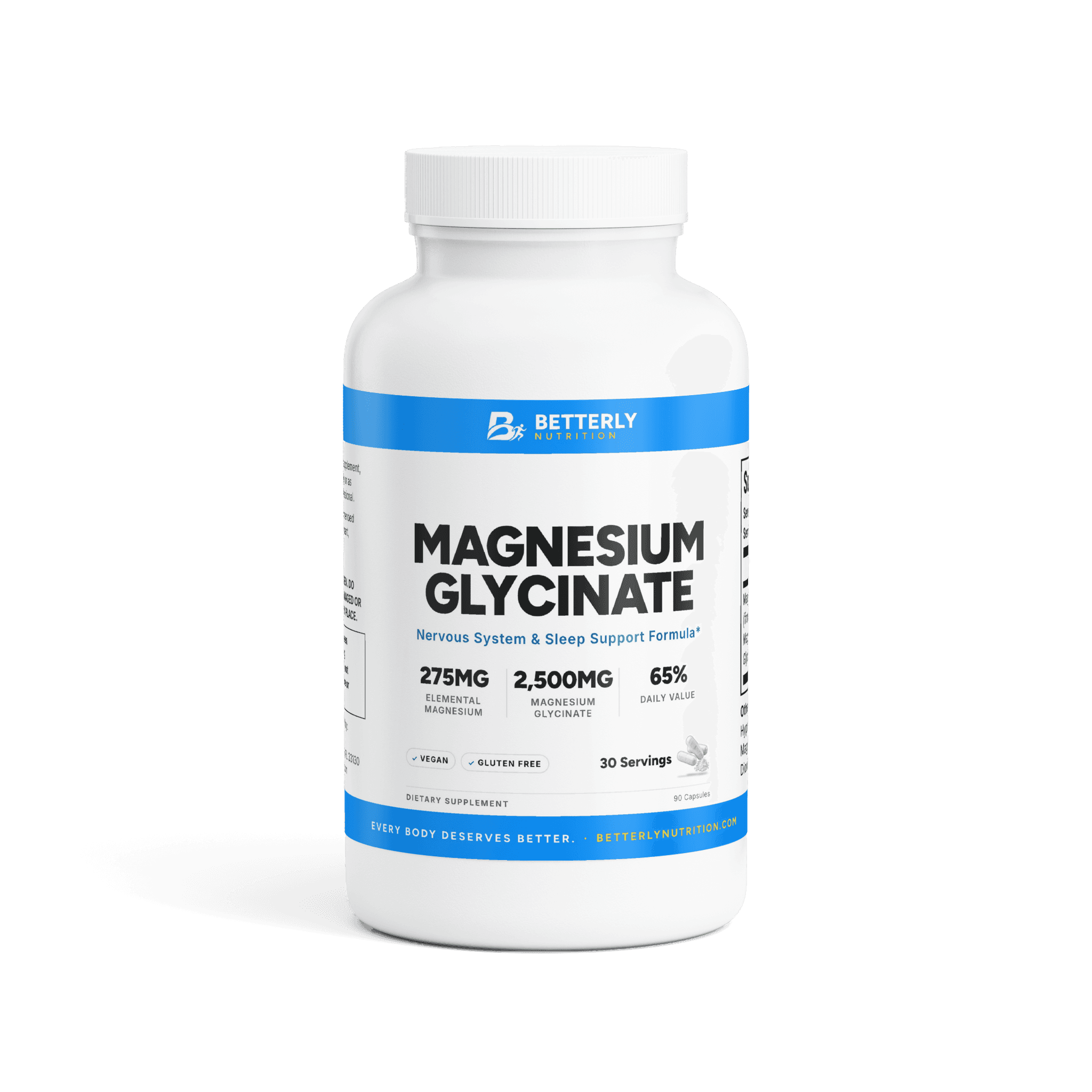
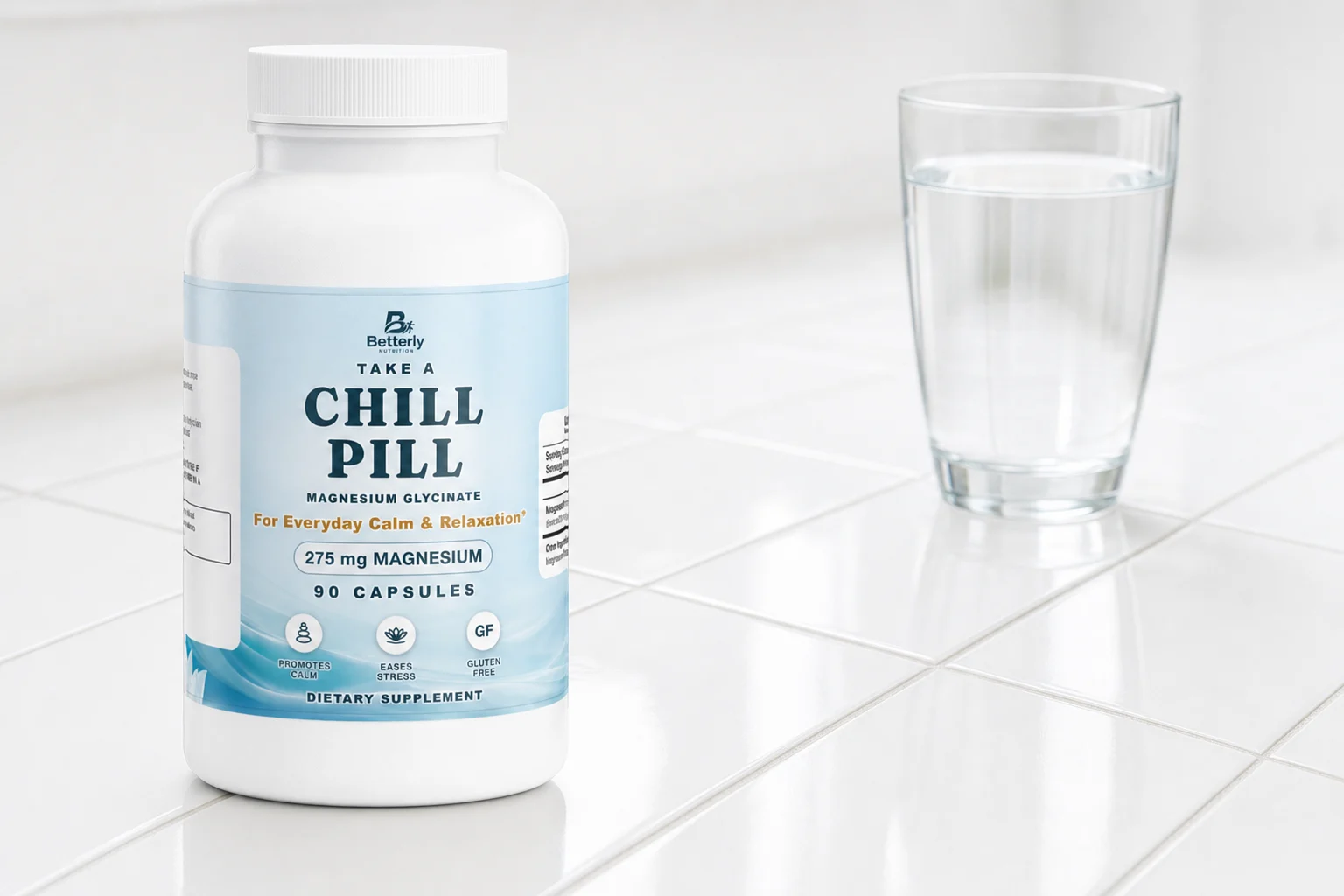
From our shop: Magnesium Glycinate Capsules — three capsules supply 275 mg of magnesium (65% DV) from magnesium glycinate, and the panel lists no zinc to add to your count.
When don't you need a zinc and magnesium supplement?
You may not need a zinc and magnesium supplement at all if your meals cover both minerals. Per ODS, most Americans already get enough zinc from food alone.
Magnesium is a closer call. ODS says many American diets fall short, with men over 70 and teens most likely to have low intakes, though food plus supplements generally tops the recommended amounts.
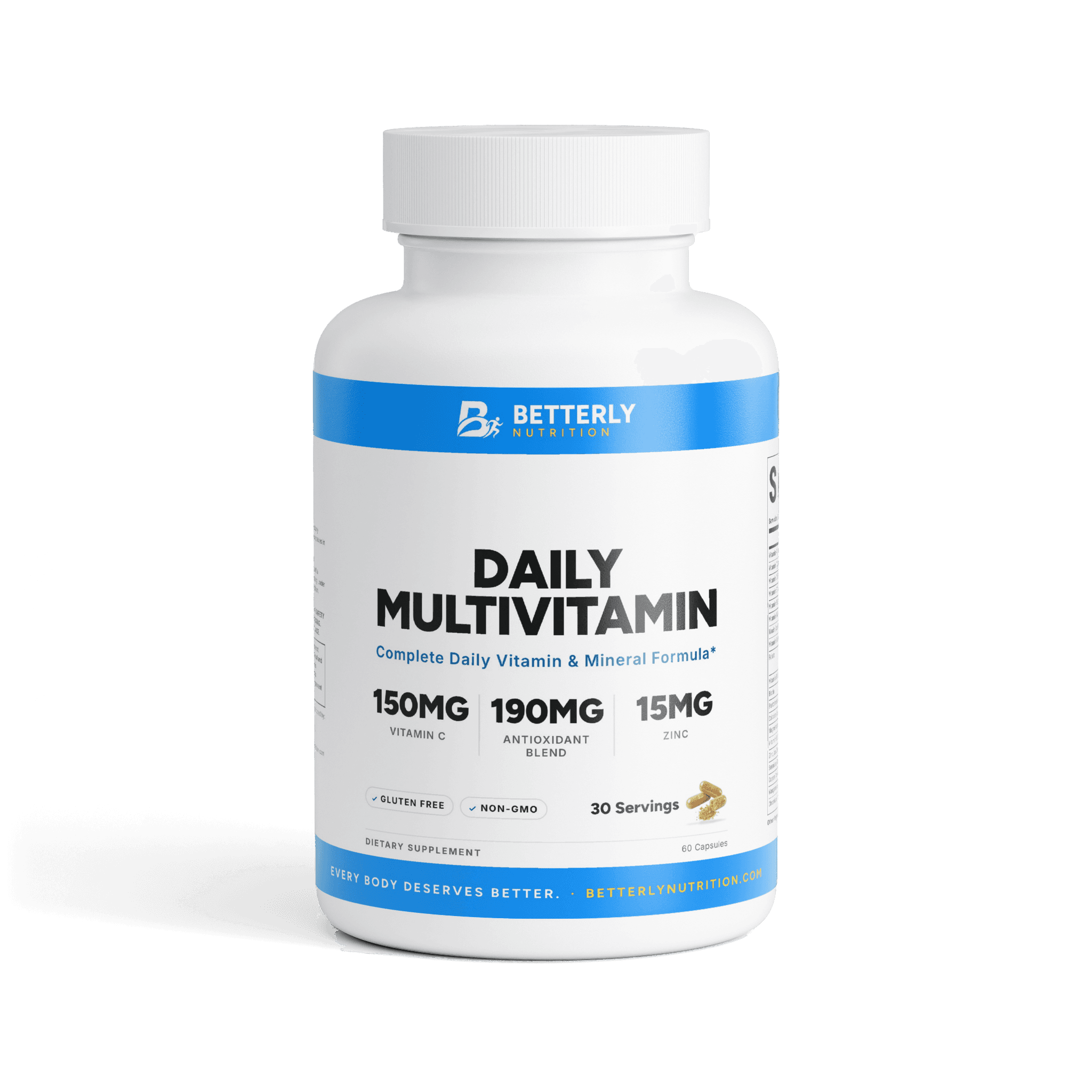
A multivitamin may already cover part of this. The ODS multivitamin fact sheet says basic multis usually carry low amounts of magnesium, and it warns that a multi can raise your chances of getting too much zinc. Ours fits that description: 15 mg of zinc (136% DV) but only 50 mg of magnesium (12% DV).
So if you already take a multi, magnesium alone is the likelier gap, and our look at who actually needs a daily multivitamin covers the multi itself. Vegetarians and vegans are one group ODS says may run low on zinc, since phytates in beans and grains reduce how much the body absorbs.
Who should check with a healthcare provider first?
Pregnancy, nursing, age under 18, prescription medicines, planned surgery and ongoing medical conditions all call for a healthcare provider's input before you pair zinc and magnesium.
- Pregnant or breastfeeding. The tribulus formula's label says not to use it while pregnant or lactating. The multivitamin and glycinate labels say to consult a physician first.
- Under 18. ODS sets the teen zinc limit at 34 mg for ages 14 to 18 and advises teens to get 9 to 11 mg a day. Add that much food zinc to the tribulus formula's 30 mg and a teen goes over. Our multivitamin and glycinate labels tell under-18s to see a physician first.
- Taking any prescription. ODS says both minerals can interact with some antibiotics. For certain ones, it suggests taking the antibiotic at least 2 hours before or 4 to 6 hours after zinc. Some diuretics change how much of each mineral you lose, so have your pharmacist check your list.
- Surgery ahead. When your care team asks what you take, mention both minerals, plus the tribulus formula's botanicals if it's in your routine.
- Managing a medical condition. Each of the three labels asks you to consult a physician first. Raise kidney function too, since the ODS magnesium sheet names the kidneys as the exit route for surplus magnesium.
FAQ: zinc and magnesium together
Can you take zinc and magnesium every day long term?
Yes, zinc and magnesium can stay in a long-term routine if each day's total stays under the ODS limits, which are set per day. None of our three labels names a number of weeks. One long-term risk ODS names is low copper, which can follow long stretches of excess zinc. Our multivitamin lists 2 mg of copper per 2-capsule serving, while the tribulus formula lists none.
Is it better to take zinc and magnesium at night or in the morning?
No federal source we found says one time is better for zinc and magnesium, so follow each label. Our Tribulus, Zinc & Magnesium Capsules say before bedtime, our Daily Multivitamin Capsules say morning with a meal, and our Magnesium Glycinate Capsules say once daily with no hour named. For the glycinate, choose the slot you'll remember and keep it steady.
Can women take zinc and magnesium together?
Yes, women can take zinc and magnesium together, and the adult limits are the same for everyone. Women need less of each, though, with ODS listing 8 mg of zinc and 310 to 320 mg of magnesium a day. Our tribulus formula is labeled for men's vitality and warns against use while pregnant or lactating, so the multivitamin and glycinate route is the closer match.
Can you take zinc and magnesium with vitamin D?
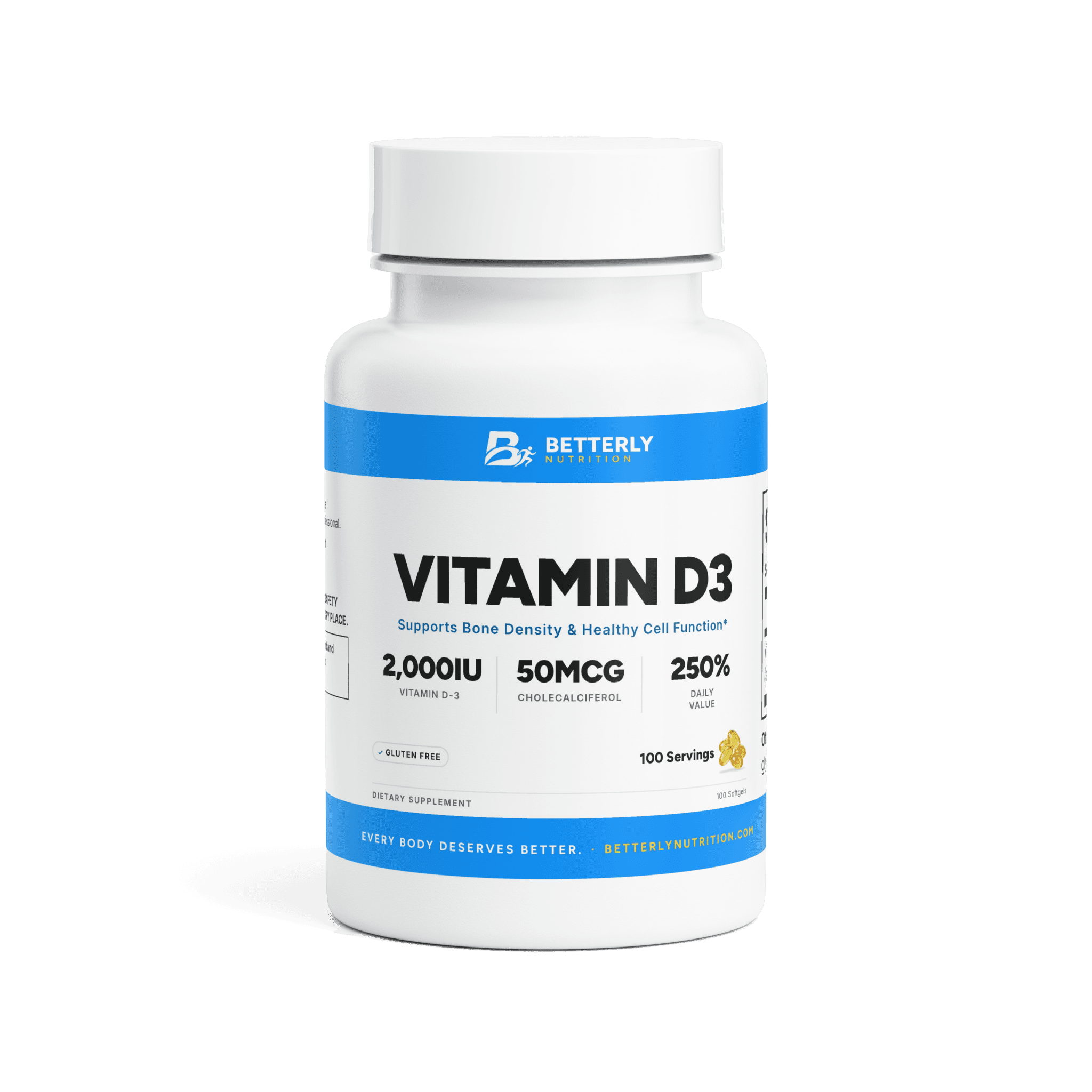
Yes, zinc, magnesium and vitamin D can share a routine as long as each stays under its own upper limit. Our Daily Multivitamin Capsules list 10 mcg of vitamin D, 15 mg of zinc and 50 mg of magnesium per 2-capsule serving. If you add a separate vitamin D product, count its micrograms too. Per the ODS vitamin D fact sheet, the adult upper limit is 100 mcg (4,000 IU) a day, all sources combined.
What happens if you take too much zinc and magnesium?
According to ODS, too much zinc can bring nausea, dizziness, headaches, upset stomach, vomiting and loss of appetite. Over a long time, it can also drive copper levels down. Too much supplemental magnesium can cause diarrhea, nausea and abdominal cramping. If you notice these after starting a product, stop, add up your totals and talk with a healthcare provider.
Sources
- Zinc: Fact Sheet for Consumers, NIH Office of Dietary Supplements
- Magnesium: Fact Sheet for Consumers, NIH Office of Dietary Supplements
- Multivitamin/mineral Supplements: Fact Sheet for Consumers, NIH Office of Dietary Supplements
- Vitamin D: Fact Sheet for Consumers, NIH Office of Dietary Supplements
If this left you looking for somewhere to start, read zinc and magnesium capsules with 30 mg of zinc per serving — its amounts per serving are listed on the page. For the practical questions this raises, how dosing, sourcing and subscriptions work is answered in one place.