On this page
- Key takeaways
- What counts as low dose melatonin?
- Why start with a small dose of melatonin?
- Is 1mg of melatonin enough for an adult?
- Does a higher dose of melatonin work better?
- What's in a 1mg melatonin strip besides melatonin?
- How do you run a fair 14-night trial of 1mg melatonin?
- When is 1mg of melatonin really not enough?
- Who can skip melatonin, even at 1 mg?
- Who should check with a healthcare provider first?
- FAQ: low dose melatonin
- Sources
The short answer: Low dose melatonin, which this guide takes to mean 1 mg or less per serving, is a reasonable first amount for an adult who wants to try it. The federal health pages we read give adult amounts only for jet lag, not everyday sleep. NCCIH also says too little is known about side effects to judge overall safety, especially once a dose goes past what the body normally produces. Whether 1 mg is enough comes down to why you're awake.
Key takeaways
- NCCIH ties melatonin, a hormone your body produces in the dark, to two jobs: sleep and the timing of your body's internal clock.
- The NCCIH pages we read don't define "low dose" or give an official adult amount, and NCCIH tells melatonin users to follow the label.
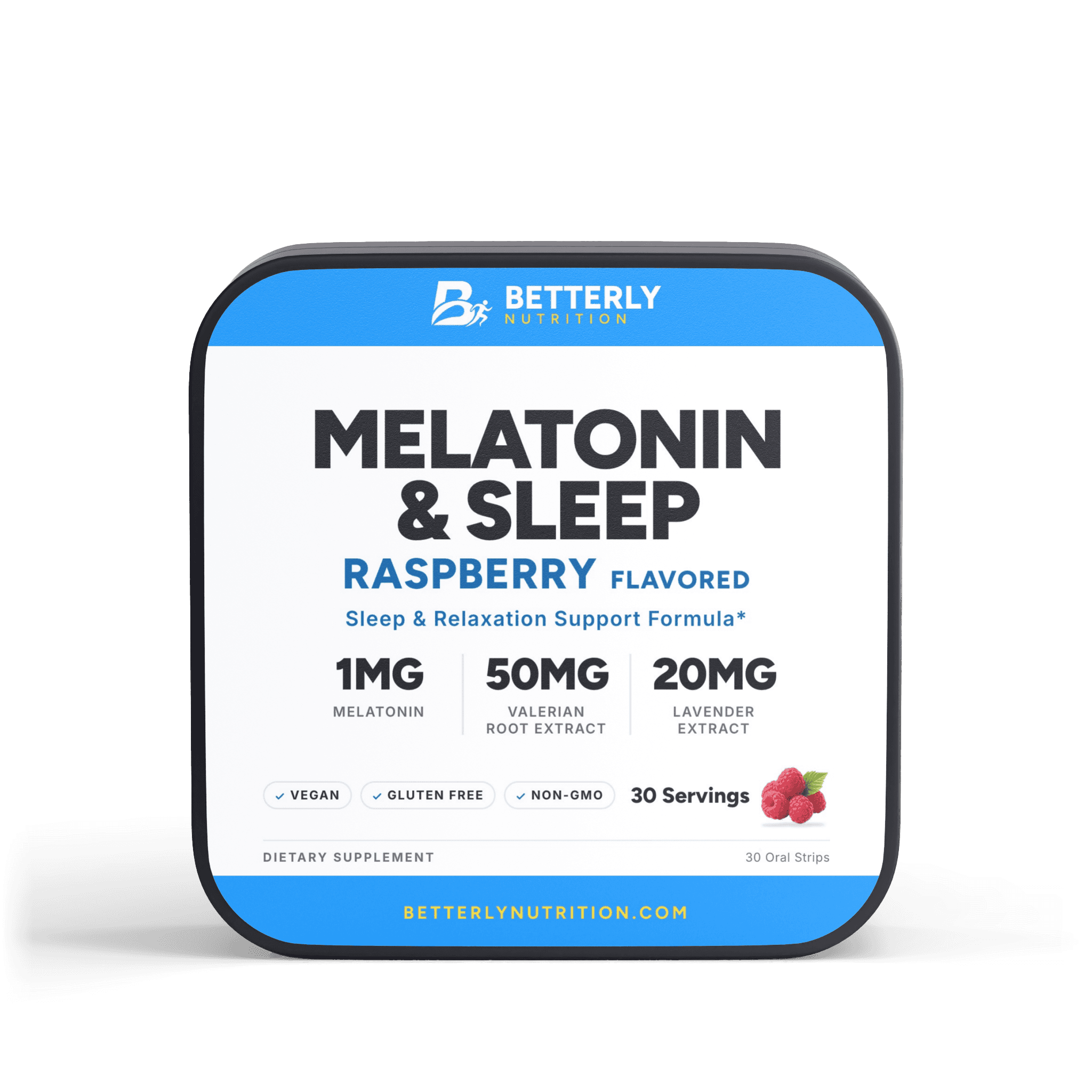
- Betterly's 1mg Melatonin Sleep Strips list 1 mg of melatonin plus four botanical extracts per 1 Oral Strip (210 mg) serving.
- When screens, late caffeine or a busy mind keeps you up, raising the melatonin dose doesn't touch the cause.
Full disclosure: we sell the 1mg Melatonin Sleep Strips this guide centers on, plus two stronger melatonin products. Weigh what follows with that in mind, and check our math against the labels and federal sources we link.
What counts as low dose melatonin?
Low dose melatonin has no official definition on any federal page we read, so here it means 1 mg or less per serving, the bottom of our range.
Part of the reason is how melatonin is sold. NCCIH's page Melatonin: What You Need To Know points out that it's considered a dietary supplement in the United States, while several other countries make it prescription-only and consider it a drug. With no prescribing framework, each brand picks its own number.
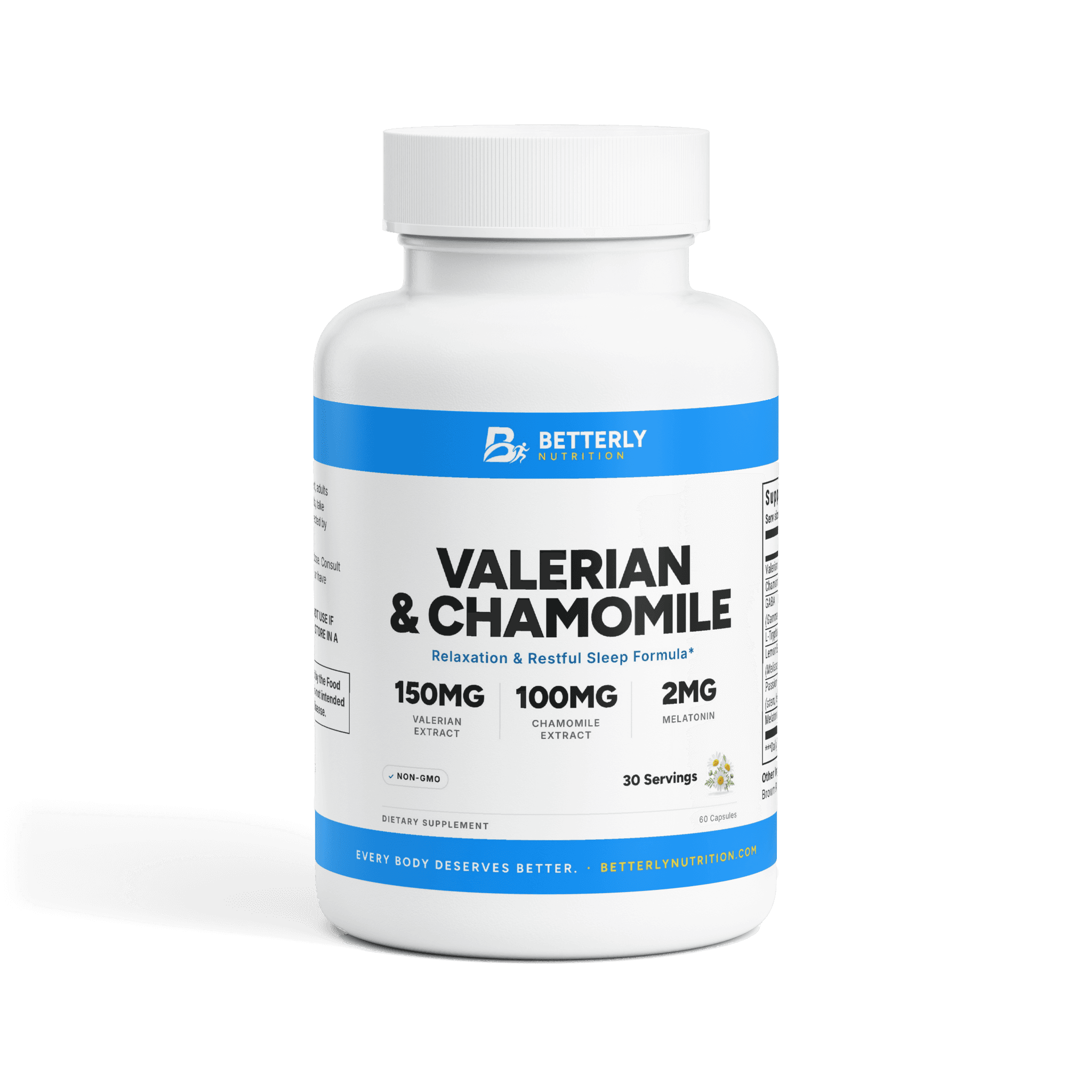
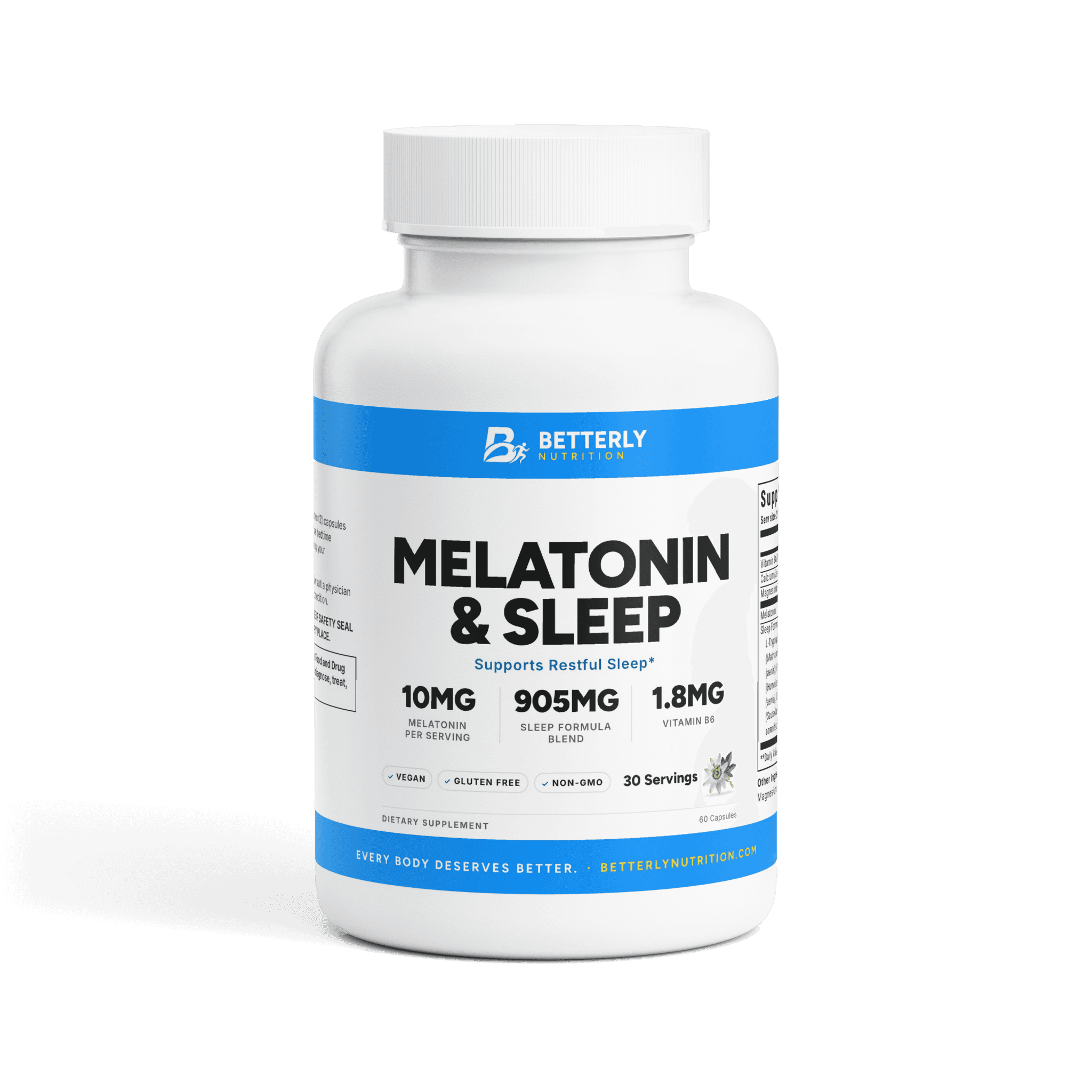
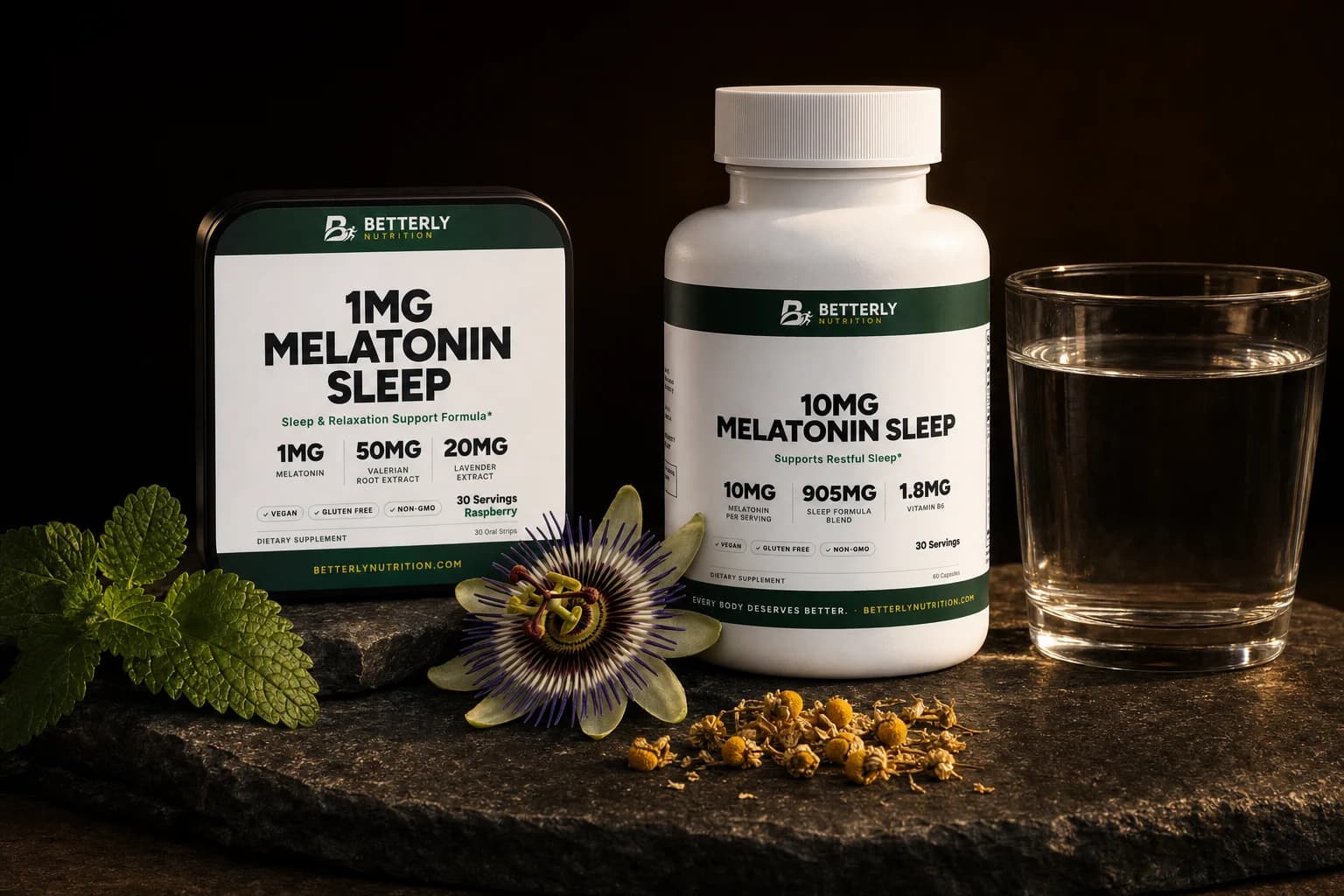
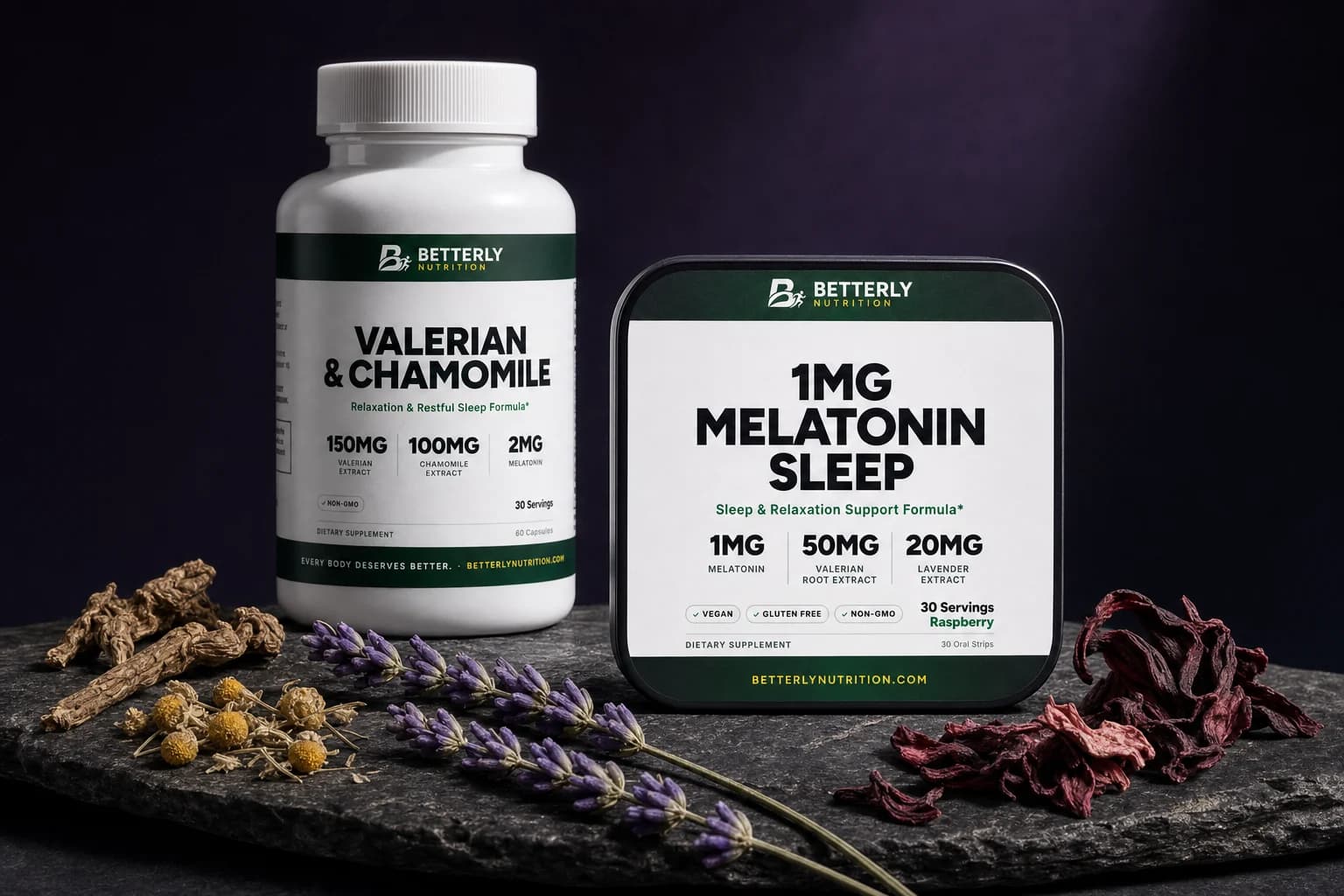
Our own shelf shows how wide that spread can get. The strip carries 1 mg per 1 Oral Strip (210 mg) serving. The Valerian & Chamomile Sleep Capsules carry 2 mg per 2-capsule serving, and the 10mg Melatonin Sleep Capsules carry 10 mg per 2-capsule serving. Same store, tenfold gap.
Why start with a small dose of melatonin?
A small melatonin dose is a sensible first step because the federal pages we read give adult amounts only for jet lag, not everyday sleep, and NCCIH says side-effect information is scarcest above natural levels.
Start with what melatonin is. Your brain starts making it once the day goes dark, and NCCIH credits it with a hand in sleep and in timing your circadian rhythms, the body's daily clock.
According to NCCIH, bright light after dark can block that production. So before you change the number on a label, it's worth changing the light in the room.
Plenty of sleep sites claim 1 mg works as well as far bigger amounts for everyday sleep. We didn't find that comparison on the NCCIH or MedlinePlus pages we read, so it gets no weight here.
NCCIH's safety point is narrower. It calls the side-effect picture incomplete and points to doses above the body's usual output as the range where the least is known. Add the missing dose standard and the cautious move is to begin at the bottom. That's caution, not a promise that 1 mg will work.
Is 1mg of melatonin enough for an adult?
A 1 mg melatonin serving may be worth a trial when your trouble is sleep timing. If bright screens, late coffee or a restless mind is behind it, the fix lies outside the bottle.
"Enough" depends on the job you're giving melatonin. Sort that out first.
| What's keeping you up | Is melatonin the right tool? | A better first move |
|---|---|---|
| Your bedtime keeps sliding later | Possibly: timing is melatonin's lane | A fixed bedtime first |
| Screens and bright lamps late | Not first | Dim the lights |
| Coffee or energy drinks after lunch | No | Move caffeine earlier |
| Thoughts that keep circling | Probably not | A wind-down routine |
| A warm, noisy or bright bedroom | No | Quiet, cool and dark |
| Weeks of poor sleep | No | See a healthcare provider |
Only the top row describes a timing issue, the job NCCIH ties melatonin to, and even there a steady bedtime comes before any strip. Every other row calls for a different fix before you blame the dose. Most of those fixes echo the habits on NCCIH's page on complementary approaches for sleep: a consistent sleep schedule, time outside every day, a quiet, cool and dark room, and no caffeine or bright artificial light too close to bedtime.
If you live mostly in the fourth row, our racing-mind wind-down routine is a better next read than any dose chart.
Does a higher dose of melatonin work better?
No NCCIH or MedlinePlus page we read shows a higher melatonin dose working better, and NCCIH flags doses above natural levels as the least understood for side effects.
NCCIH's melatonin page covers jet lag, shift work and a 2018 sleep-timing study, but none of those summaries compares 1 mg with bigger amounts.
The closest thing to a dose comparison we found sits in travel medicine. The CDC's jet lag guidance for travel clinicians says 0.5 to 1 mg often suffices to produce a circadian shift, meaning a move in your body clock's timing, and it doesn't recommend high doses over 5 mg. That's advice for crossing time zones, not for ordinary nights, but it points the same way as starting small.
On our shelf, "higher" means 2 mg in the valerian capsule or 10 mg in the high-dose capsule, each per 2-capsule serving. Label accuracy is a separate, category-wide worry, and our 10mg melatonin dose breakdown covers it along with the top of the range.
What's in a 1mg melatonin strip besides melatonin?
Betterly's 1mg Melatonin Sleep Strips pair 1 mg of melatonin with four botanical extracts, each amount printed, per 1 Oral Strip (210 mg) serving.
Here's the panel as the label lists it:
- Valerian root extract: 50 mg
- Lavender extract: 20 mg
- Chamomile extract: 10 mg
- Hibiscus extract: 10 mg
- Melatonin: 1 mg
The panel marks every row "Daily Value (DV) not established." No proprietary blend hides any amount.
A pack holds 30 strips. The other-ingredients line runs to 10 items, opening with pullulan and cellulose and closing with steviol glycosides, with raspberry flavor, xylitol, erythritol and sorbitol syrup among those in between. Its label also lists vegan, gluten free and non-GMO claims.
Two honest limits. First, this isn't a melatonin-only product, so a trial tests a small blend rather than melatonin alone. Second, its 50 mg of valerian root extract is a third of the 150 mg per 2-capsule serving in our Valerian & Chamomile capsules, and valerian carries its own cautions. Our valerian root side effects guide covers who should skip it.
From our shop: 1mg Melatonin Sleep Strips — a dissolving oral strip with 1 mg of melatonin and four disclosed botanical amounts per serving, plus vegan, gluten free and non-GMO claims on the label.
How do you run a fair 14-night trial of 1mg melatonin?
A fair 14-night trial of 1mg melatonin keeps three things steady: one strip a day as the label directs, one bedtime, and one short set of morning notes.
The label's suggested use is simple: place 1 oral strip on the tongue daily and allow it to dissolve. It doesn't name a time. Our guide on how long before bed to take melatonin goes deeper on timing.
The most detailed routine NCCIH describes comes from a 2018 study of people with a diagnosed late-running body clock, who paired melatonin an hour before their target bedtime with a fixed bedtime. NCCIH doesn't give the dose used, and for that group it says it's uncertain whether the benefits outweigh the possible harms. Read it as a sign that your schedule matters, not as a recipe.
Before night one, settle two things: a bedtime you can hold for all 14 nights, weekends included, and one place to keep your notes.
Then run the same short checklist every evening:
- One strip at the same point in your routine, and never a second.
- Lamps down and screens away for the last hour.
- No caffeine late in the day.
- No new sleep product, herb or other melatonin source until night 15.
Each morning, write down three things: lights-out time, a rough guess at when you drifted off, and how clear-headed you feel by mid-morning.
Why 14 nights? One rough night tells you little, and two weeks lets a pattern show. NCCIH describes short-term melatonin use as appearing safe for most people. It doesn't define "short-term," but two weeks is brief by any reading.
On day 15, read the notes in one sitting. If you're settling near your set bedtime and mornings feel fine, there's no reason to climb. If nothing moved, revisit the first table before you touch the dose.
When is 1mg of melatonin really not enough?
One mg of melatonin sits below the 3 to 5 mg MedlinePlus names for in-flight jet lag use, and a flat 14-night log is the other signal.
MedlinePlus's jet lag prevention page suggests taking 3 to 5 milligrams of melatonin during your destination's bedtime if you're in flight then, and trying melatonin several hours before bedtime for several days after you arrive. The CDC guidance above leans lower, so federal travel advice isn't unanimous. Our strip's label allows one strip a day, and we won't tell you to stack strips to match either plan. Ask a pharmacist before the trip.
Two other situations deserve an honest look:
- Your 14-night log didn't move. If one strip plus the light and caffeine changes left your notes flat, the next step is a talk with a provider, not a second strip. The strip's label is blunt on this point: "Do not exceed recommended dose."
- You'd like a formula with more herbs. Our Valerian & Chamomile Sleep Capsules list 150 mg valerian extract (root) and 2 mg of melatonin per 2-capsule serving, alongside chamomile, GABA, L-tryptophan, lemon balm and passion flower. That's a different formula, not a stronger strip.
Don't jump from one strip to 10 mg on your own. That's a tenfold step, and each 2-capsule serving of the 10 mg product also carries a 905 mg blend that lists St. John's wort and 5-HTP.
From our shop: Valerian & Chamomile Sleep Capsules — a herb-forward 2-capsule serving with 2 mg of melatonin, 150 mg valerian extract and five more ingredients, each at 100 mg.
Who can skip melatonin, even at 1 mg?
You can skip melatonin, even a 1 mg strip, if you usually drift off near your chosen bedtime and wake up feeling rested.
Other honest reasons to leave it on the shelf:
- One rough night after a stressful day. That's ordinary, and it isn't a timing problem.
- You work nights. The shift-work evidence NCCIH summarizes is mixed, so plan night-shift sleep with a provider rather than a strip.
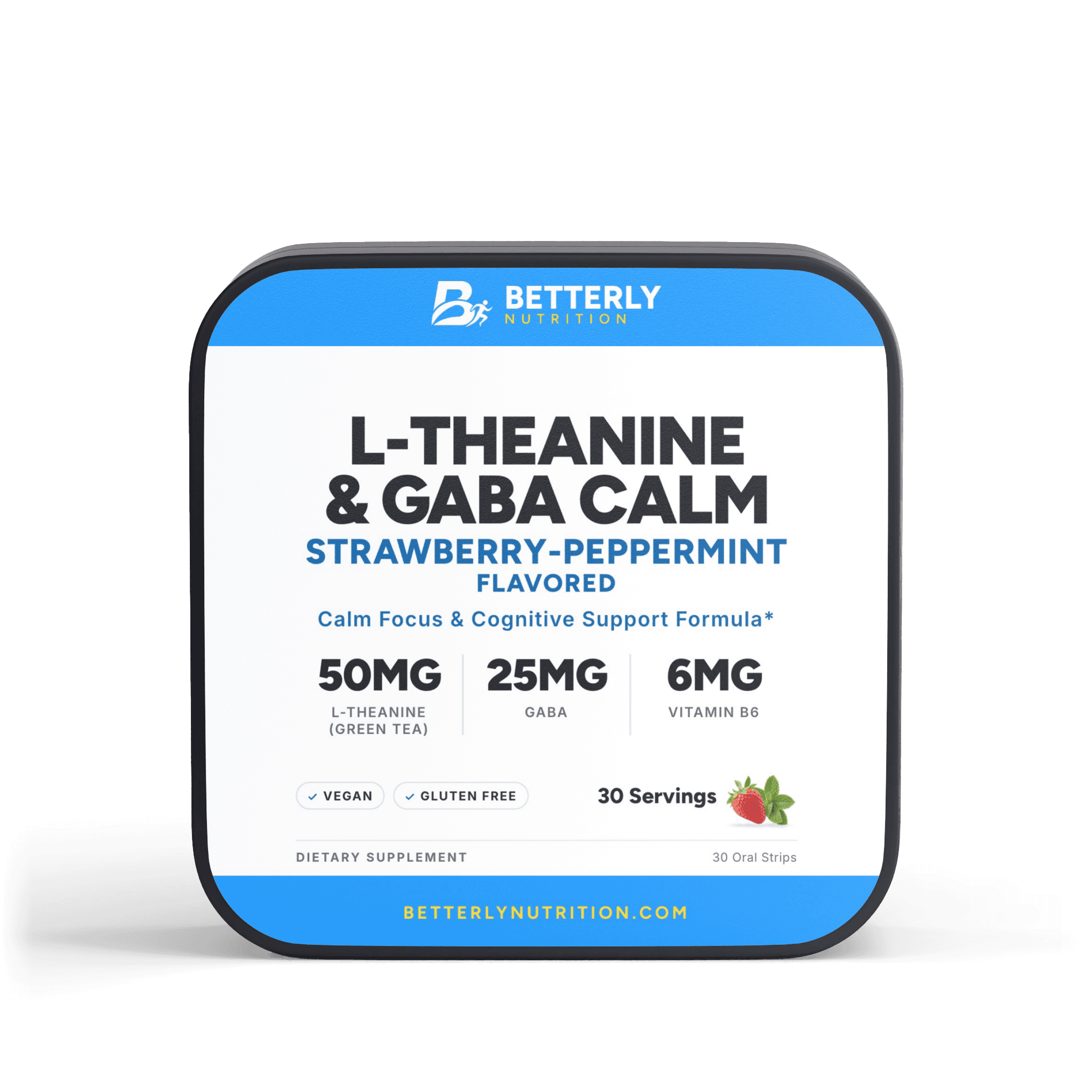
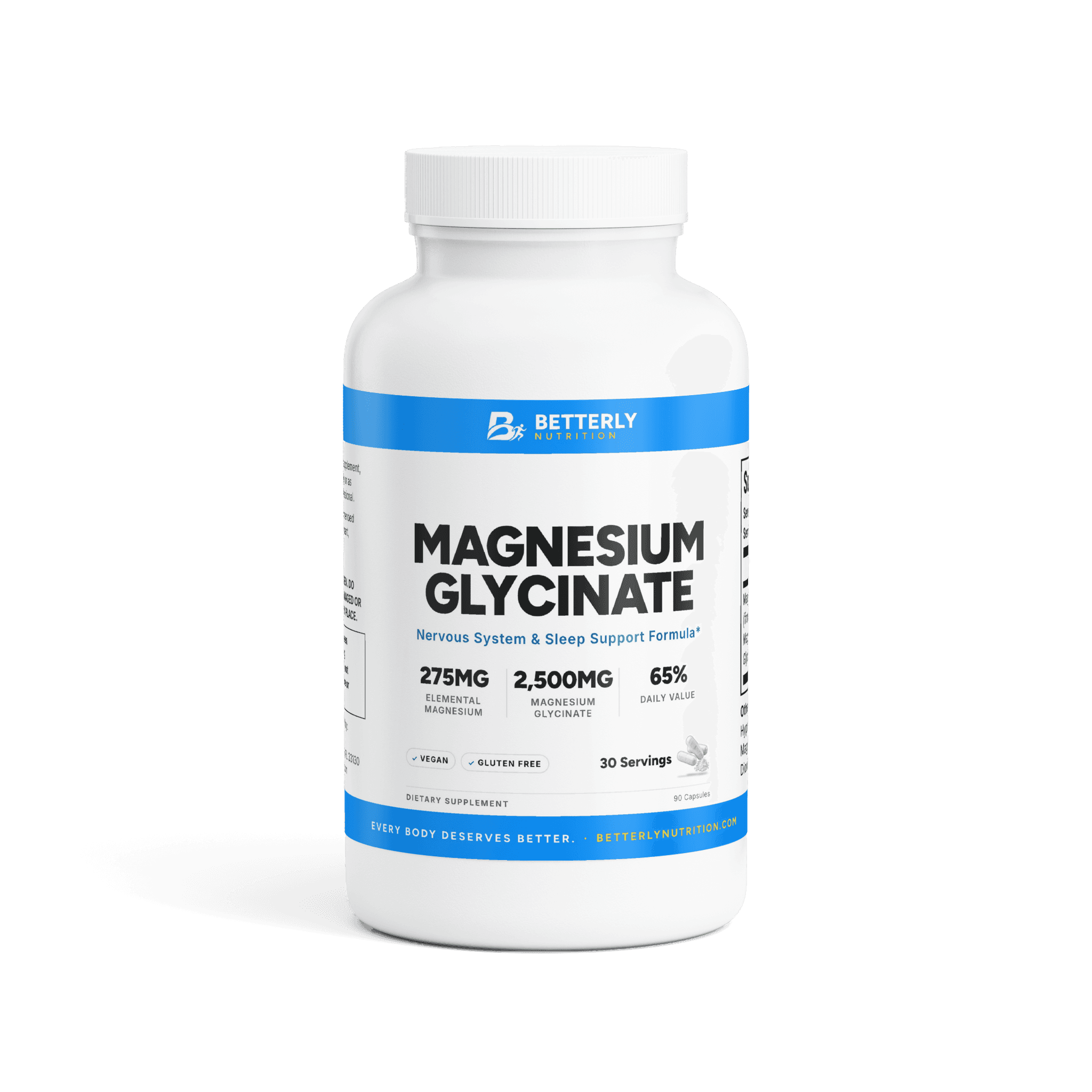
- You'd rather skip hormones. The sleep and stress relief shelf has melatonin-free formulas too, including Magnesium Glycinate Capsules and L-Theanine & GABA Calm Strips.
Who should check with a healthcare provider first?
Check with a healthcare provider before you use 1mg Melatonin Sleep Strips if you take any medicine, have a medical condition, are pregnant or nursing, or are under 18.
Everything but the medicine question comes from the label's own caution: "Consult a physician if pregnant, nursing, under 18, or have a medical condition." So the strip isn't a teen's or child's product without a physician's okay.
Watch for stacking on our own shelf. One strip plus one serving of the valerian capsule adds up to 3 mg of melatonin and 200 mg of valerian extract in a day, more than either label describes alone. NCCIH's sleep page asks you to learn the risks of combining products first.
If you're pregnant or nursing, NCCIH calls a provider visit especially important before any supplement, melatonin included.
NCCIH also notes that some supplements may interact with medicines or pose risks when surgery is coming up, and it says people on blood thinners should take melatonin only under medical supervision. List the strip with everything else you take.
FAQ: low dose melatonin
Can you take melatonin every night?
Yes for a short stretch, but a low melatonin dose doesn't settle the long-term question. In NCCIH's words, short-term use "appears to be safe for most people," while information on long-term safety is lacking. Our strip's pack holds 30 strips, about a month at one a day. If you reach the end of a pack and plan to reorder for nightly use, that's a good moment to show your trial notes to a healthcare provider.
Can you cut a 1mg melatonin strip in half for 0.5 mg?
We can't promise that half of a 1mg melatonin strip holds exactly 0.5 mg, because the label's directions cover one whole strip and say nothing about splitting it. If you'd like to try less than 1 mg, such as 0.5 mg or 0.3 mg, ask a pharmacist or healthcare provider about a product made at that strength, so the declared amount matches what you take.
Can older adults take 1mg of melatonin?
Older adults may be able to use 1mg of melatonin, but a provider's view comes first. NCCIH warns that in older people melatonin may stay active for a longer stretch, bringing a risk of daytime drowsiness. The label's caution also covers anyone with a medical condition. Take the pack and your medicine list along to that appointment.
Does low dose melatonin have side effects?
Yes, low dose melatonin can still cause side effects, since the NCCIH page we read doesn't tie them to a particular amount. Among the mild side effects NCCIH reports from short-term studies are headache, dizziness, nausea and sleepiness. With our strip, the hibiscus, chamomile, lavender and valerian extracts count too. Your morning notes make a pattern easier to spot, and anything that bothers you is worth raising with a provider.
Is 1mg of melatonin a lot?
No, 1mg of melatonin isn't a lot next to the rest of our shelf: it's half our valerian capsule's 2 mg serving and a tenth of our 10 mg capsule serving. Whether it's a lot for your body is harder to say, because none of the federal pages we read puts a number on natural production. For travel, the CDC counts doses as small as 0.5 mg as often sufficient, and 1 mg is the upper end of that bracket.
Sources
- Melatonin: What You Need To Know (NCCIH)
- NCCIH overview of complementary approaches for sleep
- CDC Yellow Book jet lag chapter for health care providers (CDC)
- Jet lag prevention (MedlinePlus)
If this left you looking for somewhere to start, read low dose melatonin sleep strips — its amounts per serving are listed on the page. For the practical questions this raises, how dosing, sourcing and subscriptions work is answered in one place.