On this page
- What saffron is (and why it's the world's most expensive spice)
- Safranal and crocin: the compounds behind the research
- Saffron for cravings and snacking: what the research suggests
- Saffron and mood: an honest read
- Threads vs standardized extract: which form makes sense
- How much saffron per day? What researchers actually used
- How to choose a saffron supplement (and spot a fake)
- Safety, side effects, and who should check with a provider first
- Where saffron fits in a weight routine
- FAQ: saffron extract
- Sources
Saffron is the most expensive spice on earth — and, quietly, one of the more interesting supplement ingredients of the past decade. The conversation around saffron extract benefits rests on a handful of small but genuinely encouraging studies: less snacking in one randomized trial, steadier mood in several others. This guide covers what saffron actually is, what the research does and doesn't show, and how to choose a saffron supplement that contains real saffron — which turns out to be a bigger question than it sounds.
One honest note up front: the studies here are small and short, and they're worth taking seriously without being oversold. We'll hedge where hedging is due.
What saffron is (and why it's the world's most expensive spice)
Saffron is the dried stigma of the Crocus sativus flower — the three thread-like red strands at the center of each purple bloom. Every one of those threads is picked by hand, usually at dawn before the flowers open fully, and by most estimates it takes well over a hundred thousand flowers to yield a single kilogram of dried saffron.
That arithmetic is why real saffron is so costly by weight — and it matters to supplement shoppers more than you'd think. When an ingredient costs that much, the economic pressure to fake it is enormous, and saffron is widely considered one of the most adulterated ingredients in the world. We'll come back to that in the buying section, because it changes how you should read a label.
For cooking, the price is about flavor and color. For supplements, it's about two specific compounds.
Safranal and crocin: the compounds behind the research
Nearly all of the supplement research on saffron centers on its two best-known actives:
- Crocin is the carotenoid that gives saffron threads their deep red color. It's the compound researchers most often measure when they standardize an extract.
- Safranal is the aromatic compound behind saffron's distinctive honey-and-hay smell, and it shows up alongside crocin in most of the mood and sleep research.
Two supporting players — crocetin and picrocrocin — round out the plant's chemistry, but crocin and safranal are the names you'll actually see on labels.
How these compounds work in the body is still being mapped. Researchers suspect they interact with serotonin signaling, the same general system involved in mood and appetite, but mechanism studies are early, and "we think it works this way" is the honest ceiling. What saffron does have is something rarer: placebo-controlled trials in actual humans, which is more than many trendy ingredients can say.
The practical takeaway for now: a good saffron supplement tells you it's standardized to a stated level of crocin, safranal, or both. Plain saffron powder with no standardization can vary wildly from batch to batch.
Saffron for cravings and snacking: what the research suggests
This is the study that put saffron in the weight-support conversation, so it's worth describing precisely.
In a randomized, placebo-controlled study published in 2010, 60 healthy, mildly overweight women took either a branded saffron extract — 176.5 mg per day, split into two doses — or a placebo for eight weeks. The saffron group logged fewer snacking episodes in their daily food diaries than the placebo group, and the researchers described a satiating, or fullness, effect.
What makes the study interesting isn't a dramatic weight number — the weight changes were modest. It's the pattern. The extract didn't behave like a fiber that fills your stomach. Participants simply reported reaching for snacks less often, which the researchers connected to the mood-and-satiety side of saffron rather than to any physical bulk effect.
The honest caveats: it's one small study, it ran eight weeks, and it used one specific branded extract at one specific dose. "Research suggests" is the right frame here — not settled fact.
And if between-meal grazing is your actual sticking point, saffron is one lever among several. Our companion piece on how to stop snacking between meals covers the habit side, which does more of the heavy lifting than any supplement will.
Saffron and mood: an honest read
The other major branch of saffron research is mood — and it's the branch with the most trials behind it.
Across a series of small randomized studies, mostly four to eight weeks long, saffron extract at around 28 to 30 mg per day outperformed placebo on standard mood rating scales. One placebo-controlled trial in healthy adults with everyday low mood used 30 mg per day of a standardized extract for eight weeks. Participants reported better mood scores, and on the test day, saffron softened the usual stress-related dip in heart rate variability (a heart-rhythm measure) during a lab stress task.
Why does mood belong in an article about weight support? Because for a lot of people, snacking isn't hunger — it's a coping response to occasional stress, boredom, or the mid-afternoon slump. An ingredient associated with a balanced mood and less snacking is working the same problem from two sides, and that's the most plausible story behind the snacking findings above.
Now the limits, stated plainly: many of these trials were small, several came from the same research groups, and some had funding ties to saffron producers. None of that makes the results wrong — it makes them preliminary. And if a persistently low mood is interfering with your life, that's a conversation for a healthcare professional, not a spice.
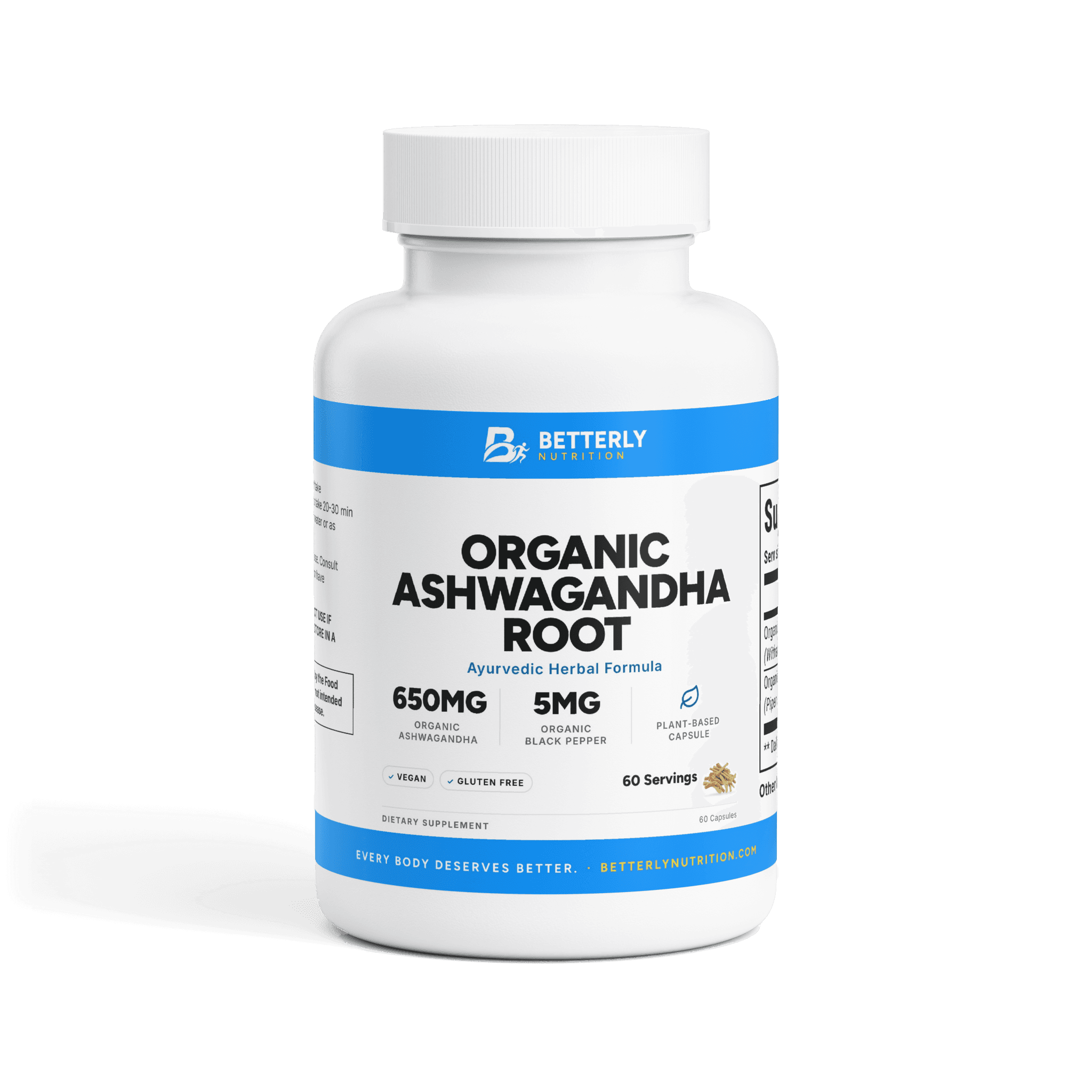
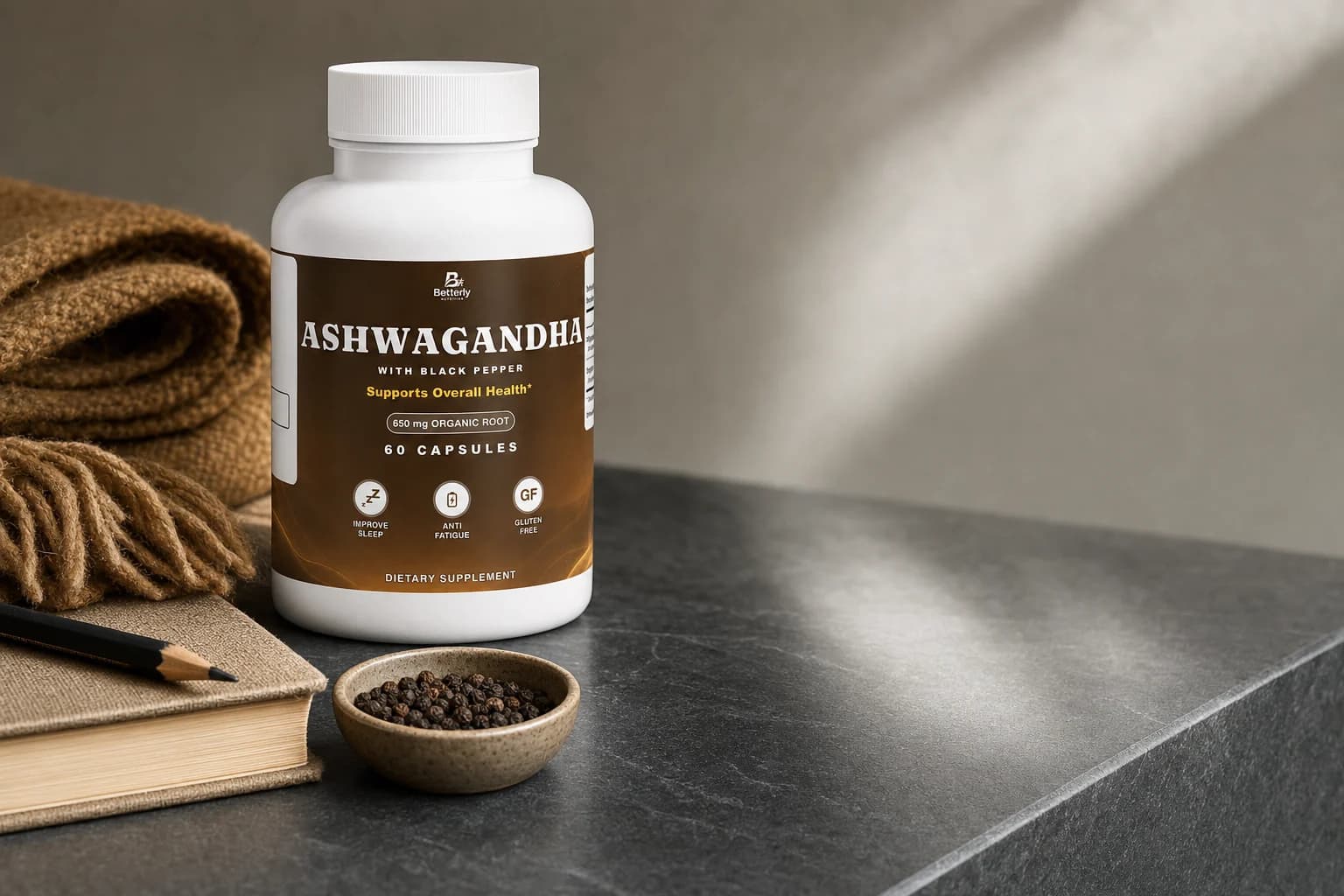
If the stress-eating pattern sounds like you, calming herbs are a related lane worth knowing about — our adaptogens primer and our guide to ashwagandha benefits and how to take it are both plain-English starting points, and our Organic Ashwagandha Root Capsules are a common pick for everyday calm.
Threads vs standardized extract: which form makes sense
You can buy saffron three ways, and they are not interchangeable.
- Whole threads are wonderful for cooking, but they're a poor fit for supplementation. You can't measure active compounds by eye, potency varies by harvest and storage, and you'd need to consume a consistent amount every single day to mirror what studies did.
- Plain ground saffron or "saffron powder" in a capsule sounds concentrated but usually isn't. Unstandardized powder can carry far less crocin than a much smaller amount of a proper extract — and the label often won't tell you either way.
- Standardized extract is what nearly all of the research used: a concentrated extract with a stated milligram amount and a declared crocin or safranal level. If you want what the studies looked at, this is the form to match.
Format is a separate question from form. Saffron shows up in capsules, liquids, and dissolvable strips, and the strip format simply skips swallowing a pill. Whatever the format, check the label for a stated saffron amount and any declared standardization.
How much saffron per day? What researchers actually used
There's no official saffron extract dosage, so the honest approach is to look at what studies used:
- Mood research mostly used 28 to 30 mg per day of a standardized extract, taken for four to eight weeks.
- The snacking study used 176.5 mg per day of one specific branded extract. That's not "more saffron" than the mood studies in any meaningful sense — different extracts have different concentrations, so milligram counts only mean something relative to the extract they describe.
- More is not better. Saffron is potent. Culinary-scale gram quantities taken daily aren't advisable, and several grams at once is genuinely unsafe. Supplement servings sit far below those amounts — one more reason to buy a product with a clearly stated dose and follow its label.
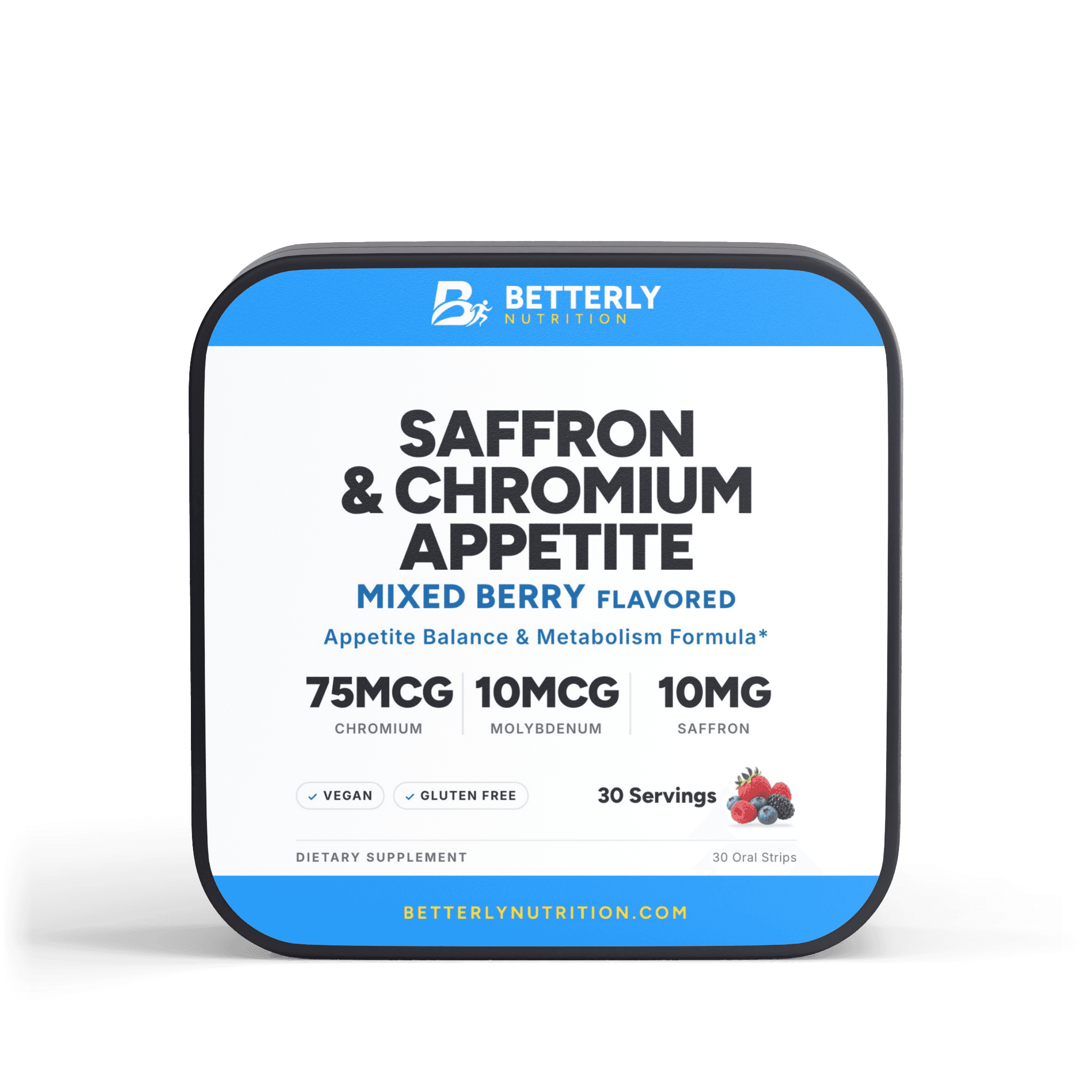
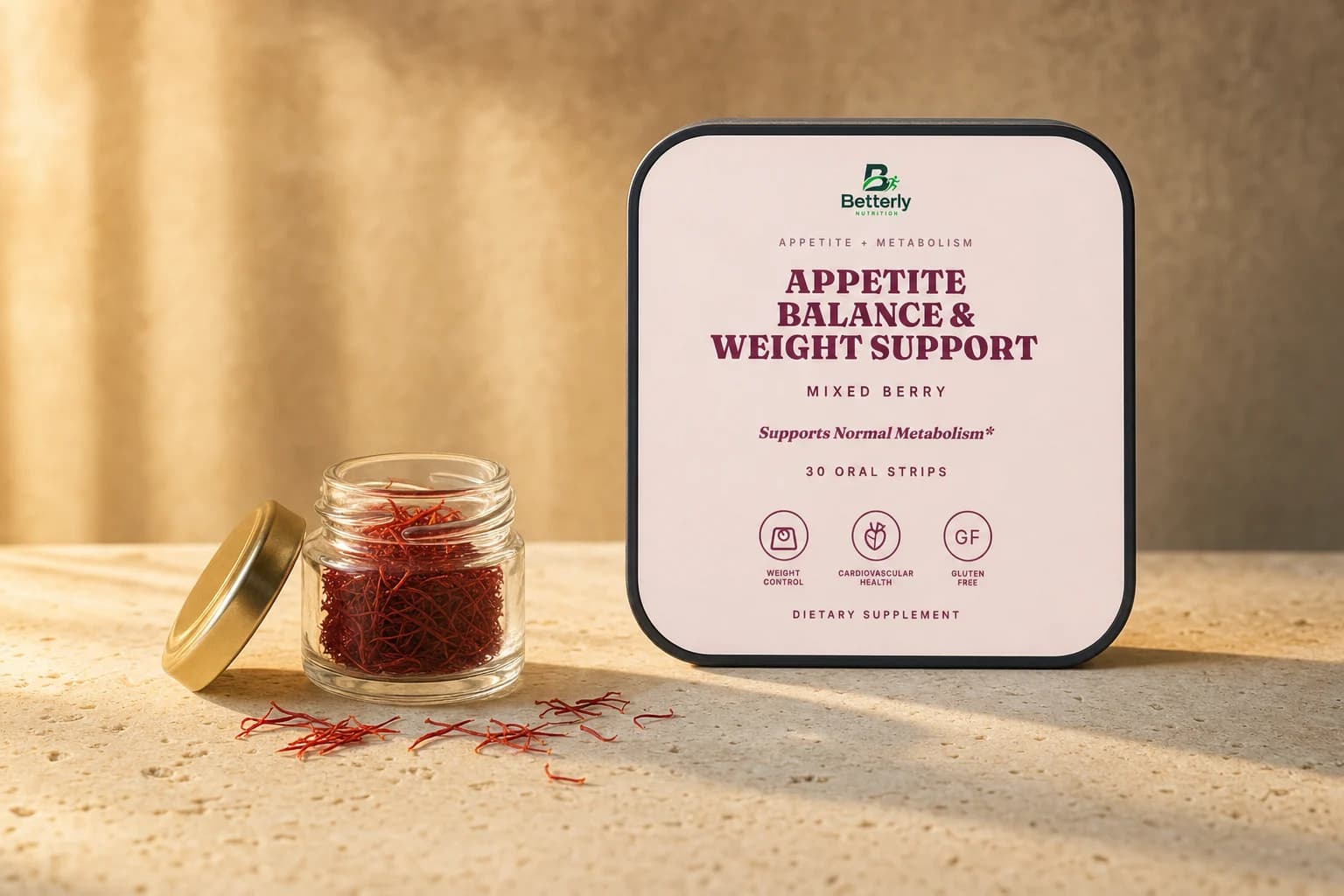
Those numbers describe research extracts, not any particular product. On our shelf, the Saffron & Chromium Appetite Strips provide 10 mg of saffron (Crocus sativus) and 75 mcg of chromium per 1-oral-strip serving, 30 strips per container, made to support mindful eating as part of an everyday routine. The honest limit: 10 mg is below the amounts used in the studies above, and the label doesn't declare an extract ratio or a crocin or safranal level. The label's suggested use is 1 oral strip on the tongue daily, so don't take extra strips to match a study.
How to choose a saffron supplement (and spot a fake)
Because real saffron is so valuable, fraud is a constant in this category. "Saffron" can turn out to be safflower petals, marigold, turmeric, or dyed corn silk — and extracts can be quietly diluted in ways no one can see. Here's what separates a credible product from a red flag:
- The Latin name. The label should say Crocus sativus. Safflower — a common stand-in — is a completely different plant (Carthamus tinctorius).
- A stated extract amount. You should see an exact milligram figure per serving, not a "proprietary blend" that hides how much saffron you're actually getting.
- Standardization. A declared crocin or safranal level is the closest thing you have to proof there's real saffron in the bottle.
- A real company. A physical address and a reachable human are worth more than a page of glowing adjectives.
- Sane pricing and sane promises. Genuine saffron extract is never dirt-cheap, and no honest brand promises effortless weight loss from a spice. If the marketing sounds like magic, the product usually isn't even real saffron.
Safety, side effects, and who should check with a provider first
At the amounts used in studies, saffron extract was generally well tolerated. A small number of participants reported mild effects — dry mouth, headache, or nausea — at rates similar to placebo.
A few groups should talk to a healthcare provider before starting:
- Pregnant or nursing? Skip saffron supplements unless your provider specifically okays them. High amounts of saffron have a long traditional reputation for being inappropriate in pregnancy, and this isn't the place to experiment.
- Taking daily medication? Because researchers suspect saffron interacts with serotonin signaling, anyone on medications that affect mood should check first. The same goes for blood-thinning medications.
- Managing an ongoing health condition? Same answer: quick conversation first.
- Under 18? Our strip label says to consult a physician first.
- Taking any prescription medication? Our Saffron & Chromium Appetite Strips also contain 75 mcg of chromium per 1-oral-strip serving. According to the NIH Office of Dietary Supplements, chromium supplements might interact with some medicines, including insulin and levothyroxine, so check with your provider first.
And a note that shouldn't need saying but does: supplements support normal function. They are not a substitute for professional care when something real is going on.
Where saffron fits in a weight routine
Saffron's niche is specific: it's the ingredient with human research on snacking and everyday mood, which makes it most interesting if your pattern is craving-driven eating rather than slow metabolism.
- If cravings are the issue, start with habits — our guide on how to stop snacking between meals is the foundation — and consider our Saffron & Chromium Appetite Strips as a supporting player.
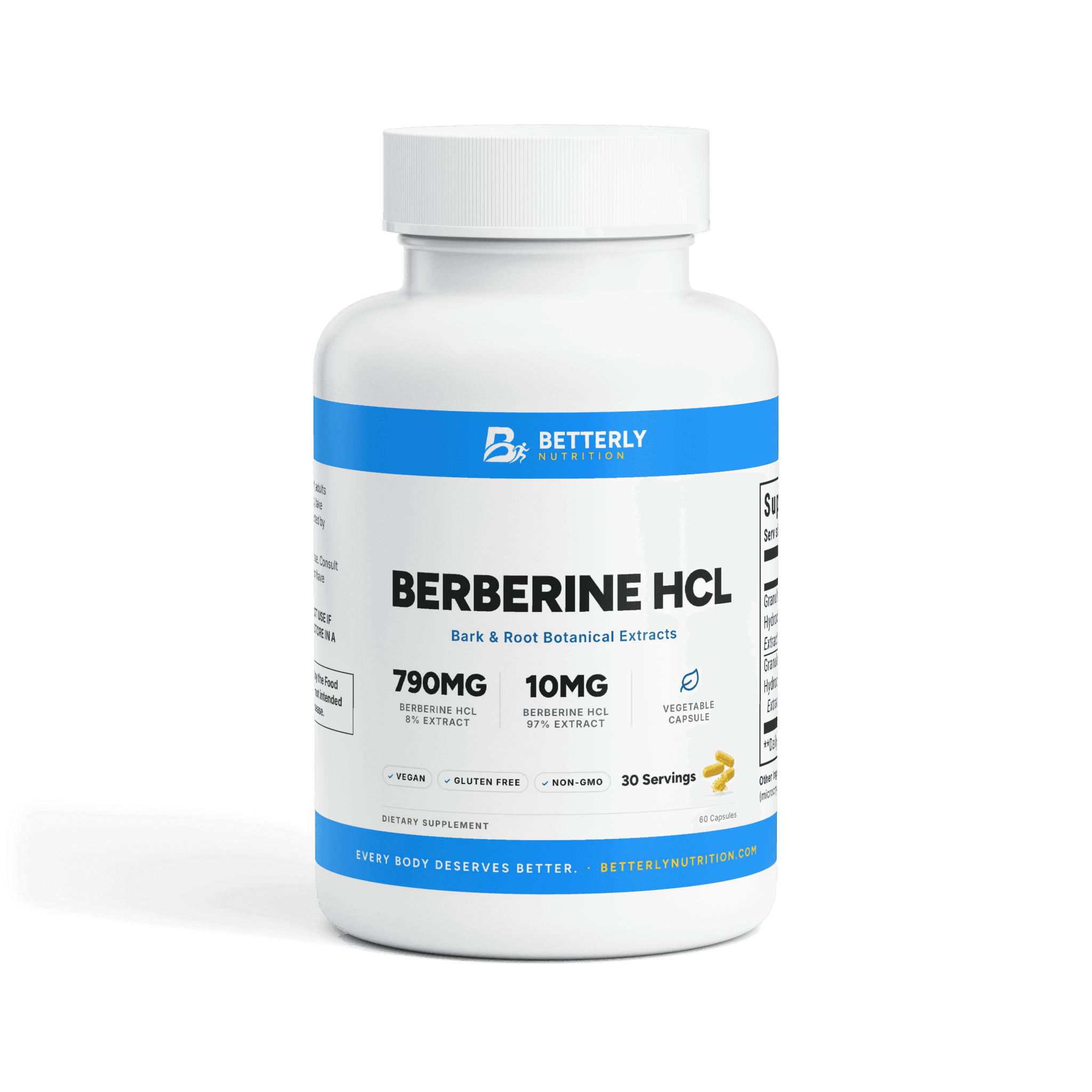
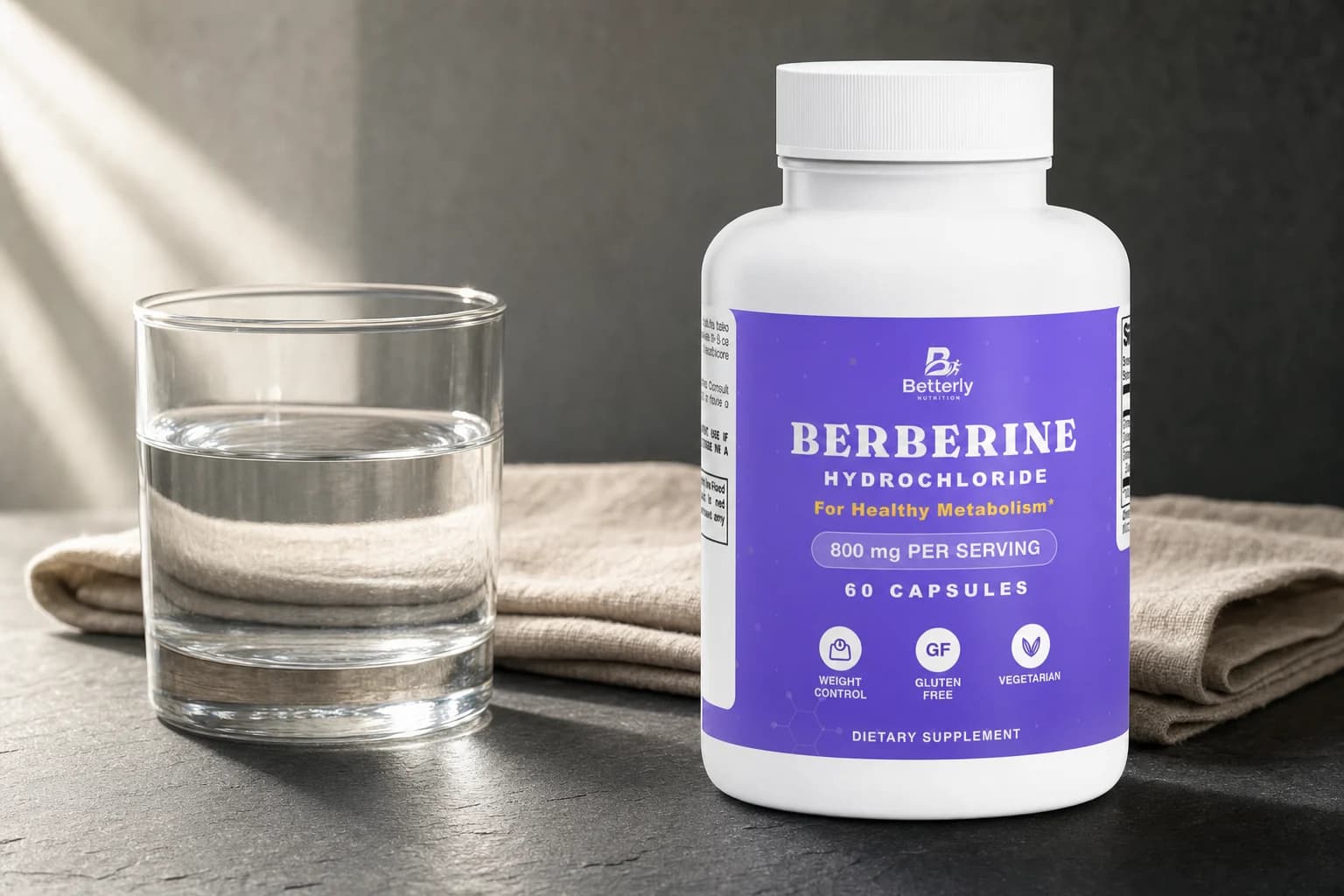
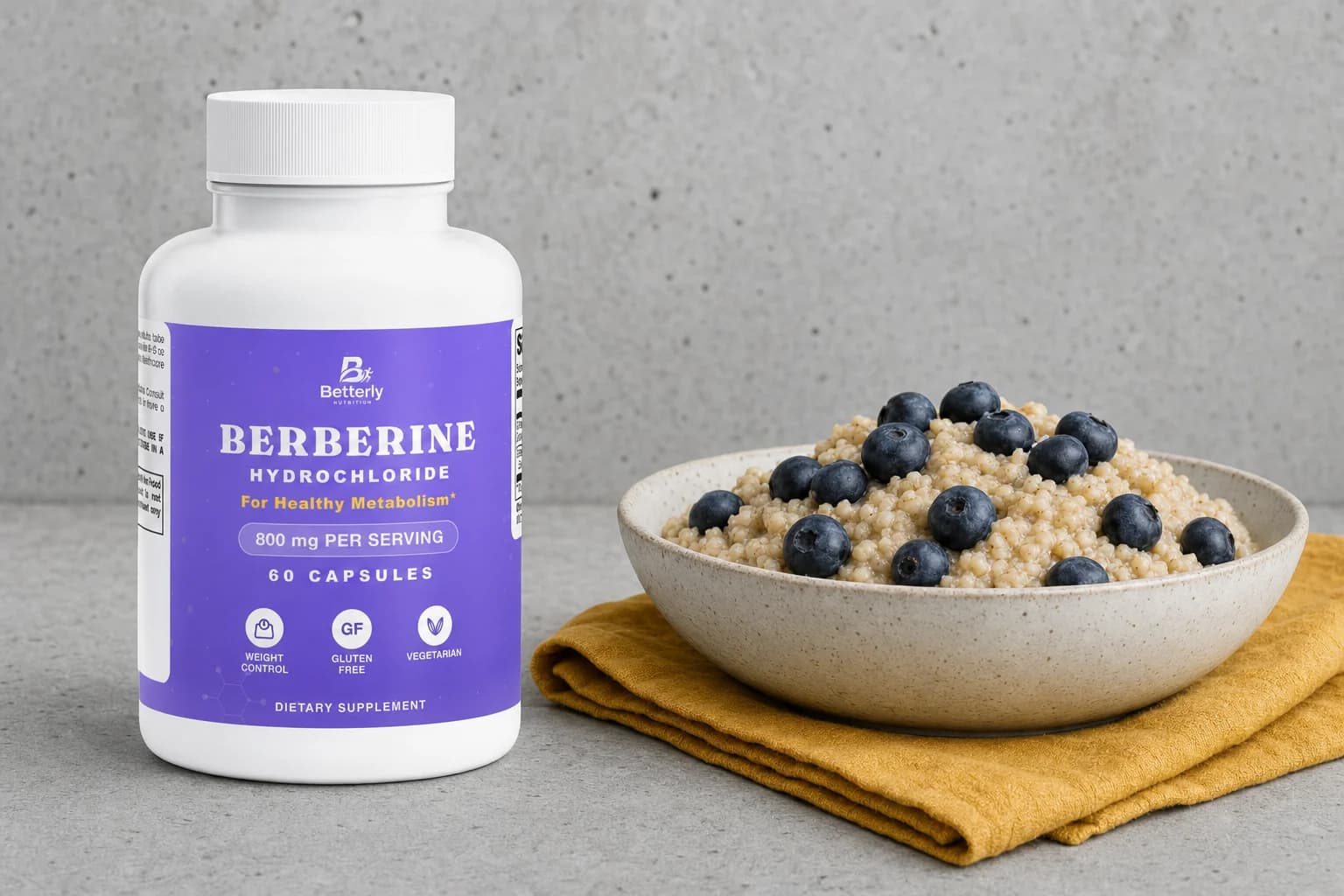
- If metabolism is your focus, berberine is the more-studied ingredient for that lane (see our Berberine HCl Capsules); our berberine guide gives it the same honest tour we've given saffron here.
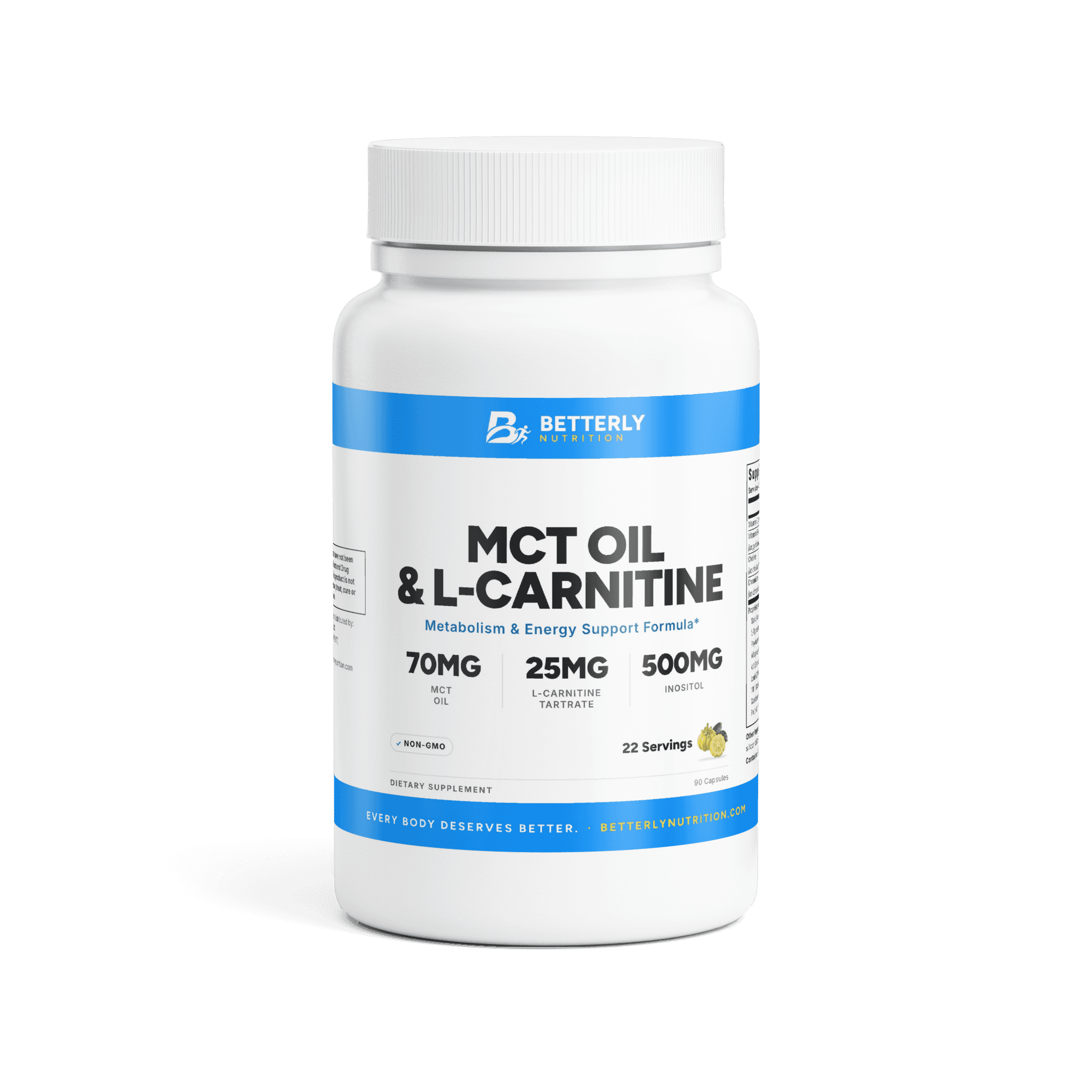
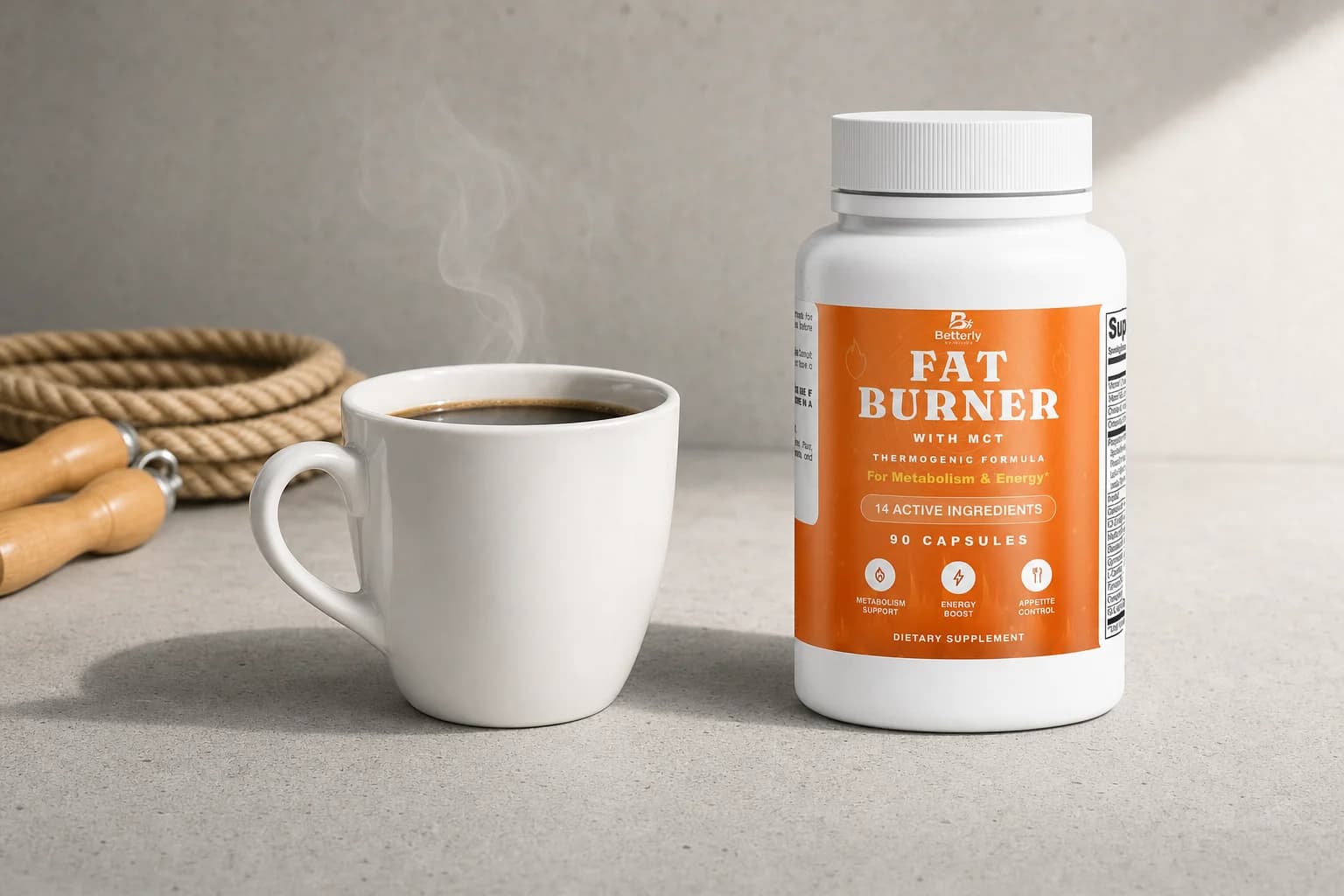
- If you're weighing multi-ingredient formulas like our MCT Oil & L-Carnitine Capsules, read our label read of L-carnitine and MCT oil together first; it walks through that panel line by line.
You can compare everything in one place in the Weight Support collection. No single ingredient does the whole job; the wins come from stacking small, honest advantages.
FAQ: saffron extract
How long were the saffron studies?
The saffron trials described in this guide ran four to eight weeks of daily use, and the 2010 snacking study ran eight weeks. Those are study lengths, not a promise of when anyone will notice a change. Follow your product's label, and check in with your healthcare provider if you have questions about how long to use a saffron supplement.
Should I take saffron in the morning or at night?
Saffron research doesn't point to a best time of day. In the 2010 snacking study, participants took one capsule twice a day, and the mood trials used a steady daily dose. For our Saffron & Chromium Appetite Strips, the label's suggested use is 1 oral strip on the tongue daily with no set time, so anchor it to an existing habit and keep it steady.
Is saffron extract the same as the saffron in my spice rack?
Same plant, different preparation. An extract concentrates and standardizes the active compounds so every serving is consistent — something a pinch of cooking threads can't offer, since potency varies by harvest, age, and storage. If you want what the studies looked at, choose a standardized extract with a stated milligram amount per serving.
Can I take saffron extract every day?
Daily use is how the saffron trials in this guide were run: 28 to 30 mg of extract per day in the mood trials and 176.5 mg in the snacking study, for four to eight weeks. Follow your product's label, and loop in your provider first if you're pregnant, nursing, or taking medication.
Can saffron support healthy weight management?
Saffron may support healthy weight management alongside diet and exercise, but it isn't a shortcut. The saffron research most relevant to everyday eating looked at snacking frequency and a sense of fullness. Think of any saffron supplement as one small part of a routine built on balanced meals and regular activity, never as a replacement for those habits.
What's the difference between crocin and safranal?
Crocin is the carotenoid behind saffron's deep red color; safranal is the compound behind its aroma. Both serve as quality markers — a standardized level of either on the label is a good sign you're getting real saffron. Crocin is the compound researchers most often measure when they standardize an extract.
Sources
- Chromium - Consumer Fact Sheet, NIH Office of Dietary Supplements
If this left you looking for somewhere to start, read saffron and chromium appetite support strips — its amounts per serving are listed on the page. For the practical questions this raises, how dosing, sourcing and subscriptions work is answered in one place.