On this page
- Key takeaways
- When should you take tongkat ali?
- Is it better to take tongkat ali in the morning or at night?
- Should you take tongkat ali with food or on an empty stomach?
- How much tongkat ali per day is typical?
- Do you need to cycle tongkat ali?
- How do you count tongkat ali across two products?
- How should you take tongkat ali capsules each day?
- When is tongkat ali not worth adding?
- Who should check with a healthcare provider before taking tongkat ali?
- FAQ: when to take tongkat ali
- Sources
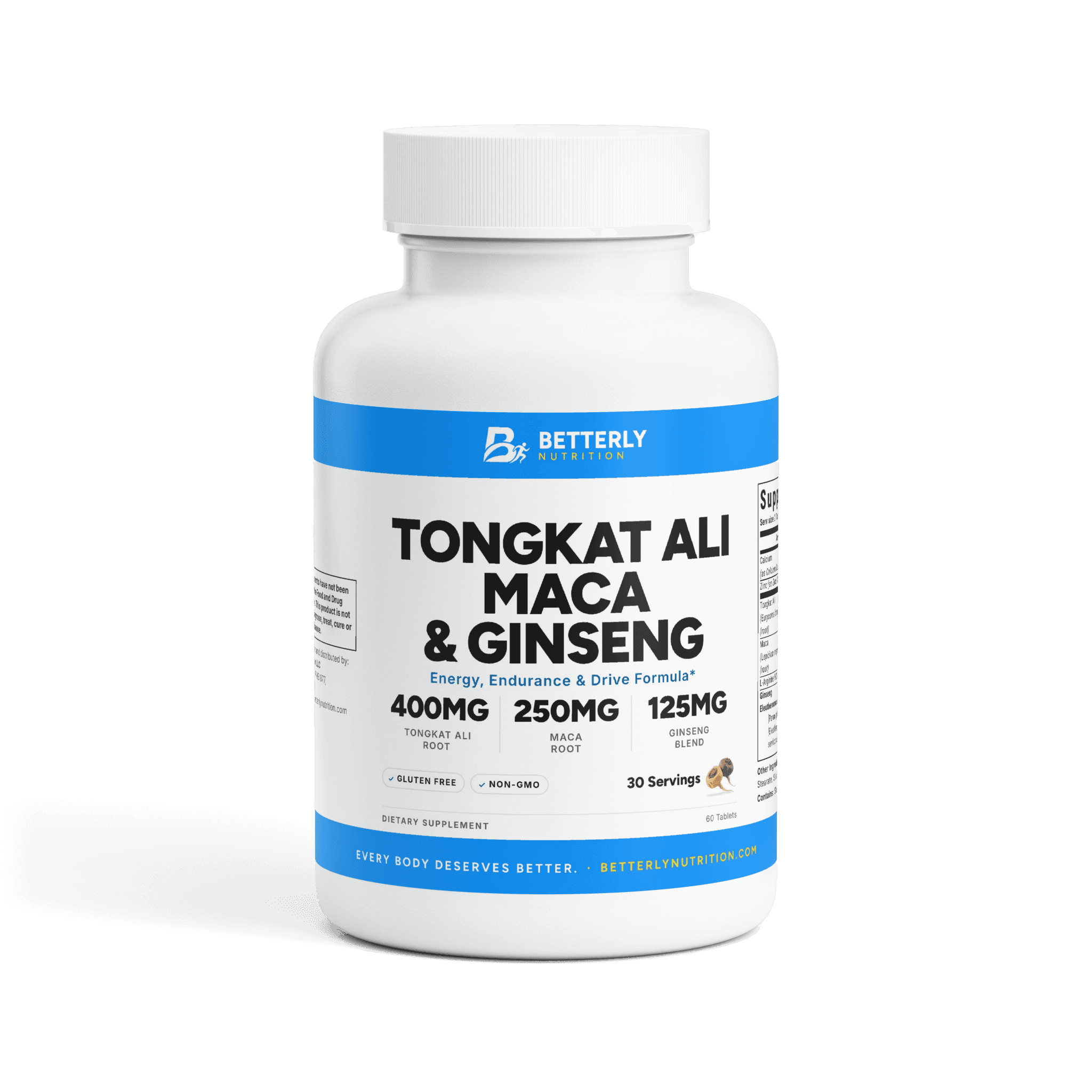
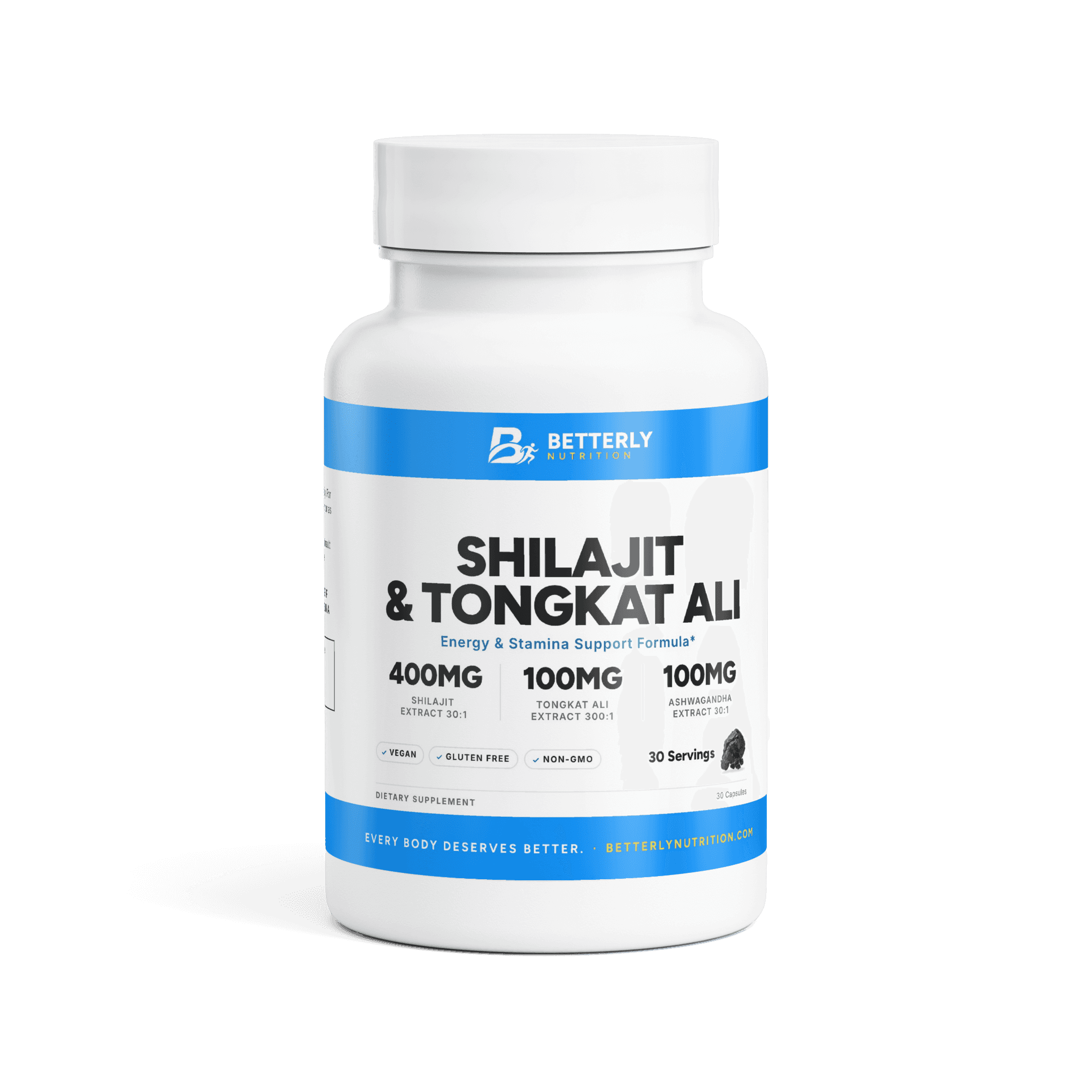
The short answer: Our two tongkat-led labels call for one serving a day, so when to take tongkat ali is whichever hour you'll repeat. Shilajit & Tongkat Ali Capsules direct one capsule daily with water (100 mg of a 300:1 extract). Tongkat Ali, Maca & Ginseng Capsules direct two tablets once a day (400 mg of root), but each serving adds 50 mg of zinc against a 40 mg adult upper limit, so we don't recommend it without a provider's review.
Key takeaways
- The two Betterly products named for tongkat ali set a daily count, not a clock time.
- NIH's LiverTox database gives 100 to 400 mg a day as the typical amount of tongkat ali in traditional use.
- No federal source we checked lays out a cycling schedule for tongkat ali, so on-and-off plans shared online are habits, not guidance.
- A 400 mg root serving and a 100 mg extract serving can't be added up as "500 mg of tongkat."
- The Tongkat Ali, Maca & Ginseng Capsules serving carries 50 mg of zinc, 10 mg past the adult upper limit of 40 mg, so that tablet needs a provider's okay before you take it as labeled.
A word on bias: we sell every product quoted here, so each product amount below comes straight off our printed Supplement Facts panels. Where a label or a federal source says nothing, we leave the gap showing.
When should you take tongkat ali?
Take tongkat ali once a day at a time you can repeat, because the two products named for it give a daily count and no set hour.
The tablet blend says: "Take two (2) tablets once a day." The shilajit capsule says: "Adults take one (1) capsule daily," with 6-8 oz (177-237ml) of water for best results.
NIH's LiverTox entry on tongkat ali covers typical amounts and safety but doesn't point to a time of day either.
Tongkat ali is Eurycoma longifolia, a Southeast Asian tree, and every Betterly label that lists it uses the root. LiverTox lists Long Jack among its other names, so panels may say longjack instead.
Is it better to take tongkat ali in the morning or at night?
Either slot fits our two tongkat-led labels: no federal source we found ties the herb to morning or night, and the formula matters more than the clock.
Here's what the four Betterly labels that list tongkat ali say:
| Betterly label | Tongkat ali row, per serving | Timing words on the label |
|---|---|---|
| Tongkat Ali, Maca & Ginseng Capsules | 400 mg root (2 tablets) | "once a day" |
| Shilajit & Tongkat Ali Capsules | 100 mg root extract 300:1 (1 capsule) | "daily," with water |
| Tribulus, Zinc & Magnesium Capsules | 50 mg longjack root (3 capsules) | "before bedtime" |
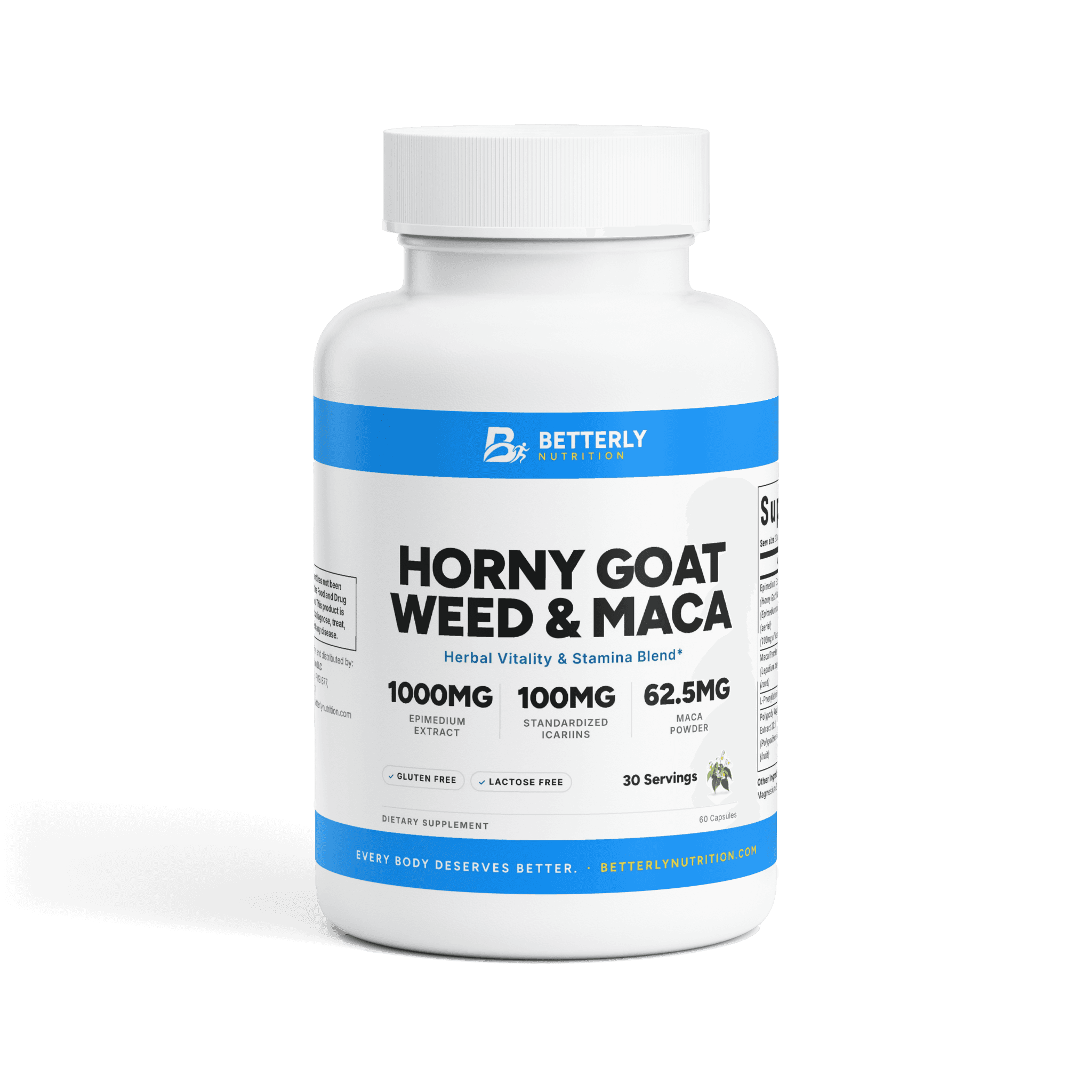
| Horny Goat Weed & Maca Capsules | 1 mg longjack extract 100:1 (2 capsules) | "once a day" |
Only one names a time, and there tongkat ali is a 50 mg line beside 750 mg of tribulus fruit, so that bedtime instruction belongs to the whole formula.
Neither of our two tongkat-led panels lists caffeine, but if your sleep seems off after an evening serving, mornings are an easy switch the labels allow. A forgotten serving does nothing at any hour, so hook it onto a routine you never skip.
Should you take tongkat ali with food or on an empty stomach?
Neither tongkat-led Betterly label mentions food, but the tablet blend's panel gives a reason to pair it with a meal: its calcium comes as calcium carbonate.
Each 2-tablet serving lists 367 mg of calcium as calcium carbonate (28% DV). According to the NIH Office of Dietary Supplements (ODS) calcium fact sheet, that carbonate form is absorbed best with food. That's about the calcium, not the tongkat ali, but it makes a meal the natural anchor once a provider signs off.
The shilajit capsule asks only for 6-8 oz (177-237 ml) of water, and its panel has no mineral rows. With breakfast or without, you're following the label.
We found no federal source on tongkat ali itself and an empty stomach. LiverTox lists nausea and abdominal discomfort among its uncommon side effects, so if a serving unsettles your stomach, tell your provider. Our guide to tongkat ali side effects covers the rest.
How much tongkat ali per day is typical?
LiverTox puts the typical daily amount of tongkat ali in traditional medicine at 100 to 400 mg, and on paper our two tongkat-led labels sit at either end.
LiverTox adds that some capsules sold online carry 1,000 to 1,600 mg, and that the effects of higher doses and long-term use haven't been assessed in humans. There's no federal Recommended Dietary Allowance for tongkat ali, and we found no NIH upper limit.
Why "on paper"? LiverTox doesn't say whether that range means raw root or extract, and we sell one of each. The tablet's 400 mg is plain root, with no ratio printed. The capsule's 100 mg is a root extract labeled 300:1, a maker's concentration figure. LiverTox also notes that tongkat extracts aren't standardized for purity or concentration, so the ratio doesn't convert into a root amount you could trust.
That leaves one honest answer to "how much per day": the amount on your label, and never more. Both cautions open with "Do not exceed recommended dose."
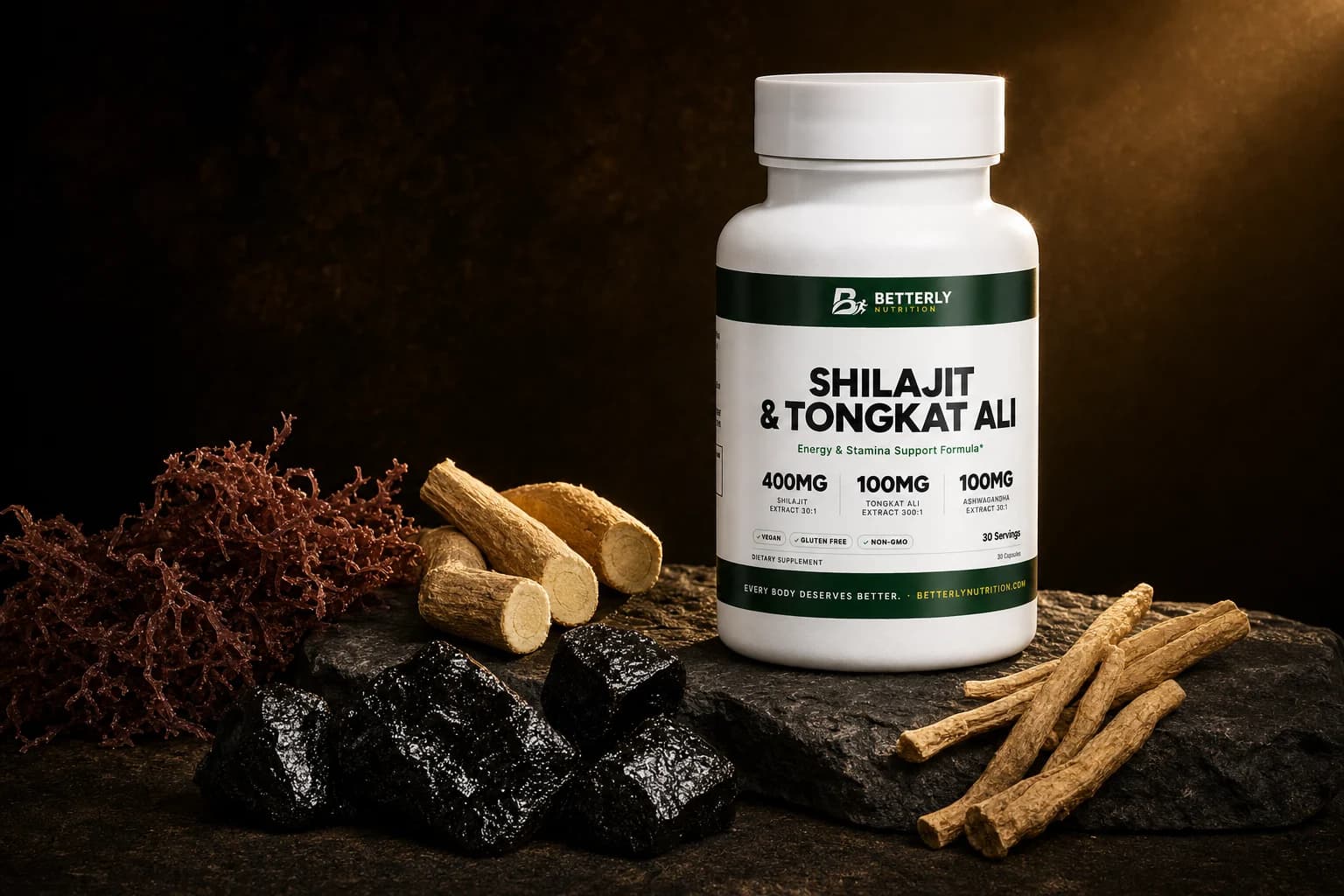
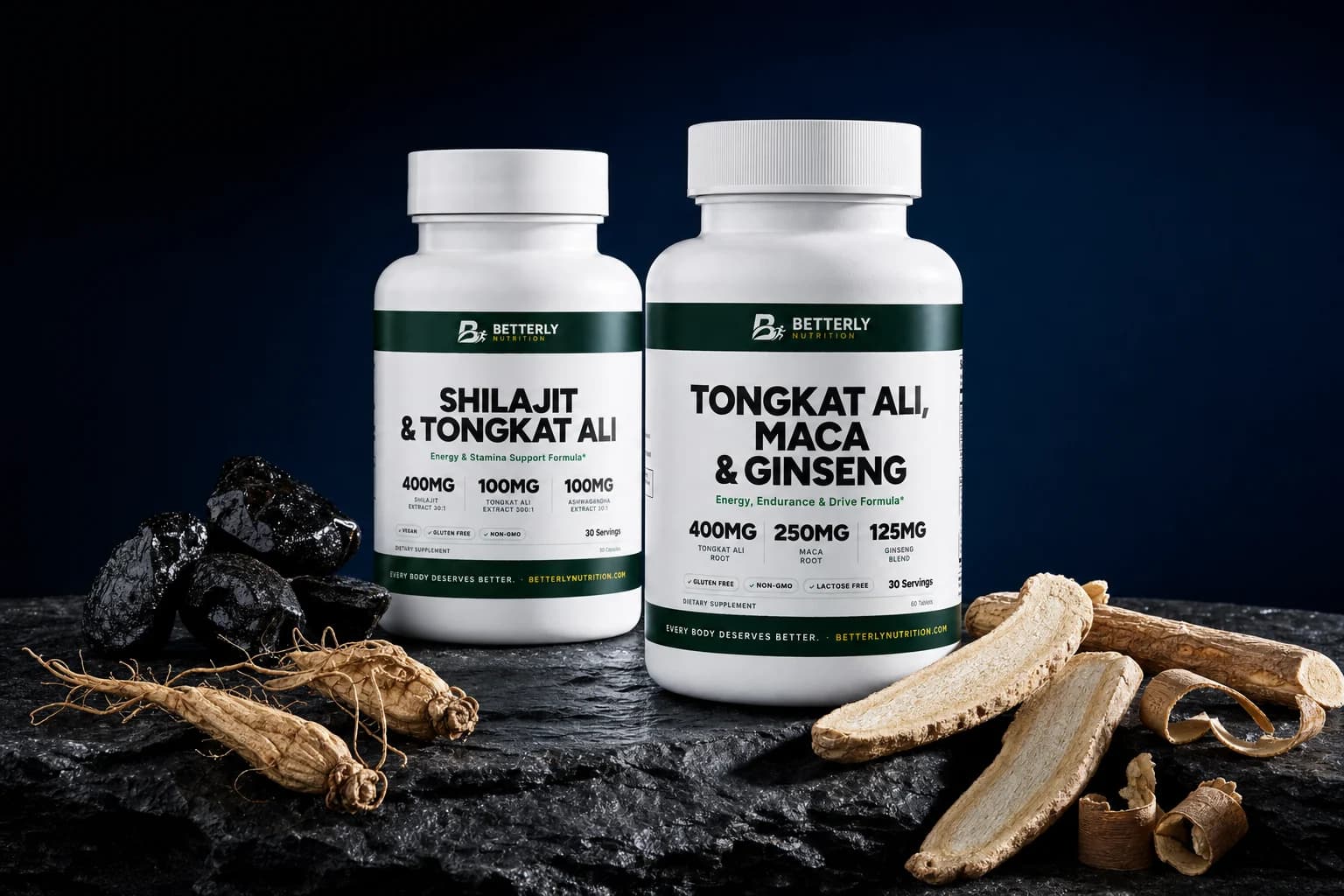
From our shop: Shilajit & Tongkat Ali Capsules — taken once a day with a glass of water, each capsule pairs 100 mg of 300:1 tongkat ali root extract with 400 mg of shilajit extract plus 100 mg of ashwagandha root extract.
Do you need to cycle tongkat ali?
No federal source we found sets a cycling schedule for tongkat ali, and no Betterly label mentions breaks, so cycling is a shared habit rather than guidance.
Cycling means taking a supplement for a stretch, then pausing on purpose. Online you'll see plans like five days on and two off, or several weeks on and one off. That doesn't make a break a bad idea. It means nobody can tell you the right length.
The tongkat ali trials summarized in LiverTox gave a set daily amount for a fixed period, and none was designed around planned breaks. LiverTox also says tongkat ali's long-term safety in people is poorly documented.
So a planned check-in makes more sense than a borrowed cycle. The ODS guide Dietary Supplements: What You Need to Know counts the length of use among the things to agree on with your provider before you start. Each of our bottles holds 30 servings, so finishing one is a natural point to decide whether to continue, pause or stop.
How do you count tongkat ali across two products?
Count tongkat ali row by row, because 400 mg of plain root and 100 mg of a 300:1 extract measure different things and can't be added into one total.
One row weighs plain root. The other weighs an extract, and as explained above, its 300:1 ratio can't be turned into a root figure you could trust. Instead, list every tongkat line in your day, under all its names. That list matters because, per ODS, you're most likely to run into side effects at high doses or when you take many different supplements.
| If your day includes | Tongkat ali lines | Zinc on those labels | Our read |
|---|---|---|---|
| Shilajit & Tongkat Ali Capsules only | 100 mg extract 300:1 | None listed | Within the label |
| Tongkat Ali, Maca & Ginseng Capsules only | 400 mg root | 50 mg | Over the zinc limit; provider first |
| Both of those | 400 mg root + 100 mg extract | 50 mg | Two tongkat sources; we don't suggest it |
| Tongkat blend + Tribulus, Zinc & Magnesium | 400 mg root + 50 mg longjack | 80 mg | Twice the zinc limit; skip it |
The shilajit capsule alone is the only row inside every limit we can check. Each pairing adds a second tongkat line, and the tablet brings its zinc into all of them.
That zinc column needs a plain statement. The ODS zinc fact sheet for consumers sets the adult ceiling at 40 mg a day with every source counted, meals and medicines included, and one 2-tablet serving of the Tongkat Ali, Maca & Ginseng Capsules brings 50 mg by itself. Our stance: skip this product at the printed serving unless a healthcare provider has checked the zinc and said yes.
ODS links excess zinc to nausea, dizziness, headaches and a queasy stomach, and our explainer on what happens when zinc stacks past the limit runs the numbers.
Some tongkat lines are tiny. The Horny Goat Weed & Maca Capsules list 1 mg of longjack root extract per 2-capsule serving, listed between polypody extract and saw palmetto powder.
The tablet's panel has a separate gap, unrelated to tongkat. Its proprietary blend prints one combined weight, 745 mg, for pumpkin seed extract, sarsaparilla, oat straw and ten other ingredients, without saying how much of each. Our walkthrough on how proprietary blends hide amounts explains that gap, and the shilajit and tongkat ali pairing guide covers that combination.
How should you take tongkat ali capsules each day?
Take tongkat ali capsules as labeled: one Shilajit & Tongkat Ali capsule daily with water. The blend's 2-tablet serving holds 50 mg of zinc, over the 40 mg limit, so ask a provider first.
- Know which one is a tablet. Only the shilajit formula is a true capsule. The blend's Supplement Facts panel counts its serving in tablets: 2 of them.
- Keep the capsule simple. One capsule, once a day, with 6-8 oz of water, at whatever hour suits you.
- See a provider before the first tablet. If they're comfortable with the zinc, the label says two tablets once a day, and a meal suits the calcium carbonate.
- Don't make up a missed serving. Neither label covers a skipped day, so resume at your usual time instead of doubling up.
- Run one tongkat product at a time. Check the pairing table before adding a second bottle.
- Keep a short log. ODS encourages a written list of everything you take, with amounts and reasons.
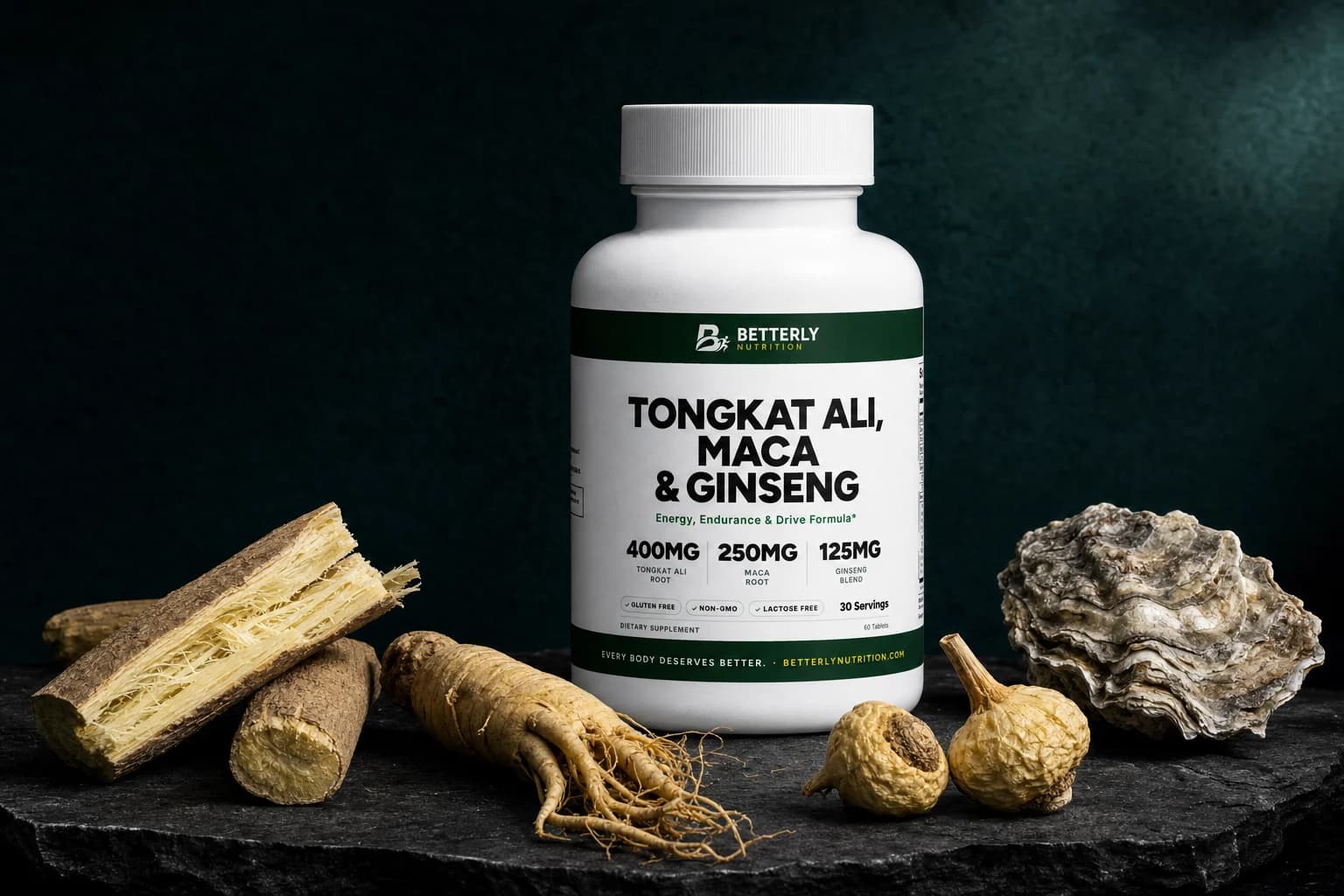
From our shop: Tongkat Ali, Maca & Ginseng Capsules — a 2-tablet serving pairs 400 mg of tongkat ali root with 250 mg of maca, a 125 mg ginseng blend and 50 mg of zinc (above the 40 mg adult upper limit), so your provider should see the label first.
When is tongkat ali not worth adding?
Tongkat ali isn't worth adding if another product already lists it, if you want a single-herb product, or if your zinc intake is already high.
- Something you already take lists tongkat ali or longjack, so a second line would add a source neither label asks for.
- You want tongkat ali on its own. Every Betterly label that lists it is a blend.
- Your zinc intake is already high. ODS says almost all multivitamin-mineral supplements contain zinc, and the tablet blend adds 50 mg on top.
- You're under 18, pregnant or nursing, the three groups both cautions name.
To compare single herbs with blends, browse the full adaptogens shelf.
Who should check with a healthcare provider before taking tongkat ali?
Ask a healthcare provider about tongkat ali first if you're expecting or breastfeeding, under 18, on a prescription, booked for surgery, or looking after an ongoing health condition.
Both tongkat-led labels read: "Consult a physician if pregnant, nursing, under 18, or have a medical condition." The tribulus label is stricter: "Do not use if pregnant or lactating." Our sources add reasons that tie to timing:
- You take an antibiotic. The tablet blend brings 50 mg of zinc per serving (the shilajit capsule lists none), and ODS says quinolone and tetracycline antibiotics and zinc can lower each other's absorption. ODS advises taking the antibiotic at least 2 hours before zinc or 4 to 6 hours after.
- You take a thyroid hormone medicine. ODS warns that levothyroxine absorbs poorly if you take it within 4 hours of calcium carbonate, the calcium form in the tablet blend.
- Your liver health is being monitored. LiverTox grades tongkat ali as possibly, and rarely, linked to liver injury, based on isolated reports muddied by possible undisclosed steroid use.
- You have a shellfish allergy, since the tablet blend lists oyster extract.
- You have surgery coming up. ODS advises telling your provider about every supplement first.
FAQ: when to take tongkat ali
How often should you take tongkat ali?
Once a day is how often both tongkat-led Betterly labels say to take tongkat ali: one capsule daily for the shilajit formula, or two tablets once a day for the blend. One blend serving already brings 50 mg of zinc, over the 40 mg adult upper limit, so check with a provider before taking it at all. Never add a second serving, which would double that zinc to 100 mg. Neither label mentions splitting a serving, so don't split one.
Should you take tongkat ali before or after a workout?
Tongkat ali has no workout timing on our labels, so before, after or nowhere near the gym all follow the directions. LiverTox's review of the research doesn't link tongkat ali to better athletic performance, so there's little reason to plan training around it. A post-workout routine works as a reminder cue as well as breakfast.
Is 1,000 mg of tongkat ali too much?
Yes, 1,000 mg of tongkat ali is well above the 100 to 400 mg a day LiverTox calls typical, and LiverTox says the effects of higher doses haven't been assessed in people. None of our four tongkat-containing labels comes close. The highest, the tablet blend, lists 400 mg of root per 2-tablet serving, and the shilajit capsule lists 100 mg of extract. Keep to your label.
Is the tongkat ali dose different for women?
No, none of the Betterly labels that list tongkat ali sets a separate serving for women; each lists one serving with no split by sex. LiverTox's typical range of 100 to 400 mg isn't divided by sex either, and ODS gives the same 40 mg zinc upper limit for adult women and men. Both cautions also send anyone pregnant or nursing to a physician before the first serving.
How do you take tongkat ali powder?
Tongkat ali powder should follow its own label's directions, since none of Betterly's tongkat-containing products is a powder. LiverTox notes that tongkat ali is also sold as raw powder and in tea or coffee blends, formats where you do the measuring. A tablet or capsule fixes the amount, which makes counting across products easier.
Sources
- Tongkat Ali, LiverTox database, National Library of Medicine, National Institutes of Health
- Zinc: Fact Sheet for Consumers, NIH Office of Dietary Supplements
- Calcium: Fact Sheet for Consumers, NIH Office of Dietary Supplements
- Dietary Supplements: What You Need to Know, NIH Office of Dietary Supplements
If this left you looking for somewhere to start, read tongkat ali root tablets with maca and ginseng — its amounts per serving are listed on the page. For the practical questions this raises, how dosing, sourcing and subscriptions work is answered in one place.