On this page
- Key takeaways
- Glucosamine HCl vs sulfate: what's actually different?
- How much glucosamine is in 200 mg of HCl vs 200 mg of sulfate?
- What is glucosamine sulfate 2KCl, and how much potassium?
- Is glucosamine sulfate better than glucosamine hydrochloride?
- Glucosamine sulfate vs glucosamine chondroitin vs MSM: what differs?
- Which glucosamine suits a shellfish allergy or vegetarian diet?
- How do you take each capsule, according to its label?
- When don't you need either glucosamine form?
- Who should check with a healthcare provider first?
- FAQ: glucosamine HCl and sulfate
- Sources
The short answer: In glucosamine HCl vs sulfate, the glucosamine is the same molecule; only the salt attached to it changes. Hydrochloride pairs it with chloride. Sulfate often arrives bundled with potassium chloride, written "2KCl." That extra salt takes up weight, so 200 mg of HCl holds about 166 mg of glucosamine, while 200 mg of sulfate 2KCl holds about 118 mg. Where the glucosamine came from often matters more than which salt it wears.
Key takeaways
- Glucosamine hydrochloride and glucosamine sulfate both deliver the same glucosamine molecule, just attached to a different salt.
- Gram for gram, glucosamine HCl carries more glucosamine than glucosamine sulfate 2KCl, because sulfate and potassium chloride fill part of the weight.
- The NIH's National Center for Complementary and Integrative Health lists both salts as U.S. dietary supplements and doesn't rank one above the other.
- A salt name never tells you the source, so anyone avoiding shellfish has to read the allergen line and warning on the bottle.
- Anyone on warfarin should clear glucosamine with their prescriber, because NCCIH links it and chondroitin with a higher bleeding risk in people taking that medicine.
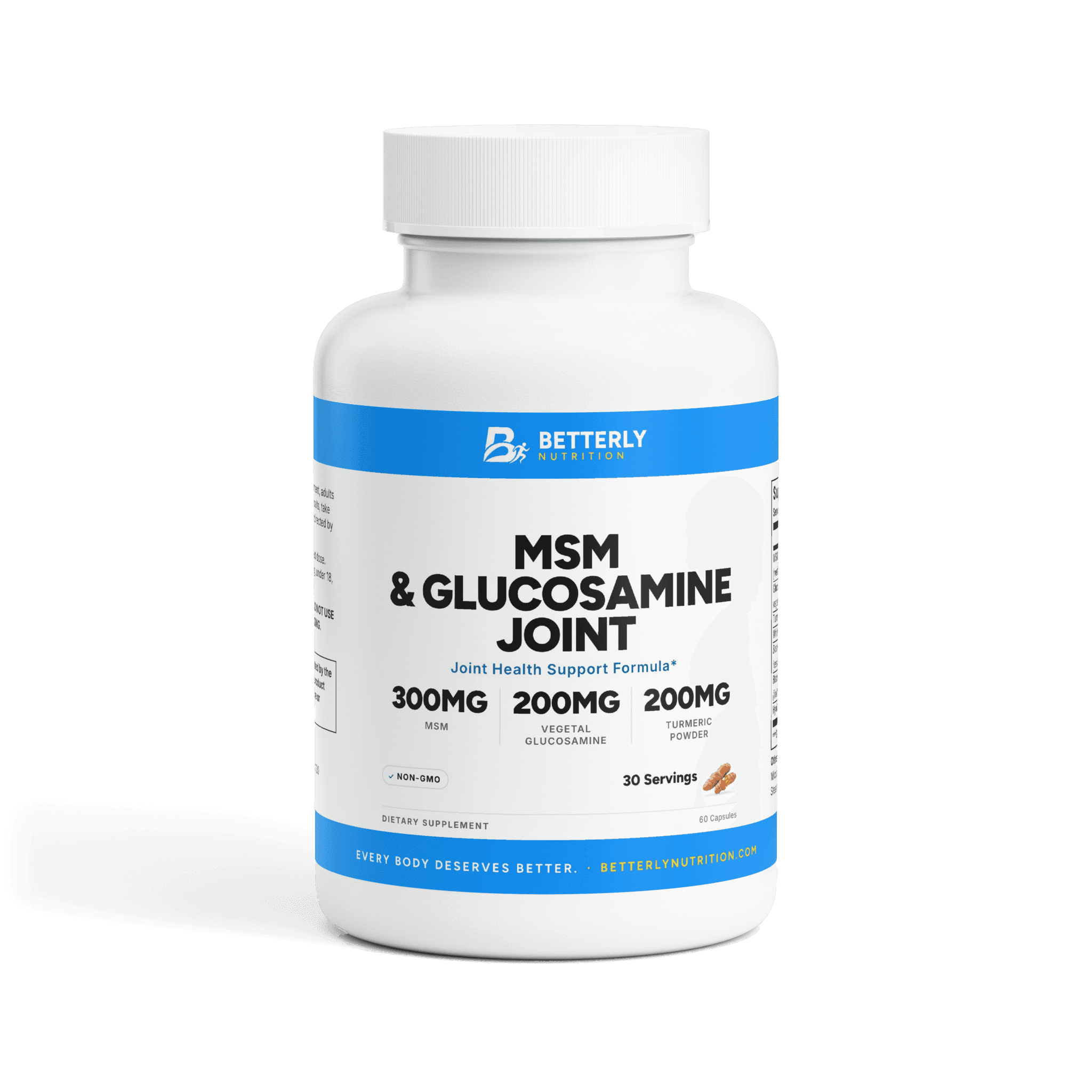
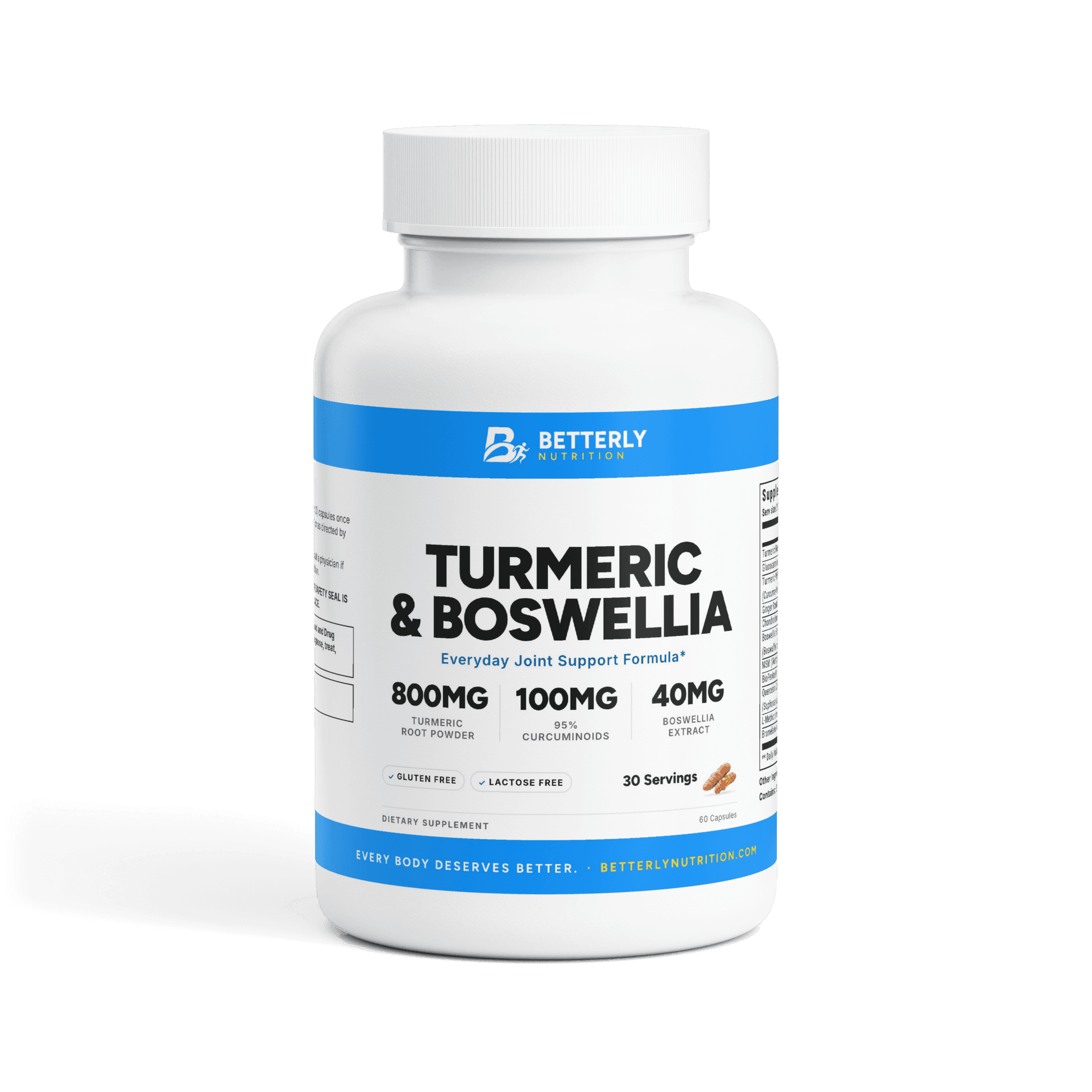
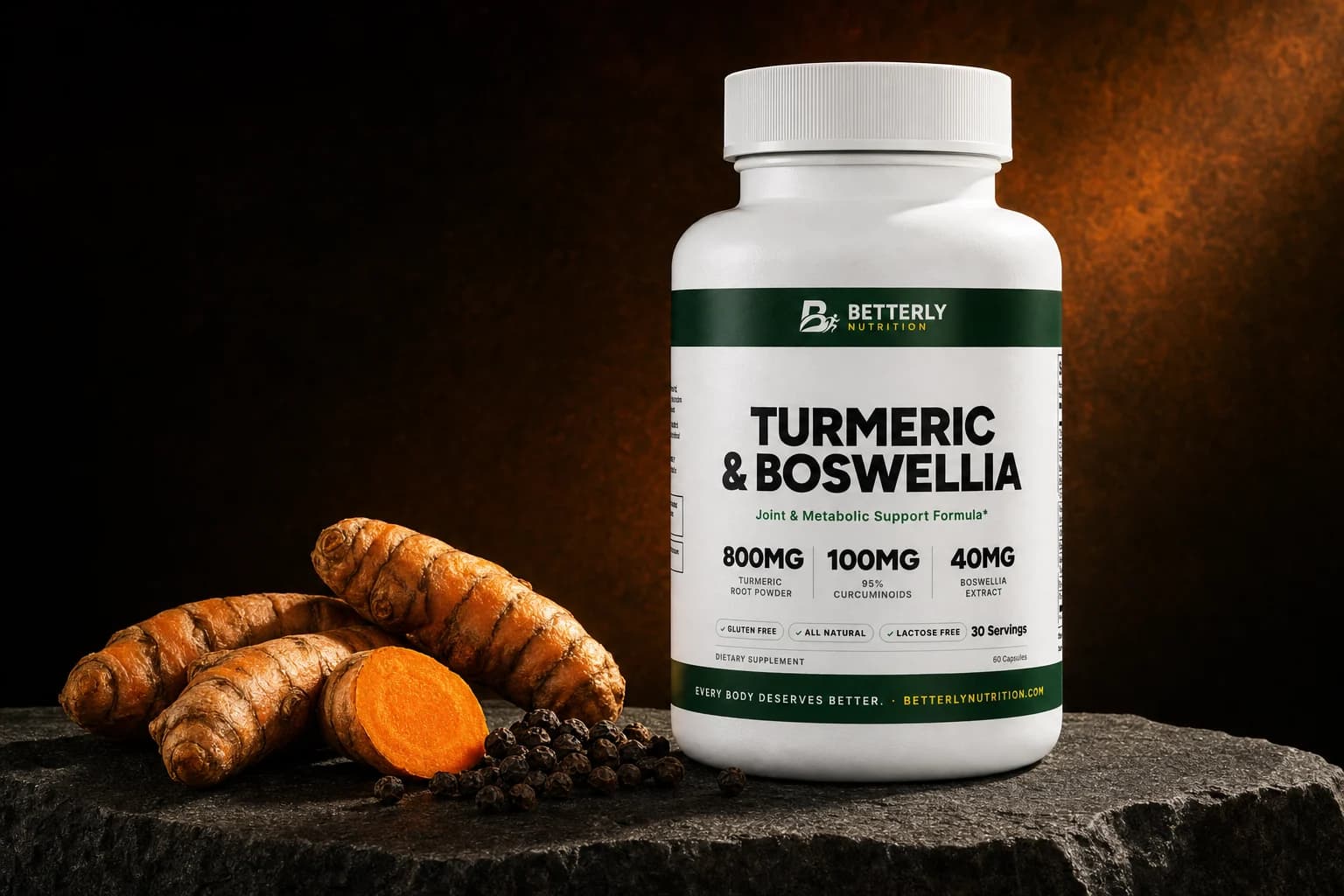
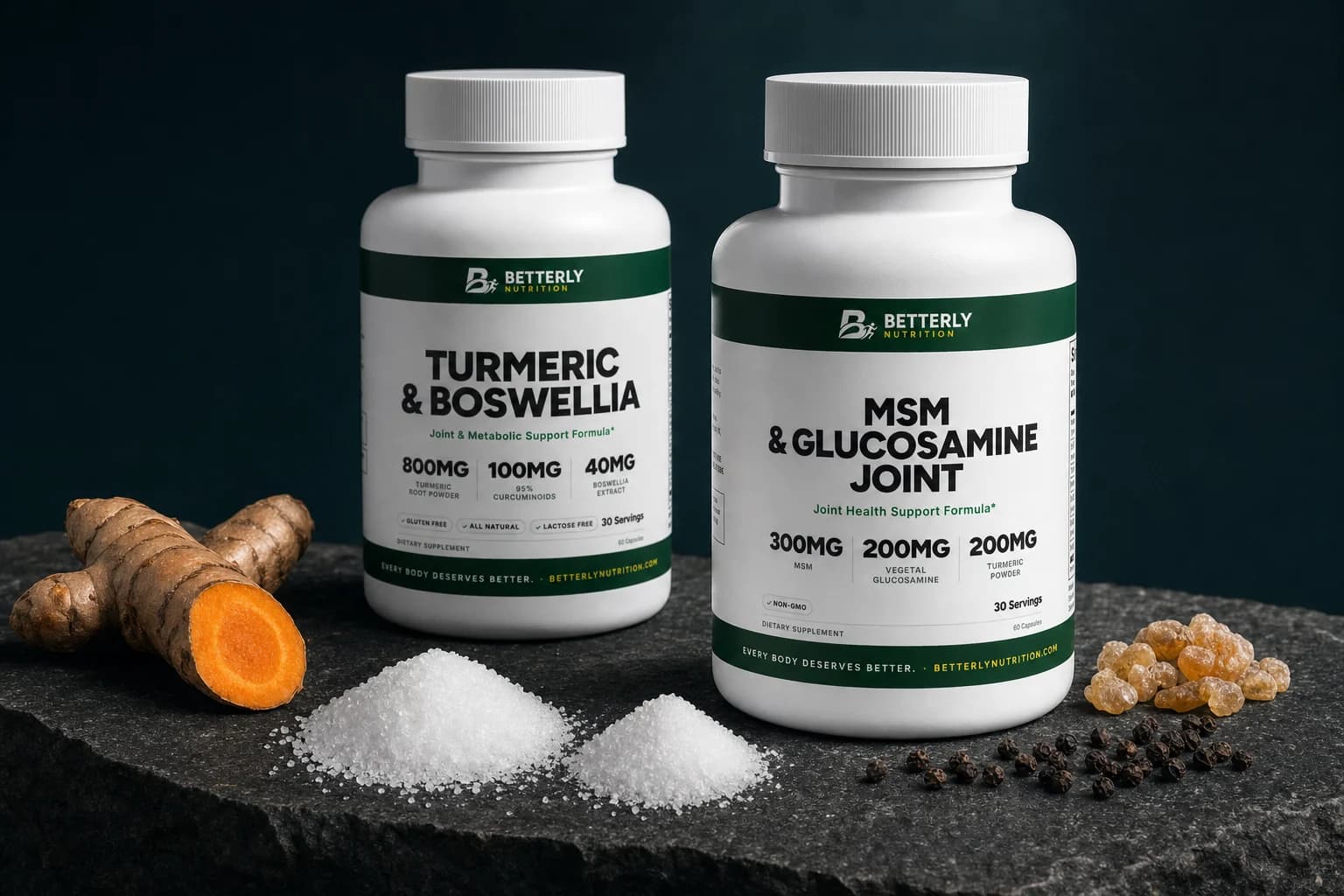
A sale of either capsule pays our bills, and this page puts the HCl one first, so read with that stake in mind. Our MSM & Glucosamine Joint Capsules use glucosamine HCl, and our Turmeric Curcumin & Boswellia Capsules use glucosamine sulfate 2KCl. Both panels appear below with the salt math worked out in the open, and both bottles belong to our Targeted Support collection.
Glucosamine HCl vs sulfate: what's actually different?
Glucosamine HCl and glucosamine sulfate differ only in the salt that carries the glucosamine. Hydrochloride uses chloride, while sulfate uses sulfuric acid, often plus a mineral salt.
Glucosamine itself is an amino sugar. The National Center for Complementary and Integrative Health (NCCIH) describes its job in one line: "Glucosamine is a building block for molecules called glycosaminoglycans that are part of the structure of cartilage."
Supplements sell glucosamine as a salt, a dry powder that weighs neatly into a capsule. NCCIH notes that U.S. dietary supplements use either glucosamine sulfate or glucosamine hydrochloride.
Here's how the two salts compare on our own two bottles:
| Feature | Glucosamine HCl | Glucosamine sulfate 2KCl |
|---|---|---|
| Partner salt | Chloride | Sulfate plus potassium chloride |
| Glucosamine in 200 mg | About 166 mg | About 118 mg |
| Our product | MSM & Glucosamine Joint Capsules | Turmeric Curcumin & Boswellia Capsules |
| Allergen line on our label | None printed | Shellfish (crab, lobster, crawfish) |
Read the table this way: HCl packs more glucosamine into the same label weight, and on our shelf the sulfate bottle is the one with a shellfish line. Neither gap means one salt is "stronger."
How much glucosamine is in 200 mg of HCl vs 200 mg of sulfate?
About 166 mg of glucosamine sits inside 200 mg of glucosamine HCl, and about 118 mg sits inside 200 mg of glucosamine sulfate 2KCl, based on molecular weights.
A Supplement Facts panel lists the weight of the whole salt, not the glucosamine inside it. You can check the math with PubChem, the free chemistry database run by the NIH's National Library of Medicine:
- PubChem lists glucosamine at a molecular weight of 179.17 (grams per mole, the unit chemists use to compare molecules).
- Its glucosamine hydrochloride entry lists 215.63. Glucosamine makes up 179.17 of that, or about 83%. So 200 mg of HCl holds about 166 mg of glucosamine.
- Its glucosamine sulfate potassium chloride entry lists 605.5 for a unit that holds two glucosamines (358.34 together). That's about 59%, so 200 mg of sulfate 2KCl holds about 118 mg.
So the MSM & Glucosamine Joint Capsules deliver roughly 48 mg more glucosamine per 2-capsule serving than the Turmeric Curcumin & Boswellia Capsules, though both panels print 200 mg. These are our estimates from formula weights; neither label states glucosamine content on its own. If you compare brands on price per milligram, convert first.
One limit applies to both our bottles. Glucosamine is one line among seven on the joint capsule and one among eleven on the turmeric capsule, so no single ingredient gets much room. If glucosamine is all you're after, set its mg line beside a single-ingredient label and run the same conversion.
What is glucosamine sulfate 2KCl, and how much potassium?
Glucosamine sulfate 2KCl is glucosamine sulfate sold as one ingredient with potassium chloride. By our estimate, 200 mg of it holds roughly 26 mg of potassium.
KCl is the chemical formula for potassium chloride, a mineral salt, and the "2" means two units of it. Because it's one ingredient, the potassium chloride counts inside the 200 mg on our turmeric capsule's panel.
Here's where the 26 mg comes from. Using the same PubChem weights, potassium chloride makes up about 49 mg of the 200 mg, and potassium is a little over half of that weight.
For scale, the NIH Office of Dietary Supplements' potassium fact sheet lists a daily recommended amount of 3,400 mg for adult men and 2,600 mg for adult women, and names potassium chloride as a common supplement form. Roughly 26 mg is about 1% of the women's figure. Small, but if a provider has asked you to watch potassium, count it.
Is glucosamine sulfate better than glucosamine hydrochloride?
No federal source we checked ranks glucosamine sulfate above glucosamine hydrochloride. NCCIH lists both salts side by side and calls the research on glucosamine inconsistent.
Online, one camp calls sulfate "the studied form" while the other calls HCl purer. NCCIH doesn't referee that argument. Summing up studies in adults with joint concerns, it says results have been inconsistent and expert reviews have reached conflicting conclusions.
NCCIH adds one detail that leans toward sulfate. In some other countries, a prescription crystalline glucosamine sulfate is sold as a drug. A 2014 analysis NCCIH describes found studies of that prescription product generally had more favorable results than other glucosamine studies.
NCCIH offers two possible reasons. The products may truly differ, or the gap may reflect bias, since most prescription-product studies had design weaknesses, were over 20 years old and were funded by the drug's maker. Either way, a U.S. supplement capsule, ours included, isn't that prescription product.
Some brands argue the sulfate part does useful work of its own. We couldn't find a federal source that says so, so we don't lean on it. The glucosamine inside the salt, its source and what else shares the capsule are all readable. The salt name alone tells you far less.
Glucosamine sulfate vs glucosamine chondroitin vs MSM: what differs?
Glucosamine sulfate is a single ingredient. "Glucosamine chondroitin" means a formula pairing glucosamine with chondroitin sulfate, and MSM is a separate sulfur compound that isn't glucosamine at all.
The shared word "sulfate" trips people up. Chondroitin sulfate and glucosamine sulfate are different molecules. NCCIH describes chondroitin as a part of cartilage that helps it resist compression, sold in the U.S. as chondroitin sulfate.
Here's where each shows up on our panels, per 2-capsule serving:
- Turmeric Curcumin & Boswellia Capsules: 200 mg of glucosamine sulfate 2KCl, 50 mg of chondroitin sulfate and 10 mg of MSM.
- MSM & Glucosamine Joint Capsules: 300 mg of MSM and 200 mg of GlucosaGreen® vegetal glucosamine HCl, with no chondroitin. The panel also lists 10 mg of hyaluronic acid.
So only the turmeric capsule has the glucosamine-chondroitin pairing, while the joint capsule carries 30 times more MSM. Our guide to MSM supplements covers that compound.
Collagen is the other name you'll meet in the joint aisle. It's a protein, not an amino sugar, and our collagen types and uses explainer covers how Type II differs from Types I and III.
Which glucosamine suits a shellfish allergy or vegetarian diet?
The salt name can't answer this, because "HCl" and "sulfate" say nothing about where the glucosamine came from. Read the allergen line, the warning and the capsule material instead.
Our two bottles show why. The turmeric capsule's label says it contains shellfish (crab, lobster and crawfish), and it carries this warning: "WARNING: People allergic to shellfish should not consume this product." The joint capsule's panel names its glucosamine as GlucosaGreen® vegetal glucosamine HCl, and it prints no shellfish Contains line.
Capsule shells count too. The joint capsule uses gelatin, and the turmeric capsule's vegetable shell (hypromellose) holds a fill that contains shellfish. So neither fits a vegetarian or vegan diet.
| If you... | MSM & Glucosamine Joint (HCl) | Turmeric & Boswellia (sulfate) |
|---|---|---|
| Are allergic to shellfish | No shellfish line; review the label with your allergist | Skip it: the label warns against it |
| Eat vegetarian or vegan | Not a fit: gelatin capsule | Not a fit: contains shellfish |
| Avoid gluten | No gluten-free claim printed | Label says gluten free |
| Want chondroitin too | None | 50 mg per serving |
If shellfish is your concern, our sulfate capsule is off the list, and the HCl bottle's label is one to take to your allergist before trying it. If you're vegetarian, neither bottle works, and that's a gap in what we sell. Our guide on whether glucosamine comes from shellfish goes deeper on sourcing.
From our shop: MSM & Glucosamine Joint Capsules — 200 mg of GlucosaGreen® vegetal glucosamine HCl and 300 mg of MSM per 2-capsule serving, with no shellfish Contains line on the label.
How do you take each capsule, according to its label?
Both labels call for 2 capsules a day. The MSM & Glucosamine Joint Capsules add 6-8 oz of water, and the Turmeric Curcumin & Boswellia Capsules say 20-30 minutes before a meal.
The joint capsule's suggested use is two capsules daily, "with 6-8 oz (177-237ml) of water or as directed by healthcare professional." The turmeric capsule's is two capsules once a day, "20-30 min before a meal or as directed by your healthcare professional."
Each label adds, "Do not exceed recommended dose," so skip the urge to double up for a bigger glucosamine number.
What about taking both bottles? Neither label suggests it, and the overlap is bigger than it looks. Both panels list turmeric, boswellia and MSM, and each adds a pepper extract: the joint capsule's 10 mg black pepper extract and the turmeric capsule's 10 mg of BioPerine®, a branded black pepper extract. Repeats like these are easy to miss when you read one bottle at a time, and our guide to keeping a daily supplement routine short makes the case for fewer bottles. If you still want both, clear it with a healthcare provider.
When don't you need either glucosamine form?
You probably don't need a new glucosamine product if you already take one, or if a salt name on a forum is the main reason you're shopping.
Skip it, or at least pause, if any of these fit:
- Your current joint formula already lists glucosamine, so a second one repeats it.
- You'd switch salts only because someone called sulfate the "real" form. NCCIH doesn't back that ranking.
- You avoid both shellfish and gelatin. Neither of our capsules fits, and we'd rather say so now.
- You mostly want turmeric. Our comparison of turmeric root powder and curcumin extract is a better starting point than a glucosamine blend.
From our shop: Turmeric Curcumin & Boswellia Capsules — 200 mg of glucosamine sulfate 2KCl and 50 mg of chondroitin sulfate per 2-capsule serving alongside 800 mg of turmeric root powder, in a hypromellose (vegetable) capsule; the label warns anyone allergic to shellfish not to take it.
Who should check with a healthcare provider first?
Talk to a doctor or pharmacist before either glucosamine form if you take warfarin or other prescription medicine, are pregnant or nursing, are under 18, or manage any medical condition.
Both our labels print most of that list as their caution. NCCIH adds points that apply to glucosamine in general:
- Warfarin. Glucosamine and chondroitin have been associated with a higher risk of bleeding in people taking the anticoagulant warfarin.
- Glucose levels. NCCIH says glucosamine may raise glucose levels in some people, so ask first if you take any medicine that affects yours.
- Pregnancy and breastfeeding. Little is known about glucosamine and chondroitin safety during either.
Three more points, two of them from our own panels. The turmeric capsule's shellfish warning rules it out for anyone allergic. If a provider has asked you to limit potassium, mention the 2KCl form. And if surgery is scheduled, tell your care team everything you take. Our formulas also list botanicals like white willow bark, ginger and bromelain, so bring the whole bottle.
FAQ: glucosamine HCl and sulfate
Is glucosamine HCl the same as glucosamine sulfate?
No, but the glucosamine inside them is identical. Glucosamine HCl and glucosamine sulfate are two salt forms of the same amino sugar, paired with chloride in one and sulfate plus a mineral salt in the other. That changes how much glucosamine a label weight holds: by our math from PubChem's molecular weights, about 166 mg per 200 mg of HCl versus about 118 mg for sulfate 2KCl.
Is glucosamine sulfate 2KCl the same as glucosamine sulfate?
The glucosamine sulfate is the same, but the label weight isn't. "2KCl" means potassium chloride is counted inside the milligrams, so part of a 200 mg line is mineral salt. Some labels print "2NaCl," which swaps in sodium chloride (table salt), and others print plain "glucosamine sulfate" with no salt named. Before comparing brands by milligrams, ask which mineral salt, if any, comes with it.
Can you take glucosamine HCl and sulfate together?
There's little reason to take glucosamine HCl and sulfate together, since both deliver the same glucosamine molecule. Neither of our labels suggests combining them, and our two bottles already repeat turmeric, boswellia, MSM and two pepper extracts. If you're weighing it anyway, bring both labels to a healthcare provider first.
What are the side effects of glucosamine hydrochloride?
NCCIH says large studies of glucosamine and chondroitin haven't identified major safety problems. It flags three cautions that apply to glucosamine in either salt form: glucose levels may rise in some people, bleeding risk is higher for people taking warfarin, and little is known about use during pregnancy or breastfeeding. Anyone taking prescription medicine should check with a provider first.
How long does a bottle of each capsule last?
A bottle of either capsule lasts 30 days at label directions. Each of our two bottles holds 60 capsules, or 30 servings of 2 capsules, and both labels call for 1 serving a day. Neither label caps how many months you can take it, so ask your provider about long-term use.
Sources
- NCCIH fact sheet on glucosamine and chondroitin, National Center for Complementary and Integrative Health
- D-Glucosamine (CID 439213), PubChem, National Library of Medicine
- Glucosamine Hydrochloride (CID 91431), PubChem, National Library of Medicine
- Glucosamine sulfate potassium chloride (CID 76965765), PubChem, National Library of Medicine
- Potassium: Fact Sheet for Consumers, NIH Office of Dietary Supplements
If this left you looking for somewhere to start, read vegetal glucosamine HCl capsules with MSM — its amounts per serving are listed on the page. For the practical questions this raises, how dosing, sourcing and subscriptions work is answered in one place.