On this page
- Key takeaways
- Is glucosamine made from shellfish?
- What is shellfish-free glucosamine made from?
- How does a supplement label show that glucosamine contains shellfish?
- What do our two glucosamine labels show?
- Can you take glucosamine if you're allergic to shellfish?
- Is vegetal glucosamine the same as vegan glucosamine?
- How do you take the vegetal glucosamine capsule, according to its label?
- When don't you need shellfish-free glucosamine?
- Who should check with a healthcare provider first?
- FAQ: glucosamine and shellfish
- Sources
The short answer: Glucosamine made from shellfish is common, but it isn't the only kind sold. The NIH's LiverTox reference says supplement glucosamine is usually made from shellfish exoskeletons or from fermented grain, without saying which route is more common. Your clues are on the label: a source word such as "vegetal" on the glucosamine row, and crab, lobster or shrimp named in a Contains line or in parentheses. Our two joint formulas carry one of each.
Key takeaways
- Supplement glucosamine is usually made from shellfish exoskeletons or from fermented grain, according to the NIH's LiverTox reference.
- FDA allergen rules cover dietary supplements, so a product made with crustacean shellfish has to name the species, such as crab or lobster, in parentheses or in a Contains line.
- "Vegetal" on a glucosamine row describes that one ingredient's source, not the capsule, the other ingredients or the factory.
- "May contain" and shared-facility statements are voluntary, so a label without one hasn't promised you anything.
- If you're allergic to shellfish, take the full label to your allergist before trying any glucosamine, a vegetal one included.
Before we go further: Betterly sells two formulas with glucosamine, and only one of them declares shellfish. Both earn us revenue, so we quote their label lines exactly as printed for you to check. Both sit in our Targeted Support collection.
Is glucosamine made from shellfish?
Supplement glucosamine is often made from shellfish, but not always. The NIH's LiverTox reference says it's usually made from shellfish shells or from fermented grain.
Glucosamine is an amino sugar, a simple sugar with a nitrogen group attached. A 2010 USDA technical report on glucosamine hydrochloride describes it as an essential part of chitin, the tough material in shellfish shells, and notes that shellfish waste is one place it can come from.
The NIH's LiverTox entry on glucosamine puts both routes in one sentence. It says the glucosamine in commercial supplements is "usually prepared from the exoskeletons of shellfish or from fermentation of grain." An exoskeleton is the hard outer shell of a crab or shrimp.
So a shellfish origin is common, not universal. The label, and the brand's answer if you ask, are your clues before you buy.
Don't look to the salt name for help. "Sulfate" and "HCl" (hydrochloride) name a chemical form, not an origin. Our breakdown of glucosamine HCl versus sulfate covers what the salt does change.
What is shellfish-free glucosamine made from?
Shellfish-free glucosamine is usually made by fermentation, which grows a microbe on sugar or grain and then extracts glucosamine from it, rather than breaking down crustacean shells.
The USDA report walks through one commercial example. A mold called Aspergillus niger grows in a fermentation fed with dextrose, a simple sugar. Acid then frees the glucosamine from the mold's biomass, and the result is filtered, crystallized, dried and packed as glucosamine hydrochloride. The report says the finer details are proprietary.
On a label, glucosamine made without shellfish may carry a source word on its row, such as "vegetal" or "vegetarian." That's the maker's description of the raw material, not a certification, and it speaks for that row only.
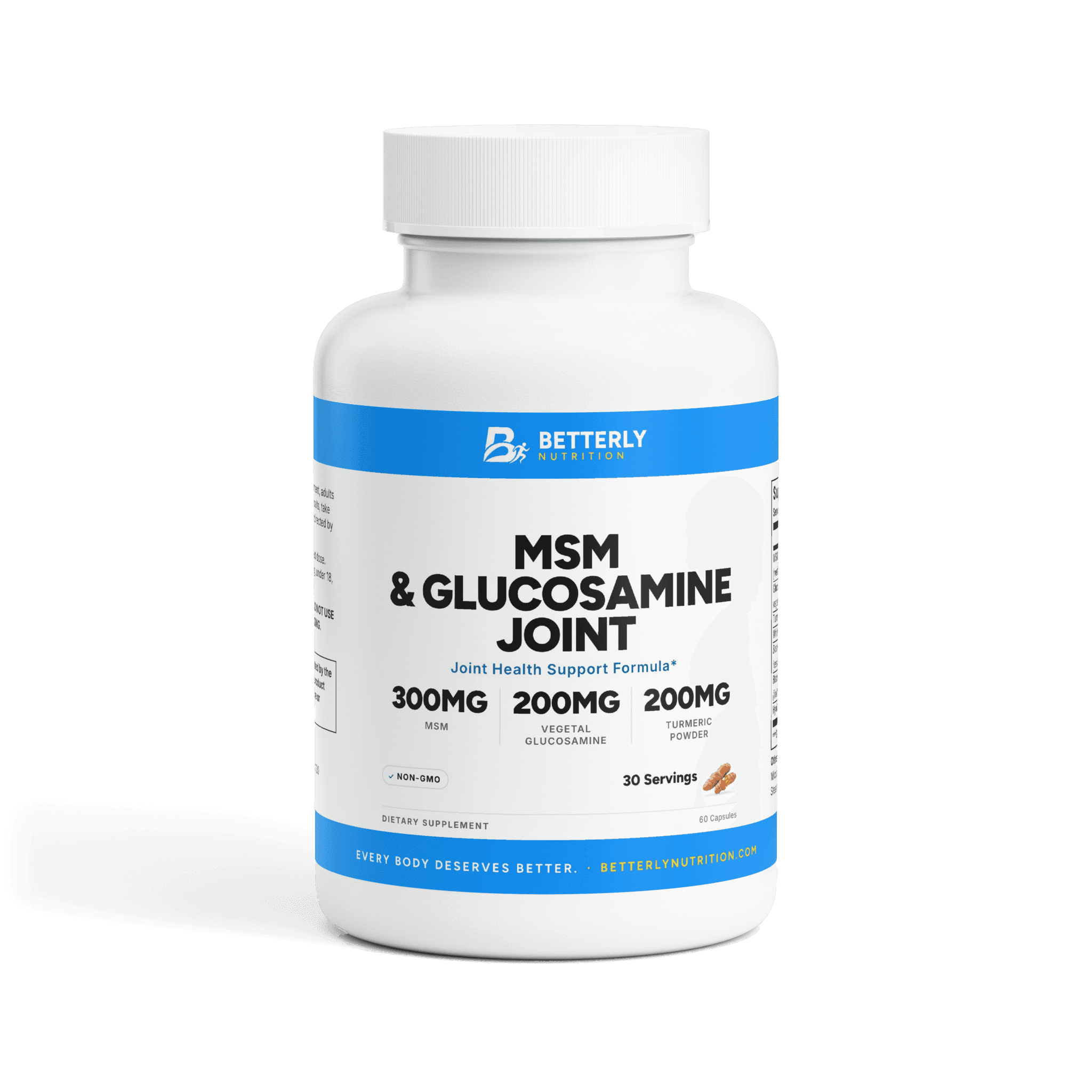
Our MSM & Glucosamine Joint Capsules show it in print. The row reads "GlucosaGreen® vegetal glucosamine HCl," a trademarked ingredient name, and "vegetal" means of plant origin. The panel doesn't name the plant or the process behind it, so this guide can't either.
How does a supplement label show that glucosamine contains shellfish?
A supplement label shows shellfish in a Contains statement or in parentheses after an ingredient, and FDA rules require naming the crustacean, such as crab, lobster or shrimp.
The FDA's page on food allergies lists nine major food allergens, and Crustacean shellfish is one of them. The agency says it enforces these labeling rules for dietary supplements as well, so a glucosamine capsule made from crab shell has to say so.
Two gaps are worth knowing. First, the FDA's list names crustaceans only. Clams, oysters, scallops and other mollusks aren't among the nine, so if your allergist has told you to avoid mollusks as well, a required allergen declaration may not flag them.
Second, "may contain" and "produced in a facility" statements are optional. They address cross-contact, which the FDA describes as a major allergen getting into a product unintentionally, and the agency says "such statements are not required by law." Here's how to read the wording you'll meet:
| Label wording | What it tells you | What to do next |
|---|---|---|
| Contains: Shellfish (Crab, Lobster...) | A crustacean is in the product, by species | Skip it if you're allergic |
| "(shrimp)" or "(crab)" after an ingredient | That row carries the allergen | Skip it if you're allergic |
| A shellfish WARNING line | The maker says allergic people shouldn't take it | Treat it as a clear no |
| "Vegetal" on the glucosamine row | That row has a non-animal source | Check the capsule and other rows |
| No Contains line | No allergen declared there | Scan each row for (shrimp) or similar |
| "May contain" or "made in a facility" | The maker flagged possible cross-contact | Show it to your allergist |
| "Sulfate" or "HCl" alone | The salt form | Ask the brand about the source |
The law requires the allergen to be named, either in parentheses after the ingredient or in a Contains line. Warnings, source words and facility statements are the maker's extras, so read them as useful, not as guarantees.
What do our two glucosamine labels show?
Our two glucosamine labels split cleanly: the Turmeric Curcumin & Boswellia Capsules declare crab, lobster and crawfish, while the MSM & Glucosamine Joint Capsules declare no allergen.
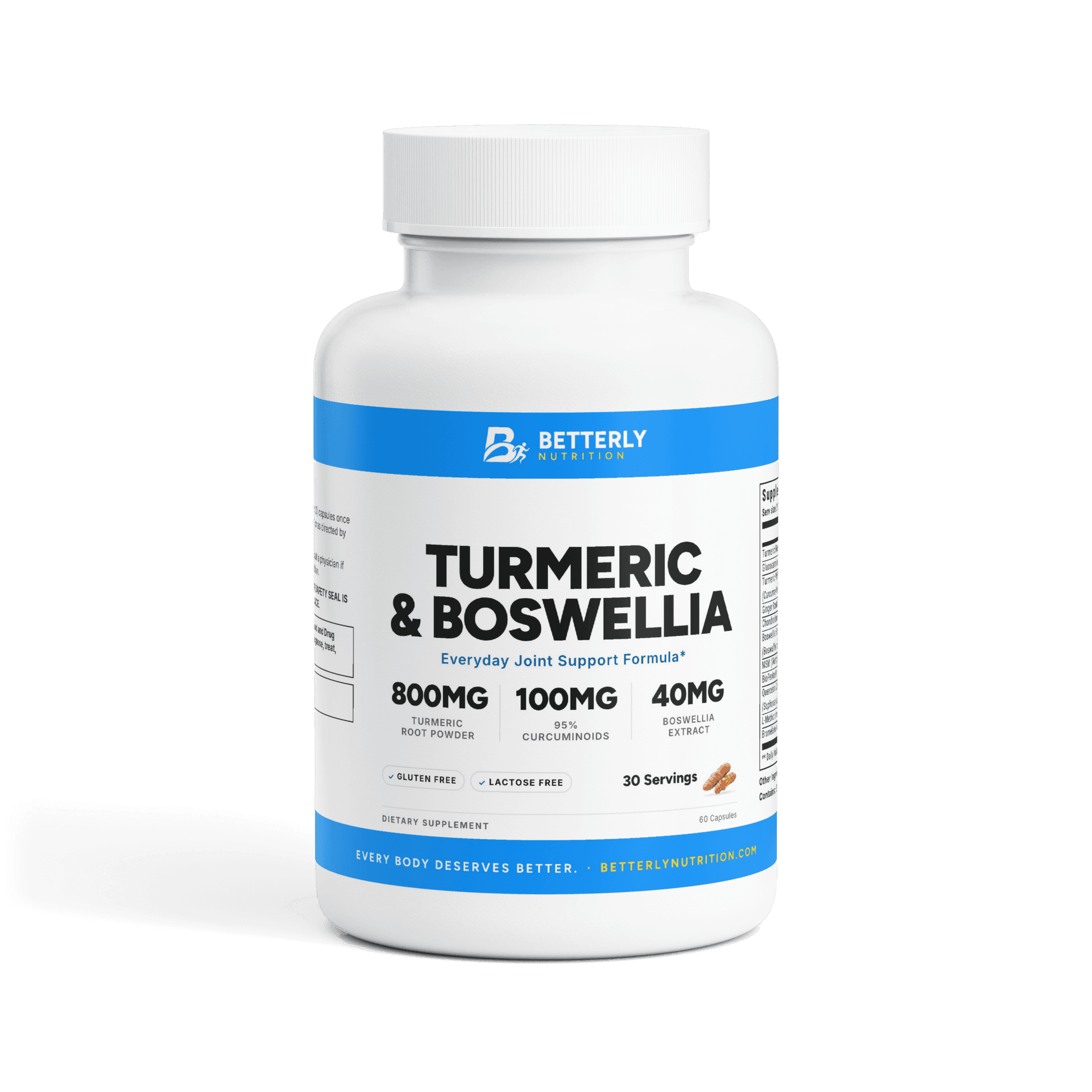
Start with the turmeric bottle. Its front lists turmeric, curcuminoid and boswellia amounts, and neither glucosamine nor shellfish appears there.
The side panel tells the rest. Each 2-capsule serving lists 200 mg of glucosamine sulfate 2KCl and 50 mg of chondroitin sulfate, and neither row names a source. Below the ingredients, the label reads "Contains: Shellfish (Crab, Lobster and Crawfish)." A separate line adds, "WARNING: People allergic to shellfish should not consume this product."
Notice where the word "vegetable" turns up on this bottle: in "Hypromellose (vegetable capsule)" under Other Ingredients. A plant word covers only the line it sits on, and here that line is the shell.
The joint bottle reads in reverse. Its front shows "200MG vegetal glucosamine" with a non-GMO badge. On the panel, each 2-capsule serving lists 200 mg of GlucosaGreen® vegetal glucosamine HCl, with no Contains line, no allergen in parentheses and no shellfish warning.
That label has gaps too. Its only printed claim is non-GMO, and it never says "shellfish-free" or describes the facility, so we don't claim either. The capsule is gelatin, and the 10 mg of hyaluronic acid on the panel doesn't list a source.
Can you take glucosamine if you're allergic to shellfish?
If you're allergic to shellfish, skip any glucosamine whose label declares shellfish, and have your allergist review a vegetal glucosamine label before you try it.
The FDA describes a food allergy as the immune system reacting to certain proteins in a food. You'll read online that shell-derived glucosamine is refined so heavily that little shellfish protein survives. No federal page we read settles that for supplements, so when a label declares shellfish and warns allergic people away, follow the label.
A vegetal source changes the starting material, not the factory it runs through, so the final call belongs to someone who knows your allergy history.
Before your first capsule, run this five-step check:
- Find the glucosamine row and look for a source word. "Vegetal" or "vegetarian" is a good sign, while no word means no answer yet.
- Read the Contains line under the ingredients, then scan every row for an allergen in parentheses, such as "(shrimp)." Crab, lobster, shrimp or crawfish in either spot rules that bottle out.
- Scan the whole label for a separate WARNING line, which can sit apart from the facts panel.
- Read a missing "may contain" line as silence, not a promise.
- Send the brand the questions below, then take their answers and the label to your allergist.
Questions to send the brand (ask for the reply in writing):
- What is the source of your glucosamine: shellfish, fermentation or something else?
- Does any other ingredient come from shellfish or other seafood?
- Are crustaceans or mollusks handled on the same lines or in the same facility?
- Is the glucosamine source the same for every batch?
Is vegetal glucosamine the same as vegan glucosamine?
Vegetal glucosamine isn't automatically vegan, because "vegetal" describes only the glucosamine, while a vegan product depends on its capsule shell and every other ingredient too.
Our joint capsule shows why: vegetal glucosamine, but "Gelatin (capsule)" under Other Ingredients and no vegan or vegetarian claim.
Our turmeric capsule can't fill that gap either, because its label declares shellfish. So right now we don't sell a glucosamine product for a vegan or vegetarian shopper.
If vegan is your goal, look for three things: a "vegan" claim printed by the maker, a plant capsule such as hypromellose or pullulan, and a stated source for any row that could come from an animal.
From our shop: MSM & Glucosamine Joint Capsules — each 2-capsule serving lists 200 mg of GlucosaGreen® vegetal glucosamine HCl, the label prints no Contains line, and the capsule is gelatin.
How do you take the vegetal glucosamine capsule, according to its label?
The MSM & Glucosamine Joint Capsules label says adults take 2 capsules daily, with 6-8 oz of water or as a healthcare professional directs.
Glucosamine is the second row on that panel, after MSM. Amounts are per 2-capsule serving:
- MSM (methylsulfonylmethane): 300 mg
- GlucosaGreen® vegetal glucosamine HCl: 200 mg
- Turmeric powder (root): 200 mg
- White willow bark extract: 150 mg
- Boswellia serrata extract (resin, std. to 65% boswellic acids): 100 mg
- Black pepper extract (fruit, std. to 95% piperine): 10 mg
- Hyaluronic acid: 10 mg
The bottle holds 60 capsules, or 30 servings. The label names no time of day and says nothing about meals, so choose a time you'll remember. It also says, "Do not exceed recommended dose."
If you eat shellfish without trouble, the turmeric capsule's directions differ: two capsules once a day, 20-30 minutes before a meal, or as your healthcare professional directs. With a shellfish allergy, skip that bottle; its own warning rules it out.
When don't you need shellfish-free glucosamine?
You don't need shellfish-free glucosamine if you eat shellfish without trouble and aren't avoiding animal products, because the source then matters less than the rest of the label.
Other cases where the source doesn't decide much:
- You're vegan. A vegetal row isn't enough on its own, so filter for a product the maker labels vegan.
- You avoid gelatin but eat shellfish. Then the capsule line matters more than the glucosamine row. Our hypromellose capsule is the turmeric one, though its chondroitin row names no source.
- "Vegetal" simply sounds purer to you. The word describes where the raw material came from, nothing more, so if shellfish isn't a concern, choose by the rest of the panel.
From our shop: Turmeric Curcumin & Boswellia Capsules — for adults who eat shellfish without trouble: 800 mg of turmeric root powder, 200 mg of glucosamine sulfate 2KCl and 50 mg of chondroitin sulfate per 2-capsule serving, with crab, lobster and crawfish declared.
Who should check with a healthcare provider first?
Check with a provider before glucosamine if you have a shellfish allergy, are pregnant, nursing or under 18, take prescription medicine, have surgery planned or manage a medical condition.
Both of our glucosamine labels ask anyone pregnant, nursing, under 18 or managing a medical condition to consult a physician. For an allergist visit, bring:
- The bottle, or clear photos of every panel, including Other Ingredients and any Contains or WARNING line.
- The brand's written answers to the questions above.
- A note on which shellfish you've reacted to: crustaceans, mollusks or both.
The NCCIH fact sheet on glucosamine and chondroitin lists cautions that apply whatever the source, including one for people taking the anticoagulant warfarin, and notes that glucosamine may cause glucose levels to rise in some people. Our HCl-versus-sulfate guide, linked above, walks through them. Both of our formulas also contain turmeric, which has its own list in our guide to who should skip turmeric supplements.
FAQ: glucosamine and shellfish
Does "may contain shellfish" mean a glucosamine product has shellfish in it?
No, a "may contain shellfish" line doesn't mean shellfish is an ingredient in a glucosamine product. The FDA calls wording like this an advisory statement. It says these statements aren't required by law, can address unavoidable cross-contact, meaning an allergen getting in unintentionally, and must be truthful and not misleading. So the line flags a possible trace, not a recipe. If you're allergic, it still matters, so show it to your allergist.
Is glucosamine sulfate made from shellfish?
Glucosamine sulfate can be made from shellfish, but the word "sulfate" won't tell you. It names the salt form, not the origin, and the same goes for glucosamine HCl. On our own shelf, the sulfate formula happens to declare crab, lobster and crawfish, while the HCl formula lists vegetal glucosamine. That's a fact about two bottles, not a rule, so check each label's Contains line and ingredient rows.
Does glucosamine chondroitin contain shellfish?
A glucosamine chondroitin product may or may not contain shellfish, and the Contains line or a parenthetical after an ingredient tells you. A Contains line speaks for the whole product, while a parenthetical ties the allergen to one row. Our Turmeric Curcumin & Boswellia Capsules pair 200 mg of glucosamine sulfate 2KCl with 50 mg of chondroitin sulfate per 2-capsule serving, and the label's Contains line declares crab, lobster and crawfish.
Are fish and shellfish the same allergen on a supplement label?
No. The FDA counts fish and Crustacean shellfish as two separate major food allergens, and each needs its species named, such as cod or crab. A joint formula could declare one, both or neither, so check the Contains line and the ingredient rows for each word. Our comparison of marine and bovine collagen shows how a fish declaration reads on a real label.
Can you take glucosamine while pregnant or breastfeeding?
Ask your healthcare provider before taking glucosamine while pregnant or breastfeeding. NCCIH says there's little information on how safe glucosamine and chondroitin are in pregnancy or while breastfeeding. Both of our glucosamine labels also tell anyone pregnant or nursing to consult a physician first. That holds whether the glucosamine came from shells or fermentation.
Sources
- Glucosamine (LiverTox database entry), NCBI Bookshelf, National Institutes of Health
- Food Allergies, U.S. Food and Drug Administration
- Glucosamine Hydrochloride, Handling/Processing: Technical Evaluation Report, February 1, 2010, USDA Agricultural Marketing Service, National Organic Program
- NCCIH fact sheet on glucosamine and chondroitin, National Center for Complementary and Integrative Health
If this left you looking for somewhere to start, read vegetal glucosamine joint capsules — its amounts per serving are listed on the page. For the practical questions this raises, how dosing, sourcing and subscriptions work is answered in one place.