On this page
- Key takeaways
- What are the most common greens powder side effects?
- Why does greens powder cause bloating for some people?
- Does greens powder make you poop?
- Which ingredients in a green superfood powder deserve a second look?
- How do our three powders compare on the cautions?
- Can you take greens powder while pregnant or breastfeeding?
- How can you take a greens powder with fewer stomach surprises?
- When is a greens powder more hassle than it's worth?
- Who should check with a healthcare provider first?
- FAQ: greens powder side effects
- Sources
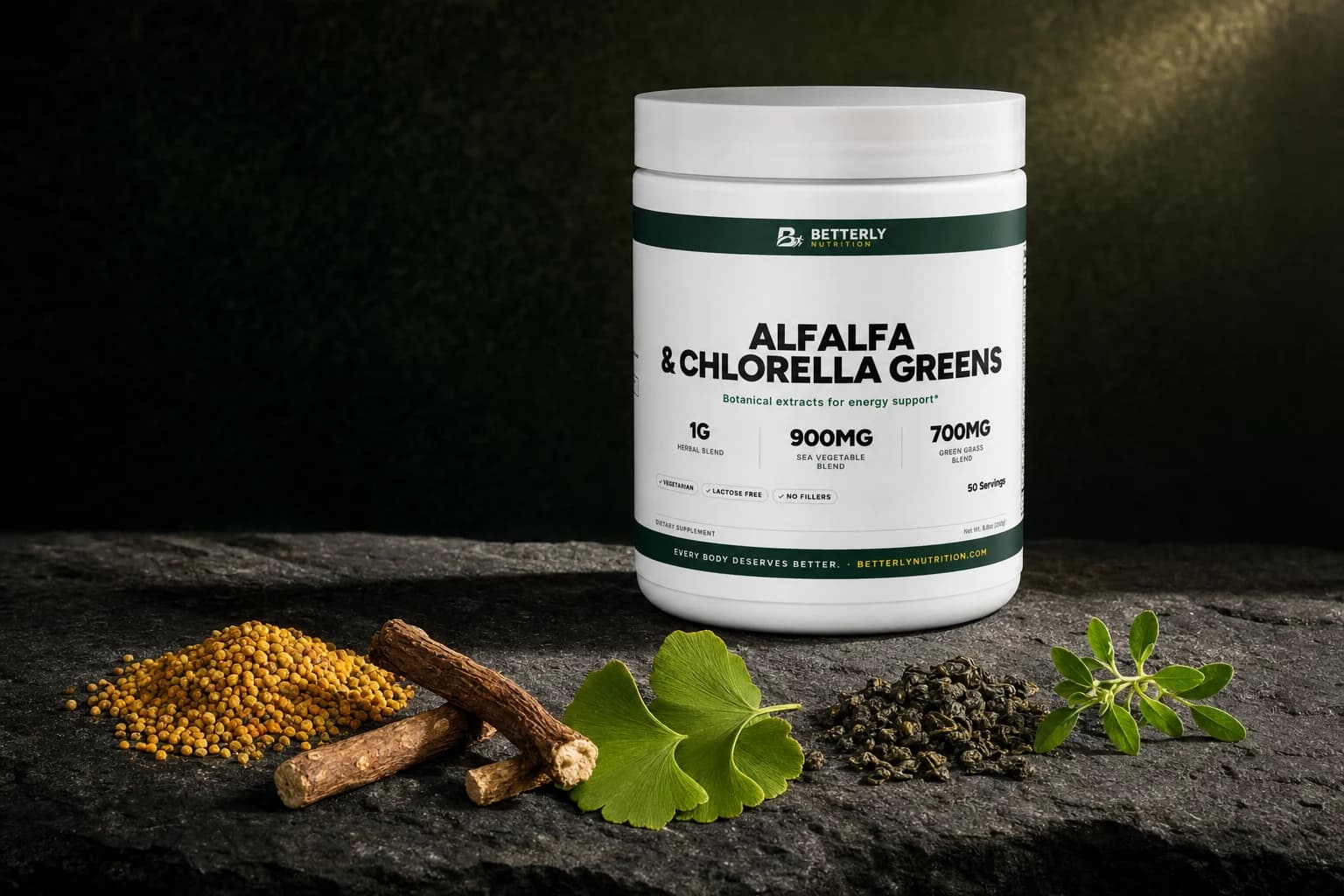
The short answer: The greens powder side effects you're most likely to notice are digestive, like gas or bloating, because plants bring fiber and MedlinePlus ties a fast jump in fiber to both. The bigger question is what else is in the scoop. Our Alfalfa & Chlorella Greens Powder, for one, tucks bee pollen, royal jelly, licorice root and ginkgo into a 1 g Herbal Blend per 2-teaspoon (about 5 g) serving.
Key takeaways
- MedlinePlus links a quick jump in fiber to gas, bloating and cramps, so digestive changes are the likeliest thing you'll notice from a greens powder.
- The Alfalfa & Chlorella's Herbal Blend includes bee pollen and royal jelly, so if pollen or bee products bother you, choose another powder.
- Licorice root and ginkgo carry their own NCCIH safety notes, and our Alfalfa & Chlorella blend never says how much of either you get.
- All three of our powders list green tea leaf, and none prints a caffeine amount.
- The Alfalfa & Chlorella lists a seaweed, sea whistle, with no iodine figure on its panel.
We sell the three powders this guide pulls apart, two greens and a reds, which could tempt us to go easy on them. So we've quoted their panels as printed and flagged the gaps.
What are the most common greens powder side effects?
Digestive changes are the greens powder side effects you're most likely to notice: extra gas, occasional bloating or a shift in bathroom habits as your gut meets new fiber.
Greens powders, super greens and green superfood blends alike, are mostly dried plants. The MedlinePlus medical encyclopedia entry on fiber ties gas, bloating and abdominal cramps to eating a lot of fiber quickly.
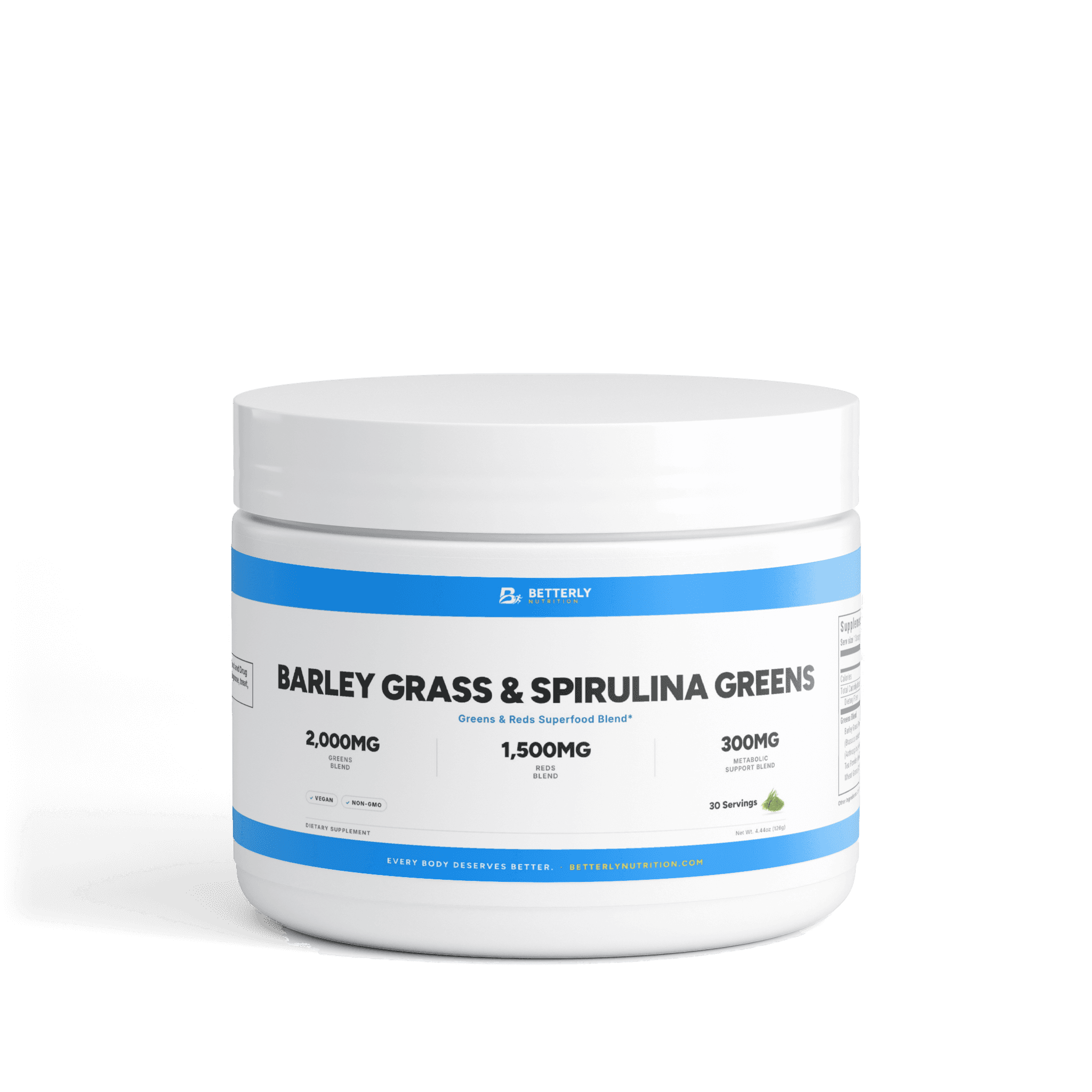
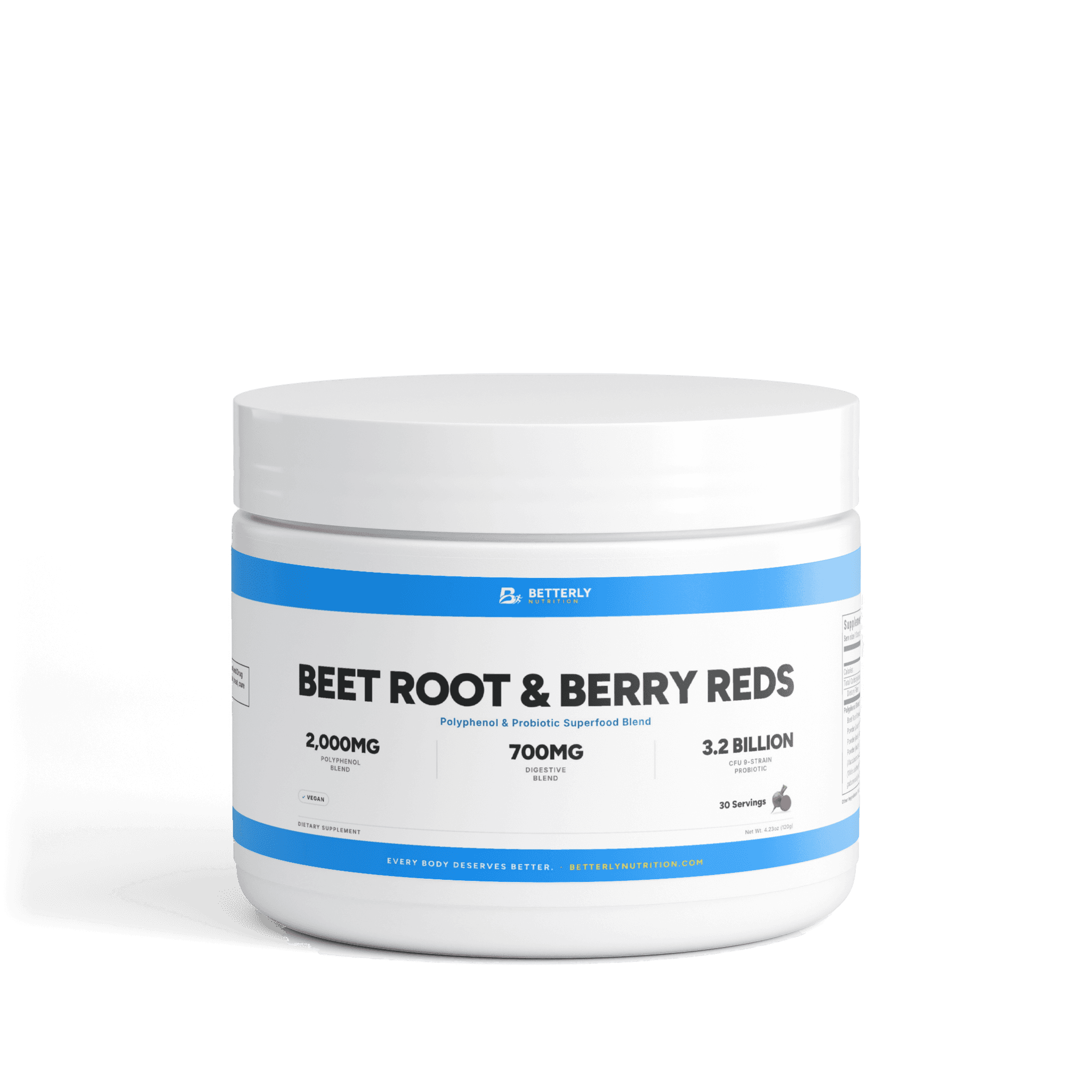
On our own labels, the fiber is modest. The Alfalfa & Chlorella lists less than 1 g (2% DV) per 2-teaspoon serving. The Barley Grass & Spirulina Greens Powder lists 2 g (6% DV) per 1-scoop (4.2 g) serving, and the Beet Root & Berry Reds Powder lists 2 g (6% DV) per 1-scoop (4 g) serving. Against the 21 to 38 g a day MedlinePlus recommends for adults, that's a small slice.
Why does greens powder cause bloating for some people?
Greens powder can cause occasional bloating when fibers like inulin and FOS arrive faster than your digestive system is used to.
All three panels list one or the other:
- Alfalfa & Chlorella: 98 mg of fructooligosaccharides (FOS) per serving, a close chemical cousin of inulin, plus apple pectin and flax seed.
- Barley Grass & Spirulina: inulin from Jerusalem artichoke root leads a 200 mg Digestive Support blend per scoop.
- Beet Root & Berry Reds: oat fiber and inulin make up a 700 mg Digestive Blend per scoop, plus a 9-strain probiotic (3.2 billion CFU per serving at manufacture).
Our guide to fiber types and how to choose one explains why quick-fermenting fibers such as inulin tend to be the gassiest.
Does greens powder make you poop?
A greens powder may nudge your bathroom habits, and fiber type shapes how, but none of our three panels says which type of fiber it holds.
MedlinePlus sorts fiber into two kinds. Insoluble fiber, from wheat bran, vegetables and whole grains, adds bulk to stool and appears to speed food through the intestines. Soluble fiber, from oat bran, barley, beans, nuts and seeds, draws in water, turns to gel and slows digestion.
Our panels print one Dietary Fiber number with no split, so the label can't tell you whether a scoop leans toward speeding things up or slowing them down. Whether a couple of grams can do much is a question our look at what a daily scoop's fiber can realistically add takes on.
Which ingredients in a green superfood powder deserve a second look?
The green superfood powder ingredients worth a second look are mostly add-ins, not greens: bee products, licorice root, ginkgo, green tea, milk thistle and stevia, plus one seaweed.
Our Alfalfa & Chlorella's front label names two ingredients; its Herbal Blend alone lists 16 under one 1 g total. Blends list contents from heaviest to lightest, a rule our piece on what a daily greens scoop can and can't add explains, so the ninth ingredient can't weigh more than a ninth of the blend.
| Ingredient | Where it shows up on our panels | Why it matters |
|---|---|---|
| Bee pollen, royal jelly | Alfalfa & Chlorella Herbal Blend | Reactions possible with pollen allergy (NCCIH) |
| Licorice root | Alfalfa & Chlorella Herbal Blend | Glycyrrhizin content unstated |
| Ginkgo leaf | Alfalfa & Chlorella Herbal Blend | Crude leaf, not extract (NCCIH) |
| Milk thistle seed | Alfalfa & Chlorella Herbal Blend | Daisy-family plant |
| Sea whistle (seaweed) | Alfalfa & Chlorella Sea Vegetable Blend | Iodine, no amount listed |
| Green tea leaf | All three powders | Caffeine, no amount |
| Stevia leaf extract | All three powders | Easy-to-miss sweetener |
| Inulin or FOS | All three powders | Fermentable fiber |
Five of those eight rows point at the Alfalfa & Chlorella alone.
Bee pollen and royal jelly
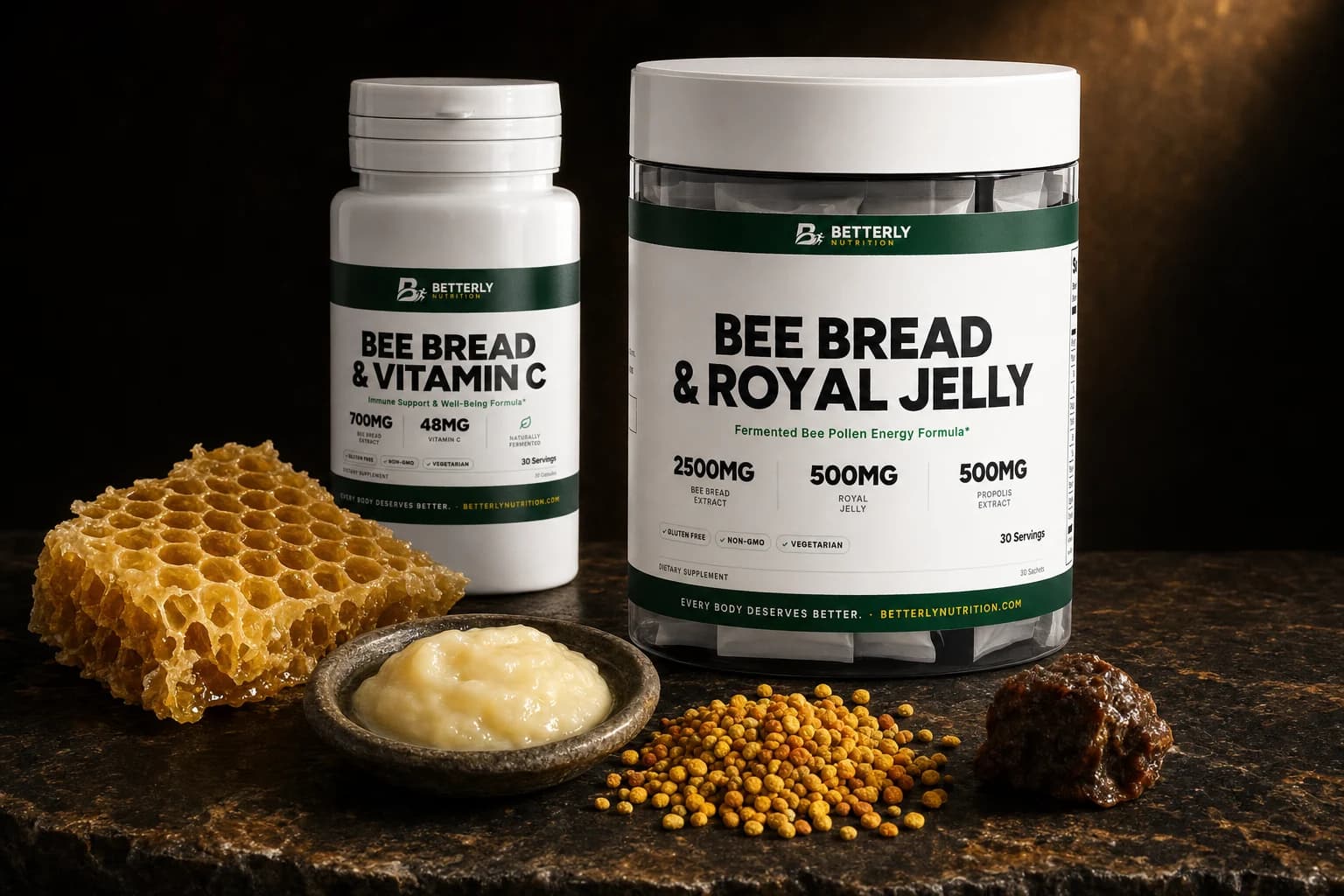
Bee pollen is third in that Herbal Blend, so it could be as much as a third of the 1 g. Royal jelly powder is 14th. NCCIH's Seasonal Allergies at a Glance page warns that people with pollen allergies may react to bee products, naming bee pollen, honey, royal jelly and propolis. Our guide to royal jelly side effects goes deeper.
Licorice root
Licorice powder (root) is 11th of 16, which caps it at about 90 mg per serving. NCCIH's licorice root page says its glycyrrhizin can cause serious side effects, especially in large amounts or over the long term. It adds that even small amounts have been linked to serious side effects in people who eat a lot of salt or manage certain health conditions.
Our panel says "Licorice Powder (root)," not DGL (deglycyrrhizinated licorice), so assume the glycyrrhizin is there.
Ginkgo
Ginkgo Biloba Powder (leaf) sits ninth, so a serving holds about 111 mg at most. NCCIH's ginkgo page calls ginkgo leaf extract generally well tolerated, with dizziness, digestive symptoms and headache as the most common side effects, and notes possible interactions with medicines.
That reassurance covers leaf extract, not the unextracted leaf powder on our panel, which prints no ginkgo amount. The same NCCIH safety section warns that "serious side effects have also occurred in people who consumed roasted ginkgo seeds or the crude ginkgo plant." Unextracted leaf is crude plant material, so ask your healthcare provider before starting the Alfalfa & Chlorella.
Green tea
Green tea powder (leaf) is on all three of our panels. The NIH Office of Dietary Supplements' overview of plant-based supplements notes that green tea carries its own caffeine and can work as a quick, strong stimulant. Blend position caps the leaf, not the caffeine: 100 mg at most in the Alfalfa & Chlorella (10th in 1 g), 500 mg in the Barley Grass & Spirulina (4th in 2,000 mg) and 200 mg in the reds (2nd in 400 mg).
Sea whistle and iodine
Sea whistle (Ascophyllum nodosum), a brown seaweed, sits last of three in the Alfalfa & Chlorella's 900 mg Sea Vegetable Blend, so it tops out at 300 mg per serving. The NIH Office of Dietary Supplements lists seaweed among iodine-rich foods, warns that too much iodine can be harmful, and counts food, drinks and supplements together toward its upper limits. Our panel has no iodine line.
Milk thistle and stevia
Milk thistle powder (seed) is 12th in the Alfalfa & Chlorella blend. People who react to ragweed, daisies or marigolds may react to it too, as our milk thistle guide explains.
Stevia hides in two spots: last in the Alfalfa & Chlorella's Herbal Blend, while the other two list Stevia Extract (leaf) under Other Ingredients, where the reds also lists maltodextrin.
How do our three powders compare on the cautions?
Our powders differ most on bee products, seaweed and probiotics: only the Alfalfa & Chlorella lists bee products or a whole seaweed, and only the reds adds a probiotic.
| Label detail | Alfalfa & Chlorella | Barley Grass & Spirulina | Beet Root & Berry Reds |
|---|---|---|---|
| Bee products | Bee pollen, royal jelly | None listed | None listed |
| Seaweed | Sea whistle | Sodium alginate (seaweed-derived) | None listed |
| Cereal grasses, grains | Five grasses, barley malt, brown rice bran | Barley, wheat grass | Oat fiber |
| Probiotic | None listed | None listed | 3.2 billion CFU at manufacture |
If bee products or seaweed concern you, skip the Alfalfa & Chlorella and note the Barley Grass & Spirulina's sodium alginate. The reds adds a probiotic to its fiber. Full panels for all three are in our Greens & Superfoods collection.
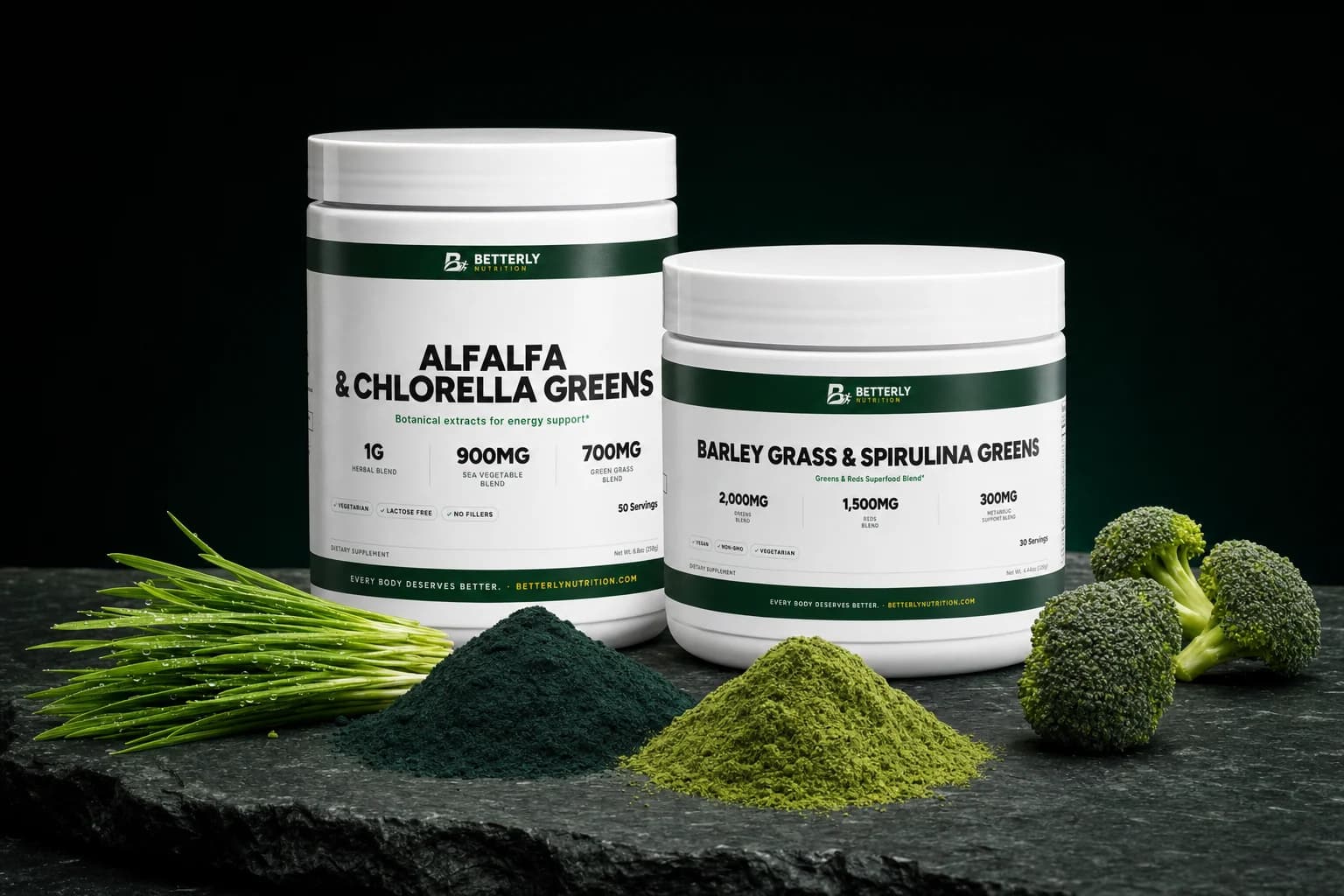
From our shop: Barley Grass & Spirulina Greens Powder — labeled vegan with no bee products or seaweed powder on its panel, and 2 g of dietary fiber per 1-scoop (4.2 g) serving.
Can you take greens powder while pregnant or breastfeeding?
Get your healthcare provider's go-ahead before using a greens powder while pregnant or breastfeeding; every one of our greens and reds labels asks for that conversation.
NCCIH flags ginkgo as possibly unsafe during pregnancy and calls large amounts of licorice extract during pregnancy unsafe, and for both herbs it says little is known about safety while breastfeeding. Both sit in the Alfalfa & Chlorella's Herbal Blend with no individual amounts.
Green tea raises a caffeine question, and with no folate or iron on any of our three panels, a greens powder can't stand in for a prenatal vitamin.
At the appointment, point to the exact lines: licorice and ginkgo in the Herbal Blend, sea whistle in the Sea Vegetable Blend, and green tea on every tub.
How can you take a greens powder with fewer stomach surprises?
A greens powder brings fewer stomach surprises when you keep to the label amount, start it on its own and use all the liquid its directions call for.
The label's suggested use for our Barley Grass & Spirulina and reds is one scoop, once daily; the Alfalfa & Chlorella sets 2 teaspoons with no frequency. Our rundown of how each greens label says to mix it covers the rest. For your stomach:
- Start it alone. Begin it the same week as a protein shake or big salads, and you can't tell which change your gut is answering.
- Use all the liquid. That's 6 to 8 oz (177 to 237 ml) for the scoops and 8 oz (237 ml) for the Alfalfa & Chlorella. According to MedlinePlus, water helps fiber move along your digestive tract.
- Keep to one tub. Two powders at once double the green tea, stevia and fermentable fiber.
- Mind the clock. If caffeine keeps you up, have your glass in the morning or at midday.
None of our labels gives a starter amount, and we won't invent one.
From our shop: Alfalfa & Chlorella Greens Powder — 50 servings of 2 teaspoons (about 5 g), with six named blends and 98 mg of FOS per serving, labeled vegetarian.
When is a greens powder more hassle than it's worth?
A greens powder is more hassle than it's worth when its extras clash with your known limits on fermentable fiber, bee products, daisy-family plants, caffeine or herbs you already take.
- Fermentable fibers already give you trouble. Every one of our panels lists inulin or FOS.
- Pollen, hive products or daisy-family plants have caused reactions before. The Alfalfa & Chlorella lists bee pollen, royal jelly and milk thistle.
- You're limiting caffeine and want a number. Green tea is on all three panels, with no caffeine figure.
- You already take ginseng, turmeric or ashwagandha on their own. The Barley Grass & Spirulina lists all three in a 300 mg Metabolic Support Blend with no amounts, so you'd stack an unknown dose on a known one.
Who should check with a healthcare provider first?
A healthcare provider should weigh in on greens powder first if you're under 18, pregnant or nursing, managing a medical condition, taking any prescription medication or facing surgery.
All three tubs print this caution, which names no medication or surgery: "Consult a physician if pregnant, nursing, under 18, or have a medical condition." A few more are worth raising:
- Prescription medication. NCCIH says ginkgo may interact with medicines. Show your pharmacist the Herbal Blend line, since the product name mentions neither ginkgo nor licorice.
- Scheduled surgery. Mention the powder to your surgical team along with any other supplements.
- An iodine limit. If a provider has set one, show them the Alfalfa & Chlorella's sea whistle line, since the panel gives no iodine number.
- Avoiding gluten. The Alfalfa & Chlorella names barley, kamut, oat, rye and wheat grass plus barley malt powder, and the Barley Grass & Spirulina names barley and wheat grass. None of our three labels carries a gluten-free claim.
If a scoop ever seems to cause a reaction, stop taking it and contact your healthcare provider.
FAQ: greens powder side effects
How long does bloating from greens powder last?
Bloating from a greens powder's fiber often fades as your digestive system adjusts, according to MedlinePlus, which gives no number of days. Our three powders add 2 g of fiber or less per serving, so if bloating lasts or feels strong, don't wait it out. Stop the powder and check with your healthcare provider, since fiber may not be the cause.
Does greens powder have caffeine?
A greens powder can contain caffeine when it lists green tea, and all three of ours do: in the Alfalfa & Chlorella Herbal Blend, the Barley Grass & Spirulina Greens Blend and the Beet Root & Berry Reds Metabolic Blend. None of the panels gives a caffeine number, so if you're limiting caffeine, count your scoop toward your daily total.
Do super greens powders cause more side effects than plain greens?
A super greens powder isn't riskier because of its name; the ingredient list decides. Every added herb, bee product or fiber is one more line to check against your own history. Our Alfalfa & Chlorella panel names 35 blend ingredients plus FOS, while the Barley Grass & Spirulina names 22 across four blends. Compare full panels, not front labels.
Is it safe to drink greens powder every day?
Daily greens powder use is what our Barley Grass & Spirulina and Beet Root & Berry Reds labels direct: one scoop, once a day, within that amount and after you've checked the caution list. The Alfalfa & Chlorella label gives 2 teaspoons without saying how often, so ask your provider. Each of the three cautions opens with "Do not exceed recommended dose."
Sources
- Fiber, MedlinePlus Medical Encyclopedia, U.S. National Library of Medicine
- Seasonal Allergies at a Glance, National Center for Complementary and Integrative Health
- Licorice Root: Usefulness and Safety, National Center for Complementary and Integrative Health
- Ginkgo: Usefulness and Safety, National Center for Complementary and Integrative Health
- Botanical Dietary Supplements: Background Information for Consumers, NIH Office of Dietary Supplements
- Iodine: Fact Sheet for Consumers, NIH Office of Dietary Supplements
If this left you looking for somewhere to start, read alfalfa and chlorella greens powder with 50 servings per tub — its amounts per serving are listed on the page. For the practical questions this raises, how dosing, sourcing and subscriptions work is answered in one place.