On this page
- Key takeaways
- Is apple cider vinegar a probiotic by the NIH definition?
- How is apple cider vinegar made, and where do the microbes go?
- Does apple cider vinegar have probiotics in the mother?
- Is apple cider vinegar a prebiotic?
- Do apple cider vinegar pills with the mother contain probiotics?
- Should you choose a vinegar capsule or a dedicated probiotic capsule?
- How do you take apple cider vinegar and probiotic capsules?
- When don't you need a probiotic with apple cider vinegar?
- Who should check with a healthcare provider first?
- FAQ: apple cider vinegar and probiotics
- Sources
The short answer: Is apple cider vinegar a probiotic? No. The NIH Office of Dietary Supplements (ODS) defines probiotics as live microbes that provide a health benefit when taken in sufficient amounts, and it names each one by genus, species and strain. Apple cider vinegar is a fermented food instead. Even raw bottles with the cloudy "mother" typically don't name a microbe or print a CFU count, so there's nothing to hold up against that definition.
Key takeaways
- Apple cider vinegar is made by two fermentations of apple juice, so microbes build it, but that doesn't make the finished vinegar a probiotic.
- A probiotic label names its microbe down to the strain and states a count, and vinegar bottles typically show neither.
- Apple cider vinegar isn't a prebiotic either, because it's an acidic liquid rather than a nondigestible food component like certain fibers.
- In an apple cider vinegar capsule that lists a probiotic, the live cultures come from a separate microbe row, not from the vinegar powder.
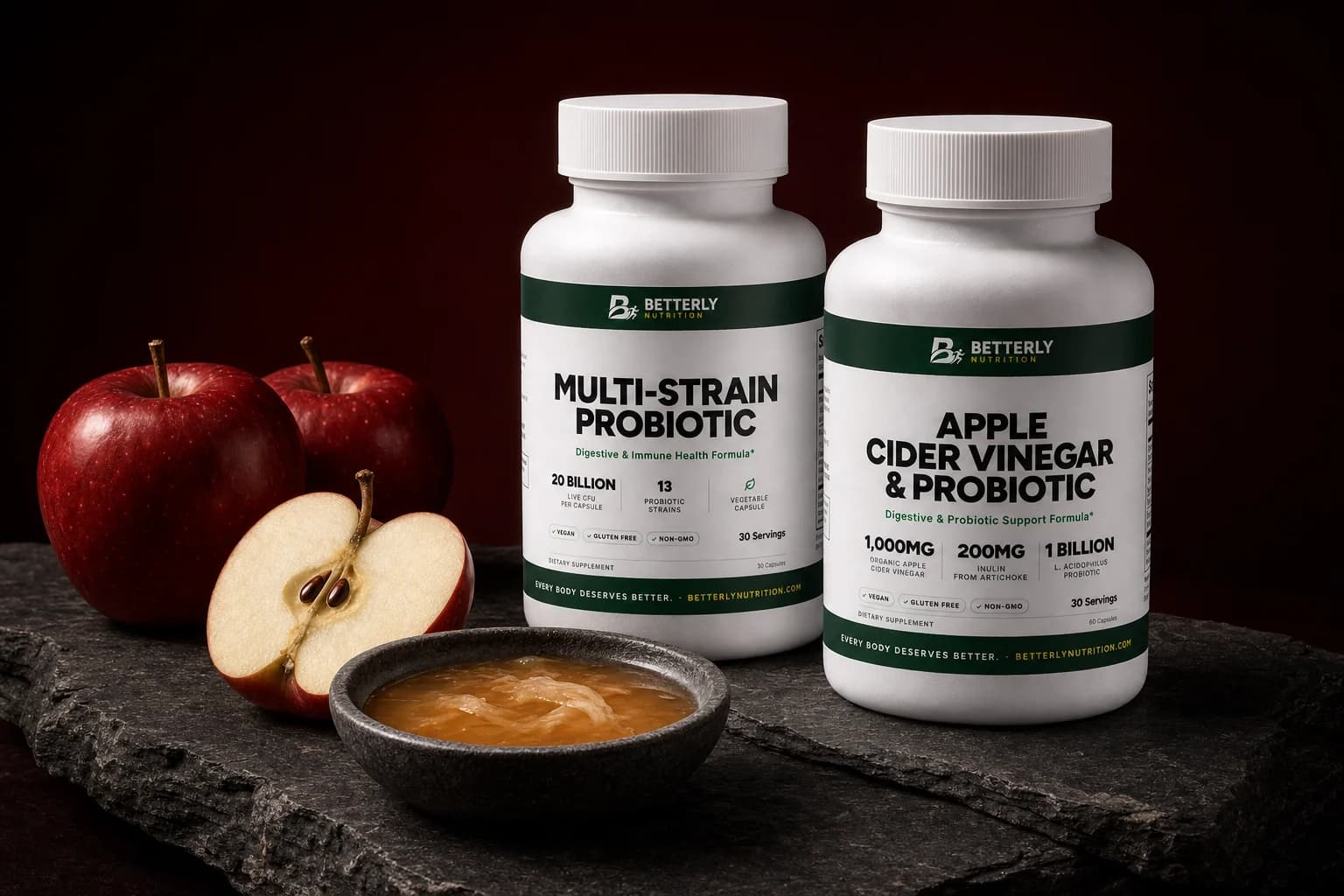
We sell Apple Cider Vinegar & Probiotic Capsules, a formula whose live cultures come from an added, named probiotic rather than from the vinegar. That gives us a reason to prefer one answer, so we've leaned on federal definitions and printed Supplement Facts numbers rather than our own say-so.
Is apple cider vinegar a probiotic by the NIH definition?
Apple cider vinegar fails the NIH definition of a probiotic, because that definition asks for specific live microbes in amounts large enough to deliver a health benefit.
The ODS fact sheet on probiotics identifies every probiotic microbe by genus, species and strain. Here it is as four tests, our own label-reading version of the ODS definition:
- Alive. The microbes are living when you swallow them.
- Named. According to ODS, any food containing probiotics should print the genus, species and strain on its label.
- Counted. The amount is stated, usually as CFU (colony-forming units, an estimate of active microbes).
- Linked to a benefit. ODS says any benefit depends on both the specific strains and the CFU count.
ODS even names vinegar. Its list of foods made with microorganisms includes yogurt, pickles, kombucha, kimchi and apple cider vinegar, followed by a caveat: "not all these foods necessarily contain probiotics with proven health benefits."
| The test | Raw ACV with the mother | Clear, filtered ACV | Probiotic supplement |
|---|---|---|---|
| Live microbes | Possibly, in the sediment | Not promised | Yes, per the label |
| Microbe named | Not typically | Not typically | Genus and species, often strain |
| Amount stated | Not typically | Not typically | CFU per serving |
| Benefit tied to it | None shown | None shown | Only if that strain was studied |
Only a supplement label can even show the first three tests. ODS cautions that some products sold as probiotics may never have been studied, so a strain code and a CFU count still don't prove a benefit. Vinegar, raw or clear, typically drops out at the second row.
How is apple cider vinegar made, and where do the microbes go?
Apple cider vinegar comes from two fermentations of apple juice, with yeast making alcohol and acetic acid bacteria then turning that alcohol into acetic acid.
The FDA's compliance guide on vinegar, CPG Sec. 525.825, defines cider vinegar as the product of the alcoholic and then acetous fermentations of apple juice. It says vinegar should contain 4 grams of acetic acid per 100 mL.
Think of the microbes as the crew, not the cargo. They make the vinegar, but they aren't what you're buying. The acetic acid bacteria in the second step include the genus Acetobacter.
Acetobacter isn't one of the usual probiotic groups. On the probiotics page from the National Center for Complementary and Integrative Health (NCCIH), the most common probiotic bacteria are Lactobacillus and Bifidobacterium types, and acetic acid bacteria aren't named at all.
Does apple cider vinegar have probiotics in the mother?
Raw apple cider vinegar may hold leftover fermentation microbes in its mother, but bottles typically don't name or count them, so they don't meet the probiotic definition.
The mother is the cloudy, stringy sediment that drifts or settles in unfiltered vinegar. It's material left behind by fermentation, and it can include some of the microbes that made the vinegar.
"Raw" and "unfiltered" mean the maker left that sediment in and skipped pasteurizing. That doesn't fix the label gap. Raw bottles don't typically print a genus, species, strain or CFU figure for the mother, so you can't tell how many microbes are alive, or whether any are.
We also found no federal page that ties a benefit to a named vinegar microbe at a stated amount.
So is raw apple cider vinegar a probiotic? Not by any label-based standard. If you like its fuller, funkier flavor, buy it as a fermented food, not as your source of live cultures.
Is apple cider vinegar a prebiotic?
Apple cider vinegar isn't a prebiotic, because prebiotics are nondigestible food components, such as certain fibers, while vinegar is a sour liquid made by fermentation.
The same NCCIH page puts it plainly: "Prebiotics are nondigestible food components that selectively stimulate the growth or activity of desirable microorganisms." In everyday terms, a prebiotic feeds microbes. It isn't a microbe itself.
Vinegar doesn't match. The FDA's standard for it is written in grams of acetic acid, not grams of fiber.
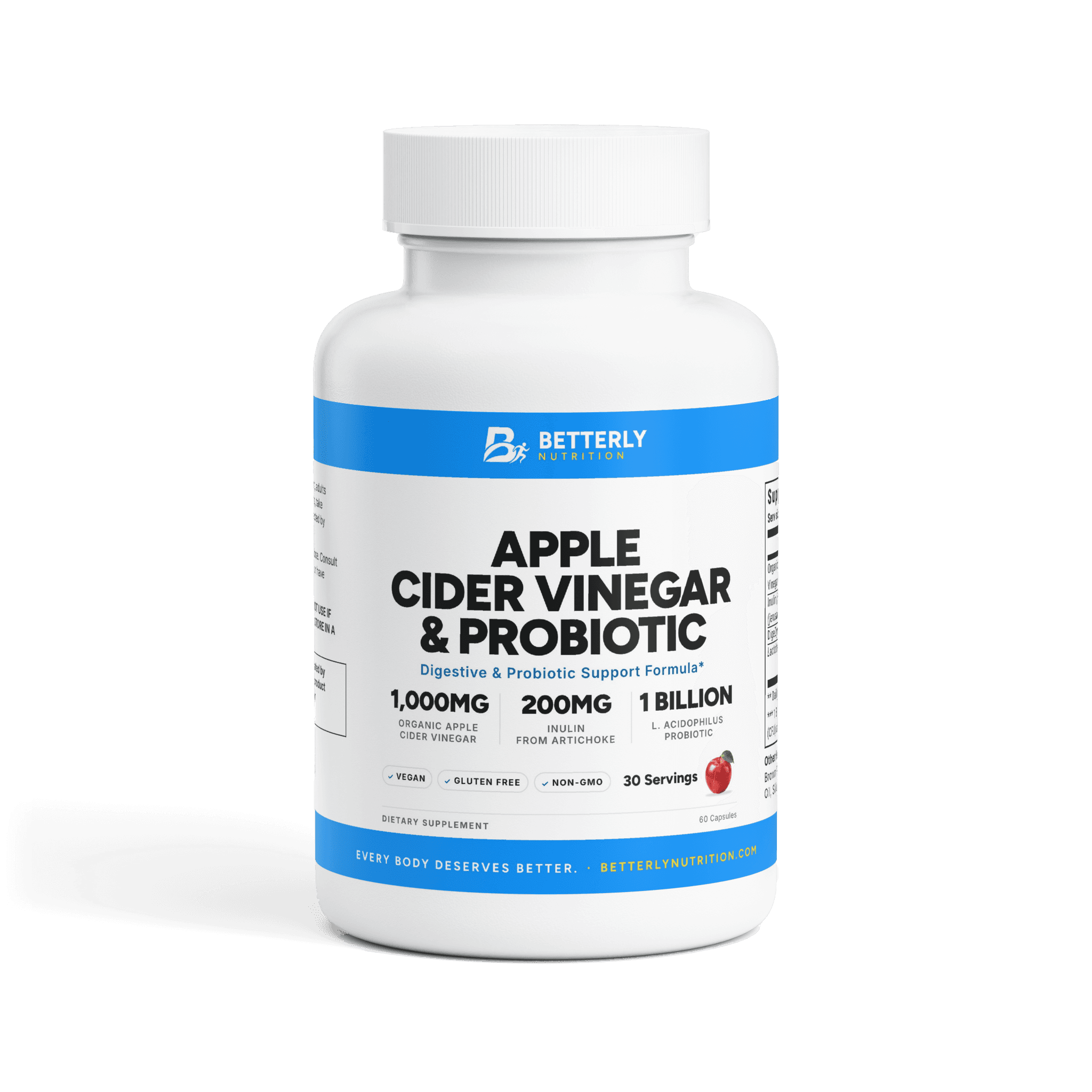
The mix-up probably comes from labels that set vinegar beside a fiber. Ours lists 200 mg of inulin from Jerusalem artichoke root per 2-capsule serving, and the panel names it simply as inulin. It never uses the word prebiotic.
NCCIH also has a name for products that pair a probiotic with a prebiotic: synbiotics. Since our panel doesn't call its inulin a prebiotic, we don't call the capsule a synbiotic, and a bottle of vinegar fits neither half of the word. Our guide to taking prebiotics and probiotics together covers the fiber side.
Do apple cider vinegar pills with the mother contain probiotics?
Apple cider vinegar pills with the mother contain probiotics only if the Supplement Facts panel lists a named microbe with a CFU count beside it.
ODS explains that a supplement containing probiotics lists the total weight of its microorganisms, and many labels also give CFUs per serving. The answer sits inside the Supplement Facts box, in a row with a Latin name such as Lactobacillus.
Letters or numbers after the species, like LA85, pin down the exact strain. A footnote on the count should say whether it was taken at the time of manufacture or holds through the expiration date. And "with the mother" on the front describes the vinegar the powder came from. It isn't a count of anything alive.
Our own capsule lists four active rows per 2-capsule serving, and only one is a probiotic.
| Panel row | Per 2-capsule serving | What it is | Live cultures claimed? |
|---|---|---|---|
| Organic apple cider vinegar powder | 1,000 mg | Vinegar | No |
| Inulin (Jerusalem artichoke root) | 200 mg | Fiber, not called a prebiotic | No |
| DigeZyme® | 100 mg | Branded enzyme ingredient | No |
| Lactobacillus acidophilus LA85 | 10 mg | Probiotic | 1 Billion CFU at the time of manufacture |
The vinegar powder is 1,000 of the 1,310 mg of listed actives, about three quarters. The probiotic row weighs just 10 mg, under 1% of that total, yet it's the only source of the "1 BILLION" on the front of the bottle. Our label doesn't say "with the mother," and it claims no live cultures from the vinegar powder.
The footnote dates that count: "1 Billion Live Colony Forming Units (CFU) at the time of manufacture." If you're wondering whether 1 Billion CFU at the time of manufacture is a lot, our guide to how many CFU a probiotic needs puts it in context.
From our shop: Apple Cider Vinegar & Probiotic Capsules — 1,000 mg of organic apple cider vinegar powder and Lactobacillus acidophilus LA85 at 1 Billion CFU (at the time of manufacture) per 2-capsule serving, plus 200 mg of inulin.
Should you choose a vinegar capsule or a dedicated probiotic capsule?
Pick the apple cider vinegar and probiotic capsule when vinegar powder is the main draw, and a dedicated probiotic capsule when the live cultures matter most to you.
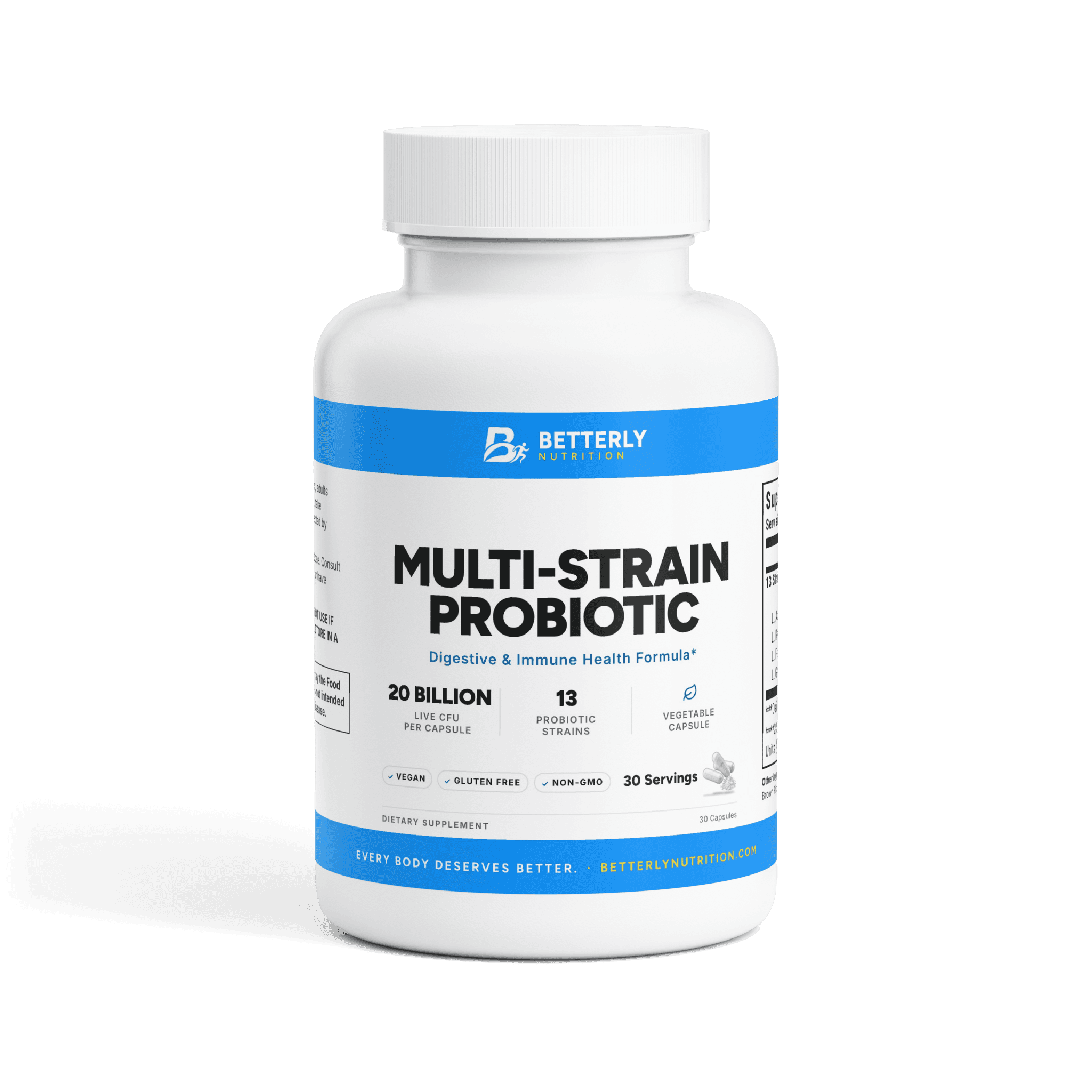
Multi-Strain Probiotic Capsules list one active row, a 13 Strain Probiotic blend, at 317 mg per 1 Capsule serving, with 20 Billion CFU counted at the time of manufacture. The label gives its 13 microbes by genus initial and species only, with no strain codes.
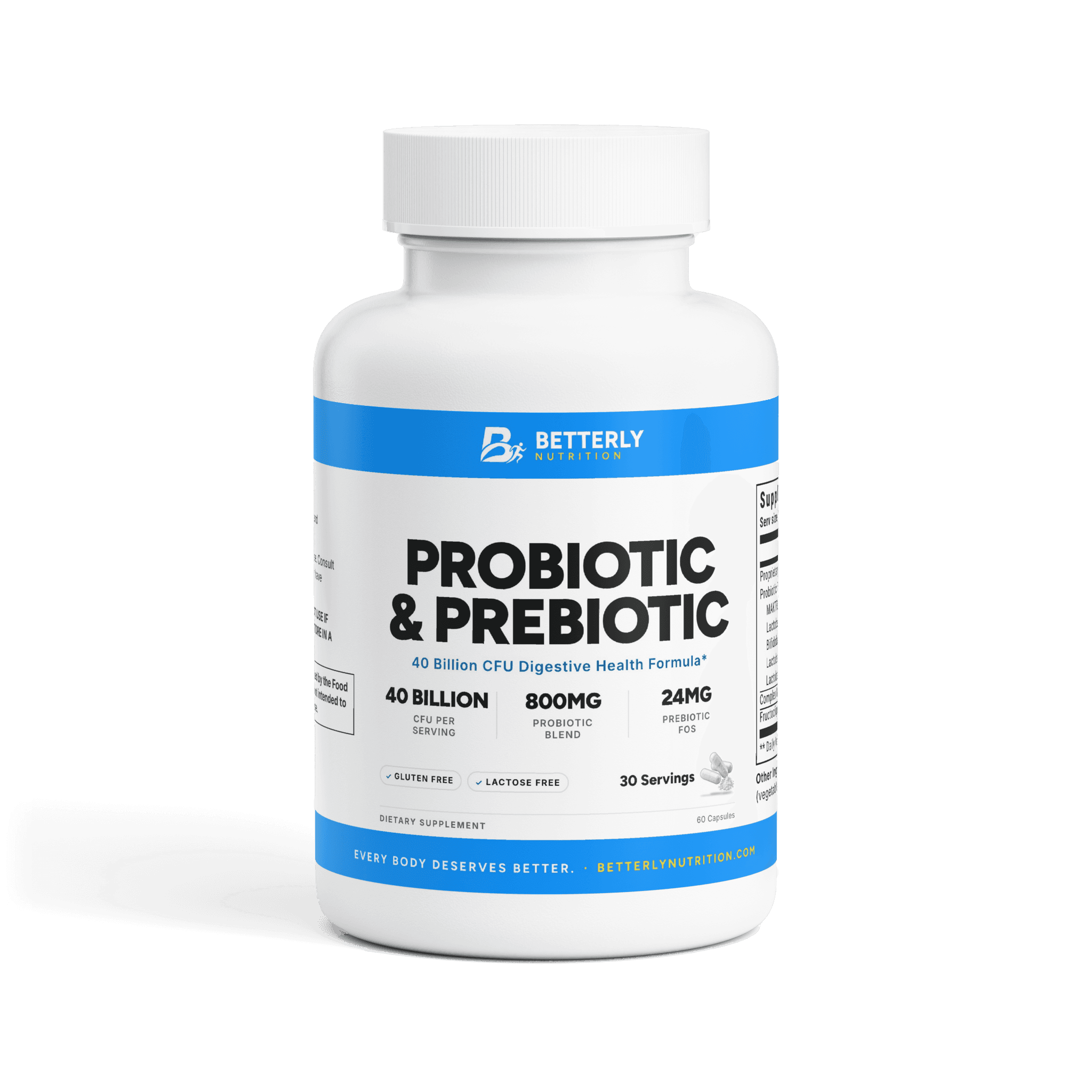
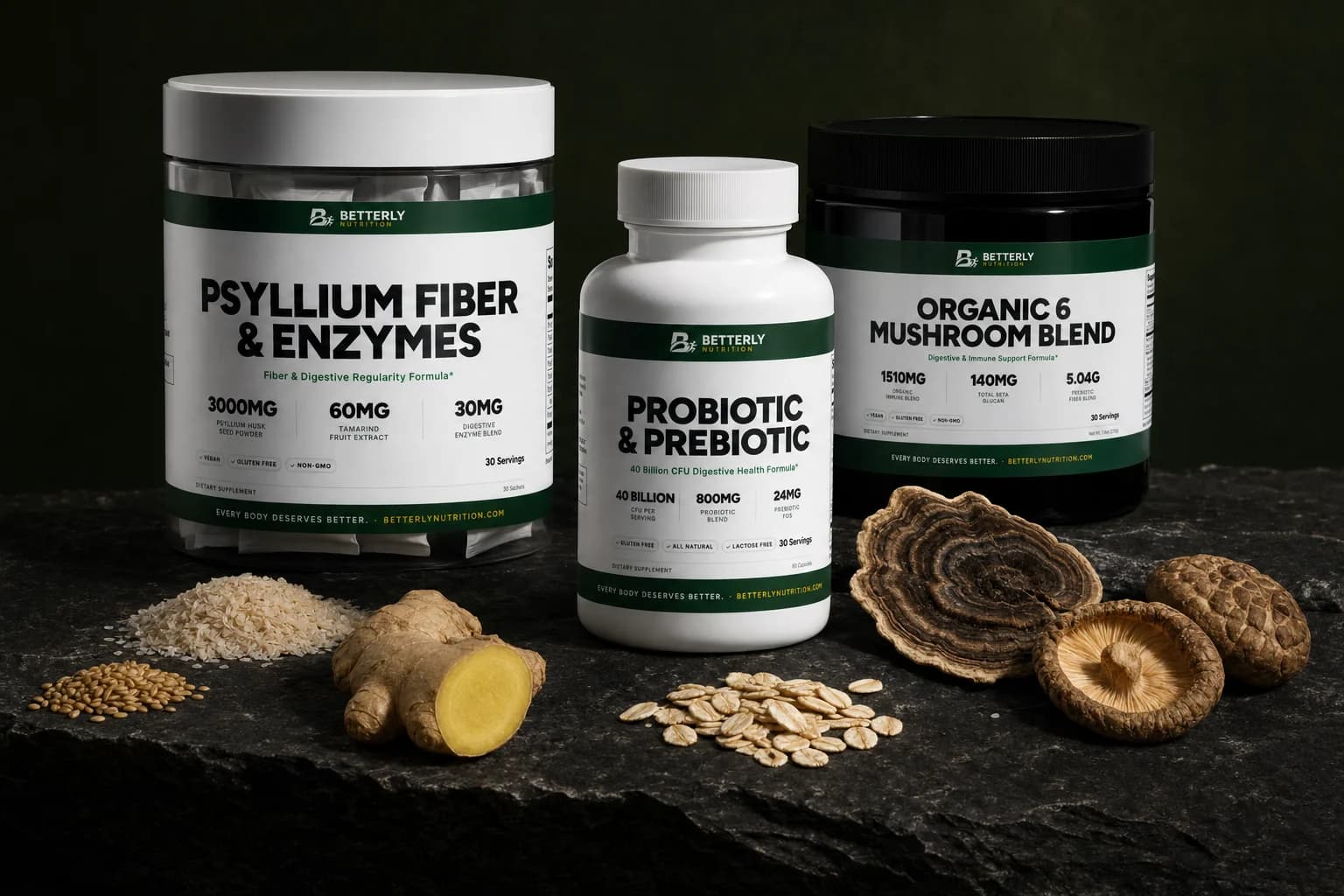
Probiotic & Prebiotic Capsules carry four coded strains, Lactobacillus acidophilus La-14 among them, inside an 800 mg proprietary blend rated at 40 Billion CFU per 2-capsule serving. Two more rows sit below the blend: Complex Marine Polysaccharide at 60 mg and fructooligosaccharide (FOS) at 24 mg.
| Label detail | ACV & Probiotic | Multi-Strain Probiotic | Probiotic & Prebiotic |
|---|---|---|---|
| Serving size | 2 Capsules | 1 Capsule | 2 Capsules |
| CFU per serving | 1 Billion, at the time of manufacture | 20 Billion, at the time of manufacture | 40 Billion, timing not stated |
| Microbes named | 1, with strain code | 13 names, species only, no codes | 4 strain codes, in a blend |
| Other active rows | Vinegar, inulin, DigeZyme® | None | FOS, marine polysaccharide |
The vinegar capsule has the smallest count but the most specific probiotic line: one strain with its own weight. The two dedicated probiotic capsules print 20 and 40 times the CFU, but as blend totals, not per-strain amounts. One count carries no timing note, so read each footnote.
You can compare all three full panels in our Gut Health & Digestion hub before you decide.
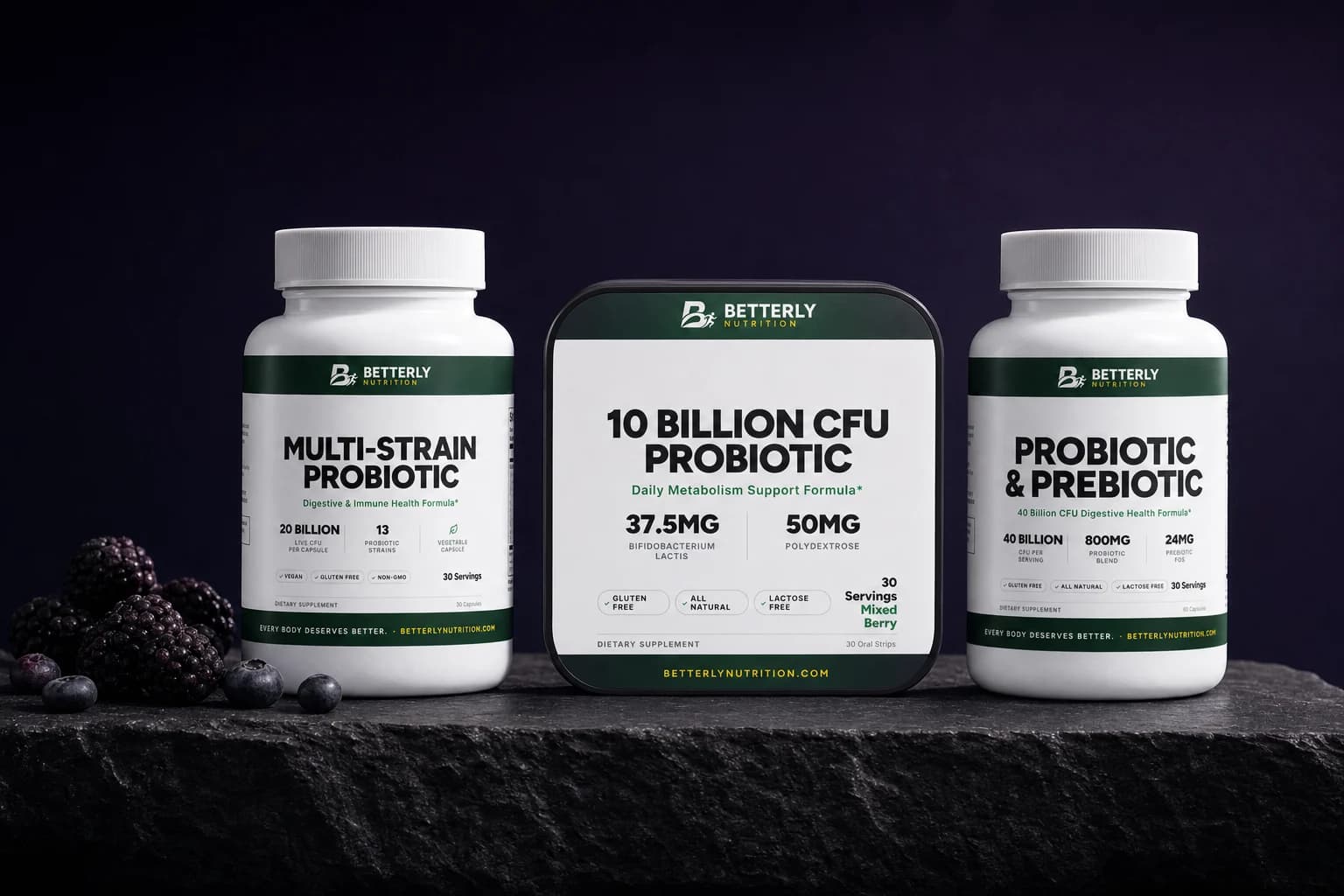
From our shop: Multi-Strain Probiotic Capsules — one vegan capsule a day for adults, with 20 Billion CFU (at the time of manufacture) from a 317 mg, 13 Strain Probiotic blend per 1 Capsule serving.
How do you take apple cider vinegar and probiotic capsules?
Under the label's suggested use for Apple Cider Vinegar & Probiotic Capsules, adults take two capsules a day, washed down with 6-8 oz of water for best results.
A bottle holds 60 capsules, or 30 servings. The caution is firm: "Do not exceed recommended dose." Extra capsules won't turn the vinegar powder into a probiotic.
Nothing on the label ties the capsules to a time of day. Our walkthrough of ACV capsule timing covers meals and mornings if you want a routine.
The two dedicated probiotic capsules follow their own labels. Multi-Strain Probiotic Capsules call for one capsule a day for adults, ideally with a glass of water (6-8 oz). The Probiotic & Prebiotic label says two capsules once daily, then recommends splitting them, one in the daytime and one in the evening, for best results.
All three labels ask for cool, dry storage. Since ODS says a CFU count can fall as a product ages, check the expiration date too.
When don't you need a probiotic with apple cider vinegar?
If you take apple cider vinegar for the vinegar itself, you don't need a probiotic added to it, and a kitchen bottle may suit you better than a capsule.
A few honest cases where our capsule isn't the right fit:
- You only want vinegar. We don't sell a vinegar-only capsule, so this formula gives you more than you asked for.
- You already take a probiotic you like. Our capsule would add L. acidophilus LA85 on top of whatever your current label lists, and our guide to ACV pill side effects covers that kind of overlap.
- You cook with vinegar already. A splash in dressings or a pan sauce is a perfectly good way to enjoy a fermented food.
- You hoped vinegar would replace a probiotic. It can't, by the definition above. Choose a labeled probiotic or skip both.
Who should check with a healthcare provider first?
The caution on Apple Cider Vinegar & Probiotic Capsules asks you to see a physician first if you're expecting, breastfeeding, younger than 18 or have a medical condition.
All three capsules here carry that caution. Prescription medicines or an upcoming surgery are reasons to show your pharmacist or doctor the bottle too.
The probiotic row brings its own federal cautions. ODS flags possible problems, including bacterial infections, when someone is already seriously ill or their immune system is weak. NCCIH likewise says harmful effects are more likely with severe illness or a compromised immune system. In healthy people, ODS says probiotics may cause gas and rarely cause infections or other problems.
If a health problem is on your mind, book the visit now rather than waiting to see what a vinegar capsule does. NCCIH's probiotics page gives the same advice for probiotics in general.
FAQ: apple cider vinegar and probiotics
Is apple cider vinegar a probiotic drink?
No, apple cider vinegar isn't a probiotic drink, even stirred into water. ODS groups it with kombucha and pickles as foods made with microbes, then cautions that not every one holds probiotics with proven benefits. A glass of diluted vinegar typically comes with no named microbe and no stated amount, so treat it as a sour, fermented flavor.
Do apple cider vinegar gummies have probiotics?
Apple cider vinegar gummies have probiotics only when the Supplement Facts panel lists a named microbe with a CFU count. Gummy formulas vary, so read the panel, not the front of the pack. With no Latin name or CFU figure there, you're buying vinegar in chewable form.
Is filtered or pasteurized apple cider vinegar still a fermented food?
Yes, filtered or pasteurized apple cider vinegar is still a fermented food, because the FDA's vinegar guide defines cider vinegar by the alcoholic and acetous fermentations of apple juice. Filtering takes out the cloudy sediment, and pasteurizing heats the liquid, so a clear bottle makes no live-culture promise. What makes it vinegar is how it was made, not what's still alive in it.
How long do the live cultures in an ACV probiotic capsule last?
Our label doesn't say how long the live cultures in an apple cider vinegar probiotic capsule last; it counts its 1 Billion CFU at the time of manufacture. ODS says CFU numbers can drop over time, so a bottle opened later may hold fewer. Keep it somewhere cool and dry, per the label, and finish it by the expiration date.
Is it safe to take an ACV probiotic capsule with another probiotic?
Maybe, but ask a healthcare provider before pairing an apple cider vinegar probiotic capsule with another probiotic. Our capsule's caution already asks anyone pregnant, nursing, under 18 or managing a medical condition to consult a physician. Per ODS, gas is possible for healthy people taking probiotics, while problems such as bacterial infections are a concern for anyone seriously ill or with a weak immune system.
Sources
- Probiotics: Fact Sheet for Consumers (NIH Office of Dietary Supplements)
- Probiotics: Usefulness and Safety (National Center for Complementary and Integrative Health)
- CPG Sec 525.825 Vinegar, Definitions - Adulteration with Vinegar Eels (U.S. Food and Drug Administration)
If this left you looking for somewhere to start, read apple cider vinegar pills with a named probiotic strain — its amounts per serving are listed on the page. For the practical questions this raises, how dosing, sourcing and subscriptions work is answered in one place.