On this page
- Key takeaways
- Is saw palmetto the same as pygeum?
- Saw palmetto vs pygeum: how do they compare side by side?
- What do federal sources say about saw palmetto and pygeum benefits?
- Why is pygeum's bark harvest a sustainability question?
- Why do formulas put saw palmetto and pygeum together?
- Saw palmetto or pygeum: which fits what you're looking for?
- How do you take saw palmetto and pygeum capsules?
- Who can skip a saw palmetto and pygeum formula?
- Who should check with a healthcare provider first?
- FAQ: saw palmetto vs pygeum
- Sources
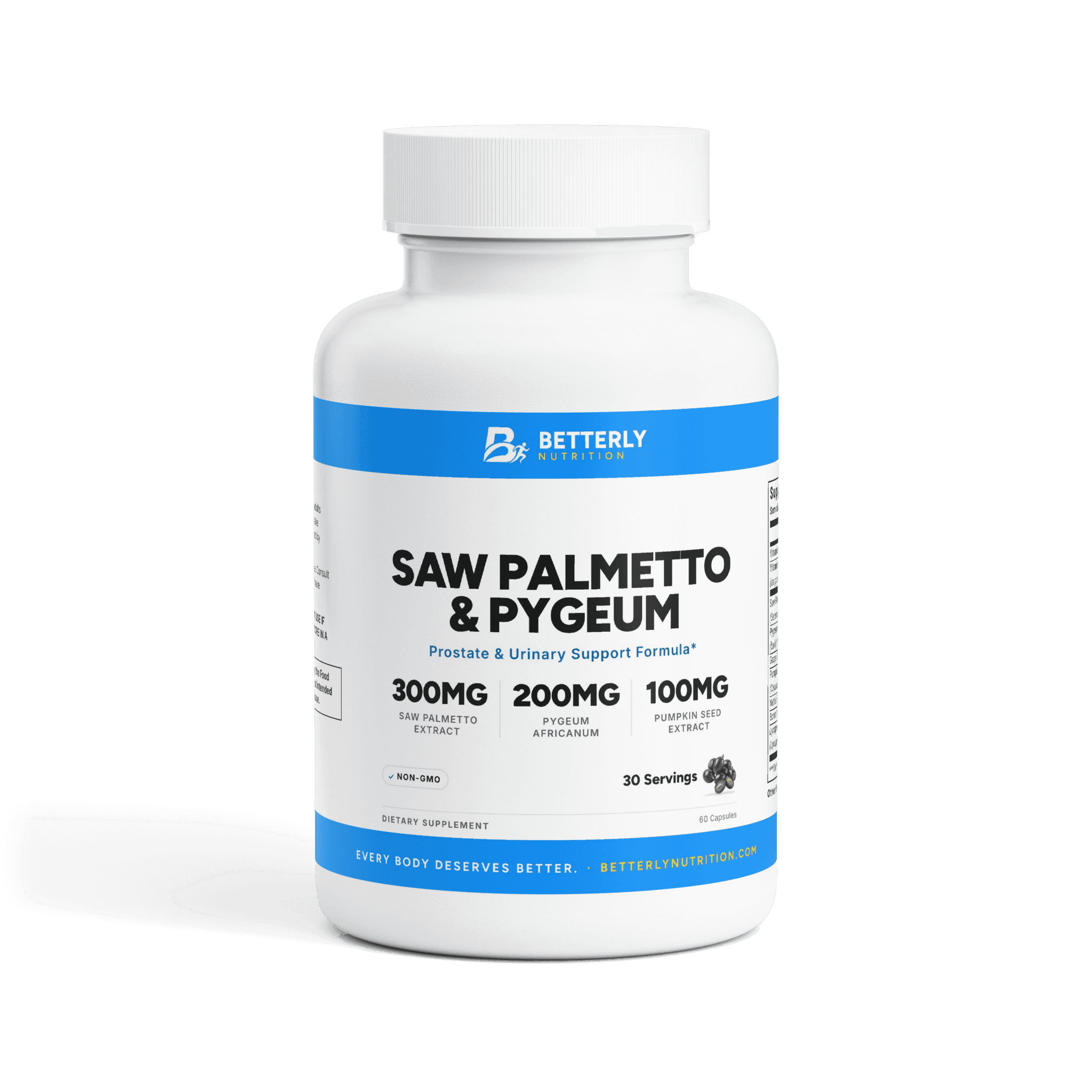
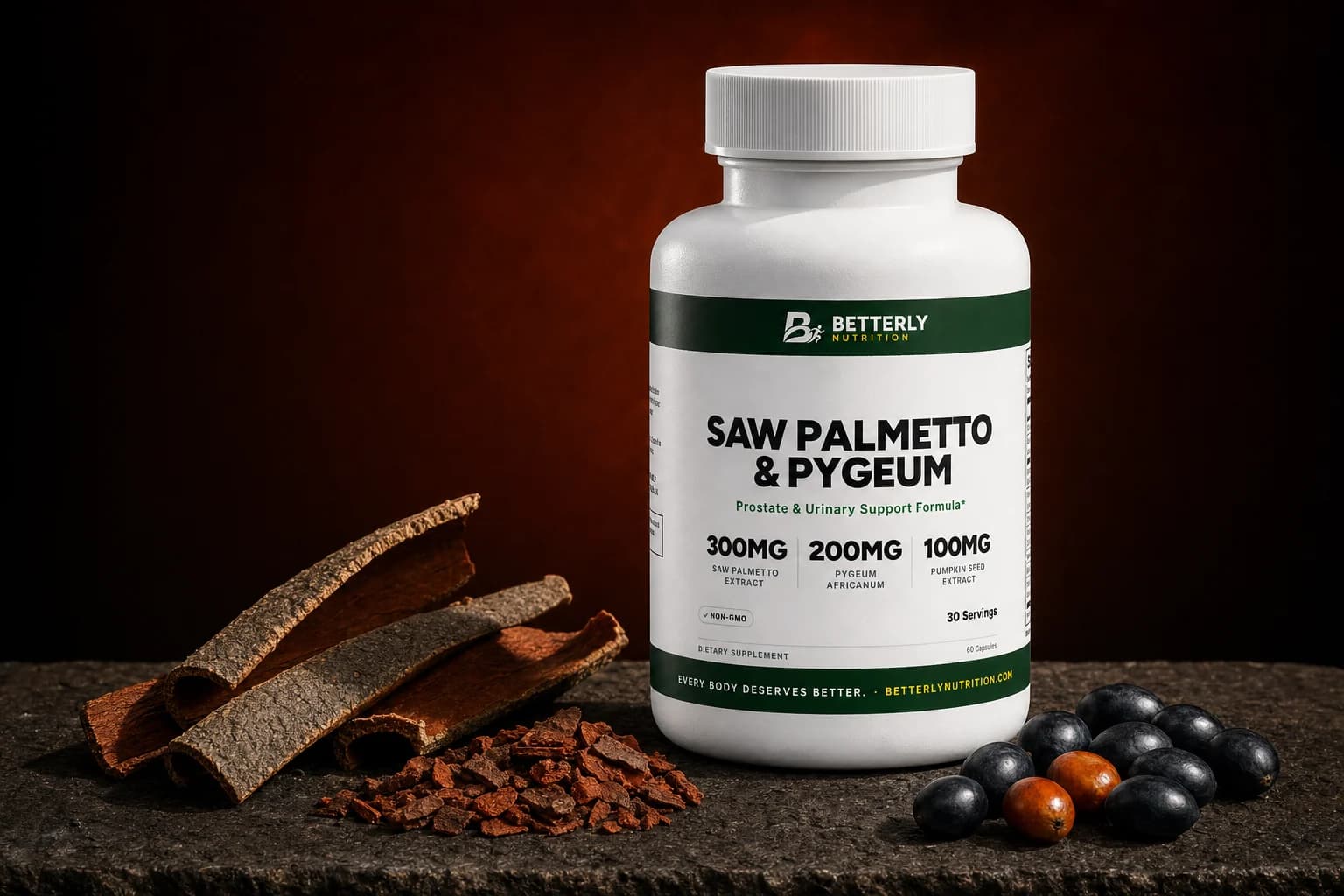
The short answer: When you compare saw palmetto vs pygeum, only saw palmetto has a fact sheet from the National Center for Complementary and Integrative Health (NCCIH), a federal health agency. Saw palmetto supplements use the berries of a small palm, and pygeum comes from the bark of an African tree. Our Saw Palmetto & Pygeum Prostate Capsules list 300 mg of saw palmetto extract and 200 mg of pygeum extract per 2-capsule serving.
Key takeaways
- Pygeum comes from Prunus africana, a tree in the plum and cherry genus, and it isn't closely related to the saw palmetto palm.
- NCCIH, a federal health agency, has a saw palmetto fact sheet but no fact sheet on pygeum.
- On our label, the pygeum row states a marker (3% phytosterols), and the saw palmetto row states none.
- Prunus africana has been listed under CITES Appendix II since 1995, so pygeum bark crossing borders needs trade permits.
We sell that two-herb formula and no single-herb version of either plant, which gives us a stake in how this comparison reads. Product amounts below are copied from our Supplement Facts panel, and every other fact traces to one of the four sources listed at the end.
Is saw palmetto the same as pygeum?
No, saw palmetto and pygeum come from two very different plants on different continents, and supplements use a different part of each.
According to the NCCIH fact sheet on saw palmetto, the plant is a small tree that reaches 6 to 10 feet. It's native to the West Indies and the southeast coast of North America, and its berries are the part used for health purposes.
Pygeum comes from African mountain forests. A 2014 review in the Journal of Alternative and Complementary Medicine, free to read in the National Library of Medicine's PMC archive, lists Pygeum africanum as a synonym for Prunus africana. It places the tree in the rose family. Its genus, Prunus, also holds plums and cherries. The tree usually stands 10 to 25 meters (about 33 to 82 feet) tall, at 1,500 to 2,000 meters (about 4,900 to 6,600 feet) of altitude.
So when our panel prints "Pygeum africanum Extract (bark)," it means the same tree the review and U.S. wildlife officials call Prunus africana.
Saw palmetto vs pygeum: how do they compare side by side?
Saw palmetto and pygeum differ in plant part, home range, label detail and how much federal guidance exists. Here's what our sources and our own panel show.
| Point | Saw palmetto | Pygeum |
|---|---|---|
| Botanical name | Serenoa repens | Prunus africana (older name Pygeum africanum) |
| Part used | Berries (fruit) | Bark |
| Where it grows | West Indies, southeast coast of North America | African mountain forests |
| Usual height | 6 to 10 ft | About 33 to 82 ft |
| Our row, per 2 capsules | 300 mg extract | 200 mg extract |
| Marker on our row | None stated | 3% phytosterols |
| NCCIH fact sheet | Yes, updated April 2025 | None |
| Trade rules | None flagged in our sources | CITES Appendix II since 1995 |
Read the marker and fact sheet rows together. Our label says more about the pygeum extract, and NCCIH says more about saw palmetto.
What does the 3% on our pygeum row mean?
The 3% means our pygeum extract is standardized. The maker measures phytosterols, a family of compounds that plants make, and adjusts each batch so they stay at that level.
The NIH Office of Dietary Supplements (ODS) explains the process in its background fact sheet on botanical supplements. It also points out that the ideal marker would be whatever causes a plant's effect in the body, and for most botanicals, no one knows yet which constituents do that. Our label names phytosterols as pygeum's marker and makes no claim about which compounds in the bark matter.
Our saw palmetto row reads "Saw Palmetto Extract (Serenoa repens) (fruit) 300 mg." It names the plant part and the extract's weight, and it gives no marker, extract ratio or solvent. On solvents, NCCIH reports that reviewers compared hexane-extracted saw palmetto products with other kinds and found no difference between the groups.
What do federal sources say about saw palmetto and pygeum benefits?
NCCIH has a detailed saw palmetto fact sheet, but it has no fact sheet on pygeum, and pygeum isn't in its Herbs at a Glance series.
NCCIH calls saw palmetto probably not helpful for its most-promoted prostate use, pointing to an NIH-funded trial that raised the dose as high as three times the usual amount and still found no benefit.
Pygeum benefits are harder to pin down from federal sources. NCCIH gives no safety or dosing summary for pygeum, so we won't list benefits we can't source. The 2014 review does lay out history: it traces the bark's commercial use to a patent in the mid-1960s, after which European demand built an international trade.
Why is pygeum's bark harvest a sustainability question?
Pygeum's bark harvest raises sustainability questions because stripping bark can kill the tree, and wild Prunus africana has been heavily harvested for export.
The 2014 review describes Prunus africana as slow to mature, tied to particular mountain habitats, and damaged by the way it's harvested. It reports that more than 3,300 tons of bark were collected each year to supply the trade, and it says nearly 70% of world supply comes from the slopes of Mount Cameroon.
One early harvester in Cameroon took only part of the bark from each trunk, because stripping a trunk bare kills the tree. Once 50 new local groups got harvesting licenses, the review says, that tight control was lost.
In 1995, the tree was added to Appendix II of CITES, the international treaty on trade in endangered species. The review explains that Appendix II covers species not yet directly threatened with extinction that could become so without trade controls.
Those rules reach the supplement aisle. A 2022 notice to importers and exporters from the U.S. Fish and Wildlife Service names "Pygeum or African cherry (Prunus africana)" among the CITES-listed plants used in supplements. Such supplements need a permit to be imported, exported or re-exported, and the notice says the U.S. Department of Agriculture regulates that plant trade.
Our label doesn't say where the bark was grown, or whether the trees were farmed or wild. You can fairly ask any pygeum seller both questions, us included.
Why do formulas put saw palmetto and pygeum together?
Formulas pair saw palmetto and pygeum because both are sold for men's prostate health, but NCCIH says no firm conclusions were reached on herb combinations that include saw palmetto.
So the pairing itself lacks direct federal evidence. ODS adds that studies in people are especially important for complex, multi-ingredient products, and ours has nine rows.
Beyond the two headline herbs, each 2-capsule serving lists 100 mg of grape seed extract, 100 mg of pumpkin seed extract, 50 mg of nettle extract, 10 mg of boron and 10 mg of a tomato-based "Lycopene 5%" ingredient. It also lists 25 mg of vitamin E (167% DV) and 13.8 mg of vitamin B6 (812% DV). If other products you take list B6, our walkthrough of B6 upper limits and daily totals shows the math.
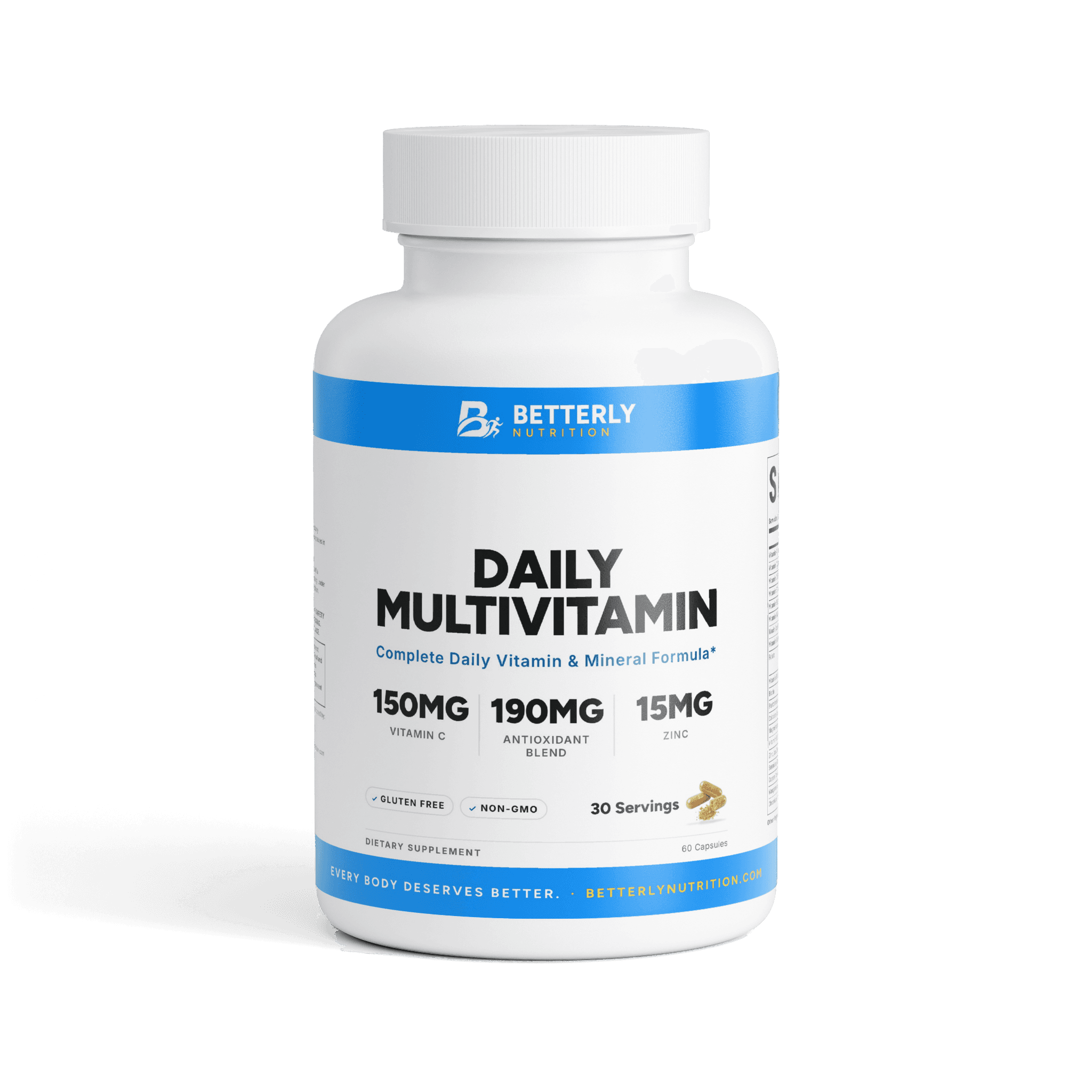
Shoppers often search for saw palmetto, pygeum and nettle root as a trio. Our prostate formula's nettle row is the leaf, so check the plant part in parentheses. Our Daily Multivitamin Capsules, by contrast, list stinging nettle extract (root) and saw palmetto (fruit) inside a 170 mg Health Support blend per 2-capsule serving, with no separate amount for either. Our guide to blends that hide individual amounts explains that tradeoff.
Saw palmetto or pygeum: which fits what you're looking for?
Pick by what you want from a label: saw palmetto has far more federal guidance to read, while our pygeum row states a marker. Nothing on our Targeted Support shelf sells either herb alone.
| If you want | Look for | Our prostate formula |
|---|---|---|
| Saw palmetto alone | A single-herb label | No, it lists 9 rows |
| A stated marker | A % beside the extract | Pygeum yes, saw palmetto no |
| Nettle root | "(root)" after nettle | Leaf, 50 mg |
| Known bark origin | Country, farmed or wild | Not stated |
| A plant-based capsule | "Vegetable capsule" or hypromellose | Gelatin |
Our formula fits if you want both herbs with every amount printed, and not if you want one herb, nettle root, a plant-based shell or a stated bark origin.
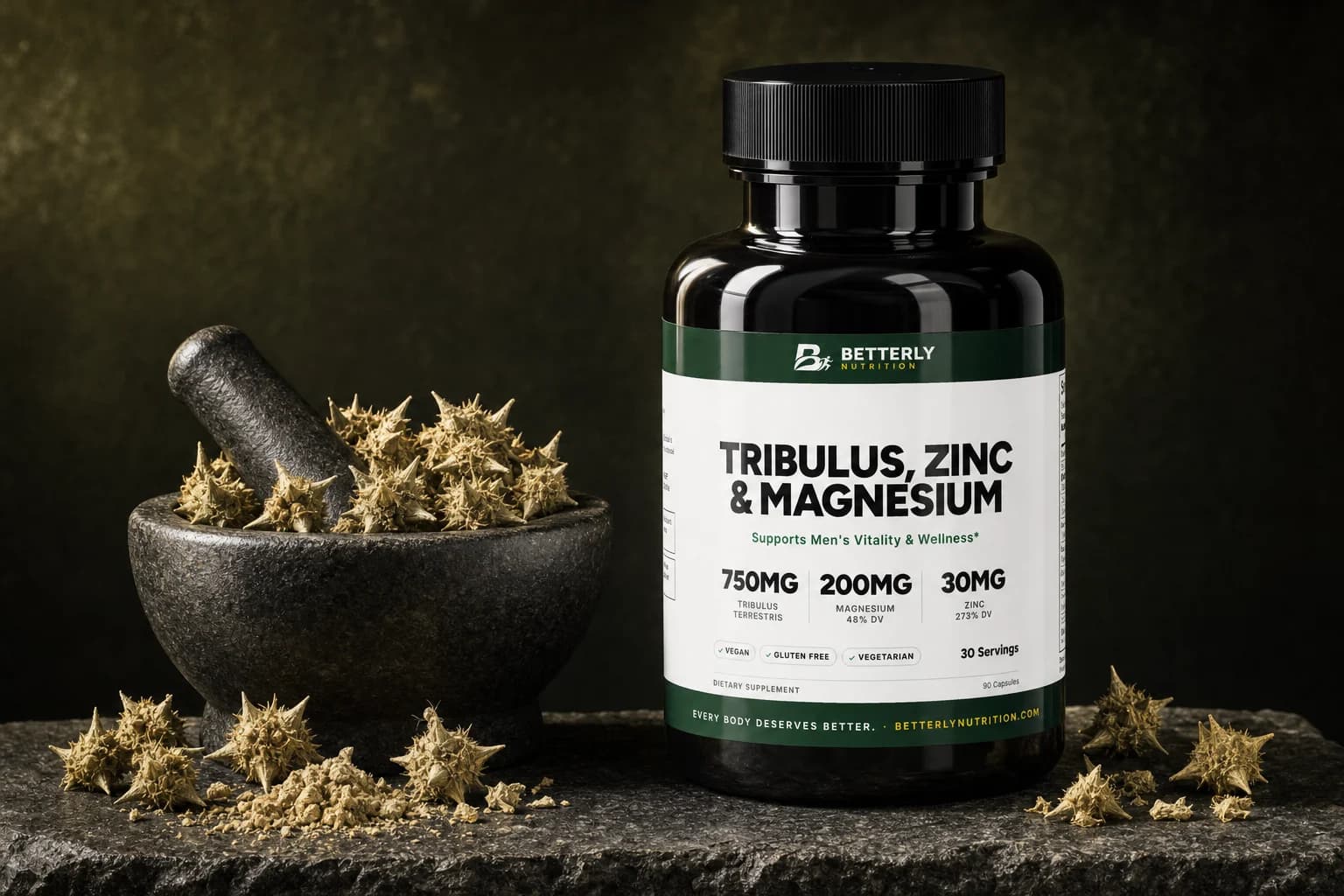
Form matters when you compare labels. Our Tribulus, Zinc & Magnesium Capsules list 50 mg of saw palmetto per 3-capsule serving, and that row is listed as berries rather than as an extract. ODS notes that a small amount of extract can hold what a much larger amount of raw plant does, so 50 mg of berries and 300 mg of extract don't line up by weight.
From our shop: Saw Palmetto & Pygeum Prostate Capsules — both herbs in one capsule, with saw palmetto fruit extract at 300 mg and Pygeum africanum bark extract at 200 mg (standardized to 3% phytosterols) per 2-capsule serving.
How do you take saw palmetto and pygeum capsules?
The Saw Palmetto & Pygeum Prostate Capsules label gives adults 2 capsules a day, taken with 6 to 8 oz of water unless a healthcare professional directs otherwise.
- In metric, the label's water amount is 177 to 237 ml.
- A bottle's 60 capsules last 30 days at 2 a day.
- The directions don't tie the capsules to a meal or an hour, so pick a slot you'll remember.
- The label's caution says "Do not exceed recommended dose." Missed a day? Don't take extra to catch up.
- Under other ingredients, the panel lists gelatin for the capsule plus brown rice flour.
- The label's one attribute claim is non-GMO, with no vegan or vegetarian claim.
Our guide on when to take saw palmetto goes deeper on timing.
From our shop: Saw Palmetto & Pygeum Prostate Capsules — a 30-serving bottle of gelatin capsules whose nine panel rows each print their own amount, with nothing tucked into a blend.
Who can skip a saw palmetto and pygeum formula?
Skip a saw palmetto and pygeum formula if you want only one of the herbs, or if you need bark origin and farmed-or-wild sourcing our label doesn't state.
Start with the one-herb case. If saw palmetto is what you came for, our formula adds a bark extract that has no NCCIH fact sheet behind it. If pygeum is why you're here, you'd be taking 300 mg of saw palmetto with it. Either way, a single-herb label from another seller is the closer match, since we don't sell one.
Sourcing is the other reason. After reading about the harvest history and the CITES listing, some shoppers only want bark from farmed trees or from a named country. Our panel gives the species and the plant part and nothing about where the trees grew. If origin decides it for you, get that answer before you buy, from us or anyone else.
Who should check with a healthcare provider first?
Check with a healthcare provider before saw palmetto and pygeum if you're pregnant or nursing, under 18, taking any medicine, managing a medical condition or facing a procedure.
NCCIH offers no safety or interaction summary for pygeum, so there's no NCCIH list to check it against the medicines you take. The agency's broader advice still covers it: if you take any medicine, ask your provider before trying an herbal product, because certain herbs can interact with medicines in harmful ways.
A two-herb blend also means naming both herbs when you ask. On our label, pygeum appears under its older name, Pygeum africanum, so use that name alongside saw palmetto and give the amounts from the panel.
The caution on our panel names four groups who should consult a physician first: anyone pregnant, nursing, under 18 or managing a medical condition. The directions themselves are written for adults. NCCIH separately says saw palmetto may be unsafe during pregnancy or breastfeeding, so those aren't times to start this formula.
NCCIH says saw palmetto doesn't appear to affect PSA (prostate-specific antigen) readings, but tell whoever orders your blood work, or plans surgery or dental work, what you take. Our saw palmetto side effects guide covers what to mention before those appointments and how the formula's vitamin E row fits in.
FAQ: saw palmetto vs pygeum
What is Pygeum africanum?
Pygeum africanum is the older botanical name for Prunus africana, an African evergreen also called African cherry. A 2014 review in the Journal of Alternative and Complementary Medicine lists the two names as synonyms. Supplements use the bark. Our label keeps the older name, "Pygeum africanum Extract (bark)," at 200 mg per 2-capsule serving.
How much pygeum should you take per day?
NCCIH gives no daily amount for pygeum, so the label on the product you buy sets the amount, and you shouldn't go past it. Our Saw Palmetto & Pygeum Prostate Capsules provide 200 mg of pygeum extract, standardized to 3% phytosterols, per 2-capsule serving, taken as 2 capsules daily. Other brands differ, so compare the percentage as well as the milligrams.
Does pygeum have side effects?
Pygeum has no NCCIH fact sheet, so NCCIH gives no side effect list for it, and we won't guess. For saw palmetto, NCCIH lists mild side effects that don't happen often, including digestive upset, dizziness and headache. If you notice anything unusual once you begin a formula with both herbs, stop it and let your provider know what you took and when you started.
Is pygeum bark powder the same as pygeum extract?
No, pygeum bark powder and pygeum extract aren't the same. Powder is ground bark. ODS explains that an extract is made by soaking a botanical in a liquid such as water or alcohol, and the result can be dried for use in capsules. Equal weights of the two can differ a lot. On our label, "Extract" and the 3% figure show which kind you're reading.
Sources
- Saw Palmetto: Usefulness and Safety (National Center for Complementary and Integrative Health)
- Botanical Dietary Supplements: Background Information, Fact Sheet for Consumers (NIH Office of Dietary Supplements)
- Prunus africana (Hook.f.) Kalkman: The Overexploitation of a Medicinal Plant Species and Its Legal Context (Journal of Alternative and Complementary Medicine, 2014, via PMC)
- Notice to the Wildlife Import/Export Community: Supplements, June 2, 2022 (U.S. Fish and Wildlife Service)
If this left you looking for somewhere to start, read saw palmetto and pygeum bark extract capsules — its amounts per serving are listed on the page. For the practical questions this raises, how dosing, sourcing and subscriptions work is answered in one place.