On this page
- Key takeaways
- When to take alpha-GPC: morning, afternoon or night?
- What's the latest you can take alpha-GPC with caffeine?
- When should you take alpha-GPC before a workout?
- Can you take alpha-GPC on an empty stomach?
- Does alpha-GPC make you sleepy or keep you awake?
- Can you take alpha-GPC with creatine?
- How do you fit the Focus Powder and Energy Drops into your day?
- When should you skip an alpha-GPC supplement?
- Who should check with a healthcare provider first?
- FAQ: when to take alpha-GPC
- Sources
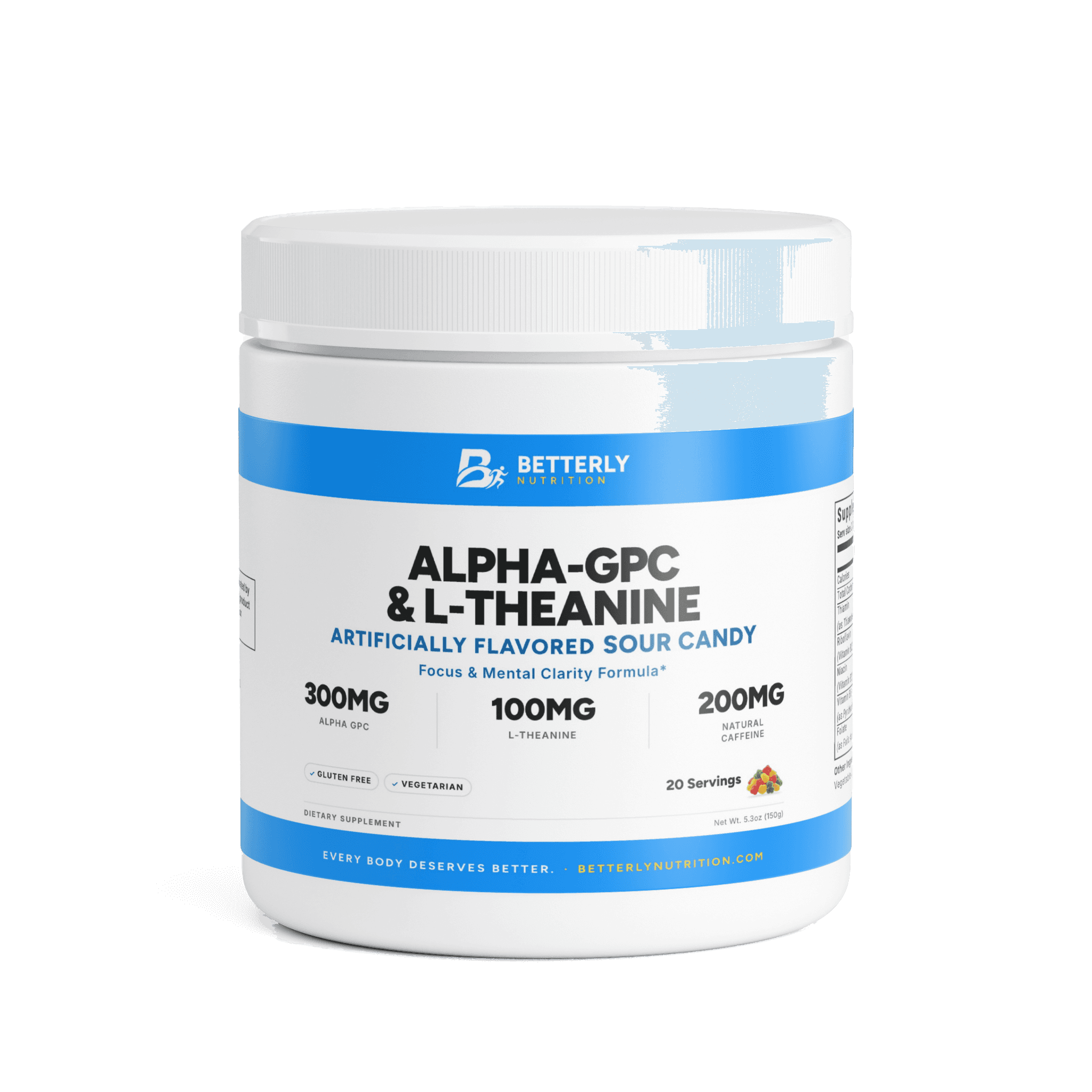
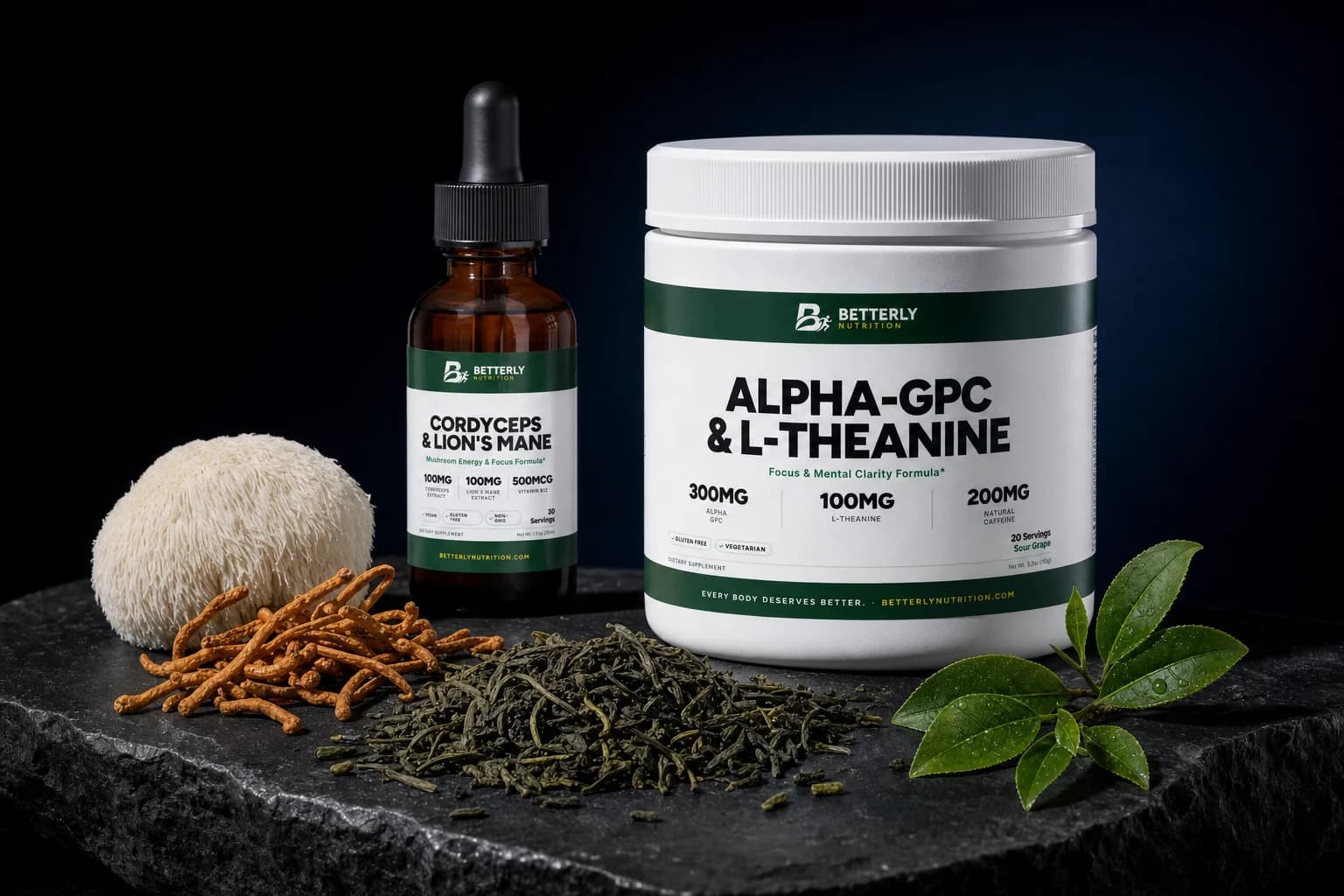
The short answer: When to take alpha-GPC depends on what shares the scoop. Our Focus Powder lists 300 mg of alpha-GPC beside 200 mg of caffeine in each 2-scoop serving, and its label names no time. So the caffeine sets the schedule: morning or early afternoon, at least 8 hours before bed. Our Energy Drops hold 25 mg of alpha-GPC per 1 ml with no caffeine listed, so any daytime slot works.
Key takeaways
- Neither alpha-GPC label in this guide names a time of day or a meal, so the rest of each Supplement Facts panel decides the timing.
- Our Alpha-GPC & L-Theanine Focus Powder lists 200 mg of natural caffeine in every 2-scoop (7.5 g) serving, and an NIH sleep page says caffeine's effects can last up to 8 hours.
- Our Cordyceps & Lion's Mane Energy Drops carry 25 mg of Alpha GPC in each 1 ml (30-drop) serving and no caffeine, so bedtime math doesn't apply to them.
- No federal source we found names a pre-workout window for alpha-GPC itself, so the powder's caffeine decides its gym timing too.
Where we stand: every product in this guide is one Betterly sells, so the timing below comes from our printed labels and four federal pages, and we'll say plainly where the formula we sell makes a late serving a bad idea.
When to take alpha-GPC: morning, afternoon or night?
Morning or early afternoon suits our caffeinated Focus Powder, while our Energy Drops, with no caffeine on the panel, fit any daytime slot.
Both products in this guide pair alpha-GPC, a choline compound whose full chemical name is L-alpha-glycerylphosphorylcholine, with other ingredients. Those neighbors usually matter more for your clock than the alpha-GPC row does.
The label on our Alpha-GPC & L-Theanine Focus Powder (Sour Grape) tells you how to mix it but not when to drink it. Mixing takes 16 fl oz (480 ml) of water for every 2 scoops (7.5 g), with room to adjust to taste. The timing clue sits on the panel instead: 200 mg of natural caffeine from green tea, one row below the 300 mg of Alpha GPC.
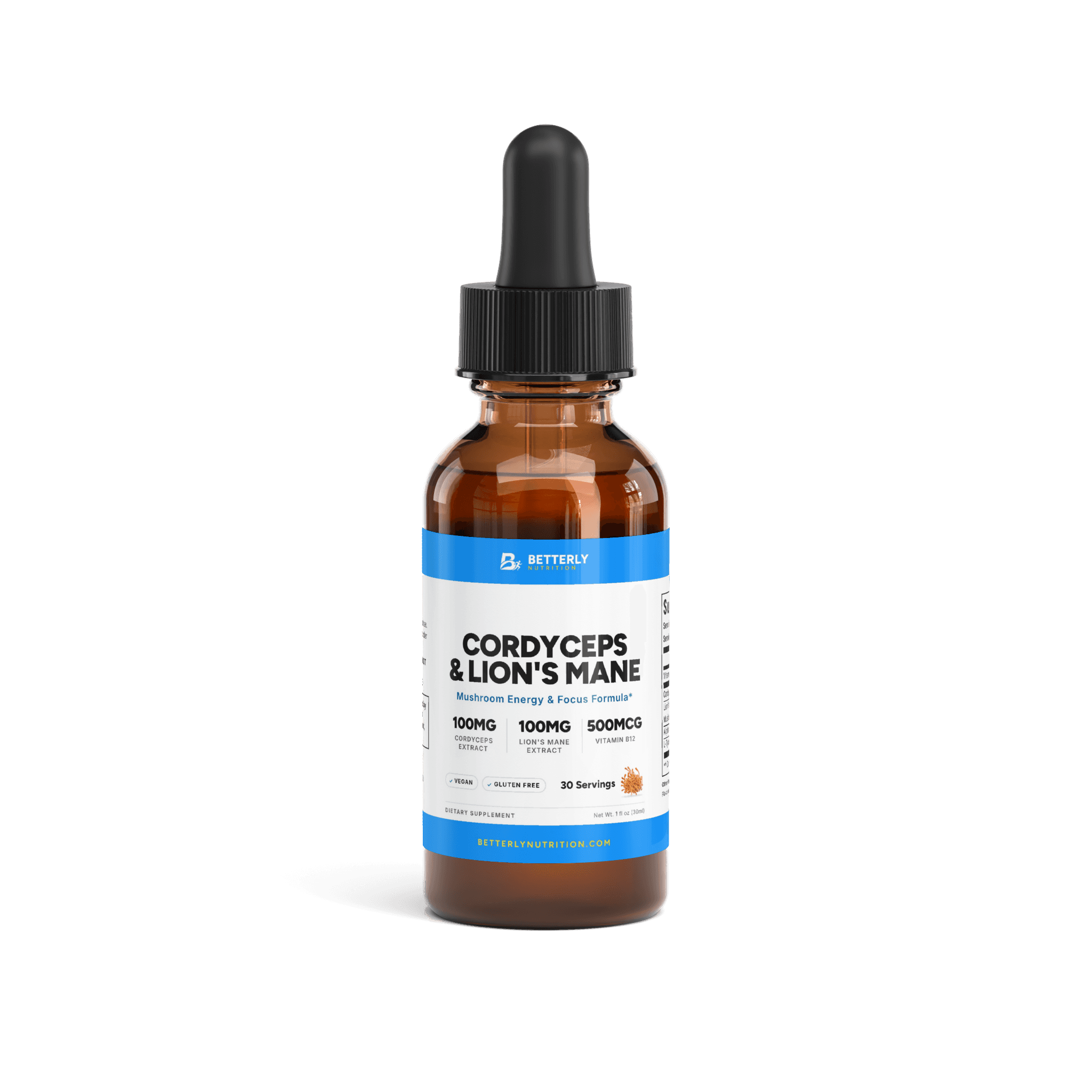
Directions for the Cordyceps & Lion's Mane Energy Drops are just as quiet about the hour, asking only that you shake the bottle and take 1 ml (30 drops) each day. Each dropperful lists 25 mg of Alpha GPC alongside cordyceps and lion's mane extracts (100 mg of each), 25 mg of L-tyrosine and 500 mcg of vitamin B12. Nothing on that panel is caffeine.
Prefer Sour Candy or Sour Gummi Worm? Flavor doesn't move the clock, since those tubs list the same 200 mg of caffeine per serving. Curious why the powder pairs alpha-GPC with L-theanine? Our guide to that stack walks through the panel.
What's the latest you can take alpha-GPC with caffeine?
Finish a caffeinated alpha-GPC drink like our Focus Powder at least 8 hours before bed, since the NHLBI says caffeine's effects can last that long.
The NIH's National Heart, Lung, and Blood Institute (NHLBI) says on its healthy sleep habits page that caffeine's effects can last up to 8 hours. Its example: coffee late in the afternoon can make falling asleep harder that night.
MedlinePlus, the NIH's consumer health library, gives a shorter span of four to six hours for how long caffeine's effects may linger. We plan with the NHLBI's 8 hours, because that's the figure written with sleep in mind.
One 2-scoop serving, set against both numbers:
| Focus Powder serving at | You may still feel it until (MedlinePlus) | Effects can last until (NHLBI) |
|---|---|---|
| 7 a.m. | 11 a.m. to 1 p.m. | 3 p.m. |
| 10 a.m. | 2 p.m. to 4 p.m. | 6 p.m. |
| 1 p.m. | 5 p.m. to 7 p.m. | 9 p.m. |
| 3 p.m. | 7 p.m. to 9 p.m. | 11 p.m. |
| 5 p.m. | 9 p.m. to 11 p.m. | 1 a.m. |
Match the last column to your bedtime. If you're asleep by 10 p.m., any serving after 2 p.m. runs past that line, and a 5 p.m. serving could still be at work at 1 a.m. For most daytime schedules, early afternoon is the practical cut-off.
Working nights? The same NHLBI page suggests shift workers keep caffeine to the first part of their shift. The drops aren't in the table because their panel lists no caffeine.
When should you take alpha-GPC before a workout?
Time our Focus Powder by its caffeine, because no federal source we found sets a pre-workout window for alpha-GPC itself, and the label doesn't name one.
Caffeine has clearer guidance. An exercise and athletic performance fact sheet from the NIH Office of Dietary Supplements (ODS) says sports-medicine experts suggest taking caffeine 15 to 60 minutes before you exercise. That's about caffeine, not alpha-GPC, and ODS adds that caffeine is most likely to help with endurance work and stop-start sports like soccer and tennis, and it doesn't help short, intense efforts like sprinting or weightlifting.
Evening training is where this breaks down. Say you head out for a 6 p.m. run and turn in at 10:30. A 5:15 p.m. serving would still sit well inside the NHLBI's 8-hour span at lights-out, so skip the powder that day rather than trade sleep for a scoop.
Weighing a stimulant drink against a gym-specific formula? Our side-by-side of pre-workouts and energy drinks times both.
From our shop: Alpha-GPC & L-Theanine Focus Powder (Sour Grape) — a sour grape drink mix with 300 mg of Alpha GPC and 200 mg of natural caffeine in each 2-scoop (7.5 g) serving, which is why we keep it to the first half of the day.
Can you take alpha-GPC on an empty stomach?
Yes, by the label: neither our Focus Powder nor our Energy Drops mentions food, so taking alpha-GPC with or without food fits their directions.
The powder barely counts as food anyway. Each 2-scoop serving lists 10 calories and 2 g of total carbohydrates, sweetened with sucralose.
The caffeine is what to watch first thing. Caffeine prompts your stomach to release more acid, according to MedlinePlus, and that sometimes means an upset stomach. If a serving before breakfast doesn't sit well, drink it with your meal or just after.
The drops, a 1 ml dropperful sweetened with stevia, name no meal either, so take them whenever you'll remember.
Does alpha-GPC make you sleepy or keep you awake?
No federal source we found says alpha-GPC makes you sleepy or keeps you awake. In our Focus Powder, it's the caffeine and the Asian ginseng that can disturb sleep.
The NHLBI calls caffeine a stimulant that can interfere with sleep, and each 2-scoop serving holds 200 mg of it. The ODS exercise sheet says ginseng supplements can disturb sleep as well, and the powder lists 50 mg of Asian ginseng extract. So asking whether you can take alpha-GPC before bed means asking about the whole formula. For the Focus Powder, the answer is no.
Sleepiness can have another cause. If you drink the powder daily and then skip a day, MedlinePlus lists drowsiness among caffeine withdrawal symptoms and says they tend to pass in a couple of days. That slump may be the missing caffeine, not the alpha-GPC.
The drops have no caffeine row, but the bottle calls itself a "Mushroom Energy & Focus Formula." That's daytime language, and we haven't found anything on how this blend affects sleep, so we'd keep them to the day.
Can you take alpha-GPC with creatine?
Neither our Focus Powder nor our Creatine Monohydrate Powder label warns against using both, and creatine's directions follow a daily count, not a workout clock.
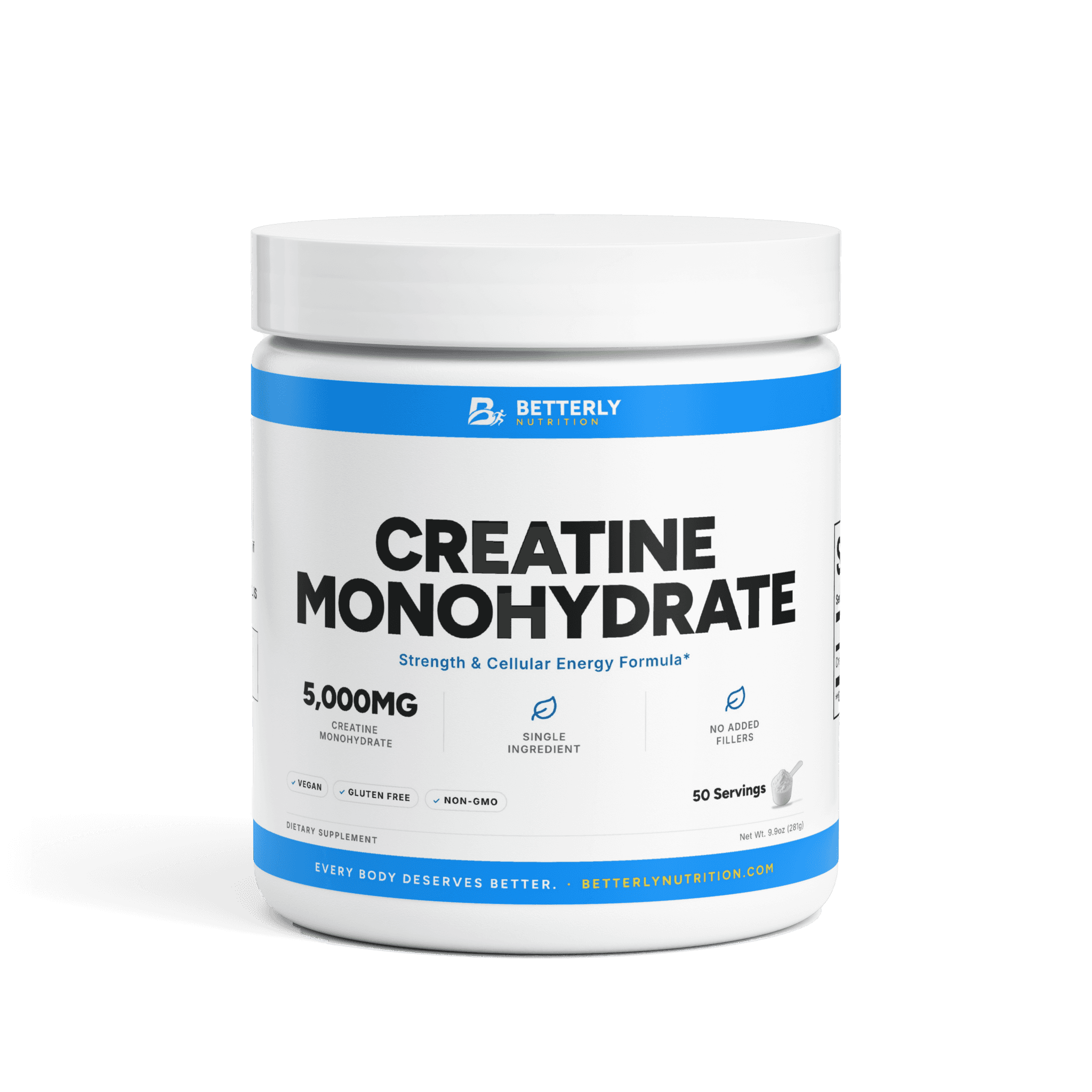
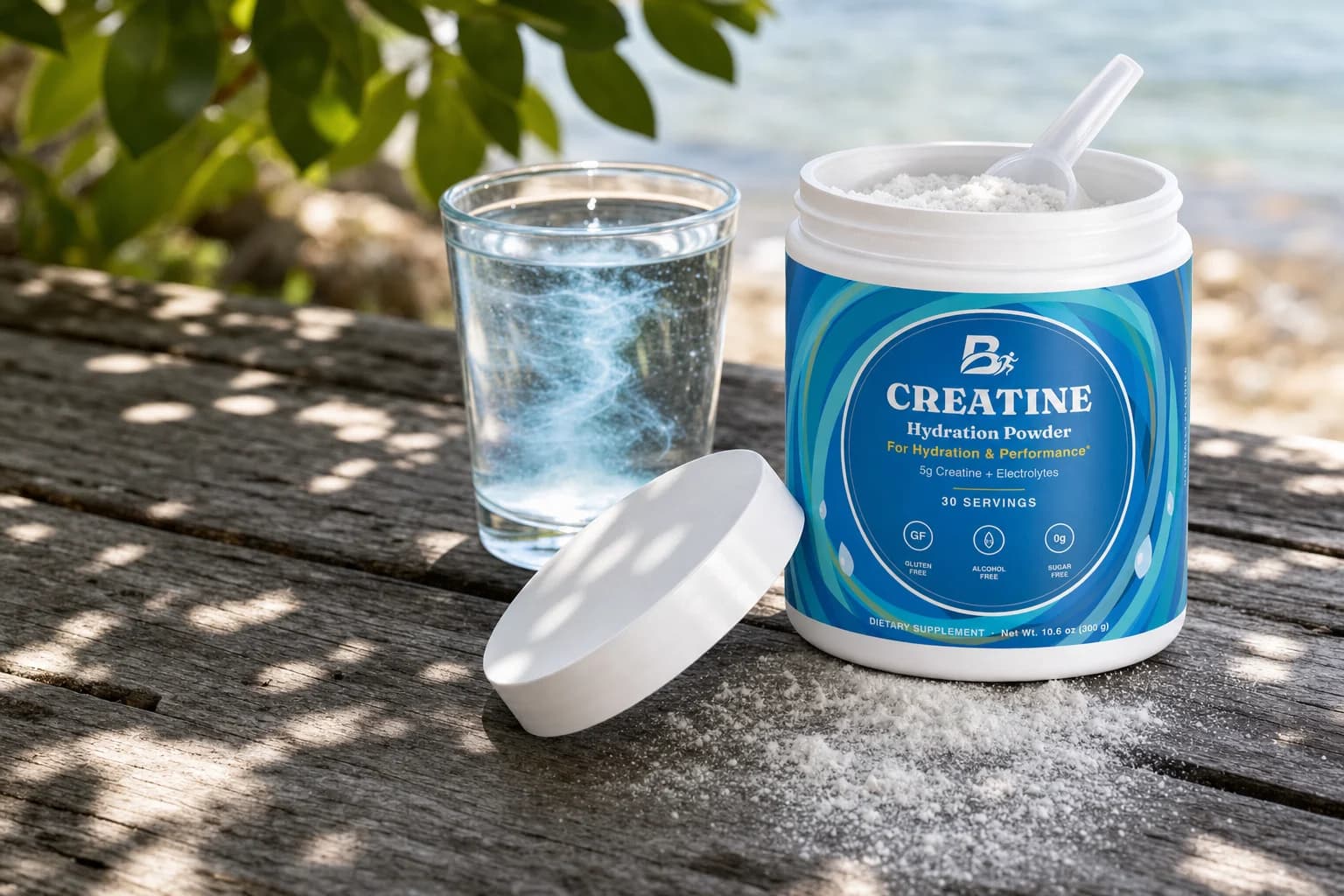
Our Creatine Monohydrate Powder holds 5,000 mg of creatine monohydrate in each 1-scoop (5.6 g) serving and nothing else, so there's no caffeine to plan around. For the first 5 days, the label calls for four scoops a day, each stirred into 8 oz (237 ml) of water or juice. From day 6, the directions drop to once or twice daily.
ODS describes a similar start in research, where people loaded with roughly 20 grams daily for 5 to 7 days before dropping to 3 to 5 grams. The label's upper option of 2 scoops (10,000 mg) goes past that range, so we'd stay at one scoop after the first 5 days.
With no caffeine to budget, creatine can go with breakfast, dinner or a post-workout drink, while the Focus Powder keeps its early slot.
Does the pair do anything together? The ODS sheet is candid that most ingredient combinations haven't been tested, so their combined effects and safety are unknown. New to creatine? Our creatine starter guide covers the basics.
How do you fit the Focus Powder and Energy Drops into your day?
Give the Focus Powder one early slot, 2 scoops (7.5 g) in 16 fl oz (480 ml) of water, and take the Energy Drops' 1 ml (30 drops) at a daytime hour.
- Tie the powder to a morning habit, like your commute, so it doesn't drift later.
- Think of the 5-scoop line as a cap, not a goal. Five scoops hold 500 mg of caffeine, 100 mg over the 400 mg daily level MedlinePlus considers not harmful for most people. Our own stopping point is one 2-scoop serving a day.
- Count your other caffeine. MedlinePlus puts an 8-ounce cup of coffee at 95 to 200 mg, so one serving plus a strong mug can reach 400 mg before lunch.
- Give the drops a fixed daytime hour. Shake them first; the label says 1 ml (30 drops) daily and warns against going past the recommended dose.
- Mind the 90-day clock. The tub says to consume it within 90 days, and at one serving a day its 20 servings last under three weeks.
Looking for a focus formula without caffeine for the hours after your cut-off? Several in our Nootropics & Focus collection list no caffeine row, so scan each panel before you pick one.
When should you skip an alpha-GPC supplement?
You can skip an alpha-GPC supplement if you only train in the evening, already rely on a caffeinated pre-workout, or were shopping for something to take at bedtime.
Check these against your calendar before you buy:
- You only train after work. Hitting the ODS 15-to-60-minute window before a 7 p.m. session means drinking the powder's 200 mg of caffeine around 6:15, still inside the NHLBI's 8-hour span until after 2 a.m.
- A caffeinated pre-workout already owns your pre-gym slot. The Focus Powder would add a second caffeine source to the same hour, so pick one product, not both.
- You wanted something for bedtime. The powder's caffeine rules that out, and the drops' label pitches energy and focus, not rest.
- Your wake-up time swings from day to day, which makes a steady 8-hour caffeine gap before sleep hard to protect.
From our shop: Cordyceps & Lion's Mane Energy Drops — a stevia-sweetened liquid with 25 mg of Alpha GPC and 100 mg each of cordyceps and lion's mane extracts per 1 ml serving, and no caffeine row to time around.
Who should check with a healthcare provider first?
Before you build a daily alpha-GPC routine, ask a healthcare provider if you're pregnant or nursing, under 18, taking any medicine, or managing a medical condition.
The drops and the creatine add under-18s to the groups the powder's label names. For a caffeine and ginseng schedule, look closest at these:
- Teens: the ODS exercise sheet advises teenagers to stay at or under 100 mg of caffeine a day, and one 2-scoop serving holds twice that. Some experts would keep Asian ginseng away from children, NCCIH notes.
- Pregnancy and breastfeeding: MedlinePlus says caffeine crosses the placenta and that a little of what you drink reaches a nursing baby. NCCIH's Asian ginseng page adds that some research suggests the herb may be unsafe by mouth during pregnancy, and that little is known about its safety while breastfeeding.
- Medicines: NCCIH flags possible interactions between Asian ginseng and some medications, and ODS notes that ginseng can weaken the blood-thinning effect of warfarin.
- Surgery coming up: blood clotting is one of the things NCCIH says Asian ginseng may affect, so list the powder when your surgical team asks about supplements.
If your days already run on a tight schedule of medicines or overnight shifts, your provider can help you pick a slot for the powder that fits around them.
FAQ: when to take alpha-GPC
How long does alpha-GPC last?
We can't put a number on how long alpha-GPC lasts, because neither our labels nor our federal sources give one. The caffeine sharing the Focus Powder's scoop is easier to time. MedlinePlus says it peaks in your blood within an hour and its effects may be felt for four to six hours, while the NHLBI's sleep page stretches that to as long as 8 hours.
Can you take alpha-GPC every day?
For the Energy Drops, yes: their alpha-GPC comes with directions to take 1 ml daily. The Focus Powder label is less specific. It caps you at 5 scoops daily but doesn't give a number of days. A daily powder habit also means 200 mg of caffeine every day, and if you stop, MedlinePlus lists withdrawal symptoms such as headaches, which usually fade after a couple of days.
Can you take alpha-GPC twice a day?
Taking alpha-GPC twice a day doesn't fit the Energy Drops, whose directions say 1 ml daily. The Focus Powder label would technically allow two 2-scoop servings under its 5-scoop cap, but that's 400 mg of caffeine, and a second serving usually lands in the afternoon, closer to bedtime. We'd keep the powder to one serving, taken early.
Can you take alpha-GPC with prescription medication?
Ask your pharmacist or doctor before pairing an alpha-GPC product with a prescription, since the Focus Powder's caution names medication. Timing can come into it too. The ODS exercise sheet notes that the medicine cimetidine can slow the removal of caffeine from your body, which raises the risk of caffeine side effects. Let them read every row, because the caffeine and ginseng count as much as the alpha-GPC.
Sources
- NIH National Heart, Lung, and Blood Institute: Sleep Deprivation and Deficiency: Healthy Sleep Habits
- MedlinePlus (U.S. National Library of Medicine): Caffeine
- NIH Office of Dietary Supplements: Dietary Supplements for Exercise and Athletic Performance, Fact Sheet for Consumers
- National Center for Complementary and Integrative Health: Asian Ginseng: Usefulness and Safety
If this left you looking for somewhere to start, read alpha-GPC powder with natural caffeine — its amounts per serving are listed on the page. For the practical questions this raises, how dosing, sourcing and subscriptions work is answered in one place.