On this page
- Key takeaways
- Alpha-GPC vs citicoline vs choline bitartrate: what's the difference?
- Is alpha-GPC the same as choline?
- Is citicoline the same as CDP-choline, or as plain choline?
- Is alpha-GPC or citicoline better?
- Alpha-GPC vs choline bitartrate: what do our labels show?
- Can you take CDP-choline and alpha-GPC together?
- How do you take our alpha-GPC and choline products?
- When don't you need a choline supplement?
- Who should check with a healthcare provider first?
- FAQ: alpha-GPC vs citicoline
- Sources
The short answer: Alpha-GPC vs citicoline comes down to what rides along with the choline. Alpha-GPC binds choline to glycerophosphate and is about 40% choline by weight. Citicoline, also sold as CDP-choline, binds it to cytidine and is only about one-fifth choline. Choline bitartrate, one of the forms multivitamins often use, is about 41%. No federal source we rely on names a winner, so let the whole panel decide.
Key takeaways
- Alpha-GPC, citicoline (CDP-choline) and choline bitartrate all supply choline, but each one pairs it with a different partner molecule.
- A label line reading "Alpha GPC 300 mg" weighs the whole compound, while "Choline (as Choline Bitartrate) 50 mg" weighs only the choline.
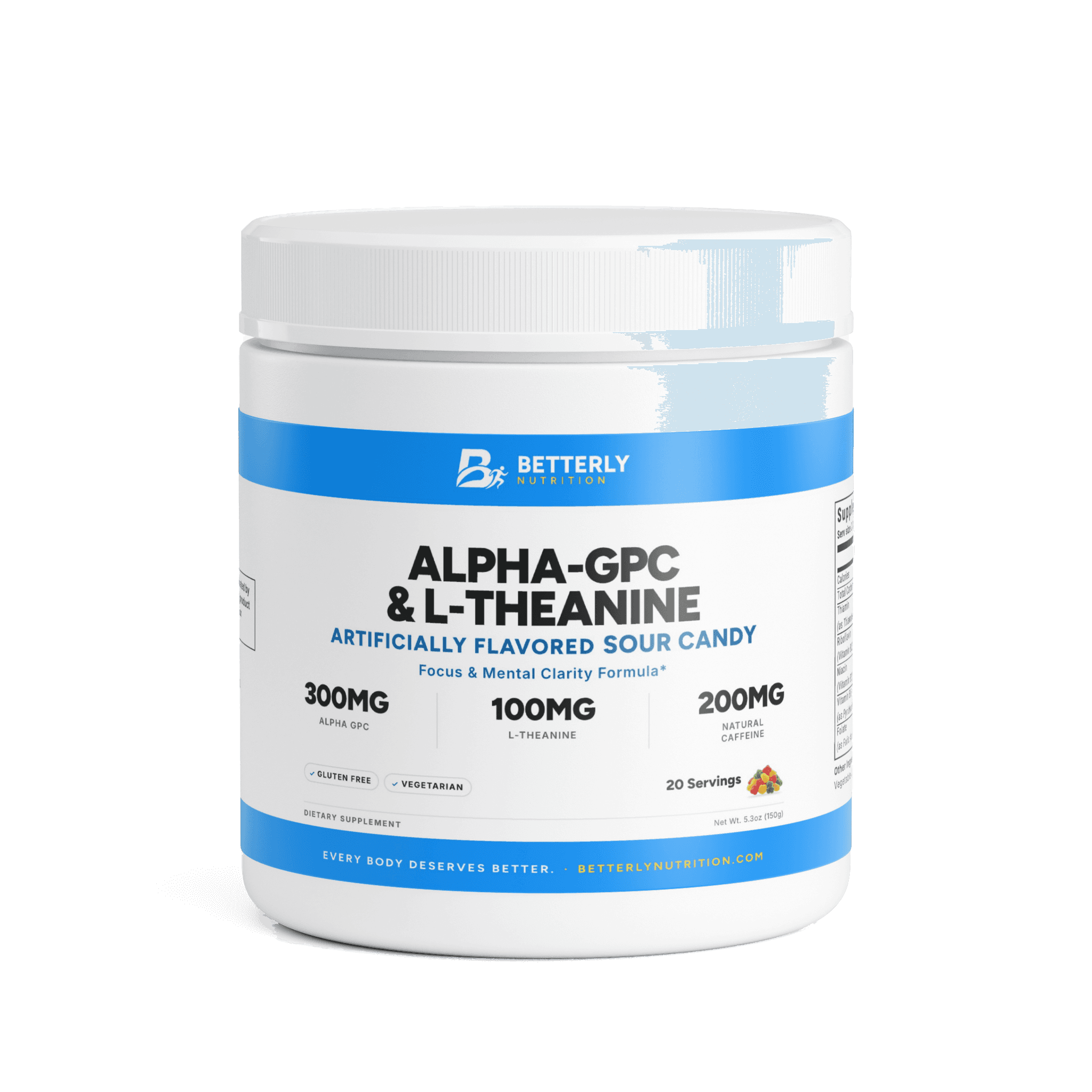
- Each 2-scoop serving of Betterly's Alpha-GPC & L-Theanine Focus Powder (Sour Grape) carries 300 mg of alpha-GPC, sharing the scoop with 200 mg of natural caffeine.
- The adult upper limit for choline listed by the NIH Office of Dietary Supplements is 3,500 mg a day, and it counts choline from food and drinks as well as supplements.
Where we're coming from: Betterly sells alpha-GPC and choline bitartrate in several formulas, and we don't sell citicoline at all. Every product number below is transcribed from our own Supplement Facts panels, and every health and safety statement points to a named federal page. The choline percentages are our own arithmetic from molecular weights, and the chemistry notes are general background.
Alpha-GPC vs citicoline vs choline bitartrate: what's the difference?
Alpha-GPC, citicoline and choline bitartrate differ in the partner molecule bound to choline, and that partner decides how much of each milligram is actually choline.
| Alpha-GPC | Citicoline (CDP-choline) | Choline bitartrate | |
|---|---|---|---|
| Choline is bound to | Glycerophosphate | Cytidine, through two phosphates | Tartaric acid, as a salt |
| Choline by weight | About 40% | About 20% | About 41% |
| How a panel lists it | "Alpha GPC" in mg, no % DV | "Citicoline" in mg, no % DV | "Choline (as choline bitartrate)" in mg, with % DV |
| Covered in this guide | Focus Powder, Energy Drops, GABA capsules | None | Choline & DHA capsules |
The second row holds the surprise: choline bitartrate packs about as much choline into each milligram as alpha-GPC does. Citicoline carries about half as much, because cytidine and its two phosphates make up most of the molecule. Those rounded shares are chemistry, not label claims.
Is alpha-GPC the same as choline?
No. Alpha-GPC is a compound that contains choline, and choline is the nutrient itself, so 300 mg of alpha-GPC isn't 300 mg of choline.
The choline fact sheet from the NIH Office of Dietary Supplements (ODS) describes it as a nutrient found in many foods. Your brain and nervous system use it to regulate memory, mood and muscle control, and your cells need it to build their outer membranes.
The long chemical name behind alpha-GPC is L-alpha-glycerylphosphorylcholine. That ODS sheet doesn't mention it, or citicoline, by name. Instead, it says the multivitamins that include choline often use choline bitartrate, phosphatidylcholine or lecithin. Our alpha-GPC and L-theanine stacking guide covers how alpha-GPC sits beside caffeine in a drink.
Is citicoline the same as CDP-choline, or as plain choline?
Citicoline and CDP-choline are one molecule under two names, cytidine diphosphate-choline. Neither name means the same thing as plain choline.
"CDP" abbreviates cytidine diphosphate. Cytidine is a nucleoside, one of the building blocks of RNA, and it's linked to choline through two phosphate groups.
That also answers "citicoline vs choline." By our math, every 100 mg of citicoline holds roughly 20 mg of choline, while 100 mg of choline bitartrate holds roughly 41 mg. That says nothing about which form does more. It just means milligrams across forms aren't interchangeable.
Is alpha-GPC or citicoline better?
Neither alpha-GPC nor citicoline gets a ranking from the federal sources we use, so the rest of the panel usually matters more than the form.
The ODS consumer guide Dietary Supplements: What You Need to Know notes that the FDA doesn't determine whether supplements are effective before they're sold.
The ODS choline sheet can't settle this matchup either. Its research notes cover choline intake and choline supplements as a group, so whatever those studies found can't tell you whether one form beats another.
Our practical take:
- Want a choline figure you can count toward the Daily Value? Pick a label with a choline line and a % DV, such as choline bitartrate.
- Want alpha-GPC in a caffeinated drink? Read the caffeine line first, since it drives your day's safety math.
- Settled on citicoline? Compare brands on milligrams, not adjectives, and remember that about a fifth of it is choline.
Alpha-GPC vs choline bitartrate: what do our labels show?
In this guide's four products, alpha-GPC appears at 300 mg, 25 mg and inside one blend, while choline bitartrate gives 50 mg of choline per 2-capsule serving.
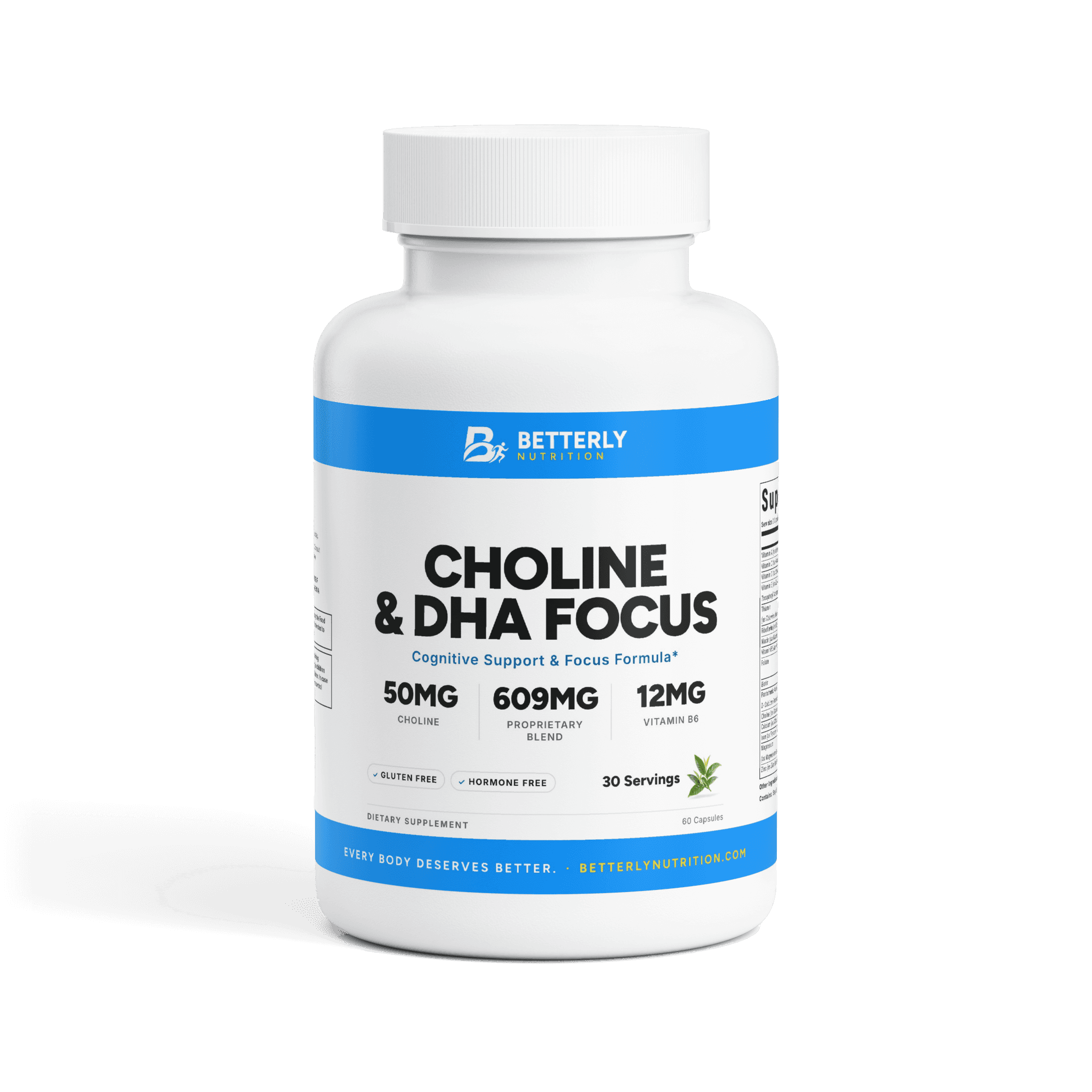
Our Choline & DHA Focus Capsules print "Choline (as Choline Bitartrate)" at 50 mg, 9% DV, per 2-capsule serving. The FDA page on the Daily Value on the Nutrition and Supplement Facts labels sets choline's Daily Value at 550 mg, and 50 mg is 9% of that. So the 50 mg is choline alone, and the bitartrate's own weight isn't shown.
The Alpha-GPC & L-Theanine Focus Powder (Sour Grape) prints "Alpha GPC" at 300 mg per 2-scoop (7.5 g) serving, with its Daily Value marked as not established. That's the whole compound's weight. No choline row sits beneath it, so the tub's label hands you no choline figure to tally.
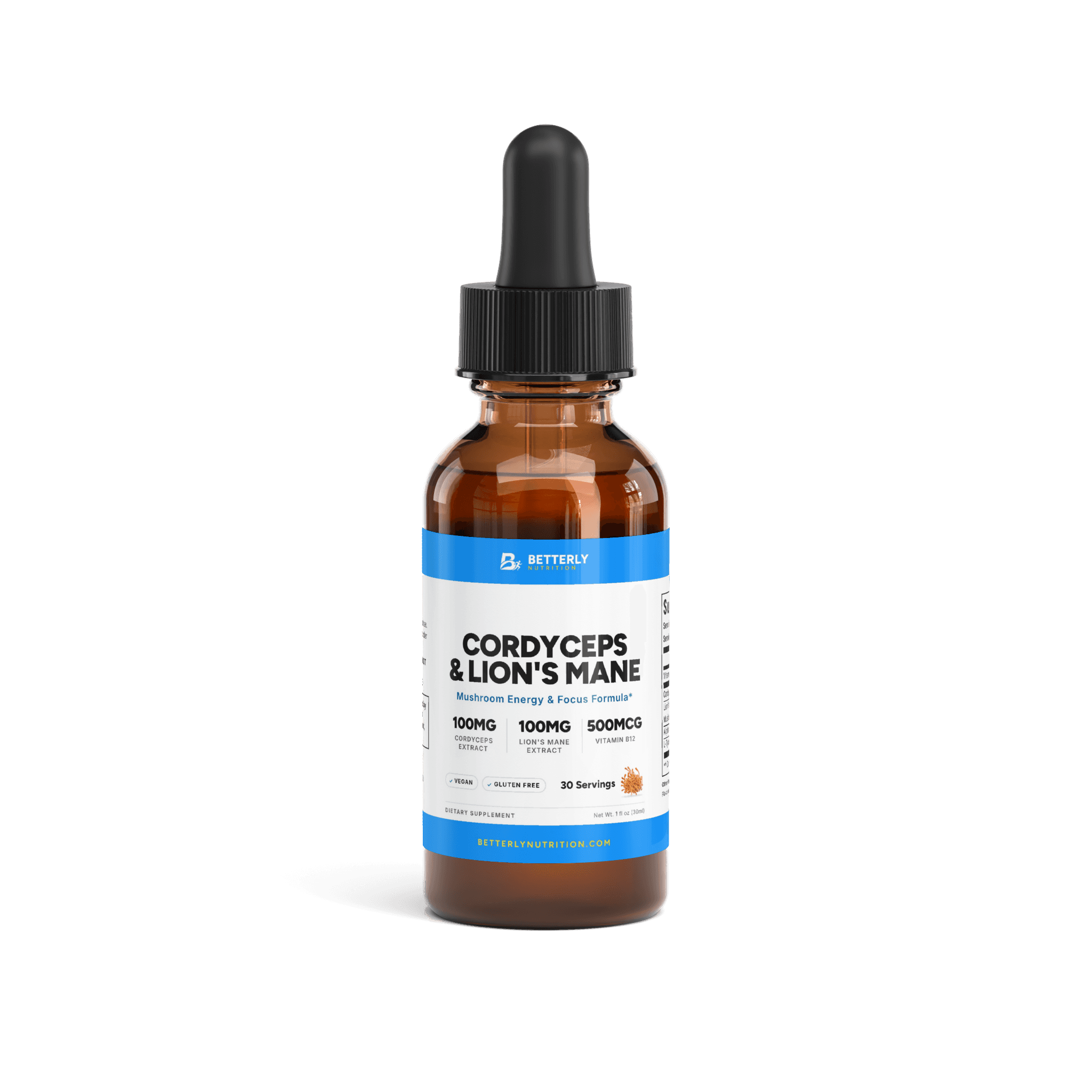
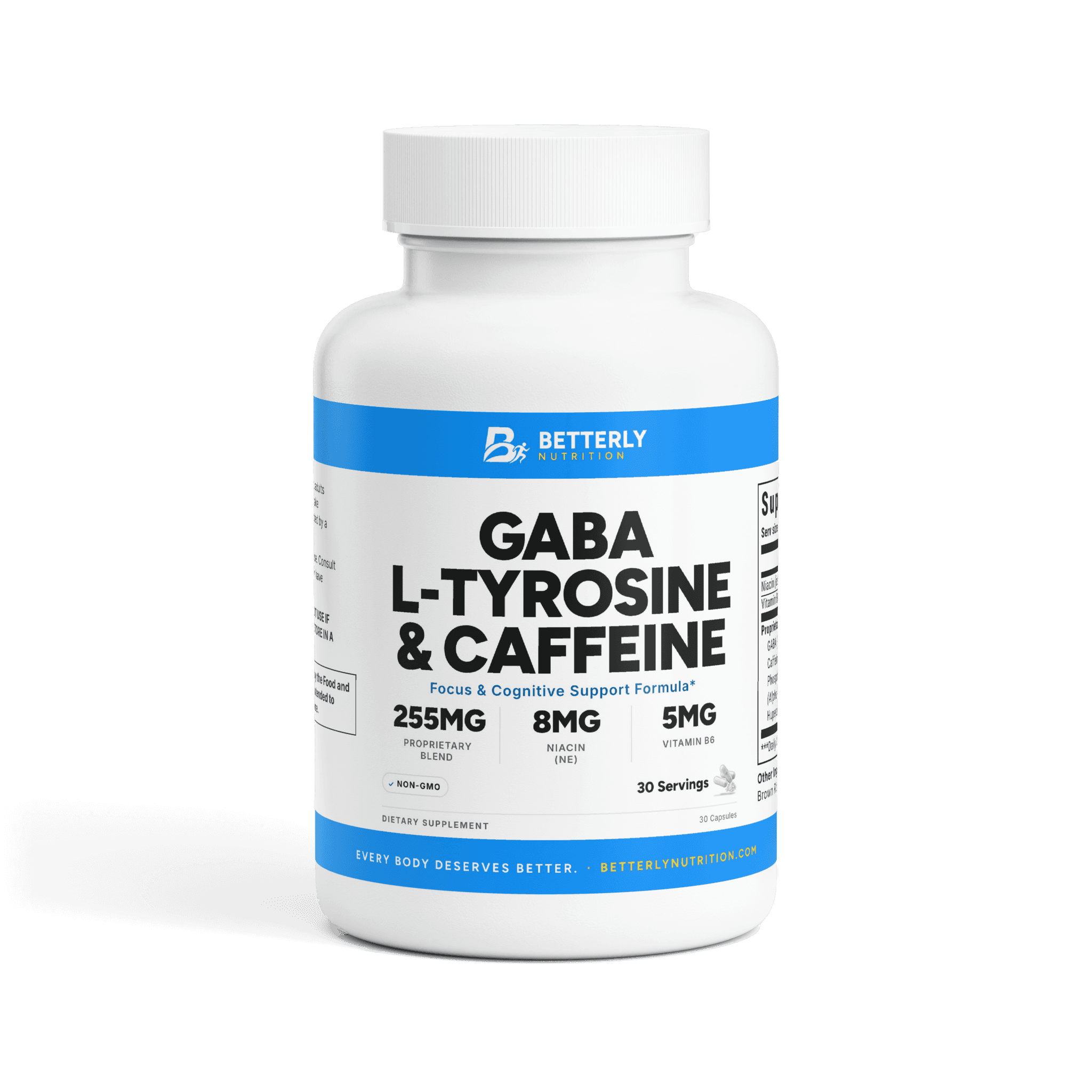
Our other two alpha-GPC products carry far less, or don't say. The Cordyceps & Lion's Mane Energy Drops hold one-twelfth as much alpha-GPC as the powder, 25 mg per 1 ml serving. The GABA, L-Tyrosine & Caffeine Capsules name alpha-GPC in a proprietary blend without its own amount, so it can't be compared on milligrams.
| Product (serving) | Choline source on the panel | Caffeine on the panel |
|---|---|---|
| Focus Powder, Sour Grape (2 scoops, 7.5 g) | Alpha GPC, 300 mg | 200 mg, from green tea |
| Choline & DHA Focus Capsules (2 capsules) | Choline, 50 mg (as bitartrate), 9% DV | No caffeine line |
| Energy Drops (1 ml, 30 drops) | Alpha GPC, 25 mg | No caffeine line |
| GABA, L-Tyrosine & Caffeine Capsules (1 capsule) | Alpha GPC inside a 255 mg blend | In the blend, no amount shown |
Down the columns, only the powder pairs a large alpha-GPC amount with a stated caffeine dose, and only the Choline & DHA capsules give a choline figure you can count.
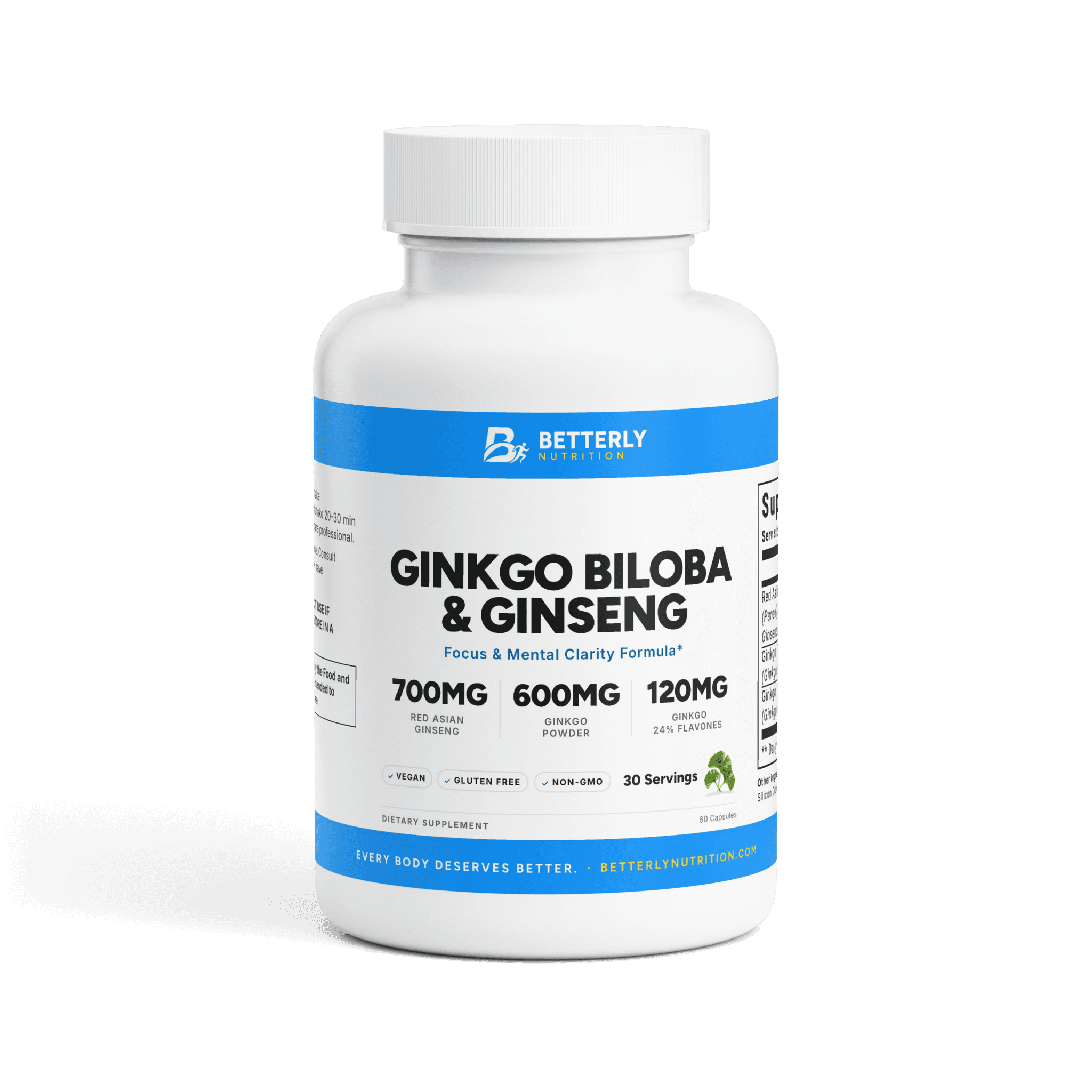
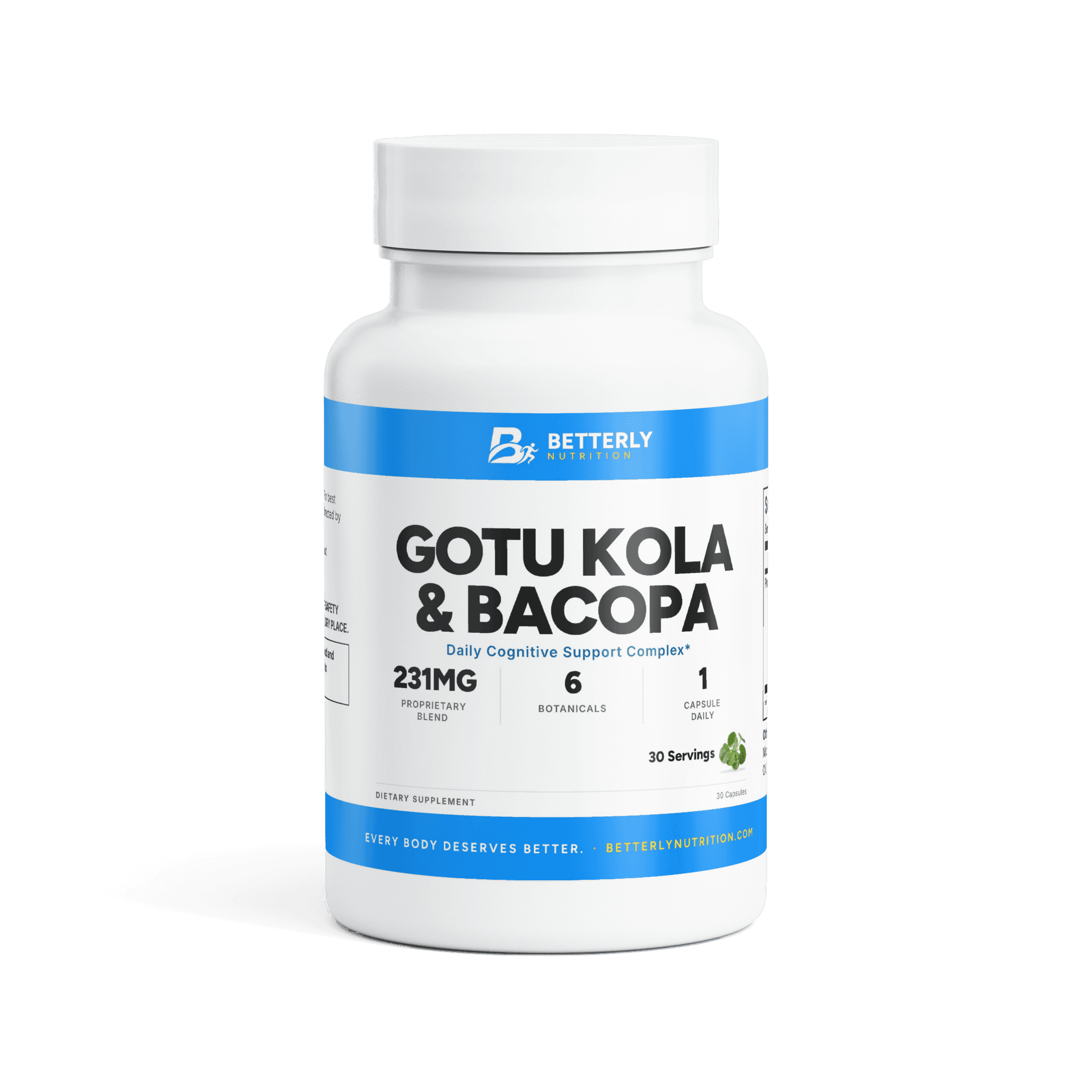
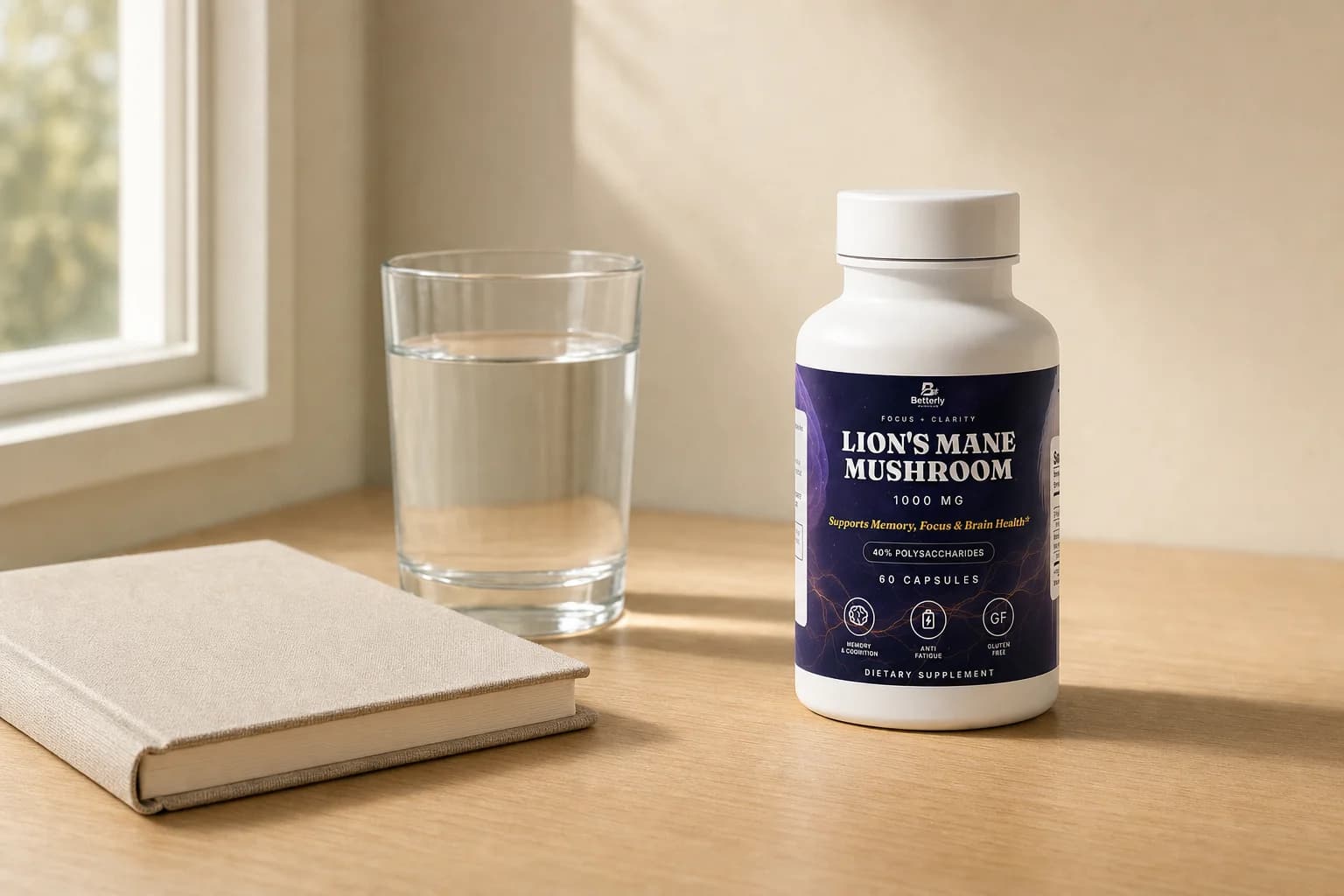
All three Focus Powder flavors print the same amounts. The rest of our Nootropics & Focus collection sits alongside these, including formulas built on bacopa, ginkgo and lion's mane.
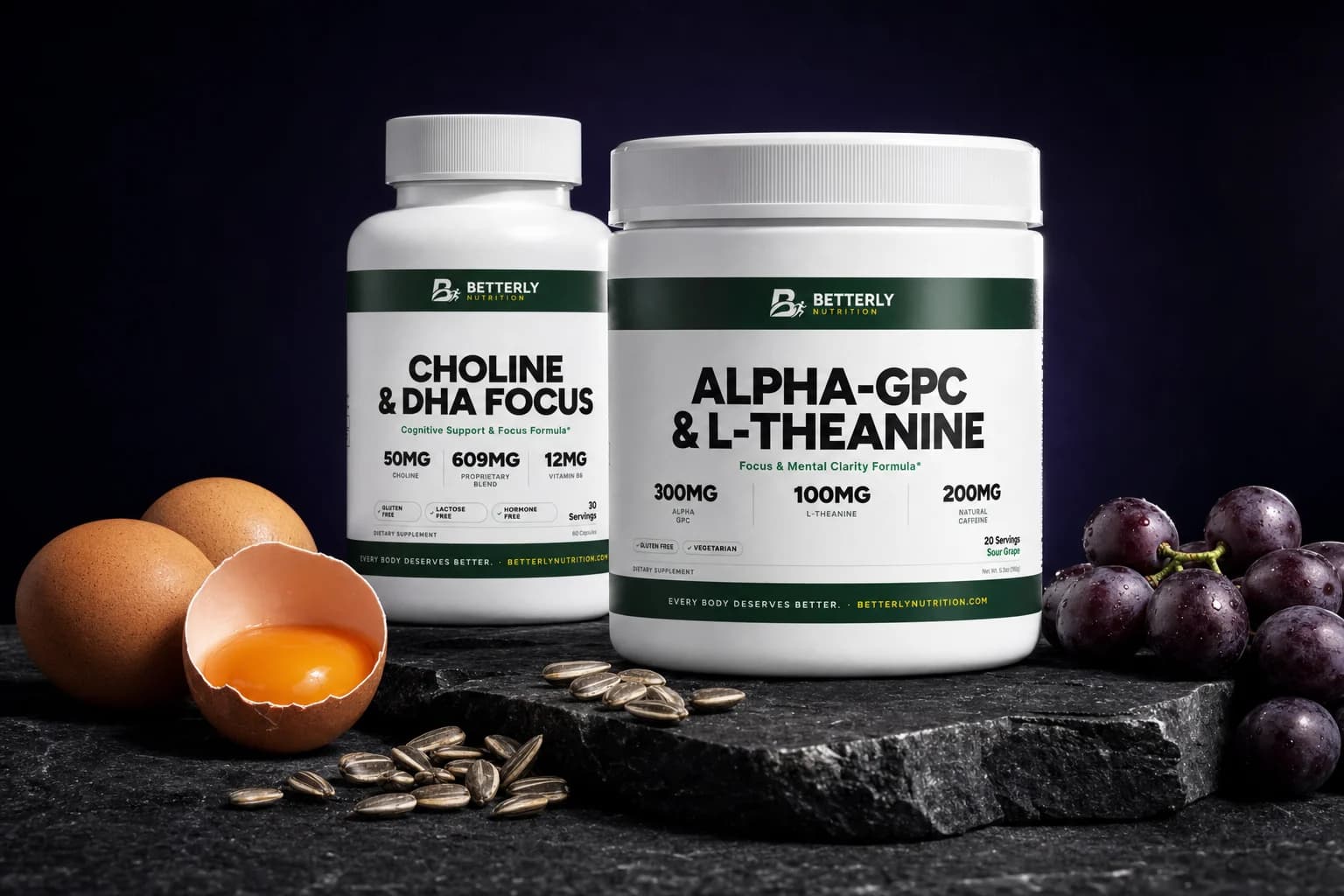
From our shop: Alpha-GPC & L-Theanine Focus Powder (Sour Grape) — our largest alpha-GPC amount, 300 mg per 2-scoop (7.5 g) serving, mixed with 200 mg of natural caffeine from green tea and 100 mg of L-theanine.
Can you take CDP-choline and alpha-GPC together?
Nothing on our labels addresses taking CDP-choline with alpha-GPC, and no federal source we use backs the pairing, so count every choline source toward one daily total.
The adult upper limit that ODS lists for choline is 3,500 mg a day, and it covers what you eat and drink, not just pills. For teens 14 to 18, the listed limit is 3,000 mg. ODS also lists what too much choline can cause, including a fishy body odor, vomiting, heavy sweating and salivation, and liver damage.
ODS's Dietary Supplements: What You Need to Know says side effects are most likely at high doses or when you take many different supplements. Doubling up on choline sources, each tucked inside a multi-ingredient formula, nudges you toward both.
Our own lineup has other overlaps. The Focus Powder and the GABA, L-Tyrosine & Caffeine Capsules both carry caffeine, and the GABA capsule's blend doesn't say how much, so pick one of the two per day. The Choline & DHA capsules' 609 mg blend lists green tea extract with no caffeine amount. Both capsules also list huperzine A in blends without amounts, so don't stack the two capsules.
How do you take our alpha-GPC and choline products?
Follow each product's own label: 2 scoops of Focus Powder in water, 2 Choline & DHA capsules once a day, or 1 ml of Energy Drops daily.
On the Focus Powder, the label's suggested use is to mix 2 scoops (7.5 g) into 16 fl oz (480 ml) of water, adjusting to taste. Its caution line says not to exceed 5 scoops daily, which needs a plain warning. Each 2-scoop serving holds 200 mg of caffeine, so 5 scoops come to 500 mg.
In its consumer update Spilling the Beans: How Much Caffeine Is Too Much?, the FDA has cited 400 mg a day for most adults "as an amount not generally associated with negative effects." That's about two to three 12-ounce cups of coffee. The label's ceiling lands 100 mg above that before any coffee or tea. Our advice is to stop at one 2-scoop serving a day, and its caffeine makes it a morning or early-afternoon drink.
The Choline & DHA Focus Capsules read "Take two (2) capsules once a day," with a caution not to exceed the recommended dose. For the Energy Drops, the directions are to shake the bottle and take 1 ml (30 drops) daily. Neither label sets a time of day, so tie yours to a daily habit you won't skip. Our guide on when to take alpha-GPC covers timing.
If caffeine doesn't suit you at all, browse our caffeine-free options for focus.
From our shop: Choline & DHA Focus Capsules — choline bitartrate supplying 50 mg of choline (9% DV) in each 2-capsule serving, plus B vitamins and a 609 mg proprietary blend, 30 servings per bottle.
When don't you need a choline supplement?
You may not need a choline supplement if you eat choline-rich foods most days, since ODS says a variety of foods can supply the recommended amounts.
ODS names meat, eggs, poultry, fish and dairy as sources. Potatoes and cruciferous vegetables such as broccoli, brussels sprouts and cauliflower count too, along with some beans, nuts, seeds and whole grains. ODS puts the recommended amount at 550 mg a day for men and 425 mg for women.
ODS also reports that most American diets fall short of those amounts. Yet few people show signs of low choline, and ODS suggests one reason might be that the body makes some. A shortfall like that points to a broader plate first, and ODS says people should get most nutrients from food.
You can probably pass on a choline product when:
- You're mainly after caffeine. A caffeine product without a choline line is simpler.
- Your multivitamin already prints a choline line. Add it up before stacking another source.
- You expect to feel the choline itself. Nothing on our labels or in our sources promises that.
Who should check with a healthcare provider first?
Between them, the labels on the four products in this guide send you to a physician first if you're pregnant, nursing, taking medication, under 18, or have a medical condition.
- If you're pregnant or nursing, ODS lists higher choline needs, 450 mg in pregnancy and 550 mg while breastfeeding. Its supplement guide also urges caution with anything beyond a standard prenatal, and the FDA suggests asking a provider about caffeine during pregnancy or breastfeeding.
- If you take medication, ODS says choline isn't known to interact with any, but the other ingredients differ. The FDA notes some medications can make people more sensitive to caffeine. The GABA, L-Tyrosine & Caffeine Capsules' blend lists 8 ingredients and the Choline & DHA blend lists 18, none with its own amount, so bring every label to your pharmacist.
- Both capsules and the drops tell anyone under 18 to ask a physician first. The powder's caution leaves age out, but with 200 mg of caffeine per serving, we'd treat it as adults-only.
ODS also advises going over every supplement you take with your provider ahead of surgery.
The Choline & DHA Focus Capsules contain soy and fish (tuna), and they include iron, so the label carries a warning to keep them away from children. They also list 12 mg of vitamin B6 (706% DV) per 2-capsule serving. Our guide on how much vitamin B6 is too much explains why that figure is worth adding up.
FAQ: alpha-GPC vs citicoline
Does citicoline have a Daily Value?
No, citicoline has no Daily Value of its own. The FDA's Daily Value table covers choline at 550 mg but doesn't list citicoline, CDP-choline or alpha-GPC, so their label lines have no % DV to print. Our Focus Powder and Energy Drops mark their Alpha GPC rows as Daily Value not established. Only a separate choline line, like the one on our Choline & DHA Focus Capsules, gets a percentage.
Is the choline Daily Value the same as the upper limit?
No, choline's Daily Value and its upper limit are different numbers. The 550 mg Daily Value is the FDA's reference for working out % DV on a label. The 3,500 mg upper limit is the adult daily figure ODS lists for choline from all sources. So the 9% DV on our Choline & DHA Focus Capsules, 50 mg per 2-capsule serving, sits far below that limit.
Is choline bitartrate a good form of choline?
Yes, choline bitartrate is a practical form if you want a choline number you can count. ODS names it among the forms that multivitamins with choline often contain. Our Choline & DHA Focus Capsules show its labeling edge: the panel prints a choline line, 50 mg with 9% DV, so it adds straight toward the 550 mg Daily Value. Whether it does more in your body than alpha-GPC or citicoline, our federal sources don't say.
Is alpha-GPC vegan?
Sometimes: whether an alpha-GPC product is vegan depends on its label. Our Cordyceps & Lion's Mane Energy Drops carry a vegan claim. The Alpha-GPC & L-Theanine Focus Powder claims gluten-free and vegetarian but not vegan, and our GABA, L-Tyrosine & Caffeine Capsules use a gelatin capsule. On the choline bitartrate side, the Choline & DHA Focus Capsules contain fish (tuna) and soy.
Sources
- NIH Office of Dietary Supplements: Choline, Fact Sheet for Consumers
- NIH Office of Dietary Supplements: Dietary Supplements: What You Need to Know
- U.S. Food and Drug Administration: Daily Value on the Nutrition and Supplement Facts Labels
- U.S. Food and Drug Administration: Spilling the Beans: How Much Caffeine Is Too Much?
If this left you looking for somewhere to start, read alpha-GPC focus powder with 300 mg per serving — its amounts per serving are listed on the page. For the practical questions this raises, how dosing, sourcing and subscriptions work is answered in one place.