On this page
- Key takeaways
- What is alpha-GPC?
- What are the benefits of alpha-GPC?
- Does alpha-GPC work? What one small trial found
- Is alpha-GPC a stimulant, or is it the caffeine?
- What are the side effects of alpha-GPC?
- Is alpha-GPC safe to take long term?
- How much alpha-GPC is too much, and how should you take it?
- Who can skip alpha-GPC?
- Who should check with a healthcare provider first?
- FAQ: alpha-GPC benefits and side effects
- Sources
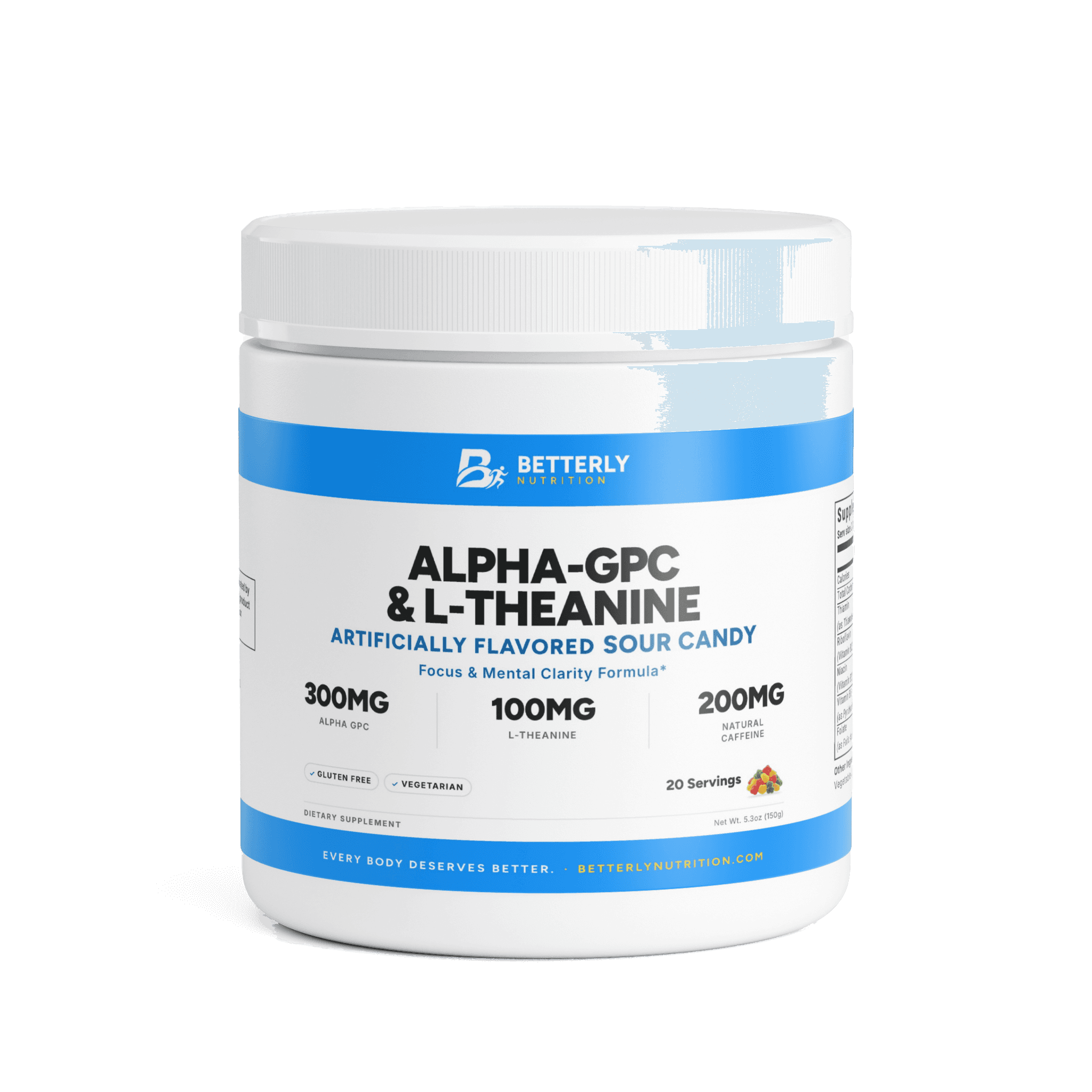
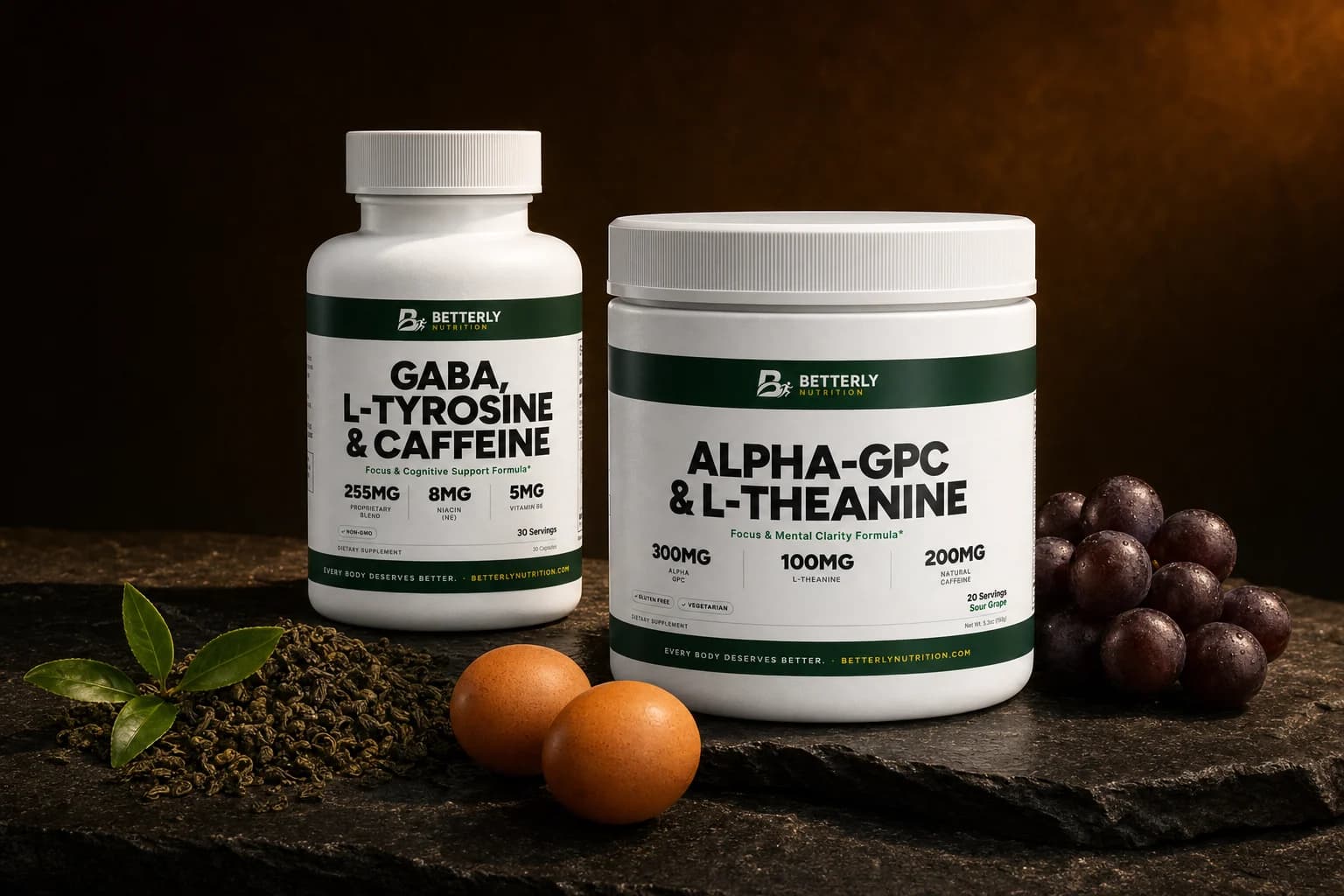
The short answer: Alpha-GPC benefits for healthy adults are unproven. This choline compound is sold for focus and gym power, but a small 2015 controlled trial found no significant gains. The side effects federal sources describe belong to too much choline or, in blended drinks, caffeine. Our Alpha-GPC & L-Theanine Focus Powder (Sour Grape) pairs 300 mg of alpha-GPC with 200 mg of caffeine in every 2-scoop serving, and the caffeine is what you're most likely to feel.
Key takeaways
- Alpha-GPC (L-alpha-glycerylphosphorylcholine, or choline alfoscerate) is a choline compound, and in a 2015 trial, people scored lower for jitteriness on 400 mg of it than on 200 mg of caffeine.
- In a 20-person trial presented in 2015, single 200 mg and 400 mg doses of alpha-GPC gave no statistically significant benefit for mood, thinking or physical performance.
- A 10-year observational study of South Korean adults aged 50 and older linked alpha-GPC use to more serious events involving the brain's blood vessels.
- Credit or blame caffeine first: at 200 mg per Focus Powder serving, it has the clearest documented effects on the panel.
Betterly sells three formulas with alpha-GPC on the panel, so we'd profit from overselling it. Instead, this page sets a trial that found nothing significant and a 10-year study that raised a safety question beside our own label numbers.
What is alpha-GPC?
Alpha-GPC is choline bonded to glycerophosphate, and supplement labels weigh that whole compound rather than just the choline inside it.
Choline is the part with a well-described job. The NIH Office of Dietary Supplements (ODS) choline fact sheet credits it with helping your brain and nervous system regulate mood, memory and muscle control, and cell membranes are built with it. Your liver makes a little; food supplies most.
Does that make alpha-GPC the same thing as choline? Not quite: it carries choline, but a milligram of alpha-GPC isn't a milligram of choline. Our comparison of alpha-GPC with citicoline and choline bitartrate does that math form by form.
What are the benefits of alpha-GPC?
Alpha-GPC is mostly sold for focus, memory and gym power, but neither the 2015 trial nor the ODS choline sheet establishes any of those benefits in healthy adults.
The marketing logic runs through acetylcholine, a chemical messenger your nerve cells use: feed in more choline, get more acetylcholine. That's a tidy theory, but the 2015 trial covered below didn't back it with any statistically significant performance gains.
ODS itself is split on choline and thinking. Some studies it describes link higher choline intake to better verbal and visual memory, while in others, choline supplements didn't improve cognition in healthy adults.
Here's how the usual pitches compare with the evidence:
| What it's sold for | What the evidence shows | Our read |
|---|---|---|
| Sharper focus | No significant effect in a 20-person trial | Unproven in healthy adults |
| Better memory | ODS: choline studies point both ways | Unsettled |
| More power at the gym | Jump power leaned higher, not significantly | Unproven |
| Feeling switched on | Caffeine rated more jittery than 400 mg alpha-GPC | Usually the caffeine |
| More choline | Choline is part of the molecule | True, but food supplies most |
Only the choline row is plainly true, and even there, food is your main source. The focus, power and jitter rows rest on one small, single-dose trial, while the memory row reflects ODS's mixed read on choline in general.
Does alpha-GPC work? What one small trial found
Alpha-GPC didn't clearly work in a 2015 trial, where 20 young adults showed no statistically significant gains in mood, thinking or power after a single dose.
Researchers presented the study at the International Society of Sports Nutrition's 2015 conference, and it's published as an abstract. Ten men and ten women, 22 years old on average, each tried all four conditions on separate occasions: 200 mg of alpha-GPC, 400 mg of alpha-GPC, 200 mg of caffeine and a placebo. It was double-blind, and testing began 30 minutes after each dose.
Some averages leaned toward alpha-GPC. On 200 mg, people finished a serial subtraction test, a quick mental math drill, 18.1% faster than on caffeine. Both alpha-GPC doses also nudged vertical jump peak power above placebo. Even so, the authors concluded that neither alpha-GPC nor caffeine had a statistically significant benefit, partly because results varied so much from person to person.
Two caveats: the company that supplied the alpha-GPC funded the work, and an abstract omits the full methods of a journal paper.
Is alpha-GPC a stimulant, or is it the caffeine?
Alpha-GPC doesn't appear as a stimulant in any source this guide cites, and in the 2015 trial, caffeine scored higher for jitteriness than the 400 mg alpha-GPC dose did.
That finding only goes so far: on jitteriness, caffeine didn't differ significantly from the 200 mg alpha-GPC dose or from placebo. Still, it fits the FDA consumer update Spilling the Beans: How Much Caffeine Is Too Much?, which names jitters, a faster heart rate and sleep disruptions as possible results of overdoing caffeine.
Our Focus Powder puts the trial's exact caffeine dose in each 2-scoop (7.5 g) serving: 200 mg, from green tea. So if you feel alert and a bit wired soon after a serving, caffeine is the likeliest reason, not the 300 mg of alpha-GPC mixed in with it.
What are the side effects of alpha-GPC?
The alpha-GPC side effects on record are indirect: ODS lists what too much choline does, and in caffeinated blends like ours, the FDA's caffeine signs matter more.
Start with choline. Per ODS, excess choline can bring on heavy sweating, vomiting, a fishy body odor, extra saliva and liver damage, among other effects. Its adult upper limit is 3,500 mg of choline a day, and your breakfast eggs count toward it just as a supplement does.
A Focus Powder serving has 300 mg of alpha-GPC, only part of which is choline, so it sits far below that limit. Even the label's 5-scoop maximum, 750 mg of alpha-GPC, holds less than 750 mg of choline, far under 3,500 mg. The caffeine at that dose is the problem: 5 scoops bring 500 mg, over the FDA's 400 mg benchmark, which is why we don't recommend it (see below).
The FDA ties too much caffeine to jitters, a faster heart rate, heart palpitations, sleep disruptions, an upset stomach, nausea and headache, so watch for those first.
What about alpha-GPC by itself? The 2015 abstract didn't report side effects, and the ODS sheet never names alpha-GPC. Should anything feel wrong after a dose, stop, and show your provider the tub or bottle you used.
From our shop: Alpha-GPC & L-Theanine Focus Powder (Sour Grape) — a sour grape powder with no proprietary blend: every row prints its own amount, with Alpha GPC at 300 mg and natural caffeine at 200 mg per 2 scoops (7.5 g), plus gluten free and vegetarian claims.
Is alpha-GPC safe to take long term?
Alpha-GPC's long-term safety is unsettled, and a 10-year observational study of millions of older adults raised a concern instead of clearing the ingredient.
That study, published in JAMA Network Open in 2021, followed about 12 million South Korean adults aged 50 and older through national health insurance records. Roughly 109,000 of them used alpha-GPC between 2006 and 2008. After adjusting for known risk factors, users had a 46% higher 10-year risk of serious events involving the brain's blood vessels, and that risk climbed as intake rose.
Because it compared users with non-users rather than assigning alpha-GPC at random, the study can't prove cause. It can't rule that out either, and we found no long-term trial in healthy adults that settles it.
How much alpha-GPC is too much, and how should you take it?
Alpha-GPC has no federal upper limit that we could find, so go by the label's suggested use: 2 scoops of the Focus Powder, which supplies 300 mg.
The 2015 trial's single 200 mg and 400 mg doses show where studied amounts sit, not what to take. Here's how our three alpha-GPC labels compare:
| Betterly product | Label serving | Alpha GPC | Versus the trial's 200 mg and 400 mg |
|---|---|---|---|
| Focus Powder | 2 scoops (7.5 g) | 300 mg | Between the two tested doses |
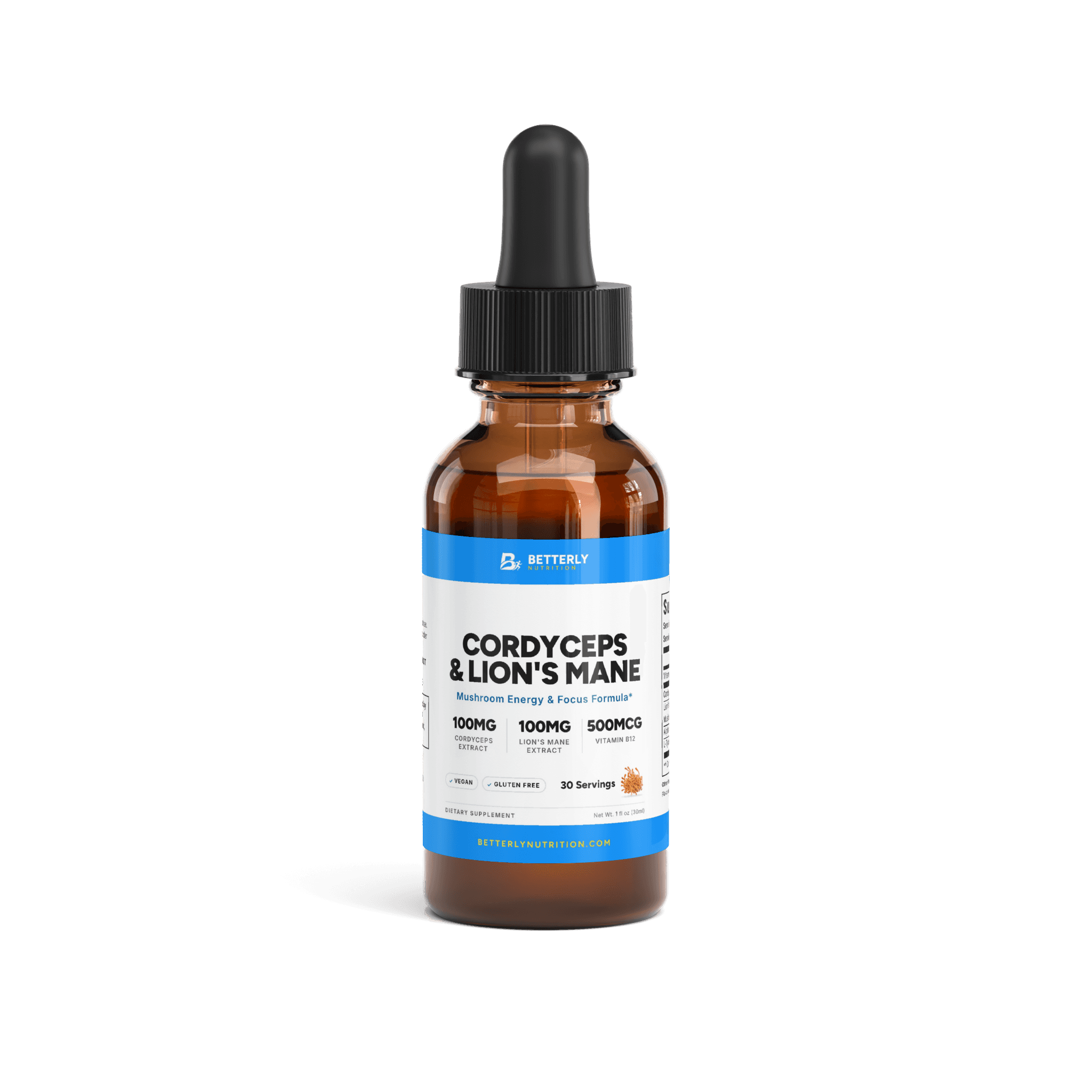
| Cordyceps & Lion's Mane Energy Drops | 1 ml (30 drops) | 25 mg | One-eighth of the lower dose |
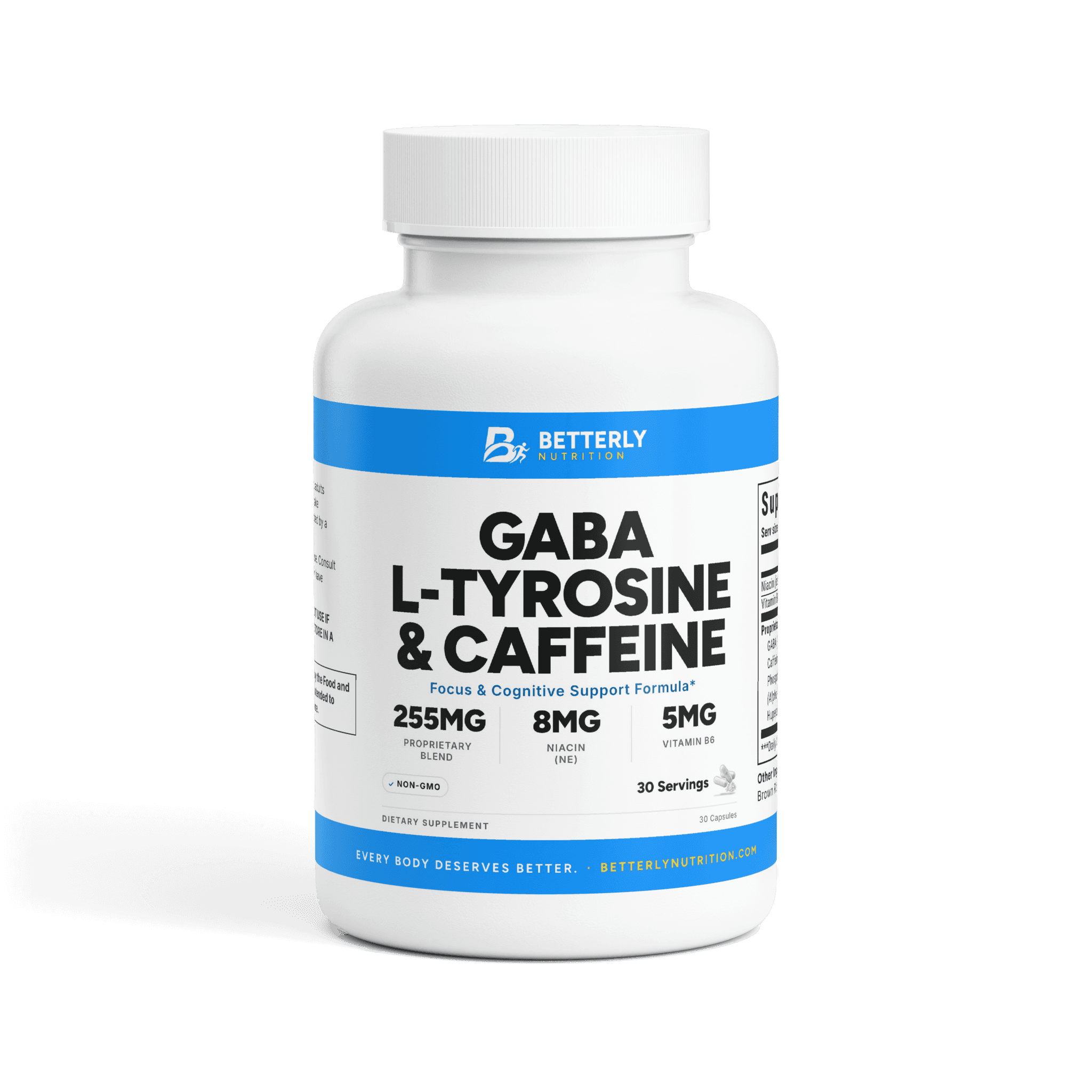
| GABA, L-Tyrosine & Caffeine Capsules | 1 capsule | Not disclosed | Under 400 mg, since the whole blend is 255 mg |
Only the powder is known to land inside the range that trial tested, and the trial found no significant benefit at either dose. The capsule's 255 mg proprietary blend names alpha-GPC and caffeine without amounts, a trade-off our guide to proprietary blends unpacks.
For the Focus Powder, the alpha-GPC isn't what limits you; the caffeine is. The label allows up to 5 scoops a day, which works out to 750 mg of alpha-GPC and 500 mg of caffeine. That caffeine sits 100 mg above 400 mg a day, the level the FDA describes, for most adults, as "not generally associated with negative effects." We keep to one 2-scoop serving per day and don't recommend the 5-scoop maximum.
To take any of the three by its label:
- Use one product per day. The powder and the capsule each bring caffeine, and the capsule's amount isn't printed, so taking both stacks an unknown dose on top of 200 mg.
- Mix the powder at 2 scoops (7.5 g) per 16 fl oz (480 ml) of water, and let that one serving be your day's total.
- The drops label asks you to shake first and take 1 ml (30 drops) daily. The capsule label, written for adults, says one capsule daily with 6-8 oz (177-237 ml) of water.
- Take the caffeinated two early in the day. For morning versus pre-workout timing, our alpha-GPC timing guide goes deeper.
Who can skip alpha-GPC?
You can likely skip alpha-GPC if you want an effect a trial has shown, if alertness is the real goal, or if you'd rather count choline itself.
- You want a shown effect. The one controlled trial here found no significant gain at 200 mg or 400 mg, so any benefit is still a hope.
- Alertness is the goal. In our Focus Powder, that lift most likely comes from caffeine, which plenty of simpler drinks already supply.
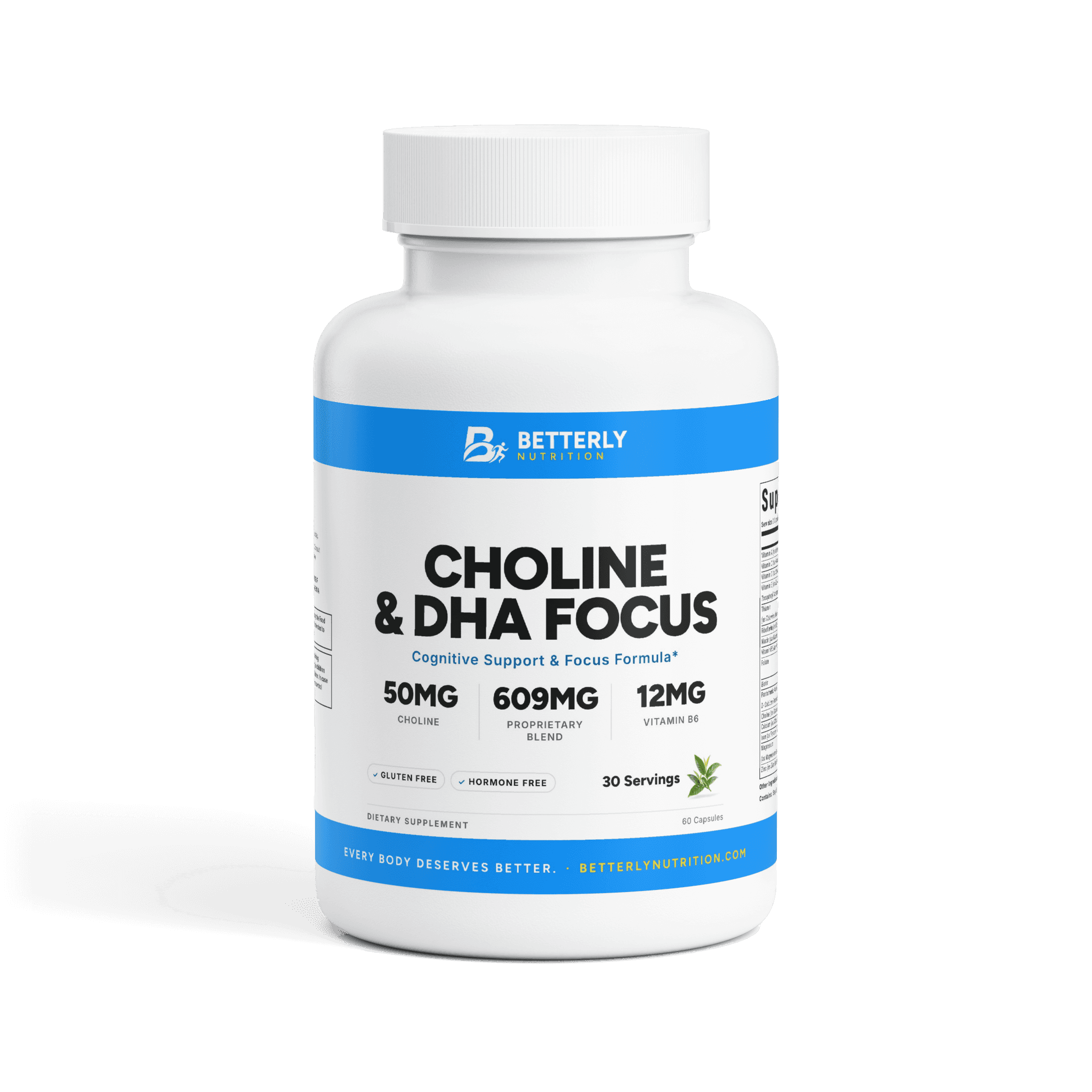
- You'd rather count choline itself. An Alpha GPC row shows no % DV, while our Choline & DHA Focus Capsules print 50 mg of choline (as choline bitartrate) per 2-capsule serving, 9% DV. That label also declares soy and fish.
Food is the other route. ODS lists meat, eggs, fish, dairy, potatoes, broccoli and some beans, nuts and whole grains, and it reports that intakes for most people here run below recommended amounts. Plenty of formulas in our Nootropics & Focus collection contain no alpha-GPC at all.
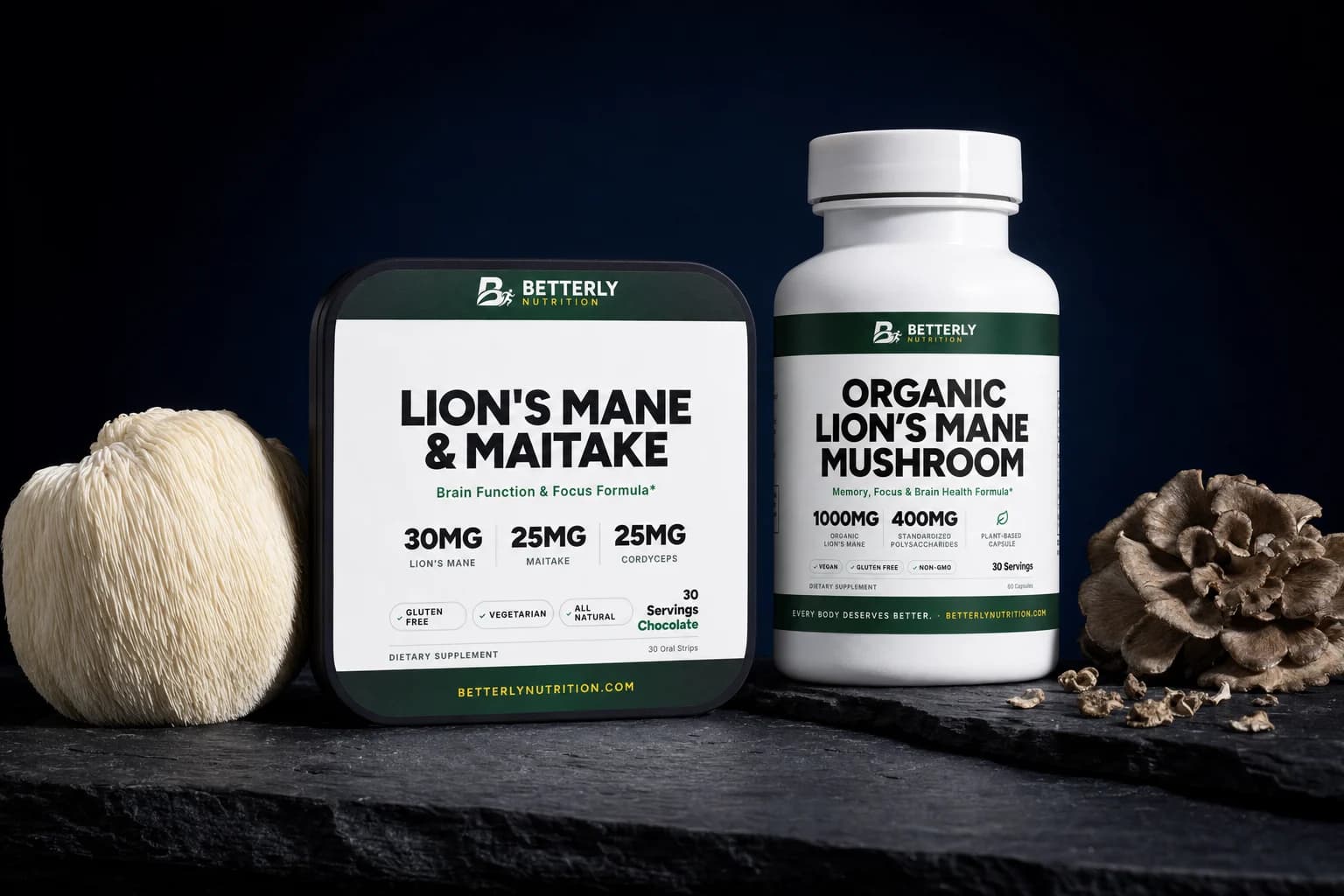
From our shop: Cordyceps & Lion's Mane Energy Drops — a liquid that lists no caffeine at all, just 25 mg of Alpha GPC with mushroom extracts, L-tyrosine and vitamin B12 per 1 ml (30-drop) serving, and its label claims vegan and gluten free.
Who should check with a healthcare provider first?
Pregnancy, nursing, medication, a medical condition and being under 18 are the reasons our labels give for getting a healthcare provider's input before an alpha-GPC product.
| If this is you | Why it matters | What we'd do |
|---|---|---|
| Pregnant or nursing | All three labels name you; FDA suggests asking about caffeine | Ask before any product |
| Taking medication | The powder's label names it; FDA says some medications raise caffeine sensitivity | Ask your pharmacist before a first serving |
| Under 18 | Two labels name you; FDA says too much caffeine can raise a teen's heart rate | Ask first, and skip the caffeinated two |
| Planning months of daily use | Long-term safety is unsettled | Raise it before you start |
| 50 or older | The age group in the 10-year study | Raise it before you start |
Scheduled for surgery? List every supplement you use for your surgical team.
FAQ: alpha-GPC benefits and side effects
Can alpha-GPC cause headaches?
Alpha-GPC isn't a documented cause of headaches in this guide's sources, but caffeine is. The 2015 abstract didn't report side effects, while the FDA names headache as one sign of too much caffeine. Our Focus Powder holds 200 mg per 2-scoop serving, so if a serving gives you a headache, suspect the caffeine first, and tell your provider if it keeps happening.
Is alpha-GPC a peptide?
No, alpha-GPC isn't a peptide. Peptides are chains of amino acids, while alpha-GPC is choline bonded to glycerophosphate. On a Supplement Facts panel it usually appears as "Alpha GPC" in milligrams. Our Focus Powder shows 300 mg per 2-scoop serving, and a triple asterisk in the % DV column, because no Daily Value has been established for it.
Does alpha-GPC interact with medications?
Possibly, because alpha-GPC products usually contain other ingredients too, so ask your pharmacist first. According to ODS, choline has no known medication interactions, but that covers choline in general, not every blend. Our Focus Powder also carries caffeine and Asian ginseng extract, and its label points anyone on medication to a physician first.
Is alpha-GPC worth it?
Alpha-GPC is worth it only if your expectations are modest. The 2015 trial found no statistically significant benefit, and whether it's safe over years is still unsettled. If the lift is what you enjoy about a focus drink, you're mostly paying for caffeine. If you want choline as a nutrient, pick a label that prints a choline amount with a % DV.
Can women take alpha-GPC?
Yes, women can take alpha-GPC, and half of the 20 people in the 2015 trial were women. Choline needs differ by sex: ODS recommends 425 mg a day for adult women and 550 mg for men, and women's needs climb to 450 mg during pregnancy and 550 mg during breastfeeding. The Focus Powder label lists pregnancy and nursing among its reasons to consult a physician.
Sources
- NIH Office of Dietary Supplements: Choline, Fact Sheet for Consumers
- Parker AG, et al. The effects of alpha-glycerylphosphorylcholine, caffeine or placebo on markers of mood, cognitive function, power, speed, and agility. Journal of the International Society of Sports Nutrition, 2015 (conference abstract, PubMed Central)
- Lee G, et al. 10-year cohort of alpha-GPC use in South Korean adults aged 50 and older. JAMA Network Open, 2021 (PubMed Central)
- U.S. Food and Drug Administration: Spilling the Beans: How Much Caffeine Is Too Much?
If this left you looking for somewhere to start, read alpha-GPC and caffeine focus drink mix — its amounts per serving are listed on the page. For the practical questions this raises, how dosing, sourcing and subscriptions work is answered in one place.