On this page
- Key takeaways
- What is artichoke leaf extract, and where does it come from?
- What do artichoke leaf extract benefits actually rest on?
- What is cynarin, and what does "standardized to 5% cynarin" mean?
- Artichoke leaf extract vs artichoke extract: what's the difference?
- Artichoke leaf vs milk thistle: how do the two herbs differ?
- What are the side effects of artichoke leaf extract?
- What dose of artichoke extract does the label suggest?
- When don't you need an artichoke extract supplement?
- Who should ask a doctor before trying artichoke extract?
- FAQ: artichoke leaf extract
- Sources
The short answer: Artichoke leaf extract benefits center on bile, the fluid your liver makes to help you digest fat. The National Library of Medicine's medical vocabulary describes cynarin, a compound from the artichoke, as working mainly on bile flow and bile production. That's a classification, not proof you'll feel a change. No NIH fact sheet covers artichoke, so judge any label by its plant part, its amount per serving and its cynarin percentage.
Key takeaways
- Artichoke leaf extract comes from the foliage leaves of the globe artichoke (Cynara scolymus), not the flower bud you steam and eat.
- MeSH, the National Library of Medicine's indexing vocabulary, classifies cynarin, the artichoke compound some labels standardize to, with agents tied to bile flow and bile production.
- Both of our artichoke labels suggest two capsules daily and say not to exceed that, so the suggested use is your ceiling.
- Artichoke is a daisy-family plant, so if ragweed, chrysanthemums, marigolds or daisies give you trouble, ask a provider first.
- Our two artichoke labels each answer half the question: one names the leaf but gives no cynarin figure, and the other states 5% cynarin but names the whole herb.
A quick disclosure: we sell two capsules with artichoke extract on the panel. You'll see both rows exactly as printed, including the gaps that make them harder to compare.
What is artichoke leaf extract, and where does it come from?
Artichoke leaf extract is a concentrated preparation of the globe artichoke's leaves, taken from Cynara scolymus, the same plant whose flower bud you cook.
MeSH, the vocabulary the National Library of Medicine uses to index medical research, files Cynara scolymus in the Asteraceae family. Its entry says the flower bud is "the familiar artichoke eaten as a vegetable."
The "leaves" you pull off a steamed artichoke are really bracts, the scales of that bud. A leaf extract uses the plant's true leaves: the long, deeply lobed, gray-green foliage below the bud that almost never reaches a kitchen.
Getting from leaf to capsule is a soak-and-dry job. The botanical supplements fact sheet from the NIH Office of Dietary Supplements (ODS) describes a plant steeping in a chosen liquid, like water or alcohol, that draws out the compounds a maker wants. Evaporate that liquid and what's left is a dry extract ready for a capsule or tablet.
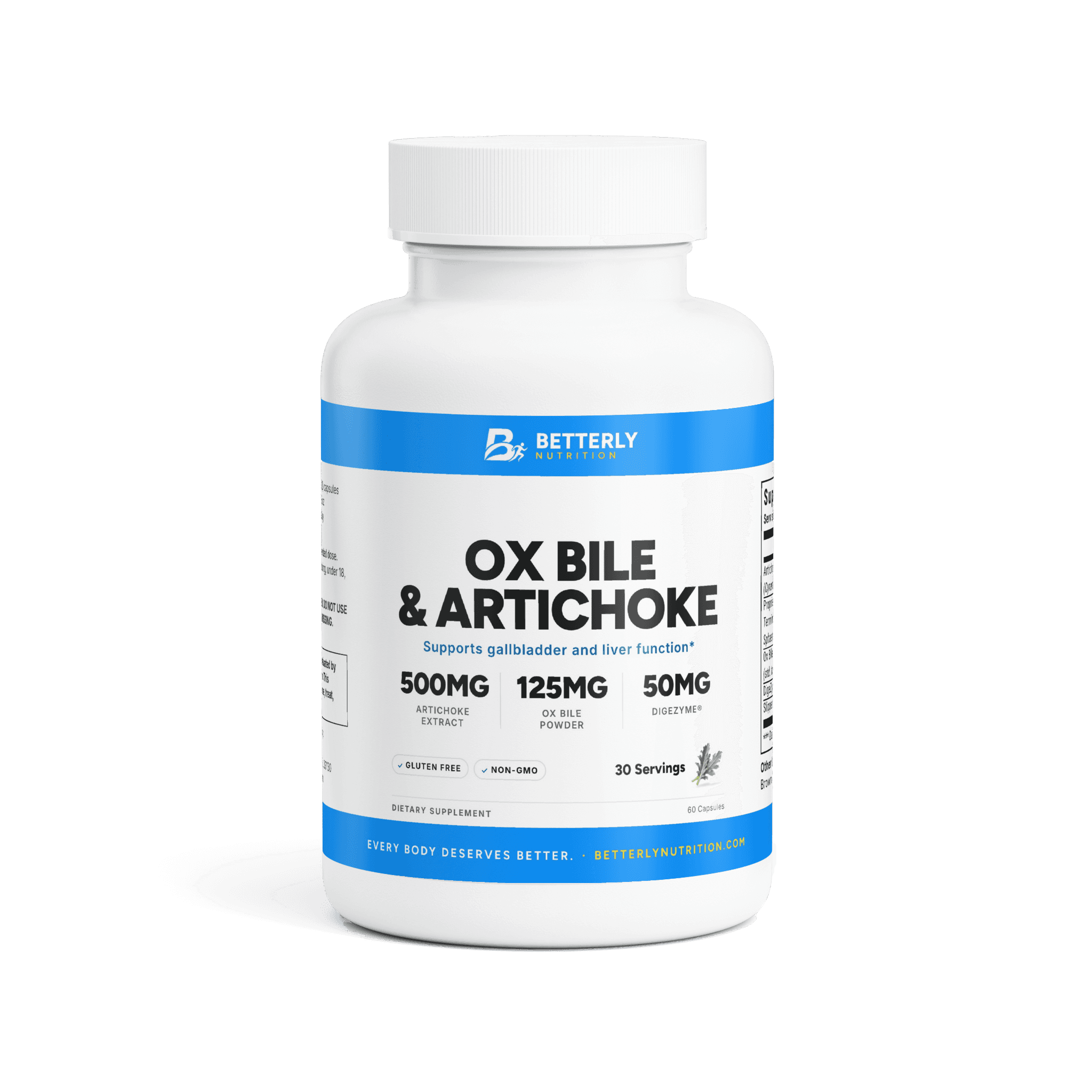
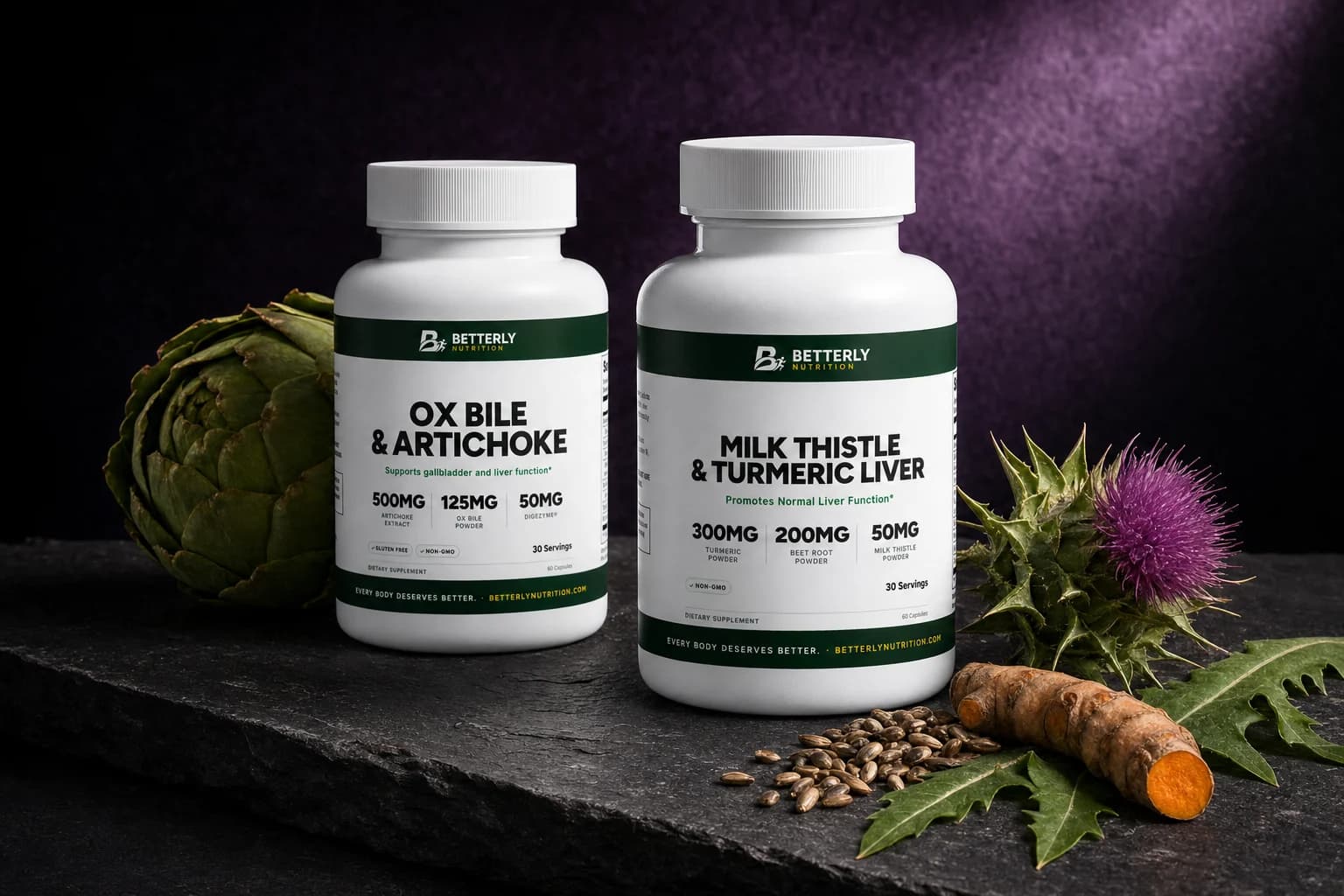
That dry form is what's inside our Ox Bile & Artichoke Capsules, whose panel prints "(Cynara scolymus) (leaf)" right under the artichoke row.
What do artichoke leaf extract benefits actually rest on?
Artichoke leaf extract benefits rest mainly on one idea: cynarin, a compound in the plant, is tied to bile.
Your liver produces bile, your gallbladder stores it until you eat, and bile helps break down the fat in your food.
MeSH describes cynarin as an artichoke compound that functions "primarily as a cholagogue and choleretic". Put simply, a cholagogue has to do with bile flowing out toward your small intestine, and a choleretic has to do with your liver making bile. That bile link is why artichoke keeps landing in digestion and liver formulas, ours included.
That's also where the evidence gets thin. A vocabulary entry isn't a verdict: MeSH sorts research by topic and doesn't grade how strong it is. And ODS points out that botanical supplements reach shelves without FDA approval, though whatever their labels claim has to be truthful and not misleading.
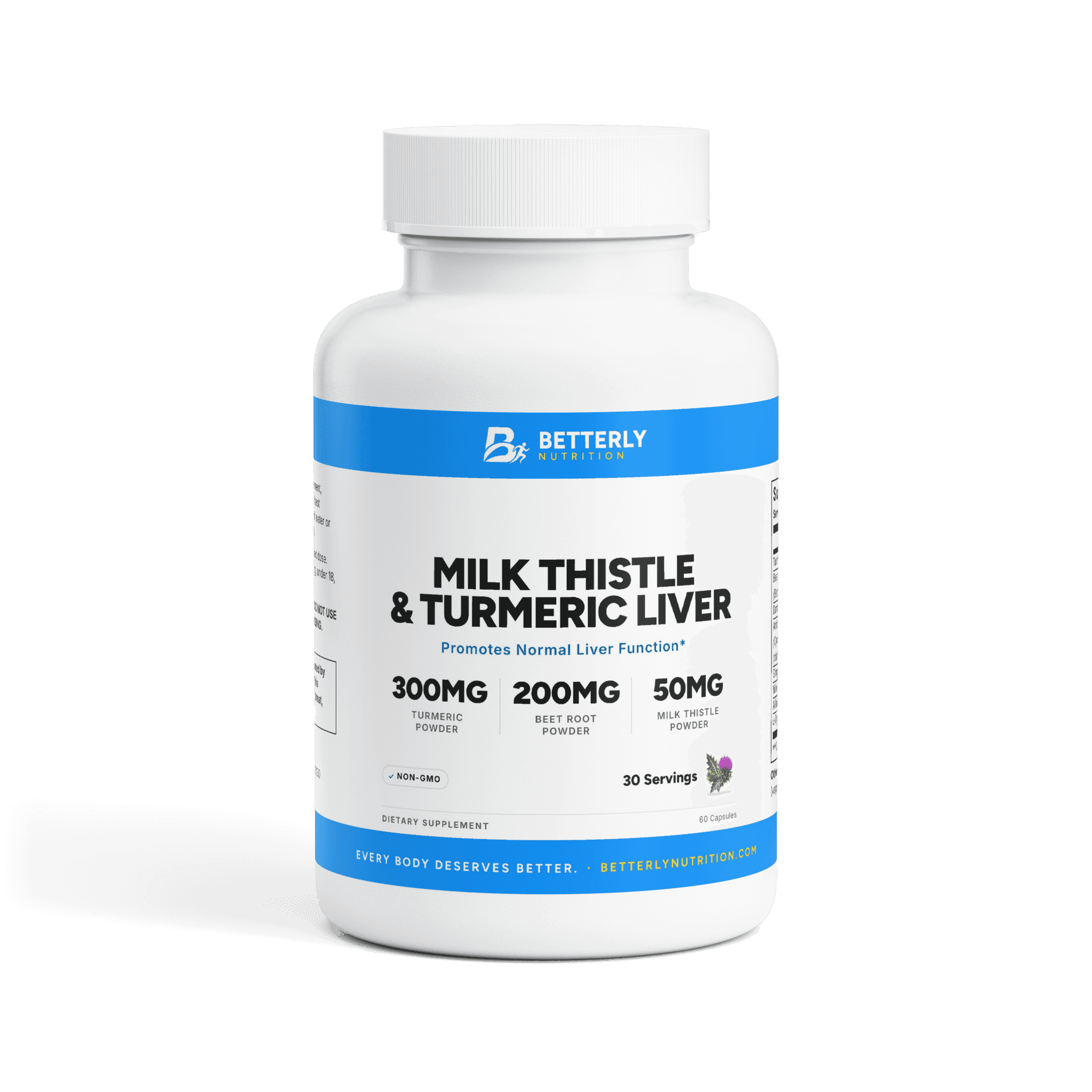
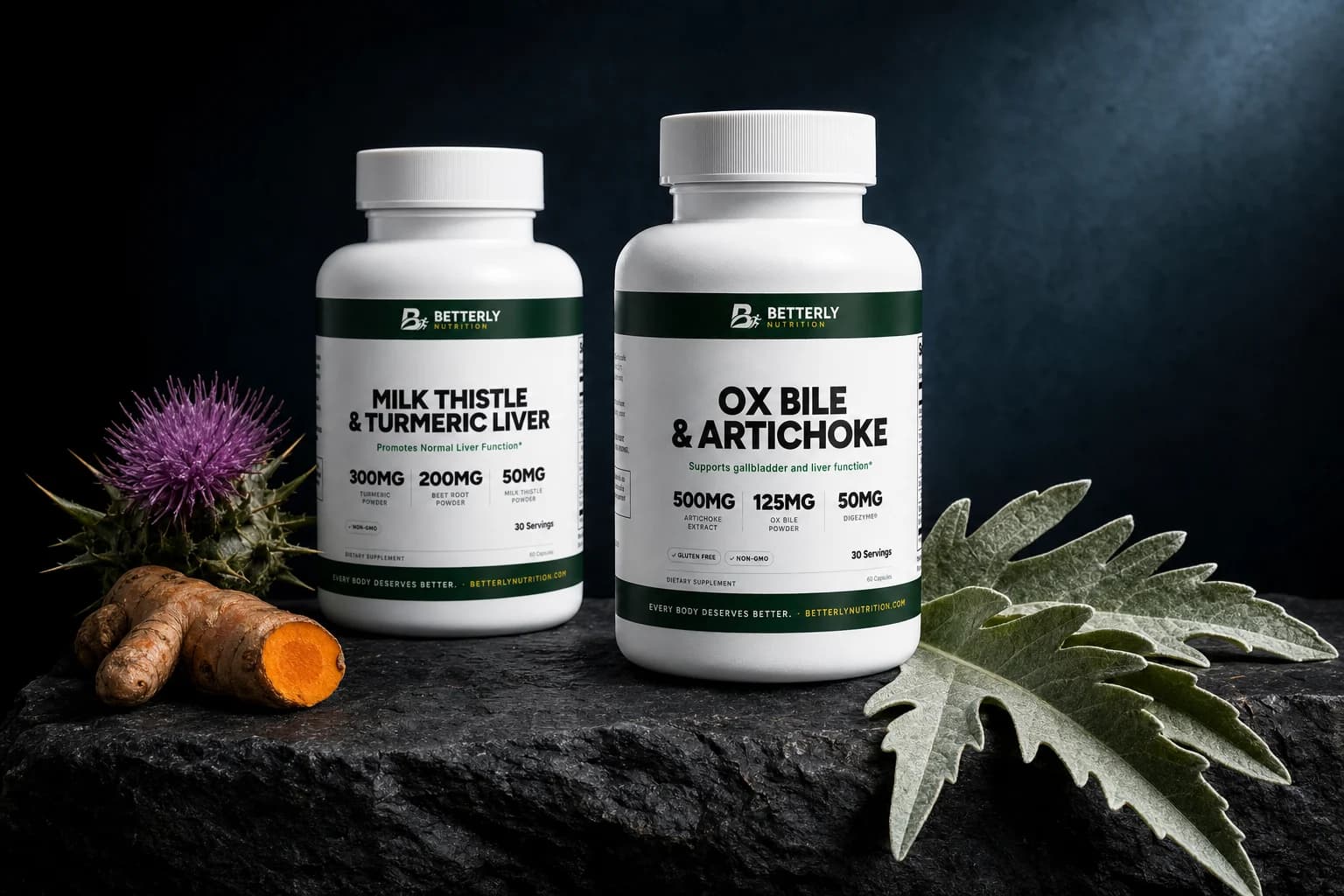
Our own labels stay modest. The ox bile capsule's label says "Supports gallbladder and liver function*," and the front of our Milk Thistle & Turmeric Liver Capsules reads "Promotes Normal Liver Function*." That asterisk leads to the usual line noting the FDA hasn't reviewed the statement.
Search for artichoke extract benefits and you'll find much bigger promises than these. We've kept to what our labels say and our sources can carry.
What is cynarin, and what does "standardized to 5% cynarin" mean?
Cynarin is a compound found in artichoke, and "standardized to 5% cynarin" means the extract is adjusted so cynarin makes up 5% of its weight.
ODS explains that standardization means measuring specific chemicals, called markers, and adjusting each batch so the amounts stay consistent. Two cautions follow: U.S. law doesn't require standardization or legally define the word, and "standardized" on a bottle doesn't necessarily mean high quality.
There's a subtler catch. In a perfect world, the marker a maker measures would also be the thing that makes the plant work. For most botanicals, ODS says, nobody has pinned down what that thing is. So read a cynarin percentage as a batch-to-batch consistency check, not a strength rating for anything you'd feel.
Here's the math for our liver capsule, whose artichoke row reads 50 mg, standardized to 5% cynarin, per 2-capsule serving:
- Per 2-capsule serving: 50 mg x 0.05 = 2.5 mg of cynarin.
- Per capsule: half that, or 1.25 mg.
- Per 60-capsule bottle: 30 servings x 2.5 mg = 75 mg of cynarin.
Artichoke leaf extract vs artichoke extract: what's the difference?
The difference is the plant part: "artichoke extract" alone could come from the leaf, the whole plant or an unnamed mix, while a leaf extract tells you exactly which.
Every detail below comes from our two Supplement Facts panels:
| Label detail (2 capsules) | Ox Bile & Artichoke Capsules | Milk Thistle & Turmeric Liver Capsules |
|---|---|---|
| Artichoke extract | 500 mg | 50 mg |
| Plant part printed | Leaf | Whole herb |
| Cynarin stated | No | 5% (2.5 mg) |
| Artichoke's share of listed weight | About half (500 of 1,015 mg) | About 6% (50 of 780 mg) |
| Biggest other row | 300 mg proprietary blend | 300 mg turmeric root powder |
| Capsule shell | Gelatin | Hypromellose (vegetable) |
Read across and neither label wins outright. The ox bile capsule carries 500 mg against the liver capsule's 50 mg and names the leaf, yet it can't tell you how much cynarin is in there. The liver capsule pins its cynarin at 2.5 mg per serving, but it lists whole herb, so strictly speaking it isn't a leaf extract at all.
Want a leaf extract with a stated cynarin figure? Neither of ours is that product, and a single-ingredient label that prints both details will suit you better.
On the ox bile capsule, the 300 mg blend lumps Terminalia chebula fruit extract and Sphaeranthus indicus flower extract under a single number, and our explainer on proprietary blends covers what that can hide. Our guide to ox bile itself covers the bile half.
From our shop: Ox Bile & Artichoke Capsules — artichoke is the largest row on this panel, at 500 mg of leaf extract per 2-capsule serving, with ox bile powder (125 mg) and DigeZyme® (50 mg) alongside it.
Artichoke leaf vs milk thistle: how do the two herbs differ?
Artichoke leaf and milk thistle are separate plants with separate marker compounds: cynarin for artichoke, and silymarin, a mix of compounds, for milk thistle.
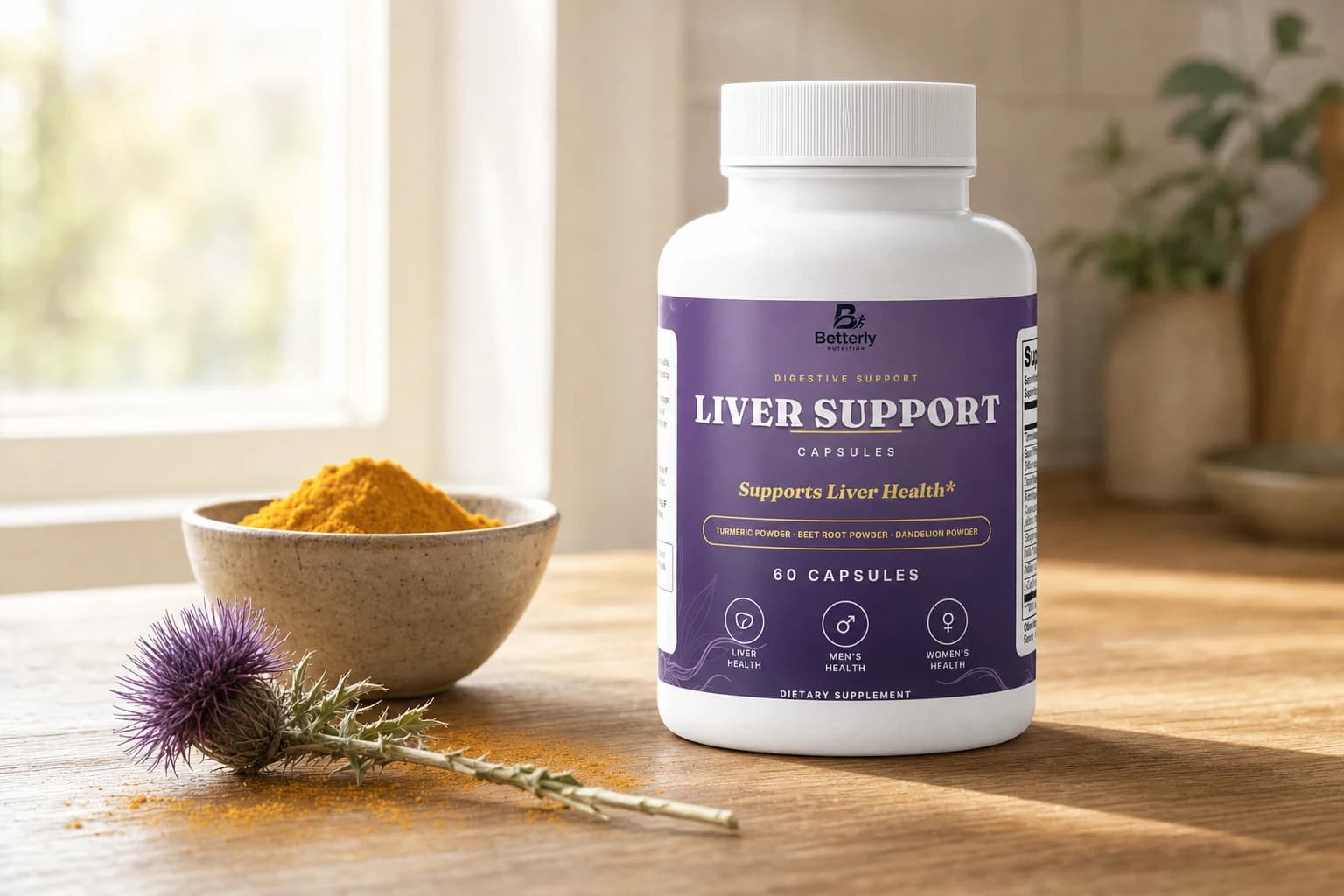
NCCIH's milk thistle fact sheet describes a tall, purple-flowered plant native to Europe and names silymarin as the main constituent of its extract. Both herbs are sold with liver function in mind, and our liver capsule holds 50 mg of each per 2-capsule serving.
On that panel, the artichoke row is actually the better-described one. It gives a cynarin percentage, while the milk thistle row says only "Milk Thistle Powder" and names neither a plant part nor a silymarin amount.
NCCIH also warns that some milk thistle products have been found to contain silymarin amounts substantially different from their labels. Any printed percentage is a claim you're trusting.
Our milk thistle buyer's guide covers silymarin and extract strength. For a row-by-row read of the whole liver formula, see our plain-English review of liver support formulas.
From our shop: Milk Thistle & Turmeric Liver Capsules — a turmeric-led formula whose 2-capsule serving includes 50 mg of artichoke extract at 5% cynarin and 50 mg of milk thistle powder, with every row's amount printed.
What are the side effects of artichoke leaf extract?
Artichoke leaf extract has no side-effect list on either of our labels, whose caution covers only dose and who should talk to a physician first. A blank there is a gap, not a guarantee.
ODS lists what a botanical's safety hinges on: what it's made of chemically, how it acts in the body, how it's prepared and the dose. A "natural" label doesn't settle any of that.
Formulas add a wrinkle, because you can't easily tell which ingredient disagreed with you:
- The ox bile capsule pairs its artichoke with cattle bile, a two-herb blend, an enzyme ingredient and slippery elm bark.
- The liver capsule lists seven ingredients besides artichoke, milk thistle among them. NCCIH names digestive symptoms such as bloating, nausea and gas as milk thistle's most common side effects.
Notice anything unusual? Stop, call your provider and have the bottle handy so they can see the full panel.
Artichoke is a daisy-family plant
Artichoke belongs to the Asteraceae, or daisy, family, according to its MeSH entry, and that family tie is the reason for an allergy caution.
The closest federal caution is written for milk thistle, not artichoke. NCCIH says milk thistle may cause allergic reactions, particularly in people who react to its relatives, for example ragweed, chrysanthemum, marigold and daisy. Milk thistle also sits in our liver capsule. If those plants bother you, talk to a provider before trying any artichoke product, ours included.
What dose of artichoke extract does the label suggest?
Our artichoke extract labels suggest two capsules daily: 500 mg of leaf extract per 2-capsule serving in the ox bile formula, 50 mg of whole-herb extract in the liver formula. No NIH fact sheet sets a daily amount or an upper limit for artichoke, so those directions are the ones to follow.
Both labels also call for 6-8 oz (177-237ml) of water and carry the caution "Do not exceed recommended dose," which lines up with ODS's advice to follow a botanical's suggested directions.
Missed a day? Pick up again the next day instead of doubling up. Keep the bottle somewhere cool and dry, as the label asks.
Sixty capsules at two a day gives you a 30-day bottle. Over that month, the ox bile capsule adds up to 15,000 mg of artichoke leaf extract, while the liver capsule comes to 1,500 mg of artichoke extract carrying 75 mg of cynarin.
Own both bottles? Pick one. Together they'd put 550 mg of artichoke extract into your day from two sets of directions never written with each other in mind. If you want both, get your provider's go-ahead first.
When don't you need an artichoke extract supplement?
Artichoke extract isn't a nutrient your body requires, and its Supplement Facts row has no Daily Value, so going without it won't leave you short.
Your body produces bile without any help from a capsule. You can pass on this one if:
- "Liver" or "gallbladder" on the front is your whole reason. Our label statements describe everyday function and don't promise a change you'd notice.
- You avoid animal products. The ox bile capsule contains cattle bile in a gelatin shell.
- You want a named leaf and a cynarin figure on one label. Neither of ours offers both.
- A formula you already take lists artichoke. Add up the rows before buying another.
If digestion support is still your goal, browse enzymes, fiber and probiotics together in our gut health collection.
Who should ask a doctor before trying artichoke extract?
Ask a doctor or pharmacist before trying artichoke extract if you're pregnant or nursing, younger than 18, taking medicine, preparing for surgery or under care for a medical condition.
The caution on both bottles reads: "Do not exceed recommended dose. Consult a physician if pregnant, nursing, under 18, or have a medical condition." Take extra care if:
- A doctor already follows your liver, gallbladder or bile ducts. Artichoke's whole reputation rests on bile, so ask first.
- Daisy-family plants give you trouble. The allergy section above explains why that matters here.
- You take any medicine. NCCIH's milk thistle page cautions that certain herbs and medicines can interact badly. Neither of our labels lists interactions, so show your pharmacist both panels.
- An operation is scheduled. List every supplement for your surgical team, artichoke too.
FAQ: artichoke leaf extract
Is artichoke leaf extract good for your liver?
There's no clear yes for artichoke leaf extract: it's sold to support normal liver function, an idea resting on cynarin's tie to bile production, one of your liver's jobs. That tie comes from how MeSH, a medical indexing vocabulary, classifies the compound. If you're already under a doctor's care for your liver, talk with them before adding a liver formula.
Is artichoke extract safe to take every day?
Daily use is what both of our artichoke extract labels describe: two capsules a day, with a caution not to exceed that dose. Never take a double serving to make up for a missed day. If pregnancy, nursing, being under 18, a medication or a medical condition applies to you, talk to a provider before starting.
When should you take artichoke extract?
Take artichoke extract at whatever time suits your routine, since neither of our labels names one. Their directions stop at two capsules daily and 6-8 oz of water, saying nothing about meals, mornings or evenings. Pairing it with something you already do every day can help you remember. If you'd prefer to tie it to meals, run that past your pharmacist along with your other products.
Is artichoke leaf tea the same as artichoke leaf extract?
No, artichoke leaf tea and artichoke leaf extract are different preparations of the same leaf. ODS notes that concentration varies a lot between teas, tinctures and extracts, with extracts packing the most plant into the least volume. So a mug of leaf tea tells you little about a 2-capsule serving with 500 mg of extract, and there's no reliable way to swap one for the other by weight.
Is Jerusalem artichoke the same as globe artichoke?
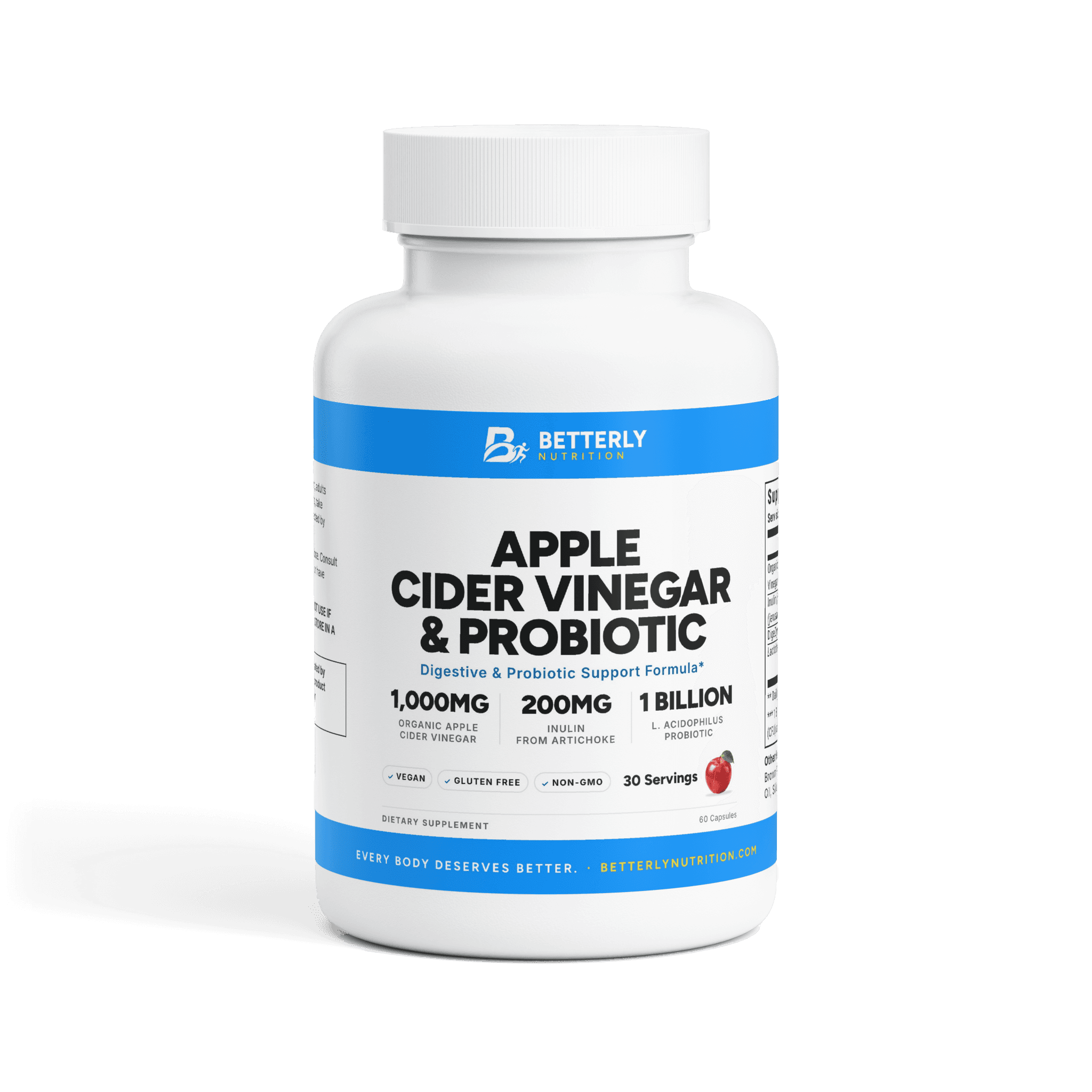
No, Jerusalem artichoke is a different plant, Helianthus tuberosus, and the part people eat is its root, not a flower bud. It's still a relative: MeSH, the National Library of Medicine's indexing vocabulary, files Helianthus in the same Asteraceae, or daisy, family as globe artichoke, so ask a provider first if daisy-family plants bother you. The root is a source of inulin, a type of fiber, and our Apple Cider Vinegar & Probiotic Capsules carry 200 mg of that inulin per 2-capsule serving.
Sources
- Cynara scolymus: MeSH (National Library of Medicine)
- Cynarine: MeSH (National Library of Medicine)
- Helianthus: MeSH (National Library of Medicine)
- Botanical Dietary Supplements: Background Information for Consumers (NIH Office of Dietary Supplements)
- Milk Thistle: Usefulness and Safety (NCCIH)
If this left you looking for somewhere to start, read ox bile capsules with 500 mg artichoke leaf extract per serving — its amounts per serving are listed on the page. For the practical questions this raises, how dosing, sourcing and subscriptions work is answered in one place.