On this page
- Key takeaways
- Can you take L-tyrosine and caffeine together?
- L-tyrosine vs caffeine: how do their roles differ?
- What did a trial of tyrosine plus caffeine actually test?
- How much caffeine is in the GABA, L-Tyrosine & Caffeine Capsules?
- How do you count caffeine if you already drink coffee?
- Should you take L-tyrosine in the morning or at night?
- How do you take each product alongside your coffee?
- When don't you need L-tyrosine with your coffee?
- Who should check with a healthcare provider first?
- FAQ: L-tyrosine and caffeine
- Sources
The short answer: Yes, you can take L-tyrosine and caffeine together, and our GABA, L-Tyrosine & Caffeine Capsules already combine them. Caffeine is the half to watch: it's a stimulant that counts toward your daily total, and L-tyrosine, a protein building block, doesn't. The capsule's 255 mg blend prints no caffeine amount, only an order that should cap it at 85 mg, so count each capsule and keep it to the morning.
Key takeaways
- Caffeine from a morning cup tops out in your blood inside the first hour, and MedlinePlus says you could still feel it four to six hours later.
- Unlike caffeine, L-tyrosine is an amino acid your body can make on its own, according to MedlinePlus, so it adds nothing to a caffeine tally.
- Our GABA, L-Tyrosine & Caffeine Capsules never print their caffeine; its third-place spot in a 255 mg blend only tells you one capsule shouldn't hold more than 85 mg.
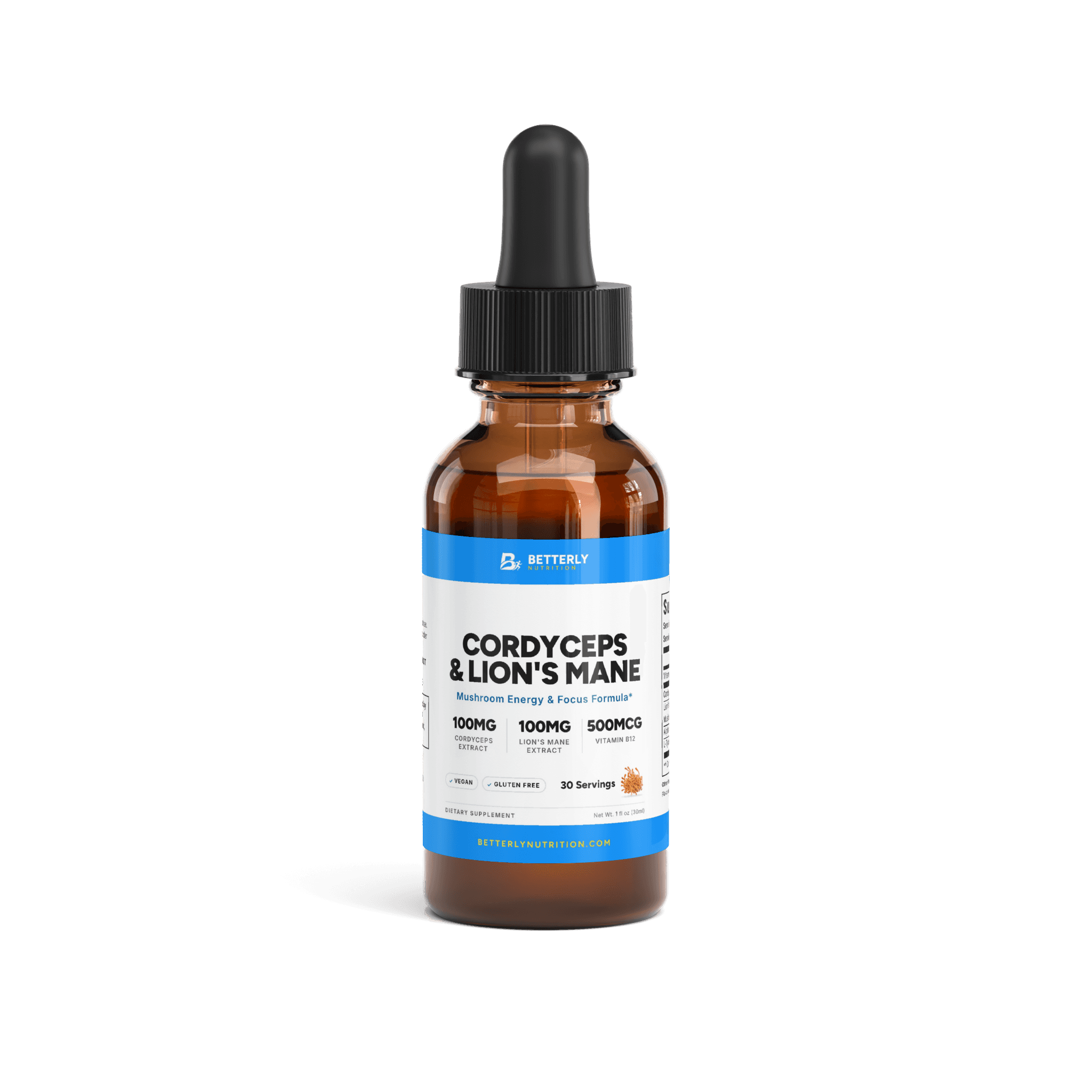
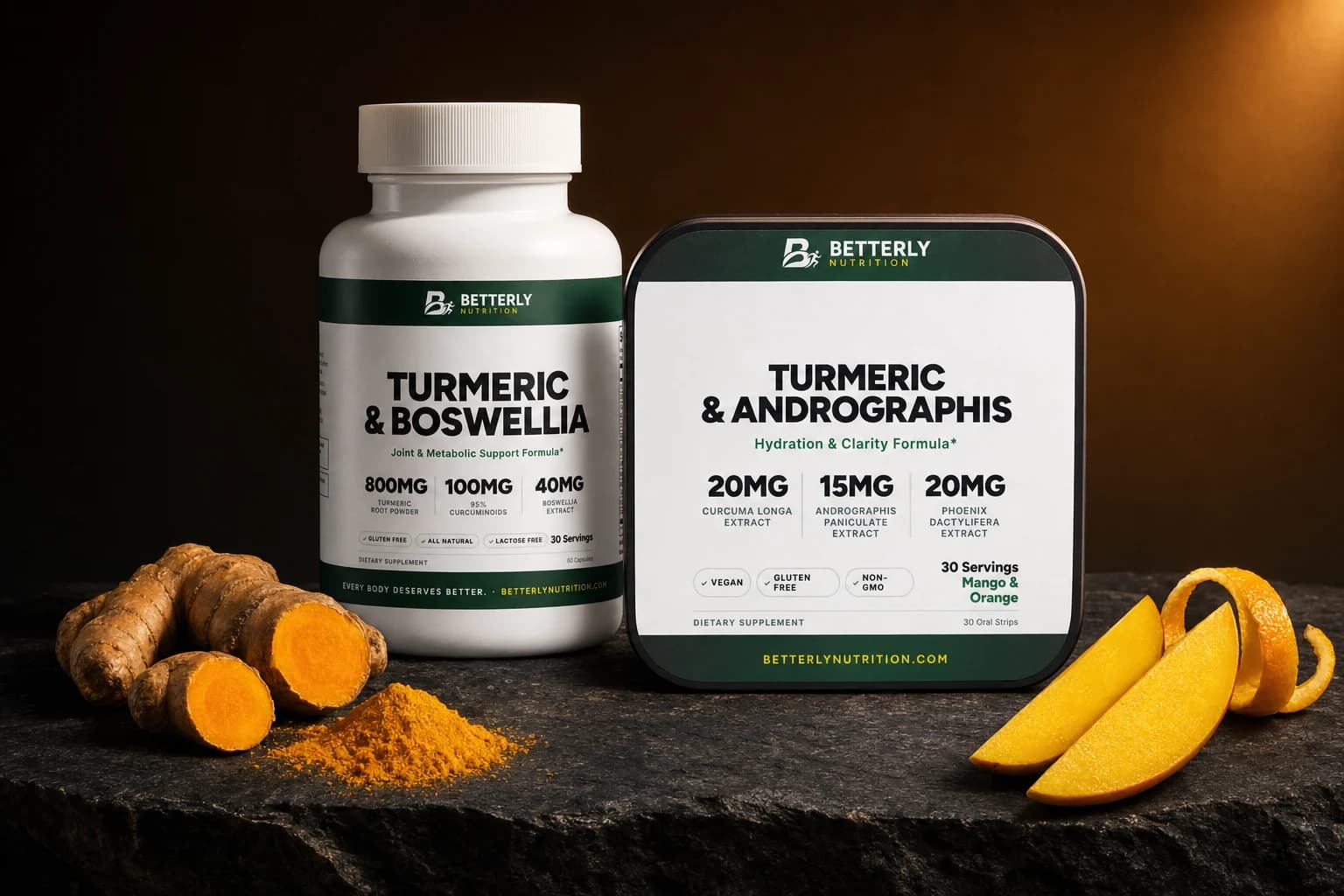
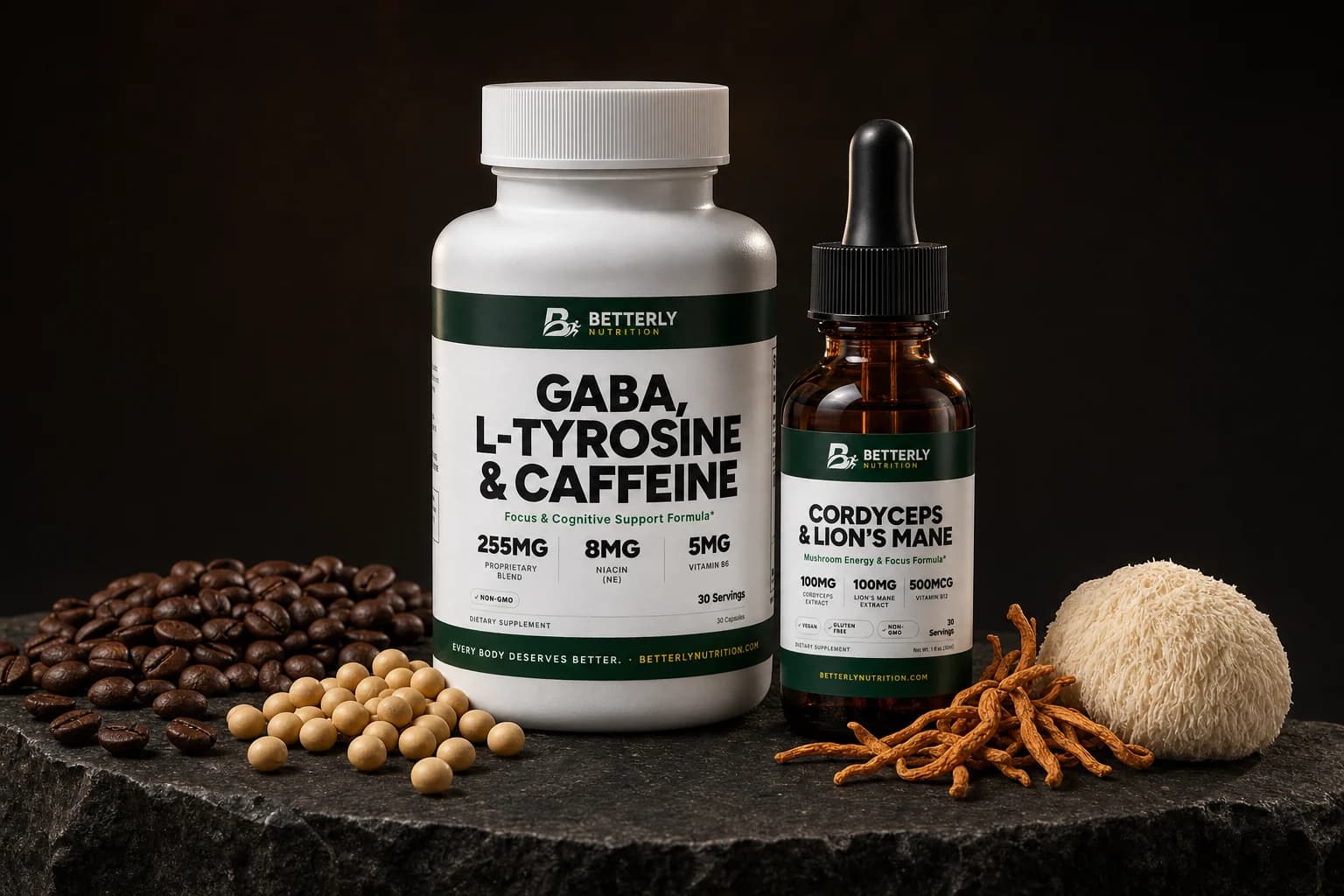
- Pair coffee with our Cordyceps & Lion's Mane Energy Drops instead and your mug stays the day's only caffeine; their panel shows 25 mg of L-tyrosine per 1 ml serving and no caffeine.
Full disclosure: we sell both tyrosine products in this guide, including the caffeinated capsule we're asking you to count carefully. Product numbers come straight off each Supplement Facts panel, and wherever the capsule's blend prints no amount, its caffeine included, we say so.
Can you take L-tyrosine and caffeine together?
Yes, L-tyrosine and caffeine can be taken together, and some focus formulas, ours included, put them in one capsule, but the caffeine still counts against your day.
The MedlinePlus page on caffeine counts taking certain medicines or supplements among the reasons to talk with your provider about caffeine. Its examples include stimulants, certain antibiotics and heart medicines. Then it widens the net: ask about interactions between caffeine and any medicine or supplement you take. A tyrosine product counts, so bring it up.
Neither label in this guide mentions coffee, so the practical questions are how much caffeine you'll end up with and when the second source lands.
L-tyrosine vs caffeine: how do their roles differ?
Caffeine is a stimulant that helps you feel more awake, while L-tyrosine is an amino acid your body uses to build proteins and chemical messengers; neither replaces the other.
MedlinePlus calls caffeine a bitter substance from more than 60 plants, cacao pods and kola nuts included, that stimulates your central nervous system. Its timing is the part a coffee drinker can use: blood levels peak inside an hour of your cup, and the effects can linger four to six hours.
Tyrosine is already on hand before your first sip. The MedlinePlus entry on amino acids files it among the nonessential ones, the amino acids your body can produce itself. Caffeine, by contrast, arrives only in what you drink or swallow.
Over the next few hours, the sources split. The MedlinePlus Genetics page on the TH gene gives tyrosine a job instead of a clock: it's the protein building block the body's catecholamine messengers, dopamine among them, start from.
Think of a pantry and a stove: tyrosine is a stocked shelf, caffeine a lit burner, and a fuller shelf doesn't light another burner. The TH page doesn't say what extra tyrosine does to that pathway, and we won't guess. Our guide on what L-tyrosine does in the body goes deeper.
What did a trial of tyrosine plus caffeine actually test?
A 2019 trial gave 20 current or former male college athletes a caffeine, theanine and tyrosine supplement or a placebo, and its design couldn't show which ingredient did what.
The study, published in the Journal of the International Society of Sports Nutrition and free on PubMed Central, was randomized and double-blind, and each man tried both, a week apart. The caffeine worked out to about 1 mg per kilogram of body weight, a dose the authors call low. They reported:
- On a reaction test where the men struck targets cued by lights and sounds, movement accuracy improved more after the supplement than after the placebo.
- Self-rated energy, focus, alertness, fatigue and motivation didn't differ between visits.
- Performance during two rounds of exercise didn't differ either.
The authors name the big limit themselves: no group took tyrosine alone or caffeine alone, so the result could come from any one ingredient. A supplement company supplied the product and funding, and some authors worked for it.
For coffee drinkers, one detail matters most: these regular caffeine users went without caffeine for 24 hours before each session and on test day. That's the opposite of adding tyrosine to your usual cup. The trial also used a different formula, and we don't borrow its results for ours.
How much caffeine is in the GABA, L-Tyrosine & Caffeine Capsules?
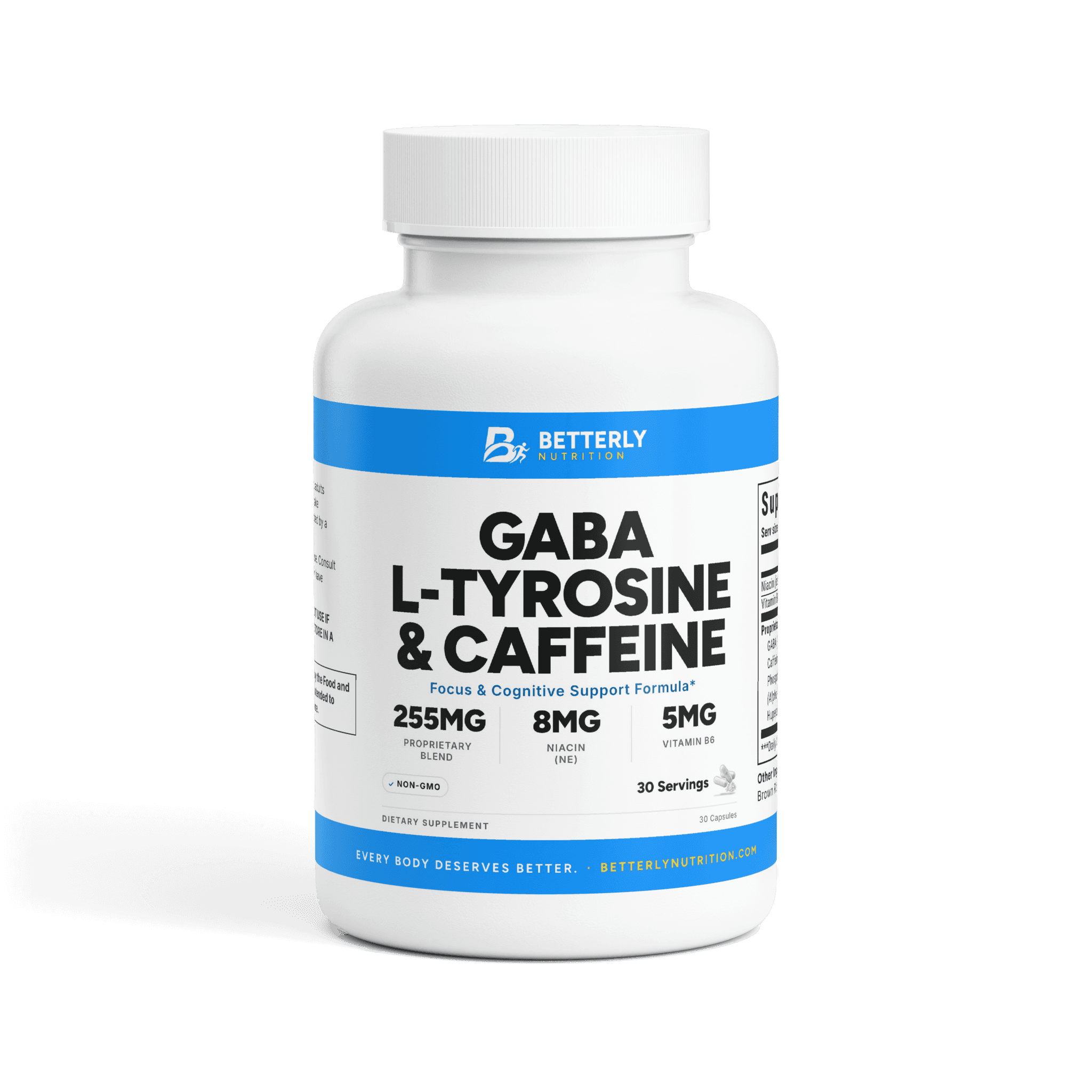
The GABA, L-Tyrosine & Caffeine Capsules label doesn't print a caffeine amount: caffeine is third of eight ingredients sharing a 255 mg proprietary blend per 1-capsule serving.
Everything the panel lists for one capsule:
- Niacin (as niacinamide): 8 mg NE, 50% of the Daily Value
- Vitamin B6 (as pyridoxine hydrochloride): 5 mg, 290% of the Daily Value
- Proprietary Blend, 255 mg: GABA, L-tyrosine, caffeine, bacopa monnieri extract (whole herb), phosphatidylserine 20% (sunflower), alpha GPC, L-theanine and huperzine A 1% (Huperzia serrata)
What the panel does give you is an order. Blend ingredients go heaviest first, as our proprietary blend explainer walks through. If caffeine weighed more than 85 mg, GABA and L-tyrosine above it would too, and the three together would overflow 255 mg. So, if the panel follows the heaviest-first rule, 85 mg per 1-capsule serving is the ceiling.
That's a limit, not an estimate: the true figure isn't printed and could sit anywhere under that line.
How do you count caffeine if you already drink coffee?
Count every caffeine source in your day against 400 mg, the daily figure the FDA cites for most adults, or roughly two to three 12-ounce mugs of coffee.
That number comes from the FDA's consumer update, Spilling the Beans: How Much Caffeine Is Too Much?. The same page stresses that people differ widely in how sensitive they are to caffeine and how fast they clear it, so think of 400 mg as an outer limit, not a target. Our pre-workout vs energy drink guide walks through a full day's caffeine tally.
For the capsule, write down its 85 mg ceiling so you never undercount. If your cups already bring you close to 400 mg, that ceiling could tip you past it. And watch how you feel: MedlinePlus lists restlessness, shakiness, trouble sleeping, headaches, dizziness and a fast heart rate as signs of too much caffeine.
| Your setup | Caffeine you can count | L-tyrosine you can count | A good fit if |
|---|---|---|---|
| Coffee only | Your cups | None added | Your routine already works |
| Coffee plus Energy Drops | Your cups; the drops list none | 25 mg per 1 ml | You track caffeine closely |
| Coffee plus the capsule | Your cups plus up to 85 mg | Inside the 255 mg blend | You drink little coffee and want one pill |
| Coffee, capsule and drops | Your cups plus up to 85 mg | 25 mg plus an unprinted amount | Not a combination we suggest |
The takeaway: only the drops add tyrosine with every number on a label, and your coffee stays the day's only caffeine. The capsule trades that precision for a single pill. Stacking both products doubles up tyrosine and alpha GPC, and neither label calls for that.
From our shop: Cordyceps & Lion's Mane Energy Drops — for coffee drinkers who want L-tyrosine without a second caffeine source: 25 mg per 1 ml serving, and no caffeine anywhere on the panel.
Should you take L-tyrosine in the morning or at night?
Take any L-tyrosine product that contains caffeine in the morning; our capsule lists caffeine, so it belongs early, while the Energy Drops label sets no hour.
With caffeine working for up to six hours, per MedlinePlus, your usual cutoff for a last coffee applies to the capsule too. Taking it with your first cup keeps both sources in one morning window.
The drops are different. With no caffeine on the panel, they add nothing to your tally whatever the hour, and their label asks only for 1 ml daily.
| Time of day | GABA, L-Tyrosine & Caffeine Capsules | Cordyceps & Lion's Mane Energy Drops |
|---|---|---|
| With your first coffee | Best slot | Adds no caffeine |
| Late morning | Workable if it's your last caffeine | Adds no caffeine |
| Mid-afternoon | Skip it | Label sets no time |
| Evening | Skip it | Label sets no time |
In short, only the capsule runs on your coffee's clock.
How do you take each product alongside your coffee?
Follow each label: one GABA, L-Tyrosine & Caffeine Capsule a day with 6-8 oz of water, or 1 ml of the Energy Drops a day after shaking the bottle.
On a capsule morning with coffee:
- Decide early. If today is a heavier coffee day, leave the capsule in the bottle.
- Swallow one capsule with 6-8 oz (177-237 ml) of water, as the label directs. It says water, not coffee.
- Log it next to your cups at its 85 mg ceiling.
- Keep it to a single capsule. The caution reads "Do not exceed recommended dose."
For the drops, shake well and take 1 ml (30 drops, or one dropper) once a day. Each 1 ml serving also lists 100 mg each of cordyceps and lion's mane mushroom extracts, 25 mg of alpha GPC and 500 mcg of vitamin B12. Eat plant-based? Only the drops fit: their label claims vegan and gluten free, and the capsule, though labeled non-GMO, comes in a gelatin shell.
From our shop: GABA, L-Tyrosine & Caffeine Capsules — caffeine and L-tyrosine share a 255 mg blend with GABA, L-theanine and four more ingredients, next to 8 mg NE niacin and 5 mg vitamin B6 per 1-capsule serving.
When don't you need L-tyrosine with your coffee?
You probably don't need L-tyrosine with your coffee if your cups already get you through the morning and your meals include protein.
Skipping it makes sense when:
- Your coffee already does the job. A second caffeine source adds to your count without a clear reason.
- Your meals include protein. Tyrosine is one of protein's building blocks, and your body makes its own too.
- Caffeine hits you hard. The capsule's real caffeine figure can't be known before you take it.
- You want a proven edge. The trial above never tested tyrosine alone.
- You want a coffee substitute. The drops list no stimulant, so don't expect them to feel like a cup.
To compare labels side by side, the Nootropics & Focus collection puts our caffeinated and caffeine-free focus formulas on one page.
Who should check with a healthcare provider first?
Coffee doesn't change the caution printed on both labels in this guide: if you're pregnant or nursing, under 18, or have a medical condition, a physician comes first.
The FDA's update adds its own reasons to ask about limiting caffeine: pregnancy, trying to become pregnant, breastfeeding, or a condition or medication that concerns you. MedlinePlus adds that kids and teens should take in less caffeine than adults.
Three more situations are worth a call before your first capsule:
- A prescription is part of your day. Stimulants lead MedlinePlus's examples, and your pharmacist can check the rest.
- Your multivitamin or B-complex probably lists niacin and vitamin B6. The capsule stacks 8 mg NE of niacin and 5 mg of B6 per 1-capsule serving on top.
- Surgery is scheduled. Mention the capsule and your usual coffee when the team asks about supplements.
Bring your day's caffeine list to that talk: each coffee and its size, any tea, soda or energy drink, and the capsule at up to 85 mg. Add the capsule's panel, since none of its eight blend ingredients, huperzine A among them, carries an amount. Felt shaky or restless on a capsule day? Those are two of MedlinePlus's too-much-caffeine signs, so pause the capsule and mention them.
FAQ: L-tyrosine and caffeine
Does L-tyrosine keep you awake at night?
L-tyrosine alone isn't tied to lost sleep in any source we used; caffeine is the ingredient to time. Run MedlinePlus's four-to-six-hour window from a GABA, L-Tyrosine & Caffeine Capsule taken with a 4 p.m. coffee, and caffeine could still be working at 8 or even 10 p.m. Take it by late morning instead. Our Energy Drops list no caffeine.
Can you take L-tyrosine after coffee?
Yes, you can take L-tyrosine after coffee, and neither label in this guide sets an order. The capsule's label asks for one capsule a day with 6-8 oz of water, and the drops' label asks for 1 ml daily. The clock matters more than the order: a capsule after breakfast coffee makes a very different day from one after a 2 p.m. refill.
Can you take L-tyrosine and L-theanine with coffee?
You can, and our GABA, L-Tyrosine & Caffeine Capsules already hold both amino acids with caffeine in one 255 mg blend, amounts unprinted. Adding coffee mainly makes your caffeine total harder to pin down. If L-theanine with your morning cup is what you're after, our guide to pairing L-theanine with coffee covers that combination on its own.
Is it safe to take L-tyrosine with caffeine every day?
Not without checking your caffeine total first: with L-tyrosine and caffeine, the caffeine is what adds up day after day. The FDA's 400 mg figure for most adults is a per-day amount, so a GABA, L-Tyrosine & Caffeine Capsule at its 85 mg ceiling has to fit under it every day, heavy coffee days included. Our sources don't follow daily L-tyrosine use over months, and the label allows one capsule a day. Ask a healthcare provider before it becomes a standing habit.
Should you take L-tyrosine with food or on an empty stomach?
Neither label in this guide says whether to take it with food. The capsule's directions call for one capsule daily with 6-8 oz (177-237 ml) of water, and the drops' call for 1 ml a day after shaking. If caffeine on an empty stomach tends to bother you, ask a pharmacist or healthcare provider how to fit the capsule in.
Sources
- Caffeine (MedlinePlus, National Library of Medicine)
- Amino acids (MedlinePlus Medical Encyclopedia, National Library of Medicine)
- Spilling the Beans: How Much Caffeine Is Too Much? (U.S. Food and Drug Administration)
- TH gene (MedlinePlus Genetics, National Library of Medicine)
- Effects of acute caffeine, theanine and tyrosine supplementation on mental and physical performance in athletes (Journal of the International Society of Sports Nutrition, 2019)
If this left you looking for somewhere to start, read L-tyrosine and caffeine capsules — its amounts per serving are listed on the page. For the practical questions this raises, how dosing, sourcing and subscriptions work is answered in one place.