On this page
- Key takeaways
- What's the difference between royal jelly and propolis?
- Propolis vs bee pollen vs royal jelly: where does each come from?
- What's inside royal jelly vs propolis?
- What do royal jelly and propolis taste like, and how are they sold?
- Is royal jelly or propolis better, and what is propolis good for?
- What does our royal jelly and propolis powder list per sachet?
- How do you take a royal jelly and propolis powder?
- When don't you need royal jelly or propolis?
- Who should check with a healthcare provider first?
- FAQ: royal jelly vs propolis
- Sources
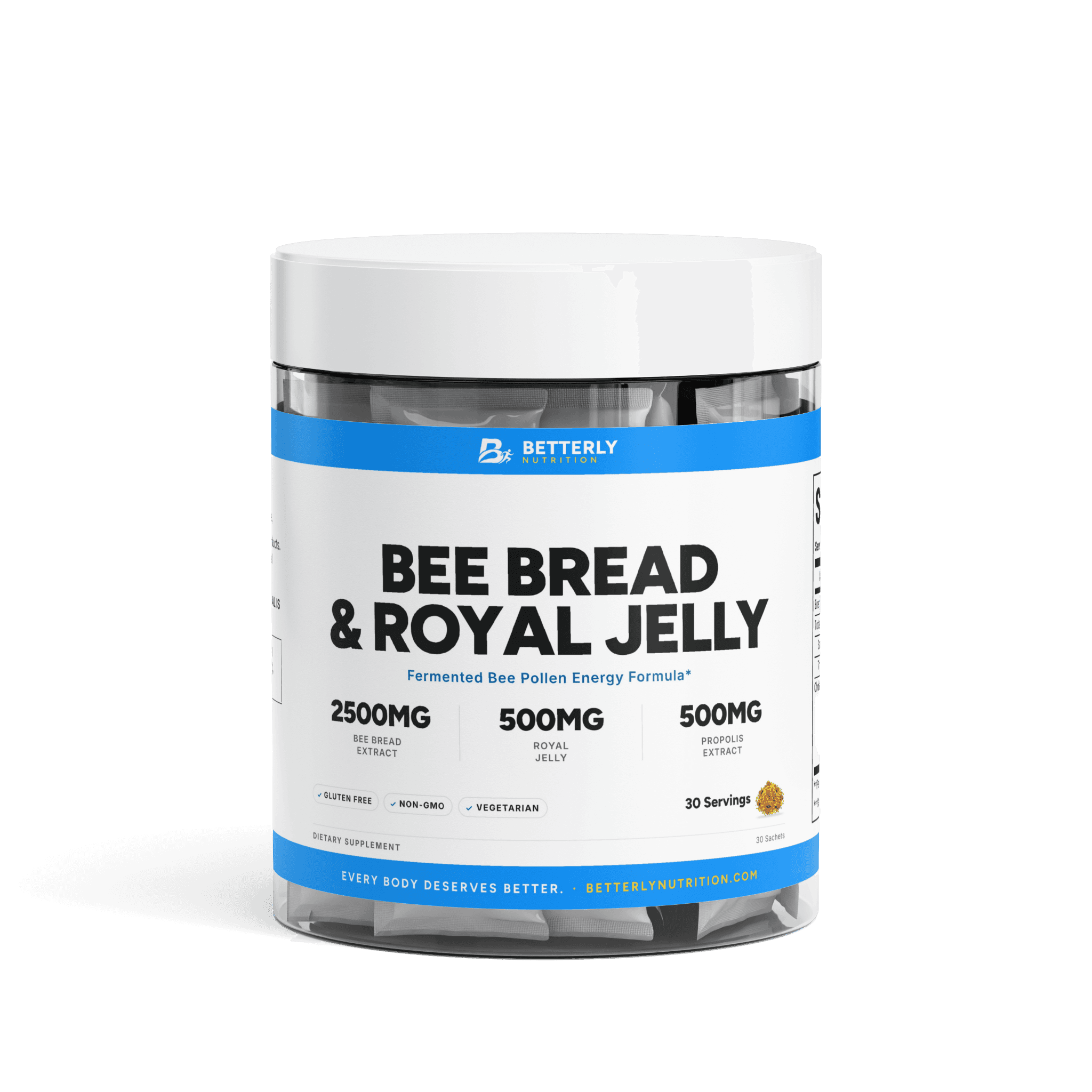
The short answer: Royal jelly vs propolis isn't a choice between two versions of one thing. Royal jelly is a milky, acidic food that nurse bees secrete to feed larvae and queens. Propolis, often called bee glue, is plant resin that bees gather from buds and other plant parts, then mix with beeswax to seal the hive. Bee pollen is the flower pollen foragers carry home. Our sachet lists 500 mg each of royal jelly and propolis per 1-sachet (4 g) serving.
Key takeaways
- Royal jelly is made inside a bee's body, while propolis starts as plant resin, so the two differ in makeup, texture and how they're sold.
- NIH's LiverTox database says royal jelly's health claims haven't been substantiated, and that propolis effects seen in lab and animal studies haven't been convincingly shown in people.
- Propolis changes with the local plants, so a label that names its type or region tells you more than one that only says "propolis extract."
- LiverTox records allergic reactions to royal jelly, propolis and bee pollen alike, so a product that combines them only suits you if none of the three has ever bothered you.
We sell Bee Bread, Royal Jelly & Propolis Powder, which puts royal jelly, propolis and bee bread (fermented pollen) in one sachet, so we'd gain if you wanted every one of them. We compare them anyway, and we point out what our own label leaves unsaid.
What's the difference between royal jelly and propolis?
Royal jelly is a protein-rich secretion bees produce to feed their young, while propolis is a sticky plant resin bees collect to build and seal the hive.
One is food, and the other is building material.
| Royal jelly | Propolis | Bee pollen | |
|---|---|---|---|
| What it is | Nurse bee gland secretion | Plant resin plus beeswax | Flower pollen packed by foragers |
| Hive job | Feeds larvae and queens | Seals gaps, lines the nest | Food, stored as bee bread |
| Texture | Milky jelly | Brittle cold, sticky warm | Dry, powdery pellets |
| Common forms | Fresh jars, freeze-dried powder | Alcohol extracts, dry powders | Granules, capsules, blends |
If you keep one row, keep the first. Royal jelly comes out of a bee, and propolis comes off a plant. Pollen sits in between: a plant material that bees turn into food.
Propolis vs bee pollen vs royal jelly: where does each come from?
Propolis and bee pollen both arrive on foragers' hind legs from plants, while royal jelly is made inside the hive by nurse bees that eat stored honey and bee bread.
Bee scientists, including one from the USDA's Agricultural Research Service, wrote a set of standard research methods for propolis that's hosted on the USDA ARS website. A photo in it shows the two loads side by side. Resin loads look semi-translucent and shiny. Pollen loads look opaque and powdery.
From there, the materials part ways:
- Propolis becomes mortar. The manual says bees use it to block holes and cracks, repair comb and strengthen thin comb edges. They even coat insects or small animals that died in the hive and are too big to carry out.
- Pollen gets packed into cells near the brood, where it becomes bee bread. Our side-by-side look at bee bread vs bee pollen follows that step.
- Royal jelly comes last. A 2020 review of royal jelly's makeup by Ahmad and colleagues describes it as an acidic secretion from nurse bees' enlarged food glands.
So royal jelly is built from the hive's stored honey and bee bread, reworked in a nurse bee's glands. NIH's LiverTox entry on royal jelly says worker and drone larvae get it for 3 days, while larvae chosen as queens get large amounts until they finish developing.
What's inside royal jelly vs propolis?
Royal jelly is mostly water, protein, sugars and fats, while propolis is mostly resin and beeswax carrying plant compounds that shift with the plants bees visit.
The Ahmad review puts royal jelly at 60% to 70% water, 9% to 18% protein, 7% to 18% sugars and 3% to 8% fats by weight. Protein makes up more than half of what's left once the water is gone. A fatty acid called 10-HDA makes up about 3.5% of freeze-dried royal jelly, and the review says it serves as an international quality standard.
Propolis is far less predictable. The USDA-hosted manual says its chemistry depends on location, climate and local plants, and it names types after their plant sources. Among them:
- Poplar type, from poplar buds, common in Europe
- Brazilian green, from a shrub called Baccharis dracunculifolia
- Red propolis, from Cuba and Brazil
Because the types differ so much, the authors say no single chemical standard can cover all propolis. LiverTox's entry on bee products adds that propolis may carry insect parts and allergens from its surroundings, and it calls bee pollen's makeup highly variable too.
"Royal jelly" names one substance with a known basic recipe. "Propolis" works more like the word "tea": one name stretched over many plant sources.
What do royal jelly and propolis taste like, and how are they sold?
Royal jelly is usually described as tangy and propolis as resinous and bitter, and their textures (a milky jelly vs a resin) decide how each is sold.
The Ahmad review calls royal jelly acidic, which fits its sour reputation. It comes fresh in small jars, stirred into honey, or freeze-dried into a powder that labels often call lyophilized, which fits into capsules and sachets.
Propolis is usually sold as an extract. The standard lab method in the USDA-hosted manual soaks powdered propolis in 70% alcohol, and liquid propolis products are often alcohol extracts too, so check the label if you avoid alcohol. Dry extract powders go into capsules and blends.
Our sachet uses the dry forms of royal jelly and propolis. Its label names no flavor, so your smoothie or drink will do most of the talking.
Is royal jelly or propolis better, and what is propolis good for?
Neither royal jelly nor propolis is better across the board, because no human research we found ranks one above the other for a healthy adult.
LiverTox's royal jelly entry says people take it for general health and well-being, then adds: "The bases of these claims have not been substantiated." Its bee products entry says the activities claimed for propolis come from cell and animal studies and haven't been convincingly shown in humans, and that bee pollen's popular claims haven't been shown either.
So what is propolis good for? For bees, a lot: it's their caulk and sealant. For people, we couldn't find a federal source that names a body function propolis supports, so we don't claim one. LiverTox notes that most clinical trials didn't report side-effect rates, though propolis is described as well tolerated.
The USDA-hosted manual adds a warning. Its authors say propolis research done without identifying the chemical type can't be reproduced. A finding about Brazilian green propolis says nothing sure about poplar propolis, and a label that just says "propolis" doesn't tell you which one you have.
That leaves four fair ways to choose: form, taste, how clearly the label states amounts, and your allergy history.
What does our royal jelly and propolis powder list per sachet?
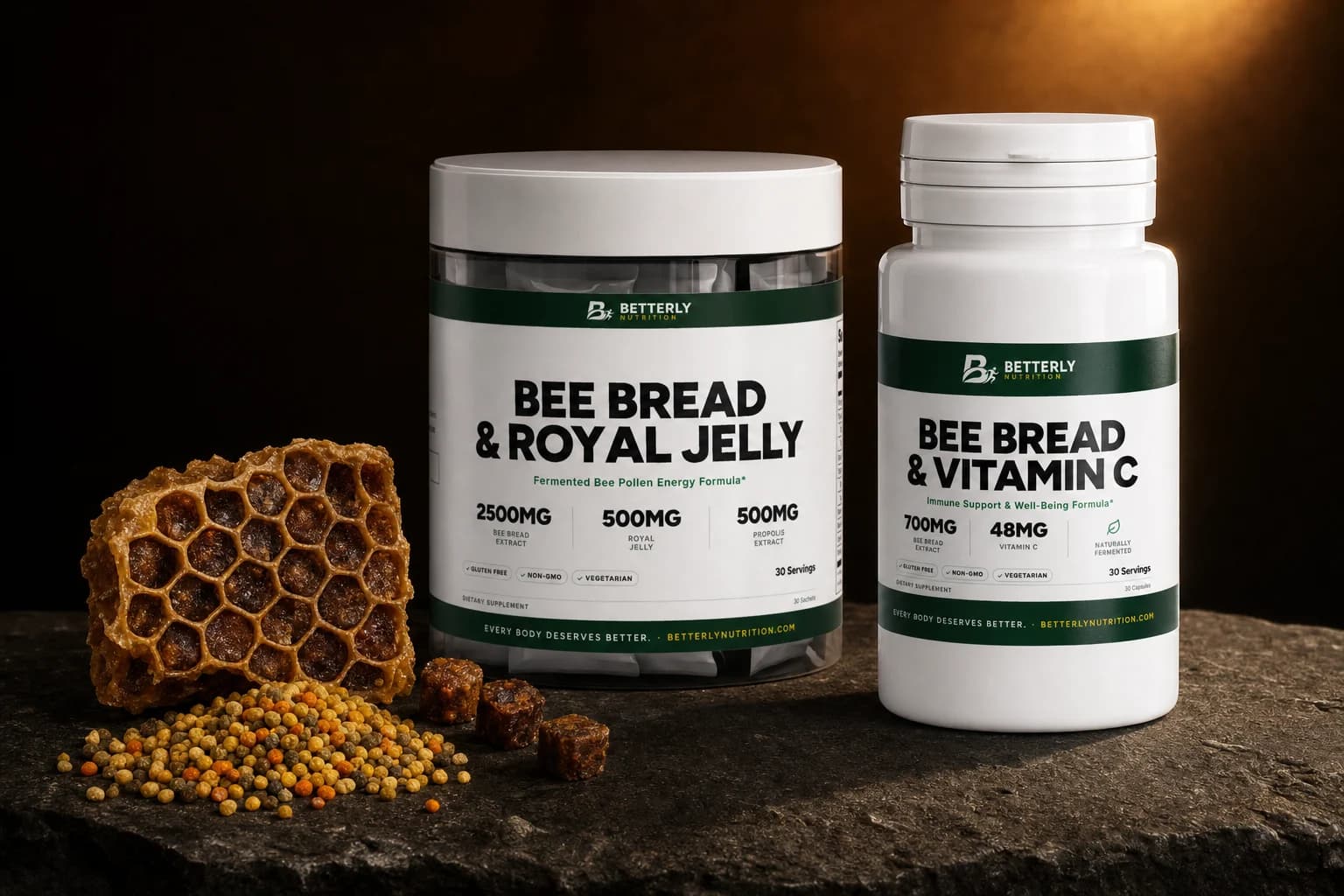
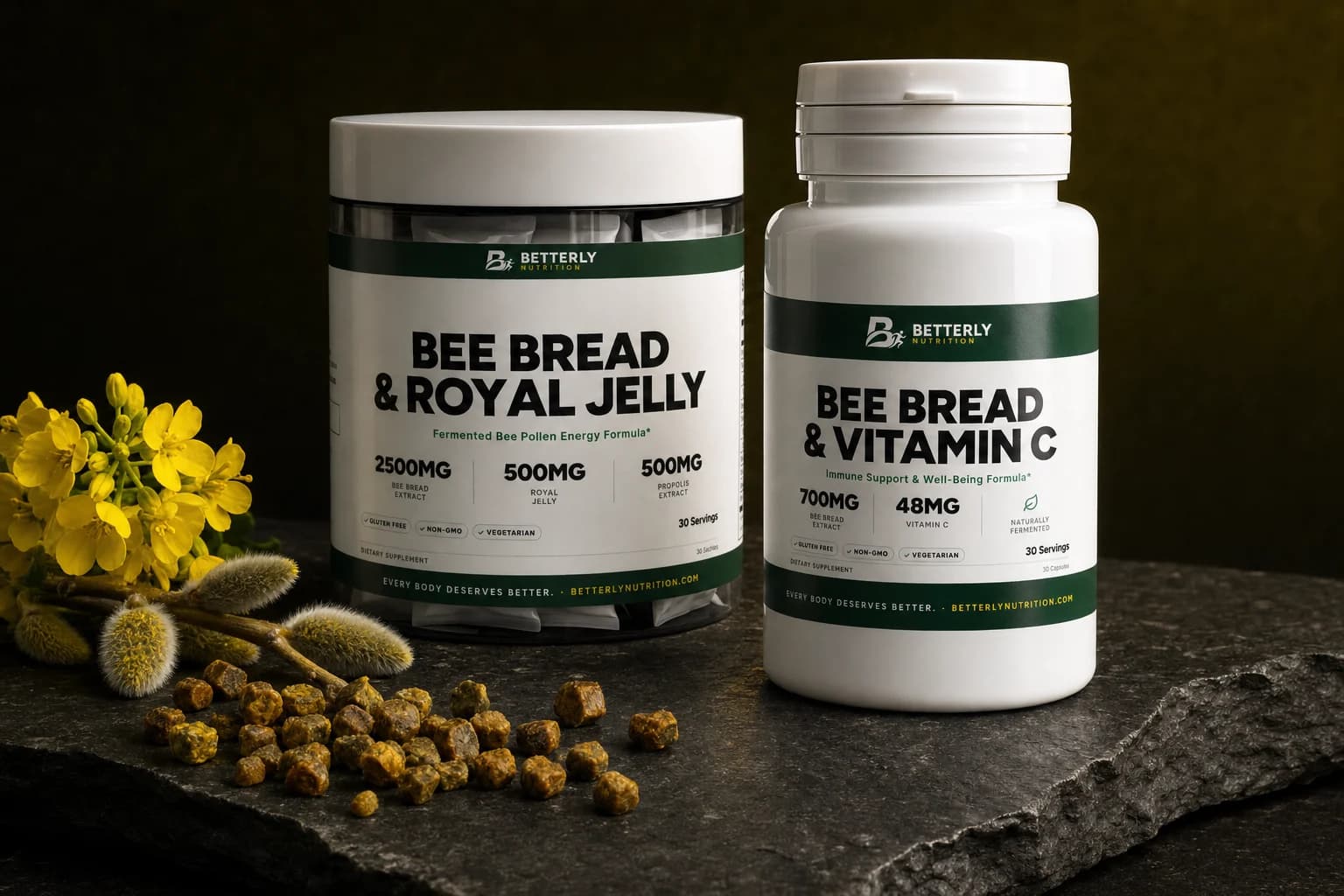
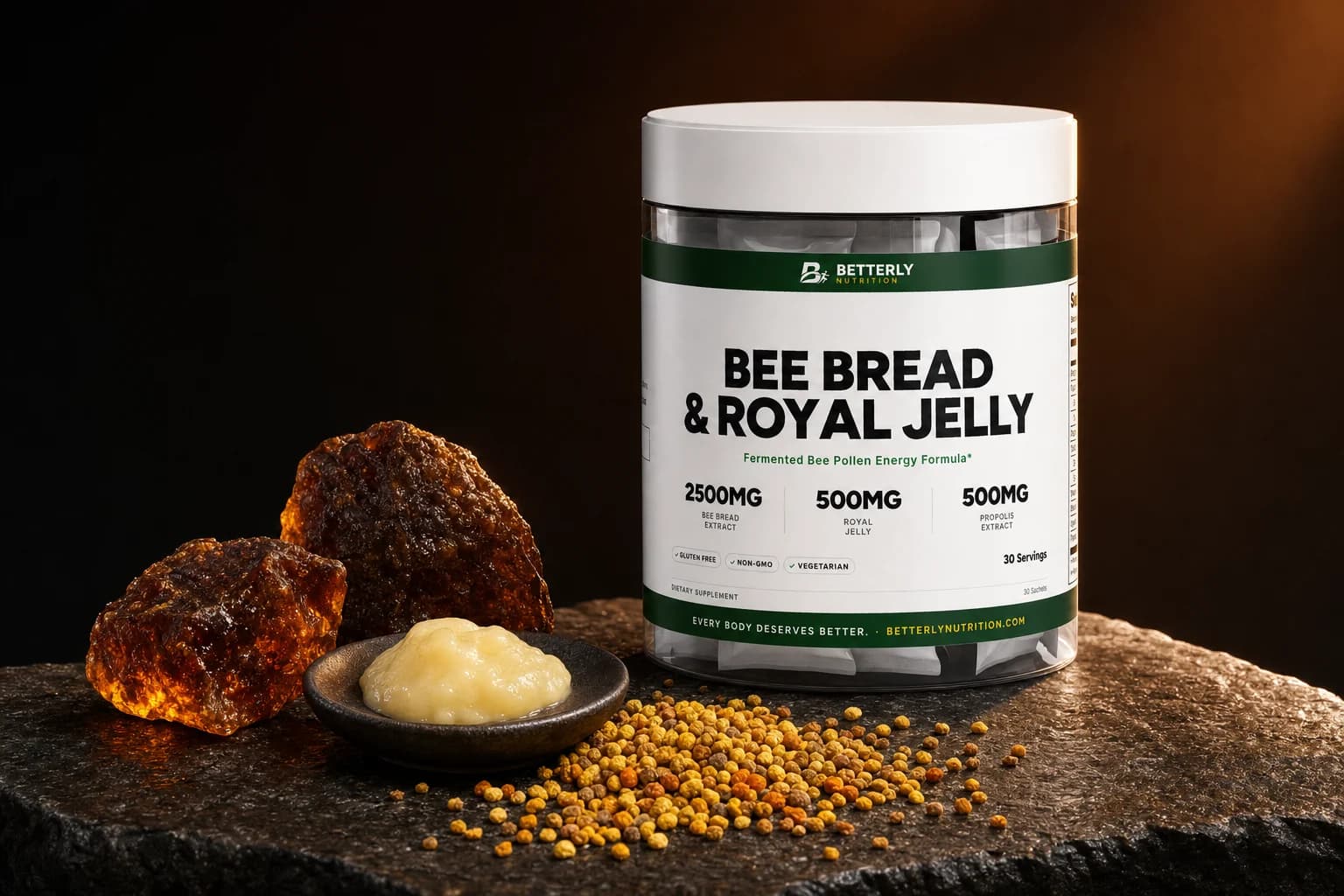
Our Bee Bread, Royal Jelly & Propolis Powder puts three hive products in one daily sachet, and its panel gives each one its own milligram row.
Per 1-sachet (4 g) serving, the Supplement Facts panel lists:
- 2,500 mg of Bee Bread Extract (Naturally Fermented Pollen)
- 500 mg of lyophilized royal jelly
- 500 mg of propolis extract powder
- 12 mg of vitamin C, 13% of the Daily Value
- 8 kcal, with carbohydrates, fiber and sugar each under 2 g
The label also claims gluten free, non-GMO and vegetarian, with 30 sachets per tub.
That separate listing is the useful part: a blend that lumps them together leaves you guessing. We aren't claiming the three do more together than apart, because we haven't seen evidence of that.
Our label has gaps, too. It gives no 10-HDA percentage, no propolis type or region, no extract ratio and no country of origin. And the tub's front reads "Fermented Bee Pollen Energy Formula." Read that as a descriptor, not a promise, since the panel lists 8 kcal and no stimulant.
| If you want | Check the label for | On our shelf |
|---|---|---|
| Royal jelly with a stated dose | Its own mg row | Sachet: 500 mg freeze-dried |
| Royal jelly inside a greens blend | Whether it gets its own amount | Alfalfa & Chlorella Greens Powder: a 1 g Herbal Blend total only |
| Propolis you can compare | A type or region, plus an amount | Sachet: 500 mg, type not named |
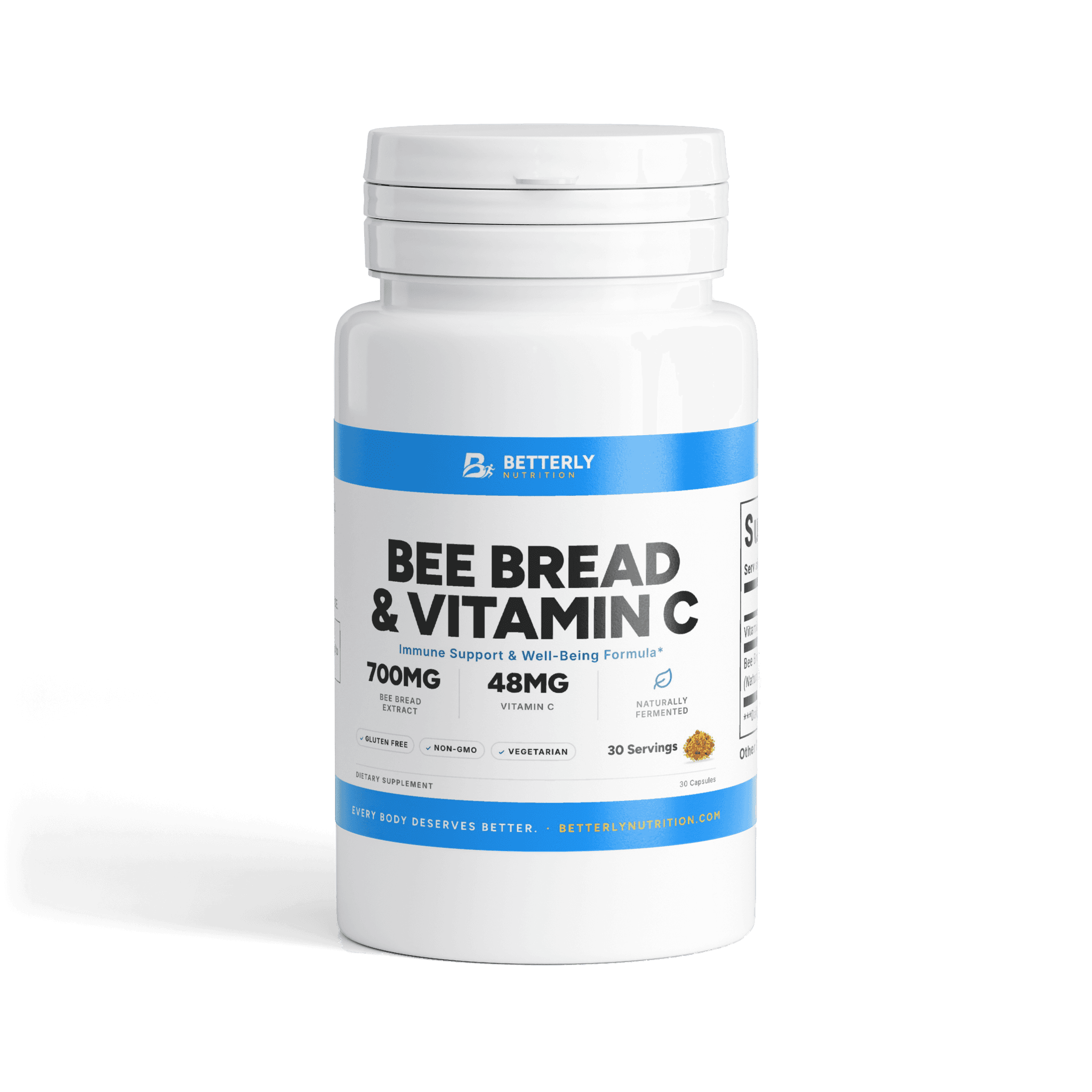
| Pollen without the other two | A bee bread or pollen row alone | Capsule: 700 mg bee bread extract |
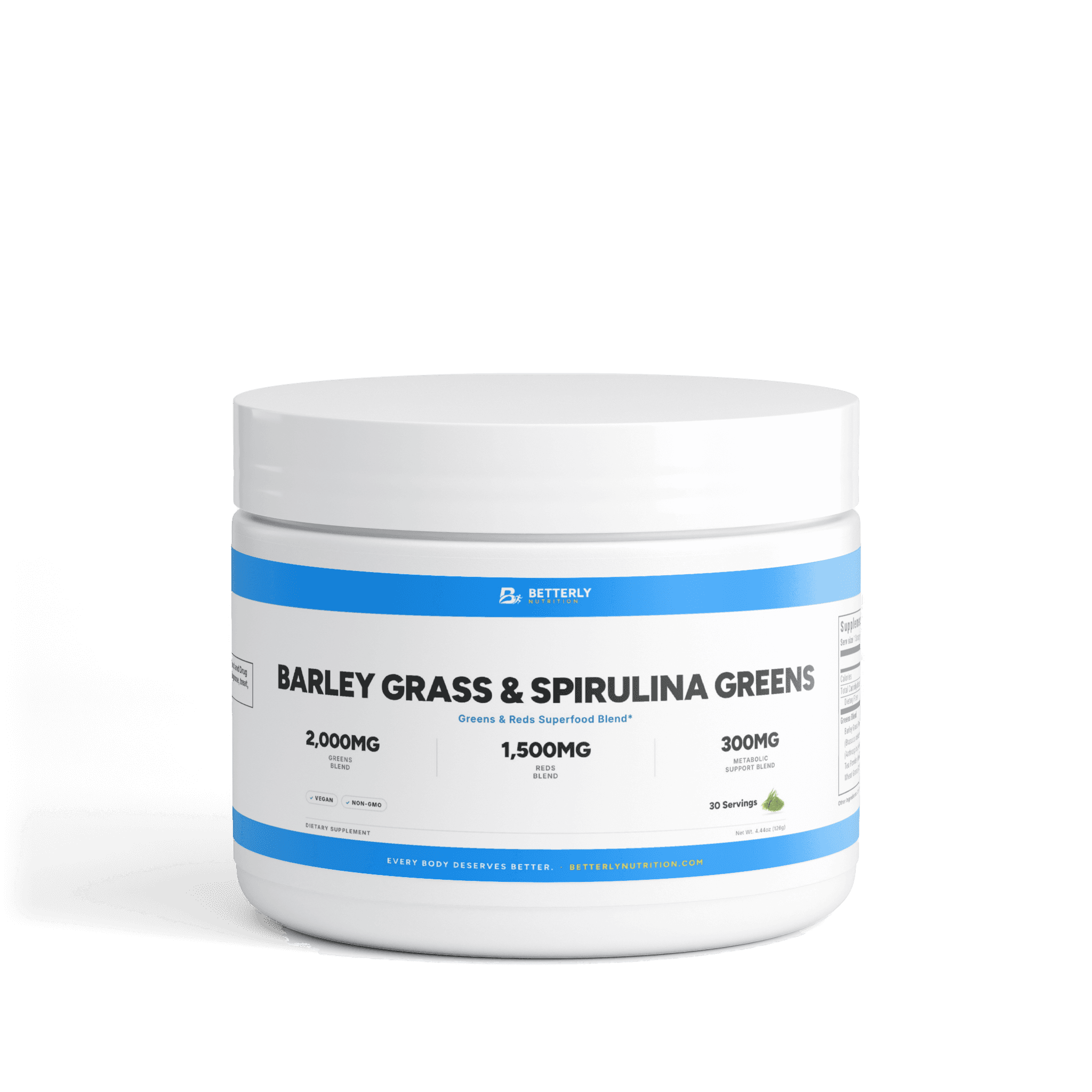
| Nothing from the hive | No hive words on the panel | Barley Grass & Spirulina Greens Powder |
Read down the middle column and one pattern stands out. Only the sachet gives royal jelly and propolis amounts of their own, and even it stops short of the type details that let you compare one propolis with another. The greens tub names royal jelly but hands you a blend weight instead, a problem our guide on why a blend total hides each plant's dose unpacks.
From our shop: Bee Bread, Royal Jelly & Propolis Powder — one 4 g sachet lists lyophilized royal jelly and propolis extract powder at 500 mg apiece, next to 2,500 mg of bee bread extract, for a daily smoothie or drink.
How do you take a royal jelly and propolis powder?
The Bee Bread, Royal Jelly & Propolis Powder label says to mix 1 sachet daily into a smoothie or beverage, and the caution line says not to take more.
A few points follow from the label:
- One sachet is one serving, so don't open a second one on the same day.
- The label sets no time of day and no meal rule. Pair it with a drink you already have daily.
- A tub of 30 sachets lasts 30 days at the label's pace.
- Read the small print under any blend in the other powders you use. Royal jelly or pollen tucked in there would add to the sachet's measured amounts, and a blend weight won't tell you by how much.
If you'd rather have bee bread alone, our bee bread capsule's label reads "Take one (1) capsule daily with a meal." For freeze-dried versus fresh royal jelly, see our guide to taking royal jelly.
From our shop: Bee Bread & Vitamin C Capsules — for anyone skipping royal jelly and propolis, one capsule lists only two actives: 48 mg of vitamin C and 700 mg of bee bread extract.
When don't you need royal jelly or propolis?
You don't need royal jelly or propolis to meet any nutrient requirement, and neither suits anyone who has reacted to a hive product before.
Other honest reasons to pass:
- You want protein. Even if half of our sachet's 500 mg of freeze-dried royal jelly were protein, that's 250 mg, about a quarter of a gram. The panel has no protein row.
- You want vitamin C. The sachet's 12 mg is 13% of the Daily Value, and food can supply the rest.
- You eat no animal products. Bee products aren't vegan, and our label claims vegetarian, not vegan.
- You were sold on one big promise. Remember LiverTox's line on royal jelly claims.
If you want a daily scoop of plants instead, browse our Greens & Superfoods shelf and check each panel for hive ingredients. Our review of what the research on bee bread does and doesn't show is worth reading before you buy any bee product.
Who should check with a healthcare provider first?
Check with a healthcare provider before royal jelly or propolis if you're pregnant, nursing, under 18, managing a medical condition, taking any medicine, or have had allergic reactions.
Our sachet's caution reads: "Do not exceed recommended dose. Contains bee products. Consult a physician if pregnant, nursing, under 18, have a medical condition, or allergic reactions."
Those allergy risks differ by ingredient. LiverTox ties royal jelly's rare but sometimes serious reactions to its proteins, and says propolis reactions likely come from plant compounds. It adds that propolis can cause skin reactions whether it's handled or swallowed. The warning signs get fuller treatment in our royal jelly side effects guide.
If you take any medicine or have surgery on the calendar, clear the sachet with your prescriber before your first serving.
FAQ: royal jelly vs propolis
Is propolis the same as beeswax?
No, propolis isn't beeswax, though it contains some. LiverTox describes beeswax as a secretion from the abdominal segments of worker bees, used to build honeycomb. Propolis is resin that bees collect from various plants and blend with beeswax and salivary enzymes. LiverTox adds that propolis is hard and breakable in the cold but soft, flexible and sticky when warmed, which lets bees press it into gaps.
Is royal jelly the same as honey?
No, royal jelly and honey are separate hive products. Honey is nectar that bees concentrate into a sweet store. Royal jelly is a secretion from nurse bees' food glands, and the Ahmad review notes that nurse bees make it by eating honey and bee bread. Some products stir royal jelly into honey, so check the label for how much of each you're getting.
Can you take royal jelly and propolis together?
Yes, royal jelly and propolis can share a serving, and our sachet pairs them at 500 mg each per 1-sachet (4 g) serving, next to 2,500 mg of bee bread extract. Stay at the label's 1 sachet a day. Keep in mind that the pair brings allergens from two directions: the bee itself and the plants it visited. If bee products or pollen have ever bothered you, talk to an allergist before trying them.
Can people with pollen allergies take royal jelly or propolis?
People with pollen allergies shouldn't take royal jelly or propolis without an allergist's okay. LiverTox reports bee pollen reactions in people allergic to pollen, and it says propolis can pick up allergens from wherever the bees gathered it. Our sachet's largest ingredient is bee bread, which is fermented pollen, so a pollen allergy applies directly here.
Sources
- Royal Jelly, LiverTox (NIH NCBI Bookshelf)
- Bee Products: Beeswax, Bee Pollen, Propolis, LiverTox (NIH NCBI Bookshelf)
- New Insights into the Biological and Pharmaceutical Properties of Royal Jelly (International Journal of Molecular Sciences, 2020, via PubMed Central)
- Standard methods for Apis mellifera propolis research (Journal of Apicultural Research, 2016, hosted by USDA Agricultural Research Service)
If this left you looking for somewhere to start, read royal jelly and propolis powder sachets — its amounts per serving are listed on the page. For the practical questions this raises, how dosing, sourcing and subscriptions work is answered in one place.