On this page
- Key takeaways
- What is bee bread made of, and how do bees make it?
- Why is bee bread hard to find, and how is it harvested?
- What nutrients does bee bread contain?
- Is bee bread good for you, and how strong is the evidence?
- Are bee bread benefits different for women and men?
- Is bee bread legit, and what should a label tell you?
- What's in our bee bread capsule, and how is it taken?
- When is bee bread not worth buying?
- Who should talk to a healthcare provider before trying bee bread?
- FAQ: bee bread benefits
- Sources
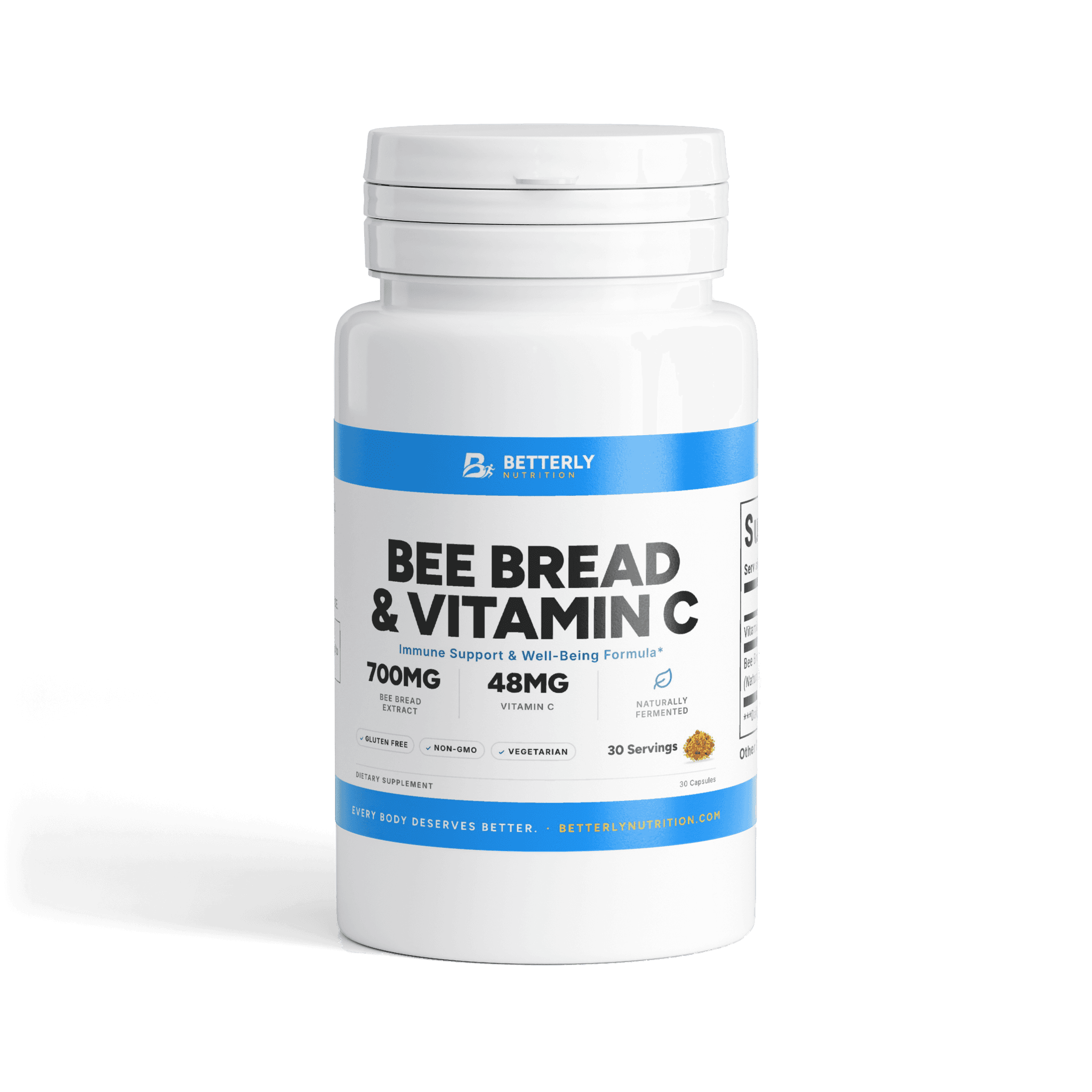
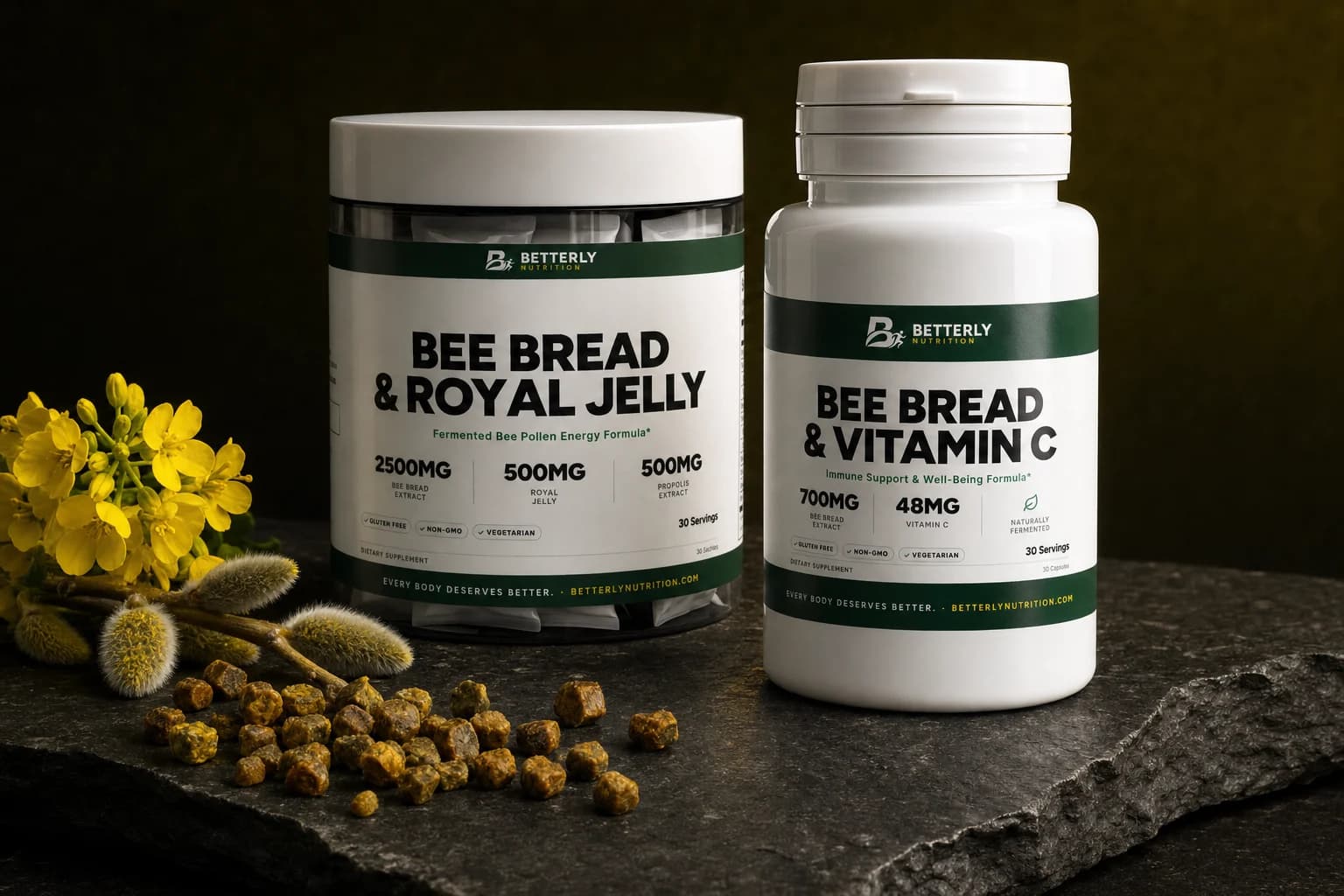
The short answer: Bee bread benefits are easier to find in ads than in human research. Bee bread is flower pollen that honey bees pack into wax cells with honey and let ferment. Lab tests show it holds protein, sugars, minerals and plant compounds, but most health findings come from test tubes and rats. Each serving of our Bee Bread & Vitamin C Capsules is 1 capsule with 700 mg of bee bread extract and 48 mg of vitamin C.
Key takeaways
- Bee bread is pollen that honey bees store in comb with honey and saliva, where it ferments into the colony's protein reserve.
- Its nutrient makeup shifts with the flowers, region and season, so one sample's numbers don't describe every jar or capsule.
- Most bee bread research is lab or animal work. Two trials in runners used 20 g or more of whole bee bread, which can't be compared directly with the 700 mg of extract in our capsule.
- In our Bee Bread & Vitamin C Capsules, vitamin C is the ingredient that the NIH Office of Dietary Supplements (ODS) ties to normal immune function.
We sell two bee bread products, a capsule and a powder, so we gain when you buy one. Below, we sort each popular claim by the evidence behind it, and each product figure is copied from our labels' Supplement Facts panels.
What is bee bread made of, and how do bees make it?
Bee bread is made of flower pollen, honey or nectar and bee saliva, packed into comb cells and left to ferment into the hive's stored protein food.
A 2022 review in the journal Antibiotics by Bakour and colleagues, Bee Bread as a Promising Source of Bioactive Molecules, lays out the steps:
- Foragers mix pollen with nectar or honey and enzyme-rich saliva, then carry it home on their hind legs.
- Bees working inside the hive fill empty cells with that pollen and honey mix.
- A thin layer of wax seals it off from air, and lactic acid fermentation sets in.
The review adds that colonies fall back on these stores when fresh pollen runs short, as it does in fall and early spring.
Fresh pollen pellets are a different product, and our guide on how bee bread differs from fresh bee pollen covers the split in detail.
Why is bee bread hard to find, and how is it harvested?
Bee bread is hard to find because it's sealed inside comb and the colony depends on it, so collecting it is slow work that many beekeepers skip.
The Bakour review says that until a few years ago, beekeepers had no good way to collect bee bread without partly wrecking the hive. It's still scarce because harvesting is hard and many beekeepers prefer to leave a colony's stores alone.
People eat bee bread as whole six-sided granules taken from the comb. You'll also find it ground into powder or sold as an extract inside capsules and drink powders.
What nutrients does bee bread contain?
Bee bread contains protein, sugars, a little fat, minerals and plant compounds, but the amounts shift so much between batches that no single nutrition label fits all of it.
A 2019 review in Antioxidants by Mărgăoan and colleagues, Bee Collected Pollen and Bee Bread: Bioactive Constituents and Health Benefits, calls bee bread composition data scarce and hard to compare. As one example, it cites analyses showing about 20% protein, 3% fat, 24% to 35% carbohydrates and 3% minerals and vitamins.
The flowers behind a batch drive much of that swing. The Mărgăoan review describes Lithuanian bee bread where willow was the leading pollen in spring samples and rapeseed led in summer.
One analysis cited in the Bakour review, of bee bread from a Malaysian stingless bee rather than a honey bee, found about 11.5 mg of vitamin C per 100 g. At that level, you'd need more than 400 g of it to match the 48 mg in one of our capsules. The Mărgăoan review also notes that vitamin C drops as pollen turns into bee bread. In our capsule, vitamin C sits on its own panel row, apart from the bee bread extract.
For bee bread nutrition facts, our capsule's panel lists only those two rows, so it has no rows for calories, protein or sugar. Our Bee Bread, Royal Jelly & Propolis Powder does: 8 kcal, less than 1 g of fat and less than 2 g each of carbohydrates, fiber and sugar per 1-sachet (4 g) serving.
Is bee bread good for you, and how strong is the evidence?
Bee bread feeds bees well, but whether it does anything specific for people is still open, since most research on it comes from test tubes and rats.
It helps to sort bee bread research into three tiers.
- Test-tube work. Extracts show antioxidant activity and effects on bacteria in a dish. That's chemistry, not proof of what happens after you swallow a capsule.
- Animal work. Rats given bee bread showed shifts in blood fats and other metabolic markers. Several of those studies used 500 mg per kilogram of body weight a day.
- Human work. It's thin. The Bakour review lists two trials in runners, and the first had 12 athletes. One gave 30 g of bee bread per hour during a 4-hour rest, and the other gave 20 g a day. Both reported slightly longer distances in a 20-minute run than with a placebo.
Those trials used whole bee bread. Our label lists 700 mg of an extract with no stated ratio, so the two can't be compared directly, and we don't claim our products do what those trials measured. The Bakour review's other human reports involved people with diagnosed medical conditions, which says little about a healthy adult. The Mărgăoan review adds that most of the clinical work it covered used small groups, in animals or in patients.
| Claim you'll see | Evidence behind it | How to read it |
|---|---|---|
| "Packed with nutrients" | Lab analyses of raw bee bread | True of raw bee bread, but amounts vary |
| "Antioxidant" | Test-tube studies of extracts | Chemistry in a dish, not an effect in you |
| "Probiotic" | Lactic acid bacteria in raw samples | Our labels list no live cultures |
| "Stamina" | Two trials in runners | Used 20 g or more of whole bee bread |
| Hormone or metabolism claims | Mostly rat studies | Not shown in healthy adults; we don't make them |
| "Immune support" | ODS names vitamin C, not bee bread | In our capsule, that job belongs to the vitamin C |
The only row with a federal source behind it is the vitamin C, and that credit goes to the vitamin, not the bee bread.
Are bee bread benefits different for women and men?
No human study we found shows bee bread benefits that differ between women and men, and most female or male claims trace back to rodent research.
In the Bakour review, those claims trace to rat work, such as a study of reproductive tissue in male rats and one of appetite hormones in female rats. None of them tested a capsule like ours.
Sex does change one thing: how much vitamin C you need. The consumer fact sheet on vitamin C from ODS lists 75 mg a day for adult women and 90 mg for adult men, plus 35 mg more for people who smoke.
So one capsule's 48 mg covers nearly two-thirds of the women's figure and a little over half of the men's. Food usually fills the rest, and ODS points to citrus fruit, red and green peppers and kiwifruit as foods with a lot of it.
Is bee bread legit, and what should a label tell you?
Bee bread is a real hive product with a real body of research, but it has no agreed quality standard yet, so the label is your main checkpoint.
The Bakour review warns that demand for bee bread has outgrown production, which opens the door to adulteration. It adds that no recognized standard for bee bread exists yet, so fakes are harder to catch.
Check these points on any bee bread label, ours included:
- Whole bee bread or an extract. An extract is processed, so look for a ratio. Ours doesn't give one.
- A flower or region source. Composition follows the pollen. Our labels don't name one, and that's a real limit.
- The ingredient behind the front-label promise. Our capsule's front reads "Immune Support & Well-Being Formula," and the vitamin C carries that wording.
- Body-function language only. A promise to fix a medical problem is a red flag.
The same four checks work across our Targeted Support collection.
On point 3, the NIH Office of Dietary Supplements' consumer sheet on supplements and immune function says your immune system needs certain nutrients to work properly, including vitamin C, vitamin D and zinc. It also covers herbs like echinacea and elderberry. Bee bread isn't on its list. Our roundup of everyday immune support supplements covers the wider field.
From our shop: Bee Bread & Vitamin C Capsules — one capsule a day with a meal gives you 48 mg of vitamin C alongside 700 mg of bee bread extract, with 30 servings per bottle.
What's in our bee bread capsule, and how is it taken?
Our Bee Bread & Vitamin C Capsules hold 700 mg of bee bread extract each, and the label's suggested use is one capsule daily with a meal.
Per 1-capsule serving, the panel lists 48 mg of vitamin C and 700 mg of Bee Bread Extract (Naturally Fermented Pollen). The only other ingredient is a hypromellose capsule. The label also lists gluten free, non-GMO and vegetarian, and a bottle holds 30 capsules.
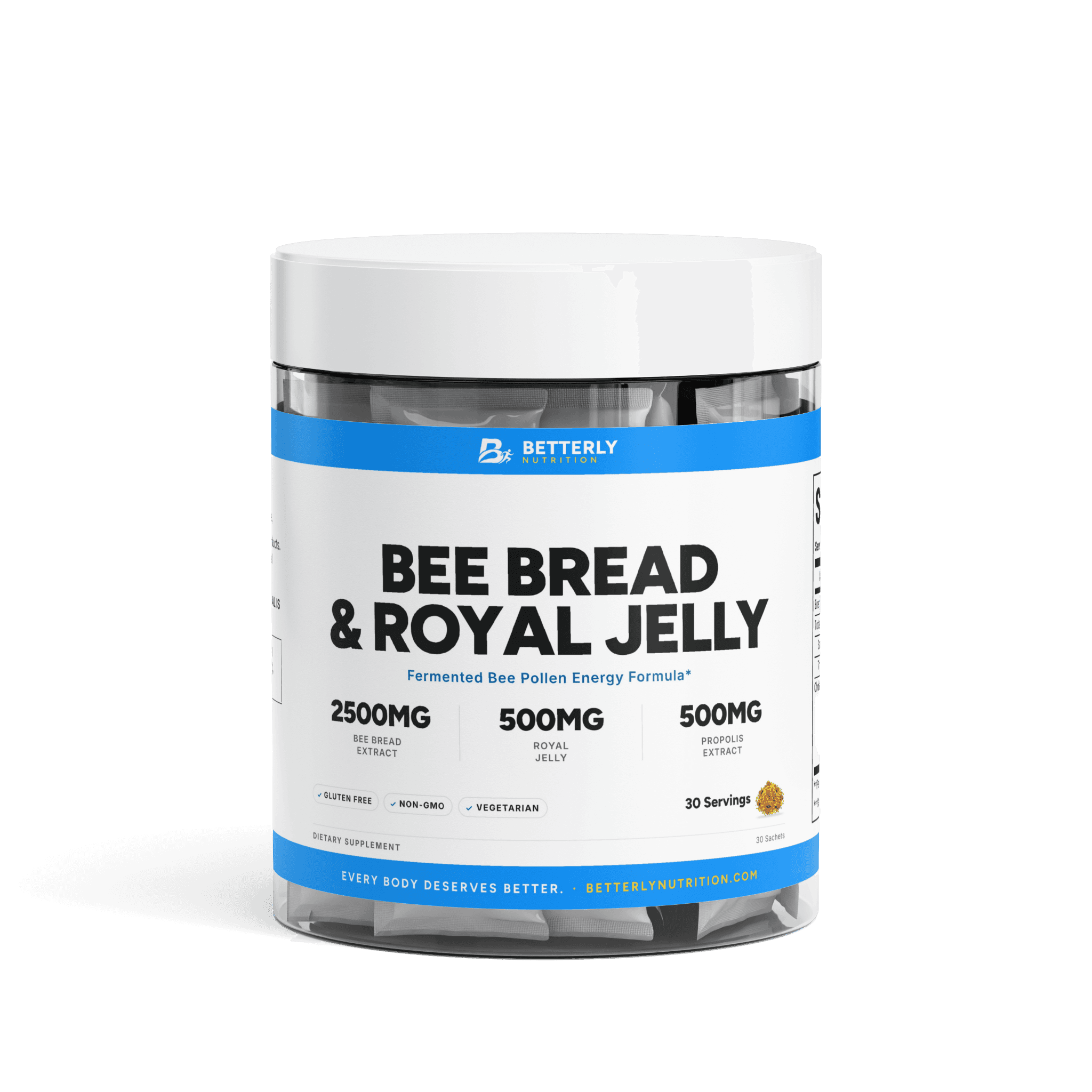
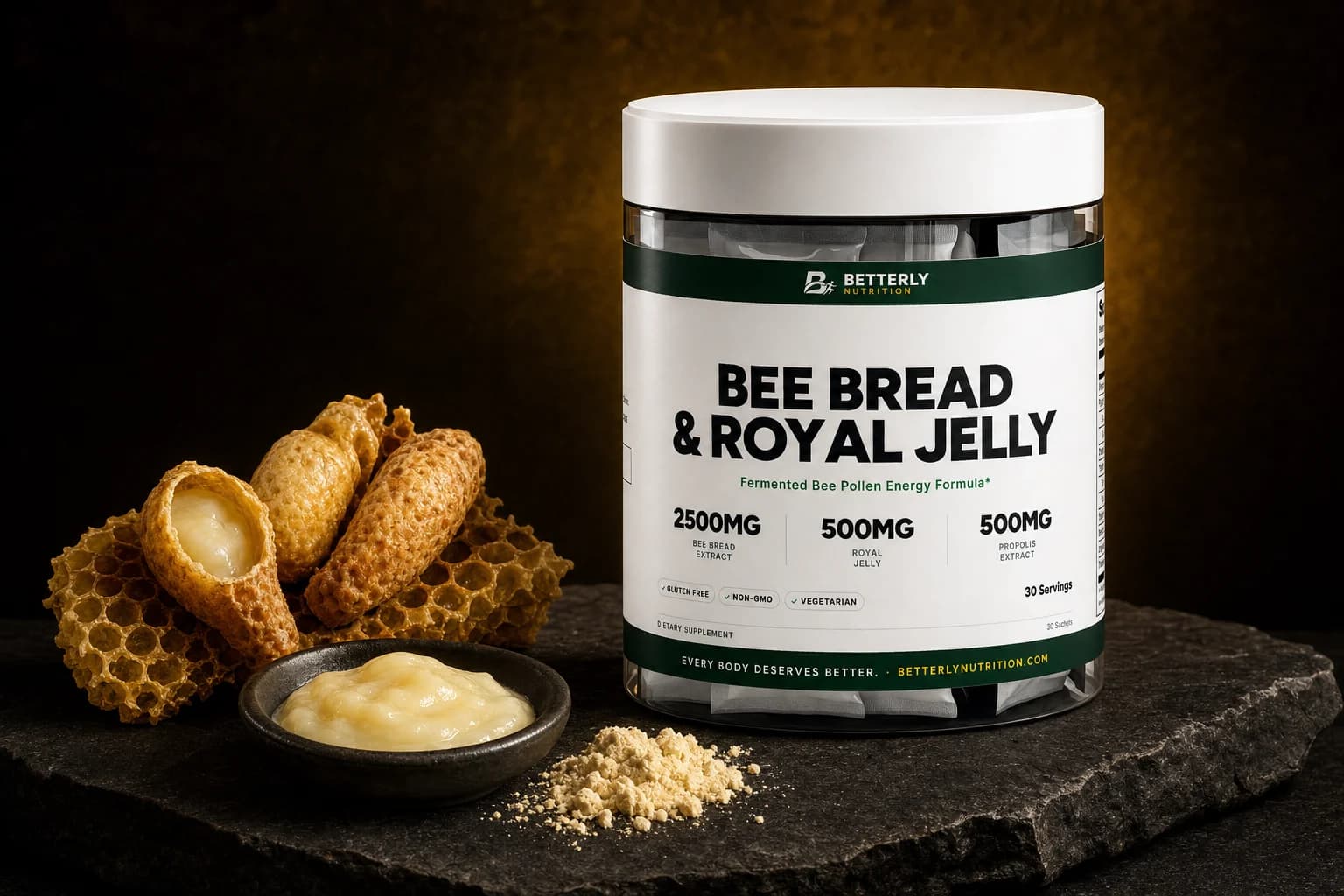
Our powder is built differently. Per 1-sachet (4 g) serving, it lists 2,500 mg of bee bread extract, 500 mg of lyophilized (freeze-dried) royal jelly, 500 mg of propolis extract powder and 12 mg of vitamin C. Its label says to mix 1 sachet daily into a smoothie or beverage. Our guide to what royal jelly adds covers that second ingredient, and timing and storage get their own walkthrough in our guide to taking bee bread.
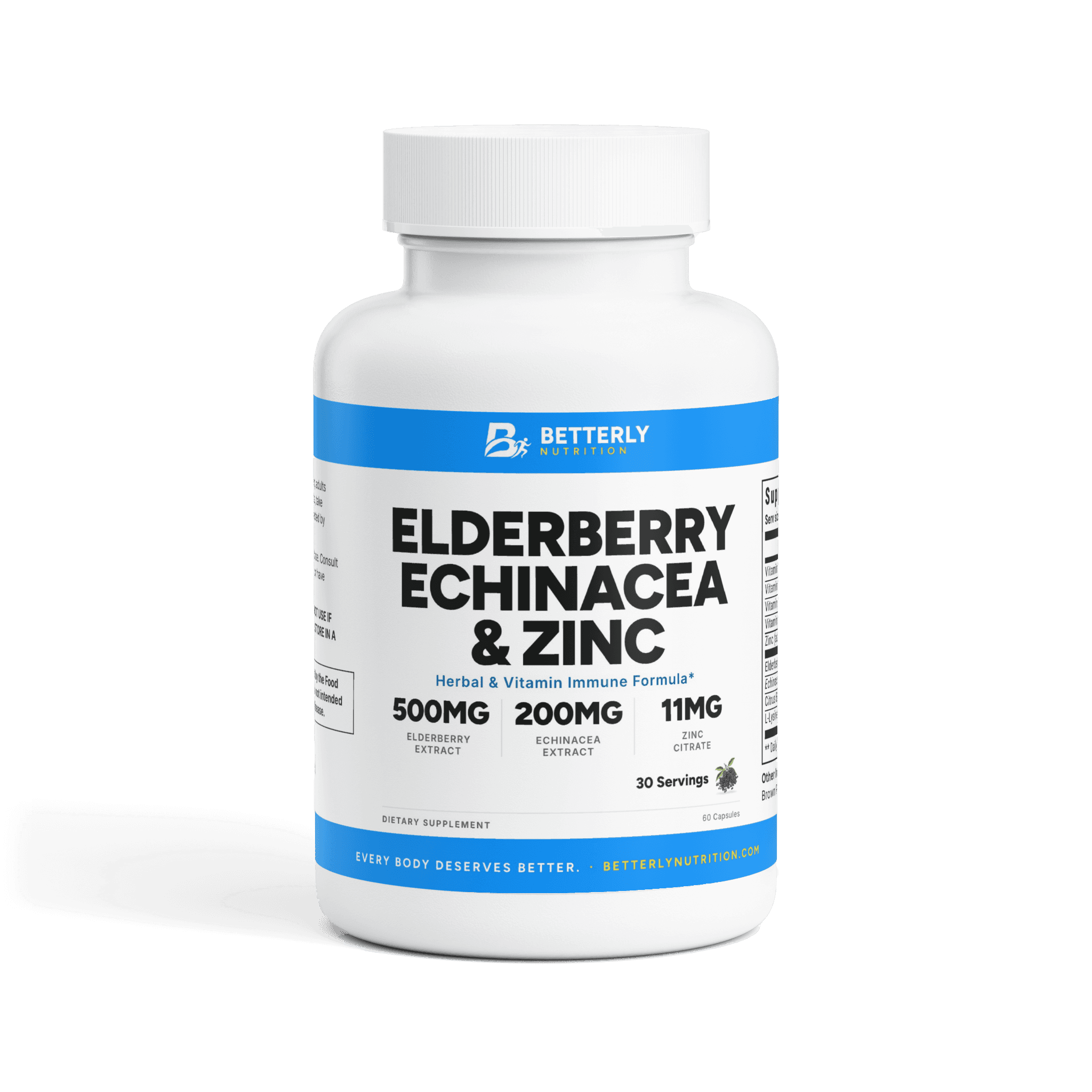
Before adding another product, total your vitamin C. Our Elderberry, Echinacea & Zinc Capsules list 180 mg per 2-capsule serving. With the bee bread capsule, that's 228 mg a day, well under the 2,000 mg adult upper limit ODS sets for food, drinks and supplements combined.
From our shop: Elderberry, Echinacea & Zinc Capsules — 500 mg of elderberry extract, 200 mg of Echinacea purpurea extract and 11 mg of zinc per 2-capsule serving, taken with 6-8 oz of water.
When is bee bread not worth buying?
Bee bread isn't worth buying if you're chasing the runner-trial results, which no label here matches, or if vitamin C is the only thing you want.
Those trials fed athletes 20 g or more of whole bee bread, while our labels stop at one serving a day and warn against exceeding it. Neither product can repeat those studies, and doubling up to try would break the label's own rule.
If vitamin C is your whole goal, you'd be paying extra for the ingredient with the thinner evidence, when the fruits and vegetables ODS names can do that job.
Pass, too, on bee bread sold with hormone or metabolism promises, since the research behind them sits in the rat tier.
Who should talk to a healthcare provider before trying bee bread?
Talk to a healthcare provider before starting bee bread if you take any medicine, and our labels add pregnancy, nursing, being under 18, a medical condition and past allergic reactions.
Medicines come first because our capsule holds two ingredients with two different gaps. The ODS vitamin C sheet says vitamin C supplements can interact or interfere with some medicines, and it asks you to tell your doctor and pharmacist about every supplement you take.
For the bee bread itself, the Mărgăoan review says data on how pollen extracts interact with drugs is still scarce. An interaction nobody has studied isn't one that's been ruled out, so give your pharmacist the full list and share it with your care team before any scheduled surgery.
Both of our bee bread labels print "Contains bee products" in their caution, because bee bread is built from pollen and honey. A past reaction to any hive product is the clearest reason to get a provider's view before the first capsule.
Pregnancy, nursing and the teen years also change the vitamin C math. For adult women, ODS sets 85 mg a day in pregnancy and 120 mg while breastfeeding, and teens aged 14 to 18 have a lower upper limit of 1,800 mg. Our label still asks anyone pregnant, nursing, under 18 or managing a medical condition to consult a physician first.
FAQ: bee bread benefits
Does bee bread work?
Bee bread clearly works as food for bees, carrying a colony through lean months. For people, the human evidence is two trials in runners who ate 20 g or more of whole bee bread, plus reports in patients. That's no basis for a capsule claim, so our label's front-panel wording rests on its vitamin C.
How much protein is in bee bread?
Bee bread is about 20% protein in the example analyses the Mărgăoan review cites, and that review describes its protein as containing all the necessary amino acids. Those figures describe raw bee bread, though, and batches vary with the flowers. Neither of our bee bread panels has a protein row, so don't count on a capsule or sachet for protein.
Does bee bread have probiotics?
Raw bee bread carries bacteria, but a bee bread supplement isn't automatically a probiotic. The Bakour review names lactic acid bacteria such as Apilactobacillus kunkeei and Lactiplantibacillus plantarum. By the definition that review quotes, a probiotic must deliver enough live microbes to benefit the person taking it. Our bee bread panels list no live cultures and no CFU count. If live cultures are your goal, our probiotic buying guide explains what those labels show.
Does bee bread have sugar or caffeine?
Raw bee bread has natural sugars, since bees mix the pollen with honey or nectar. Our capsule's panel has no sugar row (its only rows are vitamin C and bee bread extract), while our powder lists less than 2 g of sugar and 8 kcal per 4 g sachet. Neither of our bee bread panels lists caffeine.
Sources
- Bee Bread as a Promising Source of Bioactive Molecules and Functional Properties: An Up-To-Date Review (Antibiotics, 2022, via PubMed Central)
- Bee Collected Pollen and Bee Bread: Bioactive Constituents and Health Benefits (Antioxidants, 2019, via PubMed Central)
- Vitamin C: Fact Sheet for Consumers (NIH Office of Dietary Supplements)
- Dietary Supplements for Immune Function: Fact Sheet for Consumers (NIH Office of Dietary Supplements)
If this left you looking for somewhere to start, read bee bread capsules with vitamin C — its amounts per serving are listed on the page. For the practical questions this raises, how dosing, sourcing and subscriptions work is answered in one place.