On this page
- Key takeaways
- Bee bread side effects: what has actually been reported?
- Is bee bread less allergenic than bee pollen?
- Can bee pollen or bee bread upset your stomach?
- Which bee pollen allergy symptoms need 911?
- Who should not take bee pollen at all?
- What should a bee bread label tell you before you try it?
- How much bee bread does the label say to take?
- Who can skip bee bread without missing anything?
- Who should check with a healthcare provider first?
- FAQ: bee bread safety
- Sources
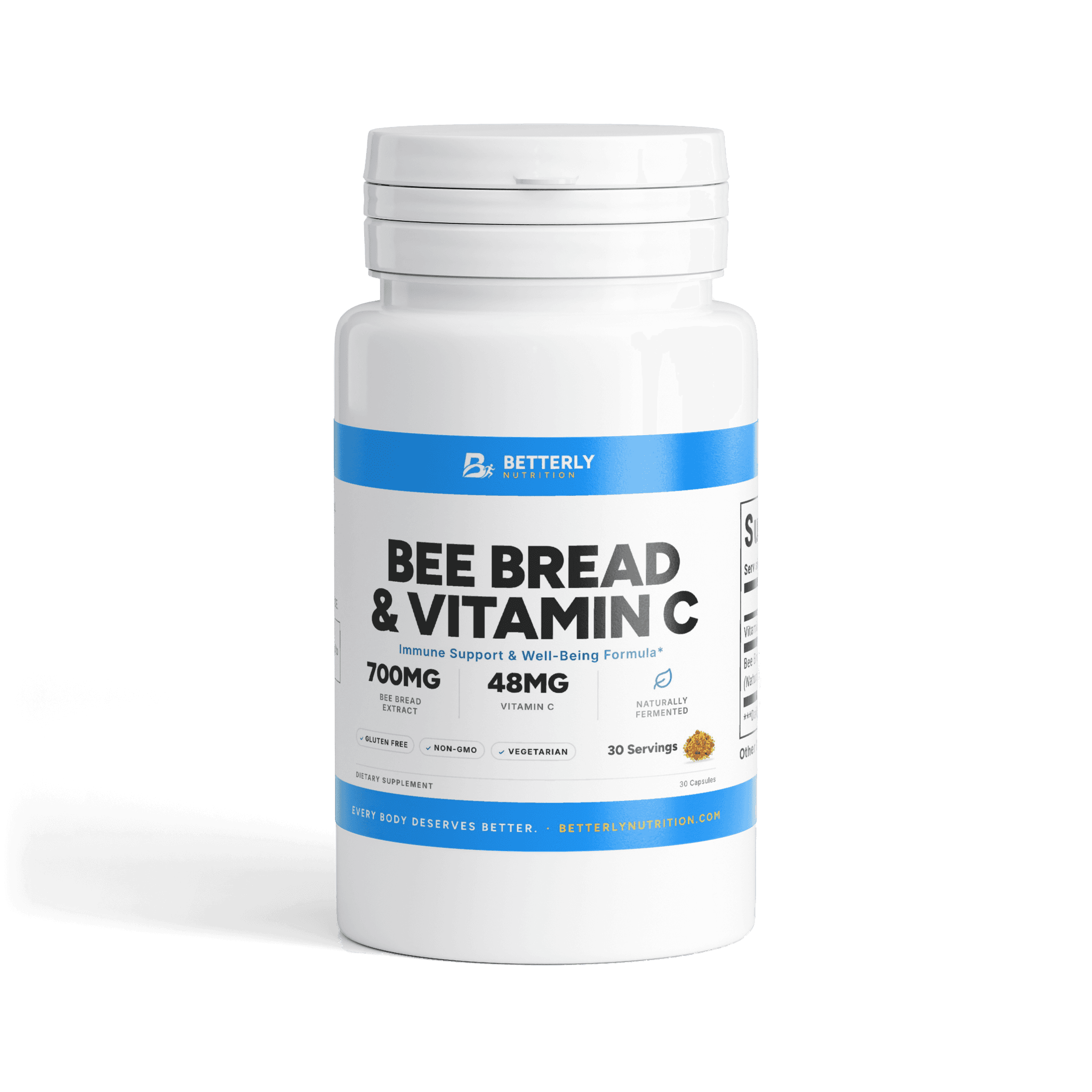
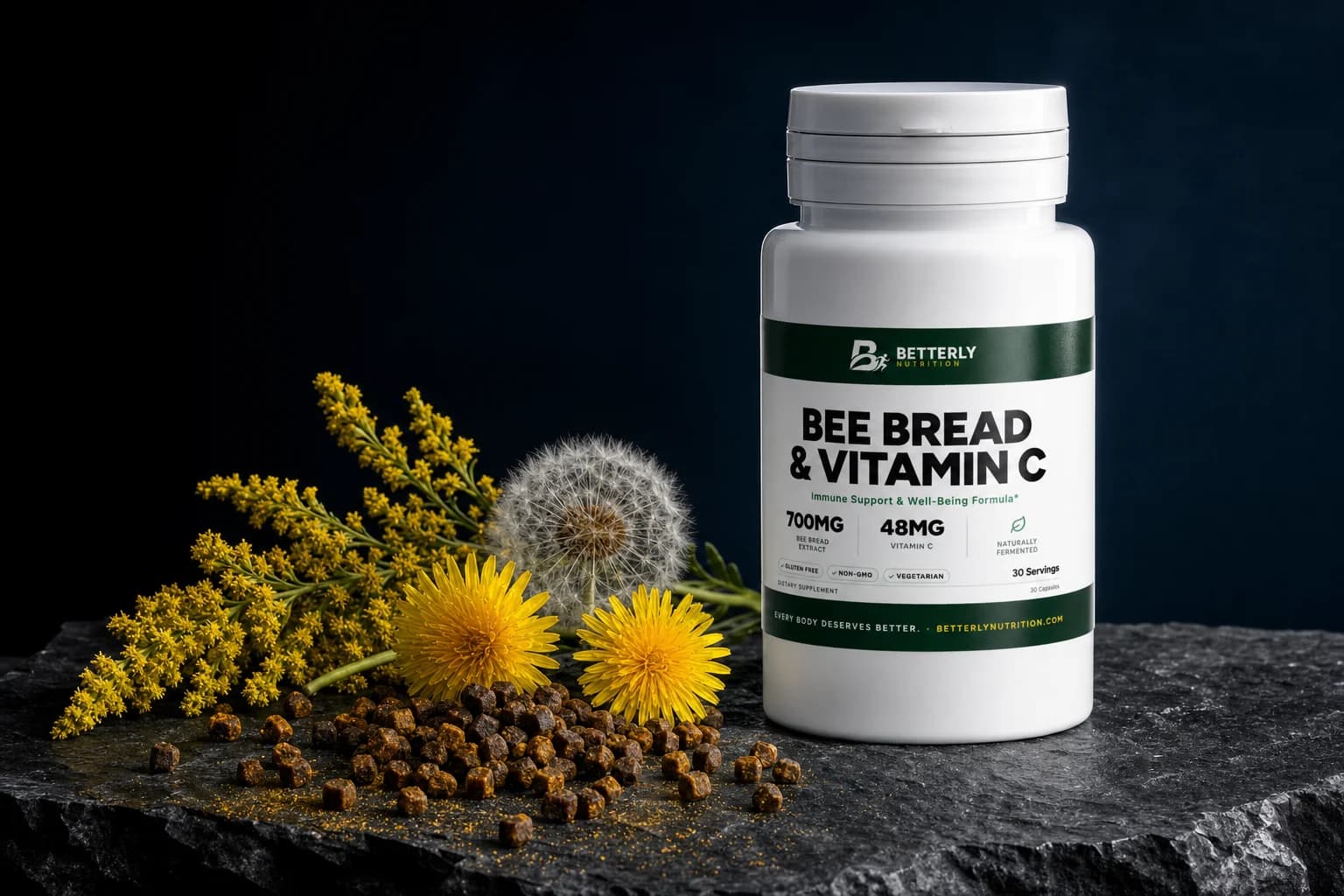
The short answer: Bee bread side effects are mostly allergic reactions, since bee bread is flower pollen that bees store and ferment inside the hive. A 2025 review of bee-product allergies rates reactions to bee bread as very rare and mostly mild, usually stomach or skin symptoms. Rare still isn't zero. If pollen or a hive product has ever set off a reaction, leave bee bread alone. Our capsule's panel shows 700 mg of bee bread extract per 1-capsule serving.
Key takeaways
- An allergic reaction is the side effect most tied to bee bread and bee pollen, and people with pollen allergies carry the most risk.
- A 2025 review found no reports of severe reactions to bee bread, yet its authors say fermentation doesn't guarantee safety for highly sensitive people.
- Cramps, nausea or diarrhea soon after a bee product can be part of an allergic reaction, especially when hives, swelling or wheezing show up too.
- Neither of our bee bread labels names the flowers behind the pollen, so the label can't rule out a plant you already know you react to.
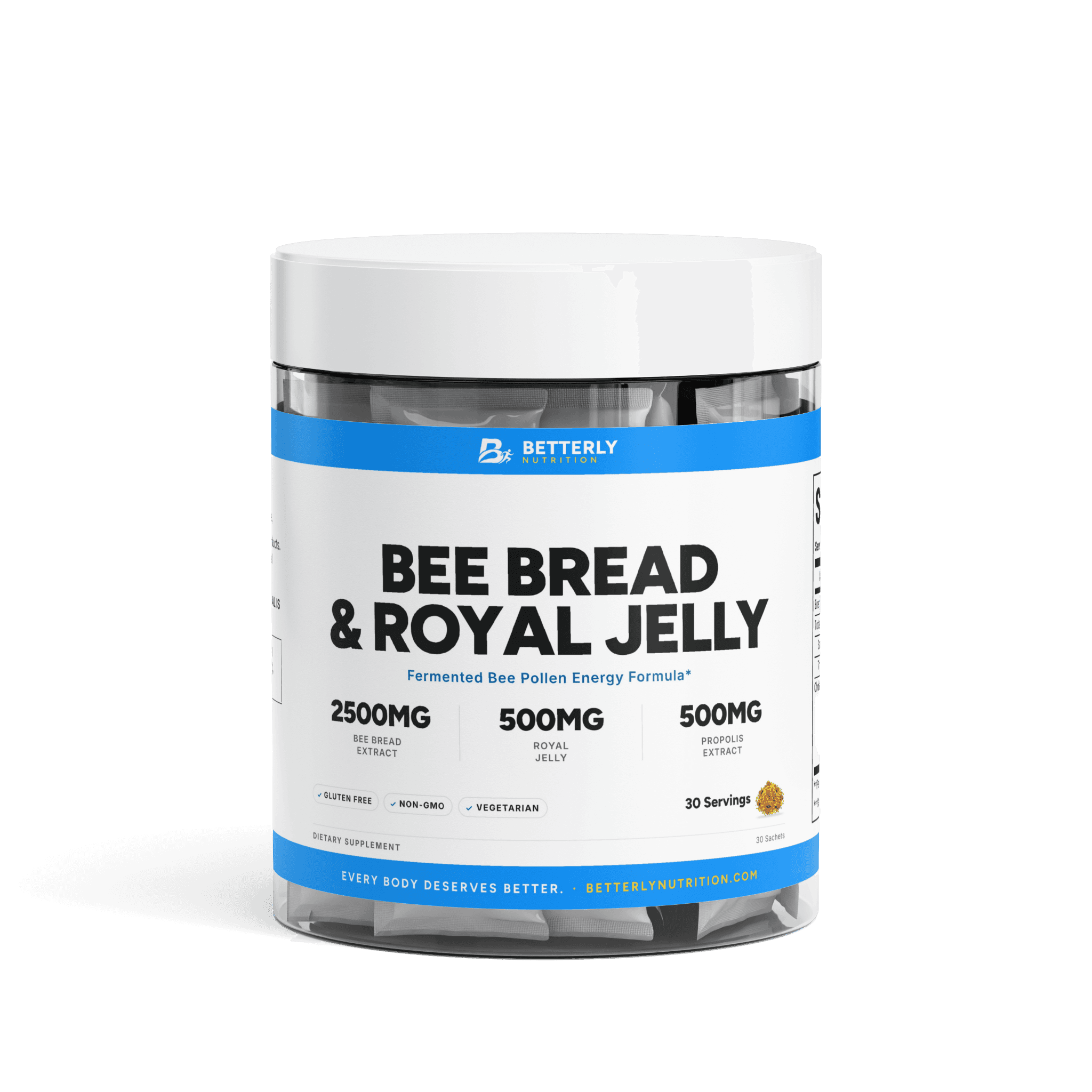
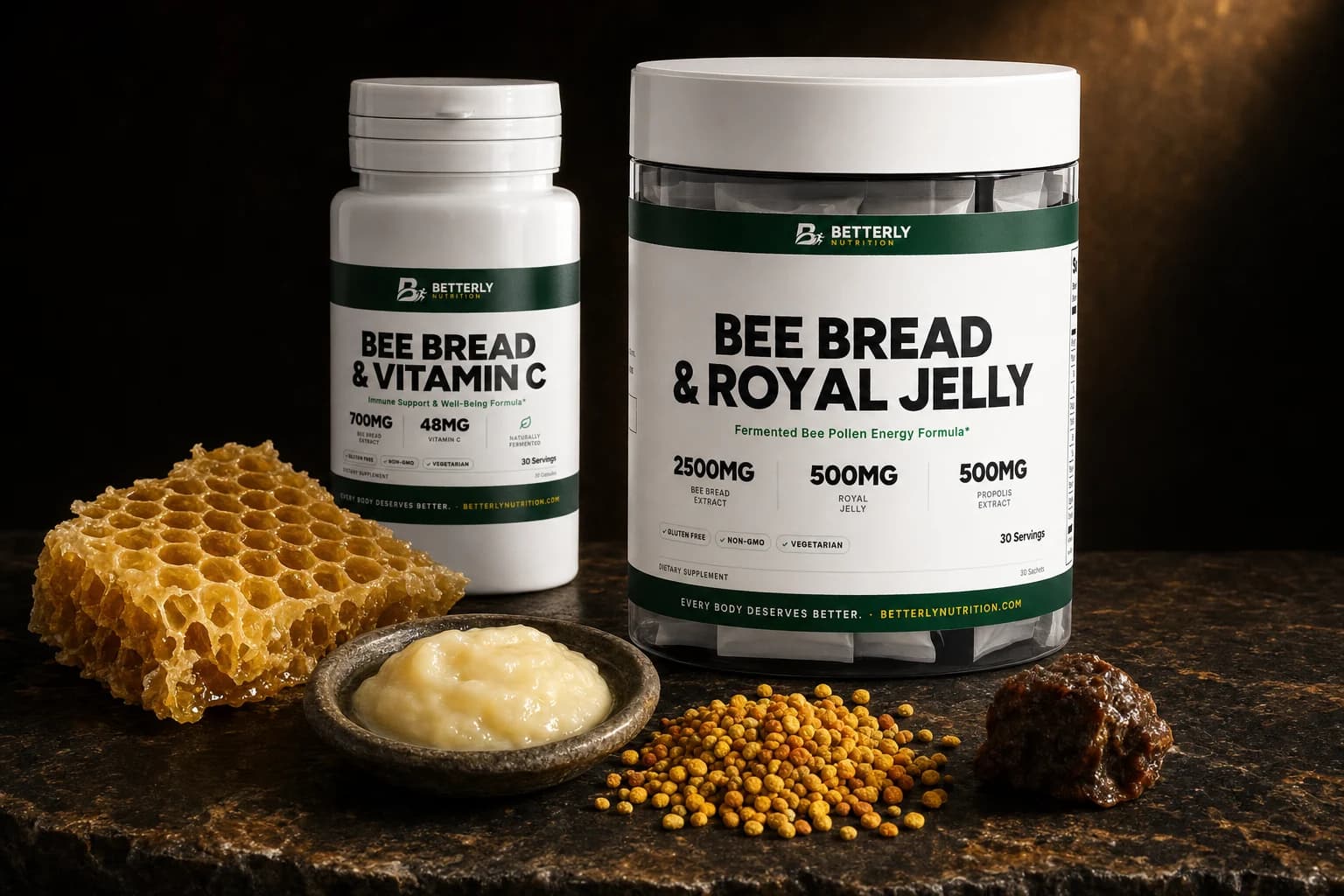
We sell two bee bread products, Bee Bread & Vitamin C Capsules and a sachet that adds royal jelly and propolis, plus a greens powder with bee pollen in its blend. That's a good reason to read us critically. Every product figure here comes straight off those Supplement Facts panels.
Bee bread side effects: what has actually been reported?
Allergic reactions are the bee bread side effect that shows up in the medical record, because bee bread carries the same pollen allergens as fresh bee pollen.
A federal page draws the same line. In Seasonal Allergies at a Glance, the National Center for Complementary and Integrative Health (NCCIH) cautions that bee products can trigger allergic reactions in anyone allergic to pollen. Its examples run from propolis and royal jelly to honey and bee pollen itself. Bee bread is pollen packed with honey, so it belongs in that group.
The most detailed look we found is a December 2025 review in the International Journal of Molecular Sciences, Ensuring the Safe Use of Bee Products, by Matuszewska-Mach and colleagues. It says bee bread's allergens are fundamentally the same as bee pollen's. Its summary table rates reactions to bee bread as very rare, mainly mild stomach or skin symptoms, with no severe whole-body reactions reported to date.
Bee pollen gets a sterner entry. The review calls dangerous reactions to it relatively rare but collects case reports of severe ones. In one, a 40-year-old man's first whole-body symptoms began an hour after he ate bee pollen.
Is bee bread less allergenic than bee pollen?
Bee bread may be less allergenic than bee pollen, according to the 2025 review, but its authors say that doesn't guarantee it's safe for highly sensitive people.
Their reasoning rests on fermentation. The review says enzymes active while bee bread ferments in the comb can break down some allergenic proteins. The same passage adds that the size of that drop varies, so it isn't something to count on.
Two more reasons not to lean on it:
- An empty record isn't proof. It can also reflect how few people eat bee bread.
- Researchers don't agree on how much the comb changes pollen. Our bee bread vs bee pollen comparison covers a 2014 hive study whose microscope checks found stored pollen grains mostly intact.
Our capsule's panel calls its bee bread "Naturally Fermented Pollen." That tells you how it was made, not how much allergen is left, and we don't claim it's low-allergen. If bee pollen has ever bothered you, assume bee bread carries the same risk.
Can bee pollen or bee bread upset your stomach?
Bee bread can upset your stomach: the 2025 review lists stomach symptoms among the mild reactions reported with it.
That matters because stomach trouble can be an allergy sign. MedlinePlus, the National Library of Medicine's consumer site, describes anaphylaxis as a life-threatening type of allergic reaction. Its symptom list puts abdominal pain, diarrhea, and nausea or vomiting right alongside hives, wheezing and swelling of the face, eyes or tongue. Those symptoms develop quickly, it says, often within seconds or minutes.
What about the vitamin C? The vitamin C fact sheet from the NIH Office of Dietary Supplements (ODS) says too much can cause diarrhea, nausea and stomach cramps, and it puts the adult upper limit at 2,000 mg daily, counting every source. Our capsule's 48 mg per 1-capsule serving is under 3% of that, so vitamin C is an unlikely culprit at the label's dose.
Which bee pollen allergy symptoms need 911?
Bee pollen allergy symptoms that need 911 include facial or throat swelling, trouble breathing, dizziness, and stomach symptoms that arrive with hives. Stop the product at the first sign.
MedlinePlus lists calling 911 or your local emergency number as the first step for a severe reaction. Here's how we'd sort what you might notice after bee bread, drawing on the symptoms it lists:
| What you notice | What it may mean | What to do |
|---|---|---|
| Swollen face, lips, tongue or throat | A serious allergic reaction | Call 911 |
| Wheezing, chest tightness, trouble swallowing or dizziness | A serious allergic reaction | Call 911 |
| Cramps, nausea or diarrhea plus hives or itching | A reaction in more than one area | Call 911 |
| A few hives or itchy skin, nothing else | A milder allergic reaction | Stop and call your provider |
| A mildly unsettled stomach, nothing else | Unclear | Stop and ask before retrying |
The top three rows are emergencies. Only the bottom two leave time for a call to your provider, and in every row you stop taking the product.
Keep the bottle for your provider to see. MedlinePlus's prevention advice is to steer clear of any food or medicine that has already caused an allergic reaction, so after one, bee products stay off your list until an allergist says otherwise.
Who should not take bee pollen at all?
Bee pollen and bee bread are a firm no if pollen or a hive product like honey, propolis or royal jelly has ever caused you a reaction. That lines up with the 2025 review, which advises avoiding bee bread once a pollen allergy is confirmed. Any exception is an allergist's call.
The review also widens the circle. It says people with atopy, an inherited tendency toward allergies, face the most risk of a severe reaction to bee products, and beekeepers are flagged too. In its bee pollen case reports, seasonal pollen allergies come up again and again.
If pollen season gets to you, look hard at the daisy family. In its section on honey, the review ties most sensitization to pollen from that family, which includes dandelion, mugwort, goldenrod and sunflower. Bees gather whatever is blooming, so a label that doesn't name its flowers can't rule out the plant that sets you off each year.
Bee stings are a separate question. The review says a bee-product allergy has to be told apart from a sting allergy, because the allergens and the medical care differ. So a sting allergy alone doesn't settle the bee bread question.
Royal jelly is where stings do count. The review's summary table lists honeybee venom allergy among the higher-risk groups for royal jelly, which is in our sachet. If a sting has ever caused you a reaction, skip the sachet unless an allergist clears it, and ask about the capsule before your first dose.
What should a bee bread label tell you before you try it?
A bee bread label should show the amount per serving, any other hive ingredients, whether the pollen was fermented, and ideally the plants it came from.
The review tells people avoiding hive products to read supplement labels carefully, and it calls for labels that spell out allergen content. Ours don't go that far. Here's what to check, using our two bee bread labels:
- Amount per serving. The capsule's panel shows 700 mg of bee bread extract per 1-capsule serving. The sachet's panel shows 2,500 mg per 1-sachet (4 g) serving, more than three and a half times as much.
- Other hive ingredients. The capsule has none. The sachet adds 500 mg of lyophilized (freeze-dried) royal jelly and 500 mg of propolis extract powder, each with its own allergy history.
- Fermented or fresh. Both panels say "Naturally Fermented Pollen," which isn't the same as allergen-free.
- Plant source. Neither label names flowers or a region, the gap that matters most if you know which pollens bother you.
- The caution. Both print "Contains bee products."
Blends need a second look: if you check only the caution box on our Alfalfa & Chlorella Greens Powder, you'd miss the bee pollen and royal jelly inside its herbal blend, a gap the label section of our royal jelly safety guide covers.
Of our two bee bread products, the capsule is the smaller exposure: one hive ingredient, taken once a day, and its other-ingredients line lists only the hypromellose capsule.
From our shop: Bee Bread & Vitamin C Capsules — the smaller hive exposure of our two bee bread products, with one bee ingredient (700 mg of bee bread extract) plus 48 mg of vitamin C in each 1-capsule serving.
How much bee bread does the label say to take?
The Bee Bread & Vitamin C Capsules label calls for one capsule daily with a meal, and that's a ceiling, not a starting point.
Its exact words are "Take one (1) capsule daily with a meal." The caution opens with "Do not exceed recommended dose." A bottle holds 30 capsules, so it lasts 30 days.
- If you miss a day, take one capsule the next day, not two.
- Don't pair the two bee bread products. Neither label suggests adding the other, and both in one day would add up to 3,200 mg of bee bread extract, plus royal jelly and propolis.
If you'd rather drink it, the Bee Bread, Royal Jelly & Propolis Powder label says "Mix 1 sachet daily into a smoothie or beverage," with 30 sachets per container. Timing and mixing get a closer look in our guide to taking bee bread.
From our shop: Bee Bread, Royal Jelly & Propolis Powder — three hive ingredients per 1-sachet (4 g) serving, led by 2,500 mg of bee bread extract, stirred into a drink once a day.
Who can skip bee bread without missing anything?
Anyone can skip bee bread without missing anything essential, since no diet requires it, and skipping is the clear call if any allergy flag above fits you.
For that group, an uncertain upside can't outweigh a real chance of a reaction. Our look at bee bread's benefits and the evidence behind them sorts each claim by how well it holds up in people.
Timing is a fair reason to wait, too. If you're starting another supplement or a new medicine this month, add one new product at a time. Then, if hives or an upset stomach show up, you and your provider know where to look.
Those five checks work on any bee product, ours or anyone else's. If you're weighing other picks from our Targeted Support collection, each product page lists the amounts per serving from its label, so scan it for hive ingredients, and for daisy-family plants such as marigold if you react to pollen.
Who should check with a healthcare provider first?
Pregnancy, nursing, being under 18, taking any medicine, a medical condition or past allergic reactions all mean a healthcare provider should weigh in before you start bee bread.
Everything on that list except medicines comes straight from our label, which doesn't mention them: "Do not exceed recommended dose. Contains bee products. Consult a physician if pregnant, nursing, under 18, have a medical condition, or allergic reactions."
- In pregnancy, the bee bread evidence the 2025 review cites comes from a rat study, which can't settle safety in people, and we found no source on bee bread while breastfeeding. For the sachet, the review also notes a suggestion that pregnant women avoid royal jelly, partly because clear safety data are lacking.
- For anyone under 18, the review urges caution with bee products, and its case reports include several girls, ages 7 to 15, who reacted to royal jelly.
- If you take any medicine, show the bottle to your pharmacist. The review describes a severe allergic reaction after royal jelly taken with an antibiotic and urges particular care when mixing medicines with unconventional supplements. ODS says vitamin C supplements can interact with some medicines too.
- Before any planned procedure, mention bee bread when your care team asks what you take, just as you would a medicine.
FAQ: bee bread safety
How soon after taking bee bread would a reaction start?
A bee bread reaction would most likely start soon after you swallow a capsule. MedlinePlus says severe allergic symptoms develop quickly, often within seconds or minutes. Onset can lag, though: the 2025 review describes a man whose first whole-body symptoms began an hour after eating bee pollen. So keep paying attention to how you feel well past the first few minutes.
Is it safe to take bee bread every day?
Bee bread is labeled for daily use, one capsule with a meal, but we found no long-term safety data on daily bee bread in people. So the Bee Bread & Vitamin C Capsules routine rests on its label, not on studies. A quiet first week doesn't settle things, either: the 2025 review includes a man who had taken bee pollen for about a month before a severe reaction during a run.
Does bee bread have different side effects for women and men?
No, the sources we used don't describe bee bread side effects that differ between women and men. Your allergy history matters far more than your sex. The one sex-specific caution is pregnancy and nursing, which our label lists as a reason to consult a physician first, and the royal jelly in our sachet gives pregnant readers a second reason to talk to their provider.
Can you take bee bread and royal jelly together?
Bee bread and royal jelly can be taken together, and our Bee Bread, Royal Jelly & Propolis Powder already combines them, but every added hive ingredient is another possible allergen. Per 1-sachet (4 g) serving, its panel shows 500 mg of lyophilized royal jelly beside 2,500 mg of bee bread extract, with 500 mg of propolis extract powder on top. If either one has ever caused you a reaction, skip the pair.
Sources
- Seasonal Allergies at a Glance (National Center for Complementary and Integrative Health)
- Ensuring the Safe Use of Bee Products: A Review of Allergic Risks and Management (International Journal of Molecular Sciences, 2025, via PubMed Central)
- Anaphylaxis (MedlinePlus Medical Encyclopedia, National Library of Medicine)
- Vitamin C: Fact Sheet for Consumers (NIH Office of Dietary Supplements)
If this left you looking for somewhere to start, read 700 mg bee bread extract capsules — its amounts per serving are listed on the page. For the practical questions this raises, how dosing, sourcing and subscriptions work is answered in one place.