On this page
- Key takeaways
- When should you take colostrum?
- Should you take colostrum on an empty stomach or with food?
- Is colostrum better in the morning or at night?
- What do our two colostrum labels say, side by side?
- How do you take colostrum capsules across your meals?
- When to take colostrum powder: does the time of day matter?
- Can you take colostrum with other supplements?
- When don't you need a colostrum supplement?
- Who should check with a healthcare provider before taking colostrum?
- FAQ: when to take colostrum
- Sources
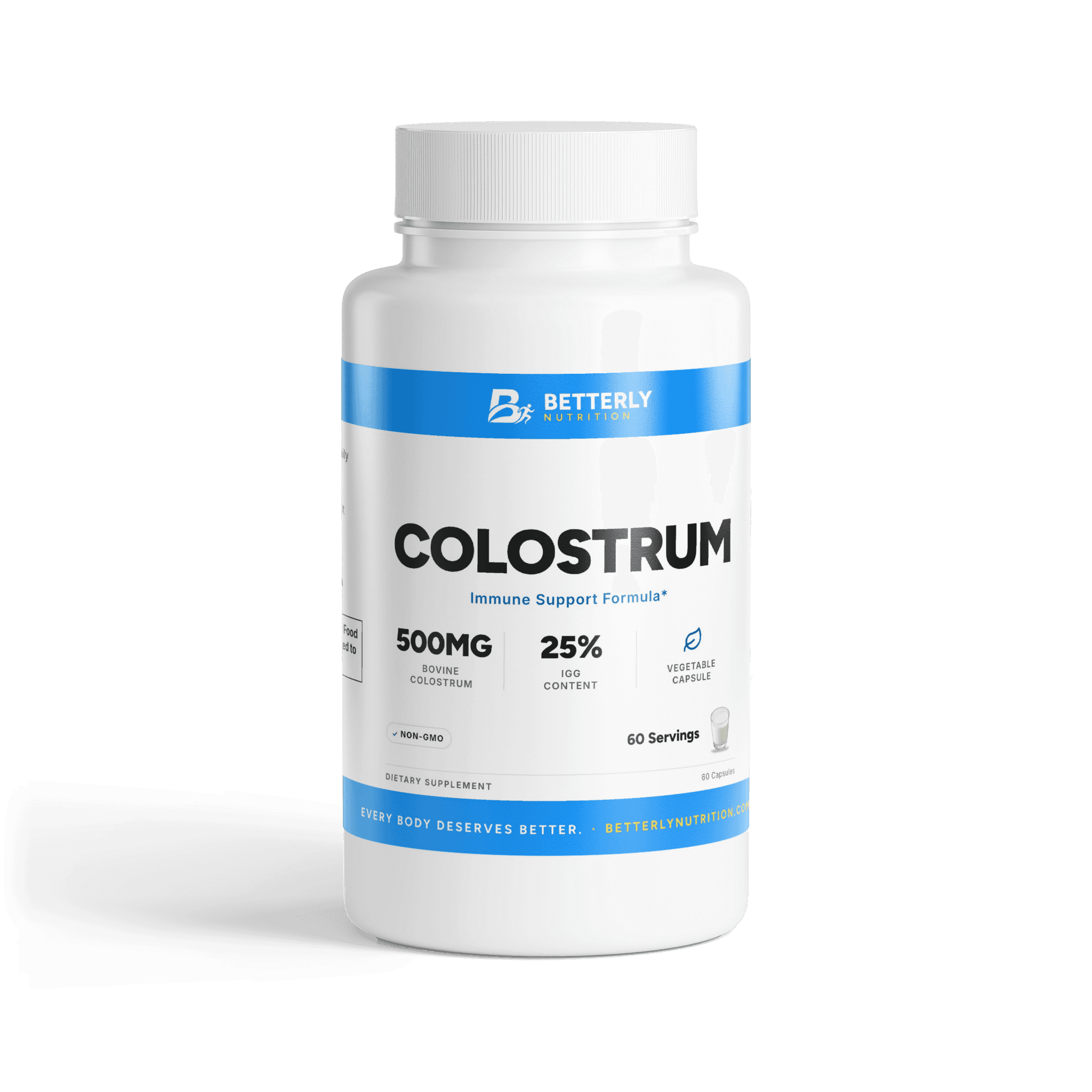
The short answer: The best time to take colostrum, going by Betterly's Colostrum Capsules label, is with a meal: 1 capsule, 1 to 3 times daily, "preferably with meals." Our powder names no meal and no hour. Its only clock is a 10-minute window after you stir a scoop into a cold drink. Neither label picks morning over night, so when to take colostrum is really about which meal you eat most reliably.
Key takeaways
- Betterly's Colostrum Capsules label ties each capsule to a meal, up to three a day, which is the opposite of the empty-stomach advice common online.
- Our 2,300mg Bovine Colostrum Powder label gives no time of day and no food rule, only a cold drink you empty within 10 minutes of mixing.
- Morning and night both fit both labels, so the best slot is a meal or a drink you already have every day.
- Bovine colostrum comes from cows, and both of our labels print "Contains: Milk (Colostrum)."
- If you take prescription medication, ask your provider before adding colostrum to what you already take.
A note on bias: Betterly sells every product linked in this guide, including the colostrum capsule and powder. Our capsule label disagrees with a lot of colostrum advice you'll find online, and we'd rather show you that openly than smooth it over.
When should you take colostrum?
You should take colostrum when its own label says to, and for Betterly's capsules that means one capsule with a meal, up to three times a day.
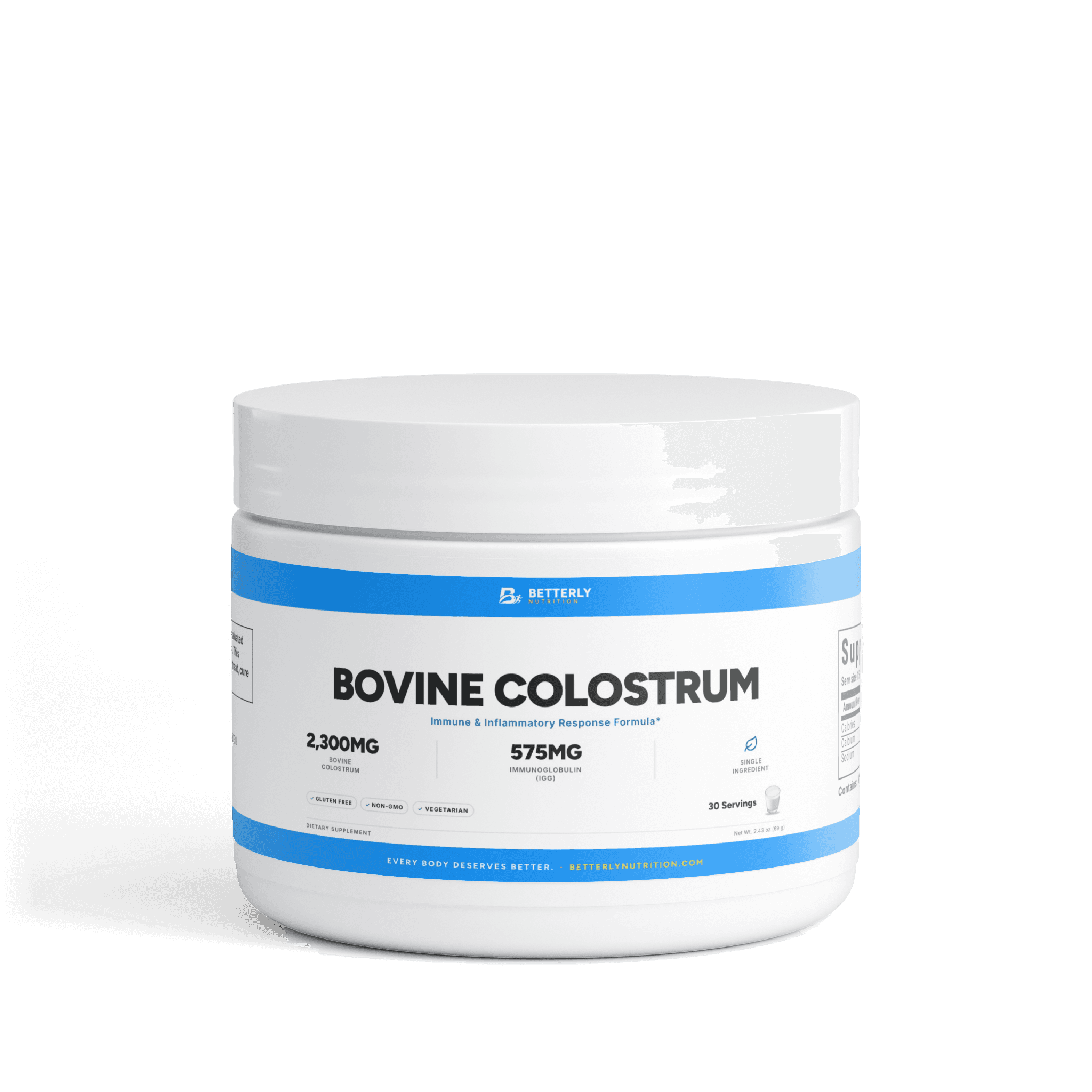
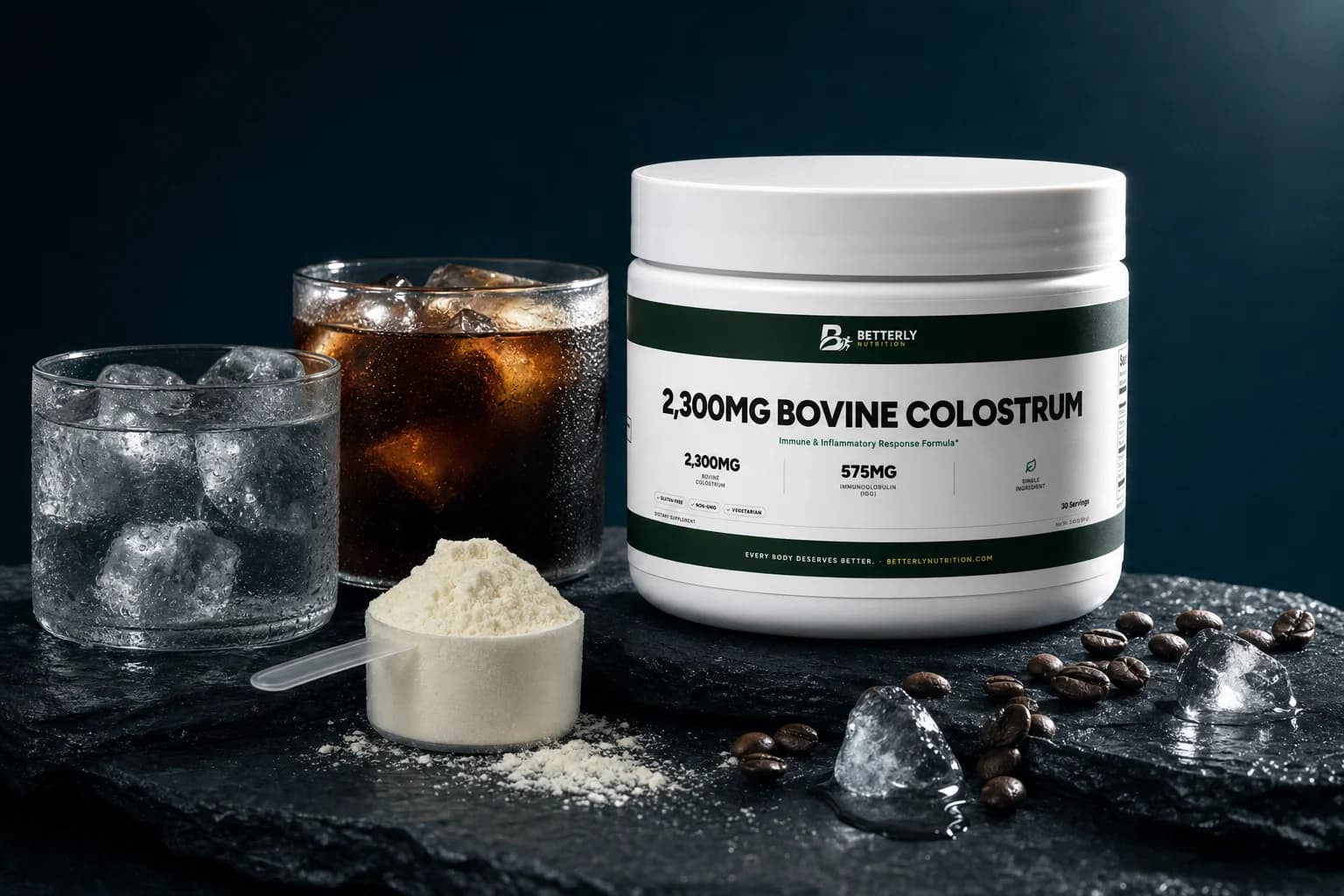
Colostrum is the first milk a mammal makes after giving birth, and ours is bovine colostrum, from cows. As a supplement it's sold dried: our capsule's panel row reads "Bovine Colostrum Powder," and the tub holds that powder loose. The tub's panel lists 575 mg of immunoglobulin G (IgG), a type of antibody protein, per 1-scoop (2.3 g) serving.
A supplement label can answer three timing questions: whether food is involved, how many times a day, and whether there's a preparation clock. The NIH Office of Dietary Supplements' consumer primer on supplement basics points out that the serving size on a Supplement Facts label is the manufacturer's suggestion, which your own healthcare provider is free to change.
Should you take colostrum on an empty stomach or with food?
Take Betterly's Colostrum Capsules with food, because the label says "preferably with meals." The empty-stomach rule you'll read on many brand blogs isn't printed on it.
Many top-ranking answers to this question say first thing in the morning, before you eat, usually with a reason about absorption attached. That reasoning isn't on our label. Colostrum doesn't come up at all on the federal consumer pages we cite, so there's no official timing rule to report, and an absorption claim with no source behind it doesn't belong in this guide.
Each company writes its own directions, so two colostrum products can carry different instructions honestly. If you own another brand's colostrum and its label says to take it on an empty stomach, follow that label. If you own ours, a meal is the default.
The word "preferably" is a stated preference, not a warning. If you take one a day, a capsule you forgot at breakfast can go with lunch instead. Still, if you're building a habit from scratch, build it around food.
Our powder's directions never mention meals, so a scoop fits with breakfast or between meals.
Is colostrum better in the morning or at night?
Betterly's two colostrum labels are silent on the hour, so morning and night both work, as long as each capsule arrives with a meal.
Morning is easiest if you eat breakfast most days. Our Daily Multivitamin Capsules label says two capsules "in the morning with a meal," so a colostrum capsule can share that same plate.
Night works too. Dinner is a meal, which is exactly what the capsule label prefers. What doesn't match is a bare capsule at bedtime, hours after your last meal.
Does anything on the panels argue against evenings? The capsule lists one active: 500 mg of bovine colostrum. The powder adds 10 calories and small amounts of calcium, sodium and potassium per scoop. There's no caffeine on either, so the labels give you no reason to avoid the evening. We make no claim that colostrum affects sleep, in either direction.
If you skip breakfast, don't force one for the sake of a capsule. Lunch is just as much a meal.
What do our two colostrum labels say, side by side?
Betterly's Colostrum Capsules give you a meal-based schedule, while our 2,300mg Bovine Colostrum Powder gives you a recipe with a 10-minute deadline and no schedule at all.
| Label detail | Colostrum Capsules | 2,300mg Bovine Colostrum Powder |
|---|---|---|
| Serving | 1 capsule | 1 scoop (2.3 g) |
| How often | 1 to 3 times daily | Not stated |
| Time of day | Not stated | Not stated |
| Food | Preferably with meals | Not mentioned |
| Liquid | Not specified | 6-8 oz cold water or favorite beverage |
| Time limit | None | Within 10 minutes of mixing |
Neither column sets a clock time. The capsule asks for meals, and the 2,300mg Bovine Colostrum Powder asks for a cold drink you finish within 10 minutes.
The servings aren't the same size, either: 500 mg of colostrum per capsule against 2,300 mg per scoop. We compare the two formats in colostrum powder vs capsules.
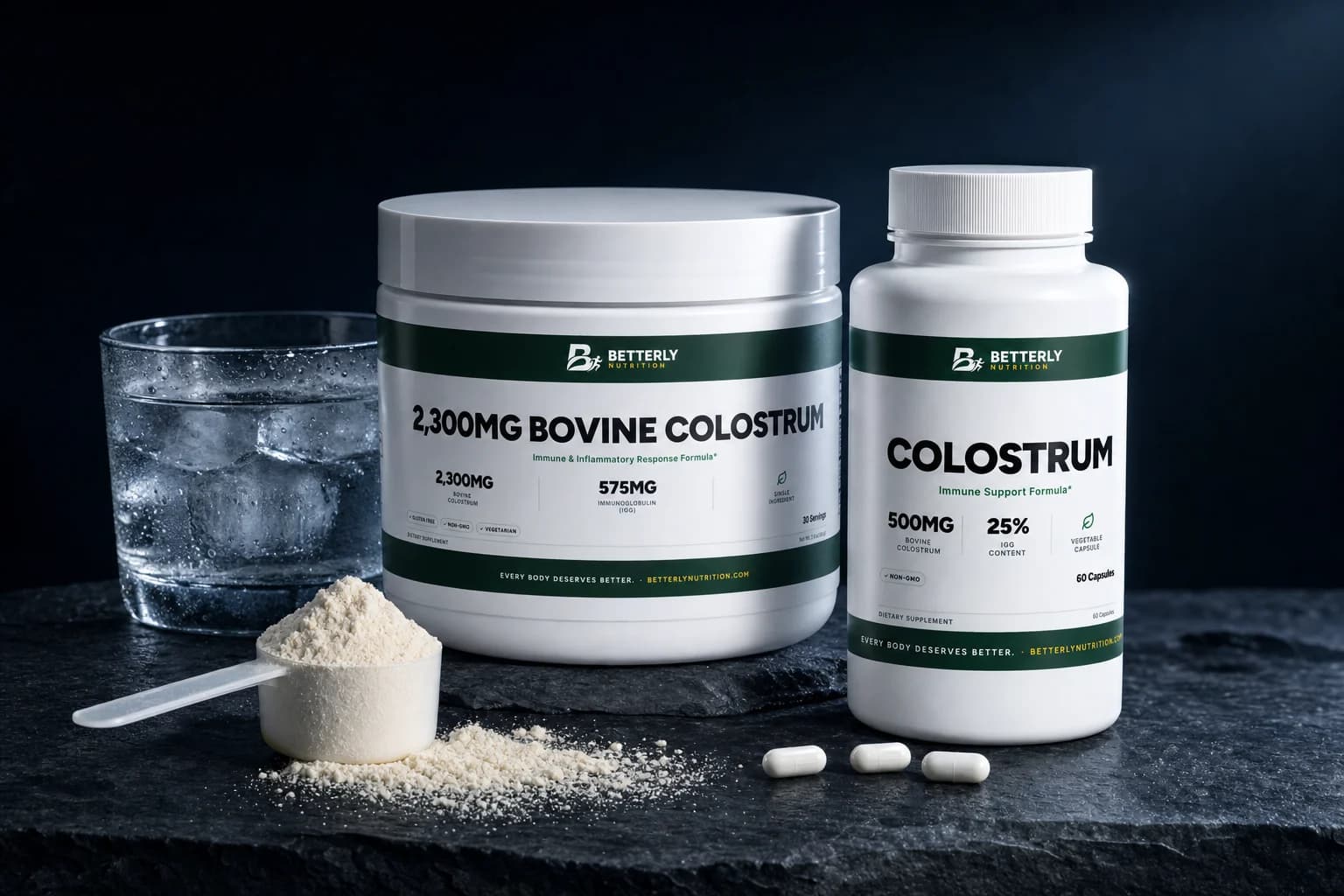
From our shop: Colostrum Capsules — 500 mg of bovine colostrum (IgG 25%) per 1-capsule serving in a cellulose vegetable capsule, labeled for 1 to 3 times daily, preferably with meals.
How do you take colostrum capsules across your meals?
Take one Betterly colostrum capsule with a meal, and if you take two or three, give each its own meal, never more than three a day.
The label's suggested use reads "Take 1 (one) capsule 1 to 3 times daily preferably with meals or as directed by a healthcare professional." That describes separate single doses, not a handful at once. Here's how to follow it:
- Pick your anchor meal. The range starts at one, so one capsule with your most dependable meal is a full routine.
- Spread any extras. Taking two? Try breakfast and dinner. Taking three? One at each main meal.
- Stop at three. The caution line reads "Do not exceed recommended dose." A missed capsule doesn't mean doubling up at the next meal.
- Do the bottle math. The bottle holds 60 capsules. That's 60 days at one a day, 30 days at two, or 20 days at three.
Your eating pattern decides which meals carry the capsules:
| Your eating pattern | Capsule plan within the label |
|---|---|
| Three meals a day | 1 capsule at one, two or all three |
| No breakfast | Lunch, dinner, or both |
| One main meal | 1 capsule with that meal |
| Night shifts | Your first and last meals of the shift |
When to take colostrum powder: does the time of day matter?
The time of day doesn't matter on Betterly's 2,300mg Bovine Colostrum Powder label, but the minutes do: finish the drink within 10 minutes of mixing.
The directions say adults use one scoop "in 6-8 oz (177-237ml) of cold water or favorite beverage." So you mix it right before you drink it, never the night before.
The label names one scoop as the serving but doesn't say how many servings a day. With no frequency printed, the careful reading is one scoop a day, which makes the 30-scoop tub last a month. If you think you need something different, ask your healthcare provider rather than guessing.
Because the powder has no meal rule, you can drink it with breakfast, mid-afternoon or after a workout. A cold shake counts as a "favorite beverage." We keep stirring tips and drink ideas for a separate guide on how to take colostrum powder.
Can you take colostrum with other supplements?
Neither Betterly colostrum label says to keep colostrum apart from other supplements, but if you take prescription medication, clear any combination with your provider first.
Start with the labels. The capsule's Supplement Facts rows list only bovine colostrum, so it adds no vitamins or minerals to your daily totals. The powder adds 20 mg of calcium (2% DV), 5 mg of sodium and 25 mg of potassium per scoop, which barely moves those numbers.
Here's how colostrum lines up with two of our other labels:
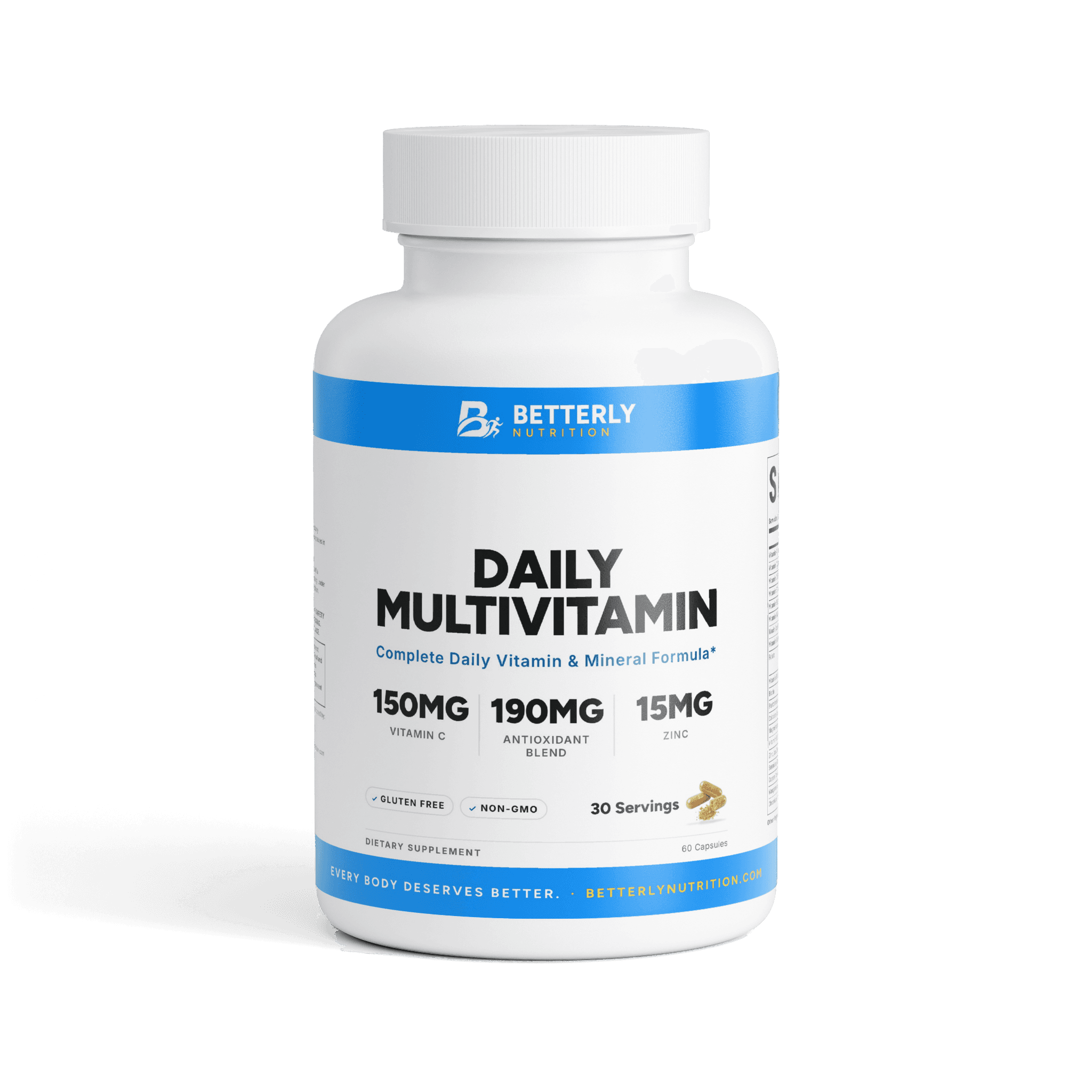
- Daily Multivitamin Capsules: two capsules in the morning with a meal. That fits the colostrum capsule's meal preference, so breakfast can hold both.
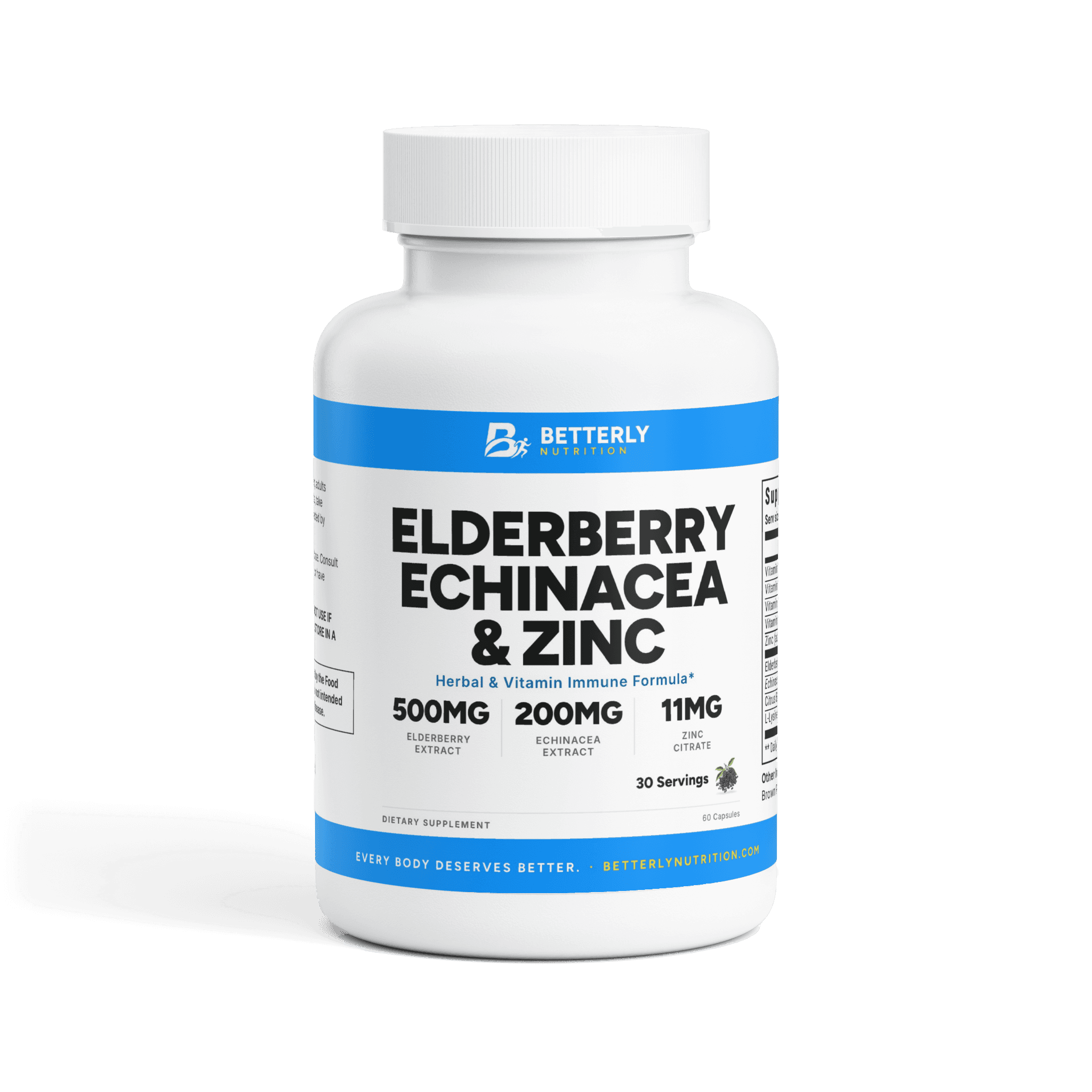
- Elderberry, Echinacea & Zinc Capsules: two capsules daily with 6-8 oz of water, no meal or hour named, so it can join a colostrum breakfast too.
Taking both of them at that breakfast doubles up on several nutrients, though. Per 2-capsule serving, the multivitamin lists 15 mg of zinc, 150 mg of vitamin C and 10 mcg of vitamin D, while the elderberry formula lists 11 mg of zinc, 180 mg of vitamin C and 40 mcg of vitamin D. Both also carry vitamin E, vitamin B6 and echinacea.
Pick one of the two to sit beside your colostrum, or add up the totals before taking both. Zinc is the number to check first. The NIH Office of Dietary Supplements' zinc fact sheet lists an adult upper limit of 40 mg a day from all sources, food included, and those two servings supply 26 mg before you count any food.
NCCIH's advice on choosing and using supplements safely warns that a supplement can do harm when combined with certain prescription or over-the-counter drugs, or with certain medical conditions. We can't tell you which medicines matter for colostrum, so that conversation belongs with your pharmacist or doctor.
The one pairing we'd skip is colostrum with more colostrum. The capsule and the powder each carry a "Do not exceed recommended dose" line, and taking both on one day stacks two servings, so stick to one format per day. If you're juggling several bottles, our guide to stacking supplements into one daily routine pins each one to something you already do every day.
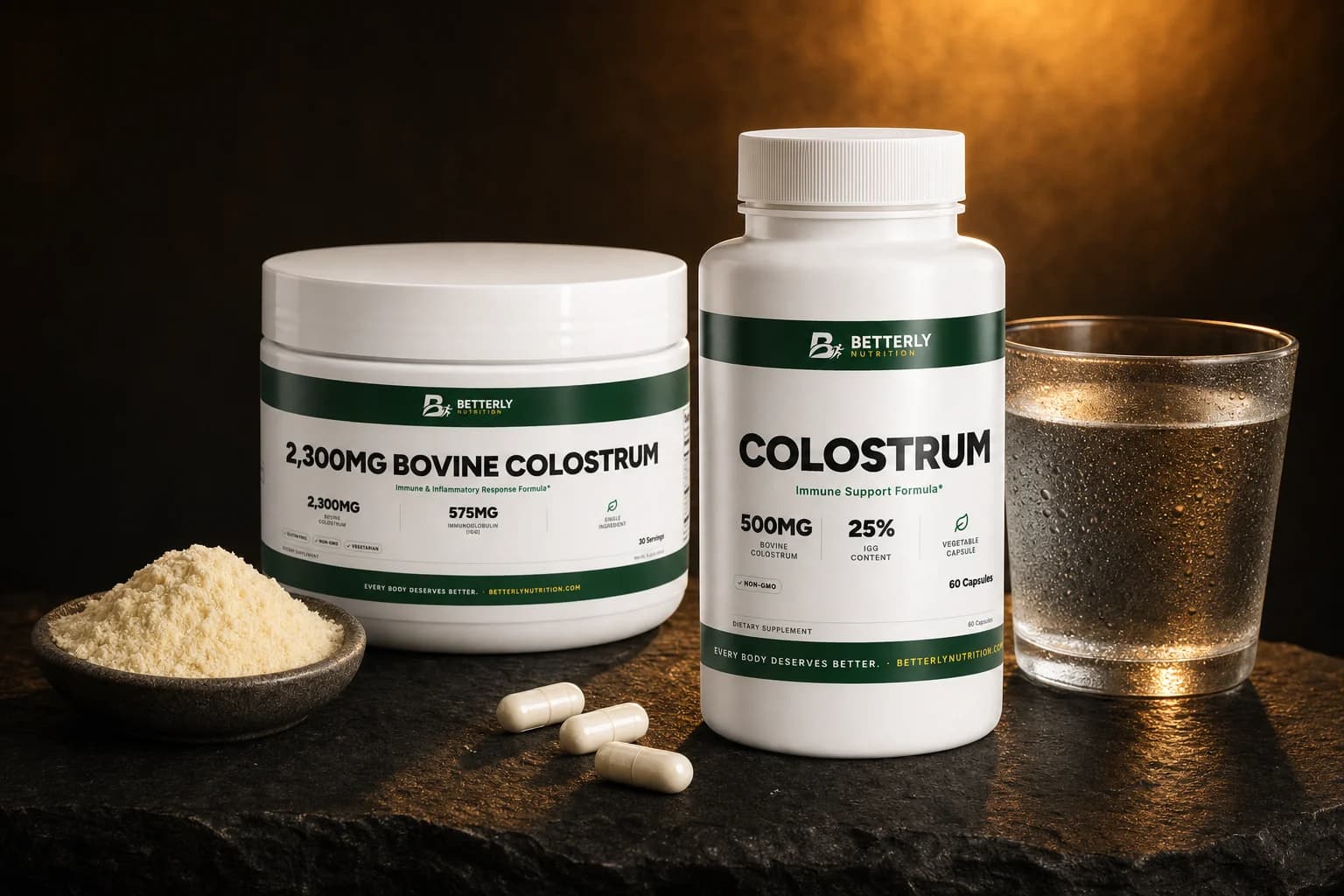
From our shop: 2,300mg Bovine Colostrum Powder — 2,300 mg of bovine colostrum and 575 mg of immunoglobulin (IgG) per 1-scoop (2.3 g) serving, a single-ingredient powder labeled gluten free, non-GMO and vegetarian.
When don't you need a colostrum supplement?
Colostrum has no Daily Value and isn't a required nutrient, so nobody strictly needs it, and anyone who avoids dairy should skip it.
Both of our panels mark it "Daily Value (DV) not established." That's different from vitamin C or zinc, which have set daily targets. ODS is also clear that no supplement replaces a varied, healthy way of eating.
Colostrum probably isn't worth adding if:
- You avoid milk or dairy for any reason. Both labels say "Contains: Milk (Colostrum)."
- Your routine already feels crowded, and a fourth bottle would make you drop the ones you chose first.
- You were hoping for something that stands in for sleep, meals and movement. No capsule does that.
For the habits that come before any bottle, see our morning-to-evening immune routine. To compare colostrum with everything else we stock for this goal, browse the immune support shelf.
Who should check with a healthcare provider before taking colostrum?
Check with a healthcare provider before taking colostrum if you're pregnant or nursing, younger than 18, on prescription medication, facing surgery or living with any medical condition.
The caution line is identical on both labels: "Do not exceed recommended dose. Consult a physician if pregnant, nursing, under 18, or have a medical condition."
Milk. The FDA's page on what you need to know about food allergies lists milk among the major food allergens that must be named on food labels. Our colostrum products come from cow's milk, and both labels say so. If milk is off your menu, colostrum is too.
Pregnancy, nursing and children. According to NCCIH, testing in pregnant women, nursing mothers and children is missing for many dietary supplements. The colostrum on our shelf is a cow's milk product for adults, unrelated to a new parent's own early milk.
Surgery. Before any procedure, NCCIH cautions, certain supplements may raise bleeding risk or affect how you respond to anesthesia. Put colostrum on the list you give your surgical team.
FAQ: when to take colostrum
Can you take colostrum every day?
Yes, daily use is what Betterly's Colostrum Capsules label describes: 1 capsule 1 to 3 times daily, preferably with meals. The powder label names one scoop per serving but doesn't state how often, so one scoop a day is the careful reading of a 30-serving tub. Neither label sets a limit on how many weeks you use it. If you plan to take colostrum long term alongside prescription medication, talk it over with your provider.
Can you take colostrum with coffee?
You can take Betterly's Colostrum Capsules with a breakfast that includes coffee, because the label asks for a meal and says nothing about caffeine. The powder is less clear. Its label says "cold water or favorite beverage" and never mentions heat, so a hot mug is the one case the wording doesn't clearly cover. If you want colostrum powder in coffee, an iced coffee is the closest match to the directions.
Should you take colostrum before or after a workout?
Either works for colostrum, because neither of our labels mentions workouts. For the capsules, take one with whichever meal sits closest to your training. For the powder, a cold post-workout shake counts as a "favorite beverage," as long as it's gone within 10 minutes of mixing. We make no claims about colostrum and exercise performance, so choose the slot that suits your schedule.
Can you take all three colostrum capsules at once?
No, three colostrum capsules at once isn't the schedule our label describes. It says to take 1 capsule 1 to 3 times daily, preferably with meals, which reads as separate single doses spread across the day. Swallowing three together still totals 1,500 mg, but it skips the meal-by-meal pattern the label sets. If a provider has told you something different, follow their advice for your situation.
Is colostrum dairy?
Yes, bovine colostrum is a dairy product, because it's the first milk a cow makes after giving birth. Both of our colostrum labels print "Contains: Milk (Colostrum)." The powder is labeled vegetarian, but that doesn't make it dairy free. Neither panel lists a lactose amount. If you avoid milk for any reason, handle colostrum like any other milk product and check with your provider first.
Sources
- Dietary Supplements: What You Need to Know, NIH Office of Dietary Supplements
- Using Dietary Supplements Wisely, National Center for Complementary and Integrative Health
- Food Allergies: What You Need to Know, U.S. Food and Drug Administration
- Zinc: Fact Sheet for Consumers, NIH Office of Dietary Supplements
If this left you looking for somewhere to start, read colostrum capsules taken with meals — its amounts per serving are listed on the page. For the practical questions this raises, how dosing, sourcing and subscriptions work is answered in one place.